云计算

Search documents
中国科技支持米兰冬奥会
Huan Qiu Shi Bao· 2026-02-07 02:07
Core Insights - The 2026 Milan-Cortina Winter Olympics has showcased the increasing visibility and influence of Chinese companies in international high-end sports markets, driven by technological innovation and a complete domestic industrial chain [1][6] - Chinese enterprises are recognized for their high-quality products and services, ranging from skiing equipment to cloud services and AI devices, which have gained trust from organizers and athletes [1][6] Company Highlights - Xiamen Beier Fiber Products Co., Ltd. aims to manufacture the lightest and strongest ski poles, achieving a weight reduction from 63 grams per meter in 2010 to 48 grams currently, with a target of 45 grams [2] - The company has established itself as a supplier for the Winter Olympics, with its ski poles being used by medal-winning athletes in various skiing events [2] - The company attributes its success to China's robust supply chain and continuous innovation, meeting the stringent delivery requirements of the Winter Olympics [2] Technological Contributions - Alibaba Cloud serves as the official cloud service partner for the Olympics, utilizing its Qianwen technology to enhance operational efficiency and eliminate digital divides among participating countries [3] - The cloud infrastructure supports the logistics and broadcasting needs of the Winter Olympics, addressing unprecedented scheduling challenges due to the geographical spread of the event [3] Product Offerings - TCL provides advanced display products for the Olympics, including hundreds of large-screen TVs and digital signage for broadcasting, enhancing the viewing experience for athletes and spectators [4][5] - TCL also supplies AI smart home appliances for the Olympic Village, contributing to the overall operational efficiency and comfort during the event [5] Industry Growth - The participation of Chinese companies in the Winter Olympics reflects a significant increase in domestic ice and snow sports equipment manufacturers, growing from approximately 300 companies in 2015 to around 900 in 2023, with sales revenue rising from under 5 billion to about 22 billion [6][7] - The success of the Beijing Winter Olympics has catalyzed technological advancements and market demand, enabling Chinese companies to break the monopoly of foreign brands in high-end sports equipment [6][7]

9点1氪丨千问回应“春节30亿免单”页面崩了;英伟达据悉今年或将不推出任何新游戏显卡;董事长被指疑为“骗保”精神病院实控人,爱尔眼科声明
3 6 Ke· 2026-02-07 01:15
Group 1 - Qianwen's "Spring Festival 3 Billion Free Order" event faced server issues due to high demand, prompting the company to allocate more resources to ensure smooth operation [2] - The event allows users to order milk tea for free using AI, with a promotional period from February 6 to February 12, and additional incentives for inviting new users [2] - Kuaishou was fined 119.1 million RMB for failing to manage security risks and promptly address illegal content on its platform, as per the Beijing Internet Information Office [2] Group 2 - Aier Eye Hospital's chairman was linked to a suspected insurance fraud case, causing a stock price drop of over 3% before the company clarified that the involved hospital is not part of its consolidated financial statements [3] - Weibo has partnered with the Chinese Olympic Committee as a sponsor and social media platform for upcoming international events from 2026 to 2029 [3] Group 3 - XWANDA reached a settlement with Geely's subsidiary, which is expected to reduce its net profit by 500 to 800 million RMB in 2025 due to costs associated with battery pack replacements [4] - Novo Nordisk's diabetes drug sales in China saw a 7% decline, marking the first drop in sales, with revenue falling to approximately 8.53 billion USD [6] Group 4 - Amazon plans to invest 200 billion USD in AI infrastructure this year, significantly exceeding analyst expectations, which may impact its profitability in the short term [11] - Apple is reportedly scaling back its virtual health coach project, "Mulberry," to reassess its strategy in the health services market [11] Group 5 - PallasAI secured several million RMB in funding to enhance its AI Agent platform, focusing on technology upgrades and industry-specific solutions [18] - Chip manufacturer "Xincheng Semiconductor" completed nearly 100 million RMB in angel round financing, indicating strong investor interest in the semiconductor sector [17]

9点1氪:千问回应“春节30亿免单”页面崩了;网信部门对快手平台依法作出处罚;董事长被指疑为“骗保”精神病院实控人,爱尔眼科声明
36氪· 2026-02-07 01:10
Group 1 - Qianwen launched a "30 billion free tea" event during the Spring Festival, but faced server issues due to high traffic, prompting the company to urgently increase resources to ensure smooth operation [4] - The event runs from February 6 to February 12, allowing users to get a 25 yuan no-threshold free order card after updating the Qianwen app, which can be used for tea, groceries, and takeout [4] - Users can earn additional free order cards by inviting friends to download the app, with a maximum of 21 cards per person, and a chance to win a valuable AI lifestyle card after inviting three friends [4] Group 2 - Kuaishou was fined 119.1 million yuan for failing to manage and address security risks and illegal content on its platform, with a warning issued by the Beijing Internet Information Office [5] - Aier Eye Hospital's chairman was implicated in a suspected insurance fraud case, causing a stock price drop of over 3% before the company clarified that the implicated hospital is not part of its consolidated financial statements [5] - Weibo announced a partnership with the Chinese Olympic Committee, becoming a sponsor and social media partner for upcoming Olympic events from 2026 to 2029 [6] Group 3 - XWANDA reached a settlement with Geely's subsidiary, which is expected to reduce the company's net profit by over 500 million yuan in 2025 [8][9] - Novo Nordisk's diabetes drug sales in China saw a decline for the first time, with a 7% drop in sales to approximately 5.4 billion Danish kroner (about 853 million USD) [9] - Nvidia is reportedly not planning to release any new gaming graphics cards in 2026 due to supply chain issues, prioritizing AI chip production instead [10] Group 4 - Amazon plans to invest 200 billion USD in artificial intelligence infrastructure this year, significantly exceeding analyst expectations, which may impact the company's profits in the short term [13] - Apple is reportedly scaling back its virtual health coach project, "Mulberry," and plans to integrate some features into existing health applications [13] - PallasAI announced the completion of a multi-million RMB financing round, which will be used for technology upgrades and industry-specific solutions [20]

股价大涨7.87%!巨头砸钱6500亿加剧担忧,黄仁勋“灭火”:AI需求火爆,庞大支出合理、可持续
美股IPO· 2026-02-07 00:35
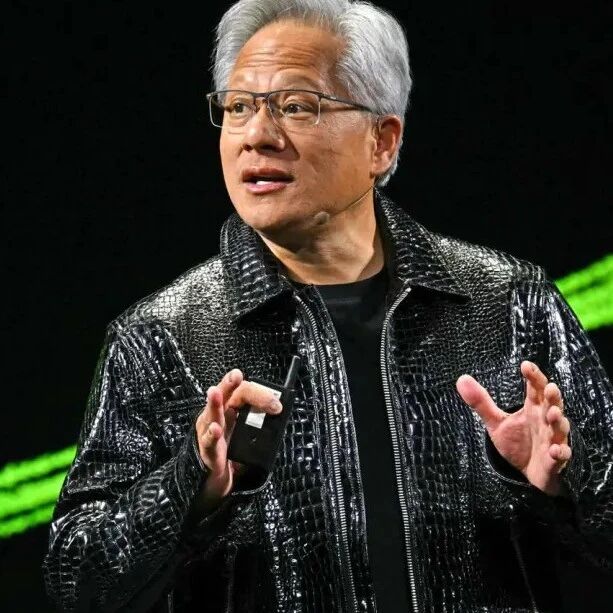
Core Viewpoint - The CEO of Nvidia, Jensen Huang, emphasized that the current surge in AI infrastructure spending is driven by extremely high computational demands, marking it as the largest infrastructure build-out in human history. He believes that as long as people continue to pay for AI, companies will profit from it [1][3]. Group 1: AI Infrastructure Spending - Huang stated that the capital expenditure in AI infrastructure is reasonable, appropriate, and sustainable, with a projected total of approximately $650 billion from major clients like Meta, Amazon, Google, and Microsoft by 2026, representing a 60% increase from 2025 [5][8]. - The spending from these four companies is expected to surpass the GDP of many medium-sized economies, with Meta's capital expenditure potentially rising by 87% to $135 billion [5][8]. - Nvidia's stock rebounded significantly after Huang's comments, with a daily increase of over 7.7%, reversing a five-day decline [3]. Group 2: Profitability and Demand for AI - Huang indicated that AI companies are starting to become profitable, and the demand for AI infrastructure will continue for the next seven to eight years. He noted that AI has become "very useful and very powerful" with a high adoption rate [6][7]. - Specific examples were provided, such as Meta transitioning its recommendation systems to generative AI, and Amazon's AWS utilizing Nvidia chips to enhance product recommendations [7]. - Huang highlighted that Nvidia's GPUs, including older models, are still in demand, reflecting ongoing needs for AI computational power [7]. Group 3: Market Reactions and Concerns - Despite the optimism from Huang, there are significant concerns among investors regarding the efficiency of AI investments and potential overcapacity, leading to a market sell-off that resulted in a loss of approximately $1.35 trillion in market capitalization for major tech companies [5][10]. - Analysts have drawn parallels between the current software industry and the newspaper industry during the internet boom, suggesting that the software sector may face similar disruptions [5]. - The market sentiment is influenced by fears surrounding the massive capital expenditures required for AI development and the uncertainty of returns, with some analysts questioning the economic viability of these investments [10][11].




美伊核谈判“暂时”结束!银价反弹超9%,道指首次突破5万点!节前5个交易日,大A怎么走?
Sou Hu Cai Jing· 2026-02-07 00:01
早上好!先来看海外市场表现。 截至收盘,纽约现货白银价格涨9.82%,报77.8825美元/盎司,本周累计下跌8.48%。COMEX白银期货 价格涨10.19%,报77.790美元/盎司,本周累跌1.12%。 纽约现货黄金价格涨3.78%,报4960.64美元/盎司,本周累计上涨1.37%。COMEX黄金期货价格涨 1.96%,报4985.10美元/盎司,本周累涨5.05%。 截至收盘,美股三大股指收涨。其中,道指涨2.47%,首次突破5万点;纳指涨2.18%;标普500指数涨 1.97%。个股方面,AMD涨超8%,英伟达、博通涨超7%。 纳斯达克中国金龙指数收涨3.75%。个股方面,嘉楠科技涨17.71%,世纪互联涨10.62%,陆金所控股涨 10.11%。 消息面上,美国商品期货交易委员会数据显示,截至2月3日当周,纽约商品交易所黄金投机客将净多头 头寸削减27983份合约,至93438份合约;白银投机客将净多头头寸削减2803份合约,至4491份合约。 美伊核谈判"暂时"结束 当地时间2月6日晚,在当天举行的美伊核谈判结束后,伊朗外交部长阿拉格齐离开阿曼首都马斯喀特。 据悉,阿拉格齐在当天谈判结束后接受 ...
人工智能投资激增,科技巨头2026年计划投入6500亿美元
Xin Lang Cai Jing· 2026-02-06 17:12
Group 1 - The four major tech giants, Microsoft, Alphabet, Amazon, and Meta, plan to invest over $650 billion in artificial intelligence by 2026 [1][4] - Amazon's capital expenditure for 2026 is projected to be around $200 billion, while Alphabet's is expected to be between $175 billion and $185 billion [1][4] - Meta has disclosed a capital expenditure range of $115 billion to $135 billion for 2026, and Microsoft is expected to spend $145 billion in its fiscal year 2026 [1][5] Group 2 - The total investment from these companies for 2026 is estimated to be approximately $635 billion at the minimum and could reach $665 billion at the maximum, representing a significant increase of about 67% and 74% respectively compared to 2025 [5][6] - The majority of these investments will be directed towards artificial intelligence chips, servers, and data center infrastructure [5][6] Group 3 - Investors have expressed concerns regarding these new capital plans, leading to stock price declines for Amazon (over 8%), Alphabet (3%), and Microsoft (over 11%) following their announcements [2][6] - In contrast, Meta's stock price increased after its quarterly earnings report, which indicated growth in advertising revenue driven by AI technology [2][6] Group 4 - Analyst Gil Luria from DA Davidson noted that the market's cautious attitude towards tech stocks reflects a rational vigilance among investors, especially in light of concerns about a potential AI bubble [2][3] - Investors are expected to remain on the sidelines until companies deliver on performance promises and achieve expected returns [3][7] Group 5 - Despite the cautious sentiment, companies like NVIDIA, Broadcom, and AMD have already benefited from the substantial investments made by tech giants, with their stock prices rising significantly following Amazon's announcement [3][7]
AI泡沫忧虑引发抛售潮,美股科技巨头一周市值蒸发逾1万亿美元
Hua Er Jie Jian Wen· 2026-02-06 16:01
Group 1 - The market is experiencing significant volatility in the tech sector due to concerns over the return on capital investments in artificial intelligence (AI), with major companies like Microsoft, Nvidia, Amazon, Alphabet, Meta, and Oracle losing a total of approximately $1.35 trillion in market value [1] - Global tech giants are projected to invest around $660 billion in AI-related infrastructure this year, surpassing the GDP of several medium-sized economies, raising investor concerns about potential inefficiencies and overcapacity risks [1] - The sentiment in the market is shifting from a fear of missing out on the AI wave to a focus on evaluating the efficiency of capital expenditures, as highlighted by GAM Investments' Paul Markham [1] Group 2 - Amazon has announced an aggressive capital expenditure plan of $200 billion, representing a 56% year-over-year increase, which is the highest among major cloud service providers, but has raised investor concerns about short-term return visibility [4] - In contrast to Amazon, Apple has adopted a more cautious approach to AI capital spending, which has been positively received by the market, with its stock price increasing by 7% due to strong demand for the iPhone [4] - The market is undergoing a systematic reassessment of high capital expenditure models, with expectations that stock prices of related companies will continue to experience volatility and pressure as doubts about the sustainability and return paths of AI investments deepen [5]
美股异动丨亚马逊大跌超10%,创2024年8月以来最大跌幅,2000亿美元资本支出吓坏市场
Sou Hu Cai Jing· 2026-02-06 15:30
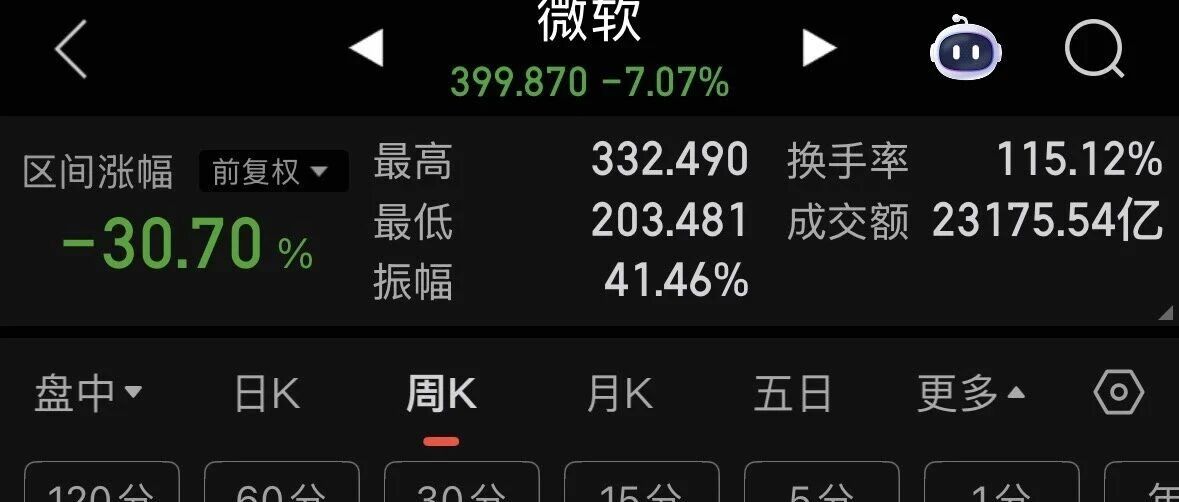
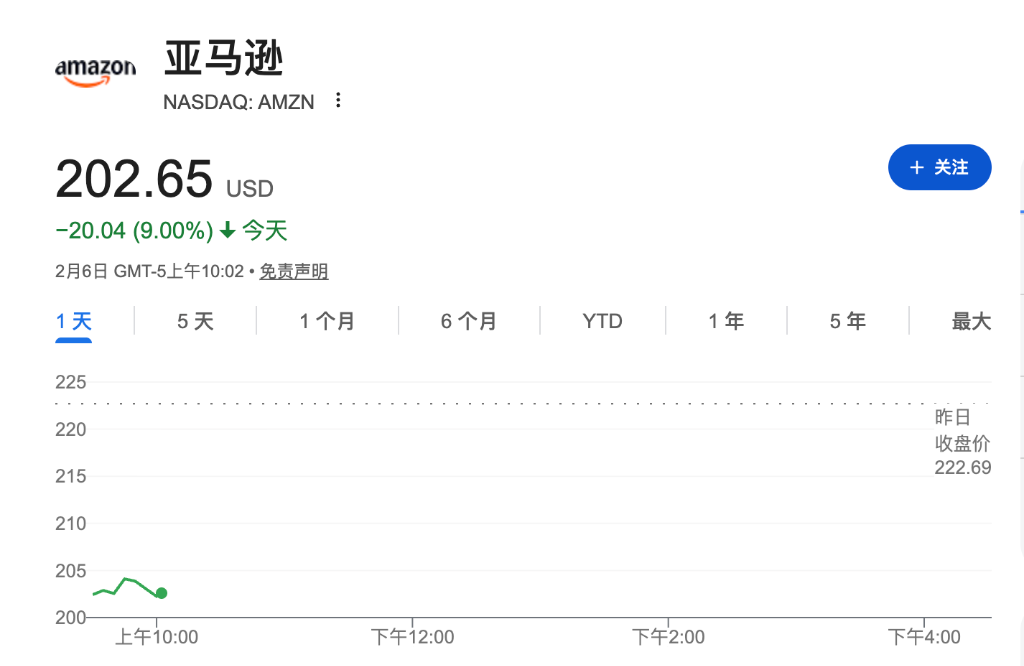
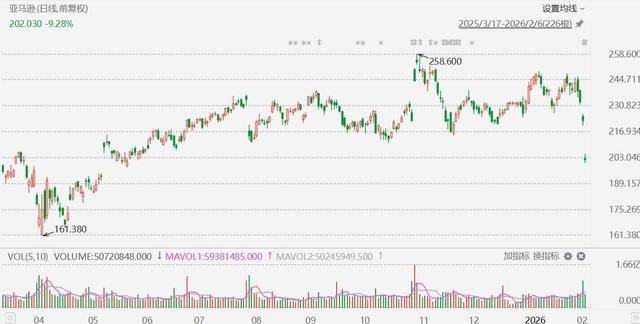
亚马逊(AMZN.US)一度跌超10%,为2024年8月以来最大跌幅,股价跌至200.31美元,创2025年5月以来 新低。主要受市场对其高达2000亿美元资本支出计划的担忧拖累。这是所有大型科技公司中最高的支出 规模,相比亚马逊去年的资本开支大幅上调50%,比分析师预期高出逾500亿美元。 在回应市场担忧时,亚马逊CEO安迪·贾西表示,他对公司云业务实现"强劲的投资回报率"充满信心, 但并未给出明确时间表。贾西回应称,公司之所以需要如此规模的资本投入,是为了满足对亚马逊AI 算力极其旺盛的需求,这需要大量数据中心、芯片和网络设备等基础设施。"这并不是什么盲目追求营 收规模的豪赌,"贾西表示,"我们有信心这些投资将带来强劲的资本回报。这一点在AWS核心业务上 已经得到验证,相信在AI领域也会如此。"贾西说,"如果算力供给更充足,AWS的增长本可以更快。 因此我们正在非常灵活、非常拼命地扩张产能。" ...
分析师:亚马逊巨额资本支出掩盖AWS强劲增长
Ge Long Hui A P P· 2026-02-06 15:24
Core Viewpoint - Amazon's commitment to invest $200 billion in capital expenditures by 2026 has overshadowed its cloud business growth of 24% year-over-year, leading to a decline in stock price [1] Group 1: Financial Performance - AWS revenue reached $35.6 billion, exceeding Wall Street's consensus estimate by $700 million [1] - The profit margin for the AWS segment remains robust at 35% [1] Group 2: Market Expectations - Advertising revenue was in line with market expectations, but investors may have anticipated greater upside given previous trends and advancements in Prime Video and Amazon DSP [1]
闲聊
小熊跑的快· 2026-02-06 15:09
Core Insights - Amazon's recent earnings report missed expectations, particularly in e-commerce performance, with declining ROIC and poor cash flow [1] Financial Performance - In Q4 2025, Amazon achieved revenue of $213.4 billion, a year-over-year increase of 12%, with an operating profit of $25 billion impacted by one-time expenses of $2.4 billion [2] - Net profit reached $21.2 billion, reflecting a year-over-year growth of 5.94%, resulting in diluted earnings per share of $1.95, which met basic expectations [2] - Online store revenue was $82.99 billion, up 9.84% year-over-year, while physical store revenue was $5.855 billion, up 4.95% [2] - Third-party seller services generated $52.816 billion, a year-over-year increase of 11.23%, and advertising revenue was $21.317 billion, up 23.31% [2] - Subscription services brought in $13.122 billion, reflecting a year-over-year growth of 14.03% [2] - Cloud business (AWS) revenue reached $35.6 billion, with a growth rate accelerating to 24%, surpassing the consensus estimate of $34.9 billion, and operating profit was $12.5 billion [2] - AWS's annualized revenue run rate is currently $142 billion [2] Capital Expenditure and Future Outlook - Amazon has delivered over 1.4 million Trainium 2 chips, noted for their rapid scaling and cost-effectiveness, being 30% to 40% more efficient than comparable GPUs [2] - The company plans to invest approximately $200 billion in capital expenditures by mid-2026, primarily directed towards AWS, significantly exceeding the consensus estimate of $146.1 billion [2] - Cash flow for 2024 is projected at $32.878 billion, dropping to $7.695 billion in 2025 [3] Market Context - The market is questioning investment returns in the fourth year of AI, with companies like Microsoft, Meta, and Amazon facing dissatisfaction from capital markets regarding their return on investment [4][5] - There is a concern that if capital expenditures continue to rise, it could negatively impact net profits and cash flow, particularly for cloud companies starting from Q3 2025 [6]