白酒

Search documents
酒价内参2月24日价格发布 总价小幅回落分化走势延续
Xin Lang Cai Jing· 2026-02-24 01:17
Core Insights - The article discusses the recent trends in the Chinese liquor market, particularly focusing on the retail prices of the top ten liquor products, which showed a slight adjustment after a period of high prices [1][4]. Price Trends - As of February 24, the total retail price for a package of the top ten liquor products was 9,258 yuan, a decrease of 2 yuan from the previous day [1][4]. - Among the top ten products, six saw price increases while four experienced declines. The most notable increase was for the premium Moutai, which rose by 8 yuan per bottle, surpassing the 2,400 yuan mark [1][4]. - Other products that increased in price include Xijiu Junpin (+4 yuan), Guojiao 1573 (+3 yuan), and several others that saw minor increases of 1 yuan [1][4]. - Conversely, the Yanghe Dream Blue M6+ dropped by 10 yuan, marking its fourth consecutive decline, while Feitian Moutai and Gujing Gonggu 20 both decreased by 4 yuan [1][4]. Market Analysis - Major foreign investment banks, including Goldman Sachs, Morgan Stanley, and UBS, have released reports indicating a structural differentiation in the liquor industry due to weak consumption during the Spring Festival and inventory pressures [3][6]. - Goldman Sachs suggests that the liquor industry is more likely to experience a bottoming out rather than a full reversal, with high-end liquor showing relatively stable performance during the Spring Festival [3][6]. - UBS notes that the industry is in a "K-shaped recovery" phase, with Moutai implementing channel and pricing strategies to restore sales, although competition in the high-end segment is intensifying [3][6]. - Morgan Stanley observes that inventory pressures among mainstream liquor companies are easing, and demand from banquet and dining channels is expected to support a sequential improvement in the industry [3][6]. - Overall, foreign institutions believe that the recovery in the liquor industry is characterized by "high-end stability and layered recovery," with a focus on demand improvement and price stability for leading brands in the second half of the year [3][6].





申万宏源证券晨会报告-20260224
Shenwan Hongyuan Securities· 2026-02-24 01:12
Group 1: IEEPA Tariff Legal Ruling - The U.S. Supreme Court ruled that IEEPA tariffs are illegal, primarily due to violations of the clear authorization principle and significant issues principle [9] - The tariffs affected include a 20% tariff on fentanyl from China, 25% on Canada and Mexico, and global equivalent tariffs [9] - The likelihood of full refunds for the tariffs is low, but partial refunds are more probable, depending on how lower courts handle the relief scope [9] Group 2: Food and Beverage Industry Insights - The overall sales volume in the food and beverage industry during the 2026 Spring Festival decreased by 10%-20%, slightly better than market expectations [10] - High-end liquor brands like Moutai and Wuliangye showed significant sales growth, with Moutai's sales expected to increase by over 30% year-on-year [12] - The industry is entering a significant destocking phase, with first-tier brands' inventory levels notably lower than the previous year [12] Group 3: Health and Nutrition Industry Trends - The health and nutrition sector is experiencing structural growth, with the market size reaching over 100 billion yuan, significantly outpacing traditional food sectors [15] - The company West Health is transitioning from agency operations to a multi-brand strategy, establishing itself as a leader in the sports nutrition and functional food segments [11] - Revenue and profit for West Health are on a stable growth trajectory, with net profit increasing from 94 million yuan in 2023 to 149 million yuan in 2025 [13] Group 4: Semiconductor Industry Developments - Huahong Semiconductor reported a revenue of $659.9 million for Q4 2025, a year-on-year increase of 22.4%, with a gross margin of 13% [19] - The company is expanding its production capacity, with a focus on enhancing its 12-inch wafer production capabilities through the acquisition of Huali Microelectronics [19] - The demand for embedded non-volatile memory products is increasing, driven by the rise in MCU and smart card needs [19] Group 5: Shipping and Transportation Sector - The VLCC freight rates surged by 24% to $146,385 per day during the Spring Festival, indicating strong demand in the oil shipping market [20] - The shipping market is expected to continue its upward trend, with tight capacity and strong demand forecasts for March [20] - The overall energy chain valuation is rising, with long-term cycles influencing high vessel utilization rates [20]
294家A股公司发“春节红包”3898亿 五粮液分红额居前十近五年累派768亿
Chang Jiang Shang Bao· 2026-02-23 23:41
Core Viewpoint - A-share listed companies are actively distributing cash dividends ahead of the Lunar New Year, with a total of 294 companies distributing approximately 389.8 billion yuan in cash dividends from December 1, 2025, to February 13, 2026, reflecting a commitment to enhancing investor returns and market stability [2][4]. Group 1: Cash Dividends Distribution - Wuliangye, a leading liquor company, has distributed over 76.8 billion yuan in cash dividends over the past five years, with a recent distribution of 10.007 billion yuan ranking it among the top ten pre-holiday dividend payers [2][6]. - Changjiang Electric Power and Darentang also completed significant cash dividend distributions of 5.138 billion yuan and 1.887 billion yuan, respectively, on February 12 [3]. - A total of 19 banks contributed 262.7 billion yuan in cash dividends, with notable contributions from China Merchants Bank and Industrial Bank, marking their first pre-holiday distributions [5]. Group 2: Trends in Dividend Payments - The number of companies distributing cash dividends before the Spring Festival decreased compared to the previous year, with 314 companies distributing approximately 344.9 billion yuan in 2025 [4]. - Changjiang Electric Power has consistently distributed over 20 billion yuan annually from 2022 to 2024, with an average dividend payout ratio of 63.38% since its listing in 2003 [4]. - Wuliangye's dividend payout ratio has increased to 70% in 2024, with a consistent rise in annual cash dividends over the past five years [6][7]. Group 3: Industry Context - The liquor industry is experiencing a shift from incremental competition to stock competition, with Wuliangye reporting a decline in revenue and net profit of 10.26% and 13.72%, respectively, in the first three quarters of 2025 [9]. - Wuliangye aims to enhance its market position by focusing on historical classic industries and emerging pillar industries, with a strategic goal of entering the world's top 500 companies by the end of 2030 [9].

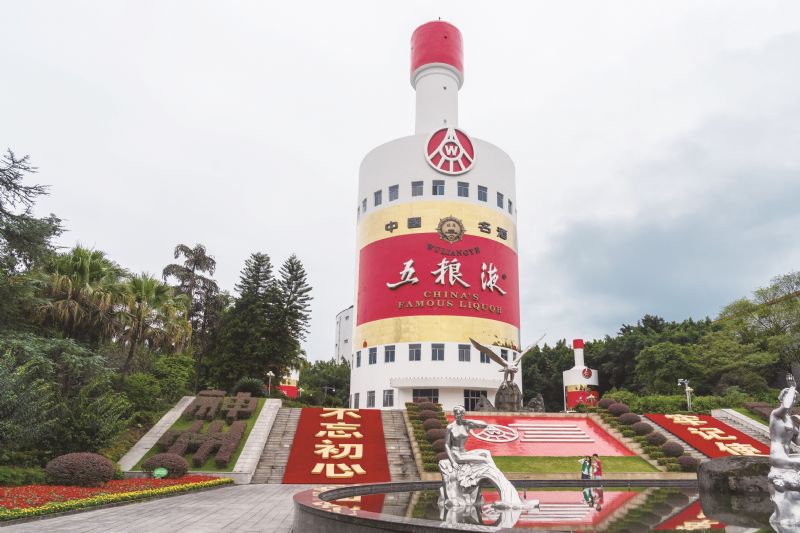
大美四川赋
Xin Lang Cai Jing· 2026-02-23 20:39
Group 1 - The article highlights the beauty and cultural richness of Sichuan, describing it as a paradise for both tourism and living, with a unique blend of natural landscapes and human heritage [1][2][3] - Sichuan is characterized by its diverse geography, including mountains, rivers, and unique natural phenomena, making it a desirable destination for travelers [2][4] - The region's cultural heritage is emphasized through historical references and notable figures, showcasing its deep-rooted traditions and contributions to Chinese civilization [3][4] Group 2 - Sichuan cuisine is celebrated for its variety and flavor, with famous dishes like Mapo Tofu and Kung Pao Chicken, reflecting the local culinary culture [4][5] - The article mentions the significance of local beverages, including Sichuan wine and tea, which are integral to the region's identity and hospitality [4][5] - The economic potential of Sichuan is highlighted through its thriving tourism and culinary industries, which are interconnected and contribute to the local economy [4][5]
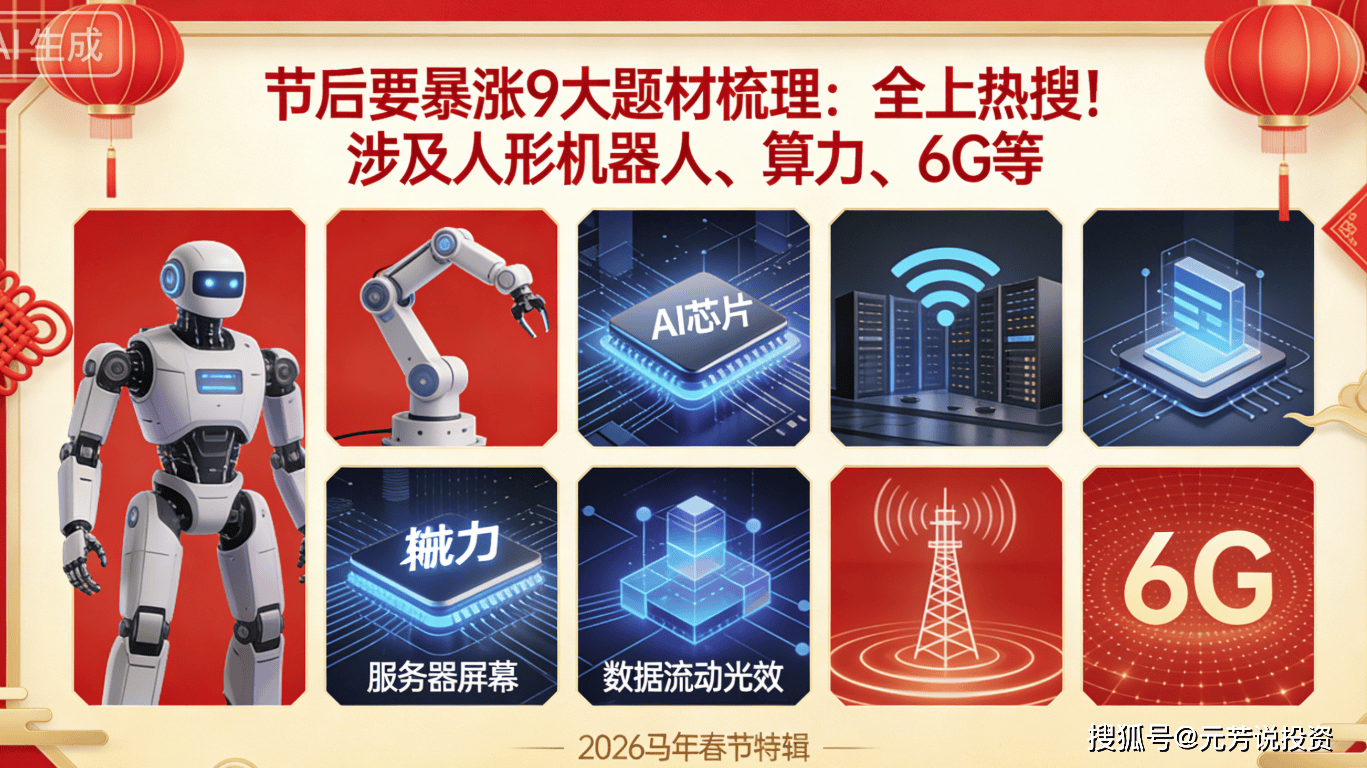
节后要暴涨9大题材梳理:全上热搜!涉及人形机器人、算力、6G
Sou Hu Cai Jing· 2026-02-23 16:20
Group 1: Market Overview - The first trading day of the A-share market in the Year of the Horse is expected to open high, supported by overseas market performance and major themes such as humanoid robots and AI models [2][4] - During the Spring Festival, the Hong Kong stock market rose nearly 1%, and the FTSE A50 index increased by 1.6% [2] Group 2: Humanoid Robots - Humanoid robots made a significant appearance during the Spring Festival Gala, showcasing their capabilities and benefiting the related industry chain [4][5] - Notable companies include Magic Atom, Galaxy General, and Yushu Robotics, which demonstrated advanced robotic performances [4][5] - The demand for these robots surged, with products selling out quickly on platforms like JD.com [6] Group 3: AI Models - The stocks of AI model companies such as Zhipu and MiniMax saw significant increases, with Zhipu's stock price rising nearly 43% and MiniMax's by about 15% [7][9] - Zhipu's new flagship model GLM-5 has achieved high performance in programming tasks, leading to increased user demand and computational power needs [11] Group 4: Autonomous Driving - Tesla's Cybercab, a fully autonomous electric vehicle, has begun production, marking a significant step in the commercialization of autonomous driving [12][13] - Data shows that Tesla's Full Self-Driving (FSD) system has a significantly higher mileage before accidents compared to other driving modes [13] Group 5: 6G Technology - Chinese scientists have made breakthroughs in optical communication and 6G technology, achieving record data transmission rates [14][15] - This advancement is expected to enhance China's capabilities in the semiconductor field and reduce reliance on foreign technology [15] Group 6: Lithium Industry - UBS has expressed a bullish outlook on the lithium market, predicting a 14% increase in global lithium demand by 2026, driven by electric vehicle sales and energy storage systems [16][17] - The report indicates a significant price increase for lithium products, forecasting a new super cycle in lithium prices [16] Group 7: Alcohol Industry - The Chinese government aims to cultivate at least 10 billion-level specialty brewing industrial parks by 2028, promoting growth in the alcohol industry [19][20] - This initiative is expected to benefit related listed companies in the alcohol sector [21][22] Group 8: AI in Healthcare - A research team has developed an AI system capable of diagnosing rare diseases, showing improved accuracy compared to previous models [23][24] - This innovation is anticipated to benefit companies involved in AI and healthcare [24] Group 9: AI Hardware - Companies in the AI hardware sector, particularly those producing AI optical modules, are experiencing high demand, with orders extending into 2026 [25][26] - The growth in AI capital expenditure from major tech companies is expected to benefit these hardware manufacturers [27][28]

五粮液:截至2月10日公司股东户数为60余万户
Zheng Quan Ri Bao Wang· 2026-02-23 15:47
证券日报网讯2月23日,五粮液(000858)在互动平台回答投资者提问时表示,截至2月10日,公司股东 户数为60余万户。 ...
出行热、票房红 沪市上市公司借助年味活动助力消费“开足马力”
Zheng Quan Ri Bao Zhi Sheng· 2026-02-23 13:39
Group 1: Travel and Transportation - Shanghai International Airport reported a single-day passenger flow of 424,900 on February 20, with a year-on-year increase of 6.4%, marking a historical high [2] - During the Spring Festival travel period, Shanghai Airport expects a total of 96,000 flights and a passenger throughput of 15.53 million, reflecting a year-on-year growth of 3.6% [2] - Guangzhou Baiyun International Airport achieved a record of 27,776 passengers on February 21, with a year-on-year increase of 9.12% [3] Group 2: Film Industry - The Chinese film market's total box office surpassed $1.1 billion, making it the leading single market globally, with the Spring Festival box office exceeding 5.2 billion yuan [4] - Shanghai Film reported a box office of 348 million yuan during the Spring Festival, capturing 6.9% of the national market share [4] Group 3: Tourism and Attractions - The Shanghai Yuyuan Lantern Festival implemented a fully digital transformation, enhancing visitor engagement through technology [5] - Changbai Mountain received 81,000 visitors during the Spring Festival, reflecting a year-on-year growth of 1.28% [5] - Huangshan Scenic Area welcomed 174,400 visitors from February 17 to 22, achieving a 2.38% increase in visitor numbers compared to the previous year [6] Group 4: Food and Beverage Industry - Jiangsu Jinshiyuan Wine Industry launched a promotional event during the Spring Festival, allowing consumers to participate in a lottery by scanning QR codes [7] - Shanxi Fenjiu introduced an interactive campaign with a 99.9% winning rate for consumers who scanned codes on bottle caps [7] - Guangzhou Restaurant Group integrated various experiences and product innovations during the Spring Festival, enhancing consumer engagement [7]



“逛”“吃”乐趣多,沪市公司感受新春消费“马力十足”
Di Yi Cai Jing· 2026-02-23 12:02
Group 1: Travel and Transportation - Shanghai Airport reported a single-day passenger flow of 424,900 on February 20, 2026, with a year-on-year increase of 6.4%, marking a historical high [2] - During the Spring Festival travel period, Shanghai Airport expects a total of 96,000 flights and a passenger throughput of 15.53 million, reflecting a year-on-year growth of 3.6% [2] - Baiyun Airport achieved a record of 27.76 million passengers on February 21, 2026, with a year-on-year increase of 9.12% [3] Group 2: Film Industry - The Chinese film market's total box office surpassed $1.1 billion, making it the leading single market globally, with the Spring Festival box office exceeding 5.2 billion yuan [4] - The Spring Festival films included five major releases that collectively grossed over 4.9 billion yuan, with a total of over 100 million viewers for the eighth consecutive year [4] - Shanghai's cinema chain secured a market share of 6.9%, generating a box office of 348 million yuan over six days [4] Group 3: Tourism and Leisure - The Yuyuan Lantern Festival embraced digital transformation, creating an immersive cultural experience for visitors [5] - Changbai Mountain received 81,000 visitors during the Spring Festival, reflecting a year-on-year growth of 1.28% [5] - Huangshan Scenic Area welcomed 174,400 visitors from February 17 to 22, 2026, achieving a revenue increase of 12.16% compared to the previous year [6] Group 4: Food and Beverage Industry - Guangzhou Restaurant launched a "Guangfu New Year Check-in Calendar" to encourage continuous customer visits, enhancing the festive experience [8] - Li Kou Fu offered discounts on limited New Year gift boxes, driving strong sales momentum [8] - Aijia Foods conducted over 6,000 in-store events during the Spring Festival, creating a vibrant shopping atmosphere [8] Group 5: Alcohol Industry - Jiu Shi Yuan held a "10,000 Bottles of Fine Wine Gratitude Giveaway" event, engaging consumers through interactive activities [7] - Shanxi Fenjiu introduced a "Drunk Beautiful China Year" theme, promoting high engagement with a 99.9% winning rate for prizes [7] - The alcohol industry has focused on consumer engagement strategies to adapt to market challenges [7]
透视贵州双龙航空港经济区春节保供战
Mei Ri Jing Ji Xin Wen· 2026-02-23 11:52
Core Viewpoint - The article highlights the significant increase in demand for Moutai liquor during the upcoming Spring Festival, driven by both B-end (distributors and self-operated stores) and C-end (individual consumers) orders, leading to challenges in supply chain management and logistics [1][3]. Group 1: Market Demand and Supply - The demand for Moutai liquor has surged, with many distributors reporting that they have sold out their January and February quotas before the Spring Festival, even prepaying for part of the March quota [1]. - The average wholesale price for the 2026 version of Moutai is reported to be stable, with prices around 1,700 RMB per bottle for boxed versions and between 1,660 to 1,690 RMB for loose bottles, indicating a price increase compared to previous years [1]. Group 2: Warehouse and Logistics Operations - The "Moutai Shuanglong Warehouse" in Guizhou covers approximately 155 acres and has a total construction area of 108,000 square meters, with a storage capacity of 32,000 tons of finished liquor and over 10.6 million boxes [2]. - The warehouse has seen a doubling of workload compared to previous years, shifting from bulk shipments to handling a large volume of small, immediate orders [3]. - The warehouse employs an automated system for inventory management, utilizing barcode scanning and real-time tracking to ensure efficient sorting and dispatching of products [3][7]. Group 3: Staffing and Operational Adjustments - To cope with the increased workload, the warehouse has expanded its workforce, adding 30 to 40 personnel for B-end orders and over 70 for C-end orders daily [4]. - New shipping warehouses in Nanjing and Beijing have been established to facilitate faster delivery for C-end consumers, significantly reducing delivery times [4]. Group 4: Collaboration with Logistics Partners - Moutai logistics collaborates with JD and SF Express for distribution, with each partner focusing on specific delivery tasks to enhance efficiency [6]. - SF Express has developed customized packaging solutions to prevent damage during transport and has implemented a "consolidation" delivery method for small orders to improve safety and efficiency [6]. Group 5: Retail Experience and Consumer Interaction - The increase in online orders has transformed Moutai's retail stores into crucial points connecting online purchases with offline experiences, leading to a three to fourfold increase in customer traffic [9]. - Retail staff have been adjusted to manage the increased customer volume, with extended operational hours to accommodate the demand [9].
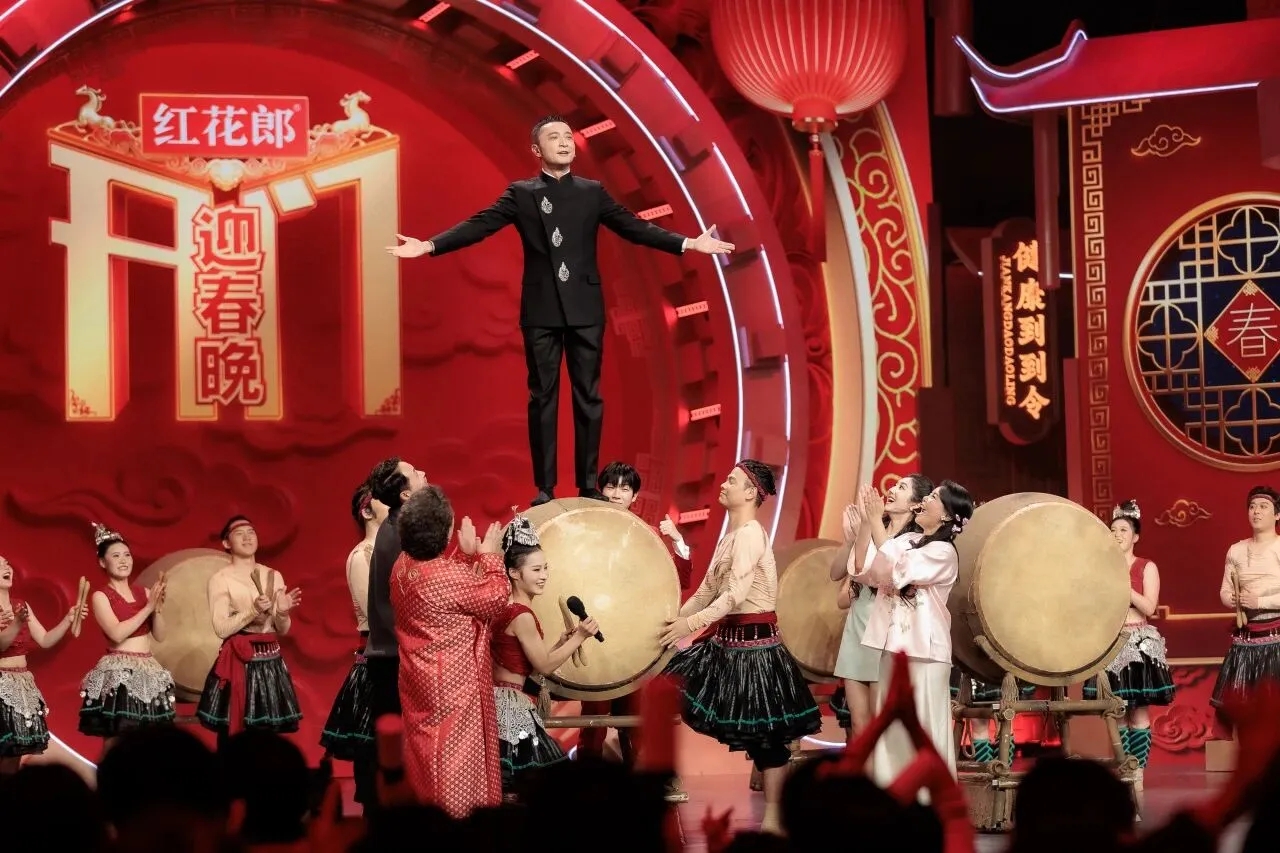
烟火气+专业度!红花郎携手春晚十七载融入国民记忆
Jin Rong Jie· 2026-02-23 08:39
Core Viewpoint - Honghualang has established a long-term partnership with the Spring Festival Gala, becoming an integral part of Chinese New Year celebrations over the past 17 years, emphasizing its commitment to cultural integration and brand presence during this significant event [1][3][15]. Group 1: Long-term Commitment - Honghualang has been a consistent partner of the Spring Festival Gala since 2009, evolving its role from a program sponsor to a cultural symbol associated with the New Year [3][5]. - The brand's understanding of the Spring Festival Gala's value extends beyond mere advertising; it serves as a platform for emotional connection among global Chinese communities [5][15]. Group 2: Cultural Integration - In 2026, Honghualang will integrate its brand into various aspects of the Spring Festival Gala, including becoming the first brand to feature a logo on the gala stage, enhancing its visibility without intrusive advertising [6][10]. - The brand aims to resonate with audiences by creating a warm and relatable atmosphere, focusing on genuine family gatherings rather than traditional marketing tactics [7][9]. Group 3: Innovative Content Strategy - The brand's content strategy includes the release of relatable micro-films that depict ordinary people's New Year experiences, effectively connecting the brand with cultural narratives [9][12]. - Honghualang's collaboration with various programs, including language and cultural shows, allows for a seamless integration of the brand into the cultural fabric of the gala [12][14]. Group 4: Engagement and Interaction - The brand has initiated online and offline campaigns to engage audiences, including a Douyin challenge that encourages users to share their New Year traditions, creating a collective cultural experience [14]. - By lighting up global landmarks and collecting blessings from netizens, Honghualang fosters a sense of community and connection among overseas Chinese [14][17]. Group 5: Brand Evolution - Over 17 years, Honghualang has transformed from a mere advertising presence to a symbol of New Year celebrations, becoming synonymous with family gatherings and cultural festivities [15][17]. - The brand's consistent presence and innovative strategies have positioned it as a leading choice for various celebratory occasions, evidenced by its top sales in the banquet liquor category for three consecutive years [17].