
网约车

Search documents
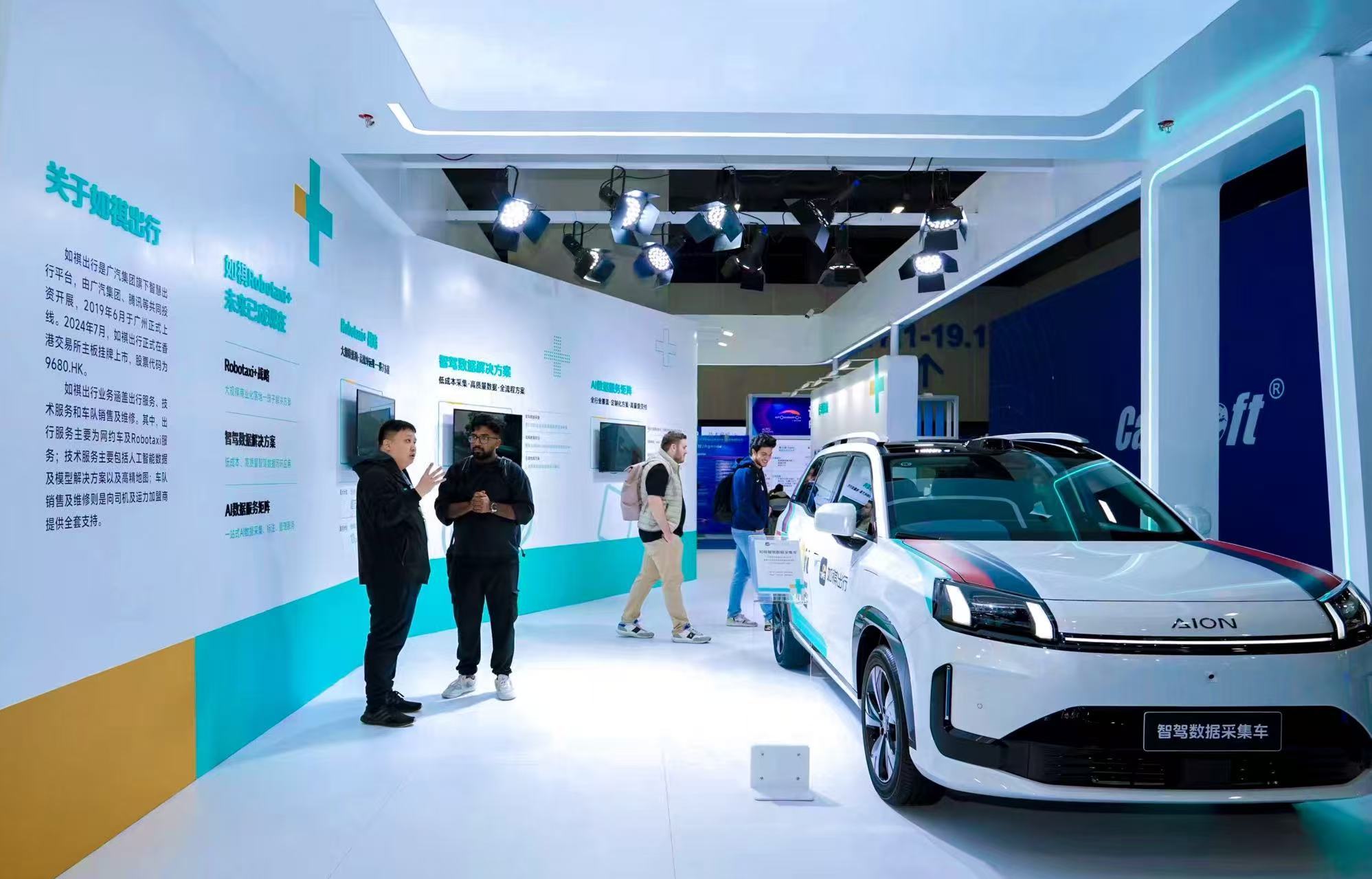
广州车展直击——如祺出行:“高效运营+高质数据”加速自动驾驶技术量产应用
3 6 Ke· 2025-11-21 10:58
Core Insights - The article highlights the evolving collaboration models between automotive companies and technology firms, particularly in the context of the Robotaxi market, which is approaching a critical point for large-scale commercialization [2][4][5] - GAC Group's mobility platform, "如祺出行," is positioned as a leader in the Robotaxi sector, showcasing its "Robotaxi+" strategy aimed at accelerating the commercialization of Robotaxi services through partnerships and data solutions [2][3][5] Group 1: Robotaxi Market Overview - The global Robotaxi market is projected to exceed $280 billion by 2030, with China expected to capture nearly 40% of this market share [4] - Despite the promising outlook, challenges such as high costs, regulatory delays, and complex operational scenarios hinder the large-scale deployment of Robotaxi services [4][5] Group 2: 如祺出行's Strategy - 如祺出行 aims to be a key player in the AI and autonomous driving ecosystem, leveraging its early investments in autonomous driving commercialization [3][6] - The company plans to expand its Robotaxi operations to 100 core cities and build a fleet of over 10,000 Robotaxis within the next five years [5] Group 3: Data Solutions and Infrastructure - 如祺出行's "Robotaxi+" strategy includes a focus on post-commercialization maintenance services, with plans to establish over 1,000 infrastructure stations to support the operation of 100,000 Robotaxis annually [5][6] - The company is developing a data service matrix that extends beyond Robotaxi operations, targeting various industries with AI data solutions [5][6] Group 4: Data Collection Innovations - The introduction of the "智驾数据采集车" (Intelligent Driving Data Collection Vehicle) aims to reduce data acquisition costs while generating valuable real-world driving data [7][8] - 如祺出行 has automated its data labeling process, significantly increasing efficiency and reducing reliance on human labor, with a team of over 1,500 dedicated to data annotation [8] Group 5: Market Potential for AI Data Services - The AI data service market in China is projected to grow from 5.8 billion yuan in 2024 to 17 billion yuan by 2028, with a compound annual growth rate of 30.84% [8]

滴滴旗下99平台电车服务已覆盖巴西5大城市 两轮出行摩托车订单量超20亿单
Mei Ri Jing Ji Xin Wen· 2025-11-21 10:45
Core Insights - Didi's Brazilian ride-hailing platform 99 has launched its electric vehicle service "99electric-Pro" in five major cities, marking a significant step in the electric mobility sector in Brazil [1] - The platform currently has over 30,000 registered electric and hybrid vehicles and has served more than 27 million passengers [1] - In addition to the electric vehicle service, 99 has partnered with local company Riba Brasil to deploy 300 electric motorcycles in Belém [1] Summary by Category Electric Vehicle Service - "99electric-Pro" is the first ride-hailing service in Brazil to offer both electric and hybrid vehicles [1] - The service is now available in São Paulo, Brasília, Porto Alegre, Goiânia, and Curitiba [1] Platform Growth and Performance - Since the launch of the motorcycle service "99Moto" in 2022, the platform has processed over 2 billion orders, covering more than 3,300 towns in Brazil by October 2025 [1] - The number of motorcycle drivers on the platform has increased by 30% in the past year, with delivery orders completed by motorcycles growing by 60% and ride orders increasing by 40% [1]

氪星晚报|阿斯塔纳航空签署谅解备忘录;雷军特别助理徐洁云,再次兼任公关部总经理;月之暗面计划于明年下半年进行首次公开募股
Sou Hu Cai Jing· 2025-11-21 10:41
Major Companies - Huaxia Happiness's board member Wang Wei questioned the compliance of the company's announcement regarding pre-restructuring, to which board member Feng Nianyi responded that the court ultimately decides on the acceptance of the pre-restructuring application, and the company has no authority to make such decisions [1] - Xiaomi Group's public relations department has undergone a leadership change, with Wang Hua transitioning to a new role at Xiaomi's Wuhan headquarters, and Xu Jieyun taking over as the new head of the public relations department [1] New Products - Huawei launched Flex:ai AI container software, which utilizes computing power segmentation technology to divide a single GPU/NPU power card into multiple virtual computing units, allowing for multiple AI workloads to be supported simultaneously [4] - Xiaomi announced the "Xiaomi HAD Enhanced Version" at the Guangzhou Auto Show, which incorporates a new training method for AI that enhances driving capabilities, with updates to be rolled out post-event [4] Investment and Financing - The company "Moonlight Dark Side" is expected to complete a new round of financing by the end of 2025, potentially reaching a valuation of approximately $4 billion, with plans for an IPO in the second half of the following year [5] Other Noteworthy News - The Ministry of Finance announced that electronic savings bonds will be included in personal pension products, with quarterly adjustments to the allocation ratio based on the investment amounts [8] - The National Pipeline Group reported that the West Oil Pipeline has transported over 200 million tons of crude oil, enhancing national energy security [8]

新华视点丨网约车“一口价”:“司乘两难”如何解?
Xin Hua She· 2025-11-21 09:25
新华社"新华视点"记者黄兴、王辰阳 近期,多地针对网约车低价竞争乱象,发布暂停"一口价""特惠单"、严禁强制司机接"一口价"订单 等措施,引发关注。 "一口价"模式旨在提供透明价格、提升消费体验,缘何引发纠纷?是否应取消这一模式?又应如何 构建平台、司机、乘客三方共赢的生态?"新华视点"记者就此展开调查。 "一口价"订单引发纠纷 新华社北京11月21日电 题:网约车"一口价":"司乘两难"如何解? 所谓"一口价"模式,是指乘客输入起点和终点后,系统依据行程信息给出固定结算价格。与实时计 价不同,在"一口价"计价中,乘客看到的预估车费即为最终实付价格。 业内人士认为,"一口价"模式本身具有独特优势,解决了部分出租车、网约车订单存在的绕路、价 格不透明等痛点。乘客可享受较低的出行成本,且不用担心"被宰";对平台来说,"一口价"订单也可提 升调度效率,降低管理成本。 重庆网约车司机黄师傅说:"虽然'一口价'订单价格比常规订单低,但它数量多,多跑的话可以得 到更多派单机会,或更容易接到优质订单。" 但与此同时,部分"一口价"或特惠订单因司机拒载、乘客体验欠佳等问题引发纠纷。 重庆市民杨女士通过百度地图预约网约车,选择 ...
优步将与Starship合作在欧洲推人行道送货机器人服务!机器人ETF(562500) “V”形反弹收复失地,伟创电气领涨超8%
Mei Ri Jing Ji Xin Wen· 2025-11-21 05:51
Group 1 - The Robot ETF (562500) is showing a strong rebound after a "V" shaped bottom formation, recovering most of the early losses, indicating strong resilience [1] - Despite a general pullback in constituent stocks, there are significant structural opportunities, with 25 constituent stocks, including Weichuang Electric, rising over 8% [1] - The ETF has seen an active trading volume of 1.273 billion yuan, with continuous net inflows of funds, solidifying its investment foundation [1] Group 2 - Everbright Securities predicts a fluctuating industry trend in 2025, with rapid style switching and a year-long focus on robot-themed investments [2] - The old-for-new policy provides effective support for total volume, but there is an imbalance in the funding structure [2] - The penetration rate of new energy vehicles is slowing, while autonomous driving policies and self-research technologies are progressing steadily, though interest has somewhat declined [2] - The robot theme is currently in a phase driven by information and expectation differences [2]


滴滴与司机双向奔赴:司机提意见还拿了块纯金奖牌
Xin Jing Bao· 2025-11-21 01:16
Core Insights - Didi has launched a Driver Festival, recognizing drivers who provided feedback to optimize the platform, awarding each with a gold medal made of 6 grams of gold [1] - A total of over 725,000 suggestions were submitted by drivers, with 482 categories receiving responses and 205 categories already resolved [1] - New features such as a clearer billing interface and optimizations for ratings and order grabbing have been implemented based on driver feedback, showcasing a commitment to improving the user experience for both drivers and passengers [1]
曹操出行(02643)与易易互联订立营销服务框架协议
智通财经网· 2025-11-20 22:37
Core Viewpoint - The company, Cao Cao Travel, has entered into a three-year marketing service framework agreement with Yiyi Interconnect, aimed at promoting battery swapping services in China, which is expected to enhance operational synergies and user engagement [1] Group 1: Agreement Details - The marketing service framework agreement will commence on January 1, 2026, and will last until December 31, 2028 [1] - The agreement involves providing marketing services to Yiyi Interconnect and/or its contacts regarding battery swapping services [1] Group 2: Expected Benefits - The collaboration is anticipated to leverage the company's driver base and ecosystem resources to support the promotion and user adoption of battery swapping services in operational cities [1] - It is expected to improve energy replenishment efficiency, thereby enhancing the value proposition for drivers and increasing user participation in the company's travel services [1] - The agreement reflects standard commercial terms and pricing arrangements based on relevant costs and market practices [1]
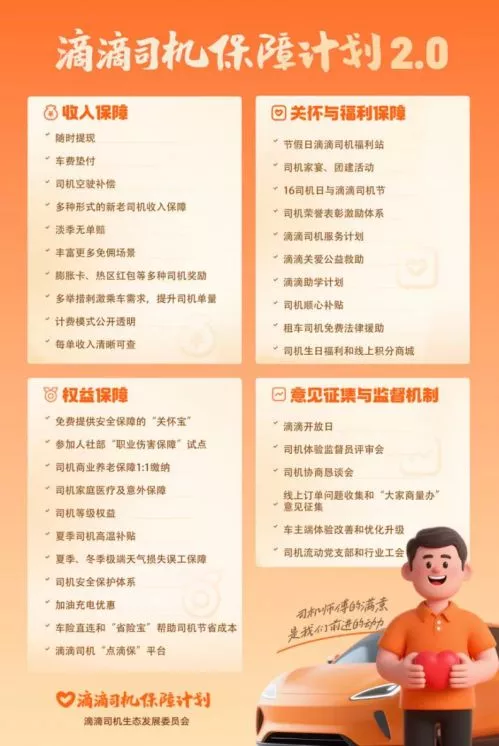
第七届滴滴司机节分会场在北京举办 六大改善举措与司机保障计划2.0同步升级
Cai Jing Wang· 2025-11-20 12:13
Core Points - The seventh "Didi Driver Festival" was held in Beijing on November 18, celebrating the contributions of over 100 drivers and addressing their concerns regarding income rewards, cheating prevention, experience improvement, and welfare protection [1][2] - Didi has launched a "Ten-Year Driver Incentive Program" to honor 100 drivers who have been with the platform for over ten years, providing each with a cash reward of 18,888 yuan and a custom trophy [3] - Didi has implemented six major improvement measures for 2025, including "off-season no-order compensation" and "penalty compensation" to enhance driver experience and security [3][5] Event Highlights - The festival included practical gifts for drivers, interactive games, and awards for outstanding drivers, fostering a celebratory atmosphere [2] - Didi organized events in 16 cities, awarding honors to 116 drivers and illuminating landmark buildings in ten cities to celebrate the occasion [2] - The event featured a "Driver Festival Welfare Square" on the Didi driver app, offering various prizes and cash rewards to drivers [4] Social Responsibility - Didi's "Didi Care Public Welfare Assistance Program" has supported over 2,500 driver families facing major illnesses or accidents since its establishment in 2018 [4] - The company aims to be a more responsible and trustworthy platform, continuously enhancing its welfare programs for drivers [4] Driver Rights and Benefits - Didi is upgrading its "Didi Driver Protection Plan" 2.0 in 2025, focusing on income security, welfare protection, and a feedback mechanism for drivers [5][7] - The company is committed to improving drivers' income levels and welfare systems, ensuring a better driving experience [7]
滴滴答疑“抽成”:是动态机制,去年平均14%
2 1 Shi Ji Jing Ji Bao Dao· 2025-11-20 00:15
Core Insights - Didi's commission mechanism is dynamic rather than fixed, adjusting based on the mismatch between passenger demand and driver service capacity [1] - A significant portion of the commission is returned to drivers or used to subsidize passengers [1] - The average commission rate for Didi in 2024 is projected to be 14% [1]
滴滴答疑“抽成”:是动态机制 去年平均14%
2 1 Shi Ji Jing Ji Bao Dao· 2025-11-20 00:10
Core Insights - Didi's commission mechanism is dynamic rather than fixed, adjusting based on the mismatch between passenger demand and driver service capacity [1] - A significant portion of the commission is returned to drivers or used to subsidize passengers, enhancing the overall experience for both parties [1] - The average commission rate for Didi in 2024 is projected to be 14% [1]