
美妆

Search documents
股价年内累涨150%背后:解构上美股份的价值突围和成长叙事
Zhi Tong Cai Jing· 2025-12-24 08:52
Core Viewpoint - The market for new consumption in Hong Kong has shifted from a focus on short-term GMV growth to evaluating long-term operational capabilities, brand resilience, and research barriers of companies, with Up Beauty Co., Ltd. (02145) exemplifying this trend through a significant stock price increase of 150% year-to-date, reaching a new high of 104 HKD [1] Group 1: Multi-Brand Strategy - Up Beauty has abandoned the old model of betting on a single blockbuster product/brand, adopting a multi-brand matrix to meet diverse consumer needs, transitioning from "traffic support" to "user cultivation" [2] - The core brand, Han Shu, has maintained rapid growth, leading the mass skincare market and achieving high sales across multiple platforms, including being the top beauty brand on Douyin during the 2025 Double Eleven shopping festival [2][3] - The brand new page has emerged as a significant growth driver, with a total sales increase of 145% year-on-year during the 2025 Double Eleven, showcasing strong performance across various channels [3] Group 2: Channel Synergy and Category Extension - The crowded skincare market has made "category extension" a key path for domestic beauty brands to unlock growth potential, with domestic brands having an advantage in understanding local consumer needs [5] - Up Beauty has successfully entered new categories such as men's skincare and personal care, leveraging the brand value of Han Shu to educate the market and convert profits [6] - The company's full-channel strategy has enhanced sales performance, with significant growth in GMV across platforms like Douyin, Tmall, and JD during the 2025 Double Eleven [7] Group 3: Research and Development - R&D investment has shifted from a cost item to a value item, with Up Beauty's R&D spending exceeding 1.03 billion CNY in the first half of 2025, reflecting a 31.7% year-on-year increase [8] - The company has established a robust R&D system, including nearly 200 patents and participation in setting national standards, enhancing its market influence [9] - Core ingredients developed by Up Beauty, such as cyclic hexapeptide-9 and X-peptide, have become competitive advantages, allowing for higher profit margins and differentiation in a crowded market [9] Group 4: Long-term Growth Narrative - Up Beauty's strategic focus on a multi-brand matrix, full-channel strategy, and long-term R&D investment positions it well for sustainable growth in the evolving consumption landscape [10] - The company's transformation from a "traffic-driven" to a "value-driven" entity is attracting long-term capital interest, with significant potential for continued growth and value creation in the Hong Kong new consumption wave [10]
股价年内累涨150%背后:解构上美股份(02145)的价值突围和成长叙事
智通财经网· 2025-12-24 08:48
Core Insights - The market for new consumption in Hong Kong has shifted from a focus on short-term GMV growth to evaluating long-term operational capabilities, brand resilience, and research barriers [1] - Up Beauty Co., Ltd. (上美股份) has successfully capitalized on this trend, achieving a stock price increase of 150% year-to-date, reaching a new high of 104 HKD [1] Multi-Brand Matrix and Growth System - The early benefits of the new consumption sector were driven by the rise of traffic platforms, but the era of "single brand dominance" is ending due to increasing consumer segmentation [2] - Up Beauty has abandoned the old model of betting on a single blockbuster product, instead adopting a multi-brand matrix to meet diverse consumer needs [2] - The core brand, Han Shu (韩束), has maintained rapid growth, leading the mass skincare market and achieving significant sales across multiple platforms during the 2025 Double Eleven shopping festival [2] Performance of New Brands - The brand newpage has emerged as a key growth driver, with a total sales increase of 145% year-on-year during the Double Eleven period, establishing itself as a leader in the children's skincare market [3] - Other emerging brands like An Min You and Ji Fang have also seen substantial growth, with An Min You achieving a 208% increase in total sales across channels [3] Brand Development Strategy - Up Beauty has transitioned from a "single brand-driven" model to a multi-brand strategy, allowing it to tap into both mass and high-end markets [4] Channel Synergy and Category Extension - Category extension is crucial for domestic beauty brands to unlock growth potential, especially as the washing and care industry enters a golden period of domestic substitution [5] - Up Beauty has successfully entered new categories such as men's skincare and personal care, leveraging its established brand value [6] Sales and Channel Strategy - Han Shu has achieved significant sales across various platforms, becoming a core driver of online growth [7] - The company's strategy of "full-channel reach + multi-category expansion" aims to enhance profitability and revenue scale, aligning with market expectations for refined operations [7] Research and Development - R&D investments have shifted from a cost to a value item, with Up Beauty investing over 1.03 billion CNY in R&D, a 31.7% increase year-on-year [8] - The company has developed nearly 200 patents and established a strong research foundation with the appointment of Dr. Karl Lintner as chief scientific advisor [9] Long-Term Strategy - Up Beauty's R&D efforts are focused on creating a sustainable competitive advantage through innovative ingredients and formulations, which will enhance its market position [9] - The company's strategic approach demonstrates a commitment to long-term growth, with a clear path for commercializing research outcomes [10]
丸美生物IPO:砸44亿营销,孙怀庆妻子隐退儿子上位
Xin Lang Cai Jing· 2025-12-24 07:57
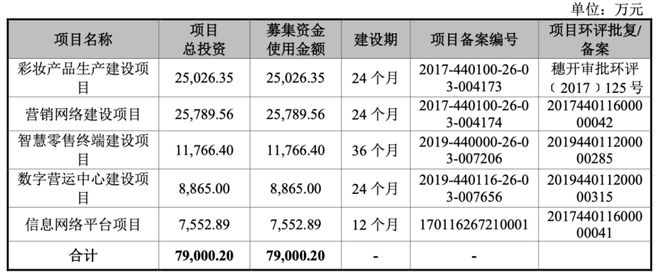
Core Viewpoint - Marubi Biological, known as the "first stock of eye cream" in A-shares, is preparing for a dual listing on the Hong Kong Stock Exchange while undergoing a power transition within the controlling family [2][3]. Group 1: Company Background and Control - Marubi Biological was founded by Sun Huaqing in 2002, focusing on eye care products and has maintained its position as the leading domestic eye care brand from 2021 to 2024 [1][19]. - The controlling shareholders, Sun Huaqing and Wang Xiaopu, hold a combined 80.8% of the company [3][10]. - The company underwent a significant dividend distribution before its IPO, benefiting the controlling family [4][30]. Group 2: IPO and Financial Adjustments - Marubi Biological submitted its IPO application to the Hong Kong Stock Exchange, aiming for an "A+H" dual listing [2]. - The company has faced challenges with its fundraising projects since its A-share listing, with all initial investment projects experiencing delays [5][7]. - Specific projects, such as the cosmetic smart manufacturing factory, have seen multiple delays and budget increases, indicating potential issues in project management [8][9]. Group 3: Financial Performance - Marubi Biological's revenue from 2022 to 2024 showed a compound annual growth rate (CAGR) of 31%, with net profits growing at a CAGR of 43% during the same period [22]. - The company reported a revenue of 24.5 billion yuan in the first nine months of 2025, a 25.5% year-on-year increase, but net profit growth slowed to only 2.86% [23]. - The gross profit margin has been steadily increasing, reaching 74.8% in 2025 [24]. Group 4: Marketing and Sales Strategy - The company has heavily invested in marketing, with total marketing expenses amounting to 4.464 billion yuan from 2022 to 2024, leading to a rising sales expense ratio [25]. - Online sales channels accounted for 87.6% of revenue in the first nine months of 2025, while offline channels have been declining [27]. Group 5: Regulatory Issues and Governance - Marubi Biological received a warning letter from the Guangdong Regulatory Bureau for financial accounting irregularities and improper management of raised funds [15][16]. - The company has committed to rectifying these issues and improving governance practices following the regulatory scrutiny [18].


Hugo Boss获融资;爱马仕收购COLOMBO少数股权;A.P.C.任命CEO
Sou Hu Cai Jing· 2025-12-24 03:40
Group 1: Hugo Boss Financing - Hugo Boss has successfully signed a €600 million revolving credit agreement to support its upgraded growth strategy "Claim 5 Touchdown" [3] - The syndicated loan was significantly oversubscribed in the market, with interest rate terms linked to ESG sustainability indicators, and has a five-year term with an expansion option [3] - This move replaces Hugo Boss's existing debt, highlighting the capital market's confidence in its long-term development [3] Group 2: Deli Foods Share Transfer - Shandong Deli Foods Co., Ltd. plans to transfer 11% of its wholly-owned subsidiary, Shandong Binteli Foods Co., Ltd., to Feixiong Lingxian Construction Development Co., Ltd. for a total price of RMB 25.3 million [7] - After the transaction, Binteli will change from a wholly-owned subsidiary to a controlled subsidiary, with Deli holding 89% [7] - Binteli specializes in the refined processing and food development of imported beef and has established long-term partnerships with several high-quality clients [7] Group 3: Cuisine Solutions Sale Consideration - Cuisine Solutions, a food supplier for Starbucks, is reportedly considering a sale, having engaged Morgan Stanley and Rothschild & Co. to explore this option [10] - The potential sale could value the private family-owned company at over $2 billion (approximately RMB 14.08 billion) [10] - Bain Capital invested $250 million (approximately RMB 1.76 billion) in 2022 to accelerate the company's development and global expansion [10] Group 4: Burberry and EssilorLuxottica Partnership - EssilorLuxottica and Burberry have successfully renewed their eyewear product development, production, and global distribution licensing agreement for another ten years [13] - This renewal extends their partnership, which began in 2006, until December 31, 2035 [13] - The collaboration aims to continue exploring market opportunities based on shared visions of creativity, craftsmanship, and innovation [13] Group 5: Meituan's Expansion in Brazil - Meituan's international business brand Keeta has officially launched operations in Brazil, starting in São Paulo [16] - Prior to the launch, Keeta conducted a month-long trial operation in Santos and São Vicente to test its technology systems and delivery efficiency [16] - Keeta has registered 27,000 restaurants and 98,000 delivery personnel, forming a local team of approximately 1,200 to support the platform's launch [16] Group 6: Kering's Creative Residency Program - Kering Group has launched the "Kering CRAFT Creative Residency Program" to discover potential future "global-local" Chinese brands [18] - The program spans a year and includes an eight-week mandatory residency module in Europe, along with domestic training activities in collaboration with the Shanghai Fashion Design Association [19] - This initiative aims to foster dialogue on creativity, heritage, and future business models in the luxury industry, supporting the growth of a new generation of creative talent in China [19] Group 7: Levi Strauss Board Appointment - Levi Strauss & Co. has appointed Jeffrey J. Jones II to its board of directors, effective January 21, 2026 [22] - Jones has been the President and CEO of H&R Block since 2017 and will retire from that position by the end of 2025 [22] - The appointment is likely aimed at leveraging his experience in North American retail, digital direct sales, and membership systems [22] Group 8: Coty CEO Transition - Sue Nabi will step down as CEO of Coty, with Markus Strobel temporarily taking over the role and also being appointed as Executive Chairman of the Board [24] - Strobel has extensive experience in the beauty and personal care sectors, having worked at Procter & Gamble for 33 years [24] - Nabi's departure comes at a challenging time for Coty, particularly with the expiration of Gucci's fragrance and beauty licenses [24] Group 9: A.P.C. CEO Appointment - A.P.C. has appointed Stephanie Phair as the new CEO, approved by its major shareholder L Catterton [27] - Phair was previously a senior advisor at L Catterton and has held leadership roles in various fashion companies [27] - Her appointment is expected to drive A.P.C.'s rapid transformation [27]



榜单公布|2025 EDGE AWARDS年度上市公司价值榜正式揭晓
Sou Hu Cai Jing· 2025-12-24 02:38
Group 1 - The core viewpoint emphasizes that listed companies in China are not only the main force behind data growth but also serve as a stabilizing factor in the industry ecosystem, focusing on long-term value and comprehensive governance [2] - In 2025, the capital market aims for steady progress and quality improvement amidst multiple risks, enhancing market resilience and risk resistance, leading to reasonable quantitative growth and effective qualitative enhancement [2] - The market's expectations for listed companies have shifted from short-term performance to long-termism and comprehensive value, including governance structure, stable returns, strategic layout in frontier fields, and deep ESG practices [2] Group 2 - The 2025 T-EDGE Global Dialogue, organized by Titanium Media Group, NextFin.AI, and Barron’s China, highlights the importance of recognizing companies that redefine industry boundaries and emphasizes the core logic of "value investment" [3] - The EDGE AWARDS annual list includes categories such as Most Socially Responsible Company, Best Board Secretary, Most Investment Value Company, and Best Investor Relations Management Company, recognizing outstanding performance in governance, investment value, social responsibility, and investor relations [3][4] Group 3 - Aier Eye Hospital is recognized as a leader in ESG practices, integrating ESG into its core business and governance structure, while actively engaging in public welfare projects to enhance national eye health [5] - Betaini Group focuses on creating a skin health ecosystem and incorporates green development into its strategy, promoting biodiversity and sustainable practices [6] - Kweichow Moutai leads the liquor industry with a brand value of 468.718 billion, actively engaging in ecological protection and social responsibility initiatives [7] - JD Group has created significant employment opportunities and is committed to improving living conditions for its delivery personnel, with plans to invest 22 billion in housing projects [8] - Quantitative Group, listed on the Hong Kong Stock Exchange, leverages AI technology to reshape online consumption and has achieved a compound annual growth rate of 44.59% in revenue from 2022 to 2024 [9] - Seres focuses on new energy vehicles and has established a robust ESG governance framework, with significant growth in revenue and sales projected for 2024 [10] - Shui Jing Fang integrates social responsibility into its corporate strategy, setting clear environmental goals and contributing to community development [11] - China Baoan actively engages in social responsibility through its subsidiaries, contributing to community welfare and healthcare improvements [13] Group 4 - The Best Board Secretary category highlights the importance of effective communication between listed companies and the public, emphasizing the role of board secretaries in enhancing corporate governance [14] - Ren Shunying from Anfu Technology is recognized for her expertise in capital operations and corporate governance, significantly contributing to the company's compliance and investor relations [15] - Xia Ping from Jiahe Intelligent is noted for her effective investor relations management and participation in strategic planning [16] - Li Liangyu from Robotech is acknowledged for his role in maintaining corporate governance and enhancing market recognition [17] - Zhang Wenyu from Tianqi Lithium is recognized for his contributions to market value management and investor relations [18] Group 5 - The Most Investment Value Company category identifies companies with clear business models and significant breakthroughs in technology or policy, indicating strong growth potential [19][20] - Orbbec, a leader in 3D vision technology, has achieved over 70% market share in key sectors and continues to lead industry advancements [20] - BYD maintains its position as a global leader in new energy, with significant growth in overseas markets and a strong investment outlook [21] - Cambrian has entered a critical profitability phase, with substantial revenue growth and a strong market position in AI chips [22] - Hanlan Environment focuses on environmental services and has achieved consistent profit growth, attracting long-term investors [23] - Geely Auto has demonstrated strong financial performance and strategic integration, positioning itself for sustained growth [24] - Kanghong Pharmaceutical emphasizes innovation in drug development and has shown robust revenue growth, indicating long-term investment value [25] - Lens Technology maintains a strong market position with solid cash flow and growth potential in the automotive and consumer electronics sectors [26]




海南自贸港第一批使用海南自产货物加工增值免关税货物出岛
Xin Lang Cai Jing· 2025-12-23 17:03
Core Viewpoint - The article highlights the first shipment of 198 kilograms of virgin coconut oil from Hainan to Guangzhou, marking a significant step in the implementation of Hainan's free trade port policies, which allow for tariff exemptions on certain goods processed with local materials [1] Group 1: Policy Impact - The coconut oil shipment is the first batch of goods utilizing Hainan's self-produced materials for value-added processing since the island's closure for customs operations [1] - The value of the coconut oil is reported at 32,000 yuan, and it will be used in the production of beauty products [1] - The policy allows for goods originating from Hainan or containing over 30% imported materials to enter the mainland without import tariffs, significantly benefiting local businesses [1] Group 2: Economic Benefits - The tariff exemption policy helps companies save over 12% on raw material costs, providing tangible benefits from the free trade port's operational policies [1] - Recognized Hainan-produced goods can be deducted from the domestic procurement costs used by value-added processing enterprises, facilitating easier achievement of the 30% value-added rate [1] - This encourages closer collaboration between local producers and processing enterprises, promoting the development of Hainan's local industries [1]
突发 | 科蒂换帅,宝洁退休老将“接棒”救火
FBeauty未来迹· 2025-12-23 13:56
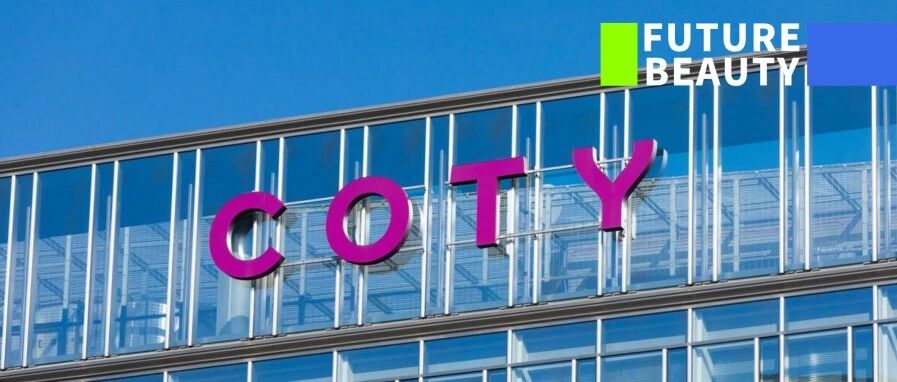
Core Viewpoint - Coty Group is undergoing a significant leadership change with Markus Strobel appointed as Executive Chairman and Interim CEO, marking a strategic shift aimed at restructuring and enhancing the company's market position in high-end fragrances and mass beauty sectors [1][2][3]. Leadership Transition - Markus Strobel, a veteran from Procter & Gamble with over 30 years of experience, will lead Coty during a critical phase of strategic review and business transformation [1][2]. - Strobel's dual role as Executive Chairman and Interim CEO indicates he will have substantial authority to drive change during the transition period, despite the CEO title being temporary [3][4]. Background of New Leadership - Strobel's career at Procter & Gamble includes various roles across multiple sectors, with notable success in revitalizing the SK-II brand, particularly in the Chinese market [4][5]. - His leadership at SK-II resulted in 18 consecutive quarters of growth, with a 30% sales increase in 2018, showcasing his capability in brand rejuvenation and digital transformation [4][5]. Strategic Context - The leadership change reflects Coty's transition from a phase of "repair and stabilization" to one of "strategic restructuring and accelerated growth," indicating a potential overhaul in strategic focus, operational models, and organizational culture [8][10]. - Coty faces structural challenges post-pandemic, with approximately 60% of its net revenue derived from high-end fragrance business, which is increasingly vulnerable due to reliance on a few key licensed brands [12][20]. Financial Performance and Challenges - Coty's financial performance has been under pressure, with a reported net revenue of $1.577 billion for the first quarter of fiscal 2026, down 8% year-over-year, and a market capitalization around $2.9 billion against a debt of $3.8 billion [20]. - The company is also experiencing a decline in its mass beauty segment, with a reported 11% drop in net revenue for the first quarter of fiscal 2026, continuing a trend from the previous fiscal year [20]. Strategic Initiatives - To mitigate risks from core license losses, Coty is expanding its brand portfolio by signing new beauty licensing agreements and launching its own fragrance brand, INFINIMENT COTY PARIS, which aims to innovate in the fragrance sector [16][18]. - The new leadership is expected to introduce a more targeted strategy, potentially focusing on high-end skincare and re-evaluating Coty's approach in the color cosmetics sector [23][25]. Future Outlook - The appointment of Strobel signifies a new strategic cycle for Coty, with expectations for a systematic approach to brand management and operational efficiency, leveraging his extensive experience from Procter & Gamble [21][27]. - The beauty industry will closely monitor how Coty adapts its market strategies, particularly in key markets like China, under Strobel's leadership [27].

天图投资冯卫东:质价比、小确幸、自我完善消费将成主流趋势丨2025T-EDGE
Tai Mei Ti A P P· 2025-12-23 13:22
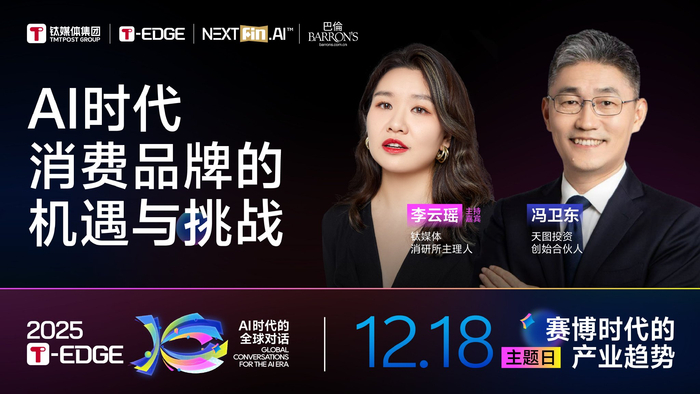
Core Insights - The 2025 T-EDGE Annual Conference and AI Global Dialogue will take place from December 15 to 21, featuring top leaders in innovation and business discussing various topics, including the opportunities and challenges for consumer brands in the AI era [2][3]. Group 1: Market Trends - The current market is described as being in a "consumption mini ice age," driven by structural economic changes, leading consumers to prioritize cost-effectiveness and quality-price ratios [3][5][19]. - There is a notable shift towards "small happiness consumption," where consumers seek emotional value through experiences rather than large purchases [19]. - The trend of self-improvement consumption is emerging, with consumers investing in health and personal development, indicating a shift in spending priorities [19][20]. Group 2: Brand Strategies - Brands are increasingly adopting local capital strategies, selling their China operations while retaining long-term brand licensing to benefit from ongoing brand value appreciation [4][8]. - Effective differentiation and value innovation are crucial for brands to maintain competitive advantages, especially in an AI-driven market [3][14]. - The integration of AI into products and services is seen as a revolutionary opportunity for brands to enhance communication and consumer engagement [3][11][15]. Group 3: Investment Insights - The investment strategy is shifting towards growth and mature stage investments rather than relying on IPOs, reflecting a broader trend in the investment landscape [9][22]. - The focus on consumer sectors is evolving, with an emphasis on sustainable and innovative brands that can adapt to changing consumer preferences and market conditions [19][22]. - The AI revolution is expected to create significant opportunities across various consumer categories, particularly in health and technology sectors [20][21].
美妆进入“深水区”:丸美生物为何押注“科研”与“品牌”双核战略?
Zheng Quan Shi Bao Wang· 2025-12-23 12:45
Group 1 - The core viewpoint of the articles highlights the increasing competition in the domestic beauty industry, with rising online traffic costs putting pressure on customer acquisition for companies like Marubi Biotechnology Co., Ltd. [1] - Marubi is strategically shifting its resources towards research and development (R&D), indicating a long-term development model driven by core technology [1][2] - The company has significantly increased its R&D investment, with a year-on-year growth of 15.34% in R&D expenses for the first three quarters of 2025, positioning it among the top in the industry [1] Group 2 - Marubi has developed over 80 proprietary ingredients, including recombinant double collagen, with more than 30 achieving large-scale production [1] - The company has filed 651 patents globally, with 375 granted, including 265 invention patents, ranking first among Chinese beauty companies in terms of granted invention patents [1][2] - The name change from "Marubi Co., Ltd." to "Marubi Biotechnology" reflects a strategic repositioning towards being a research-driven enterprise based on biotechnology [2] Group 3 - Marubi aims to establish a dual-core long-term strategy centered on "research" and "brand," focusing on enhancing differentiated R&D capabilities and brand leadership [3] - The ongoing plan for a Hong Kong listing is intended to provide crucial capital support for the company's long-term R&D and global expansion efforts [2][3] - The company's strategy emphasizes converting technological advantages into sustainable market advantages, which will be tested through its R&D and branding initiatives [3]
美妆行业周度市场观察-20251223
Ai Rui Zi Xun· 2025-12-23 07:38
Investment Rating - The report does not explicitly provide an investment rating for the beauty industry Core Insights - The beauty industry is witnessing a significant shift towards targeting Generation Z, with annual beauty spending reaching $5 billion, and brands are leveraging campus marketing strategies to engage this demographic [4] - Traditional pharmacy chains are undergoing transformation to include beauty and personal care products, with YST planning to add beauty categories in 70% of its stores, indicating a strategic pivot in response to market challenges [4] - Estee Lauder is utilizing artificial intelligence in fragrance creation, enhancing innovation and efficiency in product development [8] Industry Trends - International universities are becoming battlegrounds for fashion and beauty brands, with brands employing campus ambassadors and social media strategies to penetrate this market [4] - The "ten-thousand-store pharmacy" model is undergoing significant changes, with many beauty brands entering the pharmacy sector to capitalize on the growing demand for beauty products [4] Top Brand News - L'Oreal and Estee Lauder have signed global ambassadors to enhance brand influence, indicating a competitive landscape for talent acquisition [7] - Estee Lauder has launched a global innovation center for fragrances, integrating AI to monitor trends and optimize formulations [8] - Huaxi Biological has faced a decline in revenue and market value due to increased competition in the hyaluronic acid market, prompting a need for diversification and new growth avenues [8]