
脑机接口

Search documents
今天,沸腾了!
中国基金报· 2026-01-12 08:10
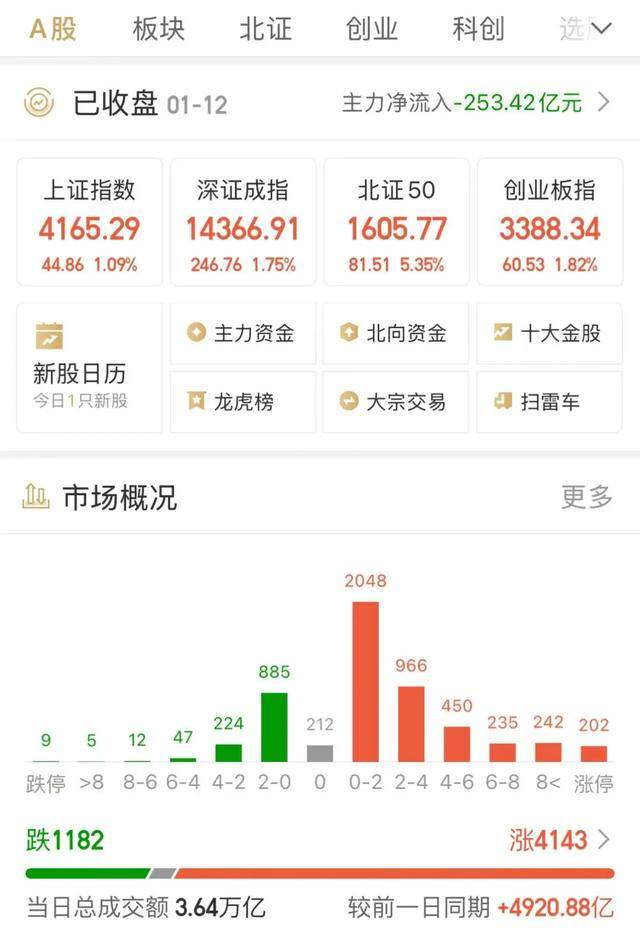
Market Overview - The A-share market experienced a significant rally, with all three major indices rising over 1%. The Shanghai Composite Index increased by 1.09%, the Shenzhen Component Index by 1.75%, and the ChiNext Index by 1.82% [1] - Over 4,000 stocks rose, and the total trading volume in the Shanghai and Shenzhen markets reached 3.6 trillion yuan, marking the second consecutive day of exceeding 3 trillion yuan in trading volume, an increase of 478.7 billion yuan from the previous trading day, setting a new historical record for trading volume [1] AI and Marketing Sector - The AI application and marketing sectors saw a broad surge, with stocks like BlueFocus Communication Group and Hand Information Technology hitting the daily limit. Notably, companies such as Yidian Tianxia, Chinese Online, and Tianlong Group formed a new "Yizhongtian" combination [2] - This sector's growth is linked to the recent popularity of the Generative Engine Optimization (GEO) concept, which enhances the visibility of content in AI search results [2] Satellite Industry - The commercial aerospace sector continued its strong performance, with stocks like China Satellite and China Satcom hitting the daily limit and reaching new highs. On January 10, the International Telecommunication Union (ITU) reported that China submitted applications for an additional 203,000 satellites, covering 14 satellite constellations [3] - All satellite ETFs experienced a daily limit increase, reflecting strong investor interest in the satellite industry [5] Brain-Computer Interface Sector - The brain-computer interface (BCI) sector showed active trading, with companies like Daoshi Technology and Yanshan Technology hitting the daily limit. A recent article highlighted the advancements in non-invasive brain-computer interfaces, emphasizing the importance of technology chain integration and talent chain completion for promoting BCI technology commercialization [4][6] - The aerospace sector is developing a brain-computer interaction system for the fifth-generation space station, achieving significant applications in human spaceflight missions [6] - Strong Brain Technology has reportedly submitted a confidential IPO application in Hong Kong, indicating ongoing interest and investment in the BCI field [6]


刷新历史纪录!A股全市成交额3.64万亿元,后市怎么看?
Sou Hu Cai Jing· 2026-01-12 08:01
Market Performance - The Shanghai Composite Index rose over 1%, marking a "17 consecutive days of gains," while the Shenzhen Component Index increased by 1.75% and the ChiNext Index by 1.82% [1] - The total market turnover reached 3.64 trillion yuan, setting a new historical record, surpassing the previous high of 3.45 trillion yuan on October 8, 2024 [1][4] - More than 4,100 stocks experienced price increases during this trading session [1] Sector Performance - The commercial aerospace and AI application sectors led the market, with brain-computer interface concepts also seeing significant gains [1] - Sectors such as computing hardware, insurance, and oil and gas experienced the largest declines [1] Investor Sentiment - A veteran investor noted the unprecedented heat in the A-share market, highlighting that there has been no significant pullback [4] - In the first hour of trading on January 12, the total turnover approached 1.7 trillion yuan, with half-day turnover exceeding 2.31 trillion yuan, indicating strong capital inflow [4] Economic Outlook - The chief economist at AVIC Securities suggested that the spring market rally may have entered a major upward phase, supported by improvements in the fundamental and policy environment [7] - Recent domestic inflation data showed a year-on-year increase of 0.8% in CPI, the highest since March 2023, indicating a positive trend in economic conditions [7] - The "anti-involution" policy aligns with market concerns and is expected to have a more pronounced effect on industries under profit pressure [7] Investment Strategy - The economist recommended a balanced allocation in sectors with marginal catalysts and advised monitoring industries with improving fundamentals that have lagged in the current rally for potential investment opportunities [7]
脑机海河实验室:完成人类首次“太空脑机接口实验”
第一财经· 2026-01-12 07:37
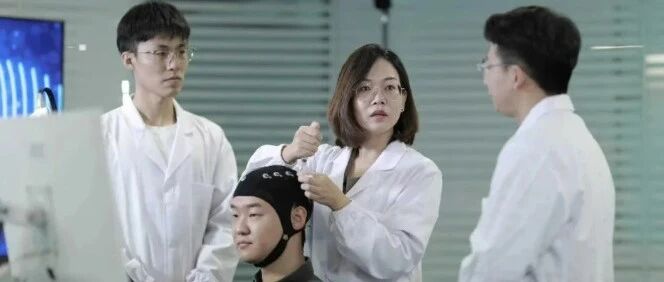
Core Viewpoint - The article emphasizes the importance of bridging the technology chain and completing the talent chain to promote the transformation and application of brain-computer interface (BCI) technology achievements [1] Group 1: Technology Development - The Tianjin University Brain-Computer Interaction and Human-Machine Integration Haihe Laboratory focuses on non-invasive brain-computer interfaces, driving technological innovation and industrial application [1] - The laboratory has established a comprehensive layout that includes high-performance devices, chips, algorithms, platforms, system integration, and key applications [1] Group 2: Clinical Applications - The "Shengong" brain-computer interaction innovative medical device series developed by Tianjin University has been launched, covering clinical applications such as stroke rehabilitation, spinal cord injury assistance, depression treatment, and auditory disorder treatment [1] Group 3: Aerospace Applications - The laboratory has designed and developed a brain-computer interaction system for the fifth generation of space stations, successfully conducting the first "space brain-computer interface experiment" [1] - This technology has been applied in subsequent manned spaceflight missions, enhancing astronauts' functional and emotional state detection, providing critical technical support for China's next-generation medical and human factors assurance system in manned spaceflight [1]
杨德龙:2026年牛市行情愈演愈烈 赚钱效应明显提高
Xin Lang Cai Jing· 2026-01-12 07:31
Group 1 - The A-share market has started 2026 with a strong bullish trend, marked by a historic 17 consecutive days of gains in the Shanghai Composite Index [1][7] - The trading volume has significantly increased, surpassing 30 trillion yuan for two consecutive days, indicating a phase of rising prices and volumes, officially launching the spring offensive [1][7] - The current bull market is seen as a once-in-a-decade investment opportunity, with a substantial shift of household savings towards the capital market due to low bank deposit rates [1][7] Group 2 - The real estate market is still in an adjustment phase, with a fundamental change in expectations for housing price increases, particularly in second and third-tier cities [2][8] - The market has broken through the 4150-point mark, moving away from key integer levels and forming an upward trend, with a slow bull market expected to last 3 to 5 years or longer [2][8] - Investment opportunities are anticipated to expand beyond technology and banking sectors to include consumer staples, new energy leaders, non-ferrous metals, and military industries, enhancing the market's profitability [2][8] Group 3 - The current bull market is tasked with three historical missions: enhancing household wealth, stabilizing the real estate market through stock market wealth effects, and supporting the development of new productive forces, particularly in technology innovation [3][9] - Emerging industries such as commercial aerospace and brain-computer interfaces are showing active performance, with expectations for continued strength in technology sectors like robotics and semiconductors in 2026 [3][9] Group 4 - Investment in technology stocks, especially leading companies, should be viewed within the context of the AI revolution, representing a long-term trend opportunity [4][10] - The Hong Kong stock market has also seen a significant rebound, indicating a similar slow bull market trend as in the A-share market, with expanding investment opportunities [4][11]
汇率升值驱动人民币资产重估,股市连阳背后的底层逻辑
Sou Hu Cai Jing· 2026-01-12 07:26
Group 1 - The A-share market has shown a strong performance, with 16 consecutive trading days of gains, surpassing the 4100-point mark, marking a ten-year high [1] - The current rise in A-shares is attributed to the systematic enhancement of the pricing power of RMB assets against the backdrop of a global liquidity restructuring [1][2] - The article analyzes the market dynamics from three dimensions: cross-border capital flow, recovery of the real economy, and asset valuation reconstruction [1] Group 2 - The change in global liquidity is driven by the anticipated personnel changes at the Federal Reserve, which may lead to a new cycle of global monetary policy [2] - The potential nomination of a new Federal Reserve chairman and the criticism of current monetary policy processes suggest an increased influence of the White House on monetary decisions [2] - If aggressive rate cuts or new quantitative easing measures are implemented, it could create strategic opportunities for RMB assets [2] Group 3 - The reversal of cross-border capital flows is indicated by the RMB entering a positive appreciation cycle, driven by expectations of currency strengthening [3] - The current capital outflow has reached approximately 10 trillion yuan, but there remains about 16 trillion yuan in unconverted funds that could return to the market [3] - The appreciation of the RMB is seen as a natural outcome of China's industrial maturity, reflecting an increase in pricing power in global trade [4] Group 4 - The recovery of cash flow statements and balance sheets in the real economy is underway, aided by the appreciation of the RMB [5] - The easing of capital outflow pressures and improved profitability in the real sector are contributing to a positive shift in cash flow dynamics [5][6] - The central bank is expected to introduce localized quantitative easing policies to support debt resolution processes by 2026 [6] Group 5 - The macroeconomic indicators show signs of mild recovery, with GDP growth reaching 4.8% year-on-year in Q3 2025, supporting the A-share market's valuation [8] - The inventory cycle has shifted from passive destocking to active restocking, indicating improved corporate profit expectations [8] - The overall economic environment is conducive to a solid foundation for A-share valuation, with rising consumer demand and easing cost pressures for industrial enterprises [8] Group 6 - The influx of incremental funds into the A-share market is evident, with insurance capital increasing its direct investment in stocks to 3.6 trillion yuan by Q3 2025 [9] - The appreciation of the RMB is expected to further enhance liquidity in the market, leading to increased capital inflows [9] - The value of Chinese manufacturing assets is being reassessed globally, as the country transitions towards high-end manufacturing and gains recognition in various sectors [10] Group 7 - Investment strategies should focus on sectors that benefit from RMB appreciation, such as import-dependent industries and those with high dollar liabilities [11] - Key areas for investment include advanced manufacturing sectors like brain-machine interfaces and commercial aerospace, which represent the future direction of China's economy [12] - Stable income-generating assets, such as banks and insurance companies, are expected to play a crucial role in the economic recovery process [12] Group 8 - The current market conditions suggest that the A-share market's rise above 4100 points is not a temporary peak but a new starting point for the revaluation of RMB assets [13] - The year 2026 is anticipated to see stronger fiscal policies and coordinated monetary measures that will support the stock market [13] - The consensus on the revaluation of Chinese assets is forming, driven by global supply chain restructuring and energy transitions [13]
收评:沪指高开高走涨1.09%,A股成交额超3.6万亿元,创历史新高
Zheng Quan Shi Bao Wang· 2026-01-12 07:26
Core Viewpoint - The A-share market experienced a strong performance with the Shanghai Composite Index rising by 1.09%, and the total trading volume exceeding 3.64 trillion yuan, marking a historical high [1]. Market Performance - The three major indices opened strong and closed higher, with the Shanghai Composite Index up by 1.09%, the Shenzhen Component Index up by 1.75%, and the ChiNext Index up by 1.82% [1]. - Over 4,100 stocks in the market saw an increase in value [1]. Sector Performance - The commercial aerospace sector showed robust performance, with companies like China Satellite and Aerospace Electronics hitting the daily limit [1]. - Brain-computer interface concept stocks surged, with Nanjing Panda achieving five consecutive daily limits [1]. - Controlled nuclear fusion concept stocks were active, with Falunsheng hitting the daily limit and Haheng Huaton rising over 11% [1]. - Sectors such as digital media, military electronics, software services, and cloud services had significant gains [1]. - Conversely, sectors like insurance, petrochemicals, and coal experienced declines [1].
强脑科技据悉以保密形式提交港股IPO申请,与中金、瑞银合作,有望成“杭州六小龙”首家上市公司
Jin Rong Jie· 2026-01-12 07:15
Core Viewpoint - Qiangnao Technology has submitted a confidential IPO application for the Hong Kong stock market, potentially raising hundreds of millions of dollars, and is expected to be the first company listed among the "Six Little Dragons of Hangzhou" [1] Company Overview - Qiangnao Technology is recognized as the first unicorn in the brain-computer interface sector in China, focusing on breakthroughs in underlying technologies for brain-computer interfaces [1] - The company aims to establish a communication pathway between the brain and external devices to facilitate information exchange, providing solutions for rehabilitation of disabled individuals and addressing brain diseases such as autism [1] - Several products have already been launched by Qiangnao Technology in the market [1] IPO Details - The IPO is being conducted in collaboration with China International Capital Corporation (CICC) and UBS Group [1] - The fundraising target for this IPO is expected to be in the range of several hundred million dollars [1]
市场消息:强脑科技已秘密申请在香港上市
Xin Lang Cai Jing· 2026-01-12 07:15
Core Viewpoint - BrainCo, a non-invasive brain-computer interface technology company based in Hangzhou, has reportedly submitted a confidential IPO application to the Hong Kong Stock Exchange, aiming to raise several hundred million dollars [1] Group 1: Company Overview - BrainCo is a member of the "Hangzhou Six Little Dragons" and recently completed a financing round of 2 billion yuan [1] - The latest financing round was led by IDG Capital and Huaden International, founded by Intel CEO Chen Lifeng, with participation from various institutions including Lens Technology, Huazhu Group, Linying Intelligent Manufacturing, and TAL Education [1] - The funds raised will be used for core technology research and development, engineering breakthroughs, and product mass production [1] Group 2: Technology and Achievements - Established in 2015, BrainCo is the first Chinese team selected for Harvard University's Innovation Lab and holds over 460 authorized patents [1] - The company has developed a smart bionic hand that has received FDA approval in the United States and CE certification in Europe, applicable in rehabilitation, health, and human-computer interaction fields [1] - BrainCo has been recognized as a key enterprise for introduction by the Hong Kong government [1] Group 3: Market Context - Another company within the "Hangzhou Six Little Dragons," Qunke Technology, has submitted two applications for listing on the Hong Kong Stock Exchange and is still in the approval process [1] - The group is gaining attention in the capital market due to breakthroughs in artificial intelligence and robotics [1]
脑机海河实验室:完成人类首次太空脑机接口实验
财联社· 2026-01-12 07:13
Core Viewpoint - The article emphasizes the importance of bridging the technology chain and completing the talent chain to promote the application of brain-computer interface (BCI) technology, highlighting the achievements of Tianjin University's Brain-Computer Interaction and Human-Machine Integration Haihe Laboratory in this field [1] Group 1: Technological Advancements - The Tianjin University team focuses on non-invasive brain-computer interfaces, driving technological innovation and industrial application [1] - A comprehensive layout has been established, covering high-performance devices, chips, algorithms, platforms, system integration, and key applications [1] Group 2: Clinical Applications - The "Shengong" brain-computer interaction medical device series has been developed, addressing clinical applications such as stroke rehabilitation, spinal cord injury assistance, depression treatment, and auditory disorders [1] Group 3: Aerospace Applications - The design and development of the fifth-generation space station's in-orbit brain-computer interaction system have been completed, enabling the first "space brain-computer interface experiment" [1] - Subsequent manned flight missions have achieved significant applications, enhancing astronauts' functional and emotional state detection, providing critical technical support for China's next-generation medical and human factors assurance system in manned spaceflight [1]

杭州“六小龙”加速资本化!强脑科技秘密提交港股IPO申请
Hua Er Jie Jian Wen· 2026-01-12 07:10
Core Insights - Strong Brain Technology, a unicorn in the brain-computer interface sector, has confidentially submitted an IPO application in Hong Kong, potentially raising hundreds of millions of dollars [1] - The company recently completed a financing round of approximately 2 billion RMB, marking the second-largest funding record globally in this sector, excluding Neuralink [2] - The IPO submission indicates a significant acceleration in the capital market for the "Hangzhou Six Little Dragons," a group of notable tech startups [1][4] Financing and Commercialization - Strong Brain Technology has established a leading position in the non-invasive brain-computer interface field, with recent funding led by IDG Capital and Walden International [2] - The company focuses on non-invasive technology, providing solutions that establish signal pathways between the brain and external devices, and has received FDA and CE certifications for its core product, the "super sensor" [2] - The Chinese brain-computer interface industry is expected to maintain a 20% annual growth rate in the coming years, with Strong Brain Technology positioned as a key player in competing with U.S. companies [2] Competitive Landscape - Brain-computer interface technology is becoming a new frontier in tech competition, with Neuralink leading in the invasive chip sector [3] - Recent announcements from Neuralink regarding large-scale production in 2026 have significantly boosted market expectations for the technology's transition from research to everyday life [3] - Strong Brain Technology aims to raise funds through its IPO to better compete with U.S. rivals like Neuralink and expand its global market influence [3] Capitalization Progress of "Hangzhou Six Little Dragons" - The IPO progress of Strong Brain Technology indicates a clearer and accelerated capitalization path for the "Hangzhou Six Little Dragons" [4] - Manycore Tech has also submitted an IPO application, showing rapid progress, with projected revenue growth and profitability [4][5] - Four companies from the "Hangzhou Six Little Dragons" have clarified their IPO directions or are in substantial operational stages, indicating a collective pursuit of market funding [6]