
超市

Search documents
于东来:公司账上资金41亿元,无贷款,“胖东来是怪胎不正常,进门还需铁栏杆”!员工税后平均工资近万元,人员流失率仅0.94%
Mei Ri Jing Ji Xin Wen· 2025-10-15 03:05
Core Viewpoint - The founder of Pang Donglai emphasizes the importance of social responsibility in business, stating that the focus should be on employee happiness rather than blind expansion or personal gain [1][7]. Financial Performance - Pang Donglai's total sales have exceeded 18.4 billion yuan this year, surpassing the total sales of the previous year [4]. - During the recent National Day and Mid-Autumn Festival holiday, the company achieved a total sales of 820 million yuan over eight days, with supermarket sales being the main contributor [6]. - The company aims to control its sales growth, planning to keep sales under 20 billion yuan for the year [7]. Employee Welfare - The average post-tax salary for employees is nearly 10,000 yuan, with a low employee turnover rate of only 0.94% [8]. - The company has recently attracted significant attention for its recruitment efforts, with a recent job posting receiving over 132,000 applications [8]. - Pang Donglai organizes international trips for employees to broaden their horizons, with the company covering travel expenses [9]. Business Strategy - The company currently has no loans and holds 4.1 billion yuan in cash, indicating a strong financial position [1]. - Pang Donglai has a cautious approach to expansion, focusing on maintaining its core values and employee well-being rather than aggressive growth [7].

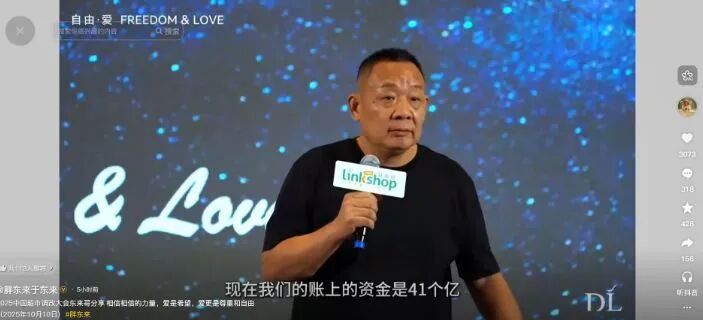
于东来透露胖东来“家底”
Di Yi Cai Jing Zi Xun· 2025-10-15 02:37
10月14日,胖东来创始人于东来在个人账号上分享了其在2025中国超市调改大会上的演讲内容。 于东来表示,企业应承担社会责任,关注员工幸福,而非盲目扩张或追求家族私利,并透露目前公司没 有贷款,账上资金达41亿元。 2025.10.15 本文字数:503,阅读时长大约1分钟 于东来还认为,销售额如果上升得太快,员工就得加班,承担更多的压力,这样不免对企业最初的价值 观产生影响。 微信编辑| 七三 第一财经持续追踪财经热点。若您掌握公司动态、行业趋势、金融事件等有价值的线索,欢迎提供。专 用邮箱:bianjibu@yicai.com (注:我们会对线索进行核实。您的隐私将严格保密。) 他指出,当前胖东来门店存在排队拥挤现象,需用铁栏杆疏导客流,未能实现温馨浪漫的购物环境,但 未来将逐步回归理想状态。 根据胖东来官网数据,2025年集团合计销售额已超过184亿元,10月集团合计销售额突破11亿元。据了 解,2024年胖东来全年销售额为169亿元,胖东来2025年仅用不到10个月时间,销售额便已超过去年。 今年3月,胖东来创始人于东来公开表示,胖东来的净利润是5%,2025年前三个月可能能卖到62亿 元,"今年我们 ...
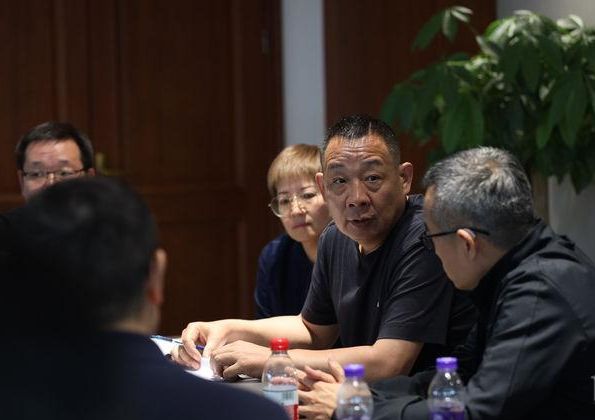
“胖东来”式改造后,永辉公布阶段性运营数据:已调改门店客流暴涨80%
Sou Hu Cai Jing· 2025-10-14 15:04
Core Insights - Yonghui Supermarket has initiated a transformation under the "Fat Donglai" model, showing positive early results in customer traffic and profitability [1][3] - The company aims to enhance its focus on "people" and "products," transitioning from broad horizontal adjustments to refined, in-depth upgrades [1][3] Performance Metrics - Since the launch of the transformation in May 2024, average customer traffic in transformed stores has increased by 80%, with over 60% of these stores entering a stable phase [3] - The profitability of these stores has surpassed the highest levels seen in the past five years [3] - During the recent National Day and Mid-Autumn Festival, overall sales in transformed stores increased by over 100% year-on-year, with customer traffic also rising by over 80% [3] Financial Challenges - Despite initial positive indicators, Yonghui Supermarket continues to face significant financial difficulties, having reported losses for several consecutive years [3] - The company plans to close some long-term loss-making stores by mid-2025 [3] - The CEO expressed a goal to guide the company through its financial challenges over the next 2 to 3 years [3] Mechanism Reform - The transformation includes deep-seated mechanism reforms aimed at ensuring product value, with a focus on transparency and win-win cooperation with suppliers [4] - Yonghui plans to reduce its supplier base from 2,300 to 800 core strategic partners and implement a bare-price direct procurement model to lower costs [4] - Employee welfare is emphasized, with over 31 million yuan distributed in bonuses to employees from January to August 2025 [4] Product Strategy - The management has outlined a core direction focusing on a comprehensive product-centric transformation, aiming to identify 200 core strategic partners and develop 100 billion-yuan-level products within three years [6] - The company is launching two major product lines: "Yonghui Custom" for collaborations with well-known brands and "Quality Yonghui" as its private label, adhering to high standards [6] - Over 20 new products were showcased at the recent event, covering various categories, with plans to introduce 60 private label products this year and expand to 500 within five years [6] Industry Context - The transformation is seen as a critical move for Yonghui Supermarket to navigate challenges posed by membership stores, discount stores, and instant retail in the traditional supermarket sector [6] - The effectiveness of this strategy in converting initial operational improvements into sustained financial profitability will be a focal point for market observers [6]

Third Space获投资;八马茶业通过上市聆讯;复朗集团总裁将辞任
Sou Hu Cai Jing· 2025-10-14 14:41
Investment Dynamics - Yonghui Supermarket has established a new trading company in Beijing with a registered capital of 10 million yuan, focusing on food internet sales, telecommunications, and internet information services, which could create additional revenue streams for the company in the long term [3] - Third Space, a luxury gym in London, secured a £75 million bank loan from OakNorth, following a previous loan of £38.5 million in June 2023, indicating investor confidence in the gym's growth potential amid increasing consumer health demands [5] - Guizhou Southern Dairy announced the suspension of its listing application on the Beijing Stock Exchange due to the need for supplementary audit matters, with projected 2024 revenue of 1.817 billion yuan and net profit of 209 million yuan, ranking 20th among 36 listed dairy companies [7] - Eight Horse Tea has passed the listing hearing at the Hong Kong Stock Exchange, aiming for a main board listing with projected revenues of 1.818 billion yuan, 2.122 billion yuan, and 2.143 billion yuan from 2022 to 2024, showing growth rates of 16.8% and 1.0% for 2023 and 2024 respectively [10][11] - Haidilao has opened a budget conveyor sushi restaurant in Hangzhou, indicating its strategy to diversify into the sushi market, leveraging its supply chain to create a differentiated product offering [13] Brand Dynamics - Luckin Coffee has launched a venue leasing cooperation across 39 cities, focusing on school locations, which is expected to enhance brand coverage in a rapidly growing coffee market [19] - LOEWE and Swiss sports brand On have collaborated to launch a limited edition Cloudsolo sneaker, which is anticipated to generate high-margin revenue for LOEWE while attracting high-net-worth customers for On [16] Personnel Dynamics - Cargill appointed Andrew MacPherson as the new CEO of Teys, coinciding with Cargill's acquisition of Teys, which is expected to enhance operational capabilities and market reach [22][23] - China Resources Beer announced a management reshuffle, appointing Jin Hanquan as executive director and president, which aims to strengthen leadership amid increasing competition in the premium beer segment [26] - The global luxury fashion group, Richemont, announced the resignation of its CEO and CFO, Chen Jiyu, who will leave on October 27, 2025, raising questions about the future leadership and performance of the group [28]



八马茶业通过港交所上市聆讯 | 10月14日早报
Sou Hu Cai Jing· 2025-10-14 02:16
Star Brands - Ye Guofu, the founder of Miniso and non-independent director of Yonghui Supermarket, emphasized the importance of direction in the company's transformation, stating that progress is key and that they will achieve great success [2] - Yonghui Supermarket's CEO Wang Shoucheng reported an average customer traffic increase of 80% in the transformed stores, with 102 stores achieving a net promoter score (NPS) average exceeding 40, and 19 stores surpassing 50 [3] - Yonghui plans to develop 100 billion-yuan-level flagship products over the next three years, collaborating with 200 core strategic partners to create compelling reasons for consumers to choose Yonghui [4] Consumer Platforms - Alibaba's cross-border e-commerce platform Lazada has integrated with Tmall to facilitate easier access for Tmall merchants to Southeast Asian markets, indicating a growing trend in cross-border e-commerce [5] - AliExpress has reported over 100,000 artificial Christmas trees being shipped overseas in preparation for the Double 11 and Black Friday sales, marking a new high in holiday inventory [6] - A report on outdoor sports consumption revealed that 60% of users on the Dewu app spend over 8,000 yuan annually, with a significant portion of users being from Generation Z [7] Investment and Financial Reports - Nanchao Foods reported a September consolidated revenue of 276 million yuan, reflecting a slight year-on-year increase of 0.0016% [12] - Eight Horses Tea has passed the listing hearing at the Hong Kong Stock Exchange, with joint sponsors including Huatai International and Agricultural Bank of China International [13] Macro News - The General Administration of Customs reported that China exported over 50 billion yuan worth of holiday goods, dolls, and animal-shaped toys in the first three quarters, highlighting the global appeal of domestic products [15]
永辉超市跌2.04%,成交额2.64亿元,主力资金净流出1976.34万元
Xin Lang Cai Jing· 2025-10-14 01:56
Core Viewpoint - Yonghui Supermarket's stock has experienced a significant decline of 24.45% year-to-date, with recent trading activity showing mixed results in terms of price movement and trading volume [2] Group 1: Stock Performance - As of October 14, Yonghui Supermarket's stock price was 4.79 yuan per share, down 2.04% during the trading session, with a total market capitalization of 43.469 billion yuan [1] - The stock has seen a slight increase of 0.84% over the last five trading days, but a decline of 7.88% over the last 20 days and a minor decrease of 0.62% over the last 60 days [2] Group 2: Financial Performance - For the first half of 2025, Yonghui Supermarket reported a revenue of 29.948 billion yuan, representing a year-on-year decrease of 20.73%, and a net profit attributable to shareholders of -241 million yuan, a significant decline of 187.38% [2] - The company has not distributed any dividends in the last three years, with a total payout of 7.101 billion yuan since its A-share listing [3] Group 3: Shareholder Information - As of June 30, 2025, Yonghui Supermarket had 359,800 shareholders, a decrease of 6.24% from the previous period, with an average of 25,220 circulating shares per shareholder, an increase of 6.66% [2] - Among the top ten circulating shareholders, Hong Kong Central Clearing Limited holds 104 million shares, an increase of 11.8954 million shares from the previous period, while the Southern CSI 500 ETF is a new entrant with 67.3567 million shares [3]
美团在京试水硬折扣超市
Bei Jing Shang Bao· 2025-10-13 15:39
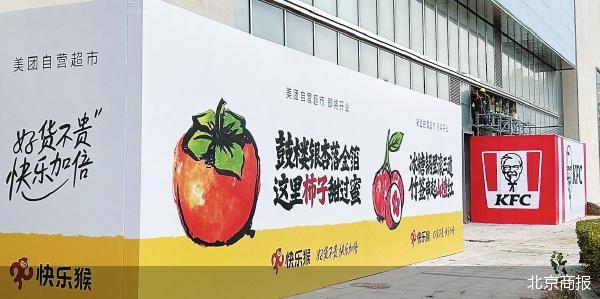
Core Insights - Meituan's self-operated supermarket "Happy Monkey" is set to open its first store in Northern China on October 24, 2023, in the Mentougou Shantou Plaza, covering an area of approximately 1,000 square meters, marking the fifth store opened by Meituan in two months [1][3] - The "hard discount" sector has become a competitive battleground this year, with major players like Hema, JD.com, and traditional supermarkets like Wumart and Yonghui firmly established in the Northern market, posing significant challenges for new entrants like Happy Monkey [1][3] Store Launch Details - The first store in Beijing will feature promotional activities on opening day, including a lottery with prizes such as electric vehicles and camping cars [3] - Happy Monkey's product offerings will focus on self-operated brands, with plans to gradually introduce online ordering and offline delivery services post-opening [3] Market Positioning - Happy Monkey aims to create a consumer memory point around "affordable prices," targeting price-sensitive customers, contrasting with the positioning of Meituan's other supermarket, "Little Elephant," which emphasizes online ordering and rapid delivery [4][8] - The store's location in a densely populated residential area is expected to ensure a sufficient order density, which is crucial for attracting foot traffic [6] Competitive Landscape - The discount supermarket model is increasingly reliant on self-owned brands to enhance price competitiveness and drive store traffic, with established players like Ole' and Hema already having significant self-owned brand market shares [8][9] - The market in Beijing exhibits a clear consumer segmentation, necessitating Happy Monkey's ability to develop localized products that cater to Northern tastes [6][10] Strategic Considerations - Meituan's cautious approach in opening stores outside the Fifth Ring Road in Beijing reflects a focus on cost considerations [5] - The integration of Happy Monkey's operations with Meituan's delivery network could meet modern consumer demands for high cost-performance and immediacy [9][10] Future Outlook - Happy Monkey is still in the early stages of demand cultivation, self-owned brand development, and offline operations, which will be critical for its competitive positioning in the hard discount sector [10][11] - The potential for success hinges on avoiding the pitfall of prioritizing scale over value, which could lead to losing competitive advantages in a crowded market [11]

家家悦:2025年半年度权益分派实施公告
Zheng Quan Ri Bao· 2025-10-13 14:12
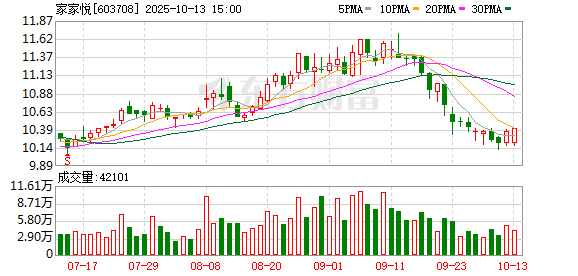
证券日报网讯 10月13日晚间,家家悦发布2025年半年度权益分派实施公告称,公司2025年半年度权益 分派方案为A股每股现金红利0.16元(含税),股权登记日为2025年10月20日,除权(息)日及现金红 利发放日均为2025年10月21日。 (文章来源:证券日报) ...

物美超市杭州调改再落两子 10月16日钱塘滨江两区门店重装开业
Sou Hu Cai Jing· 2025-10-13 12:10
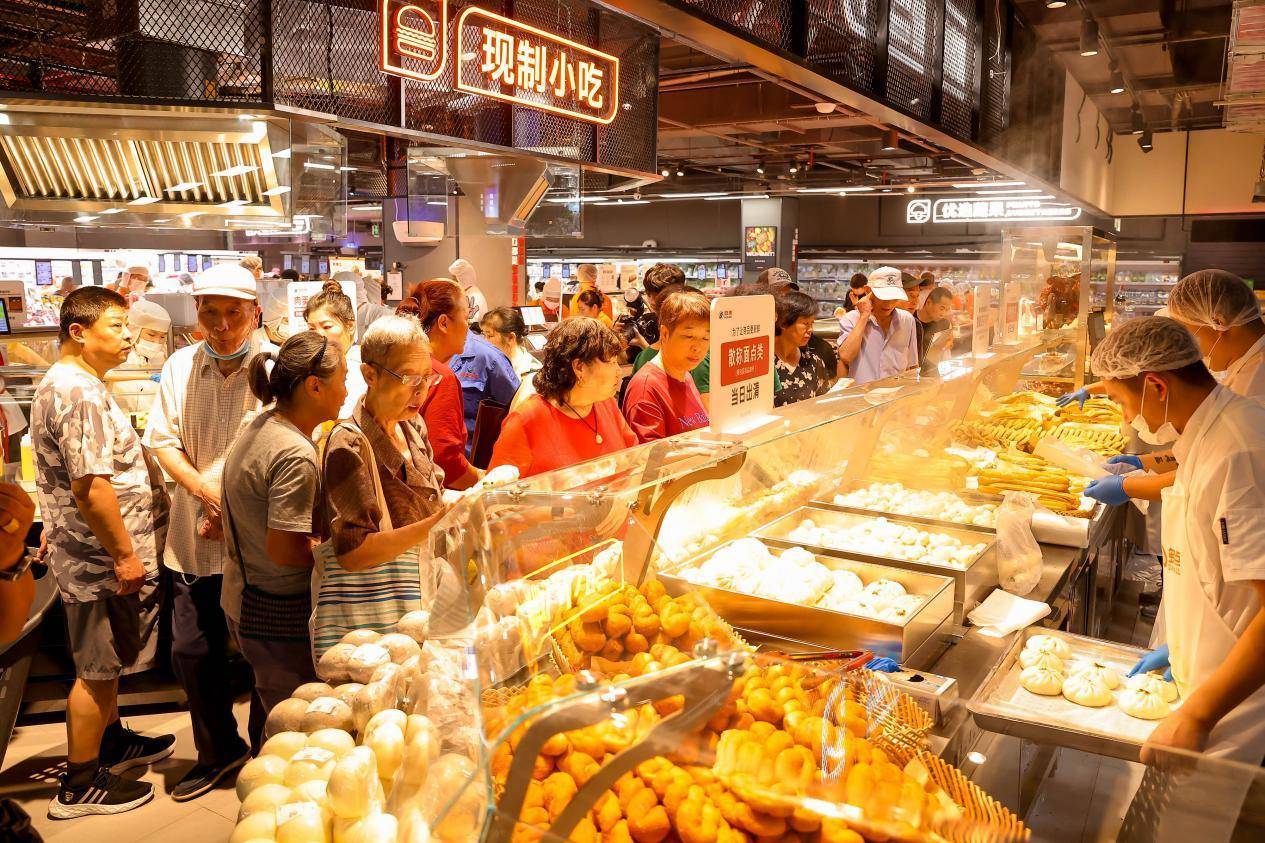
Core Insights - Two "self-adjusted" stores of Wumart in Hangzhou will officially reopen on October 16, enhancing the retail experience for local communities, students, and office workers [1][3] - The market's recognition of Wumart's adjustment model continues to rise, with significant increases in customer traffic reported at previously opened stores [3] Group 1: Store Openings and Market Response - The new stores are located in Qiantang District and Binjiang District, with the Binjiang store being the first of its kind in the area [1] - Wumart has already opened seven adjusted stores in Hangzhou, covering seven districts, with a notable increase in daily customer flow at these locations [3] Group 2: Store Upgrades and Product Offerings - The reopening will feature a 70% refresh of the product lineup, closely aligning with the product structure of the successful "Fat Dong Lai" model [3] - The new offerings will include more Jiangsu and Zhejiang flavors in key categories such as cooked food, baked goods, and fresh produce, catering to local consumer preferences [3] Group 3: Employee Welfare and Service Enhancement - Employee salaries will increase by 30% to 50% compared to pre-adjustment levels, with benefits including 10 days of paid annual leave and profit-sharing opportunities [3] - Wumart aims to enhance service quality through improved employee welfare, thereby optimizing the overall shopping experience for customers [3] Group 4: Strategic Goals - Wumart plans to leverage the reopening of these two stores to further implement its "one city, one policy" strategy, focusing on local consumption characteristics and supply chain advantages [3] - The company is committed to meeting the growing demand for quality consumption in Hangzhou and enhancing the overall commercial service quality in the city [3]
“快乐猴”超市门头沟店开业在即 美团在京试水“硬折扣”
Bei Jing Shang Bao· 2025-10-13 10:52
Core Insights - Meituan's self-operated supermarket "Happy Monkey" will open its first northern store in Beijing on October 24, covering approximately 1,000 square meters, marking the fifth store opened by Meituan in two months [1][2] - The discount supermarket sector has become highly competitive, with major players like Hema, JD, and traditional supermarkets like Wumart and Yonghui firmly established in the northern market [1][2] - Supply chain efficiency is crucial for Meituan to succeed in this competitive landscape, as it aims to differentiate itself from established giants [1][4] Store Launch Details - The first Happy Monkey store in Beijing is located in the Shantou Investment Plaza, with promotional activities planned for the opening day, including a lottery with prizes such as electric vehicles [2] - Another Happy Monkey store is set to open in Sanhe City, Hebei Province, on October 17, indicating Meituan's accelerated expansion in the discount supermarket sector [2] Consumer Appeal - "Affordable prices" are a key selling point for Happy Monkey, with products like pure milk priced at 23.9 yuan per box and freshly baked egg tarts at 5.9 yuan for four [3] - Happy Monkey targets price-sensitive consumers and emphasizes offline shopping experiences, contrasting with the online-focused strategy of similar brands like Xiaoxiang Supermarket [3] Market Strategy - Happy Monkey's cautious entry into Beijing, focusing on areas outside the Fifth Ring Road, reflects a strategic consideration of costs [4] - The store's location near densely populated residential areas and high-traffic venues is expected to drive customer traffic and order density [4] Competitive Landscape - Major competitors have established significant advantages in private label products, with brands like Ole' and Hema NB achieving over 60% private label sales [5] - The Beijing market exhibits a dual demand for quality and price sensitivity, posing challenges for Happy Monkey in localizing its private label offerings [5] Brand Differentiation - The use of private label products not only enhances price competitiveness but also serves as a draw for customers, potentially increasing sales of regular-priced items [6] - Meituan's interest in physical retail is growing, with plans for more stores like Xiaoxiang Supermarket in various locations [6] Industry Trends - The discount supermarket sector has become a focal point for major players, with Hema's community supermarket model expanding rapidly [7] - Meituan's data advantages may allow Happy Monkey to efficiently focus on product categories that align with the discount model, reducing customer decision-making costs [7] Future Considerations - Happy Monkey is still in the early stages of demand cultivation, private label development, and offline operations, which are critical for future competitiveness [8] - Success will depend on the ability to optimize supply based on dynamic demand, develop unique private label products, and enhance customer loyalty through refined operations [8]