
潮玩

Search documents
暴涨!泡泡玛特,又火了!
Xin Lang Cai Jing· 2026-01-22 08:17
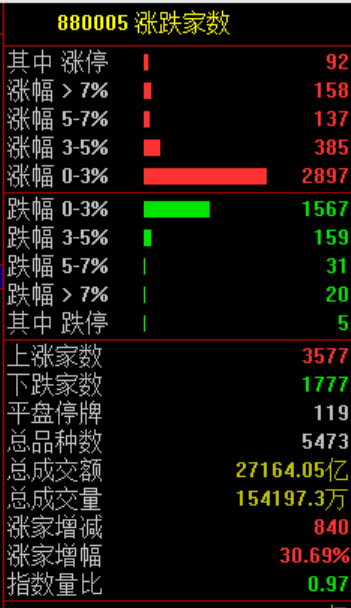
Market Overview - The A-share market experienced a volatile increase on January 22, with the Shanghai Composite Index rising by 0.14%, the Shenzhen Component Index by 0.5%, and the ChiNext Index by 1.01% [2][19] - A total of 3,577 stocks rose, with 92 hitting the daily limit up, while 1,777 stocks declined [2][19] Stock Performance - The total trading volume reached 27,164.05 billion CNY, with a total of 154,197.37 million shares traded [3][20] - Notable stocks that surged include: - Tengjing Technology (688195) up 20% at 215.02 CNY - Keshun Co. (300737) up 20% at 6.96 CNY - Triangle Defense (300775) up 19.99% at 39.49 CNY [4][21] Sector Highlights - The commercial aerospace sector showed strength, with several stocks like Triangle Defense and Jieli Suojian hitting the daily limit up [3][20] - Oil and gas stocks also saw significant gains, with Renji Co. (002629) and Victory Co. (000407) rising by 9.95% and 9.92% respectively [5][22] - Robotics concept stocks were active, with Fulei New Materials and Yichang Technology both hitting the daily limit up [5][23] Company Specific News - Pop Mart's stock surged over 6% on January 22, driven by the popularity of its new PUCKY electronic wooden fish product, which features sound effects and is marketed for emotional relief [30][33] - On January 21, Pop Mart announced a share buyback of 500,000 shares for a total of 96.49 million HKD, marking its second buyback within the week, with a cumulative buyback amount nearing 350 million HKD [16][33] Notable Declines - The semiconductor sector faced declines, with stocks like Blue Arrow Electronics (301348) dropping nearly 10% [7][24] - Guosheng Technology experienced significant volatility, opening at a limit down before rebounding to a limit up after a series of trading halts due to poor earnings forecasts [8][25]


港股异动丨回购重振信心,泡泡玛特大涨近7%
Ge Long Hui· 2026-01-22 08:03
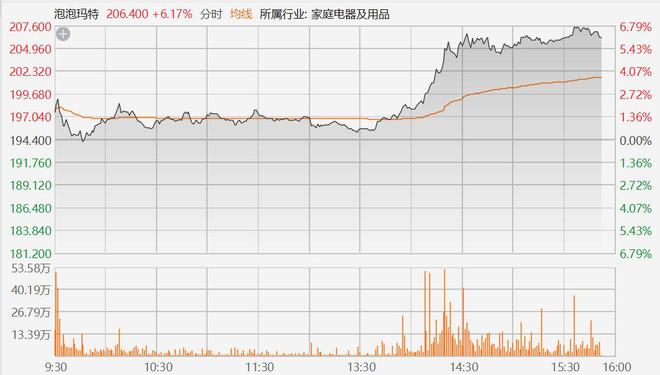
Core Viewpoint - Pop Mart (9992.HK) experienced a significant increase of nearly 7%, closing at HKD 207.6, following announcements of share buybacks totaling approximately HKD 350 million this week [1] Group 1: Share Buyback Announcements - On January 21, Pop Mart announced a plan to repurchase 500,000 shares for a total of HKD 96.49 million, with a buyback price ranging from HKD 191.1 to HKD 194.9 per share [1] - On January 19, the company had previously announced a repurchase of 1.4 million shares for HKD 251 million [1] Group 2: Market Confidence and Growth Projections - CCB International published a report indicating that the share buyback initiative is expected to restore market confidence [1] - The report anticipates that with the launch of new products, Labubu will remain a key pillar in sales this year, while other IPs are expected to perform better as overseas consumers become more familiar with them [1] - CCB International maintains a strong belief in Pop Mart's overseas expansion potential, projecting a year-on-year revenue growth of 32.8% and a net profit growth of 37.6% for this year, reaffirming a "buy" rating [1]
信达证券:维持泡泡玛特“买入”评级 经营高景气度持续
Zhi Tong Cai Jing· 2026-01-22 06:53
Core Viewpoint - The report highlights that Pop Mart (09992) is actively repurchasing shares, indicating confidence in its future performance and market position [1] Group 1: Domestic Market Outlook - The domestic market is showing upward momentum, with Pop Mart having a large and sticky user base, supported by a diversified IP matrix [1] - Key IPs such as MOLLY, SKULLPANDA, CRYBABY, and DIMOO are performing well, while the popularity of the Star People IP is rapidly increasing [1] - Recent actions to adjust supply and stabilize the second-hand market prices are seen as a strategy to regain pricing power and create a healthier commercial ecosystem based on real consumer demand [1] Group 2: Overseas Market Potential - There is significant potential in overseas markets, which are still in the early stages of development compared to the domestic market, with strong certainty for future channel expansion [2] - Challenges include short IP cycles, weaker channel capacity, and reliance on single IPs, necessitating improvements in supply chain and logistics [2] - The U.S. market, as a key consumer market for trendy toys, presents substantial growth opportunities, with a focus on operational capabilities in the short term and IP-driven growth in the long term [2] Group 3: Sales Tracking - Google Trends data indicates that the search popularity of Pop Mart's core IP "Labubu" peaked around Christmas and has remained above average since then, with a slight increase as the end of December approaches [3]

信达证券:维持泡泡玛特(09992)“买入”评级 经营高景气度持续
智通财经网· 2026-01-22 06:52
Core Viewpoint - The company has announced a share buyback plan, indicating confidence in its future performance and market position [1] Group 1: Domestic Market Outlook - The domestic market is experiencing an upward trend in demand [1] - The company has a large and highly engaged user base, with a diversified IP matrix maintaining popularity [1] - Recent actions to adjust supply and demand dynamics have led to a more balanced market, allowing the company to regain pricing power [1] - The reasonable pricing in the secondary market fosters a healthy commercial ecosystem based on genuine consumer demand, which is beneficial for long-term user base expansion and brand value accumulation [1] Group 2: Overseas Market Potential - There is significant potential in overseas markets, which are still in the early stages of development compared to the domestic market [2] - The company is actively increasing offline supply to encourage consumers to shift from online to offline purchasing [2] - Challenges include short IP cycles, weaker channel capacity, and reliance on single IPs, necessitating improvements in supply chain and logistics [2] - The U.S. market, as a key consumer market for trendy toys, presents substantial growth opportunities, with a focus on operational capabilities in the short term and IP-driven growth in the long term [2] Group 3: Sales Tracking - Google Trends data indicates that the search interest for the company's core IP "Labubu" peaked around Christmas and remains above average [3]
泡泡玛特午后涨近6% 公司已回购近3.5亿港元股份 大摩称公司财务资源充足
Zhi Tong Cai Jing· 2026-01-22 06:34
Core Viewpoint - Pop Mart (09992) has shown a significant increase in stock price, rising nearly 6% following recent share buybacks, indicating strong market confidence and financial health [1] Group 1: Stock Performance - As of the report, Pop Mart's stock price reached 205.8 HKD, with a trading volume of 2.321 billion HKD [1] - The stock experienced a rise of 5.86% during the trading session [1] Group 2: Share Buyback Activity - On January 19, Pop Mart repurchased 1.4 million shares for 251 million HKD [1] - On January 21, the company spent approximately 96.49 million HKD to buy back 500,000 shares [1] - This marks the first share buyback since early 2024, reflecting the company's commitment to returning value to shareholders [1] Group 3: Financial Outlook - Morgan Stanley estimates that Pop Mart will achieve a net profit of 12.6 billion RMB by 2025, with a projected cash reserve of 20 billion RMB by the end of 2025 [1] - This financial position indicates that the company has ample resources to further reward shareholders [1] Group 4: Market Analysis - Huatai Securities reported that Pop Mart's domestic and overseas performance showed strong resilience in Q4 of the previous year [1] - The strength of the IP matrix has provided solid support for sales growth following the peak sales of Labubu 3.0 [1] - The firm believes that the sustainability of Pop Mart's growth and its mid-to-long-term potential are undervalued, making its current valuation attractive amid market discrepancies [1]
港股异动 | 泡泡玛特(09992)午后涨近6% 公司已回购近3.5亿港元股份 大摩称公司财务资源充足
智通财经网· 2026-01-22 06:31
Core Viewpoint - Pop Mart (09992) has recently initiated share buybacks, indicating strong financial health and commitment to shareholder returns, with a notable increase in stock price and trading volume [1] Group 1: Share Buybacks - On January 19, Pop Mart repurchased 1.4 million shares for HKD 251 million [1] - On January 21, the company spent approximately HKD 96.49 million to buy back 500,000 shares [1] - This marks the first share buyback since early 2024, reflecting the company's confidence in its financial position [1] Group 2: Financial Performance - Morgan Stanley estimates that Pop Mart will achieve a net profit of RMB 12.6 billion by 2025 [1] - By the end of 2025, the company is projected to hold RMB 20 billion in net cash, indicating ample financial resources for further shareholder returns [1] Group 3: Market Analysis - Huatai Securities reports that Pop Mart's domestic and overseas performance showed strong resilience in Q4 of the previous year [1] - The strength of the IP matrix has provided solid support for sales growth following the peak sales of Labubu 3.0 [1] - The firm believes that the sustainability of Pop Mart's growth and its mid-to-long-term potential are undervalued, making its current valuation attractive amid market discrepancies [1]
泡泡玛特(9992.HK):发布股份回购公告 经营高景气度持续
Ge Long Hui· 2026-01-22 06:20
Core Viewpoint - Pop Mart has announced a share buyback plan, indicating confidence in its market position and future growth potential [1] Group 1: Domestic Market - The domestic market is experiencing an upward trend, with Pop Mart having a large and highly engaged user base [1] - The company's diverse IP matrix, including MOLLY, SKULLPANDA, CRYBABY, and DIMOO, maintains balanced popularity, while the STAR PERSON IP is rapidly gaining traction [1] - Recent actions to frequently release products have helped stabilize the second-hand market prices, allowing the company to regain pricing power and create a healthier commercial ecosystem based on real consumer demand [1] Group 2: Overseas Market - The overseas market presents significant potential, with many global markets still in the early stages of development and lower channel density compared to the domestic market [1] - There is a strong certainty for future channel expansion, although challenges such as short IP cycles and reliance on single IPs exist [1] - The company is actively increasing offline supply globally to encourage consumers to shift from online to offline purchases [1] - Supply chain issues have arisen due to substantial growth in the American market, necessitating improvements in logistics, product structure, and local team configurations [1] Group 3: Operational Strategy - The company should prioritize resolving operational issues before focusing on IP product expansion to support long-term overseas development [2] - The U.S. market, as a key consumer market for trendy toys, offers significant growth potential, with a strategy of building operational capabilities in the short term and leveraging IP potential for long-term growth [2] Group 4: Sales Tracking and Profit Forecast - Google Trends data indicates that the search popularity of Pop Mart's core IP "Labubu" peaked around Christmas, remaining above average levels [2] - Profit forecasts for the company project net profits of 135.1 billion, 179.0 billion, and 216.1 billion yuan for 2025-2027, with corresponding PE ratios of 18.0X, 13.6X, and 11.3X [2]
泡泡玛特(9992.HK):泡泡玛特的三个潜在预期差
Ge Long Hui· 2026-01-22 06:20
Core Viewpoint - The market expectations for Pop Mart are significantly influenced by short-term high-frequency tracking data, leading to concerns about IP popularity and sustainable performance growth. However, Q4 performance data indicates strong resilience in both domestic and overseas markets, supported by the IP matrix after the peak sales of Labubu 3.0. The company’s recent share buyback reflects confidence in its growth prospects, and the valuation appears attractive amid current market divergences, maintaining a "Buy" rating. Dimension 1: Q4 Overseas Market Performance - Q4 overseas performance is expected to exceed market pessimism, particularly in North America, where TikTok sales are projected to decline by approximately 10% quarter-on-quarter. However, improved inventory levels in stores are anticipated to enhance offline revenue significantly compared to Q3, with overall channel sales expected to remain stable or improve. In Southeast Asia, sales declines in H2 are attributed to natural channel structure changes, with strong growth expected in all-channel sales due to increased store numbers. The second-hand market dynamics indicate that sufficient inventory is crucial for driving new IP growth, aligning with a long-term strategy of diversified IP development [1][2]. Dimension 2: Emergence of Diverse IPs - Q4 data shows successful diversification of domestic IPs, with Labubu's share on Douyin dropping to about 30%. New IPs like Xingxingren and Crybaby are rapidly growing, narrowing the gap with Labubu. In Southeast Asia, Labubu's sales share has fallen below 40% in top-selling products, with new IPs collectively accounting for over 50% in markets like Indonesia. The established channel layouts in domestic and Southeast Asian markets facilitate the transfer of popularity from leading IPs to emerging ones, with potential for new IP growth as offline presence improves [2]. Dimension 3: Improving Ecosystem and Content Layout Potential - The company's IP content strategy is entering a practical implementation phase, with animated shorts expected to reach fans effectively through low-cost, high-frequency methods. Future long-form films may enhance IP influence, moving towards a goal of IP group development. The content strategy is anticipated to become a new tool for breaking into wider markets, complementing existing strengths in products, store experiences, and social media. New business ventures in desserts and accessories are also noteworthy [2]. Profit Forecast and Valuation - The profit forecast remains unchanged, with adjusted net profits projected at 135 billion, 185 billion, and 237 billion for 2025-2027. The target price is set at 410 HKD, based on a 27x PE for 2026, reflecting the company's high barriers to entry and ongoing diversification in IP and business models, maintaining a "Buy" rating [3].
游戏赚来的钱,米哈游投出3家IPO
首席商业评论· 2026-01-22 04:52
Core Viewpoint - The article discusses the significant investment activities of the gaming giant miHoYo, highlighting its strategic investments in various sectors, particularly in AI and technology, as a means to diversify and secure future growth amidst uncertainties in its core gaming business [4][16]. Investment Strategy - miHoYo has made over 30 disclosed investments across various fields, including AI, embodied intelligence, and commercial aerospace, indicating a broad interest in future technologies [4][6]. - The company has invested in projects like MiniMax, Suplay, and Soul, which are either approaching IPO or have already gone public, showcasing its commitment to nurturing potential high-growth ventures [4][6][16]. Investment Portfolio - miHoYo's investment portfolio includes significant stakes in Suplay (11.86%) and Soul (5.47%), both of which are in the gaming and social media sectors [6][8]. - The company has also invested in cutting-edge fields such as controlled nuclear fusion and brain-computer interfaces, reflecting its ambition to be at the forefront of technological advancements [7][14]. Market Trends and Insights - The article notes that miHoYo's investments are driven by the growing demand for virtual companionship and identity recognition among younger generations, suggesting a strategic alignment with market trends [13][14]. - The decline in revenue from its flagship game "Genshin Impact" has prompted miHoYo to seek new revenue streams through investments, indicating a proactive approach to mitigate risks associated with its core business [17][18]. Future Outlook - miHoYo's aggressive investment strategy is seen as both a proactive and reactive measure to address uncertainties in its gaming revenue, with the potential for these investments to yield significant returns in the future [16][18]. - The company’s focus on technology investments is expected to enhance its operational efficiency and expand its existing ecosystem, thereby creating new revenue opportunities [15][18].
2025年厦门海关查扣侵权嫌疑货物949万件
Xin Lang Cai Jing· 2026-01-22 04:44
Core Viewpoint - In 2025, Xiamen Customs reported a record high in the number of seized infringing goods, with 1,180 batches and 9.49 million items detained, indicating a strong enforcement against intellectual property violations in cross-border e-commerce [1] Group 1: Intellectual Property Enforcement - Xiamen Customs launched a "Special Action for Intellectual Property Protection in Cross-Border E-commerce" to address frequent infringement issues, resulting in the seizure of 1,011 batches of infringing goods through e-commerce channels [1] - The customs authority has implemented measures such as intellectual property registration, pre-confirmation, and a "white list" system to support businesses in stabilizing orders and expanding markets, leading to 1,270 new registered intellectual properties in 2025 [1] Group 2: Focus on Emerging Industries - The "潮玩" (trendy toys) sector emerged as a new highlight in foreign trade exports in 2025, prompting Xiamen Customs to initiate a "Special Action for Intellectual Property Protection in the Trendy Toy Industry" [1] - A centralized intelligent image review platform was established, along with a machine inspection image database for high-risk infringing products, resulting in the seizure of 67 batches of infringing trendy toy products and the detention of 195,000 items [1] Group 3: Future Outlook - Xiamen Customs plans to maintain a high-pressure stance against infringement in import and export activities in 2026, aiming to enhance the effectiveness of enforcement at ports [1] - The customs authority is committed to creating a better business environment at ports to support Chinese brands in expanding internationally [1]