食品饮料

Search documents
中原证券晨会聚焦-20260213
Zhongyuan Securities· 2026-02-13 00:45
Core Insights - The report highlights a positive outlook for the semiconductor industry, driven by increased capital expenditure from major cloud companies and a robust demand for AI infrastructure [22][24][25] - The electric power sector is expected to benefit from a significant increase in installed capacity, with a focus on renewable energy sources such as solar and wind [27][28][29] - The food and beverage sector shows mixed performance, with certain sub-sectors like prepared foods and snacks performing well, while others face challenges [19][20] Domestic Market Performance - The Shanghai Composite Index closed at 4,134.02, with a slight increase of 0.05%, while the Shenzhen Component Index rose by 0.86% to 14,283.00 [4] - The A-share market has shown resilience, with average P/E ratios for the Shanghai Composite and ChiNext at 16.91 and 53.15, respectively, indicating a favorable environment for medium to long-term investments [10][11] International Market Performance - Major international indices such as the Dow Jones and S&P 500 experienced declines of 0.67% and 0.45%, respectively, reflecting a cautious global market sentiment [5] Industry Analysis - The semiconductor industry saw a strong performance in January 2026, with a 18.63% increase in the domestic semiconductor index, significantly outperforming the broader market [22][23] - The electric power sector's installed capacity reached 38.9 billion kilowatts by the end of 2025, marking a 16.1% year-on-year increase, with solar and wind energy contributing significantly to this growth [27][28] - The food and beverage sector's sales in January 2026 showed a slight increase of 0.11% year-on-year, with a notable decline in month-on-month sales due to policy changes [19][20] Investment Recommendations - The report suggests a balanced investment strategy focusing on technology sectors, particularly AI and high-end manufacturing, while also considering opportunities in consumer sectors [10][11][15] - In the semiconductor space, investors are encouraged to look at companies benefiting from AI demand and increased capital expenditures from cloud providers [24][25][26] - For the electric power sector, a "barbell strategy" is recommended, focusing on stable, high-dividend companies as well as growth opportunities in renewable energy [27][29]
3婴死亡! 雀巢等再陷最大婴儿奶粉危机,“预防性召回”是空谈? | 欧陆志
Xin Lang Cai Jing· 2026-02-13 00:40
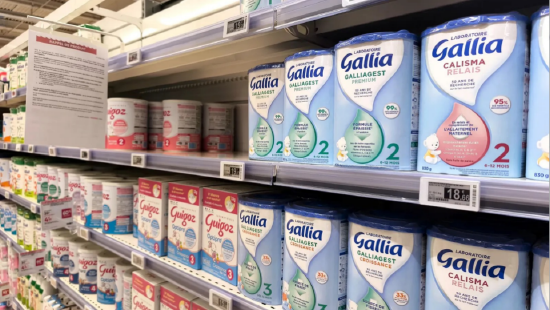
Core Viewpoint - Europe is experiencing a large-scale recall of infant formula products involving major brands such as Nestlé, Danone, and Lactalis, amid reports of multiple infant deaths suspected to be linked to contaminated formula [1][12] Group 1: Recall Details - The recall includes brands like Guigoz and Nidal, with concerns that products may contain Bacillus cereus, which can cause severe gastrointestinal issues [2][13] - As of now, there have been 33 recalls of infant formula products in France within a two-month period, a significant increase compared to the 30 recalls over the past 15 years [16][17] - Danone has also announced recalls of several infant formula products across multiple countries, including France, Austria, and Germany, due to potential contamination [8][17] Group 2: Health Implications - Reports indicate that there have been at least four infant deaths in France, with investigations ongoing to determine any causal links to the recalled products [2][10] - In Belgium, five confirmed cases of infants showing symptoms after consuming contaminated formula have been reported, with the presence of Bacillus cereus toxins confirmed [6][15] - The French health authorities have received approximately 50 reports of infant illnesses, with 14 cases leading to hospitalization, raising concerns about the safety of the recalled products [4][15] Group 3: Regulatory and Public Response - The French Ministry of Health has advised parents to retain packaging of any formula if their child shows symptoms, as it may be needed for further testing [19] - The president of the Children's Health Alliance has expressed concerns that the recall scope may not be sufficient and that the safety of infant formula is not being adequately prioritized [19]


中金:另眼看消费
Xin Lang Cai Jing· 2026-02-13 00:23
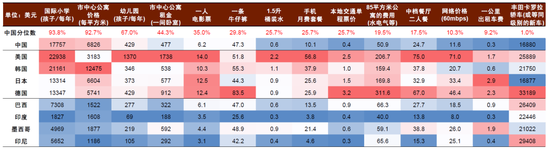
Group 1 - The article discusses the debate surrounding China's consumption rate, suggesting that it may not be as low as commonly perceived when compared internationally [1][18] - It emphasizes the importance of comparing consumption rates with domestic supply capabilities, indicating that improvements in supply capacity due to technological advancements support potential growth [3][19] - The article highlights that weak prices reflect a discrepancy between actual and potential growth, suggesting a need to enhance consumption to align actual growth with potential growth [4][20] Group 2 - Historical context is provided, illustrating that consumer demand evolves over time, with an increasing variety of products available, driven by technological advancements [21][22] - The article notes that even in slowing growth sectors, specific subcategories of consumption, such as premium and low-penetration products, continue to see growth [29][30] - It concludes with the expectation that the "14th Five-Year Plan" aims to significantly increase the household consumption rate, indicating a large potential for growth in China's consumption space [15][34]
年货消费新潮涌动
Jing Ji Ri Bao· 2026-02-12 22:35
Group 1: Market Trends and Consumer Behavior - The online and offline market for New Year goods is experiencing a surge, with a shift from traditional necessities to trendy cultural and digital products, reflecting changes in consumer confidence and values [2][3] - The boundaries of New Year goods are rapidly expanding, with traditional craftsmanship being integrated into modern designs, appealing to younger consumers [3] - Emotional value and self-pleasure are becoming more significant drivers of consumer behavior, moving away from utilitarianism and social obligations [6] Group 2: Technological Integration - The integration of technology is redefining the definition and consumption scenarios of New Year goods, with products like AI glasses gaining popularity due to their practical functions and government subsidies [4] - The rise of "tech New Year goods" is fueled by national policies promoting equipment upgrades and trade-in programs, leading to significant sales growth in digital and smart home categories [4] Group 3: Cultural and Global Expansion - The vitality of China's New Year goods economy is increasingly reaching global markets, with platforms like JD.com reporting over 100% year-on-year growth in international sales [7] - Cultural elements are essential for differentiating products in the global market, but maintaining quality and user experience is crucial for long-term competitiveness [7] - Intellectual property protection and the establishment of an original ecosystem are vital for sustaining innovation and brand upgrades in the cultural and creative sectors [7] Group 4: Sustainable Development - Achieving healthy development of the New Year goods economy requires a focus on sustainable consumption, with consumers prioritizing value for money [8] - Balancing cultural emotional value with functionality, collectibility, and reasonable pricing is essential for promoting long-term growth in the New Year goods market [8]

百事集团2025年业绩分化,北美市场承压
Jing Ji Guan Cha Wang· 2026-02-12 20:33
Group 1 - The core viewpoint of the news is that PepsiCo reported a mixed performance for Q4 and the full year of 2025, with revenue growth but a decline in net profit [1] - For the full year 2025, net revenue reached $93.925 billion, a year-on-year increase of 2.3%, while net profit attributable to PepsiCo was $8.240 billion, down 13.9% [1] - In Q4, revenue was $29.343 billion, reflecting a 5.6% year-on-year growth, exceeding market expectations, and non-GAAP core EPS was $2.26, up 15.3% year-on-year [1] Group 2 - The stock price of PepsiCo showed a fluctuation of 1.85% over the past week, with a year-to-date increase of 17.93% as of February 12, closing at $169.26 [2] - The stock experienced a seven-day consecutive rise and a monthly increase of approximately 21%, driven by better-than-expected earnings and a $10 billion buyback plan, although recent volatility indicates market concerns over pricing strategies [2] Group 3 - PepsiCo announced price reductions of up to 15% on certain snack products in the U.S. market to stimulate demand amid rising consumer price sensitivity [3] - The company is strengthening its supply chain in the Asia-Pacific region, maintaining or growing market share in China, with new production capacity projects in Xi'an supporting long-term development [3] - PepsiCo has increased its dividend for 54 consecutive years and initiated a $10 billion share buyback plan to enhance shareholder returns [3] Group 4 - Analyst opinions are divided, with some institutions attributing the stock price increase to valuation expansion rather than fundamental improvements [4] - Quant ratings suggest a "hold," with only 7 out of 23 Wall Street analysts recommending a "buy" [4] - There are warnings that the pricing strategy may trade off profit margins for a rebound in sales, necessitating close monitoring of future sales elasticity and gross margin changes [4]

好时近期股价上涨7.18%,最新财报营收增长3.45%
Jing Ji Guan Cha Wang· 2026-02-12 20:09
Core Viewpoint - The recent performance of Hershey's (HSY) stock has been active, with revenue growth reported in the latest financial results [1]. Group 1: Stock Performance - Hershey's stock price was reported at $205.79, with a daily increase of 2.14% and a trading volume of $684 million on February 4, 2026 [1]. - Over the past five trading days, the stock has accumulated a rise of 7.18% [2]. Group 2: Financial Performance - The latest financial report for the third quarter of fiscal year 2025, released on October 30, 2025, shows revenue of $8.602 billion, reflecting a year-over-year growth of 3.45% [1][3]. - Revenue has maintained stable growth during the first three quarters of 2025 [3].

梦龙股价单日大跌19%,业绩下滑与行业压力成主因
Jing Ji Guan Cha Wang· 2026-02-12 19:44
Core Viewpoint - The significant decline in Menglong's stock price by 19.15% on February 12, 2026, is primarily attributed to its conservative future performance guidance and the release of its 2025 annual performance report [1] Financial Performance - In 2025, Menglong's net profit attributable to shareholders was 2.533 billion RMB, a decrease of 48.4% compared to 2024 [2] - The company incurred a total cash expenditure of 4.653 billion RMB to operate independently from Unilever, resulting in a drastic drop in free cash flow from 6.625 billion RMB in 2024 to 314 million RMB [2] Recent Events - Menglong's management anticipates an organic sales growth rate of only 3% to 5% for 2026, which is below market expectations, and has stated that no dividends will be paid before 2026 [3] - The company issued bonds totaling 24.75 billion RMB in 2025, leading to a significant increase in financial costs, raising investor concerns about its growth potential under high leverage [3] Industry and Risk Analysis - The popularity of GLP-1 weight loss drugs has reduced consumer demand for sweets, posing long-term pressure on high-premium ice cream brands like Menglong [4] - In the Chinese market, Menglong is clearing inventory through discount channels, with some products priced as low as 6 RMB, which may harm its brand premium ability, while facing intensified competition from local brands like Yili and Mengniu in the high-end market [4] Stock Performance - On February 12, Menglong's stock price hit a low of $15.97, with a daily volatility of 6.41% and a trading volume of approximately $623 million, indicating significant selling pressure [5] - The market is re-evaluating the "growing pains" of the independently operated company post-split, such as supply chain transition costs and inventory subsidy expenses, exacerbating pessimism regarding short-term profitability [5]
通用磨坊发布第二季度财报,重申全年业绩指引
Jing Ji Guan Cha Wang· 2026-02-12 19:44
Core Insights - General Mills reported a 7% year-over-year decline in net sales for Q2 of fiscal year 2026, with net sales amounting to $4.861 billion. The company reaffirmed its full-year guidance, expecting organic net sales to range between -1% and 1% [1][2]. Performance Overview - The adjusted operating profit and earnings per share are projected to decline by 10% to 15% at constant exchange rates. Future performance will need to be monitored to see if the company meets its guidance targets [2]. Strategic Initiatives - General Mills is divesting non-core categories, such as the sale of its yogurt business in the U.S. and Canada, and reallocating resources towards high-margin areas like pet food. The company plans to increase new product innovation investment by 30% and boost marketing spending to drive organic growth. The North American retail segment saw a 13% revenue decline, while the pet food segment grew by 11%, indicating a need for ongoing observation of the transformation's effectiveness [3]. Operational Status - The company has optimized logistics and production processes through artificial intelligence, saving over $20 million in transportation costs since fiscal year 2024, with an expected annualized savings of over $50 million. However, the potential for further cost reductions is narrowing, necessitating a balance between short-term efficiency and long-term innovation investments [4]. Business Development - Due to a sluggish North American market, General Mills is accelerating its expansion into emerging markets such as Asia. For instance, adjustments are being made to the Häagen-Dazs store count in China, with the company seeking growth through product innovation and channel optimization. The international segment reported a 6% sales increase in Q2 of fiscal year 2026, but contributions from emerging markets still need validation [5]. Financial Movements - In the first half of fiscal year 2026, the company paid $659 million in dividends and repurchased $500 million in stock. Future attention will be required on the sustainability of the dividend policy and buyback plans [6].

The Kraft Heinz Company's Strategic Investments and Market Position
Financial Modeling Prep· 2026-02-12 19:06
Core Viewpoint - Kraft Heinz Company is strategically investing to enhance its brand performance and market share, while maintaining a "Hold" rating from Cowen & Co. with a slight price target adjustment Group 1: Financial Performance - Kraft Heinz's stock is currently valued at $24.99, reflecting a modest increase of 0.16% or $0.04 [4] - The stock has fluctuated between $23.57 and $25.20 during the day, with a yearly peak of $33.35 and a trough of $21.98 [4] - The company's market capitalization is approximately $29.58 billion, with a trading volume of 37.7 million shares [4] Group 2: Strategic Investments - The company announced an additional $600 million investment during its Q4 2025 earnings call to rejuvenate organic growth by focusing on brands that have shown positive responses to investments [2] - Kraft Heinz's Taste Elevation business is experiencing favorable momentum, with 70% of its revenue gaining market share in the U.S. [2] Group 3: Future Plans - Kraft Heinz plans to increase spending in the upcoming second quarter to improve market share by the end of the year [3] - The company is focusing on enhancing value market share and refining product and packaging to better align with consumer demands [3] - Kraft Heinz has temporarily halted its planned business separation, indicating a potential shift in strategic focus [3]

2/12财经夜宵:得知基金净值排名及选基策略,赶紧告知大家
Sou Hu Cai Jing· 2026-02-12 15:59
Core Insights - The article provides an overview of the latest fund net asset value rankings, highlighting the top-performing and bottom-performing funds in the market [1] Fund Performance Summary Top 10 Funds by Net Value Growth - The top-performing funds include: 1. Jin Xin Core Competitiveness Mixed A: 1.2096, growth of 7.96% 2. Dongfang Innovation Growth Mixed C: 1.3704, growth of 7.02% 3. Dongfang Innovation Growth Mixed A: 1.4032, growth of 7.02% 4. Huaan Emerging Power Mixed A: 1.2446, growth of 6.77% 5. Huaan Emerging Power Mixed C: 1.2430, growth of 6.76% 6. Huitianfu New Wisdom Selected Mixed A: 1.6640, growth of 6.67% 7. Huitianfu New Wisdom Selected Mixed C: 1.6280, growth of 6.61% 8. Dongfang Alpha Technology Selected Mixed C: 1.3845, growth of 6.55% 9. Dongfang Alpha Technology Selected Mixed A: 1.3854, growth of 6.54% 10. Jin Xin Quantitative Selected Mixed A: 1.7502, growth of 6.48% [2] Bottom 10 Funds by Net Value Decline - The underperforming funds include: 1. Huaxia CSI Animation Game ETF Initiated D: 1.6901, decline of 2.23% 2. Huaxia CSI Animation Game ETF Initiated C: 1.6886, decline of 2.22% 3. Huaxia CSI Animation Game ETF Initiated A: 1.7111, decline of 2.22% 4. Guotai CSI Animation Game ETF C: 1.7131, decline of 2.19% 5. Guotai CSI Animation Game ETF A: 1.7369, decline of 2.19% 6. Guotai CSI Animation Game ETF E: 1.7306, decline of 2.18% 7. Zhonghang Hengyu Port Mixed C: 1.2314, decline of 2.08% 8. Zhonghang Hengyu Port Mixed A: 1.1960, decline of 2.08% 9. Huitianfu National Index ETF C: 1.7765, decline of 2.07% 10. Huitianfu National Index ETF A: 1.7829, decline of 2.07% [3] Market Analysis - The Shanghai Composite Index showed slight fluctuations with a closing increase, while the ChiNext Index opened high and closed with a small gain. The total trading volume reached 2.16 trillion, with a stock rise-to-fall ratio of 2108:3280 [5] - Leading sectors included comprehensive, mineral products, shipbuilding, semiconductors, and IT equipment, all with gains exceeding 2% [5] - The fund with the fastest net value growth was Jin Xin Core Competitiveness Mixed A, indicating a shift towards technology-focused investments [5] Fund Holdings and Strategy - The top holdings of Jin Xin Core Competitiveness Mixed A show a concentration of 63.34% in the top ten stocks, with a focus on consumer sectors, although a recent shift towards technology is noted [6] - The fund's performance indicates a potential transition in investment strategy, particularly towards liquid cooling technology [6] - The Huaxia CSI Animation Game ETF, with a significant holding concentration of 75.48%, is primarily focused on the media sector, but has underperformed relative to the market [7]