
体育场馆运营

Search documents
繁华商圈变身运动街区 “体育+”加速“破圈”激活消费新潜力
Yang Shi Wang· 2025-11-17 11:54
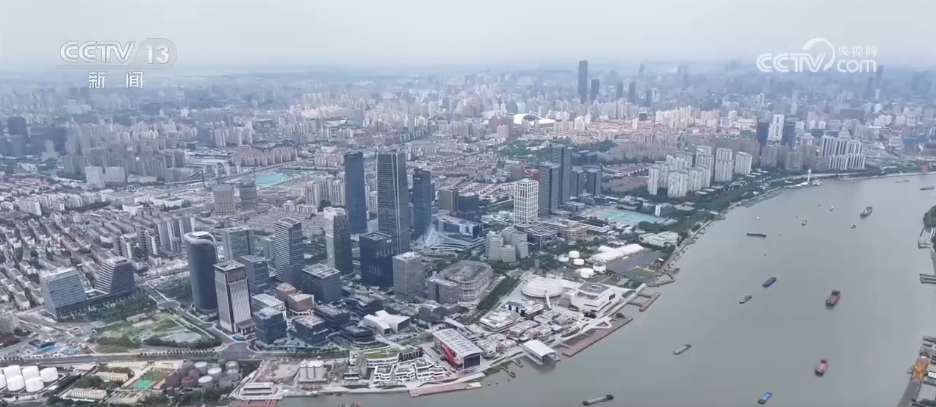
Core Insights - The current National Games are boosting public enthusiasm for sports, with Shanghai's commercial areas utilizing idle spaces to create sports venues, enhancing consumer traffic and activating new consumption dynamics [1][9]. Group 1: Sports Infrastructure Development - Shanghai's Xuhui Riverside has transformed into a vibrant area with a 10-kilometer running track, skateboarding parks, and tennis courts, providing both exercise and social opportunities for residents and visitors [3][5]. - The West Bund Dream Center, previously a cement factory, has been redeveloped into a trendy commercial space that integrates various sports elements, attracting significant foot traffic [3][9]. Group 2: Consumer Experience Enhancement - Commercial areas are implementing a "sports brand matrix + scenario-based sports space" strategy to enhance consumer experiences, with activities like skateboarding attracting families and fostering community engagement [7][9]. - The introduction of diverse sports activities has led to a 30% increase in foot traffic for surrounding dining and coffee businesses, with weekend visitor numbers exceeding 20,000 [9]. Group 3: Event-Driven Engagement - Events such as amateur kickboxing competitions and modern sports carnivals are being held in Shanghai, drawing participants and spectators from the Yangtze River Delta region, thus transforming commercial spaces into fashionable sports districts [11][12]. - The modern carnival featured over 20 sports activities and saw a nearly 10% increase in foot traffic over four days, demonstrating the effectiveness of integrating sports into urban environments [12].

“上场运动、下场消费”成为消费新选择 老厂房向“新”向“智”催生新场景
Yang Shi Wang· 2025-11-16 02:25
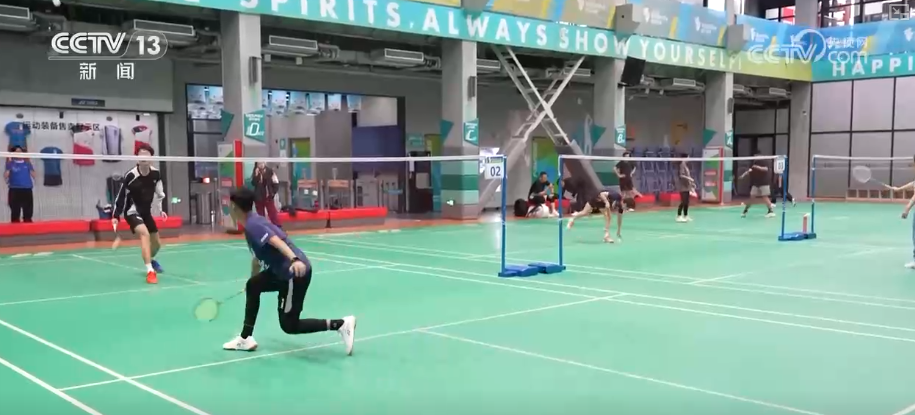
Core Insights - The transformation of old factory areas in Shijiazhuang into vibrant urban landmarks highlights a trend in urban renewal and adaptive reuse of industrial spaces [1][8] - The newly renovated smart sports venue has become a popular destination, operating 24/7 and featuring advanced facilities that cater to diverse consumer needs [12][14] Group 1: Venue Features - The smart sports venue occupies a renovated 12,000 square meter space, previously a coal machinery factory, now housing 20 sports courts [8][10] - The venue includes dedicated areas for children and offers a variety of sports such as badminton, basketball, and football, attracting a wide range of users [6][4] - Advanced technology allows users to book courts via a WeChat mini-program, with automated lighting and other smart features enhancing the user experience [12][14] Group 2: Popularity and Usage - Since October, over 33,000 visits have been recorded at the venue, with a single-day peak of over 5,000 visitors, indicating high demand [14] - The venue's success has led to an influx of sports-related businesses setting up nearby, further enhancing the area's appeal [16] Group 3: Broader Urban Development - The renovation of this sports venue is part of a larger initiative in Shijiazhuang, where three additional old factory sites are being transformed into comprehensive commercial centers that integrate sports, entertainment, and dining [23][18] - The overall trend reflects a growing interest in "sports + consumption" models, creating new urban experiences for residents [23]
力盛体育(002858) - 002858力盛体育投资者关系管理信息20251031
2025-10-31 01:22
Company Overview - Lisheng Yundong (Shanghai) Sports Technology Co., Ltd. is a leading automotive sports service provider in China, focusing on the marketization of sports events and the digital upgrade of the sports industry [2]. - The company’s main business includes sports event management, venue operation, marketing services, sports club management, and sports equipment manufacturing and sales [2]. Financial Performance - In the first three quarters of 2025, the company achieved a revenue of CNY 380 million, a year-on-year increase of 14.34% [2]. - The net profit attributable to shareholders reached CNY 22.02 million, up 56.07% year-on-year [2]. - In Q3 2025, the company reported a revenue of CNY 109 million, a slight decline of 1.07% year-on-year, while the net profit attributable to shareholders surged by 1482.24% to CNY 6.70 million [2][3]. Business Dynamics - Revenue fluctuations in Q3 2025 were attributed to the seasonal distribution of events, with fewer races compared to Q2 2025 and Q3 2024 [3]. - Venue operations experienced a decline due to adjustments and suspensions of certain venue operations since Q3 2024, but overall growth was maintained in the first three quarters of 2025 [3]. Growth Drivers - The growth of the core event business is driven by multiple factors, including increasing the number of event IPs, enhancing event participation, and boosting ticket sales through improved event influence [4]. - The gross margin of event operations is expected to improve as the value of events increases, indicating potential for further enhancement [4]. Future Prospects - The company is optimistic about the commercialization of its golf events, which are still in the early stages of operation, and anticipates significant growth in the future [5]. - The national push for a CNY 7 trillion sports industry and the encouragement of event economy integration with cultural tourism are seen as beneficial for the company’s strategic direction [6]. Strategic Initiatives - The company has invested CNY 184 million in the construction of the Hainan International Circuit, expected to contribute revenue by 2027 [7]. - Future growth will focus on expanding event categories and investing in related sectors such as sports marketing, venue management, and sports technology [8].

阿里橙狮体育拿下国内投资最大体育中心,意味着什么?
Sou Hu Cai Jing· 2025-10-29 23:37
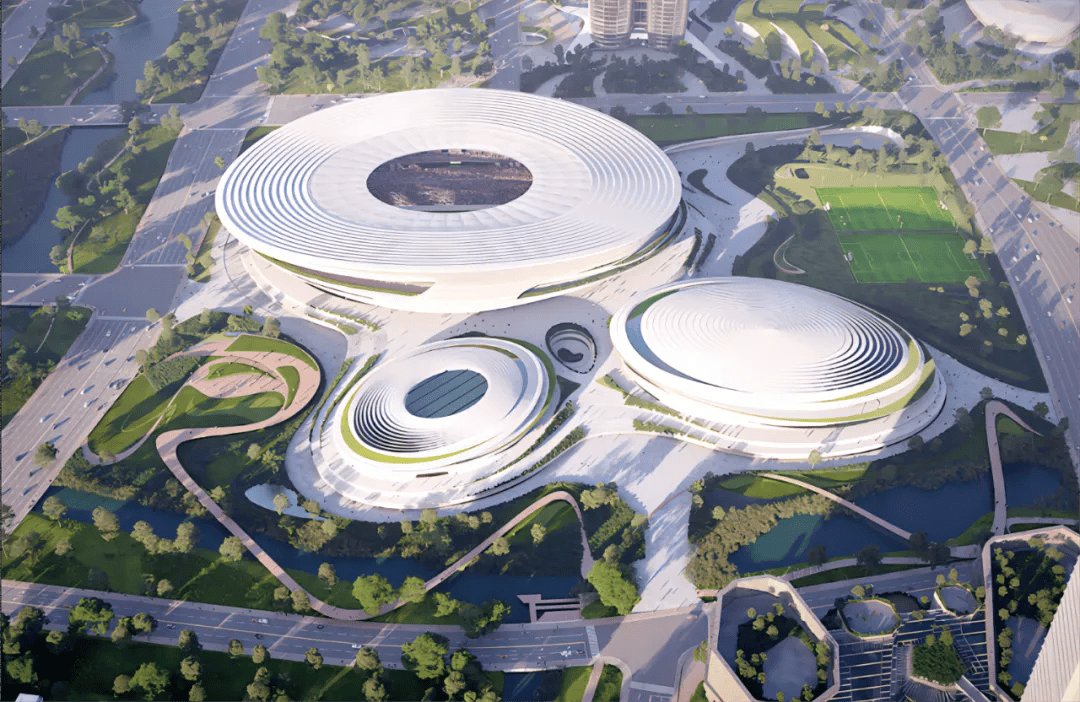
Core Insights - The operational rights of the Hangzhou Yuhang International Sports Center, with an investment exceeding 9.5 billion yuan, have been awarded to Alibaba's Orange Lion Sports for 15 years, signaling a transformation in China's sports industry [1][4] - This partnership represents a shift towards a "super venue + digital operation" model in the sports sector [1] Group 1: Project Overview - The Yuhang International Sports Center is a significant venue with a total construction area of 534,000 square meters, featuring a 60,000-seat professional football stadium and an 18,000-seat multi-purpose gymnasium [3] - The design incorporates local elements and includes a dual-use function with a retractable turf system for quick transitions between sports events and concerts [3] Group 2: Operator Strength - Orange Lion Sports, established in 2015 and formerly known as Alibaba Sports, has evolved into a digital sports service platform with over 350 million online users and more than 70 self-operated venues [4] - The company is projected to achieve monthly revenues of 100 million yuan and annual revenues exceeding 1 billion yuan in the 2024-2025 fiscal year, marking four consecutive years of profitability [4] Group 3: Significance of Collaboration - The partnership aims to address the "white elephant effect" of underutilized large sports venues by leveraging commercial resources for sustainable operations [5] - The strategic location of the Yuhang International Sports Center, connected to major transportation hubs, enhances its potential for attracting foot traffic and consumer spending [5] Group 4: Industry Impact - This collaboration aligns with favorable policies aimed at boosting the sports industry, with a target of exceeding 7 trillion yuan in total industry scale by 2030 [7] - Orange Lion Sports plans to invest over 5 billion yuan by 2035 to support innovations in the "sports + AI" sector, establishing new operational standards for sports venues and events [7] - The evolution of sports consumption is shifting from mere viewing to a more integrated experience, fostering a positive cycle of "events + consumption" that expands growth opportunities in the sports industry [7]

广州开放中小学体育场馆,不负全民运动热情
Nan Fang Du Shi Bao· 2025-10-28 04:49
Core Points - The launch of the "School Sports Pass" app in Guangzhou allows reservations for over 1,300 sports venues across 800 primary and secondary schools, aimed at promoting public health ahead of the upcoming National Games [1][2] - The initiative is part of a broader effort by the Guangzhou Education Bureau to open school sports facilities to the public, following the issuance of guidelines earlier this year [1][2] - The opening of school sports venues is seen as a way to maximize resource utilization and enhance community engagement in sports, especially in light of the National Games [3] Summary by Sections Implementation of Sports Venue Opening - The "School Sports Pass" app is a practical implementation of the guidelines issued by the Guangzhou Education Bureau, facilitating the opening of school sports venues to the public [1][2] - Schools must ensure that educational activities and safety are not compromised when opening their facilities [1] Challenges and Considerations - There are varying conditions among schools regarding their ability to open sports venues, with some schools being unable to do so immediately due to specific circumstances [2] - The potential for charging fees in the future due to maintenance and management costs has been highlighted, indicating that initial free access may not be sustainable [2] Impact of the National Games - The upcoming National Games is expected to boost public interest in sports, and the opening of school sports venues is part of a larger strategy to enhance sports infrastructure and accessibility in Guangzhou [3] - The initiative aims to not only provide social benefits but also potential economic returns for schools, creating a win-win situation [2][3]
第一批回县城开球馆的羽球人,快撑不下去了?
36氪· 2025-10-12 09:06
Core Viewpoint - The article discusses the rising trend of badminton courts opening in county towns, highlighting the shift from limited options to an abundance of choices for badminton enthusiasts, driven by lower costs and increased demand for recreational activities [6][7][11]. Group 1: Market Dynamics - The number of badminton courts in county towns has surged, with one individual noting that five new courts opened in their hometown, providing a total of 46 courts [6][12]. - The cost of playing badminton in county towns is significantly lower than in major cities, with prices as low as 10 yuan for casual play and 20 yuan for court rental, compared to at least 100 yuan in cities like Beijing [6][12]. - The influx of badminton courts has transformed the experience for local players, shifting from "hard to find a court" to "too many choices" [7][11]. Group 2: Entrepreneurial Opportunities - Many young entrepreneurs are returning to their hometowns to open badminton courts, inspired by the success of previous ventures like coffee shops [10][11]. - The concept of "geographical arbitrage" is evident, as entrepreneurs leverage lower costs in county towns to replicate successful business models from larger cities [18]. - Initial investments for opening badminton courts are relatively low, with one entrepreneur spending 350,000 yuan to set up a facility, including rent and equipment [18]. Group 3: Challenges and Competition - Despite the initial success, many new badminton courts face challenges in attracting consistent customers, especially as competition increases [28][36]. - Pricing strategies are crucial; setting fees too high can deter customers, while too low may not cover costs. For instance, one entrepreneur had to adjust their pricing from 50-70 yuan to 19.9 yuan for three hours to attract players [30][31]. - The market is becoming saturated, leading to concerns about sustainability as many courts may struggle to maintain profitability once the initial excitement fades [39][44]. Group 4: Community Engagement - Successful badminton courts are focusing on creating a community atmosphere, offering free snacks and engaging with customers on a personal level [41][43]. - The social aspect of playing badminton in county towns is emphasized, with players often forming groups with friends and family rather than just meeting strangers [44]. - Entrepreneurs are adapting their facilities to cater to local preferences, such as using vibrant colors for court surfaces to attract younger players [25][39].

从免费球场到马拉松训练营
Hang Zhou Ri Bao· 2025-10-09 02:37
Group 1 - The article highlights the increased participation of citizens in sports activities during the "National Day + Mid-Autumn Festival" holiday, with many opting for local sports venues instead of traveling [1] - Huanglong Sports Center offered free access to various sports facilities during the holiday, attracting many residents who prefer to stay active and socialize through sports [1] - The center organized a variety of events, including a marathon training camp for those preparing for the 2025 Hangzhou Marathon, catering to diverse fitness needs [1] Group 2 - The Hangzhou Sports Bureau conducted inspections of public sports venues during the holiday to ensure safety and service quality, employing a "four not two direct" approach for effective oversight [2] - The inspection team focused on crowd management, equipment maintenance, and the implementation of the "National Day free access" policy, providing feedback on areas needing improvement [2] - The Sports Bureau plans to enhance public access to sports facilities, optimize fitness reservation services, and upgrade safety measures to meet the diverse exercise demands of the community [2]
体育消费场景创新 “请你流汗”成新风尚
Zheng Quan Shi Bao· 2025-10-08 22:06
Core Insights - The "Double Festival" holiday has seen a surge in sports consumption in the Greater Bay Area, particularly through new venues like the Qianhai Ice and Snow World, which has become a key attraction for tourists and locals alike [1][2] Group 1: Sports Consumption Trends - The Qianhai Ice and Snow World, with a total investment of 29.6 billion yuan, is expected to attract 3 million visitors annually and generate an additional 1.2 billion yuan in GDP for the surrounding area [1] - Participation in ice sports in Shenzhen is projected to exceed 500,000 people in 2024, marking a 30% year-on-year increase [1] - Shenzhen has hosted over 10 international ice sports events annually in recent years, generating more than 1 billion yuan in sponsorship, broadcasting, and tourism revenue [1] Group 2: Community Sports Development - Shenzhen has established over 200 outdoor smart gyms, with an average daily usage of around 30,000 people [2] - The transformation of old factories into sports consumption destinations, such as the Shenzhen Meinan River Sports Town, reflects a trend towards integrating diverse sports and social activities [2][3] - Unique sports venues in Shenzhen are driving higher consumer spending, with average spending per visit being 2.5 times that of traditional venues [3] Group 3: Events and Economic Impact - The upcoming 15th National Games, co-hosted by Guangdong, Hong Kong, and Macau, is seen as a significant opportunity for the integration of sports and consumption [3] - Initiatives like the "Shenzhen Shopping Season" and "2025 Guangzhou Sports Consumption Season" are expected to enhance the economic impact of the National Games [3] - The government is facilitating a model of "event-driven, public participation" to boost sports consumption and enhance commercial activity in Shenzhen [3] Group 4: Corporate Engagement - Decathlon is expanding its presence in the Greater Bay Area with new store openings and upgrades, indicating confidence in the region's sports market potential [4] - The shift towards active lifestyles and sports consumption is becoming a vital economic driver for urban areas, contributing to the holiday economy [4]
这个“超长假期”,江苏假日市场有何“新”意
Xin Hua Ri Bao· 2025-09-28 23:51
Cultural Events - Jiangsu's cultural performances and exhibitions during the holiday season feature a blend of traditional and modern elements, including Suzhou Pingtan performances in Nanjing parks and various classic operas [2][3] - The integration of technology in performances is highlighted by the debut of a humanoid Peking opera robot in a show at Shajiabang scenic area, showcasing advancements in cultural presentations [3] Sports and Fitness - Sports venues across Jiangsu are implementing "inclusive + innovative" strategies, offering free or low-cost access to facilities and a variety of activities to promote public fitness during the holiday [5][6] - Nanjing's Dream Blue Youth Olympic Sports Park is offering half-price fitness experiences and hosting a concert expected to attract 13,000 attendees, enhancing local economic activity [6] Consumer Events - The holiday season is marked by a surge in consumer activities, with Jiangsu planning 607 themed promotional events and distributing approximately 250 million yuan in consumer vouchers to stimulate spending [8][9] - The 23rd Nanjing International Auto Show will feature over 60 car brands and 70,000 square meters of exhibition space, catering to diverse consumer preferences [8] Tourism and Attractions - New attractions in Jiangsu focus on immersive experiences, such as the Huai'an Bear Outing Theme Park, which utilizes advanced technology to create engaging environments for visitors [11][12] - The opening of new cultural venues, including the "Golden Poetry Immortal Pavilion" in Nanjing, reflects a trend towards enhancing tourist experiences through cultural enrichment [13] Rural Tourism - Rural tourism in Jiangsu is evolving with initiatives that combine agriculture, culture, and leisure, offering visitors hands-on experiences like crab-catching and local cuisine [14][16] - The "Healthy Country Companion" theme routes promote rural tourism, connecting urban visitors with the natural beauty and cultural heritage of Jiangsu's countryside [16]
“树上挂票”提出场馆运营考题
Jing Ji Ri Bao· 2025-09-26 21:49
Group 1 - The core idea of the news revolves around the humorous introduction of the "Tree Ticket" concept by the Yongzhou Football Association in response to high spectator demand for a local football match, highlighting the mismatch between urban sports infrastructure and the growing interest in sports events [1] - The emergence of local amateur football leagues, such as "Xiang Super," "Chuan Super," and "Gan Super," reflects a rising trend in grassroots sports, driven by increased spectator interest and local cultural integration [2] - The challenge of limited venue resources is emphasized, with cities exploring innovative solutions to enhance sports facilities while integrating them into broader urban development initiatives [2] Group 2 - Effective venue operation is identified as a critical issue, with many sports facilities facing high construction costs and maintenance challenges, leading to underutilization and resource wastage [2] - The importance of aligning venue services with market demand is stressed, advocating for venues to become active community hubs that offer diverse sports and cultural activities [3] - The adoption of multi-faceted operational models, including partnerships and the use of technology, is recommended to enhance venue efficiency and broaden revenue streams, ensuring sustainable development in the sports industry [3]