
农产品种植

Search documents
南华浩淞大豆气象分析报告:巴西收获进展加速,阿根廷关注降水
Nan Hua Qi Huo· 2026-02-09 12:01
1. Report Industry Investment Rating No relevant content provided. 2. Core View of the Report - The overall harvest progress of Brazilian soybeans in the 2025/26 season is accelerating, with the harvest progress reaching 16.55%, higher than 9.84% in the same period last year, and market institutions are continuously increasing their production forecasts. Although Argentina faces a risk of production reduction, the overall abundant harvest pattern in South America is set [1][14][15]. 3. Summary by Relevant Catalogs 3.1 Brazil's Soybean Situation - **Mid - western Region** - In Mato Grosso, the soybean harvest progress has reached 39.61% of the sown area, with a single - week progress of 14.64%, much higher than 28.58% in the same period last year. Dry weather has accelerated the harvest in the central - northern, northern, and western regions, and the harvested yield has exceeded the initial forecast [1][14]. - In the southwestern dry - farming area of Goiás, the harvest is accelerating, but due to excessive rainfall, the harvest yield varies, and in some areas, the grains are lighter and the quality has declined [1][14]. - In the southern part of Mato Grosso do Sul, water shortage in some areas has reduced the production potential, but other areas are still growing well, with 97.7% of the soybeans rated as good or above [1][14][15]. - In Minas Gerais, soybeans continue to grow well, but recent excessive rainfall has delayed the harvest in the irrigated areas [1][15]. - **Southern Region** - In the western part of Paraná, the harvest is underway. High - temperature and low - rainfall conditions have affected the soybean yield potential and accelerated the maturity of soybeans [1][15]. - In Rio Grande do Sul, the planting period has been extended, and sowing operations are still ongoing in the areas after the first - crop corn harvest [1][15]. 3.2 Argentina's Soybean Situation - The national soybean sowing work has ended. The proportion of crops in good condition or above has decreased by 9% week - on - week to 75%, but increased by 4% year - on - year. The proportion of suitable or better moisture conditions has decreased by 6% week - on - week to 59%, and decreased by 7% year - on - year [2][34]. - More than 40% of the first - season soybeans in the central Pampas Plain are in the critical yield - forming period. The moisture conditions in the central - eastern Entre Ríos and southern Córdoba are poor, while in the northern La Pampa and western Buenos Aires, the moisture conditions for crop growth are suitable [2][34]. - 16% of the second - season soybeans have entered the reproductive growth stage, but they also face water deficits, with some experiencing flower shedding and even plant death in extreme cases. The uniformity of rainfall in the next two weeks will have a significant impact on the final yield [2][34]. 3.3 International Soybean Annual Focus - Different months have different focus points, including US soybean export volume, South American production, global soybean ending stocks, Chinese imports, US and Chinese sowing areas, and US yield levels [52]. 3.4 Soybean Growth Cycle and Weather Requirements - **Growth Cycle** - **Planting Period**: The average daily temperature of the 5 - centimeter soil layer at the initial sowing stage should reach 10 - 12°C. After germination, the suitable temperature for seedling growth is 15 - 25°C, and the moisture should be maintained at 60% - 70% [60]. - **Flowering Period**: The suitable temperature for flowering is 20 - 28°C, and the soil water content should be 70% - 80% [60]. - **Growth Period**: The suitable growth temperature is 21 - 23°C, and the soil field water - holding capacity should be maintained at about 70% [60]. - **Harvest Period**: The suitable temperature is 15 - 25°C, the relative air humidity should be 50% - 60%, and the soil humidity should be maintained at 40% - 50% of the field water - holding capacity [60]. - **Disaster Risks** - Planting period: Floods and extreme droughts [60]. - Flowering period: Floods (continuous rain), droughts [60]. - Growth period: Heatwaves, droughts, and pests [60]. - Harvest period: Continuous rain and storms [60].

南华浩淞棕榈油期货气象分析报告:降雨分布不均匀,马来半岛南部依然面临干旱困扰
Nan Hua Qi Huo· 2026-02-09 10:31
Report Industry Investment Rating - Not provided in the given content Core Viewpoints - Since the end of 2025, the Southern Oscillation Index has exceeded the threshold of 1, and the El Niño index was -0.55 as of the end of December 2025. The La Niña phenomenon persists, but its intensity is weak, so the overall rainfall in Southeast Asia has no obvious deviation, and currently has limited impact on palm oil producing areas [1]. - This week, rainfall in the Malay Archipelago has slightly recovered, mainly concentrated in most parts of Indonesia and eastern Malaysia. There is sporadic rainfall in the Malay Peninsula, mostly in the northern region [1]. - The soil moisture in the southern part of the Malay Peninsula is still dry, and there is no possibility of improvement in March and April. However, the rainfall in Sabah and Sarawak is acceptable, and the soil moisture is good across the country, with no drought concerns. Overall, the impact on production should be limited [2]. - In Indonesia, rainfall has recovered in most areas this week, but the soil moisture in Riau and West Kalimantan is decreasing. If there is no improvement in subsequent rainfall, there may be a drought risk in March and April [2]. - There is little short - term rainfall, and there are no severe weather disasters such as rainstorms. Continued attention should be paid to areas with poor soil moisture. If the situation does not improve, it may affect palm oil production in the second half of the year. However, if the weather in other areas is favorable for production, the overall production in the whole region is still optimistic [2]. Summary by Relevant Catalogs Weather and Phenomenon - The Southern Oscillation Index has been above the threshold of 1 since the end of 2025 and remained so until the end of January 2026. The El Niño index was -0.55 as of the end of December 2025. The La Niña phenomenon persists with weak intensity, and the overall rainfall in Southeast Asia has no obvious deviation [1]. Rainfall Distribution - This week, rainfall in the Malay Archipelago has slightly recovered, mainly in most parts of Indonesia and eastern Malaysia. The Malay Peninsula has sporadic rainfall, mostly in the north [1]. Soil Moisture - The southern part of the Malay Peninsula has dry soil moisture, with no improvement expected in March and April. Sabah and Sarawak have good soil moisture with no drought concerns [2]. - In Indonesia, most areas have recovered rainfall, but Riau and West Kalimantan have decreasing soil moisture, with potential drought risks in March and April if rainfall does not improve [2]. Production Outlook - If the soil moisture in lagging areas does not improve, it may affect palm oil production in the second half of the year. However, if other areas have favorable weather, the overall production in the whole region is still optimistic [2]. Specific Palm Oil Producing Areas Indonesia - Jambi: Rainfall has slightly improved in February, and soil moisture is expected to rise [23]. - West Kalimantan: Rainfall has increased, but soil conditions are average [31]. - Central Kalimantan: Rainfall shows an increasing trend, and soil moisture is being restored [40]. - East Kalimantan: Rainfall is acceptable, and soil moisture is being restored [47]. - Riau: Rainfall improvement is limited, and soil moisture continues to decline [55]. - South Sumatra: Rainfall has increased, and soil moisture may improve [60]. - North Sumatra: Rainfall is expected to recover, and soil moisture has not further deteriorated [67]. Malaysia - Johor: There is almost no precipitation, and soil moisture continues to decline [75]. - Pahang: Rainfall is still scarce, and soil moisture improvement is insufficient [81]. - Perak: Rainfall has slightly recovered in February, which may avoid further drought [88]. - Sabah: Cumulative rainfall is abundant, and the soil is relatively moist [94]. - Sarawak: Rainfall in February is acceptable, and soil moisture may rise [101].
关税战正在“斩杀”美国农民——美农业界痛诉关税战巨大伤害
Xin Hua Wang· 2026-02-09 10:23
Core Viewpoint - The U.S. agricultural sector is experiencing significant harm due to the tariff policies of the Trump administration, leading to increased production costs and a decline in market competitiveness [1][2]. Group 1: Impact on Farmers - The number of bankruptcies among U.S. farmers has doubled, and the overall economic condition of U.S. agriculture is deteriorating [1]. - It is projected that only about half of U.S. farms will be profitable this year, indicating a severe economic crisis in rural areas [2][3]. - The agricultural trade surplus has turned into a historic trade deficit, with U.S. soybean exports dropping from 47% of the global market share in 2018 to just 24.4% [2]. Group 2: Cost and Revenue Challenges - The costs of agricultural inputs have risen significantly due to tariffs, while crop prices have fallen to historical lows, resulting in nearly $100 billion in losses for U.S. farmers [3]. - Economic pressures are threatening the long-term viability of the agricultural sector, with many farmers struggling to secure funding for the next planting season [3]. Group 3: Calls for Action - Agricultural leaders are urging Congress to eliminate tariffs on agricultural inputs and take immediate action to stabilize the agricultural economy [2]. - There is a consensus among agricultural organizations that urgent assistance is needed to protect rural communities and ensure the sustainability of U.S. agriculture [3].
广东村民的“年终奖”为啥越来越多?|新春走基层
Nan Fang Nong Cun Bao· 2026-02-09 09:03
Core Viewpoint - The increasing year-end bonuses for villagers in Guangdong reflect the successful implementation of rural revitalization strategies and the integration of specialized rural operations, leading to enhanced collective income and community engagement [3][8][94]. Group 1: Year-End Bonuses and Collective Income - Xiqiang Village in Jiangmen has decided to increase the subsidy for villagers aged 16 and above to 35,000 yuan per person, marking a 10% increase from 2024 [4][6]. - In total, 65 trial villages in Maoming received a collective bonus of 386.56 million yuan, with individual bonuses ranging from several thousand to 175,000 yuan [15][16]. - The income from the local specialty, the Sanhua Li, has significantly contributed to the bonuses, with some farmers earning close to 900,000 yuan annually [24][25]. Group 2: Rural Revitalization Strategies - The "Guangdong Goods Going Global" strategy has been pivotal in promoting local products and enhancing rural economic development [9][12]. - The establishment of specialized agricultural bases and modern agricultural management systems has led to increased efficiency and profitability in rural areas [28][29]. - The integration of e-commerce and cold chain logistics has improved the distribution of local products, allowing for rapid market access [31][35]. Group 3: Professionalization of Rural Operations - The shift from "blood transfusion" support to "blood production" through professional management teams is a key trend in rural development [54][56]. - Various regions are adopting cooperative models that involve government, enterprises, and local communities to enhance collective income and operational efficiency [56][62]. - The introduction of rural professional managers is seen as essential for driving modernization and sustainable growth in rural economies [88][90]. Group 4: Challenges and Future Outlook - Despite the positive developments, challenges such as talent shortages and financing limitations remain, necessitating further innovation in rural financial services [78][79]. - The goal is to make bonuses a regular occurrence rather than a novelty, ensuring that more villagers benefit from economic growth [90][95].


综述|关税战正在“斩杀”美国农民——美农业界痛诉关税战巨大伤害
Xin Hua She· 2026-02-09 05:49
Core Viewpoint - The letter from 27 agricultural leaders highlights the severe negative impact of the Trump administration's tariff policies on the U.S. agricultural sector, leading to increased production costs and a significant decline in market competitiveness [1][2][3]. Group 1: Economic Impact - The number of bankruptcies among U.S. farmers has doubled, with many farmers facing significant difficulties in securing funding for the next planting season [3]. - U.S. agricultural production costs have remained at historically high levels, while crop prices have plummeted to historical lows, resulting in nearly $100 billion in losses nationwide [3]. - The U.S. is experiencing a historic agricultural trade deficit, contrasting sharply with previous years of record agricultural trade surpluses and farm income [2]. Group 2: Market Competitiveness - The market share of U.S. soybeans in global exports has dropped from 47% in 2018 to just 24.4%, indicating a near halving of its market presence [2]. - Other agricultural products are similarly affected, with countries like Brazil and Argentina capitalizing on the U.S.'s declining market position [2]. - The letter emphasizes that the U.S. is no longer viewed as a reliable supplier in the global market [2]. Group 3: Call to Action - The letter urges Congress to immediately eliminate tariffs on agricultural inputs and restore stability and sustainability to the U.S. agricultural economy [2][3]. - It reflects a broader sentiment among agricultural organizations that the rural economy is in crisis, with farmers facing extreme economic pressures threatening the long-term viability of the agricultural sector [2][3]. - The letter's signatories stress the need for urgent assistance to stabilize the agricultural economy and protect rural communities [3].
履职一年间丨全国人大代表刘艳英:酸柠檬酿出乡亲们的甜日子
Yang Guang Wang· 2026-02-09 02:05
Core Viewpoint - The article highlights the efforts of Liu Yanying, a representative at the National People's Congress, in advocating for the enhancement of rural industry revitalization, particularly focusing on the lemon industry in An'yue County, Sichuan Province, where the majority of villagers cultivate lemons and seek to increase their income through deeper processing of their products [1][2]. Group 1: Industry Insights - An'yue County has an average annual lemon production of 600,000 tons, with 70% sold directly without further processing [1]. - There are 561 processing enterprises in the county, but only 33 are engaged in deep processing, indicating a significant gap in value addition within the industry [1]. - The lack of deep processing capabilities is a common issue faced by many rural areas, limiting their ability to withstand market fluctuations [2]. Group 2: Policy Recommendations - Liu Yanying plans to propose suggestions at the upcoming National People's Congress to increase support for rural industry revitalization, advocating for targeted policy measures that would allow farmers to share more in the value-added benefits of their products [2]. - The expectation is for a "combination punch" of policies that would enhance the resilience of rural industries against market risks [2]. Group 3: Future Outlook - Liu Yanying expresses confidence that rural areas will diversify their business models, leading to more opportunities and stronger internal development momentum [3].
羊城名店新春贺岁,齐上阳山西洋菜|广货行天下·好菜在阳山
Nan Fang Nong Cun Bao· 2026-02-07 12:31
Core Viewpoint - The event "Guangdong Goods Going Global" promotes Yangshan West Lake Vegetables, showcasing its unique qualities and potential for high-quality development in the Guangdong-Hong Kong-Macao Greater Bay Area [7][10][82]. Group 1: Event Overview - The event took place on February 7 in Guangzhou, featuring over 200 renowned chefs and Bay Area buyers, highlighting the ecological and agricultural potential of Yangshan West Lake Vegetables [7][10][12]. - The event served as a platform for brand upgrading, showcasing ecological food materials and facilitating county-level investment promotion [8][10][39]. Group 2: Product Features - Yangshan West Lake Vegetables are characterized by their fresh, tender, and sweet taste, requiring minimal cooking to highlight their natural flavor [23][24]. - The vegetables are grown in dry land with spring water irrigation, ensuring quality attributes such as crispness and cleanliness [28][29]. Group 3: Agricultural Development - By 2025, Yangshan plans to cultivate 18,000 acres of West Lake Vegetables, with an annual output of approximately 229,400 tons, contributing to a production value of 1.376 billion yuan [30][32]. - The region has established a comprehensive agricultural industry system, with over 3,000 farmers benefiting from increased income through the "enterprise + base + farmer" model [32][33]. Group 4: Brand and Market Expansion - The event introduced a new brand logo for Yangshan West Lake Vegetables, marking a significant step towards brand development and market expansion [47][48]. - A series of initiatives were launched to transition Yangshan West Lake Vegetables from a regional specialty to a Bay Area premium product [44][42]. Group 5: Investment Promotion - The event also served as a comprehensive platform to showcase Yangshan's investment environment across agriculture, cultural tourism, and industrial sectors [62][64]. - The appointment of "investment ambassadors" aims to leverage resources for attracting quality projects and investments to Yangshan [79][80].
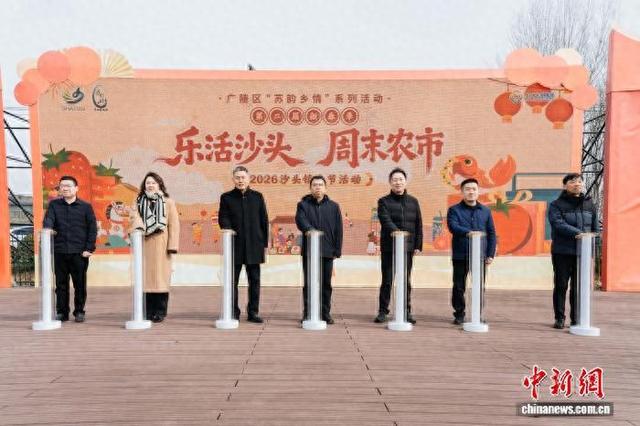
(乡村行·看振兴)江苏扬州沙头镇新春季活动启幕 科技赋能与民俗体验共促乡村振兴
Xin Lang Cai Jing· 2026-02-07 10:25
Core Viewpoint - The "Lohas Shatou Weekend Farmers' Market" second Spring Festival event has commenced, integrating traditional customs with modern agriculture to invigorate rural revitalization and enhance community engagement [1][3]. Group 1: Event Highlights - The event features six unique experience zones that blend traditional New Year customs with modern agricultural practices, including a lively "Catch the Lucky Fish" challenge and a fun strawberry picking area [3][4]. - A total of 26 specialty booths showcase a variety of local agricultural products, including fresh fruits, vegetables, and traditional snacks, catering to the pre-festival shopping needs of the public [3][4]. Group 2: Technological Integration - A significant highlight is the introduction of eight unmanned delivery vehicles equipped with smart temperature control, ensuring efficient delivery of fresh agricultural products from the market to consumers' homes [4]. - The event also promotes the branding of Shatou's agricultural products, with the introduction of the "Shatou Strawberry" as a national geographical indication, enhancing market competitiveness and value [4]. Group 3: Future Initiatives - The "Lohas Shatou" Spring Festival event will continue until February 12, with plans for a series of activities aimed at boosting consumer engagement during the Spring Festival season [5]. - The initiative aims to create a comprehensive market experience through the "Weekend Farmers' Market," "Guangsha Night Market," and "Shatou Morning Market," promoting deep integration of agriculture, culture, and tourism [5].
2026.02.06:南美大豆,玉米主产区天气展望
Guo Tai Jun An Qi Huo· 2026-02-06 11:05
商美大島,玉米王 2026.02.06 巴西未来两周降水距平 Forecast Precipitation (percent of normal) Soybeans Production Shown Inset 15-Day Forecast (GFS) Beginning 5 February 2026 0 World Ag Weather 100 150 20 110 125 60 80 ao 200 300 40 400 600 巴西未来未来7天累计降水预报 GFS High-Resolution Precipitation Forecast Days 1-7: 00UTC 6 Feb 2026 - 00UTC 13 Feb 2026 Model Initialized 00UTC 5 Feb 2026 C World Ag Weather 10 15 25 35 200 250 2 5 100 65 80 125 150 50 mm 根廷未来两周降水距平 Forecast Precipitation (percent of normal) Soybeans Production Shown Inset ...
2026年农产品市场展望:农产品:蛛网定价,旱则资舟
Guo Tai Jun An Qi Huo· 2026-02-06 10:31
Report Overview - Report Title: "Agricultural Products: Cobweb Pricing, Prepare Boats in Drought - 2026 Agricultural Market Outlook" [1] - Report Date: February 6, 2026 - Analysts: Zhou Xiaoqiu, Wu Hao 1. Report's Investment Rating for the Industry - The provided content does not mention the report's investment rating for the industry. 2. Core Views of the Report - Agricultural products are typical cyclical commodities with seasonal production and annual sales, and their pricing follows the cobweb model [3][48]. - Agricultural product prices are at historical lows, with highly predictable positive drivers and a high risk - return ratio [3][48]. - Although the overall global agricultural product output is still increasing, the increment mainly comes from South America, with a high concentration. Global resource nationalism is intensifying, and geopolitical risks remain, increasing the risk premium of essential agricultural products [3][44][48]. - In 2025/2026, the inventory - to - consumption ratios of global rice, corn, and soybeans decreased. The prices of corn and soybeans are relatively low compared to precious metals and non - ferrous metals and have fallen below the US planting cost for two consecutive years [3][48]. - It is highly predictable that the US will reduce the planting area in 2026/2027 due to low planting profits. Weather premium trading weight is increasing [3][48]. - The domestic hog price has fallen below the self - breeding and self - raising production cost since September 2025, with the possibility of passive capacity reduction during the consumption off - season. It is recommended to focus on the opportunities driven by the biodiesel policy for oils, the expected opportunities for the rapeseed - soybean meal price difference due to improved China - Canada relations, and the hog cycle reversal opportunities [3][44][48]. 3. Summary by Relevant Catalogs 3.1 Agricultural Product Prices Are Relatively Low - Since September 2025, gold has started a new upward trend. The expected Fed rate cut has increased the attractiveness of precious metals, the weakening of the US dollar's credit has led to "de - dollarization" trading, and new consumption in AI computing power, energy storage, and photovoltaics has boosted the demand for precious metals [6]. - Since November 2025, silver has become the new leader in price increases, and the gold - to - silver ratio has accelerated its decline. Silver supply is limited by associated mining, and its demand has increased rapidly in new energy vehicles, energy storage, and photovoltaics [8]. - Since November 2025, non - ferrous metals such as brass and aluminum have seen accelerated price increases, and in mid - December 2025, nickel with high inventories also started to make up for the price increase, spreading to the entire non - ferrous metal sector [10]. - Agricultural product prices are at a historical low level. Compared with the prices of precious metals and non - ferrous metals, the relative position of agricultural product prices is low. Even after the recent sharp correction of precious metals and non - ferrous metals, this situation has not changed [12]. 3.2 The Fundamentals of Agricultural Products Are Gradually Improving - As of January 2026, USDA expects the global grain output in 2025/2026 to reach a new high (+4.2%), with rigid demand growth (+2.8%). The inventory - to - consumption ratios of rice, corn, and soybeans have decreased [13]. - In 2025/2026, the global rice output decreased by 0.03%, wheat output increased by 5.16%, corn output increased by 5.29%, soybean output decreased by 0.34%, rapeseed output increased by 10.66%, palm oil output increased by 2.31%, sugar output increased by 4.58%, and cotton output increased by 0.80% [15][17][20][24]. - The US soybean has been in a loss - making state since 2024/2025, with a loss of $96.4 per acre, and the US corn has also been in a loss - making state since 2024/2025, with a loss of $130.15 per acre [36]. - From October 2024 to now, the CBOT corn and soybean futures prices have been fluctuating at a low level, and it is expected that the US corn and soybean planting will continue to be in a loss - making state in 2025/2026 [38]. - The El Niño index has been negative since September 2024, and in January 2026, it was - 0.5, in a weak La Niña state, which is beneficial to the crop yield [40]. - USDA expects the US corn yield per acre in 2025/2026 to be 186.5 bushels, and the soybean yield per acre to be 53 bushels. The Brazilian corn yield per hectare in 2025/2026 is expected to be 5.8 tons, decreasing for two consecutive years, and the soybean yield per hectare is expected to be 3.63 tons, at a historical high level [42]. - The hog price has fallen below the self - breeding and self - raising production cost since September 2025 for 16 weeks, and after a short - term low - profit stage in January 2026, it is expected to continue to be in a loss - making state during the consumption off - season. Once the market enters the passive capacity reduction stage, the cycle reversal opportunity should be noted [44]. 3.3 Cobweb Pricing, Prepare Boats in Drought - Agricultural products are typical cyclical commodities, with seasonal production and annual sales, and their pricing follows the cobweb model [46]. - In 2025/2026, the US corn and soybean yields are at historical high levels. The market focuses on the expected reduction of the planting area in the US in 2026/2027 due to continuous negative planting profits. If the expectation is confirmed from March to May 2026, the weight of weather premium will increase from July to August [47]. - The prices of agricultural products are at historical lows, with highly predictable positive drivers and a high risk - return ratio. The relative position of corn and soybean prices compared to precious metals and non - ferrous metals is low, and it is highly predictable that the US will reduce the planting area in 2026/2027 [48].