外卖

Search documents
港股异动 | 美团-W(03690)午后拉升超11% 官方定调外卖大战该结束了
智通财经网· 2026-03-25 05:47
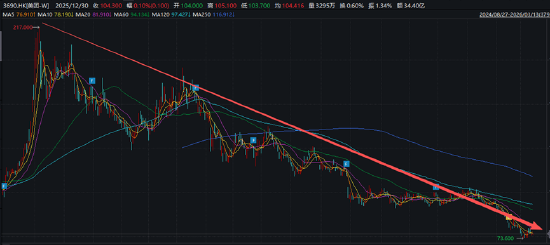
消息面上,美团拟于3月26日(星期四)举行董事会会议,以考虑及通过集团截至2025年12月31日止年 度的全年业绩。此外,3月25日,国家市场监督管理总局官网转载经济日报名为《外卖大战该结束了》 的文章,其中提到,在近日举行的新闻发布会上,市场监管总局披露了外卖平台反垄断调查的最新进 展,表示监管部门已进驻相关平台开展现场调查,下一步将通过问卷、核查等方式进一步传导监管压 力,研究处置措施。这向市场传递了监管的态度:疯狂的外卖大战,必须熄火了! 智通财经APP获悉,美团-W(03690)午后拉升超11%,截至发稿,涨11.01%,报87.7港元,成交额62.5亿 港元。 ...

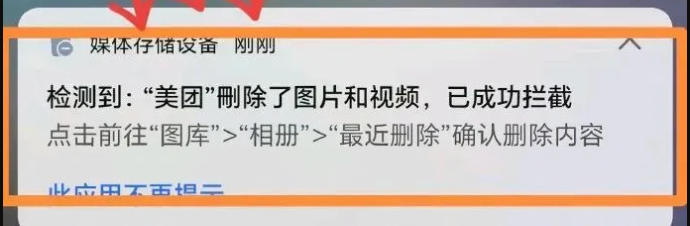
安卓用户图片被删?美团客服称约百余人受影响,将协助找回并赔偿
Xin Lang Cai Jing· 2026-03-24 05:12
Core Viewpoint - Recent reports from multiple Android users indicate that the Meituan app has allegedly deleted photos and videos from their devices without authorization, particularly after using the app for food delivery or browsing [1][3]. Group 1: User Impact - Over 180 users have contacted customer service regarding the issue, with an estimated potential impact on hundreds of users [3]. - Meituan has established a special technical support team to assist affected users in recovering their data and has apologized to each impacted user, committing to cover all costs and compensate for losses [3]. Group 2: Technical Explanation - The issue is attributed to a rare conflict between the app's automatic cache cleaning and third-party SDKs, which may have led to the erroneous deletion of user photos [3][4]. - Analysts suggest that the app's cache files and user photo directories are normally separate, indicating a possible code vulnerability or excessive use of system deletion interfaces [4]. Group 3: Historical Context - This is not the first incident concerning user data security for Meituan; previous issues include unauthorized collection of sensitive user information in 2018 and 2019 [6]. - Meituan's CEO has publicly stated that privacy protection is considered a significant social responsibility by the company [6]. Group 4: User Base Statistics - According to QuestMobile, Meituan's monthly active users are projected to reach 510 million by December 2025, with a year-on-year growth of 3%, and over 70% of these users are on Android [3].

美团迎战至暗时刻:市值蒸发6000亿,外卖护城河被击穿
Sou Hu Cai Jing· 2026-03-19 00:20
Core Insights - The intense competition in the food delivery market has significantly impacted Meituan's financial performance, leading to a drastic decline in stock price and profitability over the past year [2][3][22] Group 1: Market Competition - The entry of JD.com into the food delivery sector has disrupted Meituan's previously strong market position, with Meituan's stock price dropping from 189 HKD to around 80 HKD, a decline of 58% [2][4] - Alibaba's aggressive subsidy strategy, including a 500 billion RMB plan for Taobao Flash Sale, has forced Meituan and JD.com to engage in a costly price war, resulting in significant losses for all parties involved [6][7] - Meituan's core local business segment has shifted from a profit of 524.15 billion RMB in 2024 to a projected loss of 68-70 billion RMB in 2025, highlighting the severe impact of competition [3][7] Group 2: Financial Performance - Meituan's projected losses for 2025 are estimated between 233 billion to 243 billion RMB, a stark contrast to the previous year's profit of 358.08 billion RMB [7][22] - The operational costs for Meituan have surged, with sales costs increasing by 23.7% and marketing expenses rising by 91% in 2025 [10] Group 3: Strategic Moves - In response to the competitive landscape, Meituan has made a defensive acquisition of Dingdong Maicai for 7.17 billion USD to bolster its instant retail capabilities and integrate its logistics network [12][14] - Meituan is also expanding its offline presence through new store formats, aiming to enhance its supply chain and compete more effectively in the retail sector [15][16] Group 4: Emerging Threats - Douyin (TikTok) is establishing a stronghold in the local services market, launching a new app "Dou Sheng Sheng" that offers competitive pricing on group buying, posing a significant threat to Meituan's market share [17][19] - Douyin's strategy focuses on creating a standalone platform for transactions, which could further erode Meituan's customer base in both food delivery and local services [20][21]

央视《新闻联播》关注“新职伤”为新就业“兜底” 美团已缴纳超27亿元保费
Xin Lang Cai Jing· 2026-03-17 03:28
Core Insights - The report highlights the progress of the "New Occupational Injury" (referred to as "New Job Injury") protection for new employment forms, transitioning from pilot programs to nationwide implementation [1][7] - This initiative is a significant institutional innovation affecting approximately 84 million delivery riders and ride-hailing drivers in China, addressing the lack of protection for these flexible workers [3][9] Policy Development - The "New Job Injury" pilot program began in July 2022 in seven provinces, including Beijing and Shanghai, with the aim of creating a model where platform companies pay for occupational injury insurance for their workers [3][9] - By July 2025, the pilot program will expand to 17 provinces, with over 25 million participants already enrolled as of March 2023 [3][9] Financial Contributions - As of February 2026, Meituan, a leading platform company, has paid over 2.77 billion yuan in insurance premiums, covering approximately 17.28 million riders [4][10] Welfare Initiatives - Meituan is also exploring long-term welfare support for new employment form workers, including a pension insurance subsidy starting in 2025, covering 50% of the insurance costs for eligible riders [6][12] - The company has initiated "rider apartments" in cities like Beijing and Chengdu, providing subsidized housing to alleviate transitional housing pressures for riders [6][12] - The "Rider Major Illness Care Plan" has been upgraded to cover all types of riders and their immediate family members, with over 7,570 beneficiaries and more than 210 million yuan in care funds distributed since its launch in 2019 [6][12] Social Safety Net - The solid advancement of the "New Job Injury" system is creating a more robust social safety net for millions of new employment form workers, addressing the need for enhanced rights protection in the context of flexible employment [7][13]

2026外卖AI大战:美团死守、阿里降维、京东深耕
Sou Hu Cai Jing· 2026-03-17 01:45
Core Insights - The takeaway from the article is that the food delivery industry is shifting from a subsidy-driven growth model to a technology-driven efficiency model, marked by an AI competition among major players like Meituan, Alibaba, and JD.com [2][3][17]. Group 1: Meituan's Strategy - Meituan's CEO Wang Xing announced a cultural shift within the company by asking employees to stop calling him "Xing Ge," indicating a move towards a more agile and less hierarchical organization to adapt to the AI era [3][4]. - The company aims to leverage its strengths in the physical world, focusing on optimizing user experience through software and hardware integration, such as the AI applications "Xiao Mei" and "Xiao Tuan" [8][10]. - Meituan's data advantage, including comprehensive restaurant information and real-time delivery tracking, creates a strong competitive moat that is difficult for rivals to replicate [9][10]. Group 2: Alibaba's Approach - Alibaba's AI strategy focuses on traffic distribution, aiming to control user demand through its AI platform "Tongyi Qianwen" and the Taobao Flash Purchase ecosystem [11][12]. - The company invested 3 billion in subsidies during the Spring Festival to encourage over 130 million users to engage with its AI for shopping and food delivery, streamlining the user experience [11][12]. - Alibaba's ambition extends beyond food delivery, seeking to reshape consumer decision-making processes and enhance platform credibility through its AI capabilities [12][13]. Group 3: JD.com's Differentiation - JD.com is concentrating on B2B and delivery efficiency, utilizing advanced technologies like the JDX20 drone to enhance delivery capabilities [14][15]. - The company has achieved an average delivery time of 28 minutes with a low late delivery rate of 2%, showcasing its operational efficiency [15]. - JD.com's strategy emphasizes specialization in high-demand sectors such as B2B delivery and high-end fresh produce, building a solid competitive barrier [16]. Group 4: Future Predictions - The competition in the food delivery sector is expected to evolve from user acquisition through subsidies to efficiency driven by technology, with a focus on service quality [17][18]. - The ultimate winner will be the platform that effectively integrates AI into everyday life, addressing user pain points and enhancing overall service [18][19].



最坏情况预期:滴滴
citic securities· 2026-03-16 11:49
Group 1: Company Performance - Didi's Chinese ride-hailing business saw a 10% year-on-year increase in order volume, reaching 3.6 billion orders, with a total transaction value (GTV) of 87 billion yuan, up 11% year-on-year[5] - Adjusted EBITDA for the Chinese ride-hailing business was 2.6 billion yuan, with a GTV profit margin of 3.0%[5] - Didi maintains its GTV profit margin target of 4.2% for 2026[5] Group 2: International Business and Strategy - Didi's international food delivery business experienced a 25% year-on-year growth in order volume, with GTV growth accelerating to 47% (38% excluding exchange rate effects)[6] - The company aims to achieve a quarterly food delivery GTV of $2 billion in Brazil by Q4 2026, positioning itself as the second-largest platform in the region[7] - Despite significant losses of 3.4 billion yuan in Q4, the international ride-hailing and fintech businesses have reached breakeven[6] Group 3: Market Outlook and Risks - The management is confident in the current food delivery strategy, indicating that the worst period may soon be over if Q1 2026 can achieve both scale expansion and controlled losses[4] - Investment risks include intensified competition, macroeconomic slowdowns, regulatory risks, and challenges related to international expansion and autonomous vehicle development[9] - Didi's market share in China remains stable at 70-75%, with ongoing operations in ride-hailing, food delivery, and fintech[10]

滴滴出行:25Q4财报点评:中国出行增速及利润保持稳健,巴西外卖业务加大投入
CMS· 2026-03-15 07:57
Investment Rating - The report maintains a "Strong Buy" rating for Didi Chuxing, indicating a positive outlook on the company's stock performance [1][3]. Core Insights - Didi Chuxing reported a revenue of 58.4 billion yuan for Q4 2025, representing a year-on-year increase of 10.5%, while adjusted net profit decreased by 6% to 530 million yuan [1]. - The company's domestic ride-hailing business showed stable growth, with a Gross Transaction Value (GTV) of 87.2 billion yuan in Q4 2025, up 11.2% year-on-year, and a projected EBITA margin improvement from 3.7% in 2025 to 4.2% in 2026 [1][3]. - Internationally, Didi's food delivery business in Brazil is expected to incur larger losses in 2026, although quarterly losses are anticipated to improve [1][3]. - The report highlights the potential for long-term profit growth in Didi's ride-sharing market, supported by operational efficiencies and reduced user subsidies [1][3]. Financial Performance Summary - For the fiscal year 2024, the main revenue is projected at 206.8 billion yuan, with a year-on-year growth of 7% [2]. - Adjusted net profit is expected to rise significantly by 804% in 2024, reaching 5.6 billion yuan, before declining in subsequent years [2]. - The earnings per share (EPS) is forecasted to be 0.26 yuan in 2024, decreasing to 0.05 yuan in 2026, before rebounding to 5.52 yuan by 2028 [2][8]. - The company's total assets are projected to grow from 143.9 billion yuan in 2024 to 205.5 billion yuan by 2028 [4]. Market and Operational Insights - Didi's international business GTV reached 36.59 billion yuan in Q4 2025, marking a 47.1% increase year-on-year, with a significant rise in order volume [3]. - The report notes that Didi's other business segments experienced a revenue decline of 7.9% year-on-year, with an adjusted EBITA loss of 1.29 billion yuan [3]. - The company has initiated a share buyback program, reflecting confidence in its operational performance, with a total of 3.436 billion yuan repurchased between November 2025 and February 2026 [3].
赚麻了!滴滴25年营收2267亿:国内稳健增长,海外加速收获
Xin Lang Cai Jing· 2026-03-13 15:15
Core Insights - Didi's performance in both domestic and international markets has shown stability, with a positive outlook for 2025 [1][9] Domestic Performance - In Q4, Didi's domestic ride-hailing order volume increased by 10.1% year-on-year, maintaining double-digit growth for 12 consecutive quarters [3][11] - The Gross Transaction Value (GTV) for Q4 grew by 11.2%, indicating an increase in average order prices [3][11] - For the full year of 2025, domestic order volume is projected to grow by 10.8% to 13.735 billion orders, while GTV is expected to rise by 10.7% to 333.8 billion yuan [3][11] International Performance - In Q4, Didi's international order volume surged by 24.5% year-on-year to 1.265 billion orders, with a daily average of nearly 14 million orders [3][11] - The GTV for international operations in Q4 increased by 47.1% to 36.6 billion yuan, with a full-year GTV growth forecast of 28.2% to 117 billion yuan for 2025 [3][11][12] Business Strategy - Didi's CEO Cheng Wei emphasized increased strategic investment in overseas new businesses, which have exceeded expectations [5][12] - The company is focusing on multi-business synergy, particularly in the Latin American market, where its food delivery brand 99Food has been relaunched [5][13] - The competitive landscape in Brazil includes major players like iFood and Meituan's Keeta, with 99Food gaining market share in urban areas [13][14]

滴滴四季度核心会员数同比上涨超过15%
Jing Ji Wang· 2026-03-13 09:41
Core Insights - Didi's Q4 2025 performance shows steady growth, with core platform order volume increasing by 13.5% year-on-year to 4.844 billion orders, and a peak daily order volume exceeding 65 million [1] - The total Gross Transaction Value (GTV) for the core platform in Q4 reached 123.8 billion yuan, reflecting a year-on-year growth of 19.9%, while the annual GTV for 2025 was 450.8 billion yuan, up 14.8% [1] - Didi's CEO highlighted the strong performance in both domestic and international markets, with a focus on strategic investments in overseas new businesses and the successful launch of the new Robotaxi model R2 [1] Domestic Business Performance - In Q4 2025, Didi's domestic ride-hailing orders grew by 10.1% year-on-year to 3.578 billion, with an average daily order volume of 38.9 million [2] - The GTV for domestic services in Q4 was 87.2 billion yuan, marking an 11.2% increase year-on-year, while the annual GTV for 2025 reached 333.8 billion yuan, up 10.7% [2] - Didi has been diversifying its service offerings to meet personalized user demands, introducing various products and services such as pet transportation and premium ride options [2] User Engagement and Membership Growth - Didi's core membership numbers increased by over 15% year-on-year in Q4, with more than 20 membership benefits launched, including cross-industry partnerships with brands like Hilton and Hainan Airlines [3] - The company has enhanced user experience at 313 airports and train stations across 165 cities, including major hubs like Beijing Capital International Airport [3] International Business Expansion - Didi's international business saw a significant order volume increase of 24.5% year-on-year in Q4, reaching 1.265 billion orders, with an annual total of 4.505 billion orders, up 24.7% [4] - The GTV for international operations in Q4 was 36.6 billion yuan, reflecting a 47.1% year-on-year growth, while the annual GTV for 2025 was 117 billion yuan, up 28.2% [4] - Didi's international services now cover 14 countries and regions, serving over 100 million users, with a strong presence in Brazil, where it has accumulated 55 million active users [4][5] Technological Advancements - Didi is actively exploring the application of AI and autonomous driving technologies, with the launch of the new Robotaxi model and ongoing testing in major cities [5] - The company aims to promote its autonomous driving technology and experience globally, focusing on responsible innovation and user needs [5]
美团市值蒸发2.2万亿港元:外卖市场地位被撼动市场份额滑落至不足50% 首款AI浏览器Tabbit陷抄袭风波
Xin Lang Cai Jing· 2026-03-13 08:26AI Processing
Core Viewpoint - Meituan's stock price has been on a downward trend since October 2024, with a market capitalization dropping from a peak of HKD 2.658 trillion to HKD 468.9 billion by March 2026, reflecting investor concerns about the company's future growth prospects [1][13]. Group 1: Financial Performance - Meituan is expected to report a net loss of between RMB 23.3 billion and RMB 24.3 billion for the year 2025, marking a significant downturn from previous profitability [3][15]. - The core local business segment, once a cash cow, is projected to incur an operating loss of RMB 6.8 billion to RMB 7 billion in 2025, highlighting the intense competition in the instant retail sector [3][16]. - The company's market share in the food delivery sector has fallen from over 70% at its peak to approximately 48%, with Alibaba and JD.com capturing 33% and 19% of the market, respectively [6][18]. Group 2: Competitive Landscape - JD.com has aggressively entered the food delivery market with a "0 commission + RMB 10 billion subsidy" strategy, prompting Meituan and Alibaba to respond with their own competitive measures [4][16]. - The competition in the instant retail space is expected to intensify in 2026, with JD.com aiming for a market share of over 30% and Alibaba prioritizing its "Taobao Flash Sale" initiative as a key strategic focus [20][21]. - The shift from a "burning cash war" to a "sustained consumption" model indicates that competition will only escalate, raising questions about Meituan's ability to maintain its market share [21]. Group 3: AI Strategy and Challenges - Meituan's attempt to enter the AI space with the launch of its first AI-native browser, Tabbit, faced backlash due to allegations of code plagiarism, revealing potential strategic anxieties and technical shortcomings [2][11]. - The incident with Tabbit highlights the challenges Meituan faces in its AI initiatives, as it struggles to keep pace with competitors like Alibaba and Tencent, who are building comprehensive ecosystems around AI and cloud computing [10][22]. - The competitive landscape in AI is becoming increasingly polarized, with Meituan's focus on vertical business scenarios limiting its ability to compete effectively against larger players [22][23].