
新式茶饮

Search documents
蜜雪、古茗上市首份中报出炉,业绩飘红、股价却翻绿?
Sou Hu Cai Jing· 2025-08-27 14:32
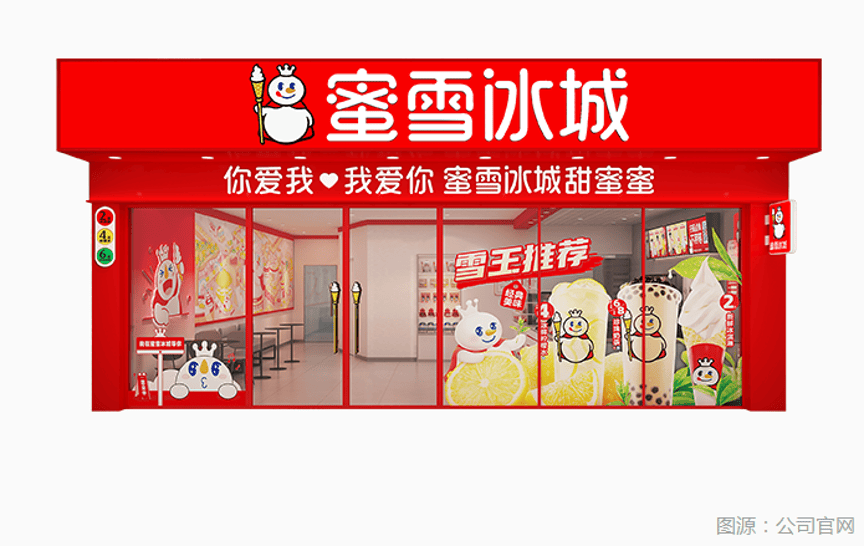
Core Insights - Both Mixue Group and Guming reported strong interim results for the first half of 2025, marking their first mid-term performance since going public [2][5] Group 1: Mixue Group Performance - For the first half of 2025, Mixue Group achieved revenue of 14.87 billion RMB, a significant increase of 39.3% year-on-year [3] - Gross profit reached 4.71 billion RMB, up 38% from the previous year, with a gross margin of approximately 31.6% [4] - Net profit for the period was 2.72 billion RMB, reflecting a 44.1% increase year-on-year, indicating strong profitability despite competitive pressures [4] - The company's store count expanded to 53,014, with 9,796 new stores added compared to the same period last year, surpassing Starbucks in terms of store numbers [4] Group 2: Guming Performance - Guming reported revenue of 5.66 billion RMB for the first half of 2025, a year-on-year increase of 41.2% [5] - Gross profit was 1.79 billion RMB, up 41% year-on-year, with a gross margin of 31.5% [7] - The net profit for the period reached 1.63 billion RMB, a substantial increase of 119.8% year-on-year, indicating strong growth in profitability [7] - Guming's store network grew to 11,179, a 17.5% increase from the previous year, covering over 200 cities [6] Group 3: Market Reactions - Despite strong performance, both companies' stock prices fell post-announcement, with Mixue down 5.27% and Guming down 3.75% [8] - Market analysts suggest that the decline may be due to profit-taking by investors after significant stock price increases since their IPOs [8]

消费板块拐点将至?2025中报前瞻揭示消费配置机遇
Sou Hu Cai Jing· 2025-07-22 07:46
Core Viewpoint - The consumer sector is showing signs of recovery, with various sub-sectors experiencing growth and opportunities as domestic consumption trends improve [1][10]. Group 1: Consumer Sector Overview - Since early 2025, there has been a gradual recovery in consumer sentiment, with domestic demand contributing 68.8% to GDP growth in the first half of the year, and final consumption expenditure contributing 52% [1]. - The implementation of policies such as the "Special Action Plan to Boost Consumption" has injected vitality into the consumer market, leading to significant increases in tourism and dining revenues during holidays [1]. - The upcoming mid-year reporting season is expected to be a critical point for validating the recovery in the consumer sector [1]. Group 2: Food and Beverage Sector - The food and beverage industry is experiencing structural differentiation, with the liquor sector under pressure while leading brands maintain steady growth due to strong brand influence [2]. - The beer sector benefits from consumption upgrades and product innovation, while the snack sector is growing due to health-conscious and personalized consumption trends [2]. Group 3: Textile and Apparel Sector - The textile and apparel industry is seeing a recovery in demand, particularly in the sportswear segment, driven by increased awareness of fitness among consumers [3]. - Major sports brands are investing in R&D to launch high-tech, high-performance products to meet consumer demands for quality and functionality [3]. Group 4: Retail Sector - The traditional retail sector is facing challenges from online shopping, leading to a decline in consumption; however, cross-border e-commerce leaders are showing strong growth [4]. - The high growth in import and export trade in Yiwu and the opening of global trade centers are providing new opportunities for cross-border e-commerce companies [4]. Group 5: Social Services Sector - The social services sector is witnessing a surge in cross-border tourism demand, supported by inbound travel policies and the travel needs of younger and older demographics [5]. - Online travel agencies are launching personalized and diverse travel products to cater to varying consumer needs [5]. Group 6: Light Manufacturing Sector - The light manufacturing industry is facing short-term export pressures, but segments like home furnishings, packaging, and pet food are performing well [6]. - The recovery in the real estate market is boosting demand in the home furnishings sector, while the packaging industry benefits from the growth of e-commerce and express delivery [6]. Group 7: Home Appliances Sector - The home appliances industry is experiencing a significant recovery in domestic demand, driven by government subsidies for replacing old appliances [7]. - While the export market faces uncertainties due to tariff policies, long-term growth potential remains strong as global economies recover and Chinese brands enhance their competitiveness [7]. Group 8: Hong Kong Stock Market - The Hong Kong consumer sector is characterized by scarce assets and high growth in earnings, indicating strong performance among leading companies [8]. Group 9: Trend in Niche Markets - The trendy toy industry is seeing strong performance from leading companies, with significant growth in revenue, net profit, and profit margins [9]. - The high-end and trendy gold jewelry sectors are achieving growth through unique designs and brand advantages, catering to young consumers' demand for personalized, high-quality products [9]. - The new-style tea beverage sector is showing significant differentiation, with leading brands achieving double-digit growth and strong store expansion [9]. Group 10: Policy Outlook - The government is expected to continue implementing policies to boost domestic consumption, with fiscal subsidies playing a crucial role in driving growth [10]. - Sectors such as home appliances and consumer electronics are likely to benefit from policies promoting the replacement of old products, while offline service consumption is set to see new development opportunities [10].
新茶饮,6月开店2120间
3 6 Ke· 2025-07-17 03:28
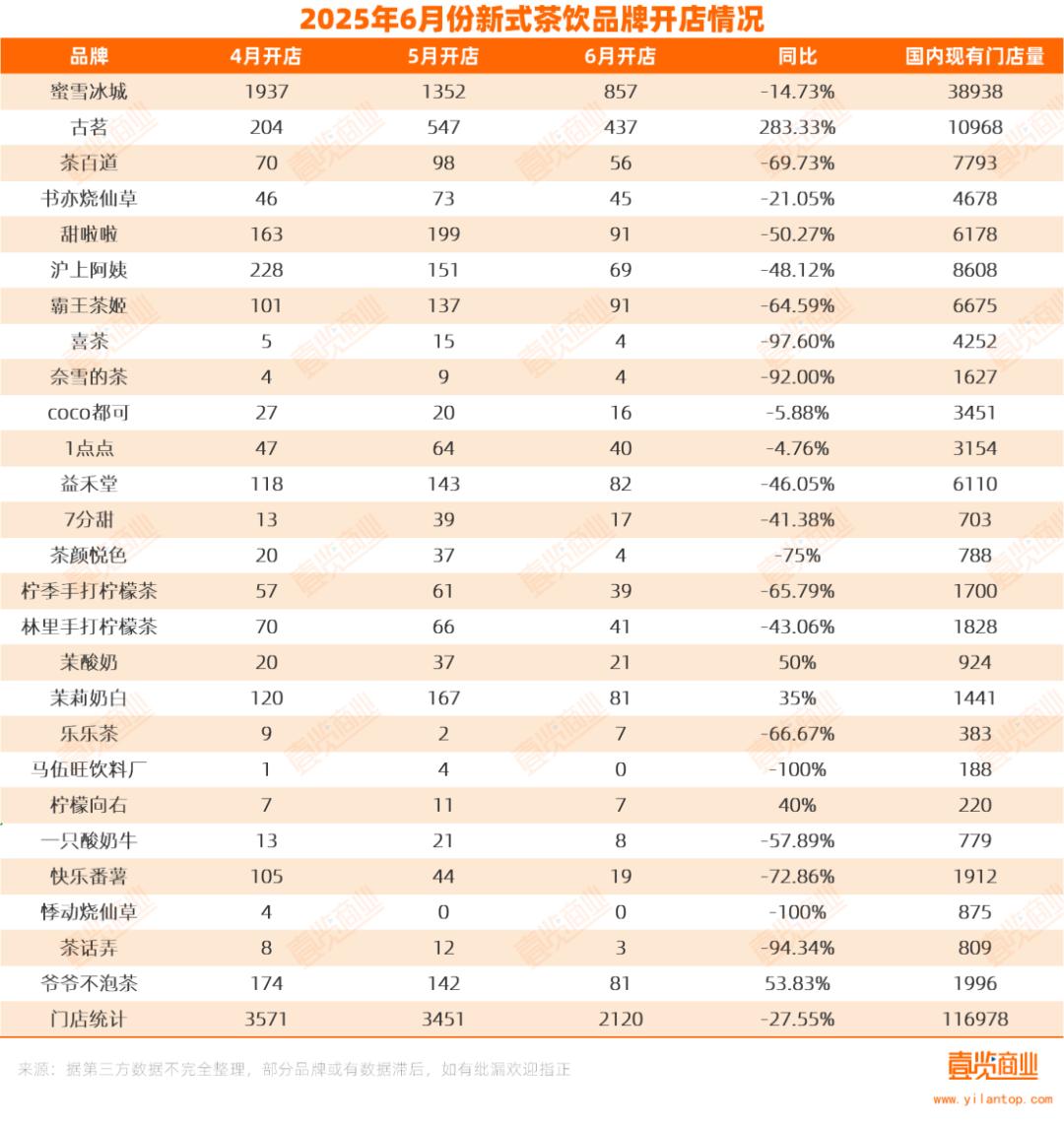
Core Insights - The new tea beverage market is experiencing a peak in new product launches and marketing as the summer season approaches [1] - In June 2025, 26 tracked tea beverage brands opened a total of 2,120 new stores, representing a year-on-year decline of 27.55% [1][4] - Despite the monthly decline in new store openings, the total number of stores in the industry has reached 116,978, an increase of 3,697 from May [1] Store Opening Trends - The leading brand, Mixue Ice City, opened 857 new stores in June, down from 1,352 in May, maintaining a total of 38,938 existing stores [3][4] - Gu Ming saw a significant increase, opening 437 new stores in June, a year-on-year surge of 283.33%, with a total of 10,968 stores [4][7] - Other notable brands include Bawang Chaji and Tianlala, each opening 91 new stores in June, with Bawang Chaji experiencing a slight decline [4][7] Product Launches - In June, a total of approximately 124 new SKUs were launched across 26 brands, an increase of 19 from May [7] - Leading brands in new product launches include Coco, which introduced 9 new SKUs, and Mixue Ice City, which launched 6 [9][10] - Seasonal flavors such as peach and berry are trending, with multiple brands introducing products featuring these ingredients [10][11] Marketing Strategies - The number of collaborative marketing campaigns has significantly increased, with 14 brands engaging in partnerships, nearly doubling from May [11] - Brands are leveraging celebrity endorsements and cultural collaborations to enhance their marketing efforts, such as Tea Yan Yue Se's partnership with the Suzhou Silk Museum [11][12] - The industry is shifting towards a more integrated marketing approach, focusing on cultural value and consumer engagement rather than relying solely on single hit products [11]

外卖市场“三国争霸”!这一赛道或成最大赢家
天天基金网· 2025-07-08 11:32
Core Viewpoint - The new-style tea beverage sector is expected to benefit significantly from the ongoing subsidy war among major food delivery platforms, with companies like Tea Baidao, Gu Ming, and Mi Xue Group showing substantial stock price increases this year [1][2]. Group 1: Market Performance - The Hong Kong stock market saw a collective surge in new-style tea beverage stocks, with Tea Baidao rising by 11% and Gu Ming and Mi Xue Group increasing by approximately 6% [1]. - Year-to-date performance shows Gu Ming up 178%, Mi Xue Group up 168%, and Luckin Coffee up 50% [1]. Group 2: Subsidy War Dynamics - On July 5, Alibaba and Meituan released a large number of high-value takeaway coupons, including offers like "25 off 21" and "16 off 16," with some items available for "zero purchase" [1]. - Following the launch of JD.com's food delivery service, a fierce competition has emerged among Alibaba, Meituan, and JD.com, with a reported total investment of 25 billion yuan in the second quarter [1]. Group 3: Financial Implications - Goldman Sachs predicts that the current food delivery price war will last longer than expected, with Alibaba's food delivery business projected to lose 41 billion yuan over the next 12 months, JD.com 26 billion yuan, and Meituan's EBIT expected to decline by 25 billion yuan [2]. - In the capital market, Meituan's stock has dropped over 21%, JD.com nearly 6%, while Alibaba's stock has risen by 30% due to better-than-expected growth in its e-commerce business [2]. Group 4: Sector Opportunities - The new-style tea beverage sector is identified as a potential winner in the ongoing subsidy competition, benefiting from high consumer frequency and low average spending, especially during the summer sales peak [2]. - The introduction of large subsidy coupons is expected to drive user engagement and increase the popularity of tea beverages on delivery platforms [2].

2亿单外卖的周末:骑手日赚千元,奶茶店忙到崩溃
Sou Hu Cai Jing· 2025-07-07 13:45
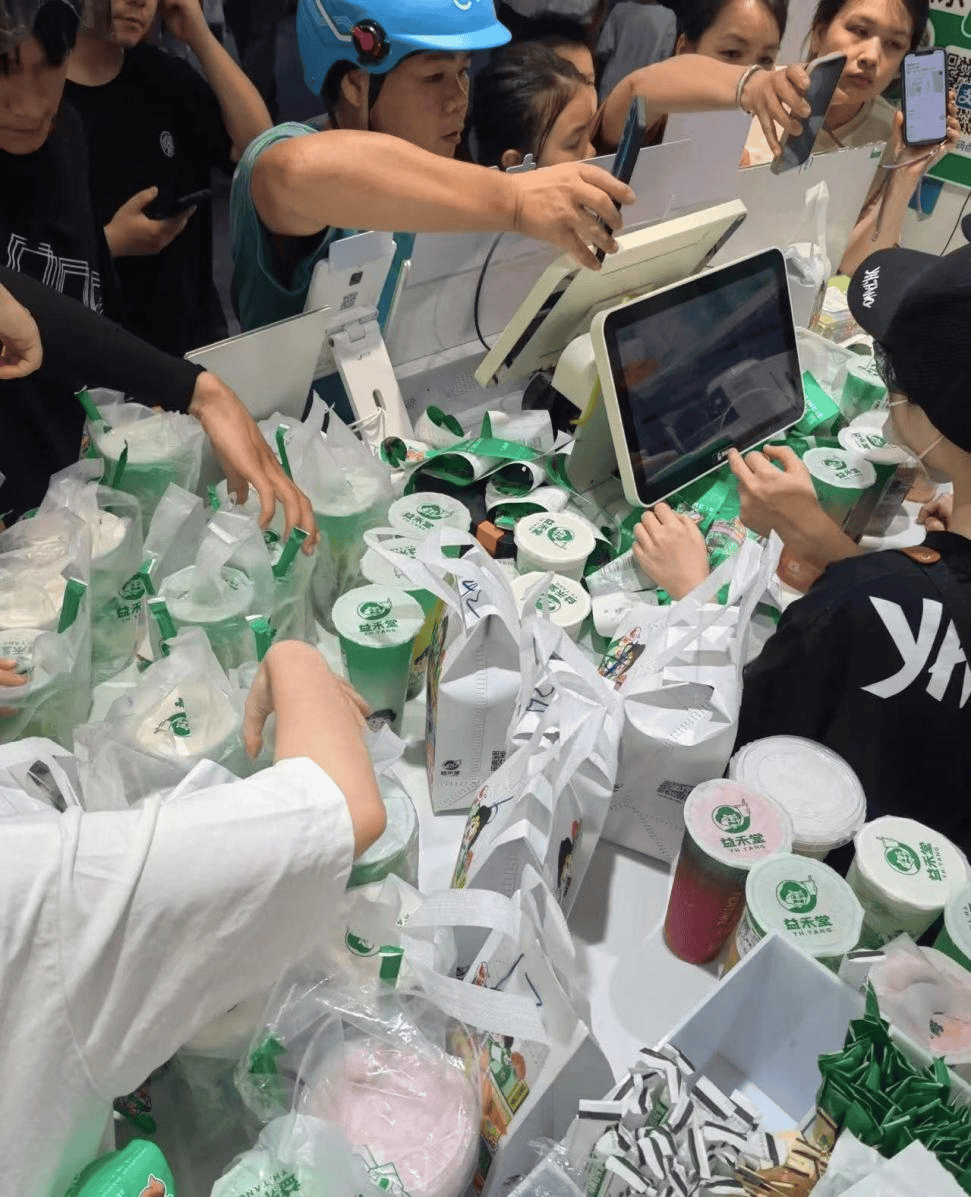
Core Insights - The takeaway from the recent surge in the food delivery market is driven by substantial subsidies from major platforms, resulting in over 200 million orders on July 5 [1][4][8] - Despite the high order volume and increased earnings for delivery personnel, the stock performance of platforms like Meituan and Alibaba remains lackluster, indicating a persistent cycle of "burning money for growth" [1][9] Group 1: Market Performance - On July 5, the combined order volume from Taobao Flash Sale, Meituan, and JD Delivery exceeded 200 million [2][4] - Meituan reported over 1.2 billion orders for the day, with more than 1 billion being food orders [4] - Taobao Flash Sale achieved a daily order volume of over 80 million, with active users reaching 200 million [2] Group 2: Consumer Behavior - The day saw a significant increase in orders for tea and coffee, with some stores reporting order volumes rising from around 100 to over 500 [5] - Delivery personnel experienced a substantial increase in earnings, with some reporting daily earnings exceeding 700 yuan due to high subsidies [4][5] Group 3: Subsidy Impact - The surge in orders was primarily fueled by aggressive subsidies from platforms, with Taobao Flash Sale announcing a 50 billion yuan subsidy plan [8] - Meituan offered substantial discounts, including "0 yuan drinks" and significant cash vouchers, leading to orders being fulfilled at minimal costs to consumers [8] - However, the high subsidy costs have raised concerns about profitability for merchants, as some reported lower profits despite higher sales volumes [9] Group 4: Stock Market Reaction - Following the surge in orders, stock prices for major platforms like Meituan and Alibaba showed minimal movement, with Meituan down 1.49% and Alibaba down 0.29% [9] - The ongoing high subsidy rates are expected to slow down the growth rate of core local business revenues for Meituan [9]
一秒,直线拉涨停!
Zhong Guo Ji Jin Bao· 2025-07-07 03:33
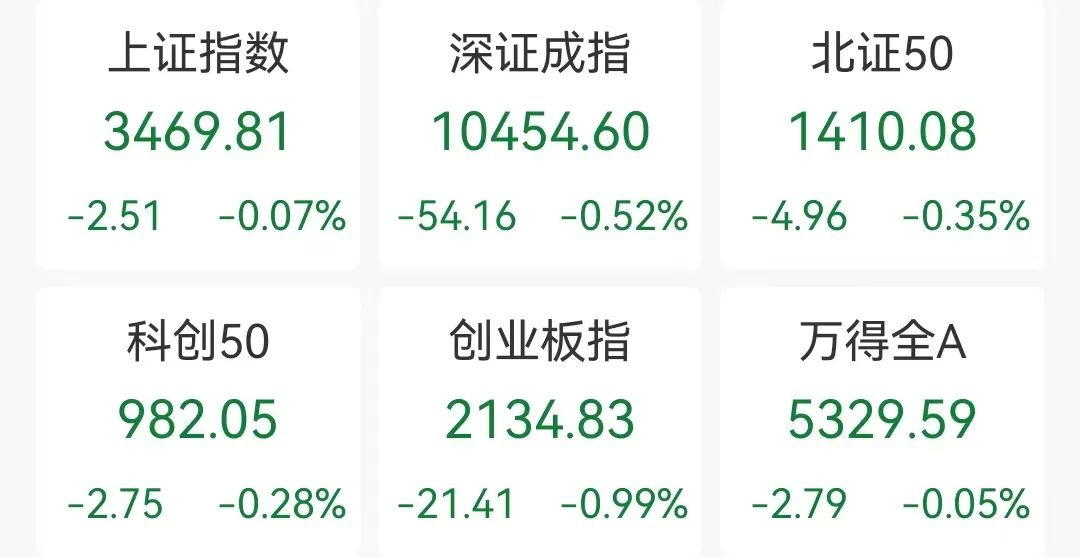
Market Overview - On July 7, the A-share market experienced a slight decline, with the Shanghai Composite Index down 0.07%, Shenzhen Component Index down 0.52%, and ChiNext Index down 0.99% [1][2] - The trading volume was significantly reduced, with total turnover around 570 billion, indicating a decrease in market activity [1] Key Stocks and Sectors - The real estate sector saw a sudden surge, with stocks like Yuhua Development and Haitai Development hitting the daily limit, while several others rose over 5% [8][9] - The new tea beverage sector also performed well, with stocks such as Cha Baidao and Guming rising by 8.33% and 7.69% respectively [4][5] - Hai Rong Technology experienced a rapid increase, hitting the daily limit with a 20.02% rise, attributed to its position in the upstream supply chain of new tea beverages [3][7] Company Developments - Hai Rong Technology focuses on high-quality raw materials and products, covering seven categories including cream, plant-based beverages, chocolate, and more [5] - Guotou Zhonglu, a major player in concentrated juice, announced a significant asset restructuring plan to acquire 100% of China Electronic Engineering Design Institute, marking a shift from traditional juice production to electronic engineering [6][8] - The housing and urban-rural development ministry is actively researching measures to stabilize expectations and stimulate demand in the real estate market, indicating potential policy support [9][10]

今天,投资人在港交所排队敲锣
3 6 Ke· 2025-06-26 04:13
Core Insights - The Hong Kong Stock Exchange (HKEX) is experiencing a surge in IPOs from consumer companies, with 12 successful listings in 2025 alone, surpassing the total of 10 for the entire year of 2024 [1][4] - Major consumer brands like Haitai Foods and Mixue Ice City have achieved significant market valuations, with Haitai Foods reaching HKD 219 billion and Mixue Ice City surpassing HKD 200 billion [1][2] - The recent supportive policies from regulatory bodies are fostering a favorable environment for consumer companies to go public, marking a new era for IPOs in this sector [2][17] Consumer IPO Trends - In 2025, notable consumer companies such as Zhou Li Fu, Sheng Bella, and Ying Tong Holdings have recently gone public, contributing to the growing trend of consumer IPOs in Hong Kong [4][5] - The "Hong Kong Three Sisters" (Haitai Foods, Mixue Ice City, and Laopu Gold) collectively have a market capitalization exceeding HKD 630 billion, showcasing the financial strength of these consumer brands [2][10] - The IPO of Mixue Ice City was particularly remarkable, with a subscription rate of 5,324 times, setting a new record for the Hong Kong market [6][11] Market Dynamics - The HKEX has over 160 companies in the IPO pipeline, with more than 30 companies having listed by mid-2025, indicating a robust interest in the market [3][4] - The consumer sector is leading the IPO wave, with 12 companies listed in 2025 compared to only 10 in 2024, highlighting a significant shift in market dynamics [4][5] - The influx of capital from both domestic and international investors is driving the growth of consumer brands in the Hong Kong market, with net inflows reaching HKD 636.9 billion in 2025 [18][19] Investment Opportunities - The valuation of consumer companies in Hong Kong is notably higher than in mainland markets, with some companies like Bubble Mart and Laopu Gold having price-to-earnings ratios significantly above the market average [17][18] - The successful IPOs of consumer brands are creating substantial wealth for their founders and early investors, with many achieving billion-dollar valuations shortly after listing [10][11] - The trend of consumer companies seeking dual listings (A+H shares) is becoming more common, as seen with brands like Mixue Ice City and Laopu Gold, which are looking to capitalize on both markets [16][18]
皇氏集团与香园食品达成战略合作 加码布局新消费
Zheng Quan Shi Bao Wang· 2025-06-25 10:51
Group 1 - The core viewpoint of the news is that Huangshi Group has signed a strategic cooperation agreement with Hubei Xiangyuan Food Co., Ltd., marking a significant step in expanding its new consumption strategy [1] - Huangshi Group aims to leverage its core advantages in the water buffalo milk supply chain and Xiangyuan Food's market strength to explore new opportunities in the beverage and tea drink sectors [1] - The ready-to-drink tea market has shown substantial growth, with the market size increasing from 70.2 billion yuan in 2018 to 211.5 billion yuan in 2023, reflecting a compound annual growth rate (CAGR) of 24.7% [1] Group 2 - Huangshi Group is enhancing its tea beverage channel development, collaborating with numerous leading brands such as Mixue Ice Cream and Tea, and Bawang Tea [2] - The company has successfully introduced high-yield water buffalo embryos from Pakistan, significantly increasing milk production per buffalo and addressing long-standing supply shortages in the industry [2] - Huangshi Group is actively launching new products like "Water Buffalo Milk Tea" and "Water Buffalo Milk Ice Cream" to capture the young consumer market while expanding its distribution channels through partnerships with major e-commerce platforms and retail chains [2]

老消费VS新消费,你看好谁?快来测测你的消费投资“段位”!(内含福利)
中国基金报· 2025-06-24 04:25
Group 1 - The article discusses the emergence of new consumer trends such as trendy toys, new-style tea drinks, and the pet economy, highlighting a wave of new consumption driven by interests, experiences, and emotions [1] - It poses questions to readers about their consumer behavior, categorizing them into "experience-oriented," "practical," or "trendsetters" in the new consumption landscape [1] - A survey titled "Youth Consumption Power Survey" is introduced, aiming to gather insights on consumer spending and preferences in the new consumption era [1] Group 2 - The article promotes participation in the survey by offering incentives, including a chance to win a cute financial mascot for selected participants [5] - It also mentions a cash red envelope lottery for all successful survey submissions, with a promise of timely distribution [7]
赚钱效应持续 四大特征解锁港股“打新”密码
Zheng Quan Shi Bao· 2025-06-16 17:33
Core Viewpoint - The Hong Kong IPO market has been thriving since 2025, with a continued profit-making effect from "new share subscriptions" Group 1: IPO Market Performance - Since 2025, 31 new stocks have been listed in Hong Kong, with only 9 experiencing a decline on their first day, resulting in a 29.03% failure rate. In the first half of 2024, 70 new stocks were listed, with 25 breaking below their issue price, leading to a 35.71% failure rate [1][2] - New stocks related to "new consumption" and "hard technology" have shown strong performance, with 13 stocks rising over 10% on their debut, including Ying'en Biotechnology, which surged by 116.70% [1][2] Group 2: Characteristics of Successful IPOs - Successful IPOs often feature leading companies in popular industries, particularly in "technology + consumption" sectors, including emerging consumer goods and advanced technology fields [1][2] - A-share companies going public in Hong Kong have also performed well, with no A-share company experiencing a decline on their first day this year. Notably, Ningde Times raised 41 billion HKD [2][3] - The quality of cornerstone investors significantly impacts the performance of new stocks, with reputable investors providing a strong endorsement of the company's fundamentals and future prospects [3][4] Group 3: Subscription Demand - High subscription multiples are a key characteristic of successful new stocks in Hong Kong, with some stocks experiencing subscription multiples exceeding 5000 times, as seen with the "Snow King" Mixue Group [4]