科创

Search documents
科创企业治理要以人力资本为主导
Di Yi Cai Jing· 2025-12-02 12:13
科创企业治理的本质是对人力资本极端动态性的制度性回应。 在人力资本主导的创新经济时代,传统公司治理模式在科创企业面前显得力不从心。笔者基于人性基本 面与制度设计理论,提出科创企业治理的本质是对人力资本极端动态性的制度性回应。其核心在于构建 一套以"动态激励相容"为灵魂、以"三权分立"的社会化治理为架构、以创新生态赋能为支撑的新型治理 范式。 重构科创企业治理的哲学基础 科创企业的治理问题,首先是一个认知框架问题。传统的公司治理理论发轫于工业时代,其隐含的前提 是货币资本的主导地位与代理成本的管控。然而,在知识经济与创新驱动的新范式下,这一前提正在被 彻底颠覆。当我们审视那些改变世界的科创企业时,会发现其成功的密码并非藏在财务报表的优化里, 而是刻在激发人类创造力的制度设计中。 治理的终极使命需要被重新锚定在"创新"这一核心上。创新不是管理流程的副产品,而是制度设计的直 接成果。只有创新可以对抗内卷,好的制度能让竞争导向创新,坏的制度则会让竞争沦为内卷。科创企 业治理的所有制度安排与机制设计,其最终的评判标准应当是能否系统性持续更好地创新。 这种创新并非简单短视的功利主义所能驱动,它需要一片特殊的文化土壤。其中 ...
花乡青旅科创园:“100%招商率”背后的焕新密码
Bei Jing Shang Bao· 2025-11-30 11:56
在北京市丰台区南三环与南四环之间,一座由老旧厂房华丽蜕变的花乡青旅科创园,正以"100%招商 率"这一亮眼成绩成为区域创新的关键节点,从空间改造到产业生态搭建,这里为北京培育新质生产力 提供了鲜活的实践样本。 废旧厂房变身科创高地 "2021年1月1日开工,6月就完成一期建设,8月底招商率100%——当时我们都没想到能这么快。"青旅 文化产业发展(北京)有限公司总经理程博回忆起园区改造初期,仍难掩兴奋。这惊人的"丰台速度"背 后,是精准规划与高效执行的完美结合。 据程博介绍,园区改造累计投入8900余万元,不仅对老厂房硬件设施全面升级,更注重"产业纯度"。主 动清退不符合"科技+文化"定位的企业,确保园区产业方向精准聚焦。二期工程于2021年9月启动,2022 年12月招商率同样达到100%。企业选择这里,一是看中毗邻总部基地、丽泽商务区的优越区位;二是 认可园区能切实解决问题的运营理念。 北京商报记者漫步园区,老工业建筑的钢筋铁骨与汽油桶焊接的公共座椅、信号塔衍生的艺术装置相得 益彰,工业风与现代感完美融合。"改造不是'推倒重来',而是让老建筑'活'起来。"程博说。这种设计 既保留历史底蕴,又吸引年轻人打卡 ...
每日钉一下(为啥市场一定会在熊市牛市之间来回切换?)
银行螺丝钉· 2025-11-20 12:54
Group 1 - The article discusses the cyclical nature of the stock market, highlighting that it oscillates between bull and bear markets due to economic cycles [7][11] - Three main cycles affecting the stock market are identified: fundamental cycle, liquidity cycle, and sentiment cycle [7][11] - The fundamental cycle refers to the growth rate of corporate earnings, which has been slow from 2022 to 2024, with a potential recovery in 2025 for certain sectors like technology and military [8][11] Group 2 - The liquidity cycle is influenced by the availability of capital, particularly affected by interest rate changes, with a significant rise in A-shares and Hong Kong stocks following the Federal Reserve's rate cuts in September 2024 [9] - The sentiment cycle reflects investor emotions, where optimism peaks during market rises and pessimism during declines, impacting investment decisions [10][11] - The interplay of these cycles can lead to simultaneous peaks or troughs, resulting in pronounced bull or bear markets [11]


ETF午评 | A股冲高回落,AI应用下挫,影视ETF、文娱传媒ETF跌2.8%,黄金股ETF涨1.78%,标普油气ETF涨2%,日经225ETF涨1.7%
Sou Hu Cai Jing· 2025-11-19 04:13
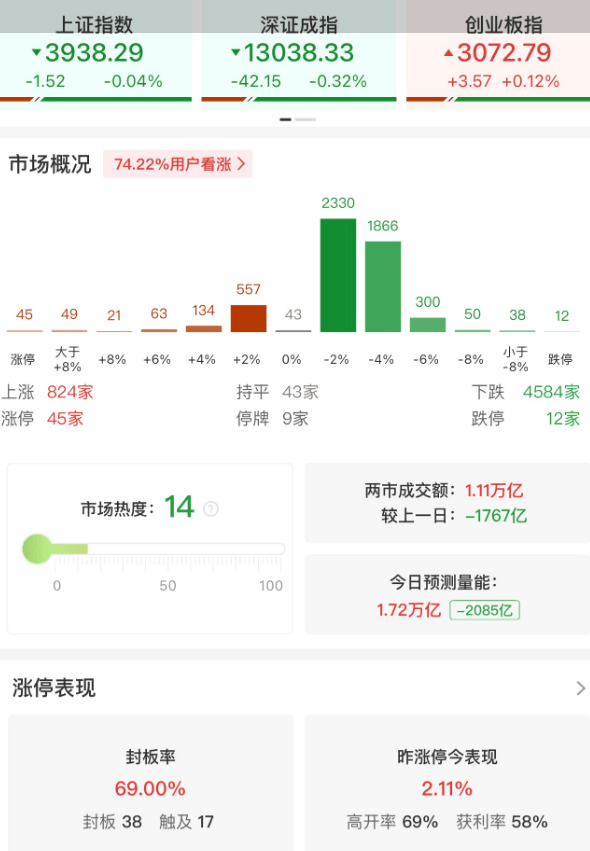
Market Performance - A-shares experienced a mixed performance with the Shanghai Composite Index down 0.04%, Shenzhen Component Index down 0.32%, and the ChiNext Index up 0.12% as of midday [1] - The Northbound 50 Index fell by 1.52%, and the total trading volume in the Shanghai and Shenzhen markets reached 1,115.7 billion yuan, a decrease of 180.4 billion yuan from the previous day [1] - Over 4,500 stocks in the market declined, indicating a broad market weakness [1] Sector Performance - Lithium mining stocks showed repeated activity, while military equipment, CPO, and oil sectors strengthened [1] - Conversely, sectors such as Hainan Free Trade Zone, photovoltaic, AI applications, innovative pharmaceuticals, and stablecoin themes experienced declines [1] - The technology innovation sector saw a downturn, with the Science and Technology Innovation New Energy ETF dropping by 2.83% [4] - The AI application sector also faced setbacks, with entertainment-related ETFs declining by 2.8% [4] ETF Performance - The Nasdaq Biotechnology ETF led gains with a rise of 3.92%, while WTI crude oil for December increased by 1.39% [3] - Both the Harvest Fund S&P Oil & Gas ETF and the Franklin Templeton S&P Oil & Gas ETF rose by 2% [3] - Gold prices rebounded, leading to a 1.78% increase in the fund's gold stock ETF [3] - Japanese stocks rose, with the Huaan Fund Nikkei 225 ETF gaining 1.7% [3]
北京:鼓励符合条件的科创企业通过债券市场募集资金
Mei Ri Jing Ji Xin Wen· 2025-11-18 08:03
Core Viewpoint - The People's Bank of China and 12 other departments have issued a plan to enhance and expand consumption in Beijing through financial support measures, focusing on bond market financing and consumer credit expansion [1] Group 1: Financial Support Measures - The plan emphasizes increasing financing support in the bond market for eligible enterprises in cultural, tourism, and education sectors [1] - It encourages qualified technology innovation enterprises to raise funds through the bond market to enhance the quality of smart elderly care and smart medical products [1] - Financial debt issuance is supported for eligible consumer finance companies, auto finance companies, and financial leasing companies to broaden funding sources and expand consumer credit [1] Group 2: Consumer Credit Expansion - The initiative promotes the securitization of retail loans, including personal auto loans, consumer loans, and credit card loans, to increase the supply capacity of consumer credit [1] - The goal is to activate existing credit stock and enhance the overall consumer credit environment [1]
香港贸发局内地总代表钟永喜:京港合作迈入“共同成就”新阶段
Xin Jing Bao· 2025-11-13 04:17
Core Insights - The 28th Beijing-Hong Kong Economic Cooperation Symposium was held from November 12 to 13 in Hong Kong, resulting in 29 signed projects with a total investment of nearly 56 billion RMB, covering areas such as technological innovation, financial services, and the digital economy [1][2] Group 1: Cooperation and Integration - The symposium highlighted a new phase of deep integration and mutual achievement between Beijing and Hong Kong, moving from traditional models of "bringing in" and "going out" to "working together" [1][2] - There are currently 14,000 Hong Kong enterprises established in Beijing, indicating a trend of deeper collaboration where businesses from both regions are merging and innovating together [2][3] Group 2: Innovation and New Productive Forces - The concept of "new productive forces" was emphasized, with innovation being key across multiple dimensions, including technology and business models [3][4] - The collaboration aims to leverage Beijing's strong research capabilities and industrial base alongside Hong Kong's international business environment and capital market advantages to create innovative platforms [3][4] Group 3: Youth Engagement and Entrepreneurship - The symposium included the 8th "Beijing-Hong Kong Youth Innovation and Entrepreneurship Competition," aimed at fostering youth innovation and providing a platform for showcasing projects [4][5] - Young people are encouraged to become "super partners" in Beijing, helping local enterprises expand internationally and contributing to the innovation landscape [4][5] Group 4: Economic Outlook and Future Cooperation - Hong Kong's GDP grew by 3.8% in Q3, with strong export growth and a vibrant IPO market, indicating a robust economic environment closely tied to national development [5] - Future expectations for Beijing-Hong Kong cooperation include enhanced collaboration in technology innovation, market integration, and support for enterprises seeking to expand globally [5]
金融“活水”精准赋能民营经济高质量发展 全省民营企业贷款突破2.5万亿元
He Nan Ri Bao· 2025-11-08 23:36
Core Insights - As of September 2025, the loan balance for private enterprises in Henan Province is projected to reach 2.55 trillion yuan, with 3.41 million loan accounts [1] - In the first three quarters, new loans issued to private enterprises amounted to 2 trillion yuan, accounting for 55.2% of new corporate loans [1] - A meeting was held on October 29 to discuss financial support for the private economy, emphasizing the need for banks to increase credit issuance in the last quarter of the year [1] Group 1 - Financial regulatory authorities are focusing on key areas and major strategies, urging banks to identify financing needs in critical sectors such as foreign trade, technology innovation, and manufacturing [2] - Banks are encouraged to innovate product offerings and provide efficient financing support tailored to the different lifecycle stages and operational scenarios of private enterprises [2] - The average interest rate for newly issued loans was 3.13% as of September, a decrease of 0.56 percentage points from the beginning of the year, aimed at ensuring low-cost credit reaches enterprises [2]
破局全球化:香港为科创企业插上资本和技术的翅膀
2 1 Shi Ji Jing Ji Bao Dao· 2025-11-06 03:25
Group 1 - The core viewpoint emphasizes the unprecedented opportunities for technology innovation companies to expand internationally against the backdrop of globalization and the deep integration of the Greater Bay Area [1] - The roundtable discussion focuses on Hong Kong's unique role as a "global hub" in this process, aiming to facilitate the globalization journey of mainland enterprises [1] - The event gathers top investors, technology leaders, and senior scholars to collaboratively explore ways to leverage Hong Kong for capital and technological advancement [1]
“耐心资本”在哪里?科创企业融资难的真相与出路
Sou Hu Cai Jing· 2025-11-05 08:04
Core Viewpoint - The financing difficulties faced by innovative enterprises in China are primarily due to a structural mismatch in the investment ecosystem, despite ongoing policy support aimed at enhancing capital market engagement with these companies [3][4]. Group 1: Background and Issues - The 2025 International Forum on Inclusive Finance highlighted the challenges of financing for innovative enterprises, focusing on optimizing long-term capital allocation and improving government fund designs [2]. - There is a growing contradiction where the willingness and ability of equity investors to engage in early-stage investments are diminishing, despite increased policy support [3]. Group 2: Challenges in Equity Investment - Early-stage and growth-stage innovative enterprises typically exhibit characteristics such as high risk, long payback periods, and insufficient short-term cash flow, making traditional bank loans and bond financing unsuitable [4]. - The current equity investment ecosystem in China has significant shortcomings in supporting early, small, and long-term investments in hard technology [5]. Group 3: Solutions to Restructure the Equity Investment Ecosystem - Mobilizing and nurturing "patient capital" is essential for bridging the financing gap for early-stage innovative enterprises, requiring alignment between funding time preferences and enterprise growth cycles [6]. - Optimizing the design of government-guided funds is crucial, with a focus on leveraging social capital through market-oriented operations [6]. - Expanding exit and liquidity channels is key to enhancing the attractiveness of seed-stage investments, particularly through the development of secondary private equity markets and merger funds [7]. - Promoting a collaborative model of investment and lending, where venture capital precedes bank support, can facilitate risk and term management [7]. - Strengthening intermediary institutions and governance capabilities in incubators can reduce information asymmetry and enhance the investability of startups [8]. Group 4: Market Dynamics and Trends - The global macroeconomic environment and geopolitical tensions have led to a decline in return expectations in the primary market, resulting in a significant reduction in the number of registered private equity and venture capital funds [10]. - Structural changes in funding sources, with an increase in government-guided funds, have led to a preference for mature projects, thereby crowding out market-driven private capital [10]. - The tightening of exit channels and high standards for listing quality have shifted investor preferences towards projects closer to commercialization, reducing interest in high-risk early-stage investments [10].

每经热评|“超42亿元天价索赔”震动科创圈 别让股权激励变纠纷导火索!
Mei Ri Jing Ji Xin Wen· 2025-11-03 13:28
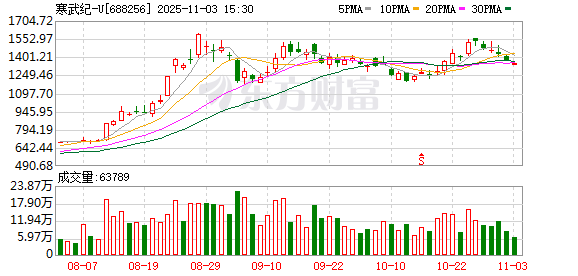
Core Viewpoint - The recent lawsuit by Liang Jun, former CTO of Cambricon (SH688256), claiming approximately 4.287 billion yuan in compensation for stock incentive losses, highlights significant issues surrounding stock incentives in the tech sector, drawing attention to the complexities and disputes that can arise in this area [2] Group 1: Stock Incentive Disputes - The lawsuit has sparked widespread market interest and emphasizes the growing concerns regarding stock incentives in innovative enterprises [2] - Disputes over stock incentives have become increasingly common in emerging sectors like technology and the internet, primarily due to two main factors: the vast difference in stock valuation before and after IPOs, and the inherent complexity of stock incentive agreements [2][3] - The disparity in stock value can lead to significant disputes, as the potential financial stakes involved are substantial, transforming minor disagreements into major conflicts [2] Group 2: Complexity of Stock Incentives - The complexity of stock incentives, coupled with insufficiently rigorous contractual agreements, serves as a direct catalyst for disputes [3] - Stock incentives span multiple legal domains, including labor law, corporate law, contract law, and securities law, making the design and execution of these agreements particularly challenging [3] Group 3: Recommendations for Companies - Companies must adopt a meticulous approach when designing contract terms for stock incentives, ensuring that all potential risks are clearly defined and addressed [3][4] - It is crucial for companies to outline specific scenarios regarding employee departure, performance issues, and other extreme situations to minimize future disputes [4] Group 4: Recommendations for Employees - Employees should thoroughly review all contractual terms related to stock incentives, paying close attention to restrictive clauses that may affect their rights [4] - Seeking independent legal advice is recommended to fully understand the implications of the terms and to assess potential risks before signing any agreements [4] Group 5: Professional Involvement - Both companies and employees should leverage professional expertise to create comprehensive and legally sound stock incentive plans [5] - Engaging specialized legal and tax advisors can help ensure that the incentive plans are clear, compliant with regulations, and designed to minimize disputes [5] Group 6: Importance of Contractual Integrity - The success of stock incentives as a driving force for innovation companies relies on a strong contractual framework and adherence to contractual obligations by both parties [5] - A commitment to contractual integrity and the establishment of a robust legal support system are essential for the effective implementation of stock incentives [5]