智能家居

Search documents
浇友谊之花 结合作硕果 “数”看东博会发展历程
Xin Hua Wang· 2025-09-17 02:16
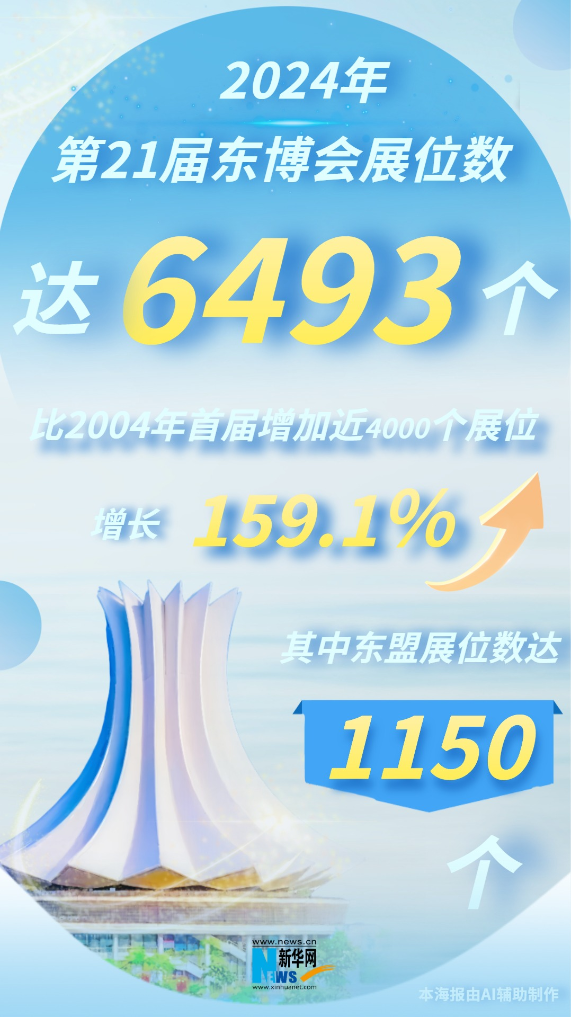
Core Insights - The China-ASEAN Expo (CAEXPO) has evolved into a significant economic and trade bridge between China and ASEAN countries since its inception in 2004, showcasing the robust growth and potential of bilateral trade and cooperation [1] Group 1: Growth Metrics - The total number of exhibition booths has increased from 2,506 in the first expo to 6,493 in 2024, with the newly added Guilin exhibition area contributing 1,093 booths [2] - The exhibition area has expanded significantly from 50,000 square meters in the first expo to 192,000 square meters in the 21st expo, marking a historical high and providing more opportunities for international display and exchange [4] - The number of participating enterprises has risen from 1,505 in 2004 to 3,300 in 2024, reflecting a growing enthusiasm among exhibitors [4] Group 2: Trade Growth - Bilateral trade between China and ASEAN has surged from $105.883 billion in 2004 to $982.34 billion in 2024, representing an increase of 827.7% [10] - The trade volume between Guangxi and ASEAN countries has also seen significant growth, from $1 billion in 2004 to 397.82 billion yuan in 2024, achieving a historical high [10] - The year-on-year growth rates for 2023 and 2024 were 22.8% and 17.2%, respectively, indicating a stable upward trend in trade [10] Group 3: Digital Transformation - The introduction of the "Cloud CAEXPO" in 2020 has attracted 9,473 enterprises over five sessions, averaging about 2,000 participants per session, demonstrating the platform's sustainability and engagement [7] - The total number of economic and trade activities reached 411, showcasing a shift from quantity to quality and enhancing the effectiveness of trade cooperation through digital services [7] Group 4: Diverse Exhibits - The expo has transitioned from showcasing specialty products to advanced processing and smart collaboration, featuring a wide range of exhibits from agricultural products to cutting-edge technology [12] - The 22nd CAEXPO will host 3,200 enterprises from 45 countries and regions, with a total exhibition area of 160,000 square meters, including a new 10,000 square meter AI pavilion [12] - Approximately 1,200 innovative products, including AI and AR technologies, will be presented, highlighting the expo's focus on technological advancement [12] Group 5: Future Outlook - The CAEXPO is entering a new phase aimed at deepening economic cooperation, promoting industrial synergy, and enhancing people-to-people connections, thereby contributing to a closer China-ASEAN community [14]

小米科技董事长雷军:智能引擎 提升金砖“含金量”
Sou Hu Cai Jing· 2025-09-17 01:56
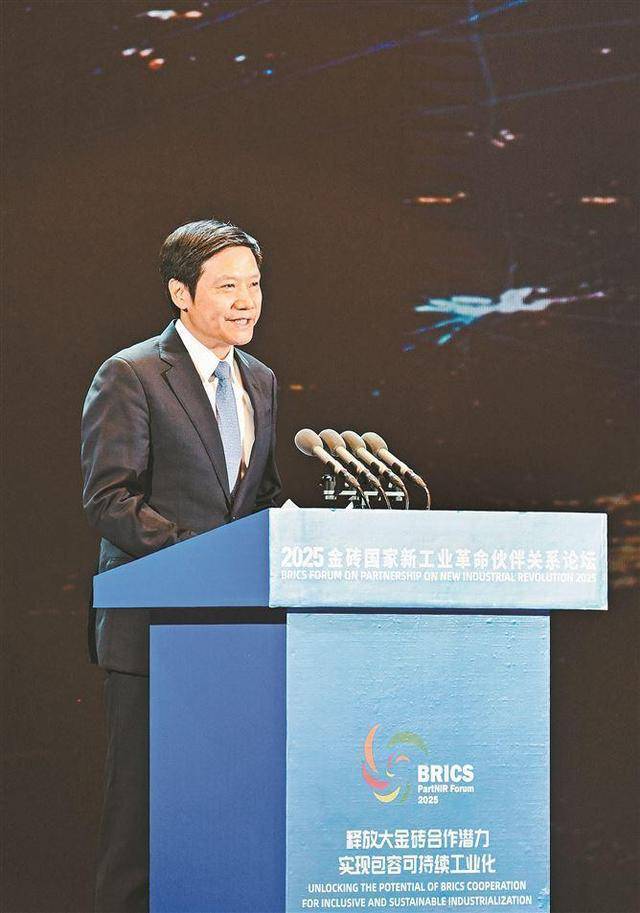
Core Viewpoint - Xiaomi's market share in BRICS countries reached 16.7% in the first half of the year, highlighting the company's growth potential in emerging markets [3][4] Group 1: Innovation and Technology - Xiaomi is leveraging AI to conduct over 10 million simulation tests to identify the optimal alloy formula for its automotive production, showcasing its commitment to integrating AI into manufacturing [4] - The company emphasizes the importance of innovation, smart empowerment, and green transformation for achieving high-quality development in the context of a new industrial revolution [3][7] Group 2: Global Collaboration and Market Expansion - Xiaomi aims to collaborate with partners in BRICS and other emerging markets to adapt product development, manufacturing, and services to local market needs, facilitating the local implementation of global technology [5] - The company is accelerating its international expansion, with plans to enter the home appliance market in Africa and Latin America this quarter [5] Group 3: Sustainable Development - Xiaomi has implemented renewable energy solutions, such as solar power, in its factories to create a green supply chain and enhance energy efficiency [7] - The company is developing its own electric vehicle, the SU7, which features a highly efficient motor and battery management system, achieving a power consumption of only 11.5 kWh per 100 kilometers [7]

营收、利润双降承压,好太太转向投资寻求突破?
3 6 Ke· 2025-09-16 23:37
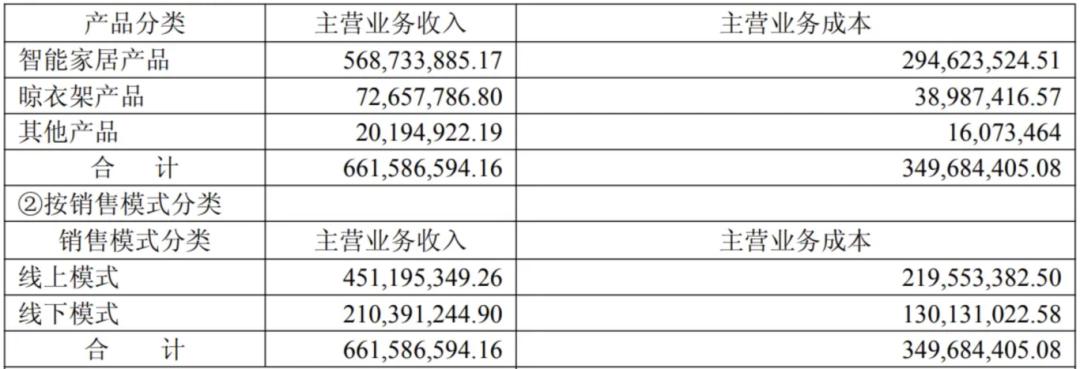
Core Viewpoint - The smart drying rack market is experiencing significant growth, but the company Haotaitai is facing a decline in performance despite the industry's positive trends [1][2][3]. Industry Overview - The smart drying rack sector is characterized by low technical barriers, leading to severe homogenization and intense competition [2]. - Major players like Haier, Midea, and Xiaomi have established comprehensive smart home ecosystems, putting pressure on smaller brands [2]. - The smart home market is projected to exceed 15 billion yuan in 2024, with a compound annual growth rate of over 20% in the past five years [1]. Company Performance - Haotaitai reported a revenue of 6.77 billion yuan in the first half of 2025, a decrease of 5.0% year-on-year, with a net profit of 861.7 million yuan, down 39.97% [5]. - For the full year 2024, Haotaitai's revenue was 15.57 billion yuan, a decline of 7.78%, and net profit was 2.48 billion yuan, down 24.07% [2]. - The company's cash flow from operating activities was 2.85 billion yuan, a decrease of 43.49% year-on-year [2]. Strategic Adjustments - In 2025, Haotaitai is implementing various strategies across channels, products, branding, manufacturing, and management to adapt to market changes [3]. - The company is focusing on online sales, which contributed 4.51 billion yuan in revenue in the first half of 2025, surpassing offline sales of 2.10 billion yuan [3]. - Despite these efforts, Haotaitai has not optimized the customer experience in offline stores or established a coordinated online-offline service system [3]. Product and R&D Insights - Haotaitai's smart home products generated 5.69 billion yuan in revenue, while drying racks contributed 730 million yuan [8]. - The company has reduced R&D investment by 17.85% year-on-year, which may hinder its technological and product leadership [4]. - The company holds 1,209 patents, but only 79 are invention patents, indicating a potential gap in product quality and innovation [10]. Financial Health - As of June 30, 2025, Haotaitai's total assets were 3.449 billion yuan, with total liabilities of 604 million yuan, resulting in a debt-to-asset ratio of 17.50% [6]. - The company has engaged in wealth management activities, investing 50 million yuan in each of two banks, but the expected returns are minimal compared to its declining performance [19]. Market Challenges - Haotaitai faces significant challenges from both industry adjustments and internal operational issues, which have led to a decline in performance [19]. - The company's reliance on the smart home sector, which accounted for 84.03% of total revenue, makes it vulnerable to market fluctuations [16]. - Quality issues have emerged, with numerous complaints regarding product reliability and performance, impacting the company's reputation [11].

中国消费:消费趋势指向何方
Sou Hu Cai Jing· 2025-09-16 12:40
Group 1 - The report by Morgan Stanley highlights the resilience and growth potential of the Chinese consumer market despite global economic uncertainties, projecting a 10.2% year-on-year growth in retail sales for 2024 [1] - Online consumption is expected to grow at a rate of 15.6% in 2024, significantly outpacing the 8.3% growth rate of offline consumption [2] - The share of service consumption is projected to increase from 45.9% in 2019 to 50.2% in 2024, indicating a shift in consumption structure [2] Group 2 - The spending power of Generation Z (born 1995-2009) is becoming more prominent, with their share of total consumer spending rising from 10% in 2019 to 15% in 2024 [2] - Consumer preferences are shifting towards quality, health, and personalization, with health food sales expected to grow by 22% and smart home products by 18% in 2024 [2] - The report identifies opportunities in emerging consumption sectors such as smart home technology, health food, and green consumption, particularly for companies with innovation capabilities and brand advantages [3] Group 3 - Leading companies in the smart home sector are projected to achieve over 30% revenue growth in 2024 [3] - The report notes potential risks such as economic slowdown, increased market competition, and rising raw material costs, which have increased by 10%-15% for some consumer goods companies in 2024 [3]

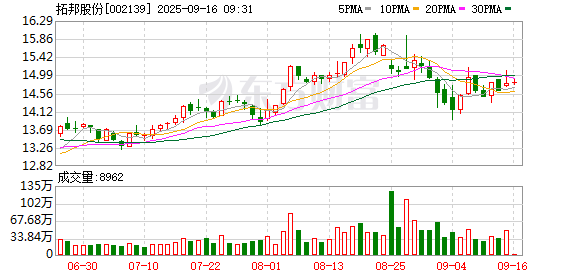
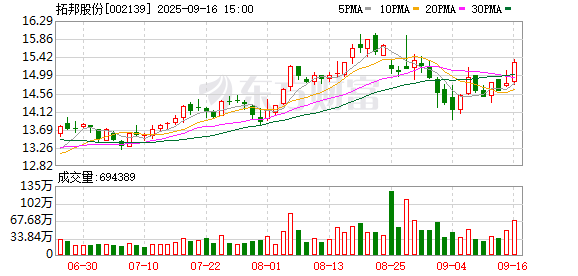
拓邦股份:公司重视智能家居及人形机器人产业的发展
Zheng Quan Ri Bao· 2025-09-16 12:16
Core Viewpoint - The company emphasizes the development of smart home and humanoid robot industries, focusing on leveraging existing technological advantages while exploring innovative application scenarios in the smart home sector [2] Group 1: Smart Home Development - The company aims to maintain its technological advantages in the home appliance sector while actively embracing new technologies like AI for smart home applications [2] - The company is committed to optimizing internal R&D efficiency and accelerating product industry validation in the smart home field [2] Group 2: Humanoid Robot Business - The humanoid robot business is identified as a core long-term strategic area for the company [2] - The company has established partnerships with clients such as UBTECH and has received small batch orders for hollow cup and component products [2] - The company plans to regularly review R&D promotion progress to continuously enhance product competitiveness [2]

石头科技:销量领跑却利润承压,转型阵痛何解?
Jing Ji Guan Cha Bao· 2025-09-16 04:46
Core Insights - Stone Technology leads the global market in vacuum cleaner shipments, achieving a market share of 20.7% with 1.34 million units shipped in Q2 2025 and a total of 2.33 million units in the first half of the year, reflecting a year-on-year growth of 67.9% [1][2] - Despite strong sales, the company's financial performance shows a stark contrast, with revenue reaching 7.903 billion yuan, a year-on-year increase of 78.96%, while net profit fell to 678 million yuan, down 39.55% year-on-year, marking a continuous decline over four quarters [1] - The decline in net profit is attributed to aggressive marketing and high R&D expenditures, with sales expenses soaring by 144.51% to 2.165 billion yuan, accounting for 27.39% of revenue, and R&D costs increasing by 67.28% to 685 million yuan, leading to a drop in gross margin from 53.81% to 44.56% [1] Company Challenges - The transition from being part of the Xiaomi ecosystem to an independent brand has resulted in the company bearing all marketing and channel costs, with significant short-term investments in overseas direct sales [2] - The global vacuum cleaner market is expected to grow, with an estimated compound annual growth rate of 26% by 2028, but the competitive landscape remains intense, requiring Stone Technology to convert its market advantage into sustainable profitability [2]

当睡眠科技遇见鸿蒙 慕思IPO助力产业智慧化升级
Cai Fu Zai Xian· 2025-09-16 03:12
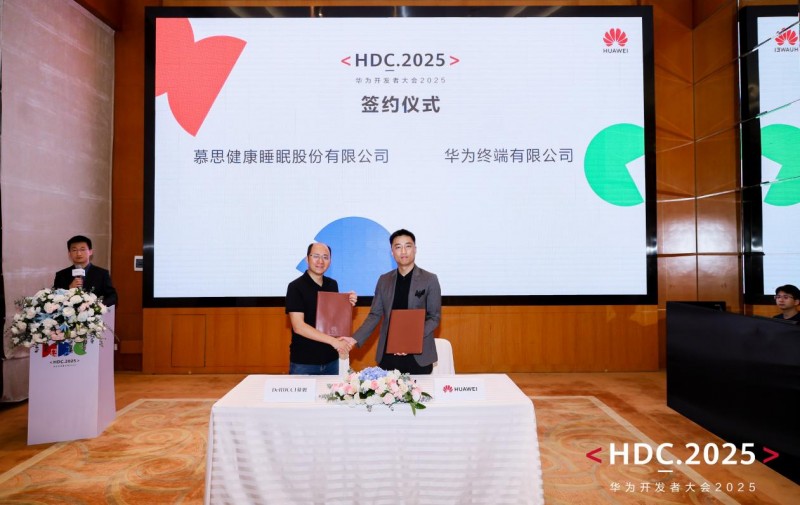
Group 1 - The core viewpoint of the articles highlights a significant transformation in the sleep technology sector, marked by the strategic partnership between Mousse Health Sleep Co., Ltd. and Huawei HarmonyOS, aiming to create a comprehensive smart sleep ecosystem [1][3][4] - This collaboration represents Mousse's strategic move into the smart sleep domain, leveraging its 20 years of experience in sleep technology and the open, compatible nature of the Harmony ecosystem to build an intelligent health ecosystem [1][3] - The partnership aims to break down device barriers, enabling seamless connectivity and collaboration among smart bedroom devices, thus enhancing the user experience from sleep products to a holistic smart sleep lifestyle [1][3] Group 2 - HarmonyOS, as a leader in the smart terminal field, seeks to inject new vitality into the health sleep sector through this collaboration, expanding its application scenarios within the smart home ecosystem [3] - Mousse, with over 1,800 patents and copyrights, has achieved a revolutionary shift from "bed adapting to people" to "people adapting to bed," and this partnership will enhance its competitive edge in the smart sleep field [3] - The integration of Mousse's sleep technology algorithms with the Harmony ecosystem is expected to transform the technological framework of the sleep industry, providing users with a warm and caring sleep environment [3][4]
全南县米家全屋智能电器中心(个体工商户)成立 注册资本20万人民币
Sou Hu Cai Jing· 2025-09-16 02:40
Core Insights - A new individual business named "Mijia Whole House Smart Appliances Center" has been established in Quannan County, with a registered capital of 200,000 RMB [1] Company Overview - The legal representative of the new business is Wen Hongseng [1] - The business scope includes a wide range of activities such as furniture sales, installation and maintenance services, and sales of various home appliances and smart home devices [1] Business Activities - The company is involved in the sale of furniture, home textiles, lighting equipment, and household appliances [1] - It also offers services related to the installation and repair of daily electrical appliances and smart control systems [1] - The business includes sales of safety monitoring systems, internet sales, and personal internet live broadcasting services [1]
广东好太太科技集团股份有限公司 关于2025年半年度业绩说明会召开情况的公告
Zhong Guo Zheng Quan Bao - Zhong Zheng Wang· 2025-09-16 02:21
Summary of Key Points Core Viewpoint - The company held a semi-annual performance briefing on September 15, 2025, to discuss its operational status and respond to investor inquiries regarding its performance and future strategies [1]. Group 1: Company Performance and Strategy - The company emphasizes continuous innovation and technological advancement, focusing on developing new products and technologies with independent intellectual property rights to maintain its competitive edge [2]. - The management acknowledges the rapid growth in market capitalization and high price-to-earnings ratio, interpreting it as market optimism regarding the company's growth potential [2]. - The company is actively expanding its product offerings in the smart home sector, having achieved certification from multiple mainstream smart home control systems [2]. Group 2: Competitive Landscape and Market Position - In response to competitive pressures from companies like Xiaomi, the company is committed to high-quality development, prioritizing product quality, technological innovation, and user experience [3]. - The company is enhancing its distribution channels through new retail transformations and partnerships with quality distributors to improve operational efficiency and expand market share [3]. - The company's core smart home products are included in the local government's appliance replacement subsidy program, indicating a strategic alignment with government policies to boost consumer spending [3].
拓邦股份:人形机器人业务是公司长期布局的核心赛道,现已与优必选等客户建立合作
Mei Ri Jing Ji Xin Wen· 2025-09-16 01:30
Group 1 - The company is optimistic about the future market prospects of smart home and humanoid robots, leveraging its first-mover advantage in these fields [2] - The company acknowledges the need to improve efficiency in new product development and promotion applications, and plans to communicate this suggestion to management [2] - The company emphasizes its commitment to the development of smart home and humanoid robot industries, focusing on maintaining existing technological advantages and exploring innovative application scenarios [2] Group 2 - The company has established partnerships with clients such as UBTECH and has received small batch orders for hollow cup and component products [2] - The company aims to continuously optimize internal research and development efficiency, accelerate product industry validation, and regularly review the progress of research and promotion [2] - The company is actively embracing new technologies like AI in the smart home sector to enhance product competitiveness [2]