
智能手机

Search documents
2025中国手机市场:苹果四季度第一,华为全年第一
Guan Cha Zhe Wang· 2026-01-14 05:38
Core Insights - The Chinese smartphone market is projected to see a slight decline in shipments, with approximately 75.78 million units expected in Q4 2025, representing a year-on-year decrease of 0.8% [1][2] - Apple leads in Q4 shipments with 16 million units, achieving a market share of 21.1%, while Huawei tops the annual rankings with 46.7 million units shipped [1][3] Q4 2025 Performance - Apple: 16 million units shipped, 21.1% market share, 21.5% increase year-on-year [2] - Vivo: 12 million units shipped, 15.8% market share, 8.8% decrease year-on-year [2] - OPPO: 11.6 million units shipped, 15.3% market share, 10.2% increase year-on-year [2] - Huawei: 11.1 million units shipped, 14.7% market share, 10.3% decrease year-on-year [2] - Xiaomi: 10 million units shipped, 13.2% market share, 18% decrease year-on-year [2] - Honor: 9.9 million units shipped, 13.1% market share, 6.1% decrease year-on-year [2] Annual Performance 2025 - Total shipments in China are estimated at 285 million units, down 0.6% from the previous year [3][4] - Huawei: 46.7 million units, 16.4% market share, 1.9% decrease year-on-year [4] - Apple: 46.2 million units, 16.2% market share, 4% increase year-on-year [4] - Vivo: 46.1 million units, 16.2% market share, 6.6% decrease year-on-year [4] - Xiaomi: 43.8 million units, 15.4% market share, 4.3% increase year-on-year [4] - OPPO: 43.4 million units, 15.2% market share, 2.1% increase year-on-year [4] Global Market Overview - Global smartphone shipments reached 1.26 billion units in 2025, with Apple (19.7% market share) and Samsung (19.1% market share) leading the market [5][6] - The global market is expected to face challenges in 2026 due to ongoing storage chip shortages, which may lead to a decline in shipments [6]




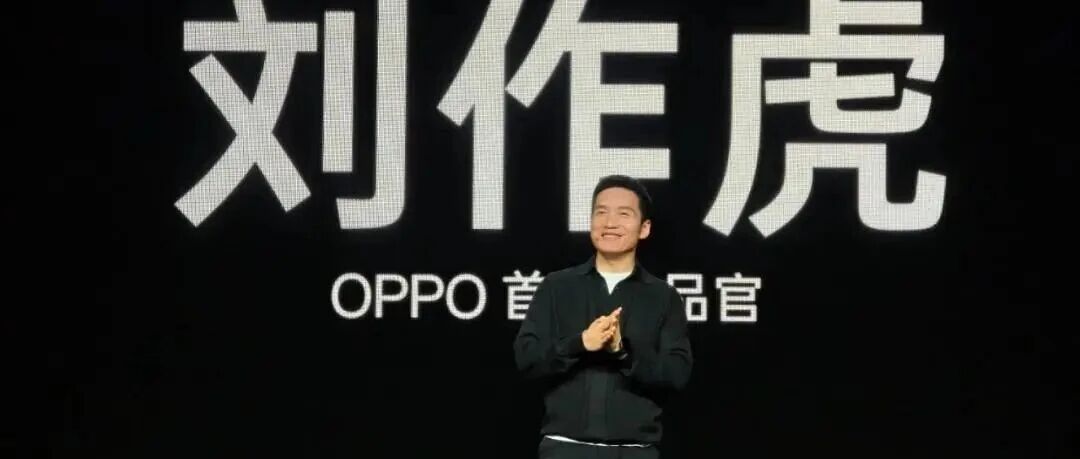
突发!一加手机CEO刘作虎遭通缉!
国芯网· 2026-01-14 04:46
Group 1 - The founder and CEO of OnePlus, Liu Zuohua, is wanted by Taiwanese authorities for allegedly recruiting over 70 top engineers in Taiwan for software development without permission [2][5] - Liu established a subsidiary in Taiwan under the guise of a Hong Kong company to circumvent legal scrutiny, investing 5.087 billion RMB over six years to attract talent [4][5] - The Taiwanese prosecutors have charged two local executives for violating cross-strait relations regulations, while Liu is separately wanted [5][6] Group 2 - The Taiwanese subsidiary, initially set up as a Hong Kong consulting firm, was primarily focused on software development for OnePlus, with all operational details reported back to the Shenzhen parent company [5][6] - The prosecutors argue that the establishment of the subsidiary without proper approval disrupts market competition and involves illegal recruitment of high-tech talent from Taiwan [6]
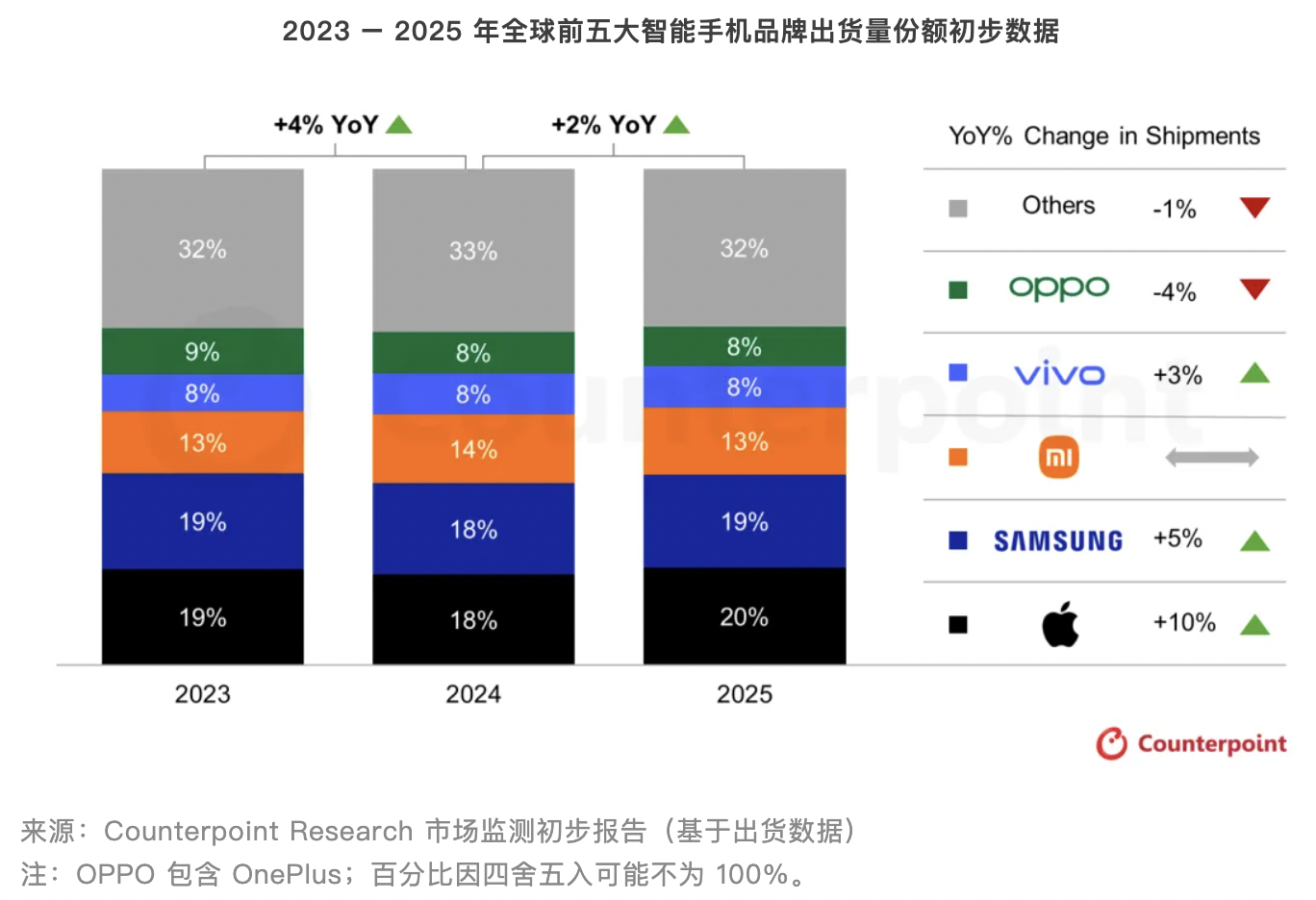
苹果登顶2025全球手机市场份额榜,三星和小米位列第二、三名
Xin Lang Cai Jing· 2026-01-14 04:08
Group 1 - The global smartphone market is expected to see a second consecutive year of growth in 2025, with a 2% year-on-year increase in shipments, driven by high-end trends and the rising adoption of 5G devices in emerging markets [1] - Apple leads the market with a 20% share and a 10% year-on-year growth, making it the fastest-growing brand [1] - Samsung follows closely with a 19% market share, while Xiaomi holds the third position with 13% [1] Group 2 - In Q4 2025, smartphone shipments showed a modest increase of 1% year-on-year, impacted by previous inventory buildup [4] - Apple achieved a record high with a quarter of global shipments, supported by its expansion in emerging and mid-tier markets, and strong demand for the iPhone 17 series [4] - Samsung's growth is attributed to the demand for the Galaxy A series in the mid-range market and strong performance of the Galaxy Fold 7 and S25 series in the high-end market [4] Group 3 - Xiaomi maintained a stable performance with a 13% market share, supported by its high-end strategy and strong demand in emerging markets [5] - Vivo ranked fourth, achieving a 3% year-on-year growth due to its high-end strategy and strong execution in the Indian market [5] - OPPO experienced a 4% year-on-year decline in shipments, facing challenges in the Chinese and Asia-Pacific markets despite growth in India and the Middle East [5] Group 4 - The merger of realme with OPPO and OnePlus is expected to result in a combined market share of 11%, positioning them as the fourth-largest player in the global smartphone market [5] - The outlook for the smartphone market in 2026 is cautious, with a 3% downward revision in shipment forecasts due to supply shortages and rising prices [6] - Apple and Samsung are expected to remain resilient due to their strong supply chain capabilities and positioning in the high-end market, while Chinese brands focusing on lower price segments may face greater pressure [6]
荣耀与泡泡玛特合作推出MOLLY 20周年限定版礼盒
Bei Jing Shang Bao· 2026-01-14 03:57
Core Viewpoint - Honor Mobile has announced a collaboration with Pop Mart to launch the Honor 500 Pro MOLLY 20th Anniversary Limited Edition Gift Box, set to be officially released on January 19 at 19:30 [1] Group 1 - The collaboration centers around the 20th anniversary of Pop Mart's IP MOLLY, integrating fantasy and fun elements into the design of the limited edition gift box [1] - Specific product details will be revealed during the launch event [1]

小鹏将组建海外本地化供应链团队;Phancy正式推出1300万像素AI智能眼镜丨智能制造日报
创业邦· 2026-01-14 03:38
Group 1 - Xiaopeng Motors plans to establish an independent overseas localized supply chain team in Europe and ASEAN by 2026, building on local production initiatives started in 2025, to enhance supply chain responsiveness and support its long-term strategy of "local roots, local production, global supply" [2] - According to Counterpoint Research, global smartphone shipments are expected to grow by 2% year-on-year in 2025, with Apple leading the market with a 25% share in Q4 2025, while Samsung holds a 17% share [2] - Phancy, a consumer electronics brand under Fan Shi Intelligent, has launched AI smart glasses equipped with a 13-megapixel camera, making it one of the few in the industry to achieve high pixel implementation [2] Group 2 - SK Hynix plans to invest approximately $12.9 billion (19 trillion KRW) to build a new advanced chip packaging factory, aimed at meeting the demand for artificial intelligence and initiating large-scale expansion, with construction set to begin in April and completion targeted by the end of 2027 [2]


展十八般武艺!“广货行天下”春季行动明天启动
2 1 Shi Ji Jing Ji Bao Dao· 2026-01-14 01:45
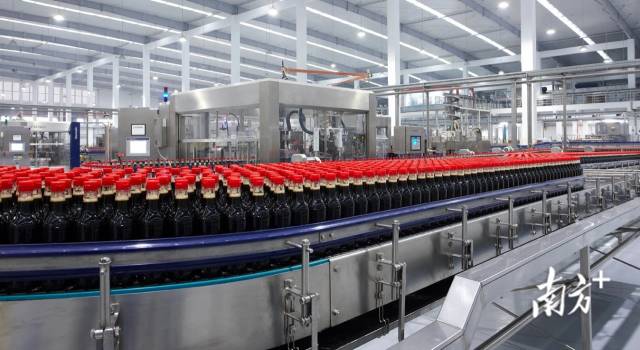
Core Insights - Guangdong's manufacturing sector is showcasing its diverse capabilities, from smart home appliances to high-end mobile phones, fashion apparel, gourmet food, and modern agriculture, emphasizing innovation and quality development [1][2][6][9][21] Group 1: Food Industry - Guangdong's food industry is projected to achieve a revenue of 896.87 billion yuan in 2024, with soy sauce production accounting for over 60% of the national output and mooncake exports representing 90% of the total [2] - The food sector is characterized by a "smart brewing" approach, integrating traditional flavors with modern technology, leading to a "delicious revolution" driven by digitalization and biotechnology [2][3] - The province has established several billion-yuan sub-clusters in various food categories, including sauces, health foods, and traditional snacks, showcasing its strong industrial foundation [2] Group 2: Home Appliances - Guangdong's home appliance exports account for nearly 50% of the national total, with the Greater Bay Area's smart appliance industry representing about 30% of the global market [6][8] - The industry employs a "combination of strengths" strategy, integrating research, manufacturing, and branding while localizing production to penetrate global markets [6][8] - Major companies like Midea and Hisense are expanding their global footprint with numerous R&D centers and manufacturing bases, enhancing their competitiveness [6][8] Group 3: Agriculture - Guangdong's agricultural output is robust, with grain production capacity increasing from 12.38 million tons in 2021 to 12.98 million tons in 2025, achieving a record high in yield per unit area [9][10] - The province leads the nation in the production of lychees and pomelos, with the lychee industry alone generating over 9 billion yuan in value [12] - The agricultural sector is supported by a modernized marine ranching initiative, positioning Guangdong as a leader in fishery production and output [10][12] Group 4: Textile and Apparel - Guangdong's textile and apparel industry boasts the highest number of enterprises in the country, with 4,240 registered companies and a production output of 3.44 billion garments in 2024 [21][23] - The industry employs a "fast response and flexible attack" strategy, utilizing data-driven customization and intelligent production to enhance efficiency [21][23] - Significant advancements in digital transformation are evident, with companies adopting AI and big data to streamline operations and reduce production times [23][24] Group 5: Cultural and Tourism - Guangdong's cultural tourism sector is leveraging traditional customs and modern marketing strategies to attract visitors, particularly during the Spring Festival [17][19] - The "Please Come to Guangdong for the New Year" campaign aims to enhance the province's appeal as a travel destination through various cultural events and activities [19][20] - The integration of local culture, food, and entertainment is designed to create immersive experiences for tourists, showcasing Guangdong's rich heritage [17][21]




港股股票回购一览:39只个股获公司回购
Mei Ri Jing Ji Xin Wen· 2026-01-14 01:17
每经AI快讯,数据显示,1月13日,共39只港股获公司回购,4只个股回购金额超千万港元。其中,腾 讯控股、小米集团-W、舜宇光学科技回购金额最大,分别获公司回购6.36亿港元、1.52亿港元、 4178.78万港元。截至1月13日,今年已有89只港股获公司回购,4只个股年内累计回购金额超亿港元。 其中,腾讯控股、小米集团-W、吉利汽车年内累计回购金额最大,分别获公司回购50.86亿港元、9.42 亿港元、3.72亿港元。 ...



嫣然天使儿童医院被曝拖欠房租,李亚鹏回应;DeepSeek发布梁文锋署名新论文;海底捞张勇再“出山”;麦当劳回应汉堡越做越小丨邦早报
创业邦· 2026-01-14 00:09
Core Viewpoint - The article discusses various developments in technology, healthcare, automotive, and entertainment sectors, highlighting significant changes, investments, and market trends that could present investment opportunities and risks. Group 1: Technology Developments - The U.S. has relaxed export controls on Nvidia's H200 chips to China, allowing sales to proceed under the supervision of the Commerce Department [3] - DeepSeek released a new paper on conditional memory for large language models, significantly improving performance in knowledge retrieval and reasoning tasks [4] - ByteDance has raised its option price by nearly 13% from $200.41 to $226.07 since last August, marking a more than fourfold increase since 2019 [5] Group 2: Healthcare Sector - The Yanran Angel Children's Hospital is facing rental debt issues, with the hospital's management stating they are negotiating with landlords to adjust rent to market levels [4] - Meta has begun layoffs in its Reality Labs division, shifting resources from VR and the metaverse to AI devices, affecting about 10% of its workforce [19] Group 3: Automotive Industry - Xiaopeng Motors plans to establish a localized supply chain team in Europe and Southeast Asia by 2026 to enhance operational efficiency [15] - BYD has maintained its position as the leading exporter of new energy buses for three consecutive years, exporting 4,234 units in 2025, a year-on-year increase of 18.2% [18] - Nissan's sales in China have declined for seven consecutive years, with a total of 653,000 units sold in 2025, a drop of 6.26% from the previous year [22] Group 4: Market Trends - The second-hand car market in China has surpassed 20 million transactions in 2025, marking a historical high with a total transaction value of 1,289.79 billion yuan [22] - The global smartphone market saw a 2% increase in shipments in 2025, with Apple leading with a 25% market share in Q4 [22] - Japan reported over 10,300 corporate bankruptcies in 2025, marking a 2.9% increase from the previous year, with the service industry being the most affected [24][25]




8点1氪丨钟薛高创始人胜诉:“爱买不买”不是我说的;“死了么”APP将更名为Demumu;麦当劳客服回应汉堡包越做越小
3 6 Ke· 2026-01-13 23:59
Group 1 - The founder of Zhong Xue Gao, Lin Sheng, won a lawsuit regarding a maliciously edited interview, affirming that he never made the statement "buy it or not" [1] - A report by Deloitte indicates that over 63% of Chinese consumers plan to spend over 300,000 yuan on their next vehicle, with fuel vehicles remaining the preferred choice at 41% [2][3] - ByteDance has raised its option price from $200.41 to $226.07, marking a nearly 13% increase since last August and over a fourfold increase since 2019 [2] Group 2 - McDonald's is facing consumer complaints about shrinking burger sizes, with customers sharing comparisons on social media [2] - The Yanran Angel Children's Hospital is negotiating with landlords over rent debts, claiming that the actual owed amount is due to a rent increase since 2020 [7] - Pinduoduo is testing a new "Billion Supermarket" feature within its app, focusing on low-price strategies to attract price-sensitive consumers [6] Group 3 - Meta Platforms plans to cut about 10% of jobs in its Reality Labs department to shift resources towards artificial intelligence [11] - The U.S. government has approved Nvidia to export its H200 AI chips to China, with a 25% fee on the transactions [12] - Liftoff Mobile, Inc. has filed for an IPO with the SEC, planning to list on the Nasdaq [13]
财信证券晨会纪要-20260114
Caixin Securities· 2026-01-13 23:30
Market Strategy - The market is experiencing a downward adjustment, with the commercial aerospace sector leading the decline [5] - The overall A-share market index fell by 1.18%, with the Shanghai Composite Index down 0.64% and the ChiNext Index down 1.96% [8] - The healthcare sector showed resilience, with notable performance from leading pharmaceutical companies [10] Industry Dynamics - The Ministry of Commerce announced anti-dumping duties on imported solar-grade polysilicon from the US and South Korea, effective January 14, 2026, for five years [27] - Star Ring Fusion completed a record A-round financing of 1 billion yuan, marking the largest financing in China's private fusion sector [29] - Omdia forecasts that global PC shipments will reach 279.5 million units in 2025, a 9.2% increase year-on-year [31] - Counterpoint reports a 2% year-on-year growth in global smartphone shipments for 2025, driven by high-end market trends and increased 5G device adoption in emerging markets [33] Company Tracking - Dize Pharmaceutical (688192.SH) expects a revenue of 800 million yuan in 2025, a 122.28% increase year-on-year, driven by the inclusion of two products in the national medical insurance directory [41] - JA Solar Technology (002459) anticipates a net loss of 4.5 to 4.8 billion yuan for 2025, attributed to intensified competition and price pressures in the solar industry [43] - Huitian Technology plans to establish a new technology incubation platform for advanced PCB processes, with a total investment of 300 million USD [46] - Huatai Securities (600909.SH) intends to increase its stake in Huafu Fund to 51%, enhancing its control over the fund [48]