
乳业

Search documents
乳业板块逆势拉升,欢乐家20cm涨停
Xin Lang Cai Jing· 2025-11-11 05:38
Group 1 - The dairy sector is experiencing a counter-trend surge, with companies like Huanlejia hitting the daily limit of a 20% increase [1] - San Yuan Co. previously reached its limit, indicating strong market interest [1] - Other companies such as Huangshi Group, Zhuangyuan Pasture, and Liziyuan are also seeing upward movement in their stock prices [1]
饮料市场 销售下滑丨消费参考
2 1 Shi Ji Jing Ji Bao Dao· 2025-11-11 05:07
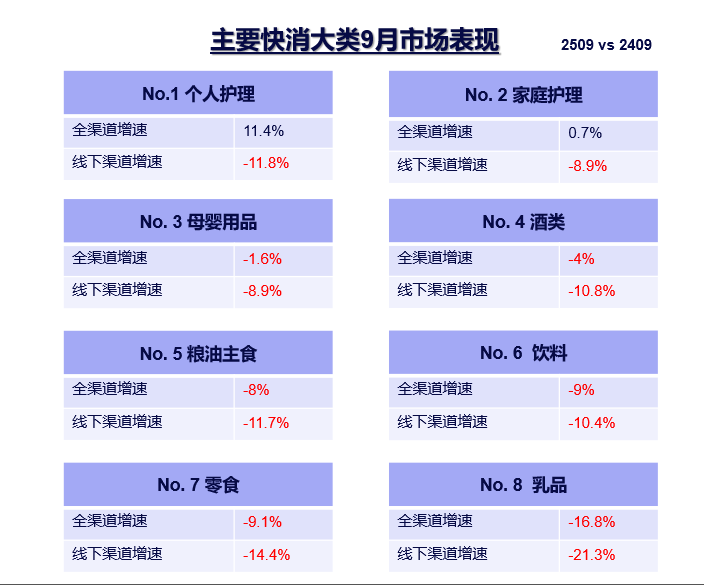
Group 1: Beverage Market Overview - The beverage market has entered a contraction phase, with overall sales down 9% year-on-year in September, and offline sales down 10.4% [1] - Uni-President China reported that its beverage business saw a low single-digit decline in revenue for Q3, while food business revenue grew in the mid to low single digits [1] - The decline in beverage revenue is attributed to price wars on delivery platforms and industry competition, with specific categories like juice facing significant pressure [1] Group 2: Dairy Industry Impact - The dairy market is also facing challenges, with Yili noting that ready-to-drink tea is substituting liquid milk products, particularly impacting packaged liquid milk sales [2] Group 3: Production Trends - National Bureau of Statistics data indicates a weakening trend in beverage production in Q3 compared to the first half of the year, with soft drink production declining by 0.17%, 6.79%, and 10.12% year-on-year in July, August, and September respectively [3] Group 4: External Factors - Adverse weather conditions, including typhoons and heavy rain, may have also impacted beverage sales during Q3 [4] Group 5: Market Recovery Signals - There are signs that the delivery platform price wars are becoming more manageable, which could be a positive development for the beverage market [5][6][7]
饮料市场,销售下滑
2 1 Shi Ji Jing Ji Bao Dao· 2025-11-11 04:47
Core Insights - The beverage market is entering a contraction phase, with overall sales down 9% year-on-year in September, and offline sales down 10.4% [1] Company Performance - Uni-President China reported that its overall revenue remained flat year-on-year in Q3, with beverage revenue declining in the low single digits. The food segment saw mid-to-low single-digit growth, driven by strong performance from products like "Qie Huang" and "Lao Tan Sauerkraut" [2] - Yili mentioned that ready-to-drink tea is substituting liquid milk products, particularly impacting packaged liquid milk sales, which are facing pressure from alternatives that are not fully captured in statistics [2] Industry Trends - Beverage production in China showed a significant weakening trend in Q3 compared to the first half of the year, with soft drink production declining by 0.17%, 6.79%, and 10.12% year-on-year in July, August, and September respectively, indicating a growing downward trend [3] - Adverse weather conditions, including typhoons and heavy rain, may have also impacted beverage sales during Q3 [4] Market Dynamics - The competition in the food delivery sector is becoming more manageable, as many executives noted that delivery subsidies have peaked [5][6] - This stabilization in the delivery market could potentially benefit the beverage sector [7] Market Performance Overview - The beverage category experienced a 9% decline in overall channel growth and a 10.4% decline in offline channel growth in September [12][13]

饮料市场,销售下滑丨消费参考
2 1 Shi Ji Jing Ji Bao Dao· 2025-11-11 04:45
Group 1: Beverage Market Overview - The beverage market is entering a contraction phase, with overall sales down 9% year-on-year in September, and offline sales down 10.4% [1] - Unification Enterprise's beverage business saw a low single-digit decline in revenue for Q3, attributed to price wars on delivery platforms and industry competition [2] - The dairy market is also facing challenges, with ready-to-drink tea beverages replacing liquid milk products, particularly impacting packaged liquid milk sales [2] Group 2: Production and Weather Impact - Beverage production in China showed a significant weakening trend in Q3 compared to the first half of the year, with monthly production declines of 0.17%, 6.79%, and 10.12% respectively [3] - Adverse weather conditions, including typhoons and heavy rain, may have also affected beverage sales during Q3 [4] Group 3: Market Recovery Signals - The competitive landscape of delivery services is becoming more manageable, with several market executives indicating that delivery subsidies have peaked [5][6] - This stabilization in the delivery market could potentially benefit the beverage sector [7]

灭菌乳禁用复原乳 我国乳业迈向“硬实力”竞争新阶段
Zhong Guo Chan Ye Jing Ji Xin Xi Wang· 2025-11-11 00:20
Core Viewpoint - The implementation of the new national standard for sterilized milk marks a significant upgrade in China's dairy industry, transitioning from a reliance on reconstituted milk to a focus on fresh milk as the sole ingredient, thereby enhancing product quality and consumer trust [1][2][3]. Group 1: Regulatory Changes - The new national standard prohibits the use of reconstituted milk in sterilized milk, mandating that only fresh milk be used as the sole raw material [1][2]. - This regulatory change aims to improve transparency and consumer choice, reducing the confusion between "pure milk" and "reconstituted milk" [3][7]. Group 2: Market Dynamics - The new standard has led to simpler product labels, with a noticeable increase in products marketed as "100% fresh milk" [2]. - The demand for fresh milk is expected to rise, benefiting domestic dairy farming and increasing farmers' income [7][8]. Group 3: Industry Impact - The implementation of the new standard is seen as a test of the entire dairy supply chain's capability, particularly in sourcing high-quality fresh milk [7]. - Larger dairy companies with established supply chains are likely to thrive, while smaller companies may struggle due to their reliance on external sources [8]. Group 4: Quality and Production - China's fresh milk production capacity has significantly improved, with 40.794 million tons of milk produced in 2024 and a 100% pass rate in quality inspections [4][5]. - The new standard is expected to enhance the overall quality of dairy products, promoting higher standards in production processes and consumer satisfaction [6][7].
同世界各国共享发展机遇 ——写在第八届中国国际进口博览会闭幕之际
Ren Min Ri Bao· 2025-11-10 22:49
Group 1: China's Commitment to Open Cooperation - China's modernization requires open cooperation and mutual benefits, as emphasized by President Xi Jinping [1] - The 14th Five-Year Plan suggests expanding institutional openness and maintaining a multilateral trade system [1] - The 8th China International Import Expo (CIIE) concluded with a record intended transaction amount of $83.49 billion, a 4.4% increase from the previous year [1] Group 2: Vibrancy of China's Market - The CIIE serves as a platform to observe China's high-level openness and the vitality of its large market [2] - The number of participating companies at the expo reached a historical high, showcasing the dynamic nature of China's market [2] - Companies like Yunfan Intelligent Control and Sherwin-Williams highlight the advantages of China's complete industrial chain and innovative capabilities [2] Group 3: Positive Business Environment - The CIIE reflects a favorable business environment in China, encouraging long-term investments from global companies [3] - The "World Open Report 2025" indicates that China's openness index is projected to grow by 0.5% in 2024, ranking 38th among 129 economies [3] Group 4: Continuous Improvement of CIIE - The CIIE has consistently attracted exhibitors and facilitated numerous transactions since its inception in 2018, demonstrating China's commitment to high-level openness [4] - The expo promotes equal benefits and solidifies common interests among participating countries [4] Group 5: Trade and Cooperation - The CIIE showcases diverse products from various countries, enhancing trade relations and meeting the diverse needs of Chinese consumers [5] - The event also features activities aimed at deepening cross-regional and cross-industry cooperation [5] Group 6: Governance and Trade Rules - China has implemented policies to enhance logistics efficiency, such as the "border inspection and release" policy, which can expedite customs clearance [6] - The country has signed 23 free trade agreements with 30 countries and regions, reflecting its commitment to improving the international trade rules system [6] Group 7: Stability and Positive Energy for the World - The CIIE hosted over 80 supporting activities, fostering cooperation and contributing to global economic stability [7] - China's focus on high-quality development and deep reforms is expected to provide more certainty and stability to the world economy [7] Group 8: Innovation and Consumer Trends - The expo highlights China's commitment to high-quality development, showcasing innovations and diverse consumer preferences [8] - Central enterprises organized significant procurement activities, indicating strong demand for collaboration [8] Group 9: Open Market Dynamics - The CIIE features vibrant consumer engagement, with international products gaining popularity among Chinese consumers [9] - The event allows foreign companies to tap into the growing Chinese market, enhancing their growth prospects [9] Group 10: Medical and Health Sector Innovations - The medical and healthcare section of the CIIE attracted significant attention, showcasing innovative products and fostering international collaborations [10] - The expo serves as a platform for companies to strengthen existing partnerships and explore new opportunities [10]
A股:刚刚,A股传来三条消息,释放重要信号!周二大盘可能这么走
Sou Hu Cai Jing· 2025-11-10 21:16
Core Insights - The main highlight in the A-share market is the significant rally in the consumer sector, particularly in the liquor and food and beverage segments, driven by a surprising rise in the October CPI data, which provided an entry point for funds [1][3][7] CPI Impact Analysis - The increase in the Consumer Price Index (CPI) in October is primarily attributed to rising prices of food and liquor, along with a recovery in certain service consumption demands [3] - For sectors like liquor and dairy, a higher CPI indicates improved profit expectations due to demand elasticity and price increase effects, enhancing companies' gross profit margins [4] - The rise in CPI supports a recovery in fund preferences for consumer goods, making them a dual-purpose investment choice amid inflation expectations [5] - The fourth quarter leading up to the Spring Festival is a peak consumption season, providing a time advantage for early positioning [6] Market Rotation Mechanism - Fund rotation in the A-share market typically follows three dimensions: sustained high prosperity (consumption, pharmaceuticals), undervalued rebound (cyclical, financial), and policy catalysts with new themes (infrastructure, technology growth) [8] - Following the consumer sector's initiation, short-term funds are likely to differentiate within the consumer line (liquor → dairy → food processing → catering and tourism) before switching to low-positioned sectors with catalysts, such as chemical resources, brokerage, and digital economy [8][9] Potential Beneficiary Sectors 1. **Investment Policies**: Infrastructure, low-altitude economy, and digitalization sectors are expected to benefit from new investment policies, particularly in railways, nuclear power, and digital transformation [10] 2. **Southbound Funds**: The cumulative net purchase of southbound funds has exceeded 50 billion HKD, with significant inflows into Hong Kong stocks, indicating potential for increased investment in related ETFs and dual-listed companies [12] 3. **Brokerage Strategies**: Brokerages are optimistic about various sectors, including their own, old economy stocks, and technology growth, providing diverse investment directions [13] Fund Flow Signals - The total transaction volume in the Shanghai and Shenzhen markets was below 2.2 trillion, with a potential increase to 2.5 trillion indicating a successful continuation of market momentum [14][15] Focus Areas for Strategy - Key sectors to monitor include the consumer chain (liquor, dairy, food processing), policy-driven sectors (low-altitude economy, digital transformation), and brokerage financials [16][17] - The strategy emphasizes capturing the initial wave of fund inflows during specific time windows, with a bullish outlook for the market if transaction volumes increase [18]

A股:大盘重回4000点,大消费爆发,释放了重要信号!周二A股可能这么走
Sou Hu Cai Jing· 2025-11-10 17:54
Core Viewpoint - The market is experiencing a style shift, with funds moving from high-valued technology sectors to lower-valued sectors such as energy, cyclical, dividend, and consumer goods, indicating a potential recovery opportunity in traditional sectors [3][4][10]. Market Performance - As of Monday's close, the Shanghai Composite Index stood at 4018.60 points, up 0.53%, while the Shenzhen Component Index rose 0.18% to 13427.61 points, and the ChiNext Index fell 0.92% to 3178.83 points [1]. - The consumer sectors, including liquor, dairy, and food and beverage, led the market rally, with over 3300 stocks rising, contrasting with the previous week where technology stocks drove the index up [2]. Fund Reallocation - There has been a significant shift in fund allocation, with technology stocks experiencing high volatility and profit-taking, while lower-valued sectors such as energy, chemicals, and consumer goods are seeing increased investment [4][10]. - The consumer sector's performance is attributed to improved expectations following a surprising CPI data release, signaling a potential economic recovery [6][8]. Macro Data and Policy Support - The unexpected rise in October's CPI indicates a recovery in consumer spending, enhancing market sentiment towards consumer-related industries [6]. - Ongoing policies aimed at stabilizing growth and promoting consumption have positively influenced the consumer sector's outlook [8]. Valuation and Positioning - Traditional consumer sectors like liquor and food and beverage have been trading at low valuations, making them attractive for institutional investors as expectations improve [9]. - The current market dynamics suggest that the consumer sector may be entering a phase of orderly accumulation by funds, indicating a potential for valuation recovery [10]. Style Shift Signals - The breakthrough of the 4000-point mark is seen as a psychological and technical milestone, with the market shifting focus from technology to consumer sectors [11]. - Investors are advised to be cautious with high-valued technology stocks while exploring opportunities in lower-valued sectors that are experiencing a rotation [11]. Short-term Market Outlook - The market is expected to continue fluctuating around the 4000-point level, with consumer stocks likely to see some profit-taking after initial gains [10]. - The technology sector may face pressure due to a lack of sustained funding, while the rotation among sectors is anticipated to accelerate [11].

外资乳企布局功能营养领域 本土企业深加工产品不断发展
Zhong Guo Jing Ying Bao· 2025-11-10 14:29
Core Insights - The eighth China International Import Expo (CIIE) showcased the competition between foreign and domestic dairy companies, particularly in the functional nutrition sector, with domestic companies increasingly replacing imported brands in the market [1][3] Group 1: Functional Nutrition Products - Foreign companies like Nestlé, Wyeth, and Danone presented specialized nutrition solutions for infants and adults, highlighting products such as Nestlé's tailored infant formula and Danone's series for elderly gut health and cancer patients [2][3] - The functional nutrition segment is seeing significant growth, particularly among middle-aged and elderly consumers, with the Chinese silver economy projected to reach a market size of 20 trillion yuan by 2027, growing from 12 trillion yuan in 2023 [2] Group 2: Domestic Dairy Product Development - Domestic dairy companies are focusing on deep processing products, with brands like Yili and Miaokelando showcasing innovations in cream and cheese, indicating a shift towards higher value-added products [3][4] - Yili's butter production capacity has doubled to 42,000 tons, making it a significant player in the international market, while Miaokelando reported a 14.85% growth in its cheese business [3][4] Group 3: Market Trends and Future Outlook - The CIIE highlighted that 70%-80% of participating companies were foreign, emphasizing the dominance of imported infant formula and functional nutrition products in cross-border e-commerce [3] - The rapid development of domestic deep processing industries is allowing local products to capture market share from imports, supported by favorable policies aimed at expanding domestic demand and improving health management [4][5]
(第八届进博会)进博“大棋盘”上的“竞”与“合”
Zhong Guo Xin Wen Wang· 2025-11-10 13:59
Group 1 - The eighth China International Import Expo showcased a variety of new dairy products, including specialized nutrition for cancer patients and supplements for early Alzheimer's disease, indicating a trend towards high-quality, natural products in the Chinese market [1] - In the first nine months of this year, China imported 2.013 million tons of dairy products worth $9.35 billion, reflecting a year-on-year increase of 3.5% in volume and 14.8% in value, with high-end categories like infant formula, butter, and cheese leading the growth [1] - Dairy companies are focusing on niche market demands, exhibiting products related to sports nutrition, children's nutrition, and functional probiotics at the expo [1] Group 2 - Fonterra and New Zealand's dairy industry have introduced "grass-fed standards," promoting natural grazing and sustainability, which is seen as a collaborative effort to cultivate a premium market segment [2] - Strategic partnerships, such as the one between essential oil company doTERRA and Xianle Health, highlight the potential for collaboration in developing new product categories, combining expertise in essential oils with nutritional food [2] - The interplay of competition and cooperation at the expo illustrates that neighboring exhibitors can drive market interest and innovation, emphasizing the value of openness and interaction in stimulating market vitality [2]