
互联网

Search documents
读懂春晚广告位:今年谁是赚钱顶流?
Xin Lang Cai Jing· 2026-02-16 06:27
Core Insights - The evolution of Spring Festival Gala sponsorship reflects the changing landscape of the Chinese economy, transitioning from a production-driven era to a technology-driven era [4] Group 1: Historical Sponsorship Trends - The first sponsor of the Spring Festival Gala in 1984 was Jinan Kangbasi Clock Factory, which exchanged 3,000 clocks for a 10-second ad slot, leading to significant brand recognition [1] - In the 1990s, liquor and pharmaceutical companies emerged as major sponsors, with Kongfu Banquet Wine spending 30.79 million yuan in 1995, resulting in a sales surge to 918 million yuan the following year [1] - From 2003 to 2019, Midea Group dominated the zero-point advertising space, with ad costs rising from millions to tens of millions [1] Group 2: The Rise of Internet Giants - In 2015, Tencent spent 53.03 million yuan for exclusive sponsorship, launching the "Shake to Grab Red Envelopes" feature, which led to over 8.1 billion interactions in one night and significantly increased WeChat payment users [3] - The competition among internet giants intensified, with Alibaba, Baidu, Kuaishou, Douyin, JD, and Pinduoduo all vying for attention through massive red envelope giveaways, focusing on user engagement and data acquisition rather than mere brand exposure [3] Group 3: The Current Landscape and Future Trends - In 2026, traditional internet companies are still present, but new players in hard technology, particularly AI and robotics, are taking center stage [4] - ByteDance's Volcano Engine became the exclusive AI cloud partner for the 2026 gala, showcasing AI's integration into interactive segments, while several top robotics companies also participated [4] - This shift signifies a broader transformation in the economy, aligning with the national strategy of promoting "new quality productivity" [4]
读懂春晚广告位:今年谁是赚钱顶流
21世纪经济报道· 2026-02-16 05:15
Core Viewpoint - The article discusses the evolution of sponsorship in the Chinese New Year Gala, highlighting how it reflects the changing landscape of the Chinese economy and advertising strategies over the years [1][2][3]. Group 1: Historical Sponsorship Trends - The first sponsor of the Spring Festival Gala was Jinan Kangbasi Clock Factory in 1984, which traded 3,000 clocks for a 10-second ad, leading to its rise as a major clock manufacturer [1]. - In the 1990s, brands like Kongfu Banquet Wine and Qinchuan Wine spent heavily on advertising, with Kongfu Banquet Wine's investment of 30.79 million yuan resulting in a revenue spike to 918 million yuan the following year [1]. - From 2003 to 2019, Midea Group dominated the zero-point advertising space, with ad costs increasing from millions to tens of millions [1]. Group 2: Shift to Internet Giants - The 2015 Spring Festival Gala marked a turning point with Tencent's 53.03 million yuan investment for exclusive rights, leading to a surge in WeChat payment registrations [2]. - Following this, various internet companies like Alibaba, Baidu, and Douyin engaged in fierce competition for sponsorship, focusing on user engagement and data acquisition rather than just brand exposure [2]. Group 3: Emergence of Hard Technology - In 2026, the Spring Festival Gala featured new players in the form of AI and robotics, with ByteDance's Volcano Engine as the exclusive AI cloud partner and several robotics companies participating [3]. - This shift signifies a transition from a focus on consumer needs and traffic to a new era emphasizing technological advancement and national competitiveness, aligning with the government's "new quality productivity" strategy [3][4].

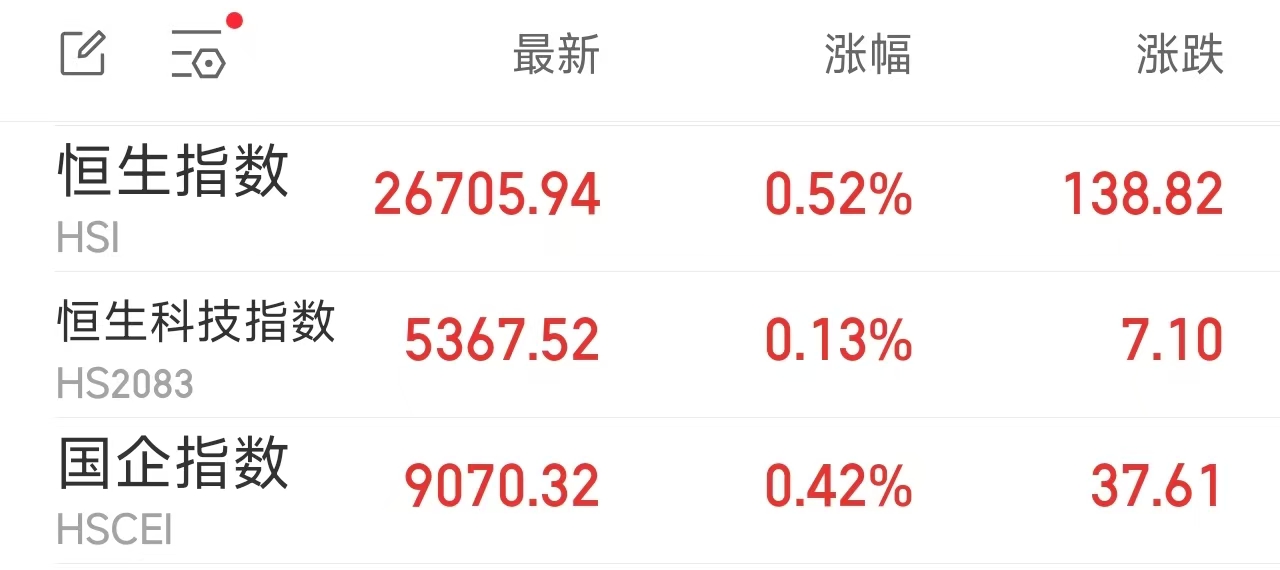
港股蛇年收官:三大指数低开高走,恒指收涨0.52%全年累涨超32%,恒生科指涨0.13%盘中一度跌近2%,港股“AI双雄”齐创新高
Jin Rong Jie· 2026-02-16 05:05
Market Performance - The Hong Kong stock market experienced a half-day trading session on February 16, with the Hang Seng Index closing up 0.52% at 26,705.94 points, the Hang Seng Tech Index up 0.13% at 5,367.52 points, and the National Enterprises Index up 0.42% at 9,070.32 points [1][2] - For the year of the Snake, the Hang Seng Index has increased by over 32%, the Hang Seng Tech Index by over 13%, and the National Enterprises Index by over 23% [1] Sector Performance - The precious metals, semiconductor, and oil & petrochemical sectors showed strength, while defense, consumer discretionary, and hardware equipment sectors underperformed [2] - Notable movements among major tech stocks included Alibaba down 0.26%, Tencent up 0.47%, JD.com down 2.26%, Xiaomi down 0.16%, NetEase up 2.32%, Meituan up 0.43%, Kuaishou up 0.15%, and Bilibili up 0.67% [2] AI Sector Developments - AI application stocks saw significant gains, with Hong Kong's AI leaders, Zhizhu and MiniMax-WP, reaching new highs, with Zhizhu up 4.74% and MiniMax-WP up 24.26% [4] - Zhizhu launched its flagship model GLM-5, which has gained popularity overseas, and announced a price increase for its AI programming subscription plan [5] Semiconductor Sector Insights - The semiconductor sector showed strength, with stocks like Zhaoyi Innovation and Lanke Technology rising over 17%, closing at increases of 9.78% and 14.05% respectively [7] - A price increase trend in storage chips is emerging, with Kioxia expected to raise average selling prices by approximately 50% starting Q1 2026, which is anticipated to significantly improve profitability in the NAND industry [9][10] Precious Metals Market - The precious metals sector is experiencing a surge, with companies like Luoyang Molybdenum rising over 5% and others like Zijin Mining and Ganfeng Lithium also seeing gains of over 4% [6] - Analysts from ANZ have raised their Q2 gold price forecast from $5,400 to $5,800 per ounce, citing ongoing structural drivers despite recent price corrections [6]
港股收盘,AI应用概念大涨
第一财经· 2026-02-16 04:39
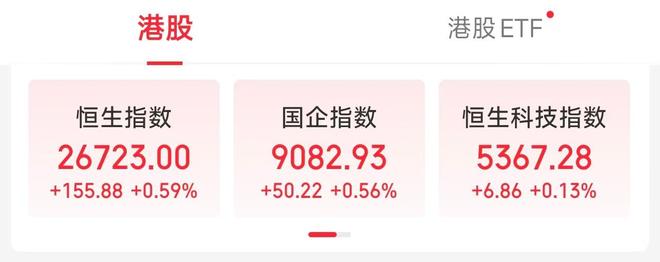
微信编辑 | 苏小 | 名称 | 现价 | 涨跌幅 | | --- | --- | --- | | 阿里巴巴-W | 154.700 | -0.45% | | 9988.HK | | | | MINIMAX-WP | 847.000 | 24.56% | | 0100.HK | | | | 腾讯控股 | 533.000 | 0.19% | | 0700.HK | | | | 兆易创新 | 406.200 | 9.78% | | 3986.HK | | | | 紫金矿业 | 43.520 | 4.67% | | 2899.HK | | | | 洛阳钼业 | 23.100 | 6.35% | | 3993.HK | | | | 小米集团-W | 36.660 | -0.49% | | 1810.HK | | | | 美团-W | 82.050 | -0.12% | | 3690.HK | | | | 果见洪察圈母 | 25.140 | 3.71% | | 0883.HK | | | 春节前最后一个交易日,港股开市半日。恒指报26723.0点,涨0.59%,恒生科技指数报5367.28点,涨0.13%。AI应用概念 ...

微信可以发金色朋友圈了!
券商中国· 2026-02-16 04:38
Core Viewpoint - Tencent has introduced new features for the Spring Festival, allowing users to create and share "New Year Friend Circles" and utilize AI to generate New Year songs, enhancing user engagement and interaction on the platform [1][10][11]. Group 1: New Features Introduction - Users can create a "New Year Friend Circle" by using the "Yuanbao" app, which allows them to post and trigger interactions, including the potential to receive red envelopes [1][5]. - The new feature includes a limited-time display of content and comments as emojis, adding a fun element to the interactions [5]. - Users can also create personalized New Year songs using AI, which can be shared with friends, further promoting engagement [10][11]. Group 2: Enhanced Red Envelope Features - This year, users can customize red envelope covers by adding "attachments," allowing for personalized greetings and images [12][14]. - The red envelope covers can be showcased on public accounts, encouraging more users to participate and share [16]. - Users can switch their nickname to "golden" in the comments section of public accounts during the Spring Festival, enhancing the festive experience [17].


港股蛇年收官:三大指数收红, 恒指涨0.59%全年累涨超32%,恒生科指涨0.13%盘中一度跌近2%,港股“AI双雄”齐创新高
Jin Rong Jie· 2026-02-16 04:28
Market Performance - The Hong Kong stock market experienced a half-day trading session on February 16, with the Hang Seng Index rising by 0.59% to close at 26,723 points, while the Hang Seng Tech Index increased by 0.13% to 5,367.28 points, and the National Enterprises Index rose by 0.56% to 9,082.93 points [1] - For the year of the Snake, the Hang Seng Index has accumulated a gain of over 32%, the Hang Seng Tech Index has risen over 13%, and the National Enterprises Index has increased by over 23% [1] Sector Performance - The precious metals, semiconductor, and oil sectors showed strength, while defense, consumer discretionary, and hardware sectors underperformed [3] - Major technology stocks saw declines, with Alibaba down 0.26%, JD.com down 2.26%, and Xiaomi down 0.16%, while NetEase and Meituan saw gains of 2.32% and 0.43%, respectively [3] AI Sector Developments - AI application stocks surged, with Hong Kong's "AI twins" Zhizhu and MiniMax-W reaching new highs, with Zhizhu rising by 4.74% and MiniMax-W increasing by 24.26% [4] - Zhizhu launched its new flagship model GLM-5, which has gained popularity overseas, and announced a price increase for its AI programming subscription plan by at least 30% [6][7] Semiconductor Sector Insights - The semiconductor sector showed localized strength, with stocks like Zhaoyi Innovation and Lanke Technology rising by over 17% [9] - A price increase trend for storage chips is emerging, with Kioxia expected to implement a pricing policy that will raise average selling prices by approximately 50% starting in Q1 2026 [12] Precious Metals Market - The precious metals sector is performing strongly, with companies like Luoyang Molybdenum and Zijin Mining seeing gains of over 5% [8] - Analysts from ANZ have raised their Q2 gold price forecast from $5,400 to $5,800 per ounce, citing ongoing structural drivers despite recent price corrections [8]
腾讯元宝追加100张万元现金“小马卡”
Bei Ke Cai Jing· 2026-02-16 03:28
腾讯还宣布,元宝App同步上线拜年红包玩法,以及"拜年朋友圈"。在元宝2.57.0及以上版本,点击"创 作-拜年朋友圈-做同款",即可生成拜年海报。 编辑 俞金旻 校对 杨利 新京报贝壳财经讯(记者韦英姿)2月16日,腾讯宣布,元宝App春节红包活动将在除夕当天追加100张 万元现金小马卡。新的小马卡将从下午4时开始陆续发放,每个小时都有概率抽中。 2月1日,元宝开启10亿元现金活动。腾讯数据显示,截至目前,第一批投放的100张小马卡,已全部"有 主"。 ...
中国策略月报:春暖花开淘金香江
Xin Lang Cai Jing· 2026-02-16 02:52
Group 1: AI Market Outlook - The AI market is currently in a "infrastructure construction phase," with a significant capital expenditure increase expected from major tech companies, including a projected $650 billion in capital spending from the six largest US tech giants in 2026, representing a 55% year-over-year increase [2][9][12] - The transition from "dialogue toys" to "production tools" is anticipated in 2026, marking a year where AI will evolve into "digital employees" capable of directly intervening in workflows and possessing planning and execution abilities [2][18][20] - The capital market's pricing anchor is shifting towards "commercial efficiency and billable scenarios," indicating a focus on AI applications that can directly translate into revenue [20][21] Group 2: Liquidity Outlook - The liquidity environment in both the US and China is expected to resonate positively post-Spring Festival, providing momentum for the spring market [3][29] - The US Federal Reserve is likely to maintain a dovish stance, with a focus on interest rate cuts rather than balance sheet reduction, which may lead to a stabilization of the dollar index and a recovery in tech stocks [3][42] - In China, the central bank's monetary policy is set to remain "moderately loose," with a net liquidity injection of approximately 1 trillion yuan achieved through MLF and reverse repos in January [3][47] Group 3: Investment Opportunities - The Chinese stock market is currently seen as high-value, with MSCI China trading at a price-to-book ratio of 1.69, significantly lower than the emerging market average of 2.80, indicating attractive investment opportunities [4][82] - The upcoming spring market is expected to be driven by "emotional recovery" and "capital replenishment," with the anticipation of the "Two Sessions" in China and US interest rate cuts acting as key variables influencing global capital flows [4][66] - Investment strategies should focus on sectors aligned with the "14th Five-Year Plan," including commercial aerospace, space computing, controllable nuclear fusion, brain-machine interfaces, and embodied intelligence [6][7]






恒生科技指数盘中跌近2%,互联网巨头走低;有色金属活跃,半导体板块直线拉升
Zhong Guo Ji Jin Bao· 2026-02-16 02:44
Market Overview - The Hang Seng Technology Index experienced a decline of nearly 2%, with major internet companies falling [1] - The Hang Seng Index dropped by 0.25%, while the Hang Seng Technology Index fell by 0.19% and the Hang Seng China Enterprises Index decreased by 0.08% [1] Sector Performance - Precious metals, semiconductors, and oil & petrochemicals sectors showed strength against the market trend, while sectors like defense, consumer discretionary, and hardware equipment struggled [2] - The non-ferrous metals sector led the market, with notable gains from companies such as Luoyang Molybdenum, which rose over 7%, and Lingbao Gold, which increased by over 6% [4] Notable Stocks - Luoyang Molybdenum's stock price increased by 7.55% to 23.36 [5] - Lingbao Gold's stock price rose by 6.73% to 25.36 [5] - Other companies in the non-ferrous metals sector, such as China Nonferrous Mining and Shandong Gold, also saw significant gains [4] AI and Semiconductor Stocks - AI application stocks opened higher, with Fubo Group rising over 10% and MINIMAX-WP increasing nearly 6% [9] - The semiconductor sector saw a sharp rise, with companies like Zhaoyi Innovation increasing by over 17% and Lanke Technology rising by over 13% [11] Upcoming Changes - The Hang Seng Index will increase its constituent stocks from 88 to 90, adding Ningde Times, Luoyang Molybdenum, and Lingbao Gold, while removing Zhongsheng Holdings, effective March 9 [7]

市场跳水!这一板块,直线拉升
Zhong Guo Ji Jin Bao· 2026-02-16 02:40
Market Overview - The Hong Kong stock market opened slightly lower on February 16, with the Hang Seng Index down by 0.25%, the Hang Seng Tech Index down by 0.19%, and the Hang Seng China Enterprises Index down by 0.08% [1] - The market experienced a downward trend, with the Hang Seng Tech Index seeing a decline of nearly 2% at one point, although the losses narrowed by the time of reporting [1] Index Performance - As of the latest update, the Hang Seng Index decreased by 0.41%, the China Enterprises Index fell by 0.62%, and the Hang Seng Tech Index dropped by 1.58% [2] - The Hang Seng Tech Index reached a high of 5351.270 and a low of 5253.640, with a trading volume of 171 million shares [2] Sector Performance - The precious metals, semiconductor, and oil & petrochemical sectors showed strength against the market trend, while sectors such as defense, consumer discretionary, and hardware equipment struggled [2] - The non-ferrous metals sector led the market, with notable gains from companies like Luoyang Molybdenum, which rose over 7%, and Lingbao Gold, which increased by over 6% [4][5] Notable Stocks - Luoyang Molybdenum's stock price increased by 7.55% to HK$23.360, while Lingbao Gold rose by 6.73% to HK$25.360 [5] - Other companies in the non-ferrous metals sector, such as China Nonferrous Mining and Shandong Gold, also saw significant gains [5] AI and Semiconductor Sector - The AI application sector opened higher, with stocks like Fubo Group rising over 10% and MINIMAX-WP increasing by nearly 6% [8][9] - The semiconductor sector experienced a sharp rise, with stocks like North Microelectronics increasing by over 17% and Lanke Technology rising by over 13% [12][13] Upcoming Changes in Index Composition - The Hang Seng Index will increase its constituent stocks from 88 to 90, adding Ningde Times, Luoyang Molybdenum, and Laopuguojin, while removing Zhongsheng Holdings, effective March 9 [7]
