光伏

Search documents
800亿光伏老大拟收购行业第六
2 1 Shi Ji Jing Ji Bao Dao· 2026-02-26 02:24
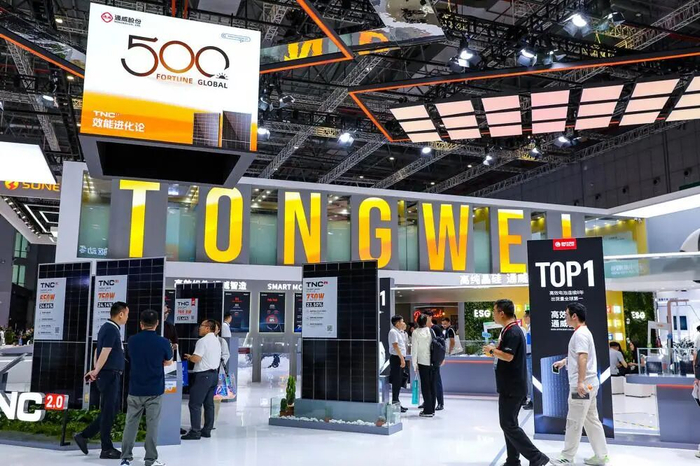
Core Viewpoint - The domestic photovoltaic silicon material sector is experiencing significant developments, highlighted by Tongwei Co., Ltd.'s announcement of plans to acquire 100% equity of Qinghai Lihua Qingneng Co., Ltd. through a combination of share issuance and cash payment, amidst a backdrop of slowing progress in the "storage plan" [2] Group 1: Acquisition Details - Tongwei's acquisition of Lihua Qingneng marks the second major merger in the domestic photovoltaic industry in 2026, following TCL Zhonghuan's investment in a new energy company earlier this year [2] - The acquisition is not classified as a major asset restructuring, but the stock and convertible bonds of Tongwei will be suspended from trading for up to 10 trading days due to the ongoing planning phase [2] - Lihua Qingneng, established in April 2021, has a planned annual silicon material production capacity of approximately 250,000 tons, ranking sixth in the industry, while Tongwei holds the top position with over 900,000 tons [5] Group 2: Market Context - The photovoltaic industry is undergoing market-driven mergers and restructuring as a means to reduce excess capacity, with the government imposing stricter controls on new capacity and promoting the exit of outdated production [2][5] - The photovoltaic index saw a decline of 1% following the announcement, with companies like Tuojin New Energy and Liancheng CNC experiencing drops of approximately 4% [2] Group 3: Financial Performance of Lihua Qingneng - As of October 31, 2022, Lihua Qingneng reported total assets of 8.746 billion yuan and net assets of 4.069 billion yuan, with a revenue of 845 million yuan and a net profit of 492 million yuan, reflecting a net profit margin of 60% [7] - The company has attracted significant investment from various stakeholders, including major photovoltaic firms and financial institutions, which has bolstered its capital support and potential for industry collaboration [7][6] Group 4: Strategic Implications - The acquisition is seen as a strategic move to optimize production capacity and enhance market share, particularly in light of tightening energy consumption standards [9][10] - The management and operational similarities between Tongwei and Lihua Qingneng, given the background of Lihua's founder, are expected to facilitate smoother integration and operational efficiency post-acquisition [11] - Successful completion of this acquisition could signify a pivotal moment in the photovoltaic industry, reflecting the proactive strategies of leading companies during periods of industry adjustment [11][12]


多晶硅:关注现货成交情况:工业硅:下方空间或不深
Guo Tai Jun An Qi Huo· 2026-02-26 02:11
商 品 研 究 2026 年 02 月 26 日 工业硅:下方空间或不深 多晶硅:关注现货成交情况 张 航 投资咨询从业资格号:Z0018008 zhanghang2@gtht.com 【基本面跟踪】 工业硅、多晶硅基本面数据 | | | 指标名称 | T | T-1 | T-5 | T-22 | | --- | --- | --- | --- | --- | --- | --- | | | | Si2605收盘价(元/吨) | 8,430 | 20 | 55 | -175 | | | | Si2605成交量(手) | 154,307 | 19,525 | -34,581 | -126,946 | | | | Si2605持仓量(手) | 313,959 | 20,108 | 10,572 | 75,090 | | | 工业硅、多晶硅期货市场 | PS2605收盘价(元/吨) | 47,630 | 630 | -1,320 | - | | | | PS2605成交量(手) | 5,136 | -3,367 | 1,145 | - | | | | PS2605持仓量(手) | 38,292 | 563 | -3 ...
创业板跌超1%,锂矿股上演涨停潮,人民币升破6.84关口,恒科指跌近1%,科网股普跌
Hua Er Jie Jian Wen· 2026-02-26 02:07
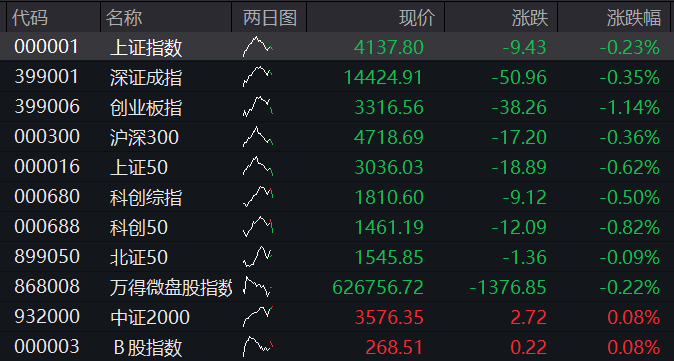
Group 1: Market Overview - The lithium mining sector experienced a surge, with stocks hitting the limit up, following Zimbabwe's Ministry of Mines and Mining Development's emergency statement to suspend all raw mineral and lithium concentrate exports [1] - On February 26, A-shares showed a downward trend, with major indices collectively declining; the ChiNext index fell nearly 1% [1] - The offshore RMB strengthened, surpassing the 6.84 mark, reaching a high of 6.8384 [1][7] Group 2: Stock Performance - Key A-share indices as of the report: Shanghai Composite Index at 4137.80 (-0.23%), Shenzhen Component Index at 14424.91 (-0.35%), and ChiNext Index at 3316.56 (-1.14%) [1] - In the Hong Kong market, the Hang Seng Index fell by 0.08% to 26745.06, while the Hang Seng Tech Index dropped by 0.96% to 5210.13 [2][3] Group 3: Commodity Market - Domestic commodity futures mostly rose, with lithium carbonate increasing by over 5% [4] - Other commodities such as tin, platinum, and fuel oil also saw gains, with tin rising by 4% and platinum, fuel oil, and manganese silicon increasing by over 2% [4] Group 4: Renewable Energy Sector - The renewable energy sector showed activity, with companies like Ganfeng Lithium and Tianqi Lithium experiencing significant stock price increases, reflecting a positive market sentiment towards lithium-related stocks [1][18] - The National Energy Administration's recent report indicated that by 2025, the newly installed capacity for renewable energy generation is expected to reach 452 million kilowatts, a year-on-year increase of 21%, accounting for 83% of the total new power generation capacity [10]

中来股份2月25日获融资买入5776.99万元,融资余额4.53亿元
Xin Lang Cai Jing· 2026-02-26 01:40
Core Viewpoint - Zhonglai Co., Ltd. has experienced fluctuations in its stock performance and financial metrics, indicating potential investment opportunities and challenges in the solar energy sector [1][2]. Group 1: Stock Performance - On February 25, Zhonglai's stock rose by 0.76%, with a trading volume of 514 million yuan [1]. - The margin trading data shows a net buying of 8.31 million yuan on the same day, with a total margin balance of 454 million yuan, which is 4.48% of its market capitalization [1]. - The margin balance is above the 90th percentile of the past year, indicating a high level of investor interest [1]. Group 2: Financial Performance - For the period from January to September 2025, Zhonglai reported a revenue of 3.898 billion yuan, a year-on-year decrease of 14.21% [2]. - The net profit attributable to shareholders was -398 million yuan, reflecting a 31.06% decline compared to the previous year [2]. - Cumulatively, the company has distributed 650 million yuan in dividends since its A-share listing, with 194 million yuan distributed over the last three years [2]. Group 3: Shareholder Structure - As of September 30, 2025, the number of shareholders decreased by 6.15% to 49,900, while the average number of circulating shares per person increased by 6.56% to 19,172 shares [2]. - Hong Kong Central Clearing Limited is the fifth-largest shareholder, holding 13.2822 million shares, an increase of 3.2951 million shares from the previous period [2]. - The Southern CSI 1000 ETF is the eighth-largest shareholder, holding 7.9639 million shares, a decrease of 99,300 shares compared to the previous period [2].

A股开盘速递 | 三大股指涨跌不一 锂矿股集体走强 油气开采、影视、光伏等板块跌幅居前
智通财经网· 2026-02-26 01:38
Group 1 - The A-share market shows mixed performance with the Shanghai Composite Index up by 0.09% and the ChiNext Index down by 0.24%, driven by strong lithium mining stocks while oil and gas, film, and photovoltaic sectors lag behind [1] - China Galaxy predicts that the A-share market will be driven by policy catalysts around the Two Sessions, with a likely upward trend supported by policy expectations, liquidity, and industry trends [1] - The market logic is expected to shift from "policy expectations" to "performance realization" as companies disclose their 2025 annual reports and subsequent 2026 quarterly reports, with stocks exceeding performance expectations likely to attract capital [1] Group 2 - Key investment opportunities include sectors benefiting from improved supply-demand dynamics and industry profit recovery, such as precious metals, oil and petrochemicals, basic chemicals, steel, cement, building materials, and finance [2] - The focus on robotics and AI during the Spring Festival is expected to create structural highlights post-holiday, with attention on key areas like semiconductors, artificial intelligence, new energy, military, and aerospace [2] Group 3 - Guangfa Securities indicates that historically, February and the period around the Spring Festival are the strongest for "spring excitement," with small-cap stocks showing a 100% probability of rising between the Spring Festival and the Two Sessions [3] - The correlation between "spring excitement" gains and the growth rate of quarterly reports has strengthened since 2019, suggesting a focus on sectors like storage, lithium battery equipment/materials, overseas computing power, non-bank financials, and software [3] - Potential themes for this year's "spring excitement" include the ByteDance industry chain, robotics, and space photovoltaic sectors, which may perform well even without quarterly reports [3] Group 4 - Oriental Securities notes that the market has seen a rise in both volume and price over the first two trading days of the new year, indicating increased trading confidence [4] - Technically, the Shanghai Composite Index faces resistance around the 4160-4170 point range, suggesting potential volatility in the coming days as market participants contest this level [4]




福斯特2月25日获融资买入7644.21万元,融资余额7.09亿元
Xin Lang Cai Jing· 2026-02-26 01:36
Core Viewpoint - Foster's financial performance has shown a decline in revenue and net profit, with significant changes in shareholder structure and trading activity in the stock market [2][3]. Group 1: Financial Performance - For the period from January to September 2025, Foster reported a revenue of 11.788 billion, a year-on-year decrease of 22.32% [2]. - The net profit attributable to shareholders for the same period was 688 million, reflecting a year-on-year decline of 45.34% [2]. - Cumulative cash dividends since the A-share listing amount to 3.669 billion, with 1.361 billion distributed over the past three years [2]. Group 2: Shareholder and Trading Activity - As of September 30, 2025, the number of shareholders for Foster was 64,900, a decrease of 9.54% from the previous period [2]. - The average number of circulating shares per shareholder increased by 10.55% to 40,208 shares [2]. - On February 25, 2025, Foster's stock price rose by 0.50%, with a trading volume of 947 million [1]. - The financing buy-in amount on February 25 was 76.442 million, while the financing repayment was 73.906 million, resulting in a net financing buy of 2.537 million [1]. - The total balance of margin trading and securities lending for Foster reached 710 million, with the financing balance accounting for 1.49% of the circulating market value, indicating a high level compared to the past year [1].

隆基绿能2月25日获融资买入3.50亿元,融资余额62.88亿元
Xin Lang Cai Jing· 2026-02-26 01:29
Group 1 - Longi Green Energy's stock increased by 1.59% on February 25, with a trading volume of 2.629 billion yuan. The financing buy amount was 350 million yuan, while the financing repayment was 297 million yuan, resulting in a net financing purchase of 53.26 million yuan. The total financing and securities lending balance reached 6.301 billion yuan as of February 25 [1] - The financing balance of Longi Green Energy was 6.288 billion yuan, accounting for 4.47% of the circulating market value, which is above the 90th percentile of the past year, indicating a high level [1] - On the same day, Longi Green Energy repaid 49,300 shares in securities lending and sold 38,600 shares, with a selling amount of 716,800 yuan. The remaining securities lending volume was 706,600 shares, with a balance of 13.12 million yuan, also above the 60th percentile of the past year, indicating a relatively high level [1] Group 2 - As of January 20, Longi Green Energy had 854,800 shareholders, an increase of 4.02% from the previous period. The average circulating shares per person decreased by 3.86% to 8,864 shares [2] - For the period from January to September 2025, Longi Green Energy reported operating revenue of 50.915 billion yuan, a year-on-year decrease of 13.10%. The net profit attributable to the parent company was -3.403 billion yuan, an increase of 47.68% year-on-year [2] - Longi Green Energy has distributed a total of 9.271 billion yuan in dividends since its A-share listing, with 4.32 billion yuan distributed in the last three years [3]

回天新材(300041.SZ):已针对BC电池等新型电池技术推出适配性更强的解决方案
Ge Long Hui· 2026-02-26 01:12
Core Viewpoint - The company has developed adaptable solutions for new battery technologies such as perovskite, heterojunction, and BC batteries, and has successfully completed the reserve and layout of a series of product lines [1] Group 1: Product Development - The company has launched solutions that are more compatible with new battery technologies [1] - Related products are currently being tested or supplied to industry clients [1] - The company will continue to follow industry technology iteration trends and optimize product performance [1] Group 2: Market Position - The company aims to consolidate its technological and market advantages in the field of new photovoltaic battery materials [1]

各地企业复工忙 冲刺节后“开门红”
Yang Guang Wang· 2026-02-26 01:08
Group 1 - The production lines across various regions are fully operational post-Spring Festival, aiming for a strong start in Q1 [1] - In Zhejiang, the recent tool exhibition achieved a transaction volume of 252 million yuan, with a precision tool company reporting orders exceeding 30 million yuan [1] - The Zhejiang tool trading center is enhancing support for merchants to expand into overseas markets, with thousands of products available online and over 15,000 international followers [2] Group 2 - A solar energy company in Jiangxi has fully released its production capacity, with a daily output of 54,000 solar cells primarily exported to the Middle East and Europe [3][2] - The Nanyang petroleum equipment company has resumed production to fulfill post-holiday orders, utilizing advanced sensor integration technology for exports to Kazakhstan and the Middle East [4] - A vehicle manufacturing company in Sanmenxia has fully resumed operations, with orders exceeding 5,000 units for the first quarter, driven by strong domestic and international market demand [4]
山西证券研究早观点-20260226
Shanxi Securities· 2026-02-26 01:01
Market Overview - The domestic market indices showed positive performance with the Shanghai Composite Index closing at 4,147.23, up by 0.72% [4] - The Shenzhen Component Index increased by 1.29%, closing at 14,475.87 [4] Coal Industry Analysis - The coal industry report highlights the impact of rising overseas coal prices on domestic coal prices, indicating a need for close monitoring [5][6] - Domestic thermal coal prices are stabilizing with a slight adjustment, as production decreases due to increased holiday shutdowns in coal mines. The spot price for thermal coal in the Bohai Rim region was reported at 717 CNY/ton, with a weekly change of +0.70% [9] - Coking coal prices remained stable, with the main coking coal price at 1,660 CNY/ton, unchanged from the previous week [9] - The report suggests that supply will gradually recover post-holiday, and attention should be paid to downstream replenishment demand and market recovery [9] Company Analysis: DingTong Technology (688668.SH) - DingTong Technology forecasts a revenue of 1.59 billion CNY for 2025, representing a year-on-year growth of 54.4%, and a net profit of 240 million CNY, up by 119.6% [12] - The company is experiencing significant growth in high-speed communication products, with expectations for 112G product shipments to exceed 2 million units monthly by 2026 [12] - The production capacity for communication connectors is set to increase significantly following the issuance of convertible bonds, with an additional annual capacity of 12 million connectors and 20 million precision structural components [12] - The report anticipates a rapid increase in the penetration rate of liquid cooling solutions for optical modules, with production capacity expected to reach 780,000 units annually [12] - The automotive connector segment is also expected to grow, with a focus on BMS projects, and an anticipated increase in production capacity of 344,000 units [12] Investment Recommendations - The report suggests that the loosening of the US dollar credit system may lead to a revaluation of physical assets, benefiting companies in the coal sector such as Guanghui Energy and others [9] - For coking coal, companies like Panjiang Coal and Shanxi Coking Coal are highlighted as potential investment opportunities [9] - In the thermal coal sector, companies such as Yanzhou Coal, Shanxi International Energy, and China Shenhua are recommended for consideration [9]