咖啡

Search documents
直通进博会丨第八届进博会搭建交流平台 中外咖啡展商共话产业新机遇
Xin Hua Cai Jing· 2025-11-10 14:58
新华财经上海11月10日电(记者杨溢仁)当前,我国咖啡消费市场热度持续攀升。从产业规模来看,2020年至2024年,我国咖啡产业规模持续增长,到2024 年已达3133亿元左右,同比增长18%。作为全球进口商品的"大舞台",第八届中国国际进口博览会俨然成为了世界精品咖啡的竞技场,全球各大产区的精品 咖啡纷纷进入人们的视野,各类观众和采购商观展期间,很难不沉醉于咖啡香气的馥郁芬芳之中。 一场跨越国界的咖啡"嘉年华" 在第八届进博会上的巴西出口投资促进局展位上,知名咖啡品牌奥尼卡被摆放在醒目的位置。 "我们的咖啡豆来自巴西曼蒂凯拉山脉,酸中带着一点花果香。"工作人员向采购商递上了刚冲泡好的咖啡。 据记者了解,从手工采摘、分拣,到水洗、日晒、烘焙、包装,奥尼卡精品咖啡豆要经过数道严格的工序,每个包装袋上都贴有巴西精品咖啡协会的认证标 志和产地溯源信息。 值得一提的是,自2018年首届进博会以来,奥尼卡咖啡就感受到了中国这片咖啡蓝海市场的吸引力。"这是一个懂咖啡的市场。"奥尼卡咖啡展台上的工作人 员告诉记者,"我们刚布置好没多久,就有很多参展商、交易商排队试饮。他们在慢慢品尝咖啡的同时,还会仔细询问咖啡豆的品种、种植 ...

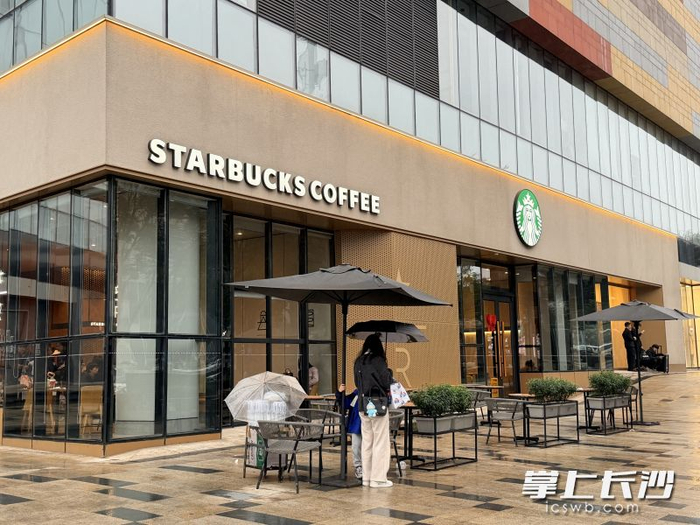
中国资本出手收购星巴克,“9块9”离我们还远吗?
Chang Sha Wan Bao· 2025-11-10 10:11
Core Insights - Starbucks has entered a strategic partnership with Chinese company Boyu Investment, forming a joint venture to operate Starbucks' retail business in China, marking the first time Starbucks has sold equity in its Chinese operations in 26 years [1][3] - Boyu Investment acquired a 60% stake for $4 billion, while Starbucks retains a 40% stake, maintaining ownership of the brand and intellectual property [1][3] - The partnership is expected to accelerate Starbucks' expansion in China, aiming to increase the number of stores from 8,011 to 20,000 [5][6] Financial Performance - Starbucks' global comparable store sales fell by 7% in Q4 of fiscal year 2024, with net revenue declining by 3% to $9.1 billion, indicating significant pressure on its global operations [3] - In contrast, Starbucks' China operations have shown strong growth, with Q4 fiscal year 2025 revenue reaching $831.6 million, a 6% increase year-over-year, and total annual revenue of $3.105 billion, up 5% [3][5] Market Dynamics - The partnership with Boyu Investment is seen as a strategic move to tap into the growing Chinese coffee market, which remains underpenetrated in lower-tier cities [6][7] - Boyu Investment has experience in expanding coffee brands in China, having rapidly increased its own coffee brand's store count by 2,000 in less than a year [6] - The competitive landscape in China is intensifying, with local brands like Luckin Coffee and others gaining market share, prompting Starbucks to consider more cost-effective product offerings [7][9] Future Outlook - The joint venture is expected to enhance Starbucks' ability to innovate in product offerings and strengthen connections with local consumers, particularly in lower-tier markets [6][7] - There is speculation about the potential introduction of lower-priced products, such as a 9.9 yuan coffee, to better compete with local brands and meet changing consumer preferences [7][9]

从边陲豆到“中国味”:云南咖啡的拼多多蝶变记
2 1 Shi Ji Jing Ji Bao Dao· 2025-11-10 09:15
新电商平台的赋能,让云南咖啡真正走出小众圈,走进更多寻常家庭。 11月的云南,普洱、保山的咖啡园里,红果连片挂满枝头。晨露还没褪去,咖农们就背着竹篮穿梭林 间,指尖划过饱满的果实,清甜的气息随风散开。 这片土地孕育了全国98%以上的咖啡产量,却曾长期困在"原料低价出口、成品高价进口"的循环里。咖 农一年到头辛苦劳作,手里的豆子卖不上价,而国人想喝杯好咖啡,还得依赖进口成品。 如今,这样的日子正在翻篇。花田萃从2020年开始扎根云南,在普洱、保山建起种植庄园,从种豆到销 售全链条把控;四只猫起步于2013年,建立德宏芒市、普洱的基地,2015年就入驻拼多多打开线上市 场。 这两家本土品牌带着对咖啡的热爱,把山间的红果酿成杯中醇香,悄悄改写着云南咖啡的产业生态,这 颗曾被贴上"边陲廉价豆"标签的果实,也渐渐有了属于中国味的底气。 植艺双兴:从田间到车间的全链升级 花田萃和咖农一起调整。主力品种卡蒂姆的植株间距拉到1.5至2米,每亩只种320棵左右,再按8×8米的 间距栽上遮阴树。这样一来,每天的光照时长刚好控制在5小时,卡蒂姆长得精神,豆子的饱满度和风 味都明显提升。 为了打破"云南只能做商业豆"的偏见,花田萃还 ...
星巴克迎来「中国合伙人」之后,还要面临哪些压力? | 声动早咖啡
声动活泼· 2025-11-10 09:04
Core Viewpoint - Starbucks has transitioned from wholly-owned expansion in China to a joint venture model, indicating a strategic shift in response to competitive pressures in the market [3][4]. Group 1: Historical Context and Strategic Decisions - Starbucks entered the Chinese market in 1999 through partnerships with local companies, gradually shifting to a wholly-owned model as the market matured [4]. - The recent deal with Boyu Capital marks a return to a joint venture structure, allowing Starbucks to retain some control while leveraging local expertise [4][5]. - The valuation of Starbucks China at $4 billion has raised concerns among industry experts, who believe it may be too high given the competitive landscape [4]. Group 2: Market Strategy and Expansion Plans - Starbucks adapts its market entry strategy based on local conditions, opting for wholly-owned or majority-controlled models in markets similar to the U.S., while using joint ventures in less familiar territories [5][6]. - The company aims to expand its store count in China to 20,000, indicating an aggressive growth strategy despite the challenges posed by local competitors [6][8]. - The partnership with Boyu Capital is seen as a way to enhance local market penetration and capitalize on Boyu's resources in residential and commercial properties [7]. Group 3: Challenges Ahead - The ambitious target of 20,000 stores may necessitate a shift towards franchising, as managing such a large number of outlets without local partners could be impractical [8][9]. - Expanding into lower-tier cities presents challenges, including limited consumer spending power and competition from lower-priced coffee options [8][10]. - Starbucks faces pressure to localize its menu and supply chain to compete effectively, as its current offerings may not meet the evolving preferences of Chinese consumers [10][11]. Group 4: Operational Adjustments - The company has made recent adjustments to its pricing and product offerings, including limited-time discounts and new beverage options, to remain competitive [10][11]. - There is a need for innovation in product development, particularly in sourcing and flavor profiles, to better align with local tastes and preferences [11].
星巴克中国变了,要加入价格战了吗?
东京烘焙职业人· 2025-11-10 08:05
Core Viewpoint - Starbucks has announced a strategic partnership with Boyu Capital to establish a joint venture, with Boyu holding 60% and a transaction valuation of approximately 4 billion USD. The plan is to expand the number of stores in China from 8,000 to 20,000, focusing on smaller cities and emerging regions [2]. Group 1: Market Challenges - Over the past 26 years, Starbucks has witnessed significant growth in the Chinese coffee market, but it now faces challenges from local competitors that have diluted its unique value propositions, such as the "third space" concept [3][4]. - The "third space" value, which provided a comfortable environment for socializing and working, has become a standard offering among competitors, reducing Starbucks' ability to command a premium price [3][4]. - The brand's symbolic value has also diminished as younger consumers have more choices, with local tea brands capturing attention through cultural symbols and collaborations [4]. Group 2: Competitive Landscape - The entry of local players like Luckin Coffee and Koolearn has shifted consumer perceptions of coffee, introducing sweeter and more accessible options that challenge Starbucks' traditional offerings [4]. - As Starbucks expands its store presence, its scarcity and symbolic value have decreased, further exacerbated by ongoing price wars that lower overall brand premiums in the coffee market [4][5]. Group 3: Strategic Initiatives - In response to these challenges, Starbucks has initiated several actions to reinforce its value, including creating unique store concepts and collaborating with popular cultural figures to enhance brand resonance [5][6]. - The introduction of a joint membership program with Eastern Airlines aims to provide exclusive benefits to high-value customers, enhancing the perceived value of the Starbucks membership system [6]. - Product innovation, such as the introduction of a no-sugar series and non-coffee offerings, aims to attract new customer segments and extend consumption periods [6]. Group 4: Financial Performance - Starbucks' recent financial results indicate a successful recovery, with consecutive quarters of growth in same-store sales and transaction volume, alongside maintaining double-digit operating profit margins [11]. - The simultaneous growth in transaction volume and profit margins suggests that Starbucks has effectively retained or regained customers, demonstrating the success of its value-driven strategy amidst a competitive pricing environment [11][12].
星巴克中国卖身:60%股权仅卖40亿?中国市场增长神话破灭
Sou Hu Cai Jing· 2025-11-10 04:11
Core Insights - Starbucks is undergoing a significant transformation, shifting from direct operations to becoming a brand licensor, thereby transferring operational risks and benefiting from licensing fees [1] - The recent $4 billion investment from Boyu Capital grants them up to 60% equity in Starbucks China, revealing a substantial valuation discrepancy where Starbucks China is valued at approximately $6.7 billion, despite Starbucks estimating its retail business in China at over $13 billion [3] - Starbucks China reported a revenue of $830 million for Q4 FY2025, a 6% year-on-year increase, with an annual revenue of $3.1 billion, reflecting a 5% growth, but the growth rate appears slow compared to competitors [5] - Global operating profit for Starbucks plummeted by 78.7% in Q4, with net profit down 85.4%, raising concerns about profitability in the Chinese market, where specific profit figures remain undisclosed [7] - Boyu Capital's partner highlighted the opportunity for more localized and innovative experiences for Chinese consumers, indicating Starbucks' current shortcomings in localization and competitive pricing against rivals like Luckin Coffee [9] - The ambitious goal of expanding from 8,000 to 20,000 stores in ten years is seen as overly aggressive, with the need for 1,200 new stores annually, which may be challenging for Starbucks alone [11] - Boyu's understanding of Starbucks' challenges, including brand aging and insufficient localization, positions them to potentially enhance Starbucks' market presence and profitability in China [11] - Post-acquisition strategies may include price reductions and localization efforts, indicating a potential shift in Starbucks' traditional high-price model to better compete in the evolving Chinese market [12]
星巴克,还会降价吗
2 1 Shi Ji Jing Ji Bao Dao· 2025-11-10 02:31
Core Insights - Starbucks China is undergoing significant changes following the sale of a 60% stake to Boyu Capital, which will lead to a joint venture valued at approximately 28.49 billion RMB (4 billion USD) [1][6] - The decision to sell a majority stake indicates a loss of market dominance for Starbucks China, as it lags behind competitors like Luckin Coffee, which reported a 47.1% year-on-year revenue growth to 12.36 billion RMB [2][5] - The expansion strategy for Starbucks China aims to increase the number of stores to 20,000, raising questions about pricing strategies and operational adjustments needed to achieve this goal [8][9] Company Strategy - The joint venture with Boyu Capital allows Starbucks to retain 40% ownership while relinquishing core decision-making power in the Chinese market [1][6] - Starbucks China has seen a revenue increase of 6% year-on-year to 831.6 million USD (approximately 5.91 billion RMB) in Q3, driven by product pricing strategies and new product launches [5][6] - The introduction of local shareholders is viewed as a higher stage of operational autonomy for the Chinese team, potentially leading to more tailored strategies for the local market [6][7] Market Position - Starbucks China currently operates around 8,000 stores, significantly fewer than its competitors, with Luckin Coffee exceeding 26,000 stores [3][5] - The brand's premium pricing strategy is under pressure as it faces rising rental costs and a decline in brand prestige, making it challenging to maintain its previous market position [3][4][11] - The potential for price reductions exists, but significant cuts may be difficult due to higher operational costs compared to competitors like Luckin and Kudi [11][12] Future Outlook - The goal of expanding to 20,000 stores suggests a shift in Starbucks' operational model, which may require adjustments in employee benefits and service quality to remain competitive [13][14] - The current service quality and employee engagement at Starbucks may be at risk if the operational model changes significantly [15] - Overall, Starbucks China is poised for transformation, but the direction and implications of these changes remain uncertain [15][16]
星巴克,还会降价吗
21世纪经济报道· 2025-11-10 02:29
Core Viewpoint - Starbucks China is undergoing significant changes following the sale of a 60% stake to Boyu Capital, raising questions about its future direction and pricing strategy in the competitive coffee market [1][3]. Group 1: Sale and Market Position - Starbucks has formed a joint venture with Boyu Capital, valuing the partnership at approximately 28.49 billion RMB (4 billion USD), with Starbucks retaining 40% ownership and brand rights [1]. - The decision to sell a majority stake indicates Starbucks is losing its market dominance in China, as evidenced by the performance gap with Luckin Coffee, which reported a 47.1% year-on-year revenue increase to 12.36 billion RMB, compared to Starbucks China's 8% growth to 7.9 billion USD (approximately 56.26 billion RMB) [1][2]. Group 2: Financial Performance and Strategy - Starbucks China reported a 6% year-on-year revenue increase to 8.316 billion USD (approximately 59.13 billion RMB) in Q3, with same-store sales up 2% and transaction volume up 9%, although average transaction value decreased by 7% [2]. - The introduction of local shareholders and the shift in operational control are seen as necessary steps for Starbucks to adapt to the changing market dynamics [3]. Group 3: Future Expansion and Pricing - Starbucks plans to expand its store count in China to 20,000, which would require a significant adjustment in its pricing strategy, especially in lower-tier markets where consumer spending is limited [4][5]. - While a drastic price reduction seems unlikely due to higher operational costs compared to competitors like Luckin and Kudi, minor price adjustments may be feasible to support the expansion goal [5]. Group 4: Operational Changes and Brand Identity - The potential shift in Starbucks' operational model raises concerns about maintaining service quality and employee morale, which have been key competitive advantages in the Chinese market [5]. - The company's commitment to high employee welfare standards may complicate efforts to lower prices while expanding rapidly [5].

星巴克,还会降价吗?
2 1 Shi Ji Jing Ji Bao Dao· 2025-11-10 00:12
Core Viewpoint - Starbucks China is undergoing significant changes following the sale of a 60% stake to Boyu Capital, raising questions about its future direction and pricing strategy [3][4][10]. Group 1: Sale Details - Starbucks will form a joint venture with Boyu Capital to operate its retail business in China, with Boyu holding up to 60% equity and Starbucks retaining 40% [3]. - The joint venture is valued at approximately 28.49 billion RMB (4 billion USD) [3]. - This sale indicates that Starbucks is relinquishing core decision-making power in its Chinese retail operations [3][4]. Group 2: Market Position and Performance - Starbucks China is losing market dominance compared to Luckin Coffee, which reported a 47.1% year-on-year revenue growth to 12.36 billion RMB, while Starbucks China’s revenue grew only 8% to 7.9 billion USD (approximately 56.26 billion RMB) [4]. - As of now, Luckin has over 26,000 stores, while Starbucks China has only 8,000, indicating a significant gap in market presence [5]. Group 3: Strategic Changes - Starbucks is shifting towards empowering its Chinese team, which has led to a 6% year-on-year revenue increase to 8.316 billion USD (approximately 59.13 billion RMB) in Q3, with same-store sales up 2% and transaction volume up 9% [7]. - The introduction of new products and price reductions has been part of this strategy, although the average transaction value has decreased by 7% [7]. Group 4: Future Expansion Plans - The plan is to expand Starbucks' store count in China to 20,000, which poses challenges in maintaining a high average spending per customer in lower-tier markets [10][11]. - Achieving this expansion may necessitate price reductions, although significant cuts may be difficult due to higher operational costs compared to competitors like Luckin and Kudi [13][15]. Group 5: Operational Considerations - Starbucks' operational costs are higher due to its premium pricing strategy and employee benefits, making substantial price reductions unlikely [13][14]. - A potential shift in operational model may be required to meet the ambitious store expansion goals, raising questions about the impact on service quality and brand identity [16][17].
星巴克,还会降价吗?丨消费参考+
2 1 Shi Ji Jing Ji Bao Dao· 2025-11-10 00:07
Core Viewpoint - Starbucks China is undergoing significant changes following the sale of a 60% stake to Boyu Capital, raising questions about its future direction and pricing strategy [3][4][10]. Group 1: Sale Details - Starbucks will form a joint venture with Boyu Capital to operate its retail business in China, with Boyu holding up to 60% equity and Starbucks retaining 40% [3]. - The joint venture is valued at approximately 28.49 billion RMB (4 billion USD) [3]. - This sale indicates Starbucks is relinquishing core decision-making power in its Chinese retail operations [3][4]. Group 2: Market Position and Performance - Starbucks China is losing market dominance compared to competitors like Luckin Coffee, which reported a 47.1% year-on-year revenue growth to 12.36 billion RMB, while Starbucks China saw only an 8% increase to 7.9 billion USD (approximately 5.63 billion RMB) [4]. - Luckin has over 26,000 stores, while Starbucks China has only 8,000, highlighting a significant gap in market presence [5]. Group 3: Strategic Changes - Starbucks is shifting towards empowering its Chinese team, which has led to a 6% year-on-year revenue increase to 8.316 billion USD (approximately 5.91 billion RMB) in Q3, despite a 7% decline in average transaction value [7][8]. - The introduction of local shareholders represents a higher level of operational autonomy for Starbucks China [8]. Group 4: Future Expansion Plans - Starbucks aims to expand its store count in China to 20,000, which would require a significant adjustment in its pricing strategy to remain competitive in lower-tier markets [10][11]. - The feasibility of maintaining a mid-to-high-end positioning while expanding to 20,000 stores is uncertain [16][17]. Group 5: Operational Considerations - Starbucks' operational costs are higher than those of competitors like Luckin and Kudi, making substantial price reductions challenging [13][15]. - The company’s commitment to employee welfare and service quality may limit its ability to lower prices significantly [14][18]. Group 6: Overall Implications - The changes at Starbucks China suggest a potential shift in its operational model, with an emphasis on adapting to the competitive landscape while maintaining service quality [19][20].