
可再生能源

Search documents
《碳达峰碳中和的中国行动》白皮书,全文来了
中国能源报· 2025-11-08 03:51
Core Viewpoint - The white paper emphasizes China's commitment to achieving carbon peak and carbon neutrality as a national strategy, highlighting significant progress in green and low-carbon transformation across various sectors [8][10]. Group 1: Commitment to Carbon Peak and Neutrality - China views the achievement of carbon peak and neutrality as essential for sustainable development and addressing environmental constraints [11]. - The country has established a comprehensive carbon reduction policy framework, including a "1+N" policy system that outlines specific actions and timelines for various sectors [15]. - China's leadership has made significant declarations regarding carbon goals, including reaching peak carbon emissions before 2030 and striving for carbon neutrality by 2060 [8][9]. Group 2: Energy Transition Achievements - Non-fossil energy consumption has increased from 16.0% in 2020 to 19.8% in 2024, with a focus on wind and solar energy development [17]. - The clean and efficient use of fossil energy is being accelerated, with fossil energy consumption decreasing from 84.0% in 2020 to 80.2% in 2024 [22]. - The comprehensive adjustment capability of the power system has improved, with significant investments in new energy sources and storage technologies [23][25]. Group 3: Low-Carbon Development in Key Sectors - The industrial sector is undergoing a green transformation, with a focus on reducing high energy consumption and emissions while promoting clean energy alternatives [27]. - The transportation sector is rapidly adopting low-carbon technologies, with a market penetration rate of 52.2% for new energy passenger vehicles by September 2025 [30]. - Urban and rural construction is increasingly focused on green development, with over 30% of new buildings being prefabricated and green materials being widely adopted [36]. Group 4: Effective Carbon Reduction Pathways - Energy-saving and carbon reduction actions are being implemented, with a reported 11.6% decrease in energy consumption per unit of GDP from 2020 to 2024 [40]. - The circular economy is being promoted, with significant improvements in waste recycling and resource utilization [43]. - The ecological carbon sink capacity is being enhanced, contributing to global greening efforts and achieving a forest coverage rate of 25.09% by 2024 [46][47]. Group 5: Support and Guarantee Systems - China is enhancing its carbon emission statistics and accounting capabilities, establishing a unified carbon emission accounting system [51]. - Economic policies supporting green and low-carbon development are being strengthened, with green loans reaching 36.6 trillion yuan by the end of 2024 [53]. - Technological innovation in low-carbon technologies is being prioritized, with a significant increase in international patent applications in this field [56]. Group 6: Global Climate Governance - China is actively participating in global climate governance, promoting the Paris Agreement and contributing to international climate negotiations [62][64]. - The Belt and Road Initiative is being leveraged to enhance green development cooperation with partner countries [65].


周末重磅!国新办发布
Zheng Quan Shi Bao· 2025-11-08 02:51
《碳达峰碳中和的中国行动》白皮书发布。 11月8日,国务院新闻办公室发布《碳达峰碳中和的中国行动》白皮书。 白皮书除前言、结束语外分为六个部分,分别是坚定不移推进碳达峰碳中和、能源绿色低碳转型取得显著成效、重点领域低碳发展深入推进、重点降碳路 径全面落地见效、支撑保障体系不断夯实、为全球气候治理注入强大动力。 白皮书强调,实现碳达峰碳中和,是中国站在对人类文明负责的高度,基于实现可持续发展的内在要求作出的重大决策部署。作出碳达峰碳中和重大宣示 五年来,中国牢固树立和践行绿水青山就是金山银山的理念,采取有力行动、付出艰苦努力,推动绿色低碳转型取得历史性成就。 白皮书指出,能源活动是碳排放的最主要来源,能源绿色低碳转型是实现碳达峰碳中和的关键。中国立足基本国情和发展阶段,在保障能源安全的前提 下,大力实施可再生能源替代,推进新型能源体系和新型电力系统建设,为实现"双碳"目标提供有力支撑。 白皮书说,节能是从源头减少碳排放的重要抓手,循环经济对碳减排具有重要促进作用,生态系统碳汇是实现减排固碳的重要途径。中国深入实施节能降 碳增效行动、循环经济助力降碳行动、碳汇能力巩固提升行动,取得积极成效。 白皮书强调,气候变化 ...

周末重磅!国新办发布
证券时报· 2025-11-08 02:47
Core Viewpoint - The white paper emphasizes that achieving carbon peak and carbon neutrality is a significant decision made by China based on its responsibility to humanity and the inherent requirements for sustainable development [2][3]. Group 1: Carbon Peak and Carbon Neutrality - The white paper outlines that China has firmly established and practiced the concept that "lucid waters and lush mountains are invaluable assets," taking strong actions to promote green and low-carbon transformation, achieving historic results over the past five years [2]. - It highlights that energy activities are the primary source of carbon emissions, and the green low-carbon transformation of energy is key to achieving carbon peak and carbon neutrality [2]. Group 2: Energy Green Low-Carbon Transformation - The white paper states that non-fossil energy has seen significant development, with the proportion of non-fossil energy consumption increasing from 16.0% in 2020 to 19.8% in 2024, an annual increase of nearly 1 percentage point [5]. - Wind and solar power generation capacity has tripled since 2020, contributing to about 80% of new power installations since then, with the share of wind and solar power generation steadily increasing at an annual rate of 2.2 percentage points [5]. Group 3: Key Areas of Low-Carbon Development - The white paper indicates that key sectors such as industry, transportation, construction, and residential life are significant sources of carbon emissions, and China is promoting the integration of traditional and emerging industries to enhance green low-carbon development [9]. - It mentions the rapid promotion of new energy vehicles, with China achieving the fastest and largest scale of new energy vehicle adoption globally [9]. Group 4: Key Carbon Reduction Pathways - The white paper reports that China has implemented energy-saving and carbon reduction actions, achieving an 11.6% decrease in energy consumption per unit of GDP during the first four years of the 14th Five-Year Plan [12]. - It highlights the establishment of approximately 150,000 waste recycling points and 1,800 sorting centers by the end of 2024, with a comprehensive utilization rate of major solid waste increasing by 3 percentage points compared to 2020 [13]. Group 5: Global Climate Governance - The white paper emphasizes China's commitment to multilateralism and international cooperation in global climate governance, actively promoting the signing and implementation of the Paris Agreement [15]. - It states that China has established energy cooperation platforms with six major regions and has signed energy cooperation partnerships with 34 countries along the Belt and Road Initiative [15].

双碳研究 | 破纪录!2025年中国风电太阳能新增装机容量将达264吉瓦!
Sou Hu Cai Jing· 2025-11-07 17:12
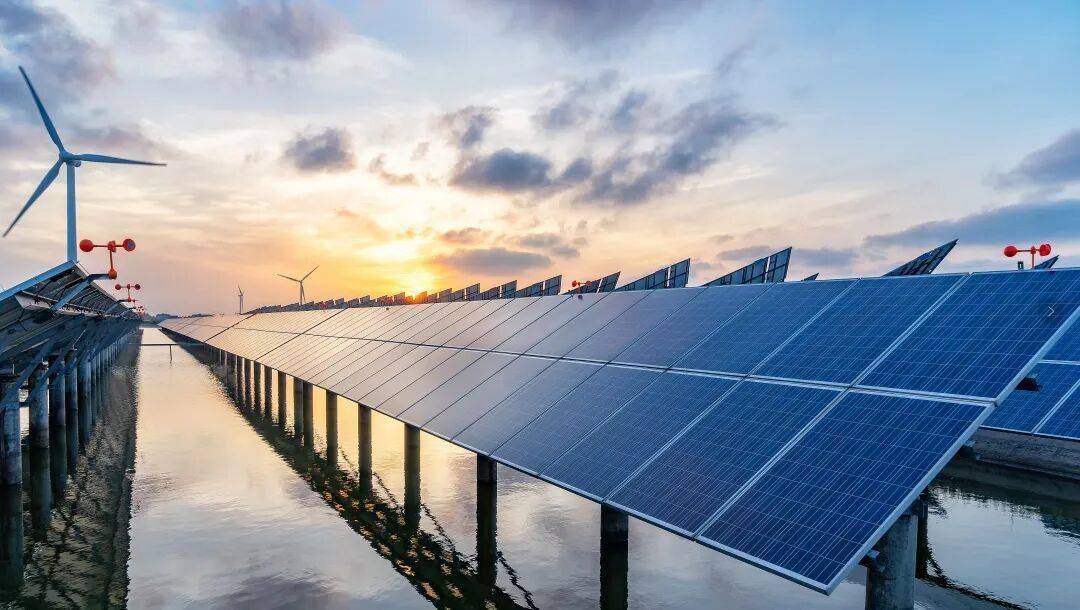
Core Insights - In the first half of 2025, China's new installed capacity for wind and solar energy reached a record 264 gigawatts, marking a significant milestone in renewable energy development [4][5][8] - The National Energy Administration (NEA) plans to achieve approximately 600 gigawatts of new capacity for the entire year, aiming for a total installed capacity of 1,680 gigawatts by the end of 2025 [4][5] - The rapid growth in renewable energy capacity is aligned with China's goal of reaching carbon peak by 2030, with wind and solar energy being crucial for this transition [4][7][8] Installed Capacity Growth - In the first half of 2025, solar power added 148 gigawatts, bringing the total solar capacity to 1,270 gigawatts, a 50% increase year-on-year [5] - Wind power saw an addition of 116 gigawatts, resulting in a total capacity of 704 gigawatts, reflecting a 75% year-on-year growth [5] - The combined installed capacity of wind and solar now accounts for 44% of China's total power generation capacity [5] Energy Generation and Consumption - Total electricity generation in the first half of 2025 reached 7,100 terawatt-hours, a 9.3% increase from the previous year [5][7] - Solar energy generation was 1,260 terawatt-hours, while wind energy generation was 1,210 terawatt-hours, together constituting 35% of total electricity generation, up from 28% the previous year [5] - For the first half of 2025, the share of fossil fuel generation dropped to 52%, down from 58% in the previous year, indicating a significant shift towards renewable energy [7] Strategic Implications - The surge in wind and solar capacity is a critical step towards achieving carbon neutrality and reducing reliance on fossil fuels [6][8] - The expansion of the renewable energy sector is supported by advanced solar panel manufacturing processes and a stable supply chain for key raw materials [5] - The NEA emphasizes the importance of improving the efficiency of renewable energy systems and reducing electricity waste to enhance overall energy management [7]

Calumet Specialty Products Partners(CLMT) - 2025 Q3 - Earnings Call Transcript
2025-11-07 15:00
Financial Data and Key Metrics Changes - The company reported $92.5 million of adjusted EBITDA for Q3 2025, marking the strongest quarter in several years [21] - Operating costs were reduced by $24 million compared to the same quarter last year, with a year-to-date reduction of $60 million [5][21] - The company reduced its restricted group debt by over $40 million during the quarter [21] Business Line Data and Key Metrics Changes - The specialty products and solutions segment generated $80.2 million of adjusted EBITDA, with production volume gains of 8% compared to the prior year [23] - The Montana Renewables segment generated adjusted EBITDA with tax attributes of $17.1 million, an increase from $14.6 million in the prior year [26] - The performance brand segment remained flat year-over-year despite the divestment of the Royal Purple Industrial Business [25] Market Data and Key Metrics Changes - The industry saw weakness in renewable diesel margins, with realized margins lower than the normal index margin formula [9] - Biomass-based diesel production remains cut back at roughly 60% utilization, with industry production volumes stabilizing just above 350 million gallons a month [10] - European SAF prices increased approximately 60% over the past six months, indicating a tightening market [19] Company Strategy and Development Direction - The company is on track for its max SAF expansion in the first half of 2026, with approximately 75% of the expanded volume either contracted or in the final review process [12][14] - The focus remains on driving operational improvements and reducing costs per barrel, with a strategic priority on deleveraging [21][24] - The company aims to leverage its integrated model to optimize crude slate and product deals, capturing market opportunities [24] Management's Comments on Operating Environment and Future Outlook - Management expressed optimism about the recovery in the renewable diesel market, anticipating improved margins once the RVO is finalized [38] - The company is confident in its ability to navigate feedstock volatility and expects to benefit from a strong operational environment in 2026 [41] - Management highlighted the importance of regulatory clarity and the potential for increased demand in the SAF market [28][19] Other Important Information - The company successfully monetized $25 million of PTCs during the quarter, with expectations for further monetization at improving price levels [22][27] - An error in the reported Q1 and Q2 2025 cash flow statements will result in an approximate $80 million increase to cash flows from operations for the first quarter [20] Q&A Session Summary Question: What are the gating items for the max SAF expansion? - Management indicated that there are very few gating items, with some tactical constraint removals planned during the scheduled turnaround [31] Question: Can you discuss the off-take agreements for SAF? - Management stated that they are well above halfway through signing customers for the increased SAF production, with a mix of executed and in-service contracts [32][33] Question: What is the primary feedstock being used for Montana Renewables? - Management explained that they utilize a dynamic approach to feedstock, broadly using one-third vegetable oil, one-third corn oil, and one-third tallow and cooking oils [36] Question: How does the small refinery exemption impact financials? - Management noted that they have reduced their outstanding RIN obligation by over $320 million due to favorable rulings on small refinery exemptions [40] Question: What are the expectations for monetizing PTCs? - Management expects to monetize PTCs closer to 95% over time, with initial monetizations around 90% [46]

阿布扎比国家石油公司与振华石油、中国海油达成战略框架协议
Xin Lang Cai Jing· 2025-11-07 05:39
Core Insights - ADNOC showcased its presence at the 8th China International Import Expo (CIIE) and established multiple collaborations with Chinese companies, including strategic framework agreements with Zhenhua Oil and CNOOC [1] Group 1: Partnerships and Collaborations - ADNOC signed several cooperation agreements with Chinese enterprises during the expo, focusing on both upstream and downstream sectors [1] - The ADNOC delegation included senior leaders from various business units, as well as representatives from Masdar and TA'ZIZ, highlighting the company's commitment to renewable energy and industrial development [1] Group 2: Strategic Developments - ADNOC plans to establish an office in Beijing by April 2025, indicating a long-term commitment to the Chinese market [1] - TA'ZIZ awarded a $1.99 billion EPC contract to China National Chemical Engineering Group's 7th Construction Company (CC7) for the construction of one of the world's three integrated PVC production bases [1]

共享美丽中国建设的“绿色密码”
Ren Min Ri Bao· 2025-11-07 01:33
Core Viewpoint - China is committed to accelerating the formation of a new pattern for building a beautiful China, emphasizing green development as a key aspect of its modernization strategy [1][5]. Group 1: Green Development Strategy - The term "green" appears 20 times in the proposal for the 15th Five-Year Plan, highlighting China's commitment to a comprehensive green transformation of economic and social development [1]. - During the 14th Five-Year period, China maintained a strategic focus on ecological civilization, leading to continuous improvements in environmental quality [2]. - China has achieved significant milestones in green development, including a forest coverage rate exceeding 25% and a stable air quality good days ratio of around 87% [3]. Group 2: International Cooperation and Climate Action - China actively promotes ecological civilization concepts and engages in international cooperation to address environmental challenges and climate crises [4]. - The country has announced new national contributions to climate action and has mobilized over 177 billion yuan in project funding to support developing countries in combating climate change [4]. - China's planning emphasizes international collaboration and green development, providing opportunities for countries seeking inclusive and sustainable development paths [4].
“共同维护自由开放的国际贸易体系”(见证·中国机遇)
Ren Min Ri Bao· 2025-11-06 22:11
Group 1 - The China International Import Expo (CIIE) serves as a significant platform for China to expand high-level opening-up and share market opportunities with the world, with the UAE expressing a desire to deepen practical cooperation with China for mutual benefit and common development [2] - The UAE's national pavilion at this year's CIIE focuses on "innovation, sustainability, and partnership," showcasing its commitment to knowledge-driven and environmentally friendly economic growth, with participating companies from sectors like infrastructure, renewable energy, and life sciences [2] - The UAE aims to demonstrate its vibrant business environment and technological expertise to Chinese and global audiences, highlighting its global competitiveness in knowledge-intensive fields [2] Group 2 - The UAE's renewable energy technologies, advanced building materials, fintech solutions, and high-quality consumer and healthcare products are increasingly entering the Chinese market, driven by the significant investment and consumption potential in China [2] - The inaugural UAE International Investment Summit's China session will be held in Shanghai, reflecting the strong commitment to deepening strategic cooperation between China and the UAE, with Shanghai recognized as a global financial and trade hub [2] - China is the UAE's largest trading partner, and the UAE is China's second-largest trading partner in the West Asia and North Africa region, with bilateral trade expected to exceed $100 billion in 2024, marking a 7.2% year-on-year increase [2] Group 3 - The growing cooperation between China and the UAE has led to an increase in Chinese companies establishing operations in Dubai, with 772 Chinese firms registered in Dubai by mid-2025, representing a 3.8% year-on-year growth [2] - Chinese enterprises are bringing advanced technologies and management experiences in AI, fintech, modern logistics, and life sciences to the UAE, enhancing local technological capabilities and knowledge transfer [2] - The interaction between Chinese and UAE companies is fostering diverse cooperation models such as joint ventures, collaborative R&D, and talent development, which can be promoted regionally and globally for mutual benefits [2][3]

是什么让这一国宣布迁都?
Jin Rong Shi Bao· 2025-11-06 12:48
Group 1 - The Brazilian government has decided to temporarily move the capital from Brasília to Belém from November 11 to 21 to host the COP30 conference [1] - COP30 is the 30th Conference of the Parties to the United Nations Framework Convention on Climate Change (UNFCCC), aimed at stabilizing greenhouse gas concentrations in the atmosphere [1] - The focus of COP30 will be on transforming commitments into actionable steps, emphasizing collaboration among nations for a prosperous, safe, and resilient future [1] Group 2 - The World Resources Institute (WRI) states that COP30 could drive significant change if substantial outcomes are achieved, building on the commitments made at COP29 [2] - COP29 established a goal for developed countries to provide at least $300 billion annually by 2035 to support developing nations in addressing climate change, with a long-term target of $1.3 trillion per year [2] - The "Baku to Belém Roadmap" is a joint plan to achieve the $1.3 trillion goal, requiring countries to establish national platforms for coordinating diverse climate funding [2] Group 3 - There is an expectation for countries to set more ambitious emission reduction targets aligned with their net-zero goals during the conference [3] - Key sectors such as energy, agriculture, and transportation are anticipated to undergo systematic transformations [3] - The conference aims to send a positive political signal supporting the UNFCCC and the Paris Agreement, emphasizing the irreversible trend towards global green and low-carbon transformation [3]
国际观察:中拉携手应对气候变化成果丰硕
人民网-国际频道 原创稿· 2025-11-06 06:01
Group 1 - Climate change is a common challenge for humanity, and China has positioned itself as a responsible developing country committed to global green development [1] - China aims to peak carbon emissions by 2030 and achieve carbon neutrality by 2060, having built the world's largest and fastest-growing renewable energy system [1] - Over the past decade, China has significantly reduced the average cost of wind and solar power generation, with costs dropping by over 60% and 80% respectively [1] Group 2 - China and Latin American countries have established an efficient cooperation mechanism on climate change, with various collaborative projects yielding fruitful results [2] - The first China-Latin America Disaster Management Cooperation Forum was held in August 2022, enhancing cooperation in disaster prevention and climate adaptation [2] - Chinese investments in renewable energy projects in Latin America, such as the San Gaban III hydropower station in Peru and the new Tanki wind project in Brazil, are contributing to regional development and emissions reduction [2] Group 3 - Chinese electric vehicles are playing a significant role in reducing greenhouse gas emissions in Latin America, where transportation accounts for 20% of total emissions [3] - China and Brazil have committed to zero deforestation by 2030, showcasing their dedication to sustainable agricultural practices [3] - China prioritizes climate cooperation with Caribbean nations, establishing funds and initiatives to support disaster response and low-carbon transportation [3] Group 4 - In September, President Xi Jinping announced a new target for a 7%-10% reduction in greenhouse gas emissions by 2035, marking a comprehensive approach to low-carbon development [4] - This announcement is seen as a significant step in supporting Brazil's upcoming climate change conference and boosting international confidence in climate governance [4] - China expresses willingness to collaborate with the international community, including Latin America and the Caribbean, to address climate challenges [4]