
电动汽车

Search documents
元旦假期国内出游1.42亿人次;美军对委内瑞拉发动袭击|周末要闻速递
21世纪经济报道· 2026-01-04 14:59
要闻速递 外交部发言人就美国强行控制委内瑞拉总统马杜罗夫妇答记者问 4日,外交部发言人就美国强行控制委内瑞拉总统马杜罗夫妇答记者问。问:据报道,1月3 日,美国派兵强行控制委内瑞拉总统马杜罗夫妇并移送出境。多国政府发声对此表示反对。中 方对此有何评论?答:中方对美方强行控制马杜罗总统夫妇并移送出境表示严重关切,美方行 径明显违反国际法和国际关系基本准则,违反《联合国宪章》宗旨和原则。中方呼吁美方确保 马杜罗总统夫妇人身安全,立即释放马杜罗总统和夫人,停止颠覆委内瑞拉政权,通过对话谈 判解决问题。详情>> 韩国总统李在明抵达北京 开启就任后首次对华国事访问 4日下午,韩国总统李在明乘机抵达北京首都国际机场,开启为期4天的访华行程。此访是李在 明总统就任后首次访华,也是韩国总统时隔6年再次访华。 元旦假期海南离岛免税购物金额7.12亿元 据海口海关统计,元旦假期期间(2026年1月1日至3日),海口海关共监管离岛免税商品销售 44.2万件,同比增长52.4%;购物人数8.35万人次,同比增长60.6%;购物金额7.12亿元,同比 增长128.9%。 创新高!去年我国批准创新药76个 对外授权破千亿美元 据国家药监 ...



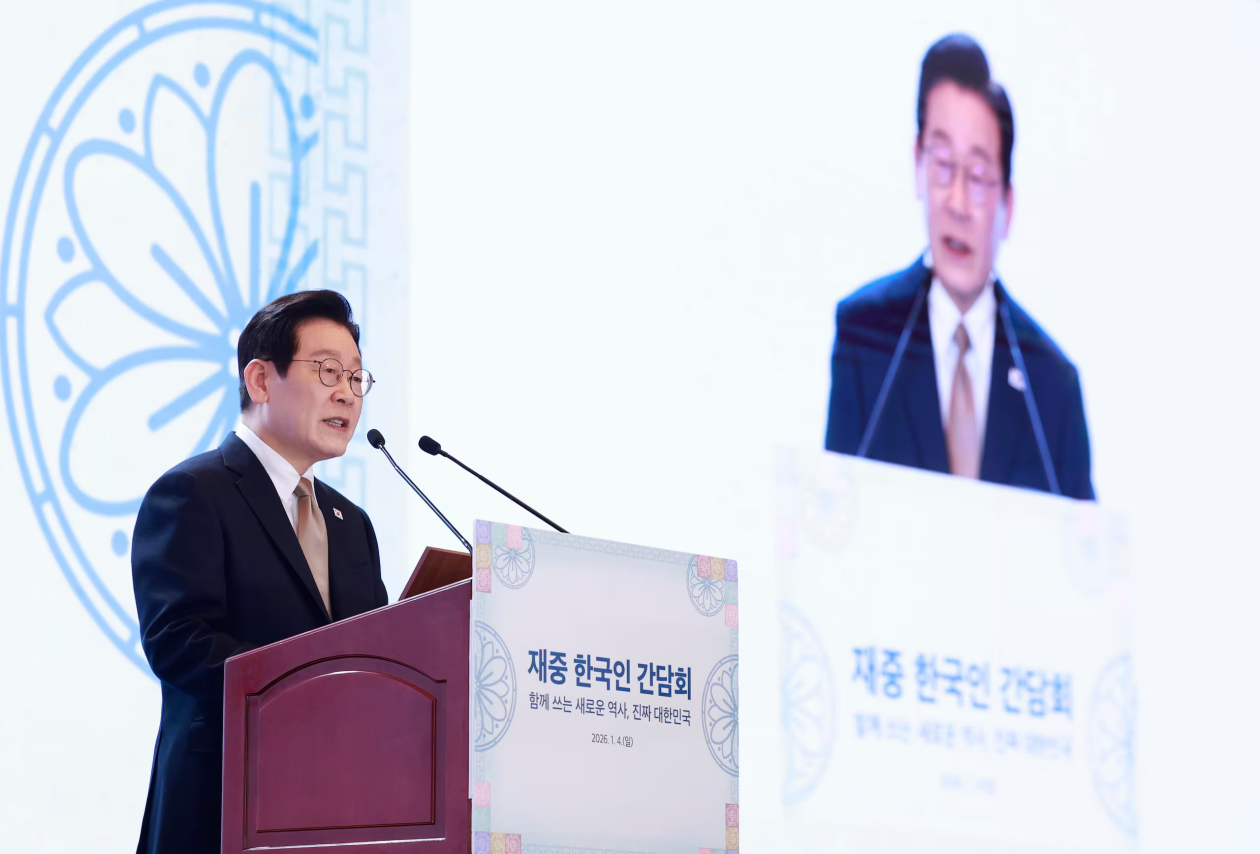
李在明抵京后表态:韩中两国在多领域合作方面拥有“无限机会”
Huan Qiu Wang· 2026-01-04 14:51
Group 1 - The core achievement of the current South Korean government is the comprehensive restoration of South Korea-China relations, which is seen as a significant diplomatic success [2][3] - The visit is intended to mark the beginning of "pragmatic diplomacy" for South Korea in 2024 and is expected to serve as an important milestone for the development of bilateral relations over the next 30 years [2][3] - There is an emphasis on the importance of economic cooperation between South Korea and China, with potential collaboration opportunities in renewable energy, biotechnology, and the silver economy, among other fields [3] Group 2 - The South Korean government aims to strengthen communication and cooperation between the two countries based on mutual respect and understanding [2][3] - The visit is also seen as a way to bridge past gaps in the relationship and restore mutual trust, with a commitment to maintaining positive momentum and preventing past difficulties from recurring [3] - The Chinese Ministry of Foreign Affairs expressed anticipation that this visit will positively contribute to the advancement of the strategic partnership between China and South Korea under the leadership of both countries' leaders [3]
开门红,马上红?
Hu Xiu· 2026-01-04 12:01
Group 1 - The core event is the U.S. operation against Venezuela, resulting in the arrest of its president on charges of drug and arms trafficking, which may lead to a significant impact on global oil prices [3] - Venezuela holds approximately 17% of the world's oil reserves, and the potential recovery of its production capacity could alter the global energy supply landscape, putting downward pressure on oil prices [3] - The timing of the U.S. action is linked to domestic political needs, particularly the upcoming midterm elections, indicating a strategic move by the Trump administration to secure electoral support [3] Group 2 - The article suggests that the recent holiday data and funding may indicate a positive market opening, hinting at potential bullish trends in the financial markets [4] - There is a concern regarding the pressure on power grid construction due to the policy of "moderate advancement without excessive advancement," which could impact the energy sector [4]
全球第一!比亚迪超越特斯拉
起点锂电· 2026-01-04 10:38
美国电动汽车制造商特斯拉公司2日公布的数据显示,该公司 2025年全球交付汽车163.6万辆 ,同比下降约8.6%。 特斯拉表示,该公司2025年第四季度共交付41.8万辆汽车,同比下降15.6%,低于分析师预期的约43.4万辆。全年交付量为163.6万辆,较 2024年的179万辆明显下降,也低于市场预期的约165万辆。 中国汽车巨头比亚迪1月1日发布的数据显示,比亚迪2025年总体新车销量超460万辆,同比增长约8%, 其纯电动汽车新车销量超225万辆 ,同比增长约28%。比亚迪首次登顶全球纯电动汽车销量榜。 据悉,这是特斯拉有史以来首次在全年电动汽车销量上被中国汽车制造商比亚迪超越。2024年,特斯拉年销量以约2万辆的微弱优势领先于比 亚迪,而2025年比亚迪一举实现了大幅超越。 往 期 回 顾 | 01 | | | 一周锂电新闻汇总 | | --- | --- | --- | | 02 | | | 瑞浦兰钧再获1GWh海外储能订单! | | 03 | | | 宁德时代入局水电站业务 | | 04 | | 举办! | 2026起点锂电两轮车换电大会暨轻型动力电池鲁班奖颁奖典礼定档2026年4月深圳 | ...

雷军:未来五年至少2000亿研发,加大大模型投入;Anthropic210亿美元购谷歌100万块TPU;罗永浩科技春晚翻车致歉,自曝ADHD引争议|AI周报
AI前线· 2026-01-04 08:56
行业热点 雷军:未来五年研发至少投入 2000 亿元,加大大模型投入 整理 | 傅宇琪、褚杏娟 雷军:未来五年研发至少投入 2000 亿元,加大大模型投入;微信回应安装包 10 多年膨胀数百倍;Anthropic 豪掷 210 亿美元购 谷歌 100 万块 TPU;比亚迪首次超越特斯拉,成全球最大电动汽车销售商;技术元老离场!腾讯 AI Lab 副主任俞栋离职;传快 手副总裁、基础大模型及推荐大模型负责人周国睿即将离职;新论文暗示 DeepSeek V4 已完成训练;Manus 武汉团队基本搬 离,核心业务人员迁往新加坡;"全球大模型第一股"来了!智谱发行市值达 511 亿港元;50 亿美元联姻!NVIDIA 正式收购 Intel 股份…… 1 月 3 日晚,小米集团董事长雷军在新年首场直播中透露,小米汽车 2026 年全年交付目标为 55 万辆,2025 年交付量超 41 万辆,超过原先计划的 30 万辆。而在今日早间发布的微博中,雷军称,"希望今年也能超额完成(目标)。" 雷军介绍小米规划聚焦三点:一是未来五年至少投入 2000 亿元坚持技术研发;二是加大对大模型的投入;三是坚持为人车家 全生态体验打造极 ...


观澜亭|白银出口管制,科技竞争进入深水区
Da Zhong Ri Bao· 2026-01-04 07:50
Core Viewpoint - The new silver export control policy in China aims to enhance industry concentration and ensure the sustainable development of the silver industry by setting strict criteria for export enterprises, amidst rising global demand for silver in various high-tech industries [2][7]. Group 1: Export Control Policy - The new policy elevates the export management level of silver, introducing three strict "red lines": - Production capacity line: Enterprises with annual production below 80 tons will be eliminated to enhance industry concentration [2]. - Qualification line: Companies must have a continuous export record for the past three years to prevent speculative entrants [2]. - Environmental line: Enterprises not meeting environmental standards will be shut down to promote green development [2]. Group 2: Industrial Demand for Silver - Silver's role has evolved beyond being a precious metal for jewelry; industrial demand now accounts for over 50% of total silver consumption, a figure that continues to rise [2]. - Silver is essential in high-end electronic components and thermal materials, playing a critical role in emerging industries such as: - Photovoltaics: Silver paste is a key conductive material for solar cells, with no complete substitutes found yet [4]. - Electric vehicles: Each electric vehicle uses an average of 1 to 1.5 ounces of silver, double that of traditional cars [4]. - 5G communication: All 5G devices require silver-coated components for signal transmission [4]. - Artificial intelligence: Silver is widely used in electronic components of servers and hardware [4]. Group 3: Global Supply Chain and Market Dynamics - The trend of increasing silver demand may reshape global supply chain dynamics, challenging the long-established global division of labor and prompting tech companies to reconsider production base layouts and supply chain resilience [5]. - Financial capital is increasingly recognizing silver's dual attributes as both a safe-haven precious metal and an industrial metal with growth potential, leading to heightened price volatility [5]. - In 2025, silver prices surged from $29-$30 per ounce at the beginning of the year to a range of $70-$80 by year-end, achieving over 100% growth, outpacing gold [5]. Group 4: Strategic Implications - The implementation of China's silver export control policy occurs at a time of global market vulnerability and supply tension, serving as a defensive measure to safeguard domestic industrial security [7]. - Long-term, this policy aims to control key resources, promote domestic industrial upgrades, and shape a favorable strategic landscape in global technology and industrial competition [7]. - The rising silver prices signal a deeper level of technological competition, where the ability to secure sufficient resources and innovate to reduce resource dependency will determine future leadership in the tech industry [7].

马斯克的“擎天柱”机器人:仍依赖远程操控,灵巧手难度巨大,内部人也质疑实用性
Hua Er Jie Jian Wen· 2026-01-04 06:56
Core Insights - Elon Musk has bet Tesla's future and personal wealth on the ambitious vision of the humanoid robot "Optimus," claiming it could generate "unlimited" revenue and become "the biggest product ever" [1] - However, there is a significant gap between Musk's vision and the current reality, as Optimus often relies on remote control by engineers and faces severe technical challenges in simulating human dexterity [1][3] Group 1: Current Challenges and Technical Limitations - During recent demonstrations, Optimus robots were not fully autonomous, with some interactions being remotely controlled by engineers wearing motion capture suits [1][3] - The project is still heavily dependent on human assistance, with engineers required to monitor and operate the robots in real-time, indicating limitations in autonomous capabilities [3] - Experts highlight that creating robotic hands with human-like dexterity involves challenges beyond just mechanical structure, including control systems and environmental perception [3][4] Group 2: Strategic Shift and Market Position - Tesla's strategic shift towards Robotaxi and humanoid robots comes as its core automotive business faces pressure, with a reported 9% decline in annual vehicle sales for 2025 and a 16% drop in Q4 [2] - Musk's new compensation plan aims for Tesla's market value to reach $8.5 trillion in 10 years, with a target of selling at least 1 million robots [2][6] - Despite long-term interest in the robotics industry, there are internal disagreements regarding the practicality of humanoid robots compared to specialized automation equipment [2][4] Group 3: Market Valuation and Analyst Perspectives - Analysts are cautious about the valuation of Tesla's robotics ambitions, with some excluding Optimus from their financial models due to the nascent stage of the industry [6] - Morgan Stanley's analyst predicts the global humanoid robot industry could reach $7.5 trillion by 2050, suggesting significant revenue potential for Tesla if it captures market share [6] - ARK Invest, despite forecasting a rise in Tesla's stock price, has not included Optimus in its 2029 financial model, citing the need for more time for commercialization [6] Group 4: Future Development and Commercialization - Tesla has postponed the initial timeline for deploying Optimus in its factories and is currently developing a third generation of the robot [7] - Musk markets Optimus as a "household helper," akin to characters from "Star Wars," but substantial breakthroughs in autonomy and practical engineering are necessary for profitability [7]

美股点金丨圣诞行情或缺席,新年行情如何演绎
Di Yi Cai Jing· 2026-01-04 05:01
Group 1 - The U.S. stock market has achieved double-digit growth for the third consecutive year, a trend last seen from 2019 to 2021, although the year-end performance has been disappointing [1] - Investors are actively seeking direction in the market, with strong corporate earnings and ongoing investments in artificial intelligence expected to boost the stock market, despite macroeconomic uncertainties and changes in Federal Reserve leadership [1] - The S&P Global U.S. Manufacturing PMI for December was reported at 51.8, slightly above the market expectation of 51.7, indicating a positive outlook for manufacturing [2] Group 2 - The Federal Open Market Committee (FOMC) recently voted 9-3 to lower the federal funds rate by 25 basis points, but internal divisions among committee members persist regarding future monetary policy [3] - Market expectations for further rate cuts by the Federal Reserve have cooled, with probabilities for rate cuts in upcoming meetings decreasing [3] - Economic indicators suggest a stable labor market, with initial jobless claims decreasing for three consecutive weeks, signaling relative stability despite seasonal fluctuations [2][4] Group 3 - The manufacturing sector's outlook is improving as trade policy uncertainties diminish, with expected growth in production across various sectors, particularly in electrical equipment driven by AI investments [4] - The automotive manufacturing sector's negative impact is expected to gradually lessen, contributing to a more favorable manufacturing environment [4] - The stock market's performance in the new year may be affected by low trading volumes and a lack of a traditional holiday rally, with significant declines in non-essential consumer goods and technology sectors [5] Group 4 - Long-term U.S. Treasury yields are gradually rising, with the 10-year yield just below 4.20% and the 30-year yield reaching 4.872%, which could increase market volatility, particularly for interest-sensitive sectors [7] - Upcoming economic data releases, including the ADP employment report and non-farm payrolls, are anticipated to provide insights into the labor market and may influence market fluctuations [7] - The stock market's resilience in the face of rising yields remains uncertain, with potential implications for future trading dynamics as investors navigate various factors, including the "January effect" and capital gains selling [7]
比亚迪登顶全球纯电销冠 特斯拉销量创历史最大跌幅
Huan Qiu Wang· 2026-01-04 04:38
来源:环球网 【环球网科技综合报道】1月4日,据CNN报道,2025年全球电动汽车市场格局生变,比亚迪以226万辆 的纯电动汽车销量超越特斯拉,首次登顶全球销冠,而特斯拉则遭遇史上最大年度销量跌幅。 数据显示,比亚迪纯电销量同比增长近28%。而特斯拉2025年交付量同比下滑8.6%至160 万辆,四季度 销量同比大跌15.6%。此前美国7500美元税收抵免政策到期前的抢购潮,虽短暂提振其三季度销量,却 透支了后续市场需求。 外媒指出,特斯拉销量下滑背后多重因素交织。一方面,比亚迪、吉利等车企及传统巨头的围剿加剧市 场竞争;另一方面,特斯拉CEO埃隆·马斯克的政治活动引发欧美消费者抵制,多地特斯拉门店爆发抗 议。为挽救颓势,特斯拉推出低配版Model 3和Model Y,但续航缩水、功能减少的短板难以打动消费 者。(旺旺) ...

百分之四十车型需进行必要技术升级
Ke Ji Ri Bao· 2026-01-04 03:04
Core Viewpoint - The implementation of the mandatory national standard for electric vehicle energy consumption limits, effective January 1, 2026, aims to enhance energy efficiency and reduce costs for consumers while promoting technological advancements in the automotive industry [1][2][3]. Group 1: Impact on Consumers and Vehicle Usage - The new standard requires that all new electric vehicles must meet stricter energy consumption limits, which will lead to longer actual driving ranges and lower operating costs for consumers [2]. - Current non-compliant models can improve their range by approximately 7% through technological optimization to meet the new limits [2]. Group 2: Rationale Behind the New Standard - The establishment of this standard is part of a broader initiative to enhance energy efficiency in the automotive sector, aligning with national carbon reduction goals [3]. - The standard also includes requirements for manufacturers to provide energy consumption data under various temperature conditions, ensuring consumers are well-informed about vehicle performance [3]. Group 3: Effects on Technology and Market Dynamics - The new standard will shift the industry from a model focused on large batteries for extended range to one emphasizing high efficiency and low energy consumption [4]. - Approximately 40% of current vehicle models do not meet the new standards, necessitating technological upgrades to avoid being phased out [4][5]. - The implementation of the standard is expected to drive significant advancements in automotive energy-saving technologies, including lightweight design and improved electric drive system efficiency [5][6].