超市

Search documents
重庆百货(600729):百年品牌焕新 多措并举见效
Xin Lang Cai Jing· 2025-09-01 04:50
Group 1: Department Store Business - The company is accelerating the transformation of existing stores by implementing an "Outlet + Shopping Center" model to address competitive pressures from offline retail and diverse shopping channels [1] - A tailored strategy of "one store, one policy" is being adopted to explore differentiated department store models based on local conditions [1] Group 2: Supermarket Business - The company is returning to the essence of commerce by enhancing product and service capabilities, with three types of supermarket formats: exquisite lifestyle stores, quality supermarkets, and fresh discount community supermarkets [2] - Each supermarket format targets different market segments, focusing on high quality-to-price ratios in core business districts, cost-effective community offerings, and thin-margin community models [2] Group 3: Appliance Business - The company is focusing on expanding into lower-tier markets and strengthening partnerships with leading brands, aiming for significant growth in overall sales through a retail franchise system [2] - The "Century Tong" retail franchise system is dedicated to lower-tier markets, integrating online and offline channels to create a new retail platform [2] Group 4: Automotive Trade - The company is optimizing its operational structure by consolidating offline stores, with new growth driven by the integration of new energy vehicles and used cars [2] - A shift from traditional fuel vehicle sales to new energy vehicle consignment sales is being promoted [2] Group 5: Convenience Store Business - The company is accelerating its entry into the convenience store market, positioning itself as "community convenience + instant service" to cater to various consumer needs [2] - The strategy includes leveraging a light-asset franchise model and utilizing the logistics network of supermarkets to enhance local advantages [2] Group 6: Investment Income from Consumer Finance - The company's investment income from consumer finance is projected to grow steadily, with expected revenues of 596 million, 662 million, and 711 million yuan from 2022 to 2024, reflecting year-on-year growth of 36%, 11%, and 7.4% respectively [3] - Investment income is anticipated to continue its stable growth trend from 2025 to 2027, reaching 782 million, 845 million, and 912 million yuan [3] Group 7: Profit Forecast, Valuation, and Rating - The company's projected operating revenues for 2025-2027 are 16.385 billion, 17.073 billion, and 18.307 billion yuan, with year-on-year changes of -4.40%, +4.20%, and +7.23% [4] - Expected net profits for the same period are 1.445 billion, 1.568 billion, and 1.738 billion yuan, with year-on-year growth rates of +9.92%, +8.47%, and +10.89% [4] - Considering the diversity and stability of the company's business, a target valuation of 12 times for 2025 is set, corresponding to a market value of 17.341 billion yuan and a target price of 39.37 yuan, with a "buy" rating [4]

折扣超市硬碰硬,京东开一城火一城的秘密
Sou Hu Cai Jing· 2025-09-01 01:19
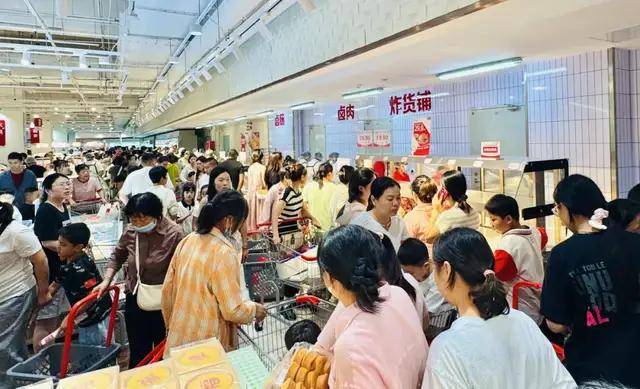
Core Viewpoint - JD's discount supermarket model is gaining significant traction, as evidenced by the overwhelming customer turnout and record sales during the opening of four new stores in Suqian, Jiangsu, indicating a strong market demand for this retail format [1][3][29] Group 1: Store Performance and Customer Engagement - On the opening day in Suqian, over 300,000 customers visited the four new stores, attracting four times the usual foot traffic for the shopping center [1] - Despite continuous rain, customers queued outside the store, showcasing a unique scene of "thousands waiting in the rain" to enter [3] - The stores operated under a "natural closing" policy, serving customers until the last one was attended to, with the store closing at 12:30 AM the following day [3] Group 2: Product Offering and Consumer Appeal - JD's discount supermarkets emphasize high-quality, low-priced products, with a focus on a wide variety of goods, including fresh produce and meats, which are sourced directly from producers [12][21] - The stores feature a larger footprint and a broader range of SKUs compared to traditional discount stores, enhancing the shopping experience [16][29] - Popular items included fresh chicken eggs priced at 9.9 yuan for 30 pieces, which sold out quickly, indicating strong consumer interest [13] Group 3: Competitive Landscape and Market Trends - The discount supermarket sector is expected to see rapid growth, with projections indicating that the market size will exceed 200 billion yuan by 2024, while current penetration is only 8% in China [29] - JD's discount supermarket model is part of a broader trend, with competitors like Meituan and traditional supermarkets also entering the discount space, indicating a competitive environment [28][29] - The success of JD's stores in Suqian and Zhuozhou suggests that this model may become the norm for future openings, driven by consumer demand for quality and value [29]


贴近社区做家庭生意 揭开互联网硬折扣超市的底牌
Bei Jing Shang Bao· 2025-09-01 00:14
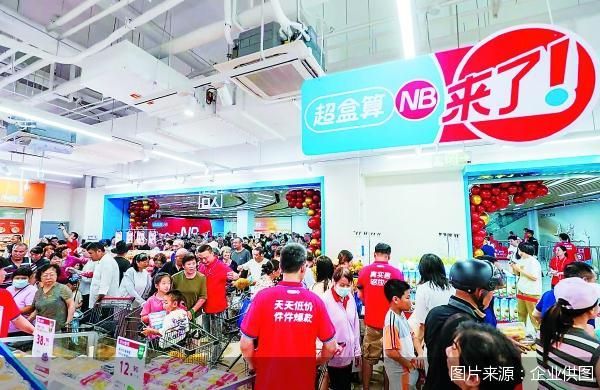
Core Insights - The competition in the hard discount supermarket sector has intensified, with major players like Hema, Meituan, and JD launching new stores focused on community family consumption [1][2][3] - These supermarkets emphasize high-frequency daily necessities and leverage private labels to achieve sustainable low prices through direct sourcing and supply chain efficiency [1][4][9] Group 1: Market Dynamics - Hema has rebranded its 300 stores to "Chao He Suan NB," while Meituan's "Happy Monkey" opened its first store in Hangzhou, and JD launched four new discount stores in Suqian [2][3] - The average store size for Hema and Meituan is around 600 to 1000 square meters, while JD's stores exceed 5000 square meters to accommodate more foot traffic [2][3] - The focus on community locations is a common strategy among these discount supermarkets, targeting areas with high population density and family-oriented consumption [2][3] Group 2: Product Strategy - Hema's procurement strategy involves controlling the introduction speed of new products, prioritizing essential items like vegetables and grains while introducing new snacks based on market trends [3][4] - Stability in product supply is crucial for community consumers, who prefer reliable staple items over fluctuating discounts [3][4] - The emphasis on private labels is significant, with Hema's private label products accounting for 60% of sales, and similar trends observed in JD and Meituan [6][7] Group 3: Operational Efficiency - Hema's "Chao He Suan NB" focuses on standardized pre-packaged goods, eliminating complex categories that do not meet expected efficiency [4][11] - The hard discount model is characterized by a low-cost structure, optimizing supply chains, and minimizing store decoration and promotional expenses [4][10][11] - The average gross margin for Hema is around 15%, with private label products typically achieving margins between 20% and 40% [9][10] Group 4: Supply Chain Management - The success of private labels relies on effective supply chain management, with a focus on market demand and product differentiation [7][8] - Hema's supply chain strategy includes reusing suppliers for various products, enhancing bargaining power and reducing costs [10] - The selection of private label products is based on market potential and the ability to meet consumer needs, ensuring a competitive edge [7][8]
揭开互联网硬折扣超市的底牌
Bei Jing Shang Bao· 2025-08-31 15:55
Core Insights - The competition in the hard discount supermarket sector has intensified, with major players like Hema, Meituan, and JD launching new stores focused on community family consumption [1][3][4] - These supermarkets emphasize low prices and low margins through private label products and direct sourcing to enhance supply chain efficiency [1][11] - The shift in focus from rapid store openings and fast delivery to deep operational management of community and family consumption scenarios is evident [1][3] Group 1: Store Launches and Strategies - Hema has rebranded its 300 stores to "Chao He Suan NB," while Meituan's "Happy Monkey" opened its first store in Hangzhou, and JD launched four new discount stores in Suqian [3][4] - The average store size for Hema and Meituan is around 600 to 1000 square meters, while JD's stores exceed 5000 square meters to accommodate more foot traffic [3][4] - All three brands target community commercial areas, focusing on high-density residential neighborhoods to support daily consumption needs [3][5] Group 2: Product Offering and Supply Chain Management - The product selection emphasizes stability in essential goods, with a focus on high-frequency daily items like vegetables and staple foods, while also introducing new products to maintain consumer interest [4][5] - Hema's private label products account for 60% of sales, while JD and Meituan also heavily feature their own brands in their stores [7][8] - The supply chain management is crucial, with a focus on direct sourcing and reducing middlemen to achieve sustainable low prices [6][12] Group 3: Pricing and Profit Margins - Hema's average gross margin is approximately 15%, with private label products typically having a margin of 20% to 40% [11][12] - The strategy of "low margin, high sales" is essential for hard discount supermarkets, allowing them to offer competitive pricing while maintaining profitability [11][12] - Cost-saving measures include minimizing store decoration and using standard packaging to reduce operational costs [13]

超市半年报:营收起落与业态迭代
Bei Jing Shang Bao· 2025-08-31 15:55
Core Insights - The performance of supermarket retail companies in China for the first half of the year shows a mixed picture, with significant disparities in revenue growth and decline influenced by factors such as scale, strategy, and regional layout [1][3] - New business models are replacing traditional stores, and private labels are increasingly becoming a significant part of financial reports [1][4] - Many listed supermarket companies are seeking refined operations to achieve growth in the second half of the year amid operational challenges [1] Revenue Performance - Yonghui Supermarket reported revenue of approximately 29.948 billion yuan, a year-on-year decline of 20.73%, with a net loss of 241 million yuan compared to a profit in the same period last year [2] - In contrast, Bubu Gao achieved revenue of 2.129 billion yuan, a year-on-year increase of 24.45%, and a net profit of 201 million yuan, up 357.71% [2] - Other companies like Zhongbai Group and Hongqi Chain also faced significant challenges, with Zhongbai's net loss expanding by nearly 80% and revenue declining by nearly 20% [3] Private Label and Product Strategy - The transformation of supply chains is crucial for gaining cost advantages, with private labels and differentiated products becoming key strategies for improving gross margins and core competitiveness [4][5] - For instance, Jiajia Yue increased the proportion of its private label and customized products from 13% to 15% in the first half of the year [4] - Yonghui Supermarket announced a focus on core products, aiming to develop 100 products with annual sales exceeding 100 million yuan within three years [4] Online Business Development - Instant delivery services are rapidly developing, with companies like Walmart China reporting that e-commerce sales accounted for over 50% of total sales [7] - Yonghui Supermarket's online business revenue reached 5.49 billion yuan, accounting for 18.33% of total revenue, showing a reduction in losses compared to the previous year [7] - Jiajia Yue's online sales reached 630 million yuan, a year-on-year increase of 23%, with a 26% growth in order volume [7] Industry Challenges - The supermarket industry faces challenges from declining consumer purchasing power and competition from instant retail platforms and discount stores [8] - Companies are also dealing with issues related to store adjustments, new store locations, and high operational costs, which complicate their ability to maintain competitive advantages [8]

揭开互联网硬折扣超市的底牌:短链路、低毛利、高周转
Bei Jing Shang Bao· 2025-08-31 11:36
Core Viewpoint - The competition in the hard discount supermarket sector has intensified, with major players like Hema, Meituan, and JD launching new stores focused on community and family consumption, emphasizing low prices and efficient supply chains [1][2][4]. Group 1: Market Developments - Hema has rebranded its budget community supermarket Hema NB to "Super Box Calculation NB," with nearly 300 stores [2]. - Meituan's discount supermarket "Happy Monkey" opened its first store in Hangzhou [2]. - JD opened four new discount supermarkets in Suqian, Jiangsu, all exceeding 5,000 square meters to attract more foot traffic [4]. Group 2: Business Strategies - All three brands focus on community and family consumption, with Hema and Happy Monkey adopting small store formats averaging 600 to 800 square meters, while JD's stores are larger [4]. - The selection of store locations is based on high population density and the need for daily essentials, ensuring a stable customer base [4][7]. Group 3: Product Offering and Supply Chain - Hema's procurement strategy involves controlling the introduction of new products, focusing on essential items like vegetables and grains, while also introducing seasonal snacks [5][7]. - The emphasis is on stable supply of essential goods rather than fluctuating discounts, fostering customer trust [7]. - Hema's self-branded products account for 60% of sales, with a focus on optimizing product quality and pricing strategies [10][12]. Group 4: Pricing and Profitability - The average gross margin for Hema's stores is around 15%, with self-branded products typically having a margin of 20% to 40% [16][17]. - The strategy of "low margin, high sales" is crucial for sustaining low prices, with some products having margins as low as 10% [16][17]. - The supply chain's efficiency is enhanced through direct sourcing and reduced operational costs, allowing for competitive pricing [17][18]. Group 5: Operational Efficiency - Hema employs a "wide category, narrow product" strategy, limiting the variety within categories to streamline decision-making for consumers [18]. - Store design costs are minimized by using basic display methods, further reducing operational expenses [18].
京东折扣超市宿迁四店齐开,首日客流超30万 为商场引客超日常3-4倍
Zhi Tong Cai Jing· 2025-08-31 04:44
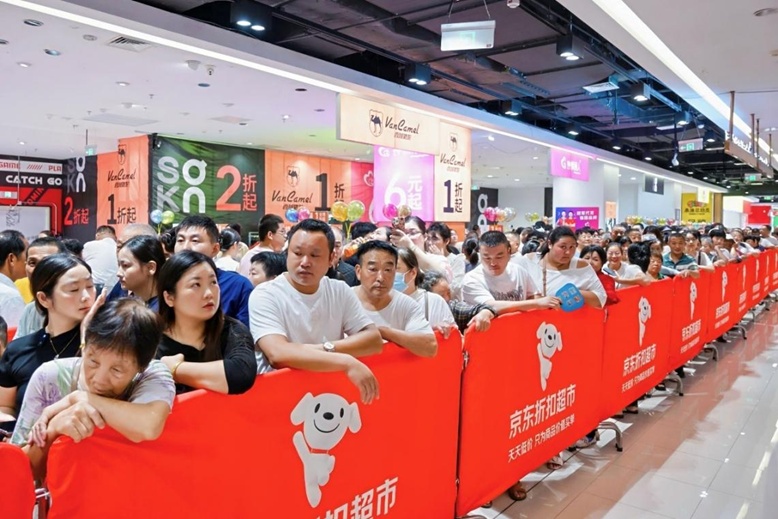
Core Viewpoint - JD's discount supermarket opened four stores in Suqian, Jiangsu, showcasing strong consumer interest with over 300,000 visitors on the first day, significantly boosting foot traffic in the malls [1][4][10] Group 1: Store Performance - The opening day saw a customer influx exceeding 300,000, surpassing the previous record set by the first store in Zhuozhou [4] - The stores maintained a large average area of over 5,000 square meters each, featuring more than 5,000 high-cost performance products across various categories [4] - The overall customer flow at the Suqian Central Mall was nearly four times that of a typical weekend, indicating a strong market response [3] Group 2: Product Popularity - Fresh chicken eggs priced at 9.9 yuan for 30 pieces quickly sold out, becoming a hot-selling item, with consumers waiting for restocks [6] - High-quality fresh produce, including watermelons and grapes, attracted significant attention, contributing to strong sales [6] - JD's private label products, such as 100% fruit juice, gained popularity among consumers, highlighting the brand's appeal [6] Group 3: Local Market Integration - The stores featured locally tailored products, including specially designed beers from Yanghe Co., which became top sellers on opening day [8] - The integration of local culture and products into the store offerings reflects JD's strategy to resonate with the community [8] Group 4: Service and Delivery - JD's omnichannel advantage was evident, with staff available for in-store assistance and a rapid delivery service through the JD app, enhancing customer convenience [10] - Customers reported satisfaction with the quick delivery service, receiving orders within 30 minutes, which underscores JD's efficient supply chain capabilities [10]
盒马"超盒算NB"全国首批17家店开业
Sou Hu Cai Jing· 2025-08-30 23:27
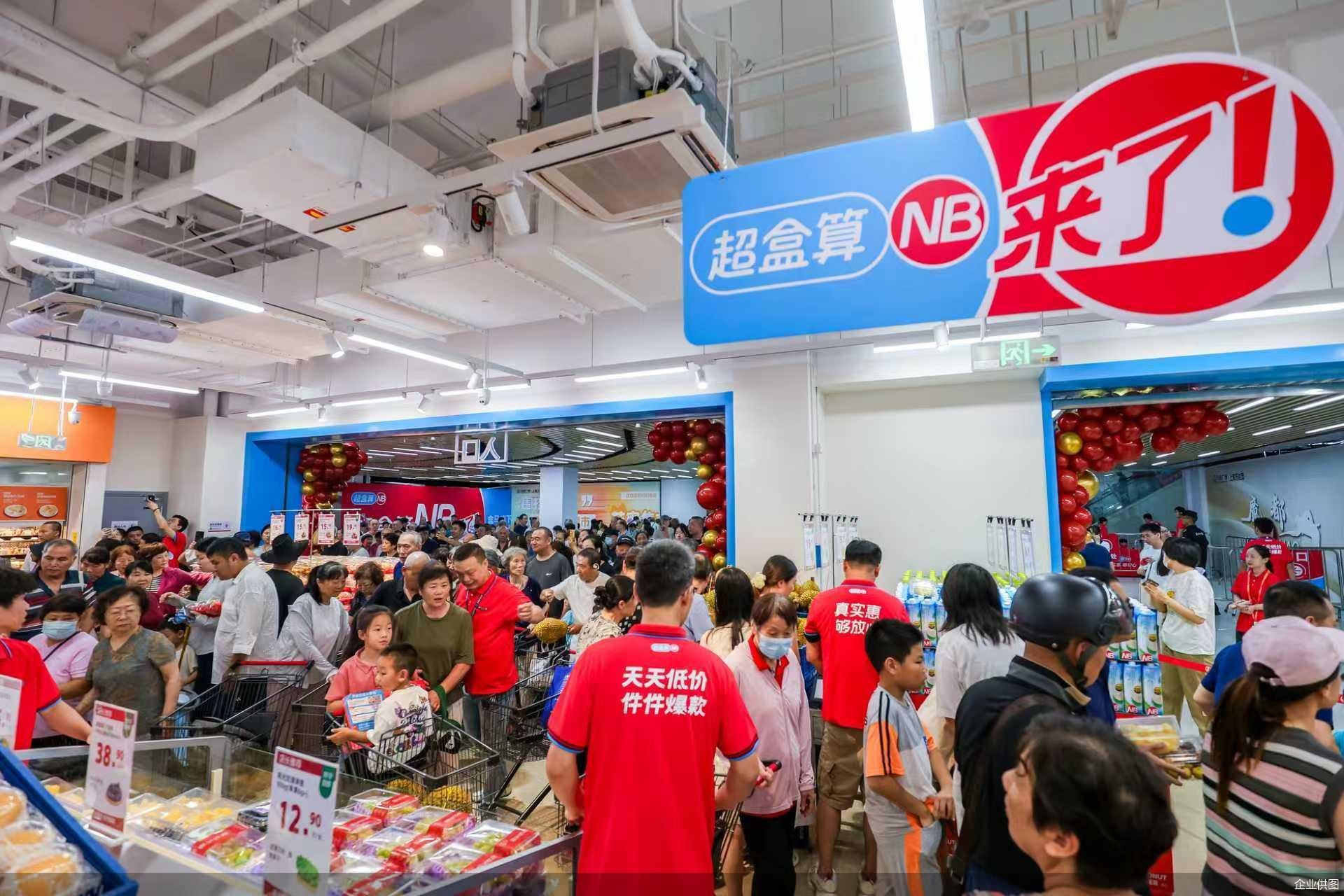
Group 1 - The retail sector is experiencing significant activity with multiple new store openings and brand upgrades, indicating a competitive landscape [1][15] - The brand "超盒算NB" (Chao He Suan NB) has been launched by Hema, marking a strategic shift towards independent development and targeting a sales goal of 100 billion yuan [3][5][7] - Hema's new brand aims to cater to price-sensitive consumers with a focus on high cost-performance products, differentiating itself from Hema Fresh [7][11] Group 2 - Meituan has launched its discount supermarket "快乐猴" (Happy Monkey) in Hangzhou, featuring a competitive pricing strategy that undercuts Hema NB by 10%-30% [9][10] - The competitive landscape for Meituan includes various players, with a focus on maximizing market share in the retail sector [10][11] - Meituan's strategy emphasizes food and grocery retail as a core business, with a focus on innovation and competition [11] Group 3 - JD.com has opened its discount supermarket in Hebei, featuring a large store format and a wide range of products, aiming to attract consumers with straightforward pricing [12][13] - The new JD discount supermarket model leverages the company's supply chain advantages to offer competitive pricing and a diverse product range [13][14] - JD's strategy includes opening multiple stores simultaneously in key locations, indicating a strong market entry approach [14]
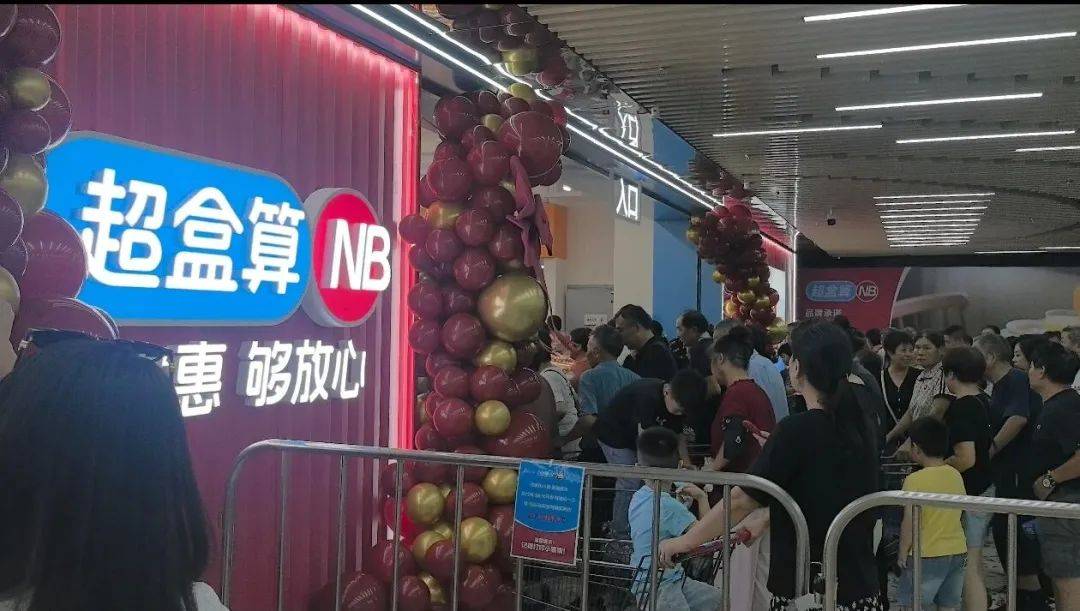
硬折扣赛道加速赛马,盒马NB升级为“超盒算NB”
Guo Ji Jin Rong Bao· 2025-08-30 16:37
Core Insights - Hema is shifting its strategic focus towards community consumption as it phases out its Hema X membership stores, with a significant acceleration in the upgrade and expansion of its hard discount format [1][2] Group 1: Brand and Market Positioning - Hema's budget community supermarket brand "Hema NB" has been officially renamed to "Chao He Suan NB," where "NB" stands for "Neighbor Business," maintaining its core positioning to serve community customers [1] - The rebranded "Chao He Suan NB" launched with 17 new stores across 10 cities in Jiangsu, Zhejiang, and Shanghai, marking its entry into new markets like Ningbo [1] - The brand aims to provide a cost-effective shopping experience through a simplified business model, with a name that is easier for consumers to remember [6] Group 2: Product Offering and Sales Performance - The product structure of "Hema NB" has evolved to include fresh produce, meat, and a proprietary product line, with self-branded products now accounting for 60% of sales in the upgraded "Chao He Suan NB" [2] - As of the end of August, the total number of "Chao He Suan NB" stores, including those that have been renamed from Hema NB, has approached 300 [6] Group 3: Strategic Goals and Leadership - Since its establishment in 2015, Hema has employed a multi-format expansion strategy, operating various formats from high-end supermarkets to community discount stores [6] - In March 2024, a new CEO, Yan Xiaolei, took over and set a goal for Hema to achieve a GMV of 100 billion yuan within three years, focusing on Hema Fresh and Hema NB as core business lines while scaling back non-core operations [6]
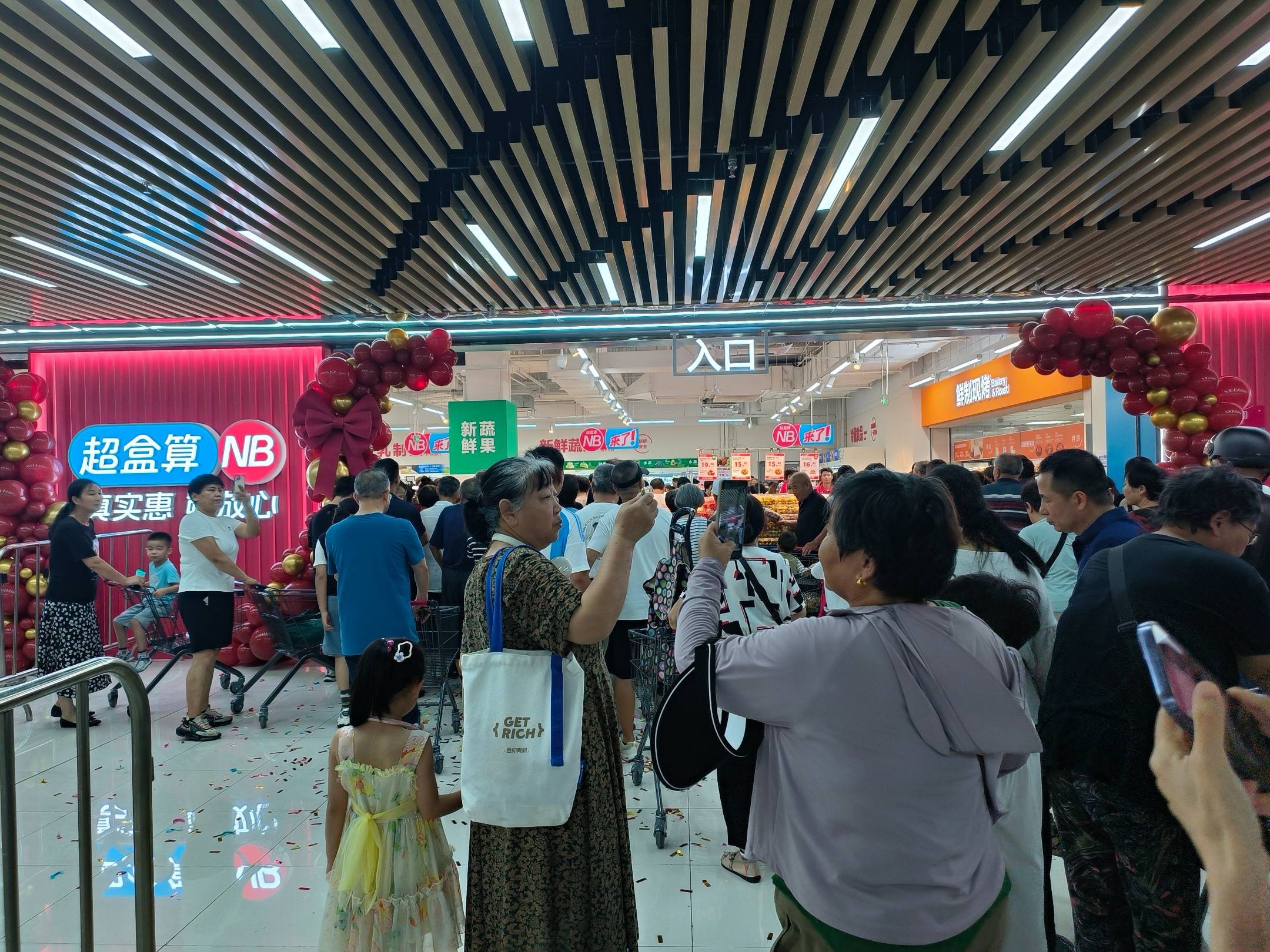
金色华联超市的倒闭:积极协商解决用户关切,共促行业健康发展
Sou Hu Cai Jing· 2025-08-30 05:19
近期,金色华联超市的倒闭消息引发了社会广泛关注。作为一家在全国范围内拥有众多分店的超市品牌,金色华联的突然关闭 让许多消费者感到震惊。不过,就在大家纷纷猜测其背后原因时,最新消息传来,该事件已得到了妥善解决。 首先,根据相关报道,金色华联的倒闭是由于经营不善、市场竞争加剧等多重因素共同导致的。此消息一出,许多忠实顾客纷 纷表示遗憾,因为这家超市一直以来都以其丰富的商品种类和优质服务受到消费者的喜爱。然而,经过多方努力,相关投资方 已主动出击,计划重新注入资金,以恢复金色华联的正常运营。 更令人欣慰的是,负责任的经营团队已经制定了一套全面的复兴计划,提出了优化商品结构、改善顾客体验和提升服务品质等 措施,旨在迅速重振品牌形象。与此同时,计划在不同区域设立新的分店,以满足更多消费者的需求。 在这样的背景下,我们可以期待金色华联将以崭新的面貌再次回归市场,继续为广大消费者提供便利的购物体验。未来的发展 值得我们共同关注,希望这一积极的变化能够为该品牌带来新的辉煌篇章。对于消费者而言,金色华联的回归无疑将成为一个 令人欣喜的消息。 ...