
生物医药

Search documents
沪深北交易所同日“亮剑”:再融资新政对A股影响(附精选股票)
Sou Hu Cai Jing· 2026-02-10 06:14
Core Viewpoint - The simultaneous release of refinancing optimization measures by Shanghai, Shenzhen, and Beijing stock exchanges marks a significant transformation in China's capital market, aimed at enhancing capital allocation efficiency and reshaping the A-share market landscape [1]. Group 1: Policy Framework and Differences - The policy frameworks of the three exchanges are highly similar, focusing on "supporting the strong, limiting the weak, promoting innovation, and enhancing convenience and regulation" [2]. - Shanghai Stock Exchange emphasizes "main board" characteristics, tailoring financing rules for large, mature technology companies [2]. - Shenzhen Stock Exchange adopts a bolder stance on supporting technology innovation, easing fundraising restrictions for growth-oriented enterprises [2]. - Beijing Stock Exchange focuses on "innovative small and medium-sized enterprises," addressing their financing challenges with flexible policies [2]. Group 2: Strategic Insights on Separate Announcements - The decision to release policies on the same day rather than a joint announcement reflects the nuanced wisdom of tiered regulation in China's capital market [3]. - Different market positioning allows each exchange to cater to the unique characteristics and needs of the enterprises they serve, avoiding a one-size-fits-all approach [3]. - The simultaneous release creates a strong policy resonance, reinforcing market perception of deepening capital market reforms while maintaining the distinct identities of each exchange [3]. Group 3: Deep Impacts on Market Perception - The new measures aim to shift the long-standing fear of "blood-sucking" effects of refinancing, which was believed to drain market funds and destabilize the market [4]. - The principle of "supporting the strong, limiting the weak" will act as a catalyst for market differentiation, favoring quality companies, especially in hard technology, while raising barriers for poorly performing firms [4]. - The policy directs resources towards "new productive forces," providing strong support for leading companies in sectors like semiconductors, AI, biomedicine, and high-end manufacturing [5]. - Allowing companies that have experienced stock price declines to raise funds through methods like private placements and convertible bonds offers a lifeline to solid businesses facing temporary challenges [6]. - A complete regulatory loop is established, tightening post-fundraising supervision while relaxing initial approvals, transforming refinancing from a mere "money-raising tool" to an "engine" for corporate development [7]. Group 4: Implications for Investors - The coordinated actions of the three exchanges signify the entry of China's refinancing mechanism into a "precise drip irrigation" era, providing tailored financing support for different types of enterprises [8]. - Investors are advised to focus on genuinely innovative and well-governed companies while avoiding those that merely chase trends without substance [8]. - The transformation of refinancing from a "blood-sucking machine" to a "blood-producing pump" is expected to enhance the value discovery function of the A-share market, leading to a healthier and more vibrant capital market [8].








华润医药:全资附属公司华润医药投资拟出售天麦生物科技约17.87%股权,底价约14.2亿元
Cai Jing Wang· 2026-02-10 06:07
近日,华润医药发布公告称,公司全资附属公司华润医药投资有限公司及其附属公司拟通过公开挂牌方 式,出售合肥天麦生物科技发展有限公司约17.87%股权,挂牌底价约14.2亿元。截至本公告日,华润医 药投资及其附属公司持有天麦生物科技少于30%股权。 ...

天津重磅发布:总投资1.82万亿元市级重点项目清单
Zhong Guo Fa Zhan Wang· 2026-02-10 05:48
Core Viewpoint - The Tianjin Municipal Development and Reform Commission has released a list of 1,112 key projects with a total investment of 1.82 trillion yuan to support high-quality development and achieve a good start for the 14th Five-Year Plan in 2026 [1] Group 1: Project Characteristics - The key projects for this year include 824 construction projects with a total investment of 1.4 trillion yuan and an annual planned investment of 202.19 billion yuan, along with 288 reserve projects totaling 422.47 billion yuan [2] - The projects exhibit five new characteristics, focusing on technology innovation, intelligent and green manufacturing, modern service industry enhancement, urban infrastructure improvement, and ensuring new guarantees for people's livelihoods [2][3][4] Group 2: Major Engineering Initiatives - Eight major engineering initiatives have been identified to drive quality and efficiency, including advanced manufacturing transformation, modern service industry expansion, and urban renewal [4][5] - The initiatives aim to deepen the integration of the Beijing-Tianjin-Hebei region and enhance infrastructure connectivity, with significant projects like the expansion of the airport and high-speed rail [4][5] Group 3: Innovation and Industry Development - Emphasis is placed on innovation as a core element for industrial transformation, with projects like the Tianjin University Synthetic Biology Research Institute and various national laboratories focusing on cutting-edge fields [5][6] - The manufacturing sector is prioritized for transformation and upgrading, with projects in new materials and intelligent manufacturing being accelerated to enhance competitiveness [7][8] Group 4: Modern Service Industry and Infrastructure - The modern service industry is being developed to support economic transformation, with financial services and logistics playing a crucial role in enhancing efficiency [8][9] - Infrastructure projects, including metro lines and urban drainage systems, are being expedited to improve urban resilience and service quality [9][10] Group 5: Social Welfare and Rural Development - Social welfare initiatives focus on education and healthcare improvements, with new schools and hospitals being constructed to enhance community services [13] - Rural revitalization efforts are being implemented to improve living conditions and promote sustainable agricultural practices [11][12] Group 6: Project Lifecycle and Support - The city is committed to providing comprehensive support throughout the project lifecycle, ensuring effective coordination among various stakeholders to facilitate project execution [14][15] - Key areas of focus include securing resources, expediting approvals, and aligning projects with national policy directions to maximize impact [14][15]
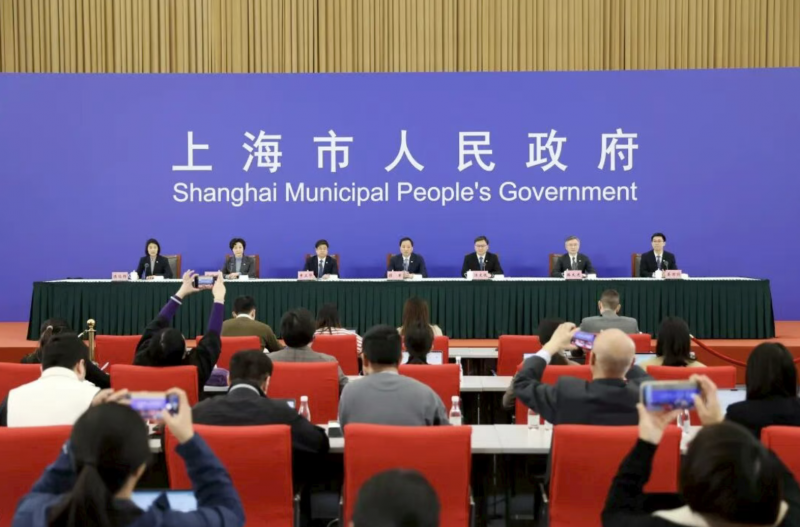
上海市人民政府主题记者会举行,市发展改革委负责人答记者问
Zhong Guo Fa Zhan Wang· 2026-02-10 04:25
Core Viewpoint - Shanghai aims to achieve a GDP growth rate of 5.4% in 2025, reaching a total GDP of 5.67 trillion yuan, while setting a target of around 5% growth for the current year as part of its "14th Five-Year Plan" and "15th Five-Year Plan" initiatives [4][5]. Group 1: Economic Development Strategies - The city will focus on five key areas to drive economic growth: deepening reform and opening up, promoting consumption and investment, nurturing new productive forces, enhancing service industry quality, and improving living standards [4][5]. - Shanghai plans to implement 184 major engineering projects with a total investment of 255 billion yuan to stimulate effective investment [4]. Group 2: Five Centers Construction - The construction of the "Five Centers" (International Economic, Financial, Trade, Shipping, and Technological Innovation Centers) is a strategic priority for Shanghai, with a focus on enhancing the city's global competitiveness [6][7]. - Specific initiatives include developing a modern industrial system centered on advanced manufacturing, particularly in sectors like integrated circuits, biomedicine, and artificial intelligence [6]. Group 3: International Financial and Trade Center Enhancements - Efforts will be made to strengthen Shanghai's position as an international financial center by enhancing its capabilities in risk management and expanding cross-border financial services [6]. - The city aims to upgrade its international trade center by attracting global supply chain management centers and supporting new trade formats such as cross-border e-commerce [7]. Group 4: Infrastructure and Innovation - Major infrastructure projects will be accelerated, including the development of the Yangshan North Port and the expansion of Pudong International Airport [7]. - The focus will also be on fostering a robust innovation ecosystem, supporting national laboratories, and promoting the application of significant technological achievements [7].
港股午评:恒指涨0.54%、科指涨0.84%,AI应用及生物医药股集体走强,汽车股及新消费概念股活跃
Jin Rong Jie· 2026-02-10 04:11
Market Overview - The Hong Kong stock market showed a slight recovery with the Hang Seng Index up by 0.54% to 27,172.87 points, the Hang Seng Tech Index up by 0.84% to 5,463.17 points, and the National Enterprises Index up by 0.78% to 9,239.54 points, while the Red Chip Index fell by 0.1% to 4,391.08 points [1] Company Dynamics - Pop Mart (09992.HK) expects global sales of over 400 million units across all IP categories by 2025, with THE MONSTERS category alone projected to exceed 100 million units [2] - Youjia Innovation (02431.HK) has secured a contract with a leading domestic automotive brand to provide advanced driving assistance controllers and driver monitoring systems for several key models [2] - Ruifeng New Energy (00527.HK) signed an investment framework agreement to build the largest inference computing cluster park in North China, with a total investment of approximately RMB 24 billion [2] - Xian Dao Intelligent (00470.HK) set its H-share offering price at HKD 45.80 per share, with the adjustment rights fully exercised [3] - Hong Kong Telecom (06823.HK) reported a 5% year-on-year increase in total revenue to HKD 36.553 billion for 2025, with EBITDA rising 4% to HKD 14.234 billion, and attributable profit increasing 4% to HKD 5.286 billion, driven by stable operations and effective cost control [3] - China Nuclear International (02302.HK) issued a positive profit alert, expecting revenue for 2025 to exceed approximately HKD 2.46 billion, with gross profit expected to be at least HKD 260 million, primarily due to increased uranium trading volumes [3][6] - Mingyuan Cloud (00909.HK) anticipates a net profit of approximately HKD 26.9 million to HKD 32.8 million for 2025, representing a turnaround and growth of about 114% to 117%, attributed to improved operational efficiency [3] - Yingda Real Estate (00432.HK) reported a net loss of HKD 69 million for 2025, a 70% reduction year-on-year [4] - China Oriental Education (00667.HK) expects a 46% to 51% increase in net profit for 2025 [5] - Carrot (02549.HK) issued a profit warning, projecting a 25% to 35% decrease in profit for 2025 [7] - Xiaomi Group (01810.HK) repurchased 1.5 million shares for HKD 52.7268 million at prices between HKD 35.04 and HKD 35.24 [8] - Geely Automobile (00175.HK) repurchased 1.408 million shares for HKD 23.4587 million at prices between HKD 16.46 and HKD 16.81 [8] Institutional Insights - GF Securities noted that the Hang Seng Index has an 82% probability of rising in the three trading days before the Spring Festival, with no significant calendar effects post-holiday, indicating a potential "passive follow" increase due to stronger correlation with A-shares [9] - Everbright Securities highlighted a market environment of "moderate fundamental recovery and synchronized liquidity," recommending a "growth + value" strategy focusing on AI, non-ferrous metals, chemicals, and insurance [10] - Dongfang Caifu Securities pointed out that Hong Kong stocks are at historical low valuations (Hang Seng Index PE at only 12 times), making southbound capital attractive for bottom-fishing, with short-term sentiment boosted by this capital [10]

港股生物医药股走势回暖,宜明昂科涨超7%,德琪医药涨超6%
Mei Ri Jing Ji Xin Wen· 2026-02-10 03:03
Group 1 - The Hong Kong stock market for biopharmaceutical companies showed a rebound on February 10, with notable gains in several stocks [1] - Yiming Anke experienced an increase of over 7%, while Deqi Pharmaceutical rose by more than 6% [1] - Both Kangnuo Pharmaceutical and Geli Pharmaceutical saw their stock prices increase by over 5% [1]
百奥赛图股价涨5.02%,中银证券旗下1只基金重仓,持有9万股浮盈赚取32.4万元
Xin Lang Cai Jing· 2026-02-10 02:31
Group 1 - The core viewpoint of the news is that BaiO Technology has seen a significant increase in its stock price, rising by 5.02% to 75.25 CNY per share, with a total market capitalization of 33.629 billion CNY [1] - BaiO Technology, established on November 13, 2009, specializes in antibody drug research and preclinical research services, operating five divisions including gene editing services, preclinical pharmacology and efficacy evaluation, model animal sales, antibody development, and innovative drug development focused on oncology and autoimmune diseases [1] - The company is located in the Daxing District of Beijing, within the Zhongguancun Science Park, and is set to be listed on December 10, 2025 [1] Group 2 - According to data, a fund under Bank of China Securities holds a significant position in BaiO Technology, with the Bank of China Health Industry Mixed Fund (002938) owning 90,000 shares, representing 3.82% of the fund's net value, making it the seventh-largest holding [2] - The Bank of China Health Industry Mixed Fund was established on September 7, 2016, with a current scale of 124 million CNY, and has experienced a year-to-date loss of 0.49% [2] - The fund has achieved a one-year return of 24.49% and a cumulative return of 114.52% since its inception, ranking 4485 out of 8127 in its category [2]

创历史新高!宁波斩获5项省科技一等奖
Feng Huang Wang Cai Jing· 2026-02-10 02:12
Core Insights - The conference held in Hangzhou on February 9 highlighted the achievements of Ningbo in the field of scientific and technological innovation, with a record number of awards received by local enterprises and institutions [1] Group 1: Award Achievements - Ningbo's enterprises and institutions led 26 awarded projects, including 5 first prizes, marking a five-year high, with a total of 7 second prizes and 13 third prizes [1] - The awarded projects cover key areas such as new materials, high-end equipment, biomedicine, and digital technology, showcasing both foundational research breakthroughs and industry technology advancements [1] Group 2: Private Sector Innovation - Private enterprises demonstrated significant innovation, with two projects from Ningbo's private sector winning first prizes for the first time since 2020, reflecting the vibrant innovation capabilities of these companies [2] - The projects include a green non-excavation pile technology and a high-precision immunodiagnostic reagent, both of which have been successfully applied in major engineering projects and medical institutions, generating substantial economic benefits [2] Group 3: Youth Talent and Research Platforms - The recognition of young scientists, such as the "90s" researcher Jiang Qiuping, emphasizes the role of youth in scientific research, with his project receiving a first prize in natural sciences [3] - The project has been highly praised internationally and has applications in consumer electronics and intelligent manufacturing, highlighting the innovative potential of Ningbo's youth [3] Group 4: Innovation Ecosystem Optimization - Ningbo's continuous efforts to optimize its innovation ecosystem are evident, with a focus on building a distinctive technological innovation system and implementing talent development programs [4] - The establishment of various innovation platforms, including national and provincial laboratories, supports enterprise innovation and talent development, creating a virtuous cycle of technology, industry, and talent [4]
孚腾资本成立一支医疗健康基金
Sou Hu Cai Jing· 2026-02-10 01:38
Group 1 - The core viewpoint of the news is the establishment of the Shanghai Futeng Huming Private Equity Fund, which focuses on the healthcare sector, marking a significant step in Shanghai's investment in the biopharmaceutical industry and signaling the opening of a new value investment window in this field [1][2]. - The fund has a first-phase fundraising scale of 410 million yuan and has completed its first investment in Xihua Testing, a global integrated drug research and development outsourcing service company [1][2]. - The establishment of the fund is a result of deepening cooperation between Shanghai and Sanming, leveraging Sanming's innovative experience in medical reform and Shanghai's international resources [1][2]. Group 2 - Futeng Capital has already invested in several innovative companies in the healthcare sector, including leading firms in brain-computer interfaces and gene therapy, covering various fields such as innovative drugs and high-end medical devices [2]. - The fund will focus on growth and mature stage projects with clear clinical needs and commercial viability, employing strategies like "old shares + capital increase" and "mergers and acquisitions" to empower enterprises [2][3]. - The fund aims to leverage Shanghai Guotou's advantages in policy alignment and long-term capital to support portfolio companies in their international development paths and to attract more strategic partners for a sustainable healthcare investment ecosystem [3].
和誉-B(02256.HK):FGFR4抑制剂依帕戈替尼获FDA快速通道资格,用于治疗HCC患者
Ge Long Hui· 2026-02-10 00:05
Group 1 - The core point of the article is that HeYu-B (02256.HK) announced that its subsidiary, Shanghai HeYu Biomedical Technology Co., Ltd. ("HeYu Pharma"), has received Fast Track Designation (FTD) from the U.S. Food and Drug Administration (FDA) for its self-developed selective small molecule FGFR4 inhibitor, Irpagratinib (ABSK-011) [1] Group 2 - The FTD is specifically for the treatment of hepatocellular carcinoma (HCC) patients who have previously received immune checkpoint inhibitors (ICIs) and multi-targeted kinase inhibitors (mTKIs) and exhibit overexpression of FGF19 [1]