
农产品贸易

Search documents
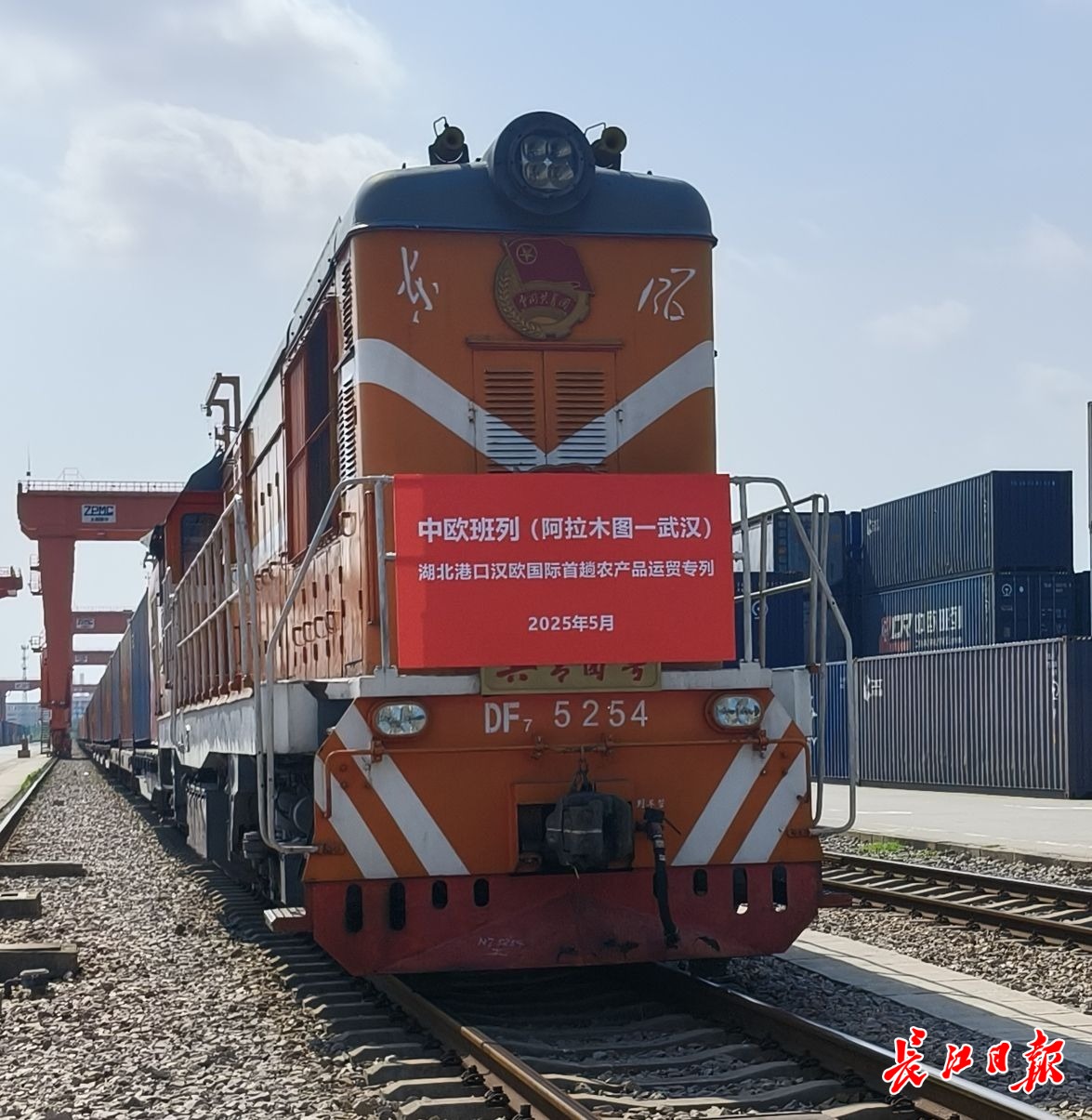
直接去产地拉回“黄金粮源”,湖北首趟中亚农产品运贸专列抵汉
Chang Jiang Ri Bao· 2025-05-21 03:45
Core Insights - A special train carrying 1,610 tons of feed wheat flour from Kazakhstan arrived in Wuhan, marking the first import of agricultural products from Central Asia to Hubei [1][2] - Kazakhstan is a significant wheat producer in Central Asia, and Hubei, despite being an agricultural province, still relies on some imports for feed grains [2] - The establishment of a logistics center in Hubei by Kazakhstan's Turkestan region aims to facilitate the storage and distribution of these agricultural products [2][3] Group 1 - The special train represents the first agricultural product trade train from Central Asia to Hubei, with plans for two more similar shipments within the month [1][2] - The train service is part of a broader initiative to balance import and export activities, with Hubei exporting textiles, electronics, and vehicles to Central Asia [2] - The "fast customs clearance" process implemented by Wuhan Customs has streamlined the import of these goods, enhancing efficiency [2] Group 2 - The annual import volume of agricultural products through this new trade route is expected to exceed 500,000 tons, which will help reduce logistics costs and meet grain processing demands [2][3] - Wuhan's strategic position as a transportation hub allows for efficient distribution of goods via multiple transport modes, enhancing overall logistics efficiency [3] - The Central European train service from Wuhan has seen a 6% increase in outbound trains and a 10% increase in inbound trains compared to the previous year, indicating growth in trade activities [3]


特朗普天塌了,不是说好互相减税吗?为什么中国人还是不买美国货
Sou Hu Cai Jing· 2025-05-19 17:41
Trade Policy and Tariffs - Trump's administration has implemented a series of tariffs against China, with rates reaching as high as 104% to 145% on certain goods, prompting retaliatory measures from China, including a 34% tariff on U.S. products [2][5] - In a surprising move, Trump announced a 10% "baseline tariff" on all imported goods, affecting over 100 countries, including China, leading to further retaliatory actions from China [5][12] - The trade war has resulted in significant volatility in global markets, with U.S. and Hong Kong stock markets experiencing declines [5][12] Trade Agreement and Compliance - A Phase One trade agreement was signed on January 15, 2020, where both countries agreed to lower some tariffs, but China's purchasing of U.S. goods did not meet expectations, leading to increased investments in South America [7][14] - China's investments in South America, including a $3.5 billion deep-water port in Peru and a large terminal in Brazil, have allowed it to secure alternative supply chains, reducing reliance on U.S. products [11][16] Market Dynamics and Consumer Preferences - Despite tariff reductions, U.S. goods remain uncompetitive in price, particularly in the agricultural sector, where Brazilian soybeans dominate the market, capturing over 70% of China's imports [9][12] - Historical grievances regarding U.S. agricultural practices have led to a cautious approach from China towards U.S. products, further diminishing their market share [9][14] - Chinese consumers show a preference for competitively priced products from South America over U.S. goods, impacting demand [12][18] Strategic Shifts and Global Trade Relations - The trade war has prompted China to diversify its procurement strategies and increase overseas investments, particularly in South America, which is becoming a key trading partner [16][18] - The U.S. market share for soybeans in China has dropped to 21% by 2024, while Brazil has taken a dominant position, reflecting a significant shift in trade dynamics [16][18] - The global trade landscape is being reshaped by these developments, with increased cooperation between China and other regions, such as Europe and Africa, to counter U.S. protectionism [18]
中国在南美建巨型码头,确保替代美国粮食
Sou Hu Cai Jing· 2025-05-19 09:20
Group 1 - The core viewpoint of the article highlights the significant impact of the recent tariff reductions between China and the U.S., leading to a surge in Chinese orders for American goods, while simultaneously indicating a shift in China's trade focus towards South America [1][3][4] - China is actively investing in South American ports, particularly the Santos port, to secure a reliable source of agricultural products, which are seen as viable alternatives to U.S. products [1][3] - The recent tariff negotiations resulted in a dramatic increase in Chinese exports to the U.S., with shipping container orders rising nearly 300% [3][4] Group 2 - Despite the surge in orders for U.S. goods, there is a notable lack of corresponding demand from China for American products, suggesting a strategic pivot towards South American partnerships [6][8] - The article emphasizes that the U.S. agricultural sector is facing significant challenges due to the loss of the Chinese market, which is difficult to replace given its size [8] - The narrative suggests that the U.S. may have underestimated China's ability to find alternatives to American products, as evidenced by China's confidence in achieving its economic growth targets without U.S. imports [6][8]

财务造假代价惨痛!张宏伟被迫让出联合能源董事局主席
Hua Xia Shi Bao· 2025-05-19 07:58
Core Viewpoint - The resignation of Zhang Hongwei from the position of chairman and executive director of United Energy Group is a significant event following the regulatory penalties imposed on him for financial misconduct related to the "Oriental System" [3][4][6]. Group 1: Zhang Hongwei's Resignation and Its Implications - Zhang Hongwei will resign from his roles at United Energy Group by the end of June, following a penalty of 10 million yuan and a lifetime ban from the securities market due to violations of securities laws [3][6]. - The resignation may raise concerns about the stability of the management team at United Energy Group, potentially leading to stock price volatility and affecting the synergy among companies within the "Oriental System" [4][8]. - Zhang's departure from multiple listed companies, including Minsheng Bank and United Energy Group, indicates a significant shift in the leadership structure of the "Oriental System" [7][8]. Group 2: Financial Misconduct and Consequences - The Oriental Group was found to have inflated its revenue by 16.13 billion yuan and costs by 16.073 billion yuan from 2020 to 2023, leading to severe public backlash and regulatory scrutiny [6]. - The China Securities Regulatory Commission (CSRC) has stated that financial fraud severely harms investor interests and will enforce strict penalties for such misconduct, including potential delisting for companies involved in major violations [5][6]. - The Oriental Group is currently undergoing restructuring due to various debt issues and has already been delisted, indicating a broader impact on the financial health of the "Oriental System" [8]. Group 3: United Energy Group's Business Performance - United Energy Group operates in oil and clean energy sectors, with significant projects in regions such as the Middle East and North Africa, and is the largest foreign oil and gas producer in Pakistan [10]. - The company reported a net loss of 1.707 billion HKD in 2023, but projected a revenue of 17.523 billion HKD in 2024, reflecting a year-on-year growth of 28.9% [10]. - The stock price of United Energy Group experienced a dramatic decline, dropping from approximately 0.6 HKD to 0.26 HKD in June 2024, representing a 55.83% decrease and a market value loss of nearly 8.8 billion HKD [10].
英欧周一将达成关系重置协议 聚焦农产品贸易便利化与防务协作
news flash· 2025-05-19 06:36
Core Viewpoint - The UK is expected to reach a significant relationship reset agreement with the EU, focusing on trade facilitation for agricultural products and defense collaboration to boost economic growth and enhance security in Europe [1] Group 1: Trade Relations - The UK aims to significantly reduce border checks and paperwork that hinder the export of food and agricultural products between the UK and the EU [1] - Earlier this month, the UK secured a comprehensive trade agreement with India and received some tariff reductions from the US [1] - The EU is accelerating its trade agreements with countries like India, Canada, Australia, Japan, and Singapore [1] Group 2: Defense Cooperation - The agreement is also expected to enhance defense cooperation between the UK and the EU, contributing to overall security in the European continent [1] Group 3: Additional Provisions - In return for trade facilitation, the UK is likely to agree to a limited youth mobility scheme [1] - France is seeking a long-term agreement on fishing rights, which remains a sensitive issue in the context of Brexit [1]
中美大幅降税后,中国订单暴增,特朗普发现,中方还是不买美国货
Sou Hu Cai Jing· 2025-05-18 20:02
Group 1 - The core point of the article highlights the significant increase in Chinese exports to the U.S. following the adjustment of tariffs, with container orders surging nearly 300% [1][3] - Data from Vizion indicates that container bookings from China to the U.S. rose by 277% to 21,530 standard containers, compared to 5,709 previously, reflecting a nearly threefold increase [1][3] - In Yiwu, a major trading hub in China, local merchants are experiencing a surge in orders as U.S. clients rush to place new orders, indicating a strong demand for Chinese goods [1][3] Group 2 - Despite the increase in exports, there is a lack of corresponding demand for U.S. goods in the Chinese market, as China continues to diversify its import sources, particularly in agricultural products [3][5] - China is investing in infrastructure in South America, such as a major export terminal in Brazil and a deep-water port in Peru, to enhance its agricultural supply chain [3][5] - Historical experiences, particularly in the soybean market, have made China cautious about relying heavily on U.S. agricultural imports, leading to a preference for established trade relationships with other regions [5][7] Group 3 - The article suggests that the current trade dynamics reflect a genuine demand for trade between the two countries, but China's reluctance to increase imports from the U.S. is influenced by past experiences and uncertainties regarding U.S. trade policies [7] - The ongoing instability in U.S. trade policies, particularly regarding high-tech industries, contributes to China's cautious approach in engaging with U.S. products [5][7] - Future developments in U.S.-China economic relations will depend on policy adjustments and cooperation negotiations between the two nations [7]
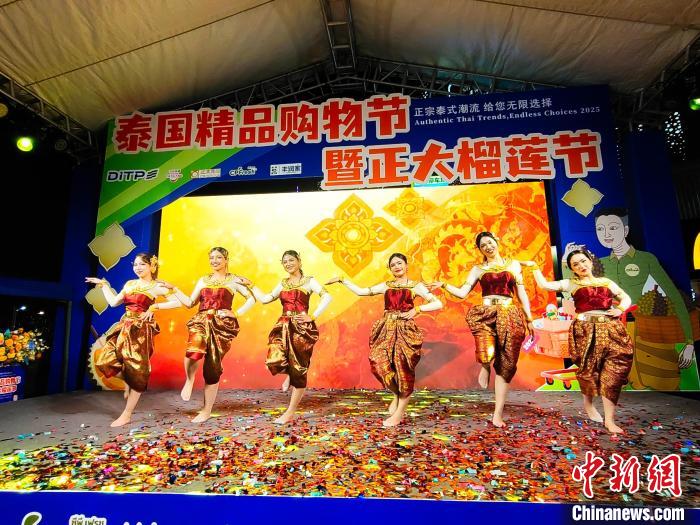
2025泰国精品购物节及榴莲节在南宁举行
Zhong Guo Xin Wen Wang· 2025-05-18 06:08
Core Points - The 2025 Thailand Boutique Shopping Festival has commenced in Nanning, Guangxi, featuring over a hundred Thai products and a Durian Festival [1][3][5] - The event aims to enhance the brand image and consumption trend of Thai products, particularly durians, in China, while promoting bilateral trade and deepening economic cooperation between Thailand and China [5] Group 1 - The event is organized by the Thai Consulate General in Nanning in collaboration with various enterprises, lasting for nine days [3] - Attendees can experience Thai culture through performances, traditional Thai massage, and live cooking demonstrations [3][5] - The Thai Consul's representative highlighted the popularity of Thai durians among Chinese consumers and the goal of boosting their market presence [5] Group 2 - Charoen Pokphand Group's Guangxi President mentioned the company's 34 years of investment in Guangxi, covering sectors like feed, poultry, aquaculture, food trade, and retail [5] - Nanning is positioned as a key gateway for ASEAN products entering the Chinese market, with plans to leverage global resources to introduce more high-quality Thai goods [5]
2025年前4个月福建省对外贸易进出口5988亿元
Zhong Guo Chan Ye Jing Ji Xin Xi Wang· 2025-05-16 22:57
Core Insights - Fujian Province's foreign trade import and export reached 598.8 billion RMB in the first four months of this year, with exports at 364.61 billion RMB and imports at 234.19 billion RMB [1] Group 1: Export Performance - Processing trade showed significant growth, with a total of 74.03 billion RMB in imports and exports, marking an 11.9% increase compared to the same period last year [1] - Foreign-invested enterprises contributed 131.19 billion RMB to imports and exports, reflecting a 3% growth [1] - Exports of mechanical and electrical products totaled 169.68 billion RMB, accounting for 46.5% of the total export value, driven by strong performances in lithium-ion batteries, flat panel display modules, and other key products [1] Group 2: Import Performance - Imports of pulp, natural gas, refined oil, and steel saw substantial increases, with steel imports surging by 146.1% to 3.14 billion RMB [2] - Mechanical and electrical product imports reached 38.45 billion RMB, making up 16.4% of total imports, with notable growth in integrated circuits and aircraft parts [2] - Specific import figures include pulp at 9.01 billion RMB (up 37.4%), natural gas at 3.7 billion RMB (up 34.3%), and refined oil at 3.18 billion RMB (up 12.5%) [2]
【早间看点】印尼上调毛棕榈油出口专项税至10% Anec上调巴西大豆5月出口预估至1427万吨-20250516
Guo Fu Qi Huo· 2025-05-16 05:54
2025/5/16 10:13 【国富期货早间看点】印尼上调⽑棕榈油出⼝专项税⾄10% Anec 5 1427 20250515 【国富期货早间看点】印尼上调毛棕榈油出口专项税至10% Anec上 调巴西大豆5月出口预估至1427万吨 20250515 2025年05月15日 07:38 02 现货行情 | 期货 | 现货 | 现货价格 | 基差 | 基差隔日变化 | | --- | --- | --- | --- | --- | | DCE棕榈油2505 | 华北 | N/A | N/A | N/A | | | 华东 | 8620 | 460 | -20 | | | 华南 | 8680 | 520 | -10 | | DCE豆油2509 | 山东 | 8160 | 266 | -34 | | | 江苏 | 8280 | 386 | ୧ | | | 广东 | 8250 | 356 | ୧ | | | 天津 | 8260 | 366 | 56 | | DCE豆箱2509 | 山东 | 2960 | 57 | -38 | | | 江苏 | 2990 | 87 | -8 | | | 广东 | 3030 | 127 ...
Sadot (SDOT) - 2025 Q1 - Earnings Call Transcript
2025-05-15 16:00
Financial Data and Key Metrics Changes - STADOT AgriFoods revenue was $132.2 million in Q1 2025, an increase of $25.7 million or 24.1% compared to Q1 2024 [6] - Net income attributable to Sadat Group improved to $900,000 in Q1 2025 from a net loss of $300,000 in Q1 2024, marking an improvement of $1.2 million [7] - EBITDA rose to $2.5 million compared to $100,000 in the prior period [7] - Basic and diluted earnings per share were $0.018 compared to a loss of $0.06 per share in the prior year [7] - SG&A expenses increased to $3.1 million, up over $1.7 million compared to last year [7][8] - Cash balance was $1.9 million with a working capital surplus of $21.9 million [8] Business Line Data and Key Metrics Changes - The company completed 76 transactions in Q1 across 17 different countries, indicating a broad operational reach [6] - The increase in SG&A expenses was primarily due to reclassifying some costs from cost of goods sold to SG&A, reflecting a more accurate cost structure [8] Market Data and Key Metrics Changes - Sadat Group's revenue is largely generated outside the United States, with minimal impact from U.S. tariffs [16] - The company has conducted agri commodity trades with 33 countries, indicating a diverse market presence [16] Company Strategy and Development Direction - The company aims to reinvest cash into the Agri Food commodity trading business to drive revenue growth and acquire strategic assets [8] - The new CEO plans to improve the balance sheet and income statements within a controlled growth plan, focusing on operational efficiencies and cost-cutting [12][13] Management's Comments on Operating Environment and Future Outlook - Management believes that tariffs will not have a significant material impact on Sadat's business due to its global trading model [16][18] - The company is studying shifts in trade flows, particularly from the U.S. to other markets like Brazil, to capitalize on new opportunities [19] - There is a focus on improving gross margins through higher-margin products like containerized specialty crops [20] Other Important Information - The restaurant division reported a positive net income of $107,000 in Q1, with ongoing expansion plans [24] - The sale of the restaurant chain is progressing, with multiple interested parties and new locations opening [23][24] Q&A Session Summary Question: Can you comment with an update on the general tariff environment and how it affects Sadat's business? - Management stated that tariffs will not significantly impact Sadat due to its global operations and revenue generation outside the U.S. [16] Question: How have the tariffs between the U.S. and China impacted the business directly? - The company has a flexible trading model and is studying shifts in demand, particularly from China to other markets [19] Question: The company's gross margins have been less than 1%. How are you going to improve those margins? - The focus is on higher-margin products like pulses and specialty crops, along with a management services agreement for a pet food ingredients processing business [20][21] Question: Please provide an update on the sale of the restaurant process. - The sale is taking longer than expected, but there are multiple interested parties, and the restaurant division continues to expand [23][24]