商业航天

Search documents
上海:更大力度培育壮大 长期资本耐心资本
Zhong Guo Zheng Quan Bao· 2026-02-03 22:20
Economic Growth Targets - Shanghai's GDP growth target for this year is set at approximately 5% [2][3] - By 2025, Shanghai's GDP is projected to reach 5.67 trillion yuan, with a growth rate of 5.4% [2] - The local general public budget revenue is expected to grow by 2% this year, reaching 850 billion yuan [2] Industrial Development Initiatives - Shanghai aims to accelerate the construction of a modern industrial system, focusing on future industries such as brain-computer interfaces, quantum computing, silicon photonics, and 6G [3] - The city plans to implement the "Artificial Intelligence +" initiative, adding over 50 advanced intelligent factories this year [3] - There will be a strong emphasis on enhancing the service sector and modernizing the industrial chain [3] Financial Sector Enhancements - The report highlights the need to deepen financial system reforms and improve the construction of the Sci-Tech Innovation Board [4] - Efforts will be made to enhance the competitiveness and influence of Shanghai as an international financial center, including the establishment of a cross-border payment system for the renminbi [4][5] - The focus will be on fostering long-term and patient capital, improving the integration of finance and industry, and supporting sectors such as technology innovation and green development [4][5]
未来已来 时不我待(有感而发)
Ren Min Ri Bao· 2026-02-03 22:00
新年伊始,具身智能、商业航天等未来产业赛道捷报频传。自变量机器人完成10亿元融资,优必选明确 年内工业人形机器人产能将达万台规模,小鹏汇天自主研发的飞行汽车进入量产冲刺阶段,脑机接口领 域实现从实验室攻关到规模化量产的关键跨越…… (文章来源:人民日报) 一个个硬核成就落地生根,一项项技术突破底气充盈,生动印证着我国未来产业正加速奔跑、强势崛 起,呈现良好发展势头。 未来产业具有前瞻性、战略性、颠覆性等特点。近年来,新一轮科技革命和产业变革加速演进,前沿技 术不断涌现,未来产业成了一个热词。何为"未来"?其核心在于立足当下、锚定长远的战略属性与引领 价值,既承载着科技革命与产业变革的前沿方向,更支撑着未来经济社会高质量发展的新动能。 培育发展未来产业,是为当下计,更是为国家之未来谋。未来产业蓄势发力,对于抢占科技和产业制高 点、把握发展主动权,对于发展新质生产力、建设现代化产业体系,对于提高人民生活品质、促进人的 全面发展和社会全面进步,都具有重要意义。 要扎根实体经济,筑牢发展根基。造船业三大指标领跑全球,背后是船企用上AI大脑助力生产经营; 低空经济深度融入民生服务,深圳无人机配送外卖已覆盖多元场景;江苏 ...
锚定空天新质生产力 亦庄百亿落子商业航天产业链
Zhong Guo Zheng Quan Bao· 2026-02-03 20:30
Core Insights - China's commercial aerospace industry is transitioning from a technology accumulation phase to a new stage focused on large-scale launches and building a commercial ecosystem [1] - Beijing E-Town has emerged as one of the highest concentration areas for the aerospace industry, with significant investments and projects underway [1][7] Industry Development - The National Civil Space Infrastructure Medium- and Long-Term Development Plan (2015-2025) initiated the exploration of market-oriented and commercial development mechanisms for China's commercial aerospace sector [2] - By 2025, commercial launches are expected to account for half of all space launches in China, with 311 commercial satellites launched in a year, representing 84% of the total [2] - 2026 is identified as a critical year for technological validation and business model development, with several reusable rockets set for key milestones [2] Investment and Market Dynamics - The Shanghai Stock Exchange has provided clear pathways for commercial rocket companies to list on the Sci-Tech Innovation Board, with reusable rockets being a key criterion [3] - Companies like Blue Arrow Aerospace and others are progressing towards IPOs, highlighting the importance of capital in driving technological advancements and commercialization [3] Regional Development Strategies - The growth of commercial aerospace is significantly influenced by regional conditions, with companies needing to consider various factors such as policy support and resource availability when selecting locations [4] - E-Town's development strategy reflects a response to these needs, having established a strong foundation with existing aerospace "national teams" and supporting industries [4][5] Ecosystem and Infrastructure - E-Town has attracted over 180 commercial aerospace-related companies, creating a comprehensive industrial ecosystem [7] - The newly completed Beijing Rocket Street project aims to foster a sustainable industrial ecosystem, potentially reducing R&D costs by over 30% for companies in the area [6][7]
锚定空天新质生产力亦庄百亿落子商业航天产业链
Zhong Guo Zheng Quan Bao· 2026-02-03 20:27
Core Insights - China's commercial aerospace industry is transitioning from a technology accumulation phase to a new stage focused on large-scale launches and building a commercial ecosystem [1] - Beijing E-Town has emerged as one of the highest concentration areas for the aerospace industry, with over 15 billion yuan invested in nine major capacity projects [1] - The year 2026 is identified as a critical year for technological validation and business model development in China's commercial aerospace sector [1] Industry Development - The National Civil Space Infrastructure Medium- and Long-term Development Plan (2015-2025) initiated the exploration of market-oriented and commercial development mechanisms for civil space infrastructure [1] - By 2025, commercial launches are expected to account for half of all space launches in China, with 311 commercial satellites launched, representing 84% of the total [1] - The shift from customized satellite manufacturing to industrialized mass production is underway, with companies like Galaxy Aerospace reducing production cycles by 80% [2] Capital Market Dynamics - The Shanghai Stock Exchange has provided clear pathways for commercial rocket companies to list on the Sci-Tech Innovation Board, with reusable rocket launches being a key requirement [2] - Several companies, including Blue Arrow Aerospace and Zhongke Aerospace, are progressing towards IPOs, highlighting the importance of capital in driving technological advancements and commercialization [2] Regional Development Strategies - The growth of commercial aerospace companies is significantly influenced by regional conditions, necessitating consideration of various factors such as industrial synergy, policy support, and resource availability [3] - A coordinated national planning approach is recommended to optimize resource allocation and avoid redundant construction in the aerospace sector [3] Ecosystem and Infrastructure - E-Town has developed a comprehensive industrial chain encompassing rocket and satellite manufacturing, aerospace electronics, and related fields [4] - The establishment of a sustainable industrial ecosystem is emphasized, with companies like Hongqing Technology planning to relocate their headquarters to E-Town to leverage its resources [4] - The Beijing Rocket Street project aims to create a collaborative research and production base, expected to reduce R&D costs by over 30% for companies in the area [5] Future Projections - In 2023, Beijing conducted 14 commercial rocket launches, with 13 originating from E-Town, and projections for 2024 include 13 launches and over 80 satellites in orbit [5] - By 2025, E-Town aims for 24 successful launches, carrying over 160 satellites, as part of its goal to create a thriving aerospace innovation cluster [5]
近九成投顾看涨全年 市场风格显现均衡迹象
Shang Hai Zheng Quan Bao· 2026-02-03 18:19
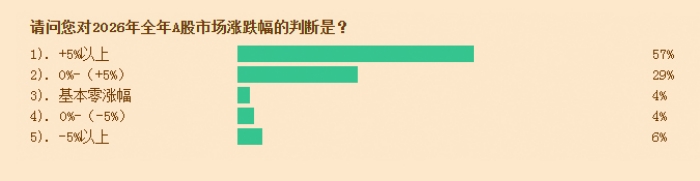
Core Viewpoint - Investment advisors are optimistic about the A-share market in 2026, with nearly 90% expecting an upward trend, and a consensus forming around economic recovery and increased capital inflow [6][7][13]. Group 1: Market Outlook - 88% of investment advisors are bullish on the A-share market for 2026, with 58% expecting an index increase of over 5% [6][14]. - Advisors predict a structural market characterized by fluctuations, with 46% expecting repeated index oscillations and significant gains in certain sectors [14][16]. - The consensus on macroeconomic recovery is strengthening, with 80% of advisors holding optimistic or neutral views on the economy [10][33]. Group 2: Asset Allocation - 67% of advisors recommend increasing allocations to equities, with 68% favoring stocks in the first quarter of 2026 [21][19]. - Advisors are shifting from a focus on growth stocks to a more balanced approach, with 42% expecting growth and dividend styles to converge [16][19]. - High dividend stocks are gaining attention, with 37% of advisors considering them reasonably valued, reflecting a shift in market sentiment [18][19]. Group 3: Investment Strategies - The predominant strategy remains flexible thematic investment, with 47% of advisors advocating for this approach, while 29% are focusing on value investing [22][33]. - Advisors suggest maintaining a higher equity position, with 80% recommending a minimum of 50% equity allocation for clients [22][33]. - The preference for direct stock investments is increasing, with 47% of advisors suggesting this method [21][19]. Group 4: Client Performance and Sentiment - 82% of advisors reported that their clients achieved profits in 2025, a significant increase of 23 percentage points from 2024 [29][27]. - High-net-worth clients are showing increased confidence, with 19% planning to increase their investments, indicating a rising risk appetite [31][27]. - The sentiment towards gold investments is also positive, with 57% of advisors expecting gold prices to continue rising [25][26].

这只太空蝴蝶来自重庆
Xin Lang Cai Jing· 2026-02-03 17:46
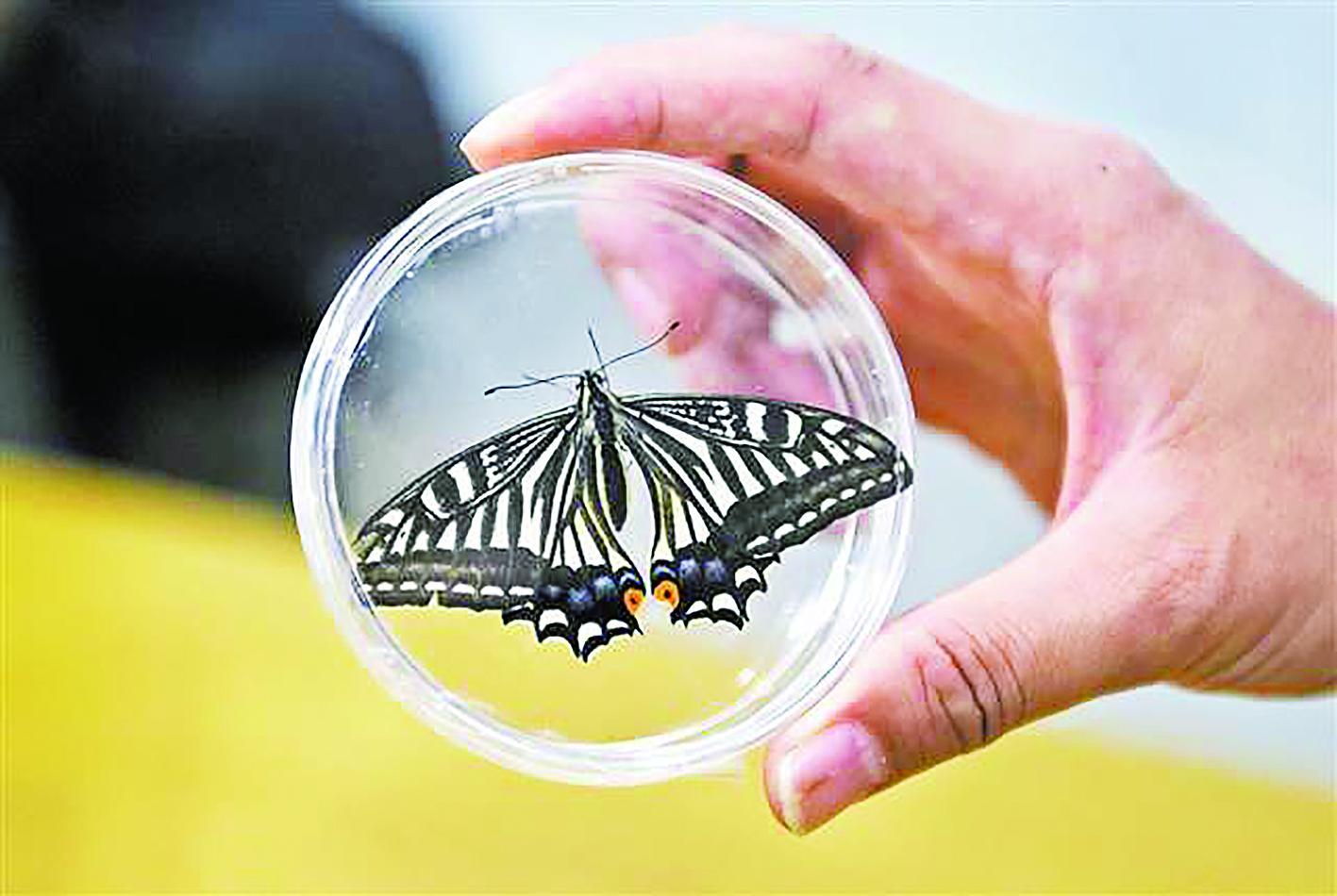
Core Insights - A butterfly that completed its life cycle in space, referred to as the "space butterfly," has garnered attention, marking a significant advancement in space ecological research by the Chongqing University team [2][3] - The experiment aims to establish a closed-loop ecological system involving plants, butterflies, and microorganisms, simulating a self-sustaining material cycle [3] Group 1: Research Objectives and Achievements - The primary goal of the "Shennong Kaiwu No. 2" experiment is to observe not just the butterfly's metamorphosis but to create a functional ecosystem with plants and microorganisms [3] - The selected plants include oil, fiber, medicinal, and fruit crops, addressing diverse needs from basic supply to food and medicine [3] - The successful development of the butterfly in space signifies a breakthrough in the field of life support systems for future lunar or Martian bases [3] Group 2: Technical Innovations - The "Shennong Kaiwu No. 2" payload has undergone significant upgrades, with a total weight of 8.3 kg and a chamber volume of 14.2 liters, compared to the previous payload for the Chang'e 4 mission, which weighed under 3 kg and had a volume of about 1 liter [4] - Innovations in materials, such as the use of magnesium alloy, have enabled a lightweight design while maintaining structural integrity and sealing [4] Group 3: Energy and Environmental Management - The team optimized the design to utilize natural sunlight through light conduits, enhancing plant growth while minimizing energy consumption [5] - An advanced environmental monitoring system collects critical data on temperature, humidity, oxygen and carbon dioxide levels, pressure, and light intensity, providing essential information for future life support systems [5] Group 4: Cost-Effective Design Philosophy - The design philosophy emphasizes simplicity and cost control, with over 90% of components being industrial-grade, avoiding complex active temperature control systems [6] - The use of passive protection methods and optimized sealing structures has reduced the need for additional gas tanks and pressure control systems, significantly lowering costs [6] Group 5: Collaboration with Commercial Space Enterprises - The success of the "space butterfly" experiment exemplifies the integration of academic research with commercial space enterprises, enhancing resource efficiency and reducing costs [7] - The collaboration allows for a modular and standardized approach, compressing development cycles and costs while providing valuable experience for commercial space companies [7] Group 6: Future Implications for Space Research - The new paradigm of "research-driven demand supported by commercial power" is expected to lower the barriers and costs for space experiments, promoting a collaborative approach between state and private sectors [8] - This shift aims to accelerate the transition from a state-led model of space research to one that includes contributions from universities, research institutions, and innovative enterprises, fostering a vibrant ecosystem for low-cost, high-efficiency space experiments [8]
商业航天IPO竞速再添新军
Sou Hu Cai Jing· 2026-02-03 16:56
Core Viewpoint - The commercial aerospace sector is experiencing accelerated capitalization in 2026, driven by both policy and industry dynamics, with multiple companies, including Tianyi Space Technology Co., Ltd., initiating IPO processes to enter the capital market [1][10]. Group 1: Company Developments - Tianyi Space Technology, a leading SAR satellite operator, has launched 38 satellites and completed 21 successful space missions, aiming for an A-share IPO [3][4]. - The company was founded in May 2015 with a registered capital of 50 million yuan and is led by founder Yang Feng, who controls 30.15% of the company's shares [3][4]. - The latest satellite launched by Tianyi was the TY170, a 50kg scientific experimental satellite, which was successfully deployed in September 2025 [4][5]. Group 2: Industry Trends - Since July 2025, there has been a surge in capital activity within the commercial aerospace sector, with companies like Blue Arrow Aerospace and Yixin Aerospace also pursuing IPOs [6][10]. - Blue Arrow Aerospace is currently the fastest in its IPO process, having its application accepted in December 2025 and entering the inquiry stage in January 2026, with plans to raise 7.5 billion yuan [7][10]. - Other companies in the satellite manufacturing sector, such as Yixin Aerospace and Weina Starry Sky, have also initiated their IPO processes [9]. Group 3: Policy Support - The rapid capitalization of the commercial aerospace sector is supported by ongoing policy enhancements, including the implementation of the "1+6" reform measures by the China Securities Regulatory Commission in June 2025 [10]. - The Shanghai Stock Exchange has issued guidelines to support commercial rocket companies in meeting the fifth set of listing standards, which are designed to facilitate the growth of high-tech industries [10]. - The National Space Administration has also introduced measures to strengthen quality supervision and promote high-quality development in the commercial aerospace sector [10].

抢占行业制高点 四川如何跑出加速度
Xin Lang Cai Jing· 2026-02-03 16:43
Core Viewpoint - The development of emerging and future industries is crucial for enhancing new productive forces in Sichuan, with a focus on sectors like artificial intelligence, biomedicine, commercial aerospace, quantum technology, and frontier biology [1] Group 1: Industry Development Strategies - Sichuan aims to accelerate the cultivation of emerging and future industries, which have shown strong momentum and vitality, contributing significantly to high-quality economic development [1] - The provincial government emphasizes the need for a forward-looking layout and integrated planning to seize technological and industrial development high ground, ensuring selected tracks are solid and advantageous [1] Group 2: Specific Industry Recommendations - The commercial aerospace sector is seen as a key area for Sichuan to leverage policy, capital, and technology to support local leading enterprises in pursuing the Science and Technology Innovation Board [2] - There is a call to build a national clean energy hub by capitalizing on hydropower opportunities, integrating resources from universities, leading enterprises, and research institutions to tackle core technologies [2] - The global photovoltaic industry is undergoing significant adjustments, presenting an opportunity for Sichuan to focus on key projects across technology, materials, equipment, products, and scenarios [2] - Sichuan's unique advantages in hydrogen energy development should be amplified through top-level design and policy coordination, focusing on key materials and core components [2] Group 3: Innovation and Collaboration - The biopharmaceutical industry is identified as a strategic emerging sector, with a need for improved collaboration among innovation elements and the establishment of high-level industry empowerment platforms [3] - Accelerating the integration of technological and industrial innovation is essential, with a focus on cultivating application scenarios and reforming innovation mechanisms [4] - The sensor industry is highlighted for its broad application potential, with a recommendation to foster a "demand-rich" ecosystem and prioritize local high-quality sensor products in major projects [4] Group 4: Talent and Ecosystem Development - Talent is deemed critical for the development of emerging and future industries, with suggestions for establishing a "green channel" for the introduction and evaluation of innovative talent teams [5] - The need for a comprehensive results transformation system in the medical and health industry is emphasized to enhance the efficiency of research and application transitions [5][6]
各地“投资任务书”竞逐未来新动能
Zheng Quan Ri Bao· 2026-02-03 16:29
Group 1 - Effective investment is seen as a stabilizing force for growth, with a focus on "big projects" across various regions [1] - For instance, Henan plans to implement over 1,000 key provincial projects with an annual investment of 1 trillion yuan, while Shanghai aims for a major engineering investment of 255 billion yuan [1] - Beijing emphasizes optimizing the implementation of key projects and maintaining a strong project reserve, with a total investment of no less than 200 billion yuan aimed at private capital [1] Group 2 - Regions are focusing on cultivating new productive forces to activate new momentum for high-quality development, with Zhejiang supporting private enterprises in new infrastructure and productive sectors [2] - Henan is accelerating the construction of a new energy system and optimizing its power grid structure, while also advancing projects in digital infrastructure [2] - The layout of these initiatives shows three characteristics: precise direction focusing on AI, bio-manufacturing, and low-altitude economy; practical paths; and emphasis on regional collaboration [2] Group 3 - The next steps should focus on promoting the cross-regional allocation of innovative elements and constructing a comprehensive support system for "basic research + technological breakthroughs + industrialization of results" [3]
猎鹰9号“急刹车”:火箭回收安全警钟敲响,新材料成破局关键(附企业清单)
材料汇· 2026-02-03 16:01
Core Viewpoint - The article discusses the safety challenges associated with the recovery of reusable rockets, particularly focusing on the recent anomaly experienced by SpaceX's Falcon 9 rocket, and emphasizes the critical role of advanced materials in addressing these safety issues [4][5][7]. Group 1: Safety Challenges in Rocket Recovery - The recovery process of reusable rockets is a comprehensive "extreme challenge" that involves various safety risks related to material performance during re-entry, propulsion, and landing phases [7]. - Key safety pain points are identified in three dimensions: re-entry phase, propulsion phase, and landing phase, each presenting unique material-related challenges [7]. Re-entry Phase - During re-entry, the rocket's surface can experience temperatures between 1500°C and 2000°C, necessitating heat protection materials that are not only heat-resistant but also lightweight and reusable [10]. - The Falcon 9 has faced issues with thermal protection coatings degrading after multiple uses, highlighting the inadequacy of traditional materials [10]. Propulsion Phase - The engine components must withstand extreme temperatures (1000°C to 3000°C) and pressures, leading to material fatigue and potential failures such as propellant leaks [12][13]. - The recent anomaly in the Falcon 9's second stage ignition is suspected to be linked to material fatigue, emphasizing the need for robust engine materials [13]. Landing Phase - The landing system must absorb impact forces, requiring materials that are strong, lightweight, and capable of withstanding repeated use [16]. - Previous incidents have shown that inadequate material strength in landing gear can lead to failures, underscoring the importance of material integrity [16]. Group 2: Role of New Materials in Enhancing Safety - New material technologies are crucial for addressing the safety challenges in rocket recovery, with ongoing research leading to the development of high-performance materials for various critical applications [18]. Heat Protection Materials - Advanced heat protection materials include ceramic matrix composites, which offer high-temperature resistance and reusability, significantly improving safety during re-entry [20]. - Carbon-carbon composites are also highlighted for their superior heat resistance, being used in critical areas like the rocket's nose cone [22]. Propulsion System Materials - Innovations in high-temperature alloys and nanocrystalline materials are being developed to enhance engine component durability and reliability under extreme conditions [25]. - New sealing materials, such as fluororubber and PTFE composites, are designed to maintain performance under varying temperatures and prevent leaks [28]. Structural and Buffering Materials - The use of composite materials in landing gear and rocket structures enhances strength and reduces weight, improving overall safety during landing [29]. - The integration of aluminum foam materials in landing gear systems is noted for its ability to absorb impact energy effectively [29]. Group 3: Comparative Analysis and Industry Insights - A comparison of domestic and international advancements in new materials reveals that while the U.S. has a head start in certain areas, China has made significant strides in developing cost-effective and innovative materials for rocket recovery [33]. - The recent SpaceX incident serves as a reminder that safety must remain a priority in the pursuit of cost efficiency in commercial spaceflight, with material innovation being a key factor in achieving this balance [34].