
国际贸易

Search documents
美国平均关税税率显著飙升至20.11%
Xin Hua Cai Jing· 2025-08-09 09:28
Group 1 - The trade-weighted average tariff rate imposed by the United States on all products has risen to 20.11%, significantly higher than the 2.44% at the beginning of the year [1] - The simple average tariff rate on all goods has increased from 2.08% at the start of the year to 17.39% as of the 7th [1] - The global trade volume affected by these tariffs has surged from $288.46 billion at the beginning of the year to $2.747 trillion currently [1] Group 2 - The average effective tariff rate in the United States has reached 18.6%, marking the highest level since 1933 [1] - A report from Yale University's budget laboratory indicates that the adjustments in U.S. tariff policy have led to this increase [1] - New tariff rates applicable to 69 trading partners were announced by the U.S. government on July 31, with implementation starting on August 7 [1]
全球瞭望丨肯尼亚媒体:美国关税政策挤压非洲发展空间
Xin Hua She· 2025-08-09 08:17
Core Viewpoint - The article discusses the impact of the U.S. government's imposition of punitive tariffs, highlighting the potential negative effects on global trade, economic growth, and geopolitical stability, particularly for African economies [1]. Group 1: Economic Impact - The U.S. tariff barriers are expected to increase the cost of imported goods, leading to a restructuring of global supply chains [1]. - The punitive tariffs may disrupt trade channels in key sectors such as commodities, electronics, and textiles [1]. - African economies, which heavily rely on export trade, foreign investment, and multilateral trade systems, will face increased economic vulnerability due to these tariffs [1]. Group 2: Specific Case of Kenya - Kenya is projected to experience significant adverse effects from the U.S. tariffs, with an estimated loss of 600,000 jobs and over 13 billion Kenyan shillings in fiscal revenue [1]. - The end of the grace period for tariffs on Kenyan goods entering the U.S. poses a severe challenge for the country [1]. Group 3: Regional Trade Dynamics - Despite the ongoing progress of the African Continental Free Trade Agreement, intra-African trade accounts for only 18% of total African trade, which is insufficient to mitigate the impacts of global trade disruptions [2]. - The article emphasizes the need for African nations to diversify their trade strategies, reduce dependency on the U.S. market, and strengthen regional trade under the African Continental Free Trade Area framework [2].
美日关税协议生变!日本还能翻盘吗?
Sou Hu Cai Jing· 2025-08-09 07:16
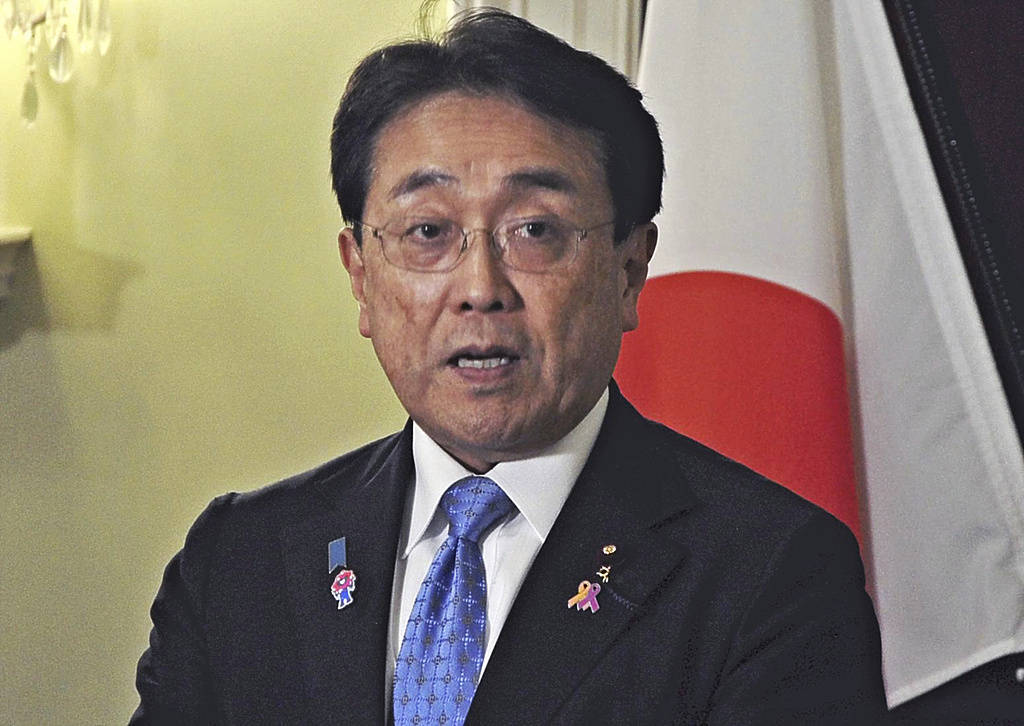
赤泽亮正表示,此前与美方反复确认,针对现有税率低于15%的商品,在8月税率提高后总税率应为15%。而美国政府日前发布的公告显示,日本 已被征税商品需在现有税率之上再加15%,内容与协议不符,对日本不利。 日美新一轮关税协议8月7日正式生效。同一天,日本政府发布更新版的2025财年实际国内生产总值(GDP)增长预期数据,从先前预期的1.2%下 调至0.7%。其下调预期的主要原因之一是美国加征关税的影响。 日本经济再生担当大臣赤泽亮正 8月6日上午,日本经济再生担当大臣赤泽亮正表示,美国方面公布的8月7日开始征收关税的官方公告与此前日美双方达成的协议不一致,此前在7 月22日,美国与日本达成贸易协议,日本适用的所谓"对等关税"税率将为15%。由于"对等关税"包含所谓10%的"基准关税"4月起已在征收,8月起 日本适用的税率将从10%提高到15%。 第一,在安全上,日本依靠美国,所以在这方面日本受到很大的牵制。 虽然知道日美关税是强扭的瓜,但怎么这么快就变味了? 第二,在贸易方面,日本对美国的出口有顺差,基本上三分之一以上是汽车,日本汽车对美国汽车具有巨大的竞争优势。在这一情况下,日本就 必须艰苦谈判。 中国世贸组 ...

临沂晟景国际贸易有限公司成立 注册资本60万人民币
Sou Hu Cai Jing· 2025-08-09 03:42
Group 1 - A new company, Linyi Shengjing International Trade Co., Ltd., has been established with a registered capital of 600,000 RMB [1] - The legal representative of the company is Liu Na [1] - The business scope includes general projects such as import and export of goods, sales of super materials, lightweight building materials, new metal functional materials, artificial boards, daily wooden products, special labor protection products, plastic products, furniture accessories, wood and bamboo processing machinery, packaging materials and products, and retail of hardware products [1]
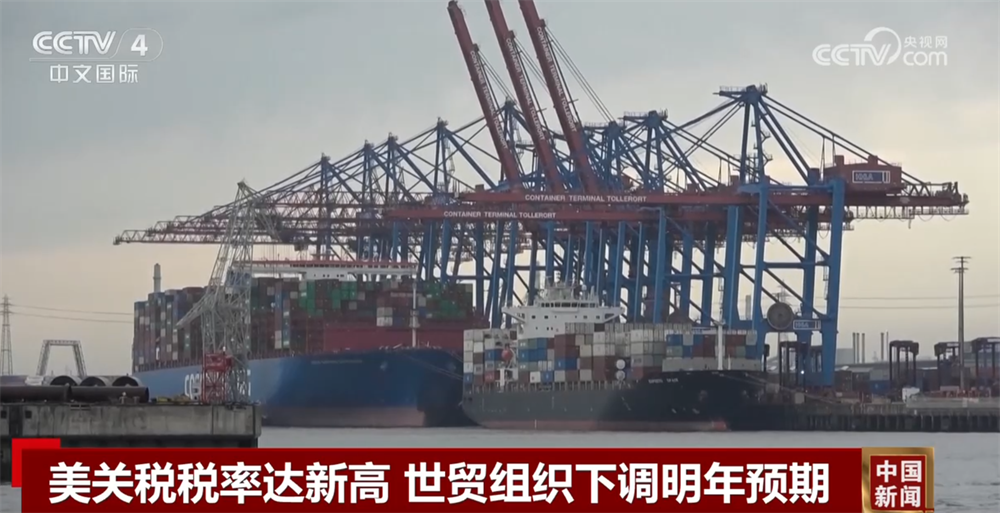
美国关税税率达新高 世界贸易组织下调2026年全球货物贸易增长预期
Yang Shi Wang· 2025-08-09 01:49
央视网消息:世界贸易组织8日发表最新预测显示,2025年全球商品贸易增长将达到0.9%,较今年4月预测的-0.2%大幅回升,但仍低于美 国关税升级前预计的2.7%。而随着关税影响逐步显现,2026年全球货物贸易增长预期将从先前的2.5%下调至1.8%。 另据世贸组织和国际货币基金组织当天发布的数据显示,美国平均关税税率已攀升至20.1%,为20世纪初以来最高水平。 世贸组织8日在贸易展望更新报告中指出,此次上调2025年增长预期主要由于美国在关税正式生效前大幅提前进口,即"前置采购"现象。 然而随着美国7日新关税生效,预计将在2025年下半年至2026年间对美国进口形成持续压力,并抑制其贸易伙伴的出口。 从区域来看,报告预测2025年亚洲经济体仍将是全球货物贸易增长的最大正向推动力,而北美地区在2025年和2026年都将对全球贸易增长 产生负面影响。 世贸组织总干事伊维拉表示,近期关税措施的全面影响仍在逐步显现。她指出:"关税不确定性的阴影持续严重影响商业信心、投资和供 应链。在全球贸易环境中,不确定性仍是最具破坏性的因素之一"。 ...
大健云仓上涨30.02%,报28.8美元/股,总市值10.85亿美元
Jin Rong Jie· 2025-08-08 18:12
Group 1 - The stock price of Dajian Cloud Warehouse (GCT) increased by 30.02% on August 9, reaching $28.8 per share, with a trading volume of $84.934 million and a total market capitalization of $1.085 billion [1] - As of March 31, 2025, Dajian Cloud Warehouse reported total revenue of $272 million, representing a year-on-year growth of 8.3%, while the net profit attributable to shareholders was $27.146 million, showing a slight decrease of 0.18% year-on-year [1] Group 2 - On August 7, Dajian Cloud Warehouse is scheduled to release its mid-year report for the fiscal year 2025 after the market closes (Eastern Time), with the actual disclosure date subject to company announcements [2] - Dajian Cloud Warehouse Technology Company is a Cayman Islands-registered holding company primarily operated by its domestic subsidiary, Dajian Cloud Warehouse Technology (Suzhou) Co., Ltd. It is a leading B2B trading platform for large goods export and a global leader in international trade digital services [2]

世界经济新格局 中国增长新机遇
Zhong Guo Qing Nian Bao· 2025-08-08 08:02
短期变量改善促预期向好 "可喜的进展""贸易局势的缓解""温和的增长"……一系列较为积极的表述,出现在7月29日国际货币基 金组织(IMF)首席经济学家皮埃尔-奥利维耶·古兰沙的演讲中。当天,IMF发布《世界经济展望报告》更 新内容,小幅上调今明两年世界经济增长预期。报告预计,2025年和2026年世界经济将分别增长3%和 3.1%,较今年4月预测值分别上调0.2和0.1个百分点。 IMF上调世界经济增长预期是基于多重因素的综合考量,这些因素包括:在美国加征关税预期下,进出 口前置效应强于预期;当前美国实际关税税率低于其4月宣布的水平;美元走弱改善金融环境,为全球 注入流动性;另有一些主要经济体实施了财政扩张政策。 不过,IMF也警告,世界经济活动在一定程度上因大幅加征关税预期而扭曲。今明两年,经济政策不确 定性仍将威胁世界经济稳定。贸易政策不确定性较高、地缘政治紧张局势升级、财政脆弱性加剧等构成 世界经济下行风险,各经济体应通过构建清晰透明的贸易框架减少不确定性。 美国总统特朗普无差别挥舞"关税大棒",不仅在美国和其贸易伙伴国的信任关系上"砸"出一道道巨大裂 缝,也给处于调整期的世界经济格局"砸"出了一些新 ...
美“关税讹诈”助推新的自由贸易进程提速
Zhong Guo Qing Nian Bao· 2025-08-08 08:02
Core Points - The U.S. has implemented new "reciprocal tariffs" on 69 trade partners, with rates ranging from 10% to 41%, causing widespread criticism and concern among affected countries [1][2][3] - The tariffs are seen as a continuation of the U.S. administration's aggressive trade policy, with specific countries like Brazil, Switzerland, India, and Japan facing particularly high rates [2][3][4] - The trade agreements reached with countries like South Korea and the EU are under scrutiny, with concerns about the fairness and execution of these agreements [5][6] Summary by Category Tariff Implementation - The new tariffs, effective from August 7, include a 15% rate for 40 countries, while 10 countries face rates of 19% or 20% [1] - Brazil faces a combined tariff rate of 50% due to additional tariffs imposed on its products [2] - Switzerland is subjected to a 39% tariff, the highest among European nations, raising alarms about its economic impact [2] Reactions from Affected Countries - Brazil's President Lula has stated that the country will not yield to U.S. pressure and has sought consultations through the WTO [2] - India's government has condemned the U.S. tariffs as unfair and has pledged to protect its national interests [3] - South Korea's agreement with the U.S. has faced criticism domestically for perceived excessive concessions [3] Trade Agreement Concerns - Japan's trade agreement with the U.S. is facing challenges, as the newly announced tariffs contradict prior agreements, leading to calls for correction [4] - The EU's agreement with the U.S. has been criticized for signaling weakness and excessive concessions, particularly from Germany [5] - Analysts suggest that the U.S. may continue to apply pressure on countries to reach trade agreements, but the long-term sustainability of such policies remains uncertain [6]
推进贸易投资自由便利 扩大高水平开放
Jin Rong Shi Bao· 2025-08-08 07:58
Core Viewpoint - The Chinese government has issued a notification to replicate and promote 77 pilot measures from the Shanghai Free Trade Zone (FTZ) to enhance high-level institutional openness and align with international trade rules [1][4]. Group 1: Financial Sector Innovations - The People's Bank of China emphasizes the importance of financial innovations in the Shanghai FTZ, highlighting the optimization of cross-border cash pools for multinational companies and the promotion of international payment services [2][3]. - Key initiatives include enhancing the functionality of free trade accounts, facilitating cross-border data flow in the financial sector, and expanding the application of digital RMB in foreign trade [2][3]. Group 2: Trade and Investment Facilitation - The 77 measures aim to enhance trade and investment facilitation, including optimizing international transit operations and integrating customs management with port operations to improve clearance efficiency [4]. - The measures also cover areas such as intellectual property protection, government procurement reform, and labor rights protection, with nearly half of the measures focusing on these sectors [4]. Group 3: Digital Trade and Economy - The Shanghai FTZ is actively aligning with international digital trade standards, focusing on data cross-border flow, digital technology application, and expanding data sharing [5][6]. - In 2024, Shanghai's digital trade imports and exports are projected to reach $109.53 billion, representing a 4.9% year-on-year growth and accounting for 30.1% of the national total [6]. Group 4: Customs Efficiency for Consumer Goods - The General Administration of Customs is enhancing the efficiency of customs clearance for imported consumer goods, particularly fruits, by developing a data recognition system for plant quarantine [7]. - Simplified domestic quarantine measures have shown positive results in the Shanghai FTZ and are being promoted nationwide to improve trade safety and convenience [7].
东亚区域合作如何顶住这场“压力测试”
Sou Hu Cai Jing· 2025-08-08 05:31
Core Insights - The East Asian cooperation, primarily through the ASEAN and 10+3 mechanisms, is under significant pressure due to U.S. tariffs and geopolitical challenges, necessitating resilience and adaptability for future growth [1][4][12] Group 1: Economic Growth and Challenges - The ASEAN and 10+3 region is projected to have an economic growth rate of 3.8% in 2025, showing resilience amid global trade turmoil, although growth may slow to 3.6% in 2026 due to ongoing challenges [1][2] - The 10+3 cooperation mechanism, which originated in response to the 1997 Asian financial crisis, has evolved to address economic recovery and long-term development, highlighting its crisis-driven nature [2][3] Group 2: Structural Adjustments and Trade Dynamics - The U.S. tariffs pose a direct threat to the export-driven economies of the 10+3 countries, which rely heavily on trade with the U.S. and are now compelled to adjust their export structures [4][5] - Countries like Japan and South Korea have engaged in significant investments and market openings to mitigate the impact of U.S. tariffs, while ASEAN nations are experiencing internal divisions regarding trade agreements with the U.S. [6][7] Group 3: Regional Cooperation and Integration - The 10+3 cooperation framework is characterized by a strong emphasis on political trust and market complementarity, with a combined population of approximately 2.2 billion, creating a substantial consumer market [3][4] - The Regional Comprehensive Economic Partnership (RCEP) is seen as a vital tool for enhancing regional economic integration, focusing on tariff reductions and unified rules of origin [11][12] Group 4: Future Directions and Strategic Initiatives - To strengthen regional cooperation, the 10+3 countries should maintain ASEAN's central role, implement RCEP effectively, and embrace digital and green economies as new growth engines [8][9] - Enhancing the regional financial safety net and exploring local currency settlements are crucial for increasing resilience against external economic shocks [8][12]