
家电

Search documents
人民日报访董明珠:做制造业,要一个一个螺丝钉去打造
Sou Hu Cai Jing· 2026-02-06 04:11
Core Viewpoint - Gree Electric Appliances, led by Chairman Dong Mingzhu, emphasizes the importance of meticulous craftsmanship in manufacturing, focusing on sectors such as air conditioning, industrial mother machines, and chips [1] Group 1: Company Development - Gree Electric Appliances has consistently attracted attention for its expansion from the air conditioning industry into other sectors [1] - The company is committed to the pursuit of industrial excellence and diversification in its business operations [1] Group 2: Leadership Insights - Chairman Dong Mingzhu shares insights on the dedication to real industry and the strategic thinking behind the company's multi-faceted development [1]

华帝股份:公司海外业务覆盖欧盟,该区域收入占比较小
Mei Ri Jing Ji Xin Wen· 2026-02-06 03:40
Group 1 - The core viewpoint of the article highlights that Vatti Corporation (002035.SZ) has a presence in the European Union for its overseas business, although the revenue contribution from this region is relatively small [2] - The sales strategy in the EU is based on a direct sales model, indicating a focused approach to market penetration [2]


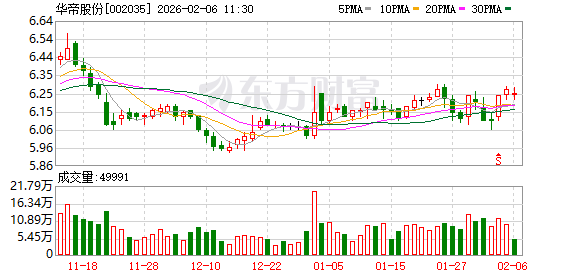
董明珠接受人民日报专访:现在的年轻人要有耐心要吃得起亏
新华网财经· 2026-02-06 03:26
Core Viewpoint - The interview with Dong Mingzhu emphasizes the importance of dedication to manufacturing and the need for high-quality products in the industry, highlighting the company's commitment to innovation and integrity in business practices [2][3][21]. Group 1: Company Development and Strategy - Gree Electric has expanded from the air conditioning sector into industrial machinery and chip manufacturing, showcasing a commitment to diversification and innovation [3][18]. - The company has implemented a "payment before delivery" model to enhance internal management and build trust with distributors, moving away from the traditional "delivery before payment" approach [10][11]. - Gree's focus on high-quality products is evident in its investment in self-manufactured equipment, such as CNC machine tools, to reduce reliance on imports and improve precision [18][19]. Group 2: Leadership and Management Philosophy - Dong Mingzhu emphasizes the importance of responsibility and teamwork, stating that success comes from a unified vision and sincere market engagement [7][10]. - The company promotes a culture of continuous learning and innovation, with a structured quality control system to ensure product reliability [13][20]. - Dong believes that the manufacturing sector is fundamental to economic stability, advocating for a patient and steady growth model rather than chasing quick profits [21][22]. Group 3: Market Position and Future Outlook - Gree aims to establish itself as a global brand, with plans to achieve 100% self-branded sales in overseas markets, reflecting a strategic shift towards international expansion [26]. - The company is adapting to new sales models, including live streaming, to engage with consumers and showcase its products effectively [25]. - Dong acknowledges the pressures of industry competition but remains committed to delivering quality products, rejecting the notion of compromising standards for short-term gains [27].

别再互怼:消费与科技从来不是二选一,而是共生共荣
Sou Hu Cai Jing· 2026-02-06 03:16
Core Argument - The article emphasizes the interdependence of technology and consumption in driving economic stability and growth, arguing against the binary opposition that pits one against the other [1][5]. Group 1: Economic Foundation - A solid economic foundation is essential for any ambitious technological blueprint, as technology development requires continuous investment in various areas such as R&D, talent cultivation, and equipment procurement [2]. - High-quality consumer brands, exemplified by Moutai, represent a stable economic base that supports local infrastructure, social investment, and industry transitions, thereby providing funding for technological research [2][4]. Group 2: Global Perspective - The article critiques the "tech-only" narrative by highlighting that successful economies, like the U.S., have a balanced structure that includes both technology giants and resilient consumer brands, which together enhance economic resilience [3]. - The U.S. technology dominance is supported by a robust consumer market and stable fiscal conditions, which enable sustained high levels of R&D investment [3]. Group 3: Domestic Context - The relationship between technology and consumption is reciprocal; advancements in technology drive consumer upgrades, while a large domestic market is necessary for the monetization of technological innovations [4]. - Traditional consumption sectors, such as the liquor industry, contribute significantly to economic stability and development, supporting agriculture, logistics, and local employment [4]. Group 4: Industry Dynamics - A healthy industrial landscape is characterized by a dual-driven approach where technology acts as a spear and consumption as a shield, ensuring economic resilience and social welfare [5]. - The article calls for a balanced view that recognizes the importance of both technology breakthroughs and consumer support in achieving long-term economic stability and growth [5].

打造国际消费中心新范式:建议上海以品牌生态筑基
Sou Hu Cai Jing· 2026-02-06 03:10
Core Viewpoint - Shanghai aims to reshape the consumer market by transitioning from short-term subsidy-driven "demand management" to systematic supply upgrades that create demand through effective supply [1] Group 1: Activation of Existing Market - The strategy involves "hardcore renewal" to activate the existing market by implementing precise old-for-new subsidies for automobiles, home appliances, and digital products, leveraging national and local funding to stimulate the replacement of durable goods and promote green industrial upgrades [1] Group 2: Expansion of Service Consumption - The focus is on a "scene revolution" to expand service consumption by creating unique experiences that others do not offer, fostering 20 integrated service consumption scenarios, increasing large-scale performance events, and enhancing cultural tourism and commercial exhibitions to convert urban traffic into retained consumption [1] Group 3: Strengthening Brand Ecosystem - The strategy includes consolidating Shanghai's central position through the transformation of key commercial districts, nurturing local brands, and vigorously developing the debut economy, aiming to build a high-energy consumption ecosystem from international brand launches to the rise of local brands, thereby reinforcing the core functions of an international consumption center [1] Group 4: Comprehensive Strategy - Shanghai can systematically transform its soft and hard strengths into sustainable domestic demand growth momentum through a combination strategy of "subsidy renewal as a foundation, scene innovation to expand boundaries, and brand ecosystem to build advantages" [1]
开盘:三大指数大幅低开 贵金属板块跌幅居前
Xin Lang Cai Jing· 2026-02-06 02:10
Market Overview - The three major indices opened lower, with the Shanghai Composite Index down 0.87% at 4040.30, the Shenzhen Component down 1.09% at 13801.03, and the ChiNext Index down 1.15% at 3222.88 [1] Industry Developments - The Ministry of Industry and Information Technology, along with eight other departments, issued the "Implementation Plan for High-Quality Development of Traditional Chinese Medicine Industry (2026-2030)", aiming to promote the approval of innovative Chinese medicine drugs and cultivate ten major traditional Chinese medicine products [2] - Eleven departments jointly released opinions to enhance the digital service convenience for inbound personnel, targeting significant improvements in internationalization and efficiency by 2027 [2] Company News - Infineon announced a price increase for certain products effective April 1, 2026 [3] - BASF raised TDI product prices by 11% in the Asia-Pacific region, excluding mainland China [4] - HP, Dell, Acer, and Asus are considering sourcing memory chips from chip manufacturers in mainland China for the first time [5] - Bitcoin experienced a significant drop, falling to around $62,000, losing over half its value from a four-month high due to increased market volatility [6] - Jinfu Technology announced plans to acquire 51% stakes in Zhuohui Metal and Lianyi Thermal Energy for 714 million yuan, while Guoxuan High-Tech plans to raise no more than 5 billion yuan through a private placement [11] - The actual controller of Beiliang Technology is under investigation by the Securities Regulatory Commission for alleged market manipulation [13] Commodity Market - COMEX gold futures fell by 3.08% to $4,798.1 per ounce, while COMEX silver futures dropped by 16.64% to $70.35 per ounce [12] - The initial margin for COMEX 100 gold futures was raised from 8% to 9%, and for COMEX 5000 silver futures from 15% to 18% [12] Financial Performance - Amazon reported fourth-quarter sales of $213.39 billion, a year-on-year increase of 13.6%, exceeding expectations of $211.49 billion, with a net profit of $21.19 billion, up 6% year-on-year [12]





董明珠接受人民日报专访:现在的年轻人要有耐心要吃得起亏
Sou Hu Cai Jing· 2026-02-06 01:48
Core Viewpoint - Gree Electric Appliances emphasizes the importance of quality manufacturing and the need for patience and perseverance in business development, as the company expands into new industries like industrial machinery and semiconductors while maintaining its core focus on air conditioning [1][12]. Group 1: Company Philosophy and Management - The company believes in taking responsibility for its operations and ensuring that all team members share a consistent value system to achieve long-term success [4]. - Gree has shifted its sales model from "goods first, payment later" to "payment first, goods later," which has improved internal management and built trust with distributors [5][6]. - The company prioritizes product quality based on market feedback, asserting that good products lead to lasting market presence [7]. Group 2: Industry Challenges and Opportunities - Gree recognizes the challenges of transitioning into new sectors, stating that internal choices regarding technology should not be viewed as failures but as learning experiences [11]. - The company has entered the chip and CNC machine tool industries to enhance product quality and reduce reliance on imports, reflecting a commitment to self-sufficiency [12]. - Gree's recent achievements in technology, such as winning a gold medal at the Geneva International Invention Exhibition, highlight its progress in developing core technologies [13]. Group 3: Competitive Edge and Future Directions - The company's core competitiveness lies in its technical expertise, particularly in components like compressors and motors, and it aims to standardize quality across its products [14]. - Gree's commitment to manufacturing is rooted in the belief that without a strong manufacturing base, the business cannot thrive, emphasizing a steady and innovative growth model [15]. - The company is adapting to modern sales methods, including live streaming, while maintaining a focus on product integrity and consumer trust [17].
“十四五”时期陕西消费市场繁荣向好
Shan Xi Ri Bao· 2026-02-06 00:40
Core Insights - The report highlights the continuous expansion of the consumer market in Shaanxi during the "14th Five-Year Plan" period, with a total retail sales of consumer goods reaching 53,198.69 billion yuan, which is 1.2 times that of the "13th Five-Year Plan" period [1] Group 1: Consumer Market Growth - The total retail sales of consumer goods in Shaanxi is projected to reach 11,587.99 billion yuan by 2025, with a year-on-year growth of 6% [1] - The retail sales of new energy vehicles are expected to reach 865.27 billion yuan by 2025, which is 21.1 times that of 2020, with an average annual growth rate of 68.8% [1] - The share of new energy vehicle retail sales in total automotive retail sales is projected to be 53.7% by 2025, an increase of 49.9 percentage points compared to 2020 [1] Group 2: Service Consumption - By 2025, the catering revenue is expected to reach 1,272.16 billion yuan, which is 1.34 times that of 2020, with an average annual growth of 6% [2] - The proportion of catering revenue in total retail sales is projected to rise from 9.9% in 2020 to 11% in 2025 [2] - The online sales through public networks are expected to reach 1,274.87 billion yuan by 2025, which is 1.8 times that of 2020, with an average annual growth of 12.3% [2] Group 3: Business Entities Growth - By 2024, the number of legal entities in wholesale, retail, accommodation, and catering sectors is expected to reach 14,104, an increase of 4,436 compared to 2020, with an average annual growth of 9.9% [2] - The proportion of private enterprises in these sectors is projected to be 98.7% by 2024, an increase of 2.2 percentage points compared to 2020 [2] - The number of chain operation stores in the trade and commerce sector is expected to grow from 6,146 in 2020 to 10,423 by 2024, with an average annual increase of over 1,000 stores [2] Group 4: Urban and Rural Market Development - From 2020 to 2025, urban retail sales are expected to grow from 8,503.1 billion yuan to 10,276.54 billion yuan, with an average annual growth of 3.9% [3] - Rural retail sales are projected to increase from 998.1 billion yuan to 1,311.45 billion yuan, with an average annual growth of 5.6% [3] - By 2025, rural retail sales are expected to account for 11.3% of total retail sales, an increase of 0.8 percentage points compared to 2020 [3]
23万亿元、590亿元 多维度“数”说经济强劲“势能”
Yang Shi Wang· 2026-02-06 00:32
Group 1 - The core viewpoint of the articles indicates that China's light industry is expected to maintain stable and positive economic growth by 2025, with a projected increase in value-added output and revenue [1] - In 2025, the value-added output of the light industry is expected to grow by 5.3% year-on-year, achieving a revenue of 23 trillion yuan, with a profit margin of 6.04%, surpassing the overall industrial average by 0.73 percentage points and the manufacturing sector by 1.34 percentage points [1] - Among 90 major light industry products, 35 are anticipated to see production growth, driven by the widespread adoption of digital R&D tools that enhance the supply of high-value-added products [1] Group 2 - The consumer market is significantly influenced by policy-driven effects, with over 129 million home appliances and 12.5 million electric bicycles expected to be replaced under the old-for-new policy in 2025 [1] - Retail sales of 11 categories of light industry goods are projected to reach 867.19 billion yuan in 2025, reflecting a year-on-year growth of 7.8%, increasing their share of total social retail sales to 17.3% [1] - The export structure of the light industry is continuously improving, with light industry goods exports expected to reach 911.46 billion USD in 2025, accounting for 24.2% of the national total, with 11 out of 22 major export categories showing growth [1] Group 3 - In January 2026, the sales volume of six categories of home appliances and four categories of digital and smart products exceeded 15 million units, with sales revenue nearing 59 billion yuan, indicating the gradual effectiveness of the old-for-new and subsidy policies [2] - Offline sales accounted for nearly 80% of the total sales, reflecting a year-on-year growth of approximately 20% [2] - Green and smart products are gaining popularity, with online sales of energy-efficient water heaters and televisions increasing by 35.7% and 28.9% year-on-year, respectively [2]
年货购物车也是业态晴雨表
Xin Lang Cai Jing· 2026-02-06 00:22
Group 1 - The core idea of the articles highlights a significant shift in consumer behavior during the Chinese New Year, moving from traditional necessities to personalized and emotionally valuable products [1][2][3] - The traditional "three essentials" for New Year celebrations—sunflower seeds, candies, and alcoholic beverages—are being replaced by new snacks, smart home appliances, cultural creative products, and pet gifts [1] - A survey indicates that 74% of consumers view the Spring Festival as a time for mental and physical adjustment, reflecting a desire for emotional connection rather than just material abundance [2] Group 2 - The changing consumption logic is reconstructing the essence of the New Year, presenting both challenges and opportunities for the market [3] - Government initiatives are encouraging the creation of a consumption festival during the nine-day Spring Festival holiday, focusing on six key areas: food, accommodation, transportation, tourism, shopping, and entertainment [3] - The evolving preferences of consumers are leading to a more vibrant and resilient economic landscape, with a growing emphasis on cultural experiences and emotional fulfillment [3]