
交通物流

Search documents
扩大供给精心打造金秋消费新热潮 龚正主持市政府常务会议
Jie Fang Ri Bao· 2025-09-29 01:32
Group 1 - The Shanghai government emphasizes the importance of safety and consumer promotion during the upcoming National Day and Mid-Autumn Festival holidays, focusing on risk assessment in key areas such as transportation hubs and tourist attractions [1] - The government plans to enhance the brand influence of Shanghai by revitalizing traditional brands, promoting innovation, and encouraging cross-industry integration [2] - The government aims to implement a plan for the professionalization and standardization of household service enterprises from 2026 to 2028, addressing industry bottlenecks and enhancing service quality [2] Group 2 - A plan to reduce logistics costs and improve efficiency has been approved, focusing on enhancing infrastructure and integrating transportation networks [3] - The initiative aims to develop a digital, intelligent, and green supply chain to facilitate the transformation of the logistics industry [3]
深国际李海涛:积极参与河南发展,五年来累计投资超30亿元
Sou Hu Cai Jing· 2025-09-26 04:05
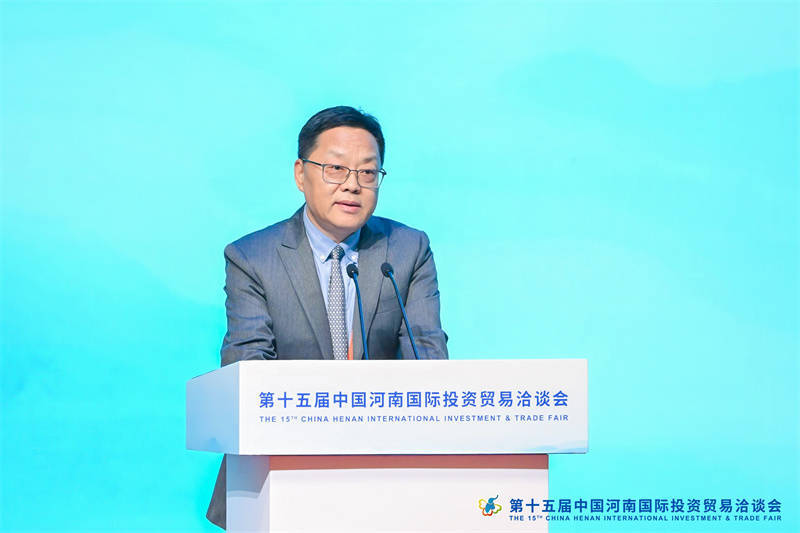
Core Viewpoint - The 15th China Henan International Investment and Trade Fair has opened in Zhengzhou, focusing on "Open Cooperation for Win-Win Development," highlighting its significance as a major international economic and trade event in Henan [1] Group 1: Event Overview - The fair is the largest and most influential international economic and trade event in Henan, attracting global investors and enhancing international attention [1] - The event lasts for three days and includes various activities such as industry matchmaking, project negotiations, exhibitions, and international cooperation [1] Group 2: Company Profile - Shenzhen International Holdings Limited (深国际) is a state-owned enterprise based in Shenzhen, primarily engaged in transportation logistics, with significant holdings in highways and logistics infrastructure [3] - The company operates 90% of Shenzhen's highways and 70% of its logistics infrastructure, and is involved in the operation of Shenzhen's China-Europe Railway Express [3] Group 3: Investment in Henan - Since 2020, Shenzhen International has actively participated in Henan's development, investing a total of 3.1 billion yuan in modern logistics parks and dedicated port projects for the Henan Steel Group [3][4] - The local government has provided substantial support in project initiation and operational challenges [3] Group 4: Future Plans - Shenzhen International aims to enhance its operations in Henan, focusing on the planning and construction of the second phase of the Shenqiu Port project and seeking further investment opportunities [4] - The company is committed to reducing social logistics costs and improving logistics efficiency in Henan, contributing to the province's goal of becoming a strong transportation hub [4]

百度(BIDU.US)涨逾3% 与招商局签署战略合作协议
Zhi Tong Cai Jing· 2025-09-16 14:27
Core Viewpoint - Baidu's stock rose over 3% to $118.54 following the signing of a strategic cooperation framework agreement with China Merchants Group on September 15, focusing on advanced AI technologies and various industries [1] Group 1: Strategic Cooperation - The agreement marks a new phase in the collaboration between China Merchants Group, a century-old state-owned enterprise, and Baidu, a global leader in artificial intelligence [1] - The partnership aims to leverage cutting-edge AI technologies in sectors such as technology innovation, transportation logistics, comprehensive finance, and real estate [1] - The collaboration is expected to promote the deep integration of advanced AI technologies with the real economy, providing strong momentum for the intelligent upgrade of China's industries [1]

事关全面绿色转型,福建发布行动方案
Zhong Guo Zheng Quan Bao· 2025-09-14 10:34
Core Viewpoint - The Fujian Provincial Government has issued an action plan to accelerate the green transformation of the economy and society, focusing on developing green low-carbon industries and promoting sustainable practices across various sectors [1]. Group 1: Green Low-Carbon Industry Development - The action plan emphasizes the growth of green low-carbon industries, particularly in areas such as optoelectronics, integrated circuits, and new energy, aiming to cultivate national-level strategic emerging industry clusters [1]. - By 2030, the scale of the energy-saving and environmental protection industry is expected to reach approximately 300 billion yuan [1]. Group 2: Traditional Industry Transformation - The plan outlines the need for green low-carbon transformation and upgrading of traditional industries, with a focus on controlling high energy consumption and emissions [2]. - New and expanded projects in key industrial sectors must meet energy efficiency benchmarks and environmental performance standards [2]. - By 2026, over 71% of key business processes are expected to be fully digitalized [2]. Group 3: Energy Transition - The action plan calls for the clean and efficient use of fossil energy, with a gradual reduction in coal consumption during the 14th and 15th Five-Year Plans [3]. - By 2030, the proportion of non-fossil energy consumption is targeted to exceed 30% [3]. - The plan includes the development of offshore wind power and nuclear energy projects, as well as the exploration of marine energy [3]. Group 4: Green Transportation Infrastructure - The plan aims to build green transportation infrastructure, including the digital transformation of cross-strait transportation networks and the construction of low-carbon stations and airports [4]. - By 2030, the carbon emission intensity of operational transportation tools is expected to decrease by approximately 9.5% compared to 2020 [4]. Group 5: Green Building Development - The action plan mandates strict adherence to energy-saving and carbon reduction standards in building construction, promoting the development of green buildings [5]. - The plan encourages the construction of ultra-low energy consumption buildings in suitable regions [5].
城市24小时 | 全国生育率“垫底”的省,向湖北小城学什么
Mei Ri Jing Ji Xin Wen· 2025-09-10 16:24
Group 1: Population and Birth Rate Issues in Heilongjiang - Heilongjiang has been experiencing a continuous decline in its resident population since 2011, with a decrease from 38.33 million in 2010 to 30.29 million in 2024, totaling over 8 million lost residents in 14 years [1] - The province has the lowest birth rate in the country at 2.92‰ in 2023, marking a historical low, and a natural population growth rate of -6.92‰, the worst in the nation [2] - The elderly population (60 years and above) in Heilongjiang reached 8.35 million, accounting for 27.3% of the total population, which is 6.2 percentage points higher than the national average [2] Group 2: Policy Initiatives to Encourage Birth Rates - The Heilongjiang provincial government has introduced various policies to encourage childbirth, including monthly subsidies of 500 yuan for second children and 1,000 yuan for third children, as well as housing subsidies for families with multiple children [2] - In Harbin, the birth rate showed a slight increase from 3.6‰ in 2022 to 3.7‰ in 2024, despite the implementation of these supportive measures [3] Group 3: Successful Case Study from Tianmen City - Tianmen City has implemented effective policies to boost birth rates, including a set of "seven opinions" and the use of combined rewards and subsidies, resulting in a 17% increase in births in 2024 compared to the previous year [1] - The Tianmen experience serves as a model for Heilongjiang to explore potential solutions to its demographic challenges [1]


中哈企业家委员会第八次会议达成合作文件72项
Zhong Guo Xin Wen Wang· 2025-09-02 15:04
Group 1 - The eighth meeting of the China-Kazakhstan Entrepreneurs Committee was successfully held in Beijing, with over 500 business representatives from various sectors including energy, transportation, logistics, and communications participating [1] - A total of 72 cooperation documents were signed during the meeting, focusing on green sustainable development and supply chain collaboration [1] - The bilateral trade volume between China and Kazakhstan has increased nearly a hundredfold over the past few decades, highlighting the significant growth in economic cooperation [1] Group 2 - The China-Kazakhstan Entrepreneurs Committee, established in 2013, is the first bilateral business cooperation mechanism between China and Central Asian countries, emphasizing the importance of collaboration under the Belt and Road Initiative [2] - The committee aims to deepen industrial cooperation, promote technological exchanges, and create business opportunities, with ongoing projects in transportation logistics, energy, and telecommunications [2] - The meeting was co-hosted by the China Council for the Promotion of International Trade, the Saka Fund, and CITIC Group, showcasing the collaborative efforts between the two nations [2]

陈济丁:内畅外联促交通运输提能增效
Jing Ji Ri Bao· 2025-08-15 00:02
Core Viewpoint - The establishment of a unified and open transportation market is crucial for effectively connecting supply and demand, thereby promoting a smooth national economic cycle. Despite having the world's largest transportation networks, there are still significant challenges in achieving seamless integration and collaboration across different regions and sectors [1][2]. Group 1: Current State of Transportation Market - China has built the largest high-speed railway network, highway network, postal express network, and world-class port clusters, with high-speed railway operating mileage reaching 48,000 kilometers and highway mileage exceeding 190,000 kilometers [1]. - The total mileage of the comprehensive three-dimensional transportation network exceeds 6 million kilometers, supporting the efficient operation of the world's second-largest economy [1]. - The logistics cost as a percentage of GDP is projected to decrease to 14.1% in 2024, with a targeted reduction in transportation costs of approximately 280 billion yuan, although this still lags behind international advanced levels [1]. Group 2: Policy and Strategic Directions - The complex international situation, including the U.S. implementation of "reciprocal tariffs," necessitates the acceleration of building a unified national market to counter uncertainties in international circulation [2]. - The Central Committee and State Council issued opinions in 2024 to systematically promote the construction of a unified and open transportation market, emphasizing the need for "five unifications and one openness" [2]. Group 3: Key Initiatives for Improvement - Efforts will focus on breaking through regional bottlenecks and promoting collaborative development among regional markets, enhancing the interconnectivity of transportation infrastructure [3]. - There is a push to lower overall logistics costs and improve the efficiency of resource circulation by integrating transportation logistics with key industrial chains and fostering new types of logistics integrators [4]. - The transformation of transportation services is aimed at enhancing consumer markets, including the development of a tourism transportation network and the expansion of new energy vehicle consumption [4]. Group 4: Regulatory Enhancements - Strengthening regulation is essential for promoting a healthy and orderly market development, including the implementation of unified standards for vehicle overload recognition and the establishment of regulatory frameworks for new business models like ride-hailing and online freight [5].
通信数据解码广东经济:1.15亿人背后的消费活力和枢纽流量
2 1 Shi Ji Jing Ji Bao Dao· 2025-08-07 07:03
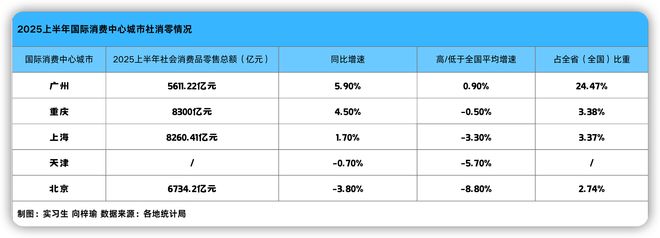
Group 1 - Guangdong has maintained its position as the largest population province in China for 18 consecutive years, with an average resident population of 115 million and a monthly flow of 50.6 million people in the first half of the year [1][4] - The province's inbound and outbound travel has seen significant growth, with an average of 4.986 million inbound visitors per month, a year-on-year increase of 29.4%, and 5.217 million outbound travelers, up 32.5% [1][4] - The retail sales of consumer goods in Guangdong reached 22,932.66 billion yuan in the first half of the year, growing by 3.5% year-on-year, indicating a strong recovery in consumer spending [3][4] Group 2 - Guangzhou has emerged as a leading international consumption center, with retail sales of consumer goods growing by 5.9% year-on-year, the highest among five major international consumption cities in China [2][3] - The city's social retail sales totaled 561.12 billion yuan in the first half of 2025, accounting for 24.47% of the province's total [3] - The influx of foreign tourists and the implementation of favorable policies have further stimulated the consumption market, with a notable increase in tax refund applications from outbound travelers [5][4] Group 3 - The transportation network in Guangdong is being enhanced, with significant increases in passenger traffic at major airports and railways, indicating a robust flow of people and goods [9][10] - The province's logistics capabilities are being strengthened, with the introduction of new international trade routes and an increase in container throughput at ports [9][10] - The ongoing development of high-speed rail and urban transit systems is expected to facilitate better connectivity and economic collaboration among cities in the Greater Bay Area [11][10] Group 4 - The "Hundred Million Talent Gathering" initiative has attracted over 1 million recent graduates to Guangdong, enhancing the province's talent pool and supporting economic growth [15][16] - The establishment of key industrial transfer parks has led to an increase in the resident workforce, with a notable rise in the number of non-local talents, indicating a growing appeal of the region [12][13] - Major projects in these industrial parks are driving investment and job creation, contributing to the overall economic dynamism of Guangdong [12][16]
上半年全国离境退税销售额 同比增长近1倍
Zheng Quan Shi Bao Wang· 2025-08-01 01:36
Group 1 - The core viewpoint of the articles highlights the significant growth in China's duty-free sales and the expansion of duty-free stores, with a nearly 100% year-on-year increase in duty-free sales and over 7,200 stores, marking an 80% growth since the end of 2024 [1] - The "Buy in China" initiative has become a popular consumption trend among both domestic residents and international tourists, with various themed events such as the International Consumption Season and Premium Launch Season being organized [1] - The duty-free policy has notably boosted the performance of leading companies in the duty-free retail sector, such as China Duty Free Group and Wangfujing, while also benefiting port economy stocks due to increased passenger flow [1] Group 2 - Local governments are leveraging regional resources and cultural characteristics to host distinctive "Buy in China - Local Station" events, catering to diverse consumer needs [2] - Cities like Shenzhen and Guangxi are showcasing their unique advantages through innovative events, such as the "Smart Summer Brand Exhibition" and the "ASEAN Fruit Gathering in Guangxi," respectively [2] - Various regions are focusing on four key areas: premium shopping, exquisite dining, exciting tourism, and fine performances, to create diverse consumption scenarios, with notable events like the Shanghai Summer International Consumption Season attracting around 2.6 million visitors [2]


交通运输部:培育壮大交通运输领域新质生产力 大力发展智慧交通
Mei Ri Jing Ji Xin Wen· 2025-08-01 01:35
Core Insights - The Ministry of Transport emphasizes accelerating the construction of a national comprehensive transportation network and advancing major project development [1] - The focus is on reducing costs and improving efficiency in transportation logistics, promoting multi-modal transport, and enhancing the integration of transportation logistics with related industries [1] - There is a strong push for technological innovation in the transportation sector, including the development of smart transportation and significant technological breakthroughs [1] - The planning for the "14th Five-Year" transportation development is highlighted, with an emphasis on high-quality planning and addressing major issues [1] Group 1 - The Ministry of Transport held a meeting to analyze the transportation situation in the first half of 2025 and outline key tasks for the second half [1] - The meeting stressed the importance of utilizing various funding support policies to serve national strategic implementations and plan for major projects [1] - There is a call for deepening the adjustment of transportation structure and promoting the trial of domestic transportation logistics corridors [1] Group 2 - The Ministry aims to foster new productive forces in the transportation sector and strengthen major technological research [1] - The development of smart transportation is prioritized, with a focus on leading industry innovation through technological advancements [1] - The meeting also discussed the need for a comprehensive plan for the "14th Five-Year" transportation development and the promotion of pilot projects for building a strong transportation nation [1]