厨电

Search documents
年度观察:于顶级豪宅的厨房格局中,窥见“好房子”的战略深水区
Sou Hu Cai Jing· 2025-12-17 11:46
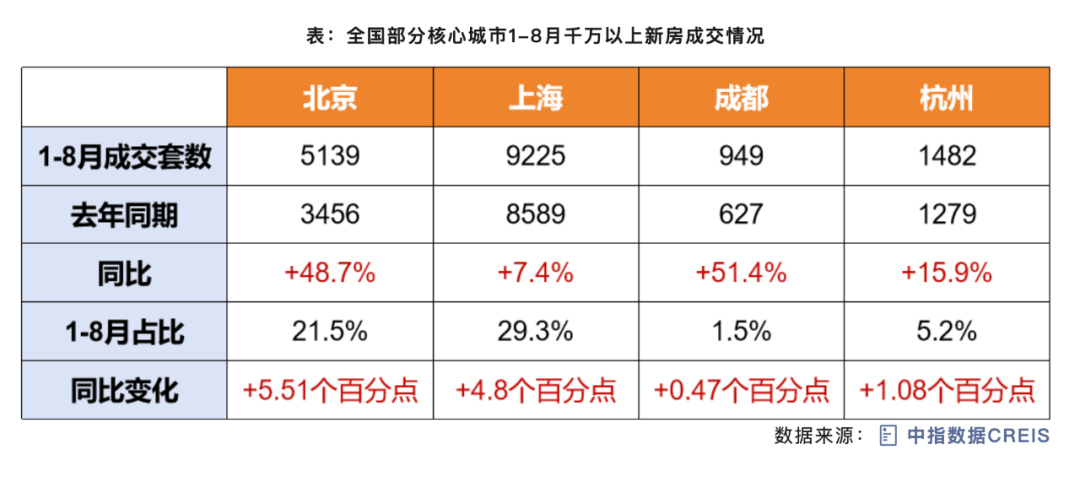
Core Insights - The central theme of the articles revolves around the strategic shift in China's real estate market towards the concept of "good housing," emphasizing the need for high-quality living spaces and the evolution of consumer preferences in the luxury housing sector [1][2][4]. Group 1: "Good Housing" Strategy - The "good housing" initiative is now a clear directive from the national level, marking a significant shift in the future direction of housing development in China [1][2]. - The year 2025 is anticipated to be a pivotal moment for the "good housing" strategy, indicating a deep supply-side reform in the real estate market [2][4]. Group 2: Luxury Market Dynamics - The luxury real estate market is experiencing a significant boom, particularly in first and second-tier cities, with a notable increase in transactions for properties priced over 10 million yuan [2][3]. - Data from the first eight months of the year shows substantial year-on-year growth in luxury home transactions in major cities like Beijing, Shanghai, and Hangzhou, with increases of 48.7%, 7.4%, and 15.9% respectively [3]. Group 3: Consumer Preferences and Trends - There is a marked shift in consumer preferences among high-net-worth individuals, moving from a focus on brand prestige to a deeper appreciation for functional and aesthetic qualities in home environments [13][14]. - The demand for high-end kitchen appliances is evolving, with local brands like Fotile gaining traction as consumers prioritize products that align with Chinese cooking habits and lifestyle [5][12][18]. Group 4: Industry Transformation - The collaboration between top real estate developers and local brands like Fotile signifies a transformation in the luxury housing market, moving from a reliance on international brands to a more balanced competition between domestic and foreign products [22][25]. - The integration of smart kitchen solutions into luxury homes is becoming a key competitive factor, reflecting a broader trend towards holistic living solutions rather than mere hardware offerings [19][20]. Group 5: Future Outlook - The ongoing evolution in the luxury housing market suggests that understanding the essence of modern living will be crucial for companies aiming to lead in the next industry cycle [26][27]. - The shift towards a more collaborative approach in product development and market strategy is expected to redefine the competitive landscape in the real estate sector, emphasizing the importance of local brands in meeting consumer needs [22][25].

上市后分红未中断,10年平均股息率高于6%的15家公司
Sou Hu Cai Jing· 2025-12-08 16:31
Core Viewpoint - The article discusses the phenomenon of high dividend yields in certain A-share companies, highlighting how consistent dividends can lead to a situation where investors effectively receive stocks for free, as their cost basis becomes negative over time due to accumulated dividends. Group 1: High Dividend Companies - Yanzhou Coal Mining Company has maintained an average dividend yield of 8.85% over the past decade, allowing early investors to accumulate over 80,000 yuan in dividends from an initial investment of 100,000 yuan [3] - Jizhong Energy, another coal company, has an average dividend yield of 7.19% over the past decade and has never reported a loss in its annual reports [3] - Daqin Railway, which transports coal, has an average dividend yield of 7.59% and is currently trading at a three-year low, making its dividend yield more attractive [5] - Huafa Group, a real estate company, has maintained an average dividend yield of 8.29% despite its stock price hitting a ten-year low [6] - Tianjian Group has not reported annual losses for nearly 20 years and has an average dividend yield of 6.59% [6] - Wan Nian Qing, a cement company, has an average dividend yield of 7.42% and has been consistent in returning profits to shareholders [6] - Other notable companies include Fusenmei, Hailan Home, and Yagor, which have maintained stable dividend yields in their respective industries [6] Group 2: Characteristics of High Dividend Companies - Most of the companies in the high dividend club are "old brands," having been listed for over 20 years, demonstrating resilience through multiple market cycles [7] - These companies primarily operate in traditional industries such as coal, railways, cement, retail, and banking, which have stable demand and do not require excessive reinvestment of profits [7] - All 15 companies listed have never reported annual losses since their IPOs, which is crucial for sustaining dividends [7] Group 3: Market Perception and Challenges - Despite their strong dividend records, many of these companies face declining stock prices, leading to a "dividend paradox" where high dividends do not correlate with stock performance [8] - The market tends to favor high-growth sectors like AI and renewable energy, often overlooking traditional industries, which are perceived as "old economy" [8] - High dividend yields can sometimes be misleading, as they may result from falling stock prices rather than increased dividend payouts, posing risks for investors [10] - Investors need to assess whether high dividends are supported by solid cash flows or if they are merely a result of asset liquidation or debt financing [10] Group 4: Investment Strategy - Investing in high dividend companies requires patience and a deep understanding of the underlying business and industry dynamics [11] - The focus should be on the cash flow generated by the business rather than short-term stock price fluctuations, which can provide a sense of security during market downturns [11] - The list of 15 companies serves as a starting point for further research into sustainable dividend-paying companies [11]


海尔大厨电2025年逆势增长领跑行业
Sou Hu Wang· 2025-12-08 05:05
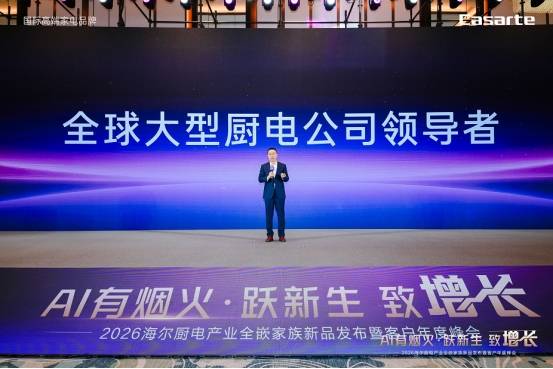
Core Insights - The global kitchen appliance market is under pressure, yet Haier's kitchen appliances are experiencing growth, achieving a 32% increase in the high-end market compared to an industry decline of 3% in the first ten months of the year [1][2] - Haier's global strategy has established a strong market foundation, with the company being the largest kitchen appliance manufacturer globally, selling over 10 million units annually for three consecutive years from 2022 to 2024 [3] - The "comprehensive ToC transformation" strategy has driven Haier's global market growth, with significant market shares in various regions, including 34% in the US and leading positions in Australia, Italy, Morocco, and notable growth in the Middle East and Southeast Asia [3][4] Company Performance - Haier's kitchen appliances have achieved breakthroughs in the domestic high-end market, with the Casarte brand being the fastest-growing high-end brand in the industry [3] - The Casarte full-embedded range hood has maintained the highest market share in the high-end segment on JD.com for five consecutive months, while the Casarte drawer dishwasher has seen a 130% increase in sales, securing the top market share [3] Innovation and Technology - Haier has introduced AI products and solutions, showcasing its leadership in the industry with the new generation of AI kitchens, which include features like automatic fire adjustment and intelligent cooking capabilities [4] - The integration of AI technology in kitchen appliances reflects Haier's commitment to enhancing user experience and product innovation [4] Strategic Insights - The reverse growth trend is attributed to the company's strategic transformation and market practices, demonstrating a systematic approach to enhancing brand value and resilience in a complex market environment [6] - The 2026 "comprehensive ToC" strategy outlines a clear path for Haier's high-end transformation, providing a practical example of resilience in the home appliance manufacturing sector [6]

政策赋能行业升级 浙江美大推动厨电产业向“高质量、智能化、绿色化”转型
Quan Jing Wang· 2025-12-07 12:01
Core Viewpoint - The Chinese home appliance industry is undergoing a significant transformation from scale expansion to quality and efficiency, with Zhejiang Meida Industrial Co., Ltd. as a leading representative in this transition, aligning its strategies with national policies aimed at enhancing consumer goods supply and demand adaptability [1][5]. Group 1: Industry Transformation - The industry is focusing on high-quality, intelligent, and green upgrades in response to national policies promoting structural reforms and consumer demand adaptability [1][4]. - There is a structural contradiction in the market characterized by an oversupply of low-end products and a shortage of high-quality offerings, prompting companies like Zhejiang Meida to optimize product structures [2][5]. Group 2: Product Innovation and Quality - Zhejiang Meida has established a complete industrial chain and strict quality control system, enabling the production of high-quality products that meet or exceed national standards [2]. - The company is committed to technological innovation to enhance product performance and reliability, despite facing short-term pricing pressures due to market demand changes [2][5]. Group 3: Smart Home Integration - The company has proactively invested in smart technology, launching AI-enabled integrated stoves that enhance kitchen safety and convenience, aligning with national encouragement for "artificial intelligence + consumption" [3]. - Zhejiang Meida is transitioning from a kitchen appliance manufacturer to a provider of smart kitchen and home solutions, reflecting a broader strategy to create diverse product matrices [3]. Group 4: Green Development Initiatives - The company is actively participating in national policies promoting equipment upgrades and trade-in programs, aiming to revitalize the market for outdated kitchen appliances [4]. - Zhejiang Meida anticipates significant growth in the market for over 120 million outdated kitchen renovations, viewing this as a long-term growth driver while fulfilling its social responsibility for green consumption [4]. Group 5: Strategic Positioning - In the context of national policies supporting consumer goods industry upgrades, Zhejiang Meida has built a differentiated advantage through high-quality products, intelligent scenarios, green consumption, and diversified channels [5]. - The company's development path exemplifies the shift in the home appliance industry from "incremental growth" to "structural optimization," ultimately achieving high-quality development [5].

营销体系提质增效!华帝关键人事变动深耕高端厨电价值战
Xin Lang Cai Jing· 2025-12-05 06:52
Core Insights - Vatti has appointed Han Wei as the Vice President to oversee marketing, indicating a strategic restructuring aimed at enhancing the marketing system [1][4] - The adjustment reflects Vatti's commitment to a "channel integration" strategy to deepen user value and compete effectively in the evolving kitchen appliance market [5][7] Market Trends - The kitchen appliance market is experiencing a "value war" driven by high-end products, rapidly penetrating into county-level markets [5][7] - Data from Suning shows a 135% surge in county-level home appliance orders from October 1 to 6, with sales of dishwashers, water purifiers, and dryers increasing by over 80% year-on-year [5][7] - Sales of embedded kitchen appliances in regions like the Yangtze River Delta and Pearl River Delta have risen by over 120% [5][7] Consumer Behavior - County consumers are shifting their focus from price to product design, smart features, health functions, and brand value, posing challenges for companies in channel coordination and experience delivery [5][7] - Traditional kitchen appliance sales face issues such as online-offline disconnects, leading to consumer experience gaps, particularly in the high-end market [7] Strategic Initiatives - The appointment of Han Wei aims to address these core pain points by integrating online and offline channels to ensure seamless delivery of high-end value at every consumer touchpoint [7] - This move is part of Vatti's broader strategy to achieve a revenue target of over 10 billion, focusing on enhancing profitability, capturing market share, and improving operational efficiency [7] - The "channel integration" and "sales and brand unity" strategy ultimately benefits consumers by simplifying decision-making processes and enhancing trust [7]


以技术突破引领烹饪革命,华帝两项燃烧技术获评“国际领先”
Xin Lang Cai Jing· 2025-12-05 06:52
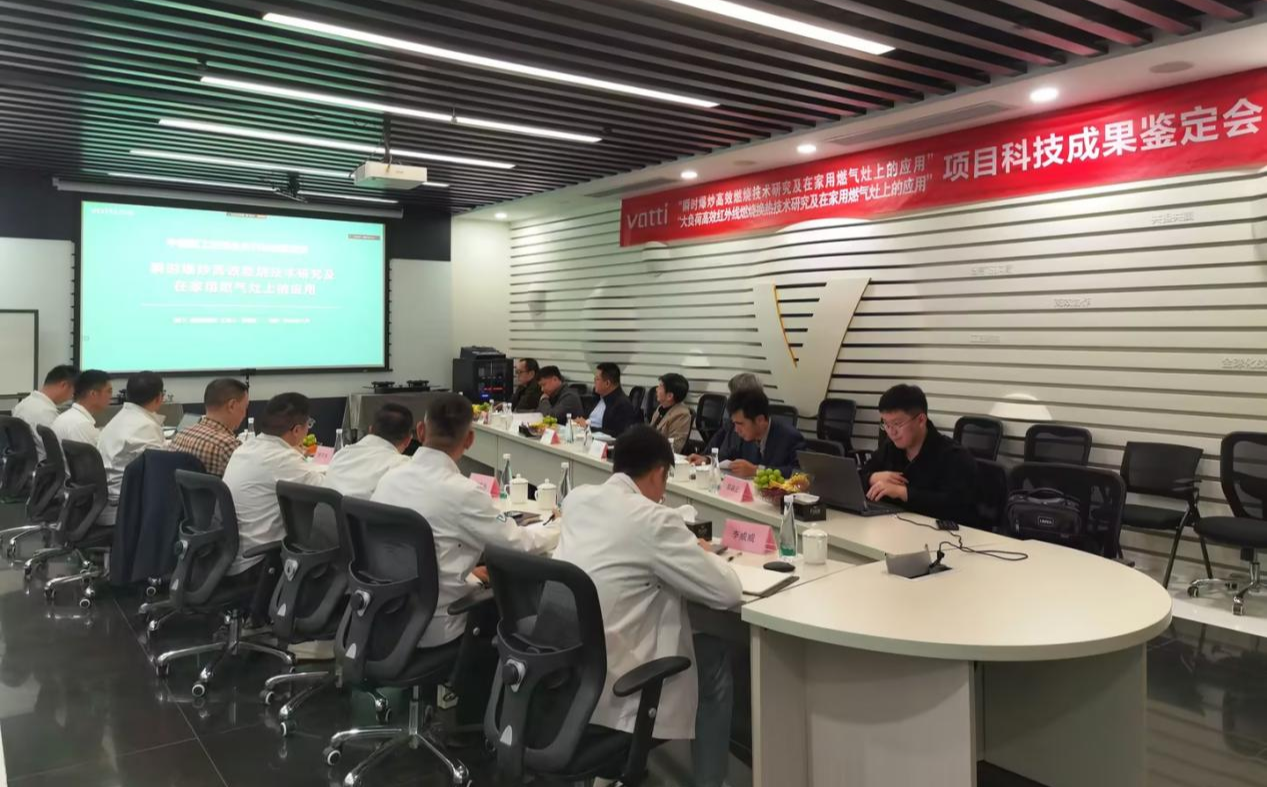
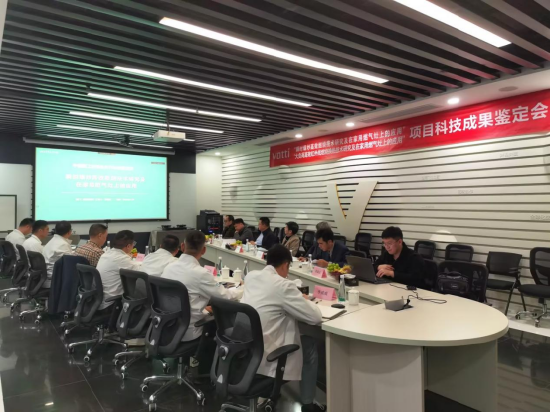
Core Viewpoint - Vatti's two innovative technologies, "Instant Stir-fry Efficient Combustion Technology" and "High-load Efficient Infrared Combustion Heat Exchange Technology," have been recognized as "internationally leading" by the China Light Industry Federation, marking a significant breakthrough in the gas stove combustion technology field in China [1][9]. Group 1: Technology Achievements - The "Instant Stir-fry Efficient Combustion Technology" focuses on enhancing the user experience in Chinese cooking by improving fire control, combustion stability, and heat exchange efficiency, allowing for quick and precise fire adjustments [3][11]. - The "High-load Efficient Infrared Combustion Heat Exchange Technology" aims for high energy efficiency and low emissions, achieving over 81% thermal efficiency while meeting national first-level green standards for CO and NOx emissions [5][13]. Group 2: Industry Impact - Vatti's recognition reflects its strong position as a leader in the gas stove industry, showcasing its deep accumulation of knowledge and innovative capabilities in combustion technology [1][9]. - The company has established itself as a pioneer in energy-saving technologies, with its original energy-conserving combustion technology being recognized as a significant advancement in the industry [6][14]. Group 3: Research and Development - Vatti has committed substantial resources to research and development, with R&D expenses reaching 172 million yuan by the third quarter of 2025, and a total of 4,690 patents, including 835 invention patents, reinforcing its technological barriers [6][14]. - The company emphasizes user needs as the starting point for its R&D efforts, continuously transforming advanced technologies into high-quality products [7][15].
后国补时代,厨电价值战启幕:华帝“价值破局”战略的先行与远见
Xin Lang Cai Jing· 2025-12-05 06:47
Core Insights - The article discusses the impending transition in the home appliance industry as the national subsidy policy is set to close, with a projected 800 billion subsidy expected to drive approximately 5% growth in the sector, promoting green and smart consumption [1][13] - The industry anticipates a more targeted subsidy approach in 2026, focusing on new and trending product categories while maintaining support for high-end energy-efficient models [1][13] - The company Vatti has proactively initiated a "three transformations" strategy (high-end, youth-oriented, and intelligent) to gain a competitive edge in this evolving market [1][13] Product Strategy - Vatti's high-end strategy is expected to be crucial as the subsidy intensity declines, potentially falling below half of the 2025 levels [3][15] - The company has successfully launched innovative products, such as the "Beauty Bath Gas Water Heater," which integrates skincare needs with bathing experiences, achieving over 32,000 units sold within two months [3][15] - Vatti's focus on integrated and intelligent kitchen appliances aligns with current consumer trends, exemplified by the FA50P steam oven, which showcases energy efficiency and multifunctionality [3][15][16] Marketing Innovations - Vatti is shifting from price competition to value competition, emphasizing brand value through diverse and youthful marketing strategies [6][18] - The company has engaged younger consumers through relatable short dramas and innovative marketing campaigns on popular platforms like Douyin and Xiaohongshu [6][18][19] - These marketing efforts have successfully enhanced Vatti's brand image, positioning it as a trendy kitchen appliance brand and fostering emotional connections with younger consumers [6][19][7] Operational Enhancements - The company is enhancing its offline channel advantages by transforming nearly 1,000 stores into smart showrooms, incorporating digital tools like VR and AI to improve customer experience [9][21] - Vatti's offline channel revenue reached 1.486 billion yuan in the first half of 2025, with a gross margin of 45.89%, reflecting a year-on-year increase of 6.83% [9][21] - The company is also expanding its online presence across major e-commerce platforms, having opened over 1,000 new stores in the first half of 2025 [11][23] Sustainability and Technology - Vatti is committed to sustainability, with its rooftop photovoltaic project generating 32% of its total electricity consumption and saving 5.81 million kilowatt-hours of municipal electricity [11][23] - The company is advancing AI integration in its products, offering a smart management system that allows users to control appliances remotely via an app [11][23] - Vatti's strategic focus on value creation positions it well to navigate market fluctuations and capitalize on future growth opportunities [12][24]

厨电下半场拼“价值”!华帝发布人事公告,立足长远发展
Xin Lang Cai Jing· 2025-12-05 06:25
Core Insights - The key to breaking through in the fiercely competitive kitchen appliance market is increasingly focused on precise insights into user needs [1] - Vatti, a leading high-end kitchen appliance brand, has successfully differentiated itself by deeply understanding the core pain point of "cleanliness" and positioning itself with a "fashionable scientific kitchen appliance" strategy [1][3] - The competition in the kitchen appliance market has evolved beyond mere parameter battles to a new stage that emphasizes understanding deep user needs and providing systematic value [1][4] Company Strategy - Vatti has anchored its "Clean Kitchen" strategy around three dimensions: "product cleanliness, spatial cleanliness, and sensory cleanliness," leading to innovative products that address user "cleanliness anxiety" [3] - Notable products include a beauty bath water heater with "high transparency active skin technology," a range hood with fifth-generation self-cleaning technology, and a dishwasher utilizing "dual square full-domain washing" technology [3] - Vatti's gross margin increased to 43.29% in the first three quarters of 2025, demonstrating the effectiveness of its strategic focus [3] Organizational Execution - Effective organizational execution is crucial for success, with the recent appointment of Han Wei as Vice President and future CEO being a strategic personnel move for Vatti [3][4] - Han Wei has extensive experience in the home appliance industry and has held various significant positions within Vatti, indicating a strong internal leadership capability [3] Market Outlook - The adjustment at Vatti suggests that the next phase of competition in the kitchen appliance industry will involve a dual focus on "precise user insights" and "efficient organizational operations" [4] - Vatti is expected to further solidify its differentiated advantage in the high-end kitchen appliance market, providing a viable path for the industry to shift from "price wars" to "value wars" and "efficiency wars" [4]
华帝股份:将继续坚持高端品牌定位
Zheng Quan Ri Bao Zhi Sheng· 2025-12-04 14:12
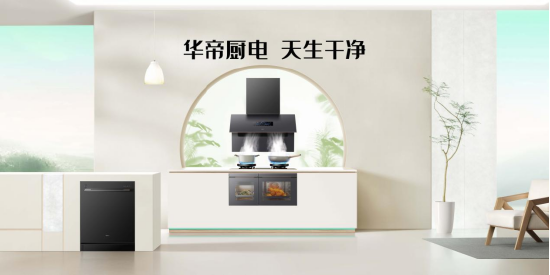
Core Viewpoint - The company has established a comprehensive product structure centered around kitchen appliances, including range hoods, stoves, and water heaters, while also expanding into integrated kitchen appliances and other home customization products [1] Group 1: Product Strategy - The company focuses on core kitchen appliance products such as range hoods, stoves, and water heaters [1] - The product line has been extended to include emerging integrated kitchen appliances like integrated stoves, dishwashers, and steam ovens, as well as whole-house customization and water purification systems [1] Group 2: Business Development - The company aims to maintain a high-end brand positioning and strengthen its traditional product advantages [1] - Future strategic development will be based on a comprehensive consideration of the company's operational status and industry market trends [1] Group 3: Operational Focus - The company plans to enhance sustainable development through technological innovation, operational efficiency optimization, and organizational capability strengthening [1]
华帝两项燃烧技术获评“国际领先”
Yang Guang Wang· 2025-12-04 02:03
Core Insights - Vatti's two innovative technologies, "Instant Stir-fry High-efficiency Combustion Technology" and "High-load Efficient Infrared Combustion Heat Exchange Technology," have been recognized as "internationally leading" by the China Light Industry Federation [1][2][3] Group 1: Technology Breakthroughs - The "Instant Stir-fry High-efficiency Combustion Technology" addresses the challenges of high-efficiency stir-frying in Chinese cooking, focusing on fire control, combustion stability, and efficient heat exchange [2][3] - This technology features a unique "one-button instant stir-fry firepower enhancement," allowing users to easily switch between firepower modes for optimal cooking results, significantly reducing cooking time and enhancing food flavor and nutrition [2][3] - The "High-load Efficient Infrared Combustion Heat Exchange Technology" aims for high-load anti-backfire, high energy efficiency, low emissions, and reliable user experience, achieving multiple original breakthroughs [2][3] Group 2: Performance Metrics - The infrared combustion technology achieves a thermal efficiency of over 81% at 5.2kW, while CO and NOx emissions meet national first-level green standards, balancing strong firepower with environmental considerations [3] - Vatti's commitment to research and development is evident, with R&D expenses reaching 172 million yuan by the third quarter of 2025 and a total of 4,690 patents, including 835 invention patents [6] Group 3: Industry Impact - Vatti's innovations not only break through long-standing technical bottlenecks in the industry but also enhance cooking quality based on real user scenarios, reflecting a commitment to technology serving human needs [3][4] - The company has established itself as a leader in the industry, with its energy-saving technology continuously evolving, achieving thermal efficiency improvements from 65% to a target of over 81% by 2025 [4] - Vatti's leadership in setting industry standards is demonstrated by its initiative in publishing the group standard for "Special Requirements for Stir-frying Function of Household Gas Stoves," which will be implemented in May 2024 [4]