血制品

Search documents
中信建投:血制品行业因子类产品批签发增长较好 关注新产品类型研发进展
Di Yi Cai Jing· 2025-08-20 00:09
Group 1 - The core viewpoint indicates that the blood products industry is expected to maintain steady growth in the first half of 2025, with a notable increase in the proportion of domestic albumin batch approvals compared to the previous year [1] - The approval growth rate for factor products such as factor VIII and fibrinogen is accelerating, reflecting companies' ongoing expansion of their factor product pipelines [1] - Companies are actively advancing the research and development of recombinant products and new immunoglobulins, with several products already approved or under review for market launch [1] Group 2 - The blood products industry is projected to achieve overall steady growth in the second half of the year, driven by stabilizing product prices, increased plasma collection, and performance contributions from new products [1] - It is recommended to focus on leading companies in the industry that are likely to continue expanding plasma station resources through both organic growth and external integration, ensuring sustained growth in blood product business [1]

国信证券:反内卷,更要买高门槛资产
Zhi Tong Cai Jing· 2025-08-15 00:25
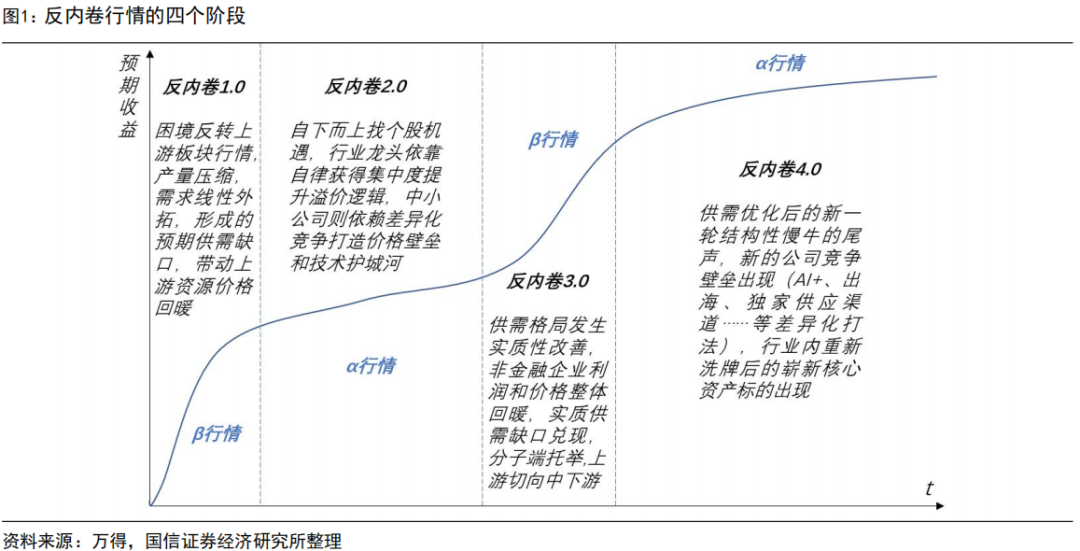
Core Viewpoint - The report from Guosen Securities emphasizes the importance of focusing on investment opportunities that are immune to "involution," highlighting three high-barrier sectors: monopolistic industries like public utilities and rare earths, industries with exclusive products and global competitiveness in hard technology, and sectors where AI accelerates the replacement of repetitive tasks [1][2][3]. Group 1: High-Barrier Industries - Monopolistic barrier assets, such as public utilities (electricity, water) and strategic rare resources (like rare earths), effectively avoid intense market competition and provide stable cash flow and pricing power, making them excellent defensive investments [2][11]. - Global competitive assets are characterized by technological innovation and product exclusivity, allowing companies to successfully expand into overseas markets and create unique advantages, primarily found in high-end manufacturing and hard technology sectors [2][11]. - AI-driven efficiency revolution assets are transforming traditional industries by replacing repetitive labor, significantly enhancing productivity and accelerating the "involution" process in certain sectors [3][19]. Group 2: Market Phases of "Involution" - The "involution" market is currently transitioning from the first phase (involution 1.0) to the second phase (involution 2.0), where the focus shifts from broad industry recovery to individual stock selection based on self-discipline and competitive differentiation [4][6]. - The first phase is characterized by supply-side contraction leading to a supply-demand gap, benefiting upstream resource sectors like steel and coal [4][6]. - The second phase sees a focus on high-quality companies that can achieve market share and profitability recovery through strict production discipline, while smaller firms must innovate and create unique competitive advantages [4][6]. Group 3: Long-Term Investment Strategy - The long-term strategy emphasizes investing in industries with natural high barriers to entry, which can provide stable and higher returns compared to short-term "involution" opportunities [11][13]. - Historical data indicates that monopolistic industries, such as public utilities and strategic rare resources, have shown resilience and sustained performance compared to emerging industries that have faced downturns [11][13]. - The report suggests prioritizing sectors with high entry barriers, such as public utilities and strategic resources, which offer stable cash flows and are less affected by economic cycles [11][13].

天坛生物“拒收”派林生物之谜
Hua Er Jie Jian Wen· 2025-08-05 09:53
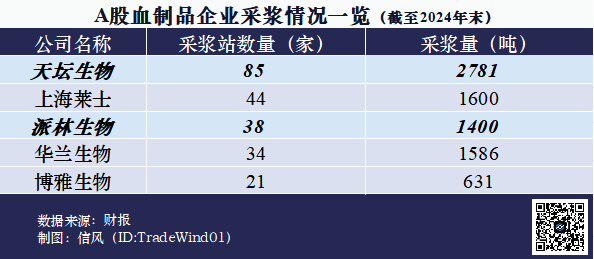
Core Viewpoint - The control transfer of blood product company Palin Bio (000403.SZ) has encountered complications, primarily due to competition concerns with Tian Tan Bio (600161.SH), which is also controlled by China Biotech [1][6]. Group 1: Acquisition Plans - In June, China Biotech planned to acquire 21.03% of Palin Bio from its controlling shareholder, Shengbang Yinghao Investment Partnership, for no less than 3.844 billion yuan [1]. - Tian Tan Bio rejected the acquisition opportunity, citing a short three-month window to raise the necessary funds, with a cash balance of only 2.686 billion yuan as of the end of 2024 [2]. - Tian Tan Bio expressed concerns over the complex history of Palin Bio's control and the associated risks of a direct acquisition [3]. Group 2: Board Changes and Management Conflicts - In October 2023, Palin Bio's board was re-elected, with Shengbang Yinghao nominating 13 directors and ousting the former chairman, Fu Shaolan [4]. - Fu Shaolan retaliated by advocating for a more balanced governance structure and warning against the consequences of unethical behavior, leading to a temporary resolution where he was appointed as co-chairman alongside the new chairman [5]. Group 3: Strategic Considerations - Tian Tan Bio's reluctance to acquire Palin Bio directly stems from a desire for a more strategic approach, suggesting that China Biotech should first acquire Palin Bio to facilitate smoother integration and operational efficiency [6][7]. - If the acquisition is successful, the combined entities would control at least 123 plasma collection stations, with a total collection volume of 4,181 tons, significantly enhancing their market position [8][9]. - The combined market share of Tian Tan Bio and Palin Bio could approach 30%, increasing by over 10 percentage points, thereby solidifying their leadership in the industry [9].


瑞幸董事长卷入财务争议,关联中概股泰邦生物私有化
Xin Lang Cai Jing· 2025-08-03 00:53
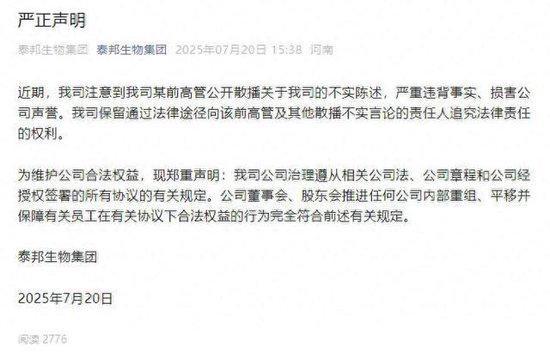
Core Viewpoint - The former chairman of Taibang Biologic, Zhou Fan, accused the current chairman, Li Hui, of misleading investors and violating laws regarding the privatization and share allocation of the company [1][2][12]. Group 1: Company Background - Taibang Biologic is one of China's top ten blood product companies, focusing on the research, production, and sales of blood and biological products [3]. - The company went public on NASDAQ in 2009, becoming the only blood product company listed in the United States [3]. Group 2: Privatization and Shareholding Issues - During the privatization process, the original management team, led by Zhou Fan, was allowed to invest in the buyout to strengthen the case for bank loans, involving over a hundred employees [2][5]. - Zhou Fan claims that the current management is attempting to cancel the shares allocated to the original management team during privatization, which he argues is illegal [2][5]. - The privatization deal was completed in April 2021, with a total valuation of approximately $4.76 billion, and Zhou Fan held about 13.77% of the shares, valued at over $656 million at the time [6][4]. Group 3: Management Changes and Conflicts - Li Hui, the current chairman, has been accused by Zhou Fan of trying to usurp control of the company through share cancellation [1][12]. - A public statement from Taibang Biologic denied Zhou Fan's claims, asserting that they would pursue legal action against him for spreading false information [2][12]. - The management structure shows that Zhou Fan is still listed as chairman, while Li Hui has taken over the role, indicating potential discrepancies in the company's governance [6][7]. Group 4: Broader Context of Li Hui and Dazhong Capital - Dazhong Capital, founded in 2016, is known for its investments in various sectors, including healthcare, and has been involved in the controversial case of Luckin Coffee, which faced a financial scandal in 2020 [9][10]. - Despite the scandal, Dazhong Capital continued to invest in Luckin Coffee, eventually becoming its controlling shareholder [10][11].
疫苗ETF(159643)涨超1.7%,政策与技术双轮驱动医药行业
Mei Ri Jing Ji Xin Wen· 2025-07-24 02:46
Group 1 - The vaccine ETF (159643) has risen over 1.7%, driven by both policy and technological advancements in the pharmaceutical industry [1] - The vaccine industry is expected to see a recovery or continued growth in key vaccine products such as PCV13, diphtheria vaccine, and MCV4, supported by improved channel inventory [1] - The blood products sector is projected to experience steady growth in plasma collection volume in 2024, contributing to future growth [1] Group 2 - The IO multi-antibody, ADC, and GLP-1 fields are witnessing continuous validation of Chinese assets, enhancing international competitiveness and driving rapid industry development [1] - National policies are encouraging the development of innovative drugs, further supporting the growth of the pharmaceutical sector [1] - The vaccine ETF tracks the vaccine biotechnology index (980015), which reflects the overall performance of listed companies involved in vaccine research, production, and related biotech services [1]
中国血制品必将出现一个巨头
3 6 Ke· 2025-06-30 06:28
Core Viewpoint - The Chinese blood products industry is undergoing significant consolidation, with major players engaging in aggressive mergers and acquisitions to capture plasma resources, leading to the emergence of potential super giants in the sector [1][5]. Industry Landscape - The blood products industry in China is characterized by a "four-way" competitive landscape, dominated by four major groups: China National Pharmaceutical Group (Sinopharm), Haier Group, China Resources, and Hualan Biological Engineering [2][4]. - The industry has transitioned into a stock competition era since 2001, with new entrants needing to acquire existing licensed companies due to a moratorium on new licenses [2][3]. Mergers and Acquisitions - Significant acquisitions include China Resources' acquisition of Boya Biological for 4.8 billion yuan, Haier's 12.5 billion yuan acquisition of Shanghai Laishi, and Sinopharm's 4.5 billion yuan acquisition of Pilin Biological [1][2]. - The consolidation trend has led to a sharp increase in market concentration, with the top five companies' market share rising from under 50% in 2019 to over 70% by 2024 [4]. Plasma Collection and Utilization - Sinopharm's network includes 154 plasma collection stations, accounting for nearly 40% of the national total, with a collection volume of over 4,000 tons by mid-2025 [3]. - The cost structure of blood products heavily relies on raw plasma, which constitutes over 60% of total costs, making scale efficiency crucial for profitability [5][6]. Market Demand and Supply Gap - The domestic blood products market surpassed 60 billion yuan in 2023, with a demand gap of 4,000 tons, highlighting the need for leading companies to enhance their supply capabilities through technological upgrades [5][6]. - China's per capita consumption of blood products is significantly lower than that of developed countries, indicating a structural supply-demand imbalance [7][8]. Technological Advancements - Companies are shifting from a resource-driven model to a dual strategy of resource acquisition and research and development to overcome technological barriers and meet high-value product demands [9][10]. - Sinopharm and Hualan Biological are focusing on developing high-purity albumin and advanced coagulation factors, with significant investments in R&D to support these initiatives [10][11]. Future Outlook - The ongoing consolidation and technological advancements suggest that the Chinese blood products industry is on the verge of producing a super giant capable of competing globally [5][11]. - The combination of policy support, resource acquisition, and technological innovation is expected to drive the industry towards a more competitive and innovative future [10][11].




医药行业并购潮涌 龙头企业积极补短板
Zheng Quan Ri Bao Zhi Sheng· 2025-06-25 16:09
Core Insights - The Chinese pharmaceutical industry is undergoing a new round of deep integration driven by policy guidance and market demand [1][2] - China National Pharmaceutical Group (Sinopharm) has announced acquisitions of two listed companies, Plasmed Biopharma and Shandong Pharmaceutical Glass, exemplifying recent M&A activity in the sector [1][2] Industry Trends - State-owned enterprises are becoming the main players in the M&A market, significantly altering the competitive landscape with their strong financial capabilities and resource integration skills [2][3] - Major industry players like Sinopharm, China Resources Pharmaceutical Group, and China General Technology Group are building competitive advantages across the entire supply chain through horizontal and vertical integration [2][3] Company Strategies - Sinopharm is focusing on strengthening its acquisition and integration strategies, aiming to enhance its market position in the health sector [3][4] - The acquisition of Plasmed Biopharma and Shandong Pharmaceutical Glass will allow Sinopharm to consolidate its supply chain, ensuring the safety and stability of the biopharmaceutical supply chain [4][6] Market Dynamics - The blood products sector is particularly strategic due to the limited number of licenses available since 2001, making existing licenses and plasma stations highly valuable [4][5] - Following the acquisition, Sinopharm's combined plasma collection volume from its subsidiaries is expected to exceed 4,181 tons, accounting for 31.2% of the national total [4][5] Financial Performance - Shandong Pharmaceutical Glass, as a leading player in the pharmaceutical glass sector, reported a revenue of 5.125 billion and a net profit of 943 million in 2024, marking 12 consecutive years of growth [5][6] Future Outlook - The M&A trend in the pharmaceutical industry is expected to evolve towards integrated supply chain acquisitions, cross-border expansions, and innovative ecosystem constructions [7]

血制品并购大变局:中国生物拟46亿元豪赌派林生物,新霸主能否解开同业竞争死结
Hua Xia Shi Bao· 2025-06-19 03:05
Core Viewpoint - The acquisition of a 21.03% stake in Pailin Biopharmaceuticals by China National Pharmaceutical Group is a strategic move to reshape the competitive landscape in the blood products industry, potentially enhancing market share and resource integration [2][5][13]. Group 1: Acquisition Details - Pailin Biopharmaceuticals announced a framework agreement for the acquisition, with a transaction value of approximately 4.6 billion yuan, calculated based on the principal of 3.844 billion yuan and an annualized interest of 9% [2]. - If the acquisition is completed, the actual controller of Pailin Biopharmaceuticals will change from the Shaanxi Provincial State-owned Assets Supervision and Administration Commission to China National Pharmaceutical Group [2][5]. Group 2: Industry Context - The blood products industry is experiencing a wave of mergers and acquisitions, with major players like China National Pharmaceutical Group and China Biotech aiming to increase market concentration [5][14]. - The industry is characterized by high barriers to entry, scarcity of plasma collection resources, and strict regulatory oversight, making the acquisition of existing companies a strategic necessity for growth [13][14]. Group 3: Historical Control Changes - Pailin Biopharmaceuticals has undergone five changes in control since its listing, reflecting the intense capital competition in the blood products sector over the past two decades [6][7]. - The company was previously embroiled in ownership disputes, which affected its strategic direction until a stable control was established in 2019 [6][7]. Group 4: Financial Performance - Pailin Biopharmaceuticals reported a revenue of 10.5 billion yuan in 2020, with a year-on-year growth of 14.67%, and net profit of 1.86 billion yuan, marking a 15.90% increase [9]. - The company achieved a revenue of 24.05 billion yuan in 2022, with a net profit of 5.87 billion yuan, benefiting from continuous investment in product development and market expansion [9][10]. - However, in 2023, the company faced a slight revenue decline of 3.18% to 23.29 billion yuan, although net profit increased to 6.12 billion yuan [9][10]. Group 5: Future Outlook - In 2024, Pailin Biopharmaceuticals is projected to achieve a revenue of 26.55 billion yuan, a 14% increase, driven by rising demand for blood products and increased plasma collection [10]. - The company anticipates challenges in 2025, with expected declines in revenue and net profit due to production capacity expansion and supply issues [11][12].

派林生物45亿被收编,“国家队”主导血制品整合潮
Guan Cha Zhe Wang· 2025-06-13 08:44
Group 1 - China National Pharmaceutical Group (Sinopharm) announced the acquisition of 21.03% stake in Palin Bio for over 4.5 billion yuan, representing a premium of 32% [1][2] - The acquisition aims to create a blood product giant with an annual plasma collection capacity of nearly 4,000 tons, reshaping the competitive landscape of the industry [1][4] - The blood product industry has seen intense competition for scarce licenses since the freeze on new approvals in 2001, leading to a wave of consolidations among major players [1][4] Group 2 - Palin Bio has undergone three ownership changes in seven years, reflecting the challenges and conflicts in the blood product sector [2][4] - The company has 38 plasma stations and an annual plasma collection capacity of over 1,400 tons, positioning it among the top players in the industry [4][5] - Despite its resources, Palin Bio has faced internal management issues, leading to governance challenges and regulatory penalties [5] Group 3 - The entry of Sinopharm is expected to bring stability and leverage its complete industry chain from research to distribution, potentially ending the cycle of ownership changes for Palin Bio [5] - Balancing capital demands with industry regulations remains a critical challenge for the newly formed entity post-acquisition [5]


中国血王之战
Hua Er Jie Jian Wen· 2025-06-12 06:50
Core Viewpoint - The control of blood product company Palin Bio (000403.SZ) has been transferred to China National Pharmaceutical Group (Sinopharm), which may lead to the integration of Palin Bio and Tian Tan Bio (600161.SH), potentially reshaping the competitive landscape in the blood product industry [1][5][9]. Group 1: Company Control and Financials - On June 10, Palin Bio announced that its controlling shareholder, Qiongcheng Shengbang Yinghao Investment Partnership, plans to transfer its entire 21.03% stake to China National Biotechnology Co., Ltd. [1] - The transaction is valued at 38.44 billion yuan, with a share price of 24.96 yuan, representing a 47% premium over the closing price of 16.96 yuan on June 6 [3]. - The estimated price-to-earnings ratio for this transaction is close to 32 times, based on a projected net profit of 7.45 billion yuan for 2024 [3][4]. Group 2: Industry Competition and Market Position - The integration of Tian Tan Bio and Palin Bio could lead to a combined revenue of approximately 86.87 billion yuan, surpassing Shanghai Lai Shi's (002252.SZ) projected revenue of 81.76 billion yuan for 2024 [7][15]. - If the integration occurs, the combined entity would control at least 123 plasma collection stations and have a total plasma collection volume of 4,181 tons, significantly increasing market share to nearly 30% [7][16]. - The blood product industry is experiencing consolidation due to limited new entrants since 2001, with companies increasingly acquiring others to expand market share [16][17]. Group 3: Challenges and Future Outlook - The integration process may face challenges, particularly regarding the internal conflicts within Palin Bio, especially with its second-largest shareholder, Harbin Tongzhi Cheng Technology Development Co., Ltd. [10][11][14]. - The future of the blood product industry may depend on how effectively China National Pharmaceutical Group can manage these internal dynamics while pursuing further consolidation [9][14]. - The industry is also exploring innovative solutions to reduce reliance on human plasma, with several companies making progress in developing recombinant products [21][22].