
财富管理

Search documents
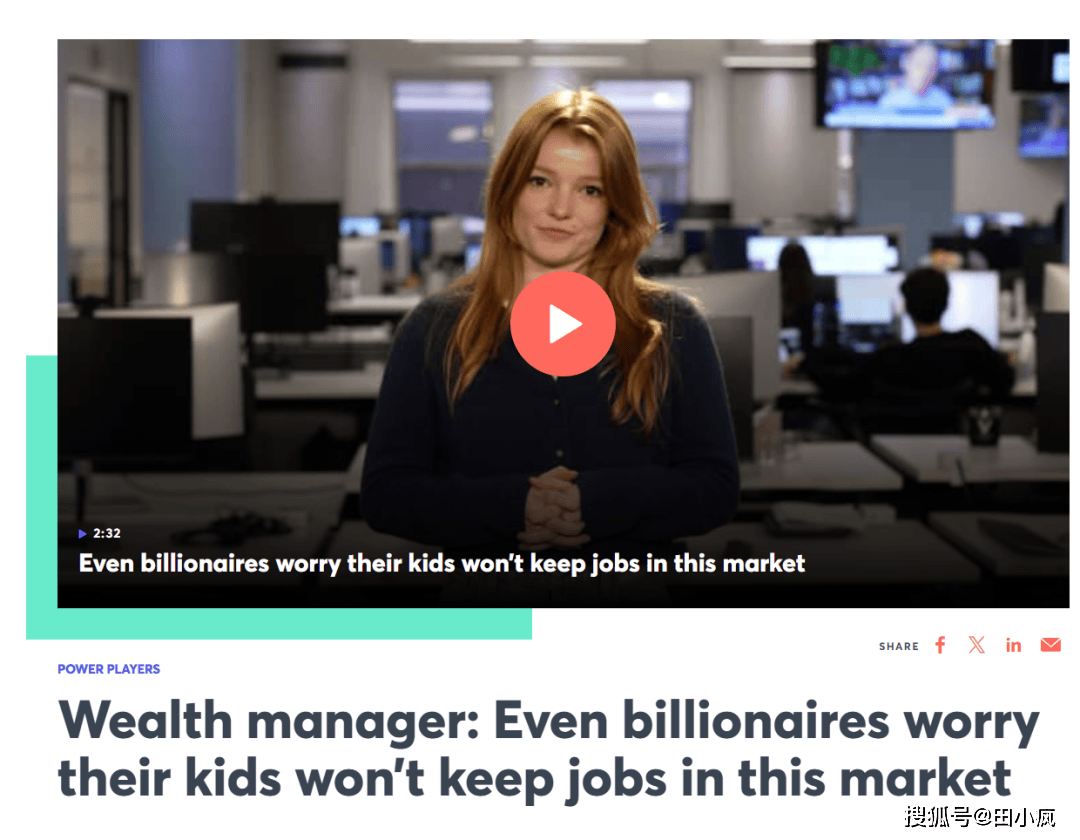
美国亿万富翁开始逼娃创业!就业崩了连顶层都慌。
Sou Hu Cai Jing· 2026-02-10 15:01
Group 1 - The article discusses the concerns of ultra-wealthy families regarding their children's job prospects in a challenging employment market, leading them to encourage entrepreneurship as a response to uncertainty [5][6][7] - Wealth management experts indicate that clients with a net worth between $100 million and $1 billion are particularly worried about their children aged 22-35 struggling to find stable careers in traditional sectors like technology, law, and healthcare [5][6] - The overall job market for young people is unfavorable, with a projected unemployment rate of 9.7% for college graduates in September 2024, marking the weakest hiring year since 2009, excluding the pandemic year of 2020 [5][6] Group 2 - The rise of artificial intelligence is identified as a potential factor contributing to the tightening job market, as existing employees are reluctant to leave their positions due to economic uncertainties, resulting in fewer entry-level job opportunities [5][6] - The article highlights a shift in strategy among wealthy families, moving away from traditional career paths towards encouraging their children to start businesses in their 20s and 30s, despite the high risks associated with entrepreneurship [6] - Michael Hans, Chief Investment Officer at Citizens Wealth, notes that while employment challenges do not threaten the basic living standards of the ultra-wealthy, there is still a desire to prevent their children from having to lower their living standards [6][7] Group 3 - The article introduces concepts such as "wealthy socialism," "technological feudalism," "financial capitalism," and "regulatory capitalism," which illustrate the distorted landscape of capitalism where resources disproportionately benefit the wealthy [9][10] - The concentration of wealth in the U.S. has returned to levels comparable to the "Roaring Twenties," with the top 1% of households holding 32% of the wealth by 2022, up from 23% in 1989 [12][13] - The article suggests that if the middle class is at risk of falling due to economic pressures, the ultra-wealthy may also face similar threats, as their wealth is often tied to volatile financial markets [13][14]


《财富管理师》封面人物|杨惠淋:以全球财富方案,守护家族基业长青
Sou Hu Cai Jing· 2026-02-10 07:16
Core Insights - The article emphasizes the evolving wealth management needs of business owners and high-net-worth individuals, highlighting a shift from a focus on asset appreciation to a demand for security, certainty, and orderly wealth transfer [2][4][5]. Group 1: Wealth Management Risks - Business owners are facing a "risk cube" that includes economic cycle risks, corporate debt risks, tax risks, marital risks, and inheritance risks, rather than just market volatility [4]. - Economic cycles, domestic macro and industrial policy adjustments, and the life cycle of businesses can lead to cash flow issues, potentially triggering personal wealth crises [4]. - Marital risks are increasingly significant, with cases of asset division during divorces highlighting the need for preemptive marital asset planning to protect family wealth and personal safety [4][5]. Group 2: Changing Wealth Management Demands - The core demand for wealth management has shifted from "value creation" to "safety," with high-net-worth individuals seeking systems that ensure their family's living standards and wealth transfer align with their intentions [5]. - The tightening of compliance and regulatory frameworks, such as the implementation of the "Golden Tax Phase IV" in China and the Common Reporting Standard (CRS) globally, has increased awareness of tax risks associated with overseas assets [5]. Group 3: Cross-Border Wealth Management - Effective cross-border wealth management requires establishing a top-level legal structure before selecting financial products, with trusts often serving as the core of this structure [7]. - Trusts can provide asset isolation and ensure that wealth is passed on according to the grantor's wishes, highlighting the importance of professional and compliant structure design [8]. Group 4: Comprehensive Wealth Solutions - A thorough assessment of family assets and tax risks is essential for creating tailored wealth management solutions, considering factors such as asset distribution, family member nationalities, and future immigration plans [10]. - The focus is on designing a comprehensive legal-financial framework that includes arrangements for business equity, family trusts, and investment management, rather than recommending single products [10][11]. Group 5: Value of Certainty in Wealth Management - The unique value proposition in wealth management lies in providing certainty amidst a world of variables, with a focus on reverse planning to clarify clients' ultimate goals [13]. - Establishing a clear legal framework for asset ownership is crucial, as it provides a reliable foundation for wealth management that does not depend on individual circumstances [13][14].

美股前瞻 | 三大股指期货齐跌 美国1月非农与CPI本周来袭
智通财经网· 2026-02-09 12:43
Market Movements - US stock index futures are all down, with Dow futures down 0.06%, S&P 500 futures down 0.17%, and Nasdaq futures down 0.33% [1] - European indices show mixed results, with Germany's DAX up 0.32%, UK's FTSE 100 down 0.13%, France's CAC40 up 0.03%, and the Euro Stoxx 50 up 0.21% [2] - WTI crude oil is up 0.44% at $63.83 per barrel, while Brent crude is up 0.41% at $68.33 per barrel [2] Economic Data and Events - Key economic data is expected this week, including December retail sales on Tuesday and the January non-farm payroll report on Wednesday, which is expected to show an addition of 70,000 jobs and an unemployment rate of 4.4% [3] - The January non-farm payroll report will also include annual employment revision data, which is expected to show significantly lower job growth than previously reported [3] - The Consumer Price Index (CPI) report is due on Friday, with expectations of a 0.3% month-on-month increase and a 2.5% year-on-year increase [3] - Major companies like Coca-Cola, McDonald's, Cisco, and ON Semiconductor are set to release their earnings this week [3] Company Insights - Morgan Stanley supports tech stocks, stating that the AI investment cycle's volatility does not change the strong fundamentals, with revenue growth expectations for large tech stocks at their highest in decades [4] - Goldman Sachs warns of potential selling pressure in the S&P 500, estimating that a drop below 6707 points could trigger up to $80 billion in systematic selling [5] - Bank of America reports a rare synchronization between Trump's approval ratings and the dollar's performance, indicating that market support may be lacking until Trump's ratings recover [6] - Goldman Sachs is collaborating with AI startup Anthropic to automate various banking functions, focusing on transaction accounting and customer due diligence [9] - BHP plans to double its investment in its copper projects in Argentina to $800 million, aiming to address the global copper supply shortage [10] - NatWest is acquiring wealth management firm Evelyn Partners for £2.7 billion, marking a significant move to expand its coverage of high-net-worth clients [11] - Sohu reported a 6% year-on-year revenue increase for Q4 2025, totaling $142 million, with online gaming revenue at $120 million [12]

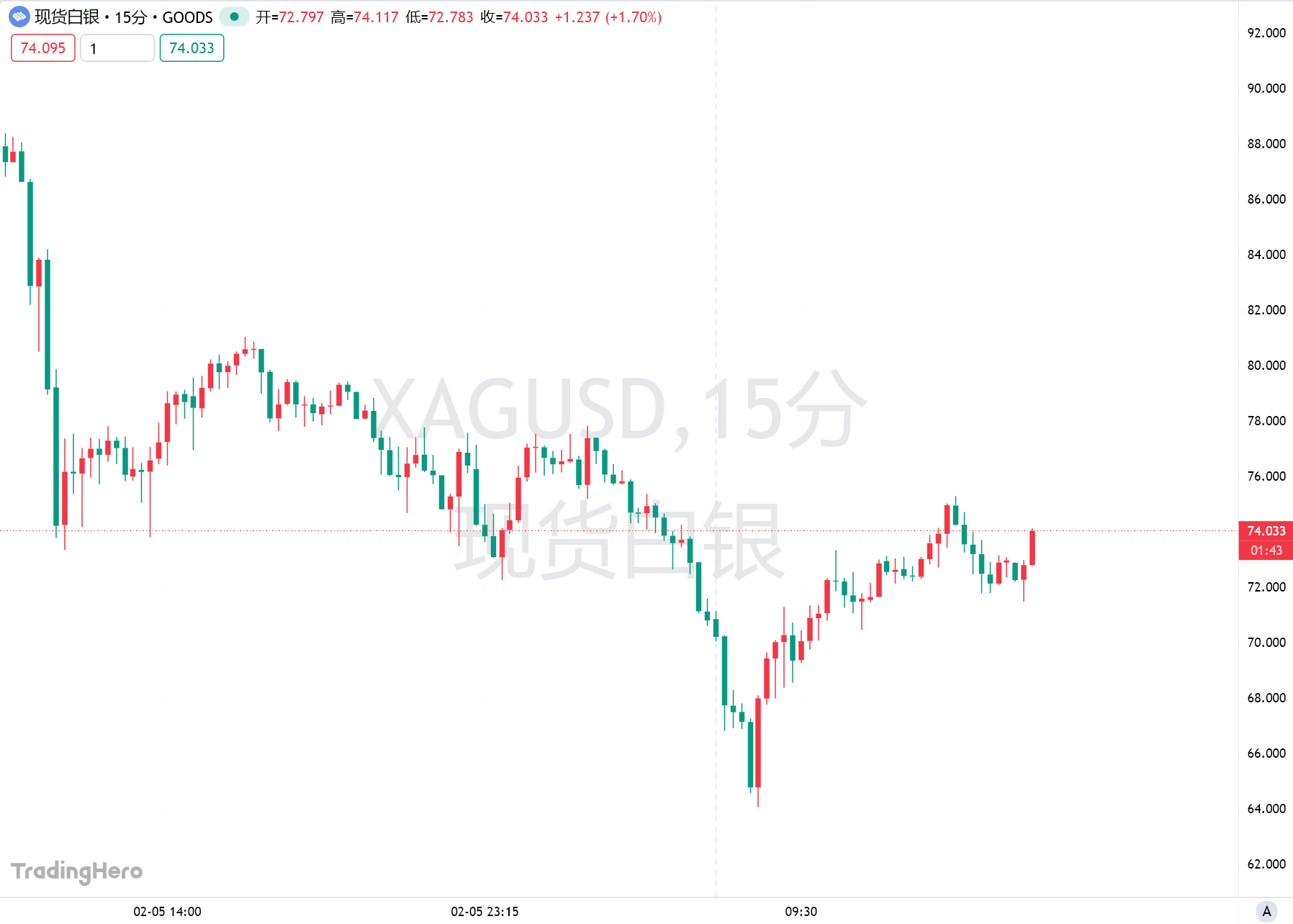
暴涨暴跌,白银寻底之路为何如此坎坷?
Jin Shi Shu Ju· 2026-02-06 08:46
Core Viewpoint - The silver market is experiencing extreme volatility due to liquidity shortages, with prices fluctuating dramatically, including a near 10% drop followed by a rapid rebound, indicating a struggle to find a bottom [1][4]. Group 1: Price Movements and Market Dynamics - Silver prices have seen a maximum increase of 6.2% during Asian trading on Friday, after previously dropping to $64 per ounce, reflecting significant volatility [1]. - The recent price fluctuations have set a record for the largest volatility since 1980, with silver prices down over one-third since reaching a historical peak on January 29 [4]. - The Shanghai Futures Exchange's silver holdings have fallen to a four-year low, indicating that investors are increasingly closing their positions due to market instability [4]. Group 2: Market Participants and Behavior - Analysts note that long positions are being forced to liquidate while short positions are taking profits, as investors prefer to hold lighter positions ahead of the upcoming Chinese New Year holiday [5]. - The extreme movements in silver prices are driven more by positioning and volatility factors rather than sudden changes in the physical metal market [6]. Group 3: Comparison with Gold - The volatility in silver is nearly three times that of gold, with the Chicago Options Exchange silver ETF volatility index around 95, compared to gold's index of approximately 36 [8]. - Despite both metals facing similar macroeconomic conditions, gold is viewed as a more stable investment due to its larger market liquidity and demand from central banks, which helps to support its price [8][10]. - Analysts believe that while silver has entered a bear market, gold is likely to maintain an upward trend, with a potential price target of $6,000 per ounce in the next 6 to 12 months [10][11].
信任的堡垒:怎样的AI才配执掌财富未来丨清华经管说
Xin Lang Cai Jing· 2026-02-05 12:18
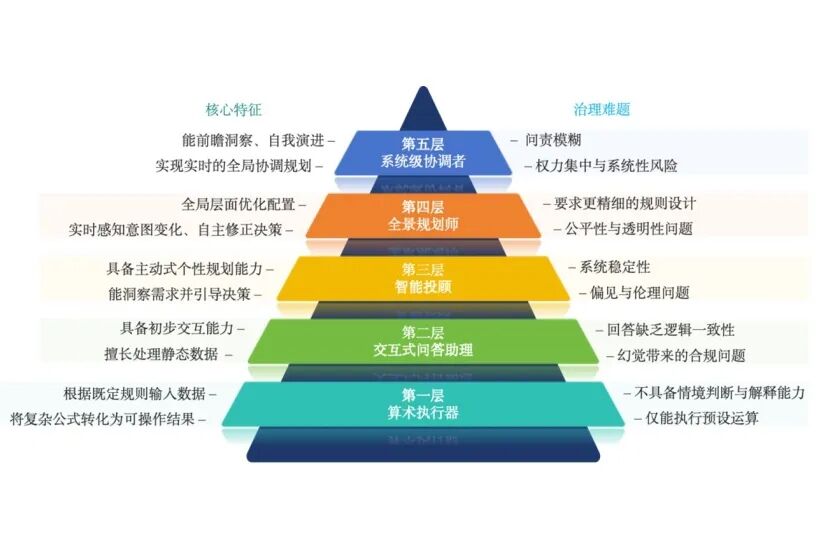
真正成熟的AI财富管理,其标志不在于算力或功能的堆叠,而是在关键决策时刻的判断品质与解释能力;不追求技术的盲目登顶,而要求能力的每一寸 提升,都有治理的基座同步加固。 人工智能理财规划师的五层能力演进图景 很多人预言通用人工智能(AGI)即将到来。当人工智能以无可争辩的能力超越人类的每一项技能,由智人(Homo Sapiens)主宰世界的时代将至此终 结。由插画家基库·约翰逊(R. Kikuo Johnson)绘制的2017年10月发行的《纽约客》(New Yorker)封面表述了这样一幅画面:年轻的人类乞丐坐在未来 的曼哈顿街头乞讨,路上形形色色的具身机器人"上班族"向他手中的杯子里投掷着螺丝和垫片,他身旁的小狗也"目瞪口呆"地注视着面前匆忙行走的机器 狗。想必此时,机器人的生产已经完全替代人类工作,而人类则成为机器人社会的"附庸"。这幅画反映了人工智能时代机器人全面取代人类工作的担忧, 引起了很多对通用人工智能悲观的共鸣。 作为谨慎乐观的学者,我们更关注人工智能如何在人类的有效监管下实现对人类的解放。传统经济学认为社会生产需要有四大要素:劳动、土地、资本与 企业家才能。现代理论将其拓展到技术与信息。而人工 ...
施罗德调查:52%受访亚洲家办拟未来3年内增加私募股权投资
Zhi Tong Cai Jing· 2026-02-05 06:48
施罗德财富管理去年7月至10月间,访问了新加坡、香港及印度等60个家族办公室。调查结果显示, 52%受访者称计划在未来三年内增加对私募股权的投资,此比例高于公募股权及对冲基金等其他资产类 别。其中,有87%受访者已投资私募股权,45%受访者在过去3年增加对私募股权的投资。 报告称,亚洲家族办公室通过直接收购股权或通过基金投资来进入私募股权市场。Vincent Ee表示,"半 流动性"私募股权基金的兴起,使这一资产类别对投资者更具可及性,推动了需求增长。"在成长型和收 购阶段的公司中也存在强烈兴趣,这些企业通常已有成熟产品,正专注于规模扩张。在这一阶段,投资 者不仅能通过资本增值,还能凭借运营和行业经验增加价值。" 总体来看,私募股权在亚洲受访家族办公室的投资组合中平均占比为18.1%,比例位居第二,仅次于股 票的28%,但高于房地产(15%)、债券(13%)和现金(10%)。 施罗德亚洲投资主管Vincent Ee表示,全球公开市场的波动加速亚洲家族办公室对私募股权的兴趣。许 多家族办公室正寻求相关性较低、期限更长且能提供更大控制权与价值创造的投资,他们将私募股权视 为管理短期市场波动、同时支持长期财富增长的 ...
瑞银:预计年底全球股市将上涨约10%,建议分散配置至中国、日本和欧洲
Jin Rong Jie· 2026-02-05 04:21
Group 1 - The UBS Chief Investment Office (CIO) expects global stock markets to rise by approximately 10% by the end of this year, with the US market remaining a core component of investors' equity allocations and having further upside potential [1] - Other regions outside the largest global economy also present attractive opportunities, driven by strategic autonomy, regional fiscal expansion, and structural reforms, with a particular focus on China, Japan, and Europe [1] - The Chinese government's explicit support for domestic artificial intelligence (AI) models and chip manufacturing is expected to lay the foundation for further increases in Chinese tech stocks [1] Group 2 - In a low interest rate environment, domestic investors are pursuing yields, which is likely to benefit sectors such as finance, healthcare, consumer goods, materials, and power equipment due to structural advantages from healthcare companies expanding internationally, the rise of new consumption models, and grid modernization [1]

2025年全球家族办公室报告
Sou Hu Cai Jing· 2026-02-05 02:41
Core Insights - The report highlights the evolution of family offices from traditional support entities to strategic cores of family wealth and legacy management, emphasizing a "family-first" perspective [1][22] - Family offices are increasingly focusing on diverse services beyond financial management, including education, career development, and well-being support, with over half of surveyed offices offering educational services (56%) and career development (52%) [1][2] - The majority of family offices are single-family offices (SFOs), accounting for 95% of the total, with a significant presence in Europe (65%) [1][2] Family Office Functions - Key functions of family offices include diversification of investments (29%), wealth preservation (23%), next-generation education (10%), and governance (10%) [2][51] - Services related to family governance and legacy are primarily managed in-house, while tax and legal services are often outsourced, with larger asset bases leading to a higher proportion of internal services [2][47] Emerging Trends - The report identifies nine evolving identities of family offices, including embedded, administrative compliance, investment, and founder types, which adapt to family needs [2] - Thirteen emerging trends are reshaping the industry, focusing on generational wealth transfer, accelerated ESG investments, digital transformation, and heightened regulatory requirements [2] Future Directions - Family offices are expected to evolve in three main areas: professional governance, operational flexibility, and diversified value creation, enhancing family cohesion and social impact [2] - The modern family office is characterized as a platform balancing tradition and innovation, privacy and responsibility, with a focus on supporting intergenerational prosperity [2]

北京一商场门口排成两条长队:一队捧着金条,一队捧着现金!有顾客秀操作:在金价800元时买入,1240元时卖掉,赚了88000元
Hang Zhou Ri Bao· 2026-02-03 16:28
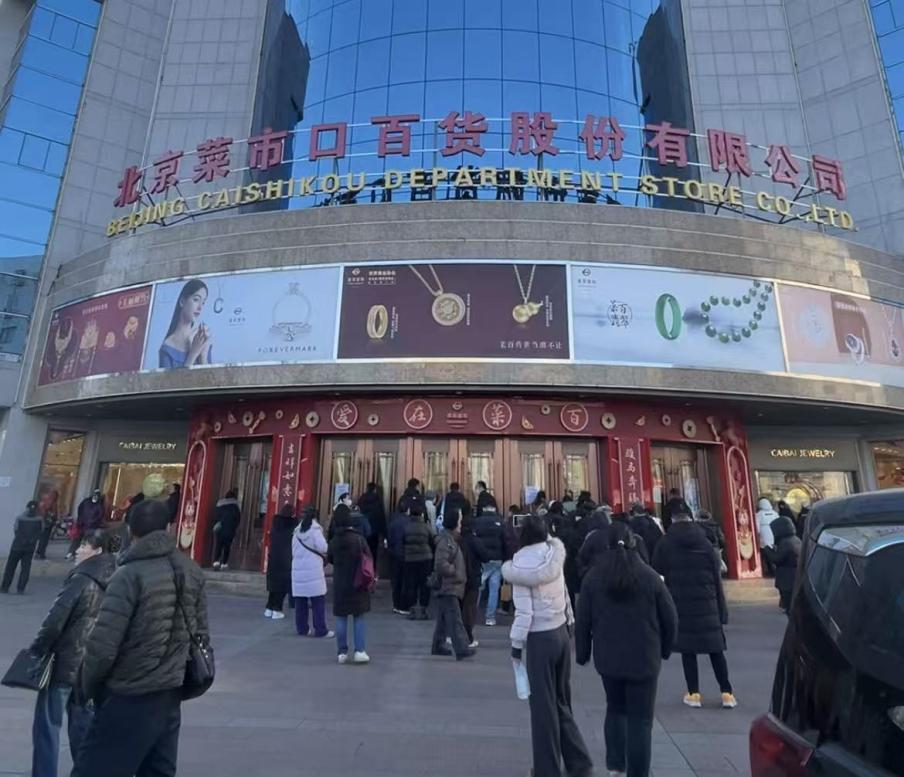
▲2月3日早上9点20分左右,北京菜百商场还未正式开门,门前已经挤满了前来买金的消费者。一位工作人员透露,回收黄金的 消费者已经从侧门进入商场内部排队。新京报贝壳财经记者姜樊 摄 随着黄金价格的持续震荡,买金者和卖金者都坐不住了。 精准"逃顶":投资者1个月赚逾1500元,称"有赚就卖" "卖的人多就该买了" 黄金震荡买金者逆向操作 "今天人不算最多的,周末比这人还多一些。"原本回购业务(即黄金回收)与购买投资金条同在一处,但由于近期人流太大,菜 百商场已将回购业务临时安排在另一层。现场有多名工作人员举着"回购业务验证队尾""购买队尾"牌子,维护现场秩序。 在菜百商场三层,卖金者排成了一条长长的"U型"队伍。队伍中有消费者聊着自己的黄金投资心得。 ▲菜百工作人员举着回购业务的牌子指引卖金者排队。新京报贝壳财经记者姜樊 摄 "我买的时候每克大约1100元,现在卖其实是亏钱的。"市民张先生在这个点位购买了200克黄金,今天他打算先把手里的黄金卖 掉一部分,"图个心安"。 上周四开始,黄金价格急转直下。国际金价一度站上5500美元/盎司,却在几天之内跌至4700美元/盎司。金价的"大跳水"让张先 生"心里没底"。尽 ...
白银一度重挫35%,贵金属狂潮是否已经见顶
Xin Lang Cai Jing· 2026-01-31 05:00
Group 1 - The market's concerns about the independence of the Federal Reserve have eased following President Trump's nomination of Kevin Warsh as the next Fed Chair, leading to a rise in the dollar and a significant drop in precious metals prices [1] - COMEX silver prices fell over 35%, reaching a low of $74 per ounce, while COMEX gold prices dropped more than 10%, nearing $4700 [1] - The sell-off extended to the entire precious metals market, with LME platinum and palladium futures both declining over 15%, entering a technical bear market alongside silver [1] Group 2 - The market is trading on the expectation of a "hawkish" stance from Warsh, which has contributed to a stabilization of the dollar and a reduction in the asymmetric risk of a continued significant dollar depreciation, causing the sharp declines in gold and silver prices [2] - The recent market movements are characterized by forced selling, as precious metals had become popular among day traders, leading to a buildup of leveraged positions that were liquidated during the price drop [2][3] - The World Gold Council reported that global gold demand reached a record high, with total demand projected to exceed 5000 tons by Q4 2025, valued at $555 billion, marking a 45% year-over-year increase [4] Group 3 - Analysts suggest that the recent price drop in precious metals may be a reassessment of concentrated holding risks, similar to the situation in tech stocks, where a high concentration of positions can lead to significant sell-offs [3] - The demand for gold has shifted from central banks to various investors, with a notable increase in ETF holdings, indicating a strong investment interest despite a slowdown in central bank purchases [4][5] - A hypothesis from JPMorgan suggests that if private investors increase their gold allocation from 3% to 4.6%, gold prices could theoretically rise to between $8000 and $8500 per ounce, although short-term risks of profit-taking exist [6]
