家具

Search documents
日本年轻人最爱逛的宝藏街区,不欢迎品牌连锁店
创业家· 2025-08-16 10:10
Core Viewpoint - The article discusses the concept of "involution" in consumer markets, highlighting how businesses often replicate each other, leading to a lack of uniqueness and consumer engagement [4][21]. Group 1: Examples of Involution - Many famous shopping streets in China look almost identical, offering the same local snacks and souvenirs, which detracts from the authentic local experience [2]. - Renowned shopping centers in China feature similar luxury brands and products, making shopping a monotonous experience [3][4]. Group 2: Causes of Involution - Involution occurs because businesses engage in the same practices, leading to a homogenized market [5][15]. - The article references the insights of Japanese social psychologist Minoru Miura, who emphasizes the importance of uniqueness in consumer offerings [5][15]. Group 3: Case Study of Shimokitazawa - Shimokitazawa, a vibrant Tokyo community, initially saw a decline in popularity due to the influx of chain stores that diluted its unique character [9][10]. - To combat this, the community began to reject chain stores and welcomed unique local shops, which helped restore its vibrancy [11][12][14]. Group 4: Lessons from Japan - The article suggests that instead of competing to be the best in a saturated market, businesses should focus on being unique and distinctive [15]. - The flagship store of Tommy in Tokyo exemplifies this approach by offering exclusive products that cannot be found in other locations, highlighting the value of uniqueness [16][17]. Group 5: Future Opportunities - The article outlines a learning trip to Japan aimed at understanding how Japanese brands thrive despite economic challenges, providing insights for Chinese businesses [19][21]. - It emphasizes the need for Chinese brands to adapt to changing consumer behaviors and market dynamics, learning from Japan's experience [21][22]. Group 6: Key Strategies for Success - The article identifies three core strategies for successful Japanese brands: supply chain-driven private label products, continuous iteration of key products, and creating lifestyle definitions that resonate emotionally with consumers [22][24]. - Examples include Kobe Bussan's efficient supply chain model and Nitori's innovative furniture supply chain management [22][26].


黄益平:如何打破低价内卷?|宏观经济
清华金融评论· 2025-08-16 09:31
Core Viewpoint - The article emphasizes the importance of brand development in the digital economy, highlighting two main paths: enhancing product quality and providing emotional experiences to consumers [1]. Group 1: Consumer Spending and Economic Growth - A significant challenge for the Chinese economy is to expand consumption, increase its share in GDP, and enhance its contribution to economic growth. Currently, only about 56 yuan out of every 100 yuan of GDP is used for consumption, which is approximately 20 yuan less than the international average [3]. - The low consumption ratio not only affects the quality of life but may also lead to oversupply and excess capacity issues. Additionally, there is a phenomenon of consumption downgrade, where the quality of consumer goods is declining [3]. Group 2: Quality Indicators and Market Dynamics - There is currently no effective indicator to reflect the quality of consumer goods. The CPI index has remained around -0.1%, which may indicate quality issues, but price does not always correlate with quality due to market supply and demand complexities [4][9]. - The "lemon market" concept by Nobel laureate George Akerlof illustrates the consequences of information asymmetry, where buyers focus on price rather than quality due to the difficulty in obtaining quality information [5]. Group 3: Solutions to Information Asymmetry - To address the lemon market problem, it is crucial to provide consumers with more information about product quality. This approach is applicable not only to the second-hand car market but also to other consumer goods, especially in e-commerce [6]. - A recent study developed two indices and a ranking system to inform consumers about brand quality and purchasing power, aiming to enhance the understanding of product quality alongside price [6][10]. Group 4: Brand Index Findings - The online consumer brand index in China has been slowly rising, indicating that consumption downgrade is not a universal phenomenon. Different industries show significant disparities in brand index values, with sectors like 3C, furniture, and beauty products having higher brand recognition compared to women's clothing [10][12]. - The average brand index is higher in new first-tier and second-tier cities compared to first-tier cities like Beijing and Shanghai, suggesting regional differences in brand perception and consumer behavior [10][13]. Group 5: Consumer Behavior and Economic Implications - The study found that cities with a higher proportion of migrant workers tend to have a higher brand purchasing power index but a lower average brand index, indicating a complex relationship between labor demographics and consumer preferences [14][15]. - The research also highlights that cities with stable populations tend to have higher average brand indices, while those experiencing significant population outflows may struggle with brand recognition and consumer spending [15]. Group 6: Emerging Brands and Consumer Trends - The study identified several emerging brands that resonate with younger consumers, such as Pop Mart and products catering to pet care, indicating a shift in consumer preferences towards quality and experience rather than just price [16]. - The overall conclusion stresses the need to focus on product quality information rather than solely on price signals, as brand importance is particularly pronounced in the digital economy [16].
7.3%、44.5%、81.7%,增长!……“数”里行间看“两新”政策成效
Yang Shi Wang· 2025-08-16 03:22
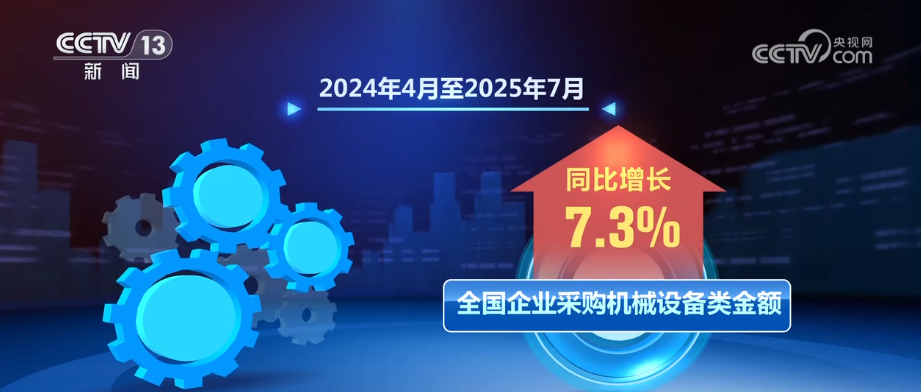
Group 1 - The implementation of large-scale equipment renewal and the old-for-new consumption policy has shown continuous effectiveness in promoting industrial transformation, boosting consumer demand, and facilitating economic circulation [1] - From April 2024 to July 2025, the amount of machinery and equipment purchased by enterprises nationwide increased by 7.3% year-on-year, with industrial enterprises seeing a 9.8% increase [3] - The information transmission and software industry, along with the technology service industry, experienced nearly a 30% increase in equipment procurement, indicating that the large-scale equipment renewal policy is providing new momentum for industrial transformation [3] Group 2 - The old-for-new policy has significantly driven diverse consumer demand, with daily household appliance sales increasing by 44.5% year-on-year and furniture retail sales rising by 30.1% from April 2024 to July 2025 [6] - The demand for smart consumption has surged, with sales in the service robot manufacturing industry increasing by over 50% [6] - The policy has also benefited the automotive sector, with nationwide sales of new energy vehicles growing by 81.7% year-on-year, indicating a rapid growth trend [6] Group 3 - Since the implementation of the "two new" policies, retail demand has continued to grow, prompting manufacturing enterprises to accelerate equipment upgrades, creating a positive interaction from policy drive to demand release and then to industrial upgrading [10] - From April 2024 to July 2025, manufacturing sales revenue increased by 5.8% year-on-year, contributing to a smoother economic internal circulation [10]
五个关键词解码7月经济
Ren Min Ri Bao· 2025-08-16 02:05
Economic Overview - In July, major economic indicators maintained overall stability, with new growth drivers emerging, supporting steady economic development despite existing risks and challenges [1] - The macroeconomic policies are showing effectiveness, leading to expanded market demand and enhanced market vitality [1] New Quality Productivity - The added value of high-tech manufacturing above designated size increased by 9.3% year-on-year in July, outpacing the overall industrial growth by 3.6 percentage points [2] - The digital economy is rapidly developing, with the added value of digital product manufacturing increasing by 8.4% year-on-year in July [2] - Production of green low-carbon products is also on the rise, with new energy vehicles, lithium-ion batteries, and wind turbine generators seeing production increases of 17.1%, 29.4%, and 19.3% respectively [2] Foreign Trade - In July, the total value of goods imports and exports grew by 6.7% year-on-year, with exports increasing by 8% and imports by 4.8% [3] - The diversification of trade is evident, with exports to ASEAN, the EU, and Belt and Road countries growing by 14.8%, 8.2%, and 11.7% respectively from January to July [3] - The export of integrated circuits surged by 21.8%, reflecting enhanced international competitiveness due to improved R&D capabilities [3] Consumption - Retail sales of consumer goods increased by 3.7% year-on-year in July, with service retail sales growing by 5.2% from January to July [4] - The "old-for-new" policy has positively impacted sales, with significant growth in retail sales of home appliances, furniture, and communication equipment [4] - Tourism and leisure-related consumption saw rapid growth during the summer, with double-digit increases in retail sales for travel services and recreational activities [5] Investment - Fixed asset investment grew by 1.6% year-on-year from January to July, with actual growth (adjusted for price factors) estimated between 4% and 5% [6] - Manufacturing investment rose by 6.2%, significantly outpacing overall investment growth [6] - Investment in high-tech industries, particularly in aerospace and information services, saw substantial increases of 33.9% and 32.8% respectively [6] Price Trends - In July, the Consumer Price Index (CPI) showed positive changes, with a month-on-month increase of 0.4% [7] - The core CPI, excluding food and energy, rose by 0.8% year-on-year, indicating a strengthening market demand [7] - The Producer Price Index (PPI) saw a month-on-month decline of 0.2%, but the rate of decline has narrowed, marking the first reduction in the decline since March [7]
21社论丨发力国内需求,巩固经济回升向好势头
2 1 Shi Ji Jing Ji Bao Dao· 2025-08-15 22:35
Economic Overview - The national economy shows a steady development trend, requiring continued macro policy support to effectively release domestic demand potential and promote a stable and healthy economic development [1][2] - In July, exports increased by 7.2% year-on-year, surpassing the previous value of 5.9%, while social retail sales grew by 3.7%, lower than June's 4.8% and May's 6.4% [1] Consumption and Retail - Retail sales of consumer goods grew by 4.0% year-on-year in July, down from 5.3% previously, with significant growth in home appliances (28.7%), furniture (20.6%), communication equipment (14.9%), and cultural office supplies (13.8%) [1] - The restaurant sector showed weak performance, with growth of only 1.1% in July compared to 5.9% in May [1] Investment Trends - Fixed asset investment increased by 1.6% year-on-year from January to July, a decline of 1.2 percentage points compared to the first half of the year, with manufacturing, infrastructure, and real estate investments all showing a slowdown [1] - Manufacturing investment has decreased, while infrastructure projects, particularly "two heavy" projects, are expected to gain momentum in the second half of the year [1][3] Industrial Production - In July, the industrial added value for large-scale industries grew by 5.7% year-on-year, down from 6.8% previously, influenced by slowing investment and consumption growth [2] - Producer prices for industrial products fell by 0.2% month-on-month, with a year-on-year decline of 3.6% [2] Policy Measures - Starting in August, measures to expand consumption include the introduction of childcare subsidies and the exemption of fees for public kindergarten education for certain age groups [3] - The government is also encouraging service consumption through fiscal interest subsidies for personal consumption loans and service industry loans [3] Challenges and Outlook - The real estate sector and local infrastructure investment present ongoing challenges, requiring time to address accumulated issues [3] - Short-term factors such as extreme weather and adjustments in consumption subsidies have impacted July's economic data, but upcoming macroeconomic policies are expected to promote effective investment and release domestic demand potential [3]
宏观政策显效 经济稳中有进
Zhong Guo Zheng Quan Bao· 2025-08-15 20:10
Economic Performance - In July, the industrial added value of large-scale enterprises increased by 5.7% year-on-year, while the total retail sales of consumer goods grew by 3.7% year-on-year [1] - From January to July, fixed asset investment rose by 1.6% year-on-year, indicating a steady economic development despite external and domestic challenges [1] Consumption Trends - The retail sales of consumer goods and services showed a combined growth of approximately 5% from January to July, reflecting a sustained expansion in consumption [1] - The sales of home appliances, cultural office supplies, furniture, and communication equipment saw significant year-on-year increases of 28.7%, 13.8%, 20.6%, and 14.9% respectively in July, driven by consumption promotion policies [1][2] Service Sector Growth - The service retail sector experienced rapid growth, particularly in cultural and tourism-related services, supported by increased consumer demand during the summer [2] - New consumption models such as online retail and live-streaming sales are gaining popularity, contributing to the emergence of new growth points in consumption [2][3] Industrial Production - In July, 35 out of 41 major industrial sectors reported year-on-year growth, with a growth coverage of 85.4%, indicating overall stability in industrial production [2] - High-tech manufacturing added value increased by 9.3% year-on-year, with significant growth in the production of green products such as new energy vehicles and lithium batteries [3] Economic Outlook - The economic foundation remains strong with significant potential for growth, supported by proactive macroeconomic policies and expanding market demand [3][4] - Upcoming policies aimed at stabilizing economic growth are expected to accelerate project funding and boost local infrastructure investment [4]
税收数据显示:“两新”政策实施一年多来成效明显
Sou Hu Cai Jing· 2025-08-15 14:43
Core Insights - The implementation of large-scale equipment updates and the "trade-in" policy for consumer goods has shown positive effects in promoting transformation, boosting consumer demand, and facilitating economic circulation [1][2] - The "policy-driven - demand release - industrial upgrade" interaction has been established, leading to a significant increase in retail demand and manufacturing sales [2] Group 1: Equipment Procurement - From April 2024 to July 2025, the amount of machinery and equipment purchased by enterprises nationwide increased by 7.3% year-on-year, with industrial enterprises seeing a 9.8% increase [1] - The information transmission and software industry, as well as the technology service industry, experienced equipment procurement growth of 27.8% and 28.3% respectively [1] - Private enterprises' equipment procurement increased by 9.3%, highlighting the supportive role of equipment updates [1] Group 2: Consumer Goods Sales - Sales of daily household appliances and audiovisual equipment increased by 44.5% and 22.8% year-on-year, respectively, from April 2024 to July 2025 [1] - Retail sales of furniture and sanitary ware grew by 30.1% and 13.6% year-on-year [1] - The service robot manufacturing industry saw a remarkable sales increase of 51.1% [1] Group 3: Automotive Industry - The "trade-in" policy has significantly benefited the automotive sector, with nationwide sales of new energy vehicles increasing by 81.7% year-on-year from April 2024 to July 2025 [1] Group 4: Economic Impact - Manufacturing sales revenue increased by 5.8% year-on-year, indicating a smoother economic internal circulation [2] - The tax authority plans to enhance the "policy + service" dual-drive approach to sustain the effectiveness of the "two new" policies, contributing to high-quality economic development [2]
2025年7月经济数据点评:如何看7月经济数据?
CMS· 2025-08-15 13:33
Economic Performance - In July, the industrial added value of large-scale enterprises increased by 5.7% year-on-year, with a month-on-month growth of 0.38%[4] - The manufacturing sector's added value grew by 6.2%, indicating its core support role in the economy[4] - Fixed asset investment from January to July rose by 1.6% year-on-year, with a month-on-month decline of 0.63% in July[4] Sector Analysis - 35 out of 41 industrial categories reported growth, achieving a growth coverage of 85.4%[4] - High-tech manufacturing saw a significant increase, with added value growing by 9.3%, led by integrated circuit manufacturing at 26.9%[4] - Real estate development investment from January to July was 53,580 billion yuan, down 12.0% year-on-year, marking a historical low[4] Consumer Trends - The total retail sales of consumer goods in July reached 38.7 billion yuan, with a year-on-year increase of 3.7%[5] - Durable goods consumption, particularly in home appliances (+28.7%) and communication equipment (+14.9%), showed strong growth[5] - Service retail sales from January to July increased by 5.2%, driven by summer tourism and sports events[5] Future Outlook - The economic growth rate in the third quarter is expected to be lower than in the second quarter, primarily due to the real estate sector's challenges[5] - Despite potential slowdowns, achieving the annual economic growth target of 5% remains feasible due to ongoing export support and consumption policies[5] - Risks include the possibility of domestic demand recovery being slower than anticipated[5]
7月经济数据点评:增长的锚点或还是出口
Changjiang Securities· 2025-08-15 13:12
Economic Performance - In July, industrial added value grew by 5.7% year-on-year, while retail sales of consumer goods increased by 3.7% year-on-year[7] - Fixed asset investment from January to July saw a year-on-year increase of 1.6%[7] Investment Trends - In July, fixed asset investment experienced a significant decline, with a year-on-year decrease of 5.2%, driven by manufacturing, infrastructure, and real estate investments dropping by 0.3%, 5.1%, and 17.0% respectively[8] - The construction installation engineering growth rate fell to -6.0% in July, indicating a downturn in the construction sector[8] Consumption Insights - Retail sales growth slowed to 3.7% year-on-year in July, with significant contributions from the automotive and home appliance sectors declining[8] - Restaurant revenue growth remained low, with a slight increase to 1.1% year-on-year, reflecting weak consumer spending in the service sector[8] Export Dependency - The report emphasizes that export performance remains a critical anchor for growth, as domestic demand alone may not suffice to fill production gaps if exports weaken[8] - July saw a decline in export delivery value growth, dropping below 1.0% year-on-year, indicating a weakening support for production from exports[8] Risk Factors - External economic volatility and uncertainty in policy responses pose risks to future growth, particularly if export trends continue to decline[8][9]
越南数字经济,前景为何不妙?
3 6 Ke· 2025-08-15 11:36
Core Insights - Vietnam's rapid economic growth over the past 40 years has transformed it from a poor nation to a rising manufacturing hub, with ambitions for a digital economy [1] - However, challenges such as talent shortages, demographic shifts, and institutional constraints pose significant risks to its digital transformation efforts [1] Economic Development - Post-war Vietnam faced severe economic challenges, including hyperinflation and widespread poverty, until the "Doi Moi" reforms in 1986 legalized private enterprise and introduced market mechanisms [2][4] - Since the reforms, Vietnam has experienced robust economic growth, with GDP growth rates consistently above 5% since 2010, and per capita GDP rising from $230 in 1985 to $4,700 in 2024 [4] Foreign Investment and Trade - Vietnam has become a key destination for foreign investment, particularly in electronics, apparel, and home appliances, benefiting from trade agreements and its strategic location [5][6] - The country's export volume has increased eightfold from 2007 to 2024, reaching $385 billion, significantly outpacing regional competitors [5] Digital Economy Strategy - The Vietnamese government has prioritized digital transformation, aiming for the digital economy to account for 20% of GDP by 2025 and 30% by 2030, focusing on sectors like digital finance and AI [10][12] - The government is actively attracting tech talent and fostering a startup ecosystem, with cities like Ho Chi Minh City and Hanoi emerging as innovation hubs [12][14] Challenges in Talent and Demographics - Vietnam faces a talent gap, particularly in engineering and technology, with a projected shortfall of skilled workers in the semiconductor industry by 2030 [16] - The country is also approaching a demographic turning point, with a declining youth population that could hinder digital product demand and innovation [17][19] Institutional Constraints - The digital infrastructure is largely state-controlled, which may limit market dynamism and innovation in the tech sector [15][19] - Issues such as unstable electricity supply and opaque regulations for cross-border data and e-commerce further complicate the digital landscape [20] Conclusion - Vietnam's economic trajectory has been shaped by its ability to attract foreign investment and integrate into global supply chains, but the transition to a digital economy will require overcoming significant human capital and institutional challenges [20]