
新能源汽车

Search documents
美股科技股,集体上涨
第一财经· 2026-02-11 14:46
| 名称 | 涨跌幅 ▼ | 珊介 | | --- | --- | --- | | 闪曲 | 8.41% | 587.210 | | 甲骨文(ORACLE) | 2.00% | 163.090 | | 英伟达(NVIDIA) | 1.75% | 191.840 | | 超威半导体(AMD) | 1.24% | 216.225 | | 博通(BROADCOM) | 0.81% | 343.200 | | 特斯拉(TESLA) | 0.80% | 428.605 | | 脸书(META PLATFORMS) | 0.64% | 675.030 | | 微軟(MICROSOFT) | 0.50% | 415.320 | | 亚马逊(AMAZON) | 0.77% | 208.560 | | 苹果(APPLE) | 0.76% | 275.760 | | 谷歌(ALPHABET)-A | 0.26% | 319.410 | | 奈飞(NETFLIX) | 0.16% | 82.340 | | 高通(QUALCOMM) | 0.15% | 140.295 | 2月11日,美股三大指数集体高开,纳指涨0.77%,道指涨0 ...


众捷汽车:已经与全球新能源汽车龙头比亚迪、长城汽车、上汽集团等建立了直接的业务合作关系
Ge Long Hui· 2026-02-11 14:37
Core Viewpoint - The company, Zhongjie Automotive, has established significant relationships with major multinational automotive parts suppliers and is actively expanding its presence in the domestic new energy vehicle market [1] Group 1: Major Clients - The company's primary clients include well-known multinational Tier 1 automotive parts suppliers such as Mahle, Modine, Hanon, Marelli, and ContiTech [1] - The products supplied by the company cover a wide range of international automotive brands, including Mercedes-Benz, BMW, Audi, Porsche, Volkswagen, Skoda, Ferrari, Maserati, Fiat, Tesla, Rivian, Canoo, Ford, General Motors, Chrysler, Dodge, Renault, Citroën, Volvo, Jaguar, Land Rover, Toyota, Subaru, Honda, Nissan, Mazda, Suzuki, Hyundai, Kia, MAN, DAF, Scania, and Iveco [1] Group 2: Domestic Market Expansion - The company is actively expanding into the domestic new energy vehicle market and has established direct business cooperation with leading global new energy vehicle manufacturers such as BYD, Great Wall Motors, and SAIC Motor [1]



签约超3年仍在“前期筹划阶段” 铭利达叫停广东肇庆新能源项目
Mei Ri Jing Ji Xin Wen· 2026-02-11 13:56
Core Viewpoint - The company, Minglida, has terminated its investment in a new energy project in Zhaoqing, Guangdong, which was planned to have a total investment of up to 1.3 billion yuan, due to market environment assessments and strategic adjustments [1][3]. Group 1: Project Termination - The new energy key component intelligent manufacturing project was initially planned to be developed in two phases, with a total investment of up to 1.3 billion yuan, including 1 billion yuan for the first phase and 300 million yuan for the second phase [2]. - The project was intended to produce products such as battery management systems for electric vehicles, motor controllers, photovoltaic inverters, and energy storage systems, but has remained in the preliminary planning stage for over three years [1][2]. - The company stated that the termination of the project would not have a significant adverse impact on its financial status, as it was still in the planning phase [3]. Group 2: Financial Performance - The company has faced declining performance, with a net profit of 403 million yuan in 2022 dropping to 320 million yuan in 2023, and a significant loss of 469 million yuan in 2024 [4]. - The company is expected to incur further losses in 2025, with projected losses ranging from 170 million yuan to 230 million yuan, marking the second consecutive year of losses [5]. - Factors contributing to the ongoing losses include high costs associated with overseas operations, prolonged project development cycles, and increased financial expenses, alongside challenges in the photovoltaic sector [5].
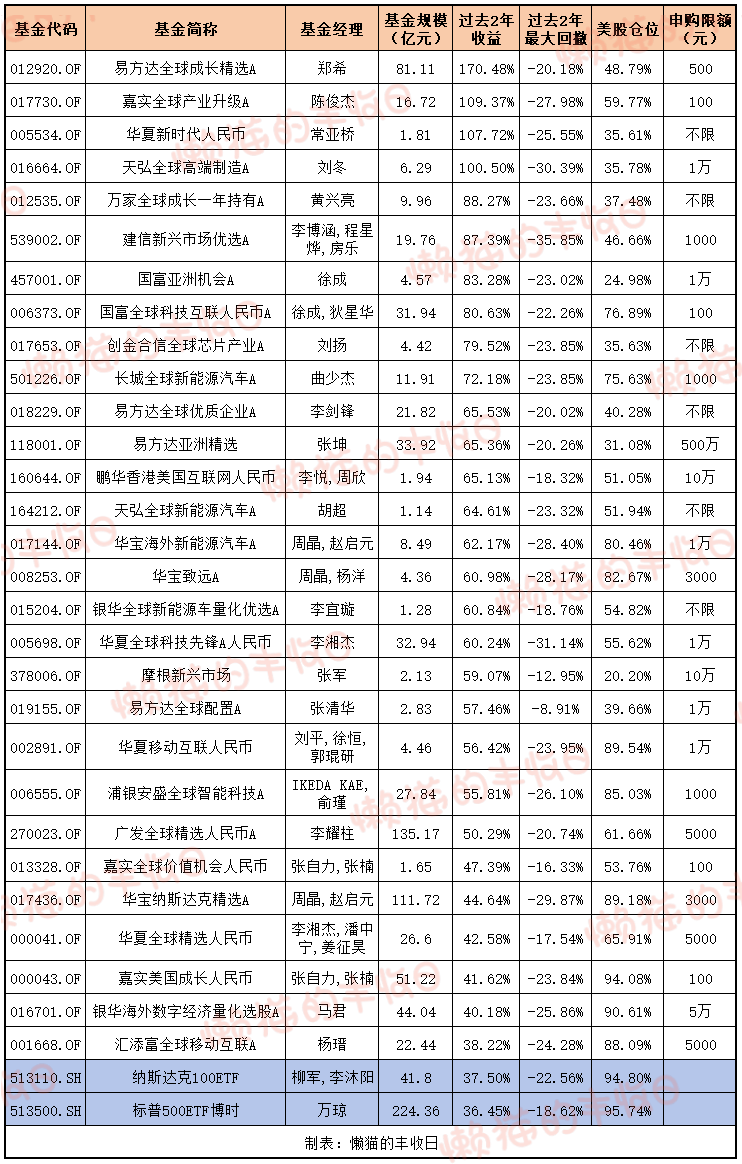
这么多QDII跑赢了纳指啊~
Sou Hu Cai Jing· 2026-02-11 12:45
Core Insights - A significant number of QDII active funds have outperformed the Nasdaq 100 ETF and S&P 500 ETF over the past two years, contrary to the common belief that active funds struggle to beat indices [1]. Fund Performance - The top-performing fund, "E Fund Global Growth Select A" managed by Zheng Xi, achieved a return of 170.48% over the past two years, surpassing the Nasdaq 100 ETF by over 130 percentage points [1]. - Other notable funds include "Jia Shi Global Industry Upgrade A" with a return of 109.37% and "Hua Xia New Era RMB" at 107.72% [1]. - The performance of these funds is attributed to significant adjustments in their holdings, particularly in overseas computing power and semiconductor stocks [4][6]. Stock Holdings - Zheng Xi's fund made substantial adjustments in Q2 2025, heavily investing in stocks like Nvidia, Broadcom, AMD, and Microsoft, which contributed to a 43.28% increase in Q2 and a 20.4% rise in Q3 [4]. - The fund's net value continued to rise, with a 132.32% increase since April 8, 2025, and a maximum drawdown of only 8.75% [6]. Comparison with Other Funds - Other funds such as "Jia Shi Global Value Opportunity RMB" and "Hua Bao Nasdaq Select A" also performed well, but did not match the impressive returns of "E Fund Global Growth Select A" [11][13]. - Funds focused on AI applications, innovative pharmaceuticals, and cryptocurrency concepts, like "Wan Jia Global Growth One-Year Holding A," showed more balanced holdings but did not achieve the same level of performance [9]. Market Trends - The overall market trend indicates that while the Nasdaq index has been relatively flat since November, the semiconductor stocks held by these funds have continued to rise, mitigating currency losses and widening the performance gap with the Nasdaq ETF [16]. - The strong earnings growth of major U.S. companies supports the ongoing rise in the stock market, with the median earnings growth of the Russell 3000 reaching a four-year high [30].


关税大战,本质上是美国继美元收割战后对中国经济的第二次围剿
Sou Hu Cai Jing· 2026-02-11 11:47
美国在全球经济中占据主导位置已经很多年,他们通过各种手段维护这个地位。美元作为国际储备货 币,给美国带来了巨大优势。 美联储通过加息周期,可以吸引全球资金回流本土,这就形成了所谓的美元收割战。这种操作在2015年 开始显现,当时美联储启动加息,美元指数从90点涨到103点高峰。 新兴市场国家资本外流严重,中国外汇储备从近4万亿美元降到3万亿美元左右。 中国政府通过加强资本管制和外汇审批来应对,企业也减少美元债务,转向人民币融资。 这场美元收割战本质上是美国利用货币政策间接削弱对手经济,中国挺过了这一轮,没有出现崩盘。 美元收割战失败后,美国转向更直接的手段,那就是关税战。 2018年特朗普上台后,以知识产权为由启动301调查,对中国商品加征关税。首批340亿美元商品加25% 税,中国反击同等规模的大豆和汽车。 2019年,美国对2000亿美元商品税率从10%升到25%,中国对600亿美元美国商品加5%到25%。这场关 税战针对中国高科技产业,如航空、新能源汽车和新材料,这些是中国制造2025计划的核心领域。 美国想通过提高进口壁垒,保护本土制造业,同时推动企业迁出中国,稀释中国在全球供应链中的控制 力。 欧盟 ...
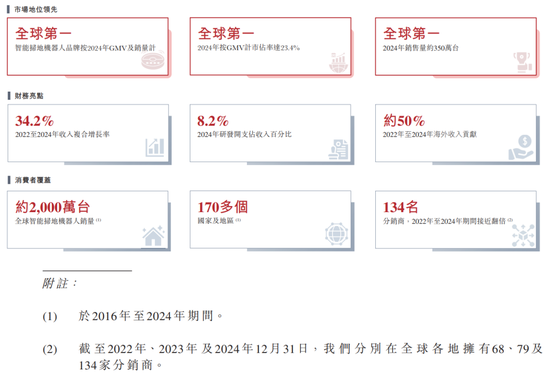
“扫地茅”石头科技去哪儿了
Xin Lang Cai Jing· 2026-02-11 11:13
Core Viewpoint - The article discusses the challenges faced by Stone Technology, a leading player in the robotic vacuum market, as it attempts to regain its former glory while navigating increased competition and financial difficulties. Company Overview - Stone Technology, once valued at nearly 100 billion yuan with a peak stock price of 1494.99 yuan per share in 2021, has seen its market capitalization drop to 39.4 billion yuan, a decline of over 50% [3][4][26][27]. - The company is attempting to diversify its revenue streams by entering the washing machine market and exploring opportunities in the electric vehicle sector, but these efforts have not yet yielded significant results [5][28][39][40]. Market Position and Competition - In the global robotic vacuum market, Stone Technology is currently ranked second with a market share of 23.69%, closely trailing behind Ecovacs, which holds 24.8% [8][31]. - The competition is intensifying, with new entrants like DJI and traditional appliance giants such as Midea and Haier entering the market, leveraging their supply chain advantages [8][31]. Financial Performance - For the first three quarters of 2025, Stone Technology reported revenue exceeding 12 billion yuan, a year-on-year increase of 72%, but its net profit fell by nearly 30% [10][33]. - The company's cash flow from operating activities turned negative for the first time since 2020, with a net cash flow of -1.06 billion yuan [10][33]. Marketing and Brand Strategy - Stone Technology's high marketing expenses have been a significant burden, with sales costs reaching 3.18 billion yuan in the first three quarters of 2025, a 103% increase year-on-year [11][34]. - The company is considering high-profile marketing strategies, such as sponsoring the CCTV Spring Festival Gala, to enhance brand visibility and consumer recognition [14][37]. Future Prospects - The company is exploring advanced robotic technologies, as demonstrated at CES 2025, where it showcased a new robot capable of navigating complex environments [20][43]. - However, the transition to more advanced robotics presents challenges, including higher costs and increased competition, raising concerns about the company's ability to maintain its competitive edge [21][44].

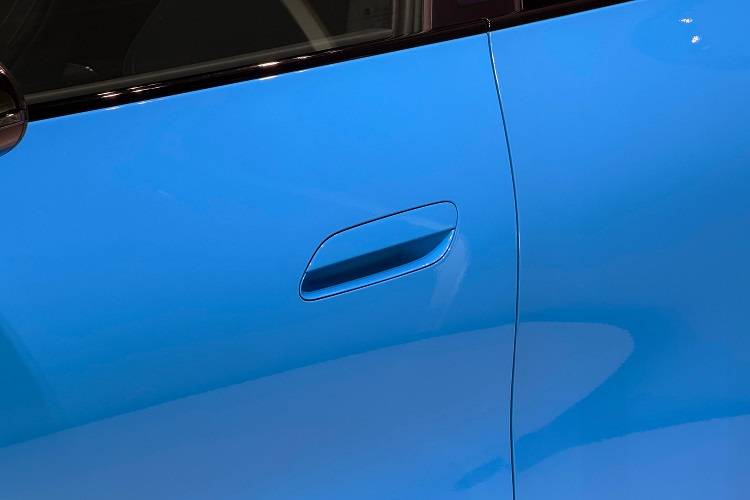
雷军称新SU7门把手符合新国标!解决低温失灵、故障率高等问题!
Sou Hu Cai Jing· 2026-02-11 10:39
Group 1 - The core point of the article highlights the significance of Xiaomi's new generation SU7 door handle design, which is expected to set a new safety standard in the electric vehicle industry [1][3] - Xiaomi's founder Lei Jun demonstrated the new door handle design during a live stream, emphasizing that it has been developed to meet the national mandatory standards that will be implemented in 2027 [3][7] - The new national standard, announced by the Ministry of Industry and Information Technology, mandates that every car door must have at least one mechanical release handle to ensure safety in extreme conditions [5][9] Group 2 - The new design of the SU7 door handle includes a mechanical redundancy structure to address issues such as failure in low-temperature environments, which have raised consumer concerns [7][9] - The standard specifies that the external door handle must provide approximately 30 cubic centimeters of hand operation space, and the internal handle must be clearly marked and positioned [7] - The modification of the door handle design is extensive, affecting the entire locking module and requiring significant testing, reflecting Xiaomi's commitment to consumer safety [11]

追觅CEO俞浩公开邀余承东加盟,跨界布局引行业关注
Zhong Guo Ji Jin Bao· 2026-02-11 10:37
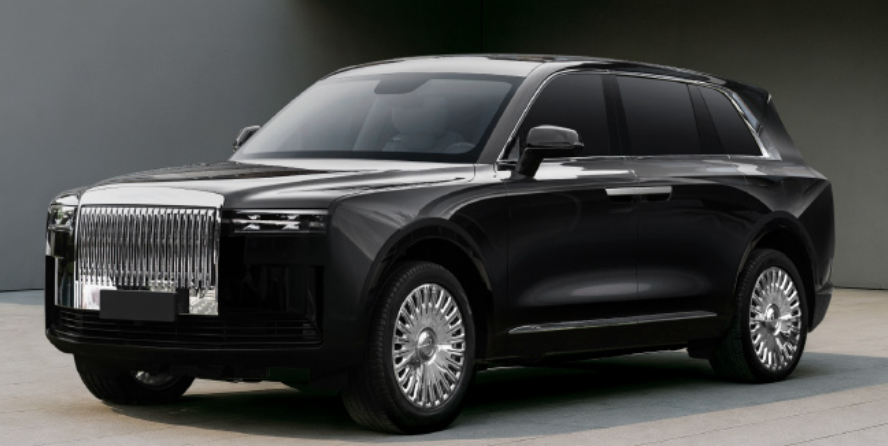
其汽车业务已构建"高性能纯电轿跑+超奢旗舰SUV"双产品矩阵,两款车型均计划于2027年上市,其中超奢旗舰SUV对标劳斯 莱斯库里南,搭载超级底盘等核心配置,全力进军高端新能源汽车市场。而华为在余承东的带领下,已搭建起以鸿蒙智行为核 心的汽车生态,携手问界、智界、享界、尊界、尚界五大品牌形成深度合作联盟,车型矩阵覆盖15万-120万元全价位段,2026 年更是定下百万辆级的销量目标,在智能汽车领域占据重要行业地位。 2月10日,追觅科技创始人兼CEO俞浩在社交平台公开喊话华为常务董事余承东,发出加盟邀请,还承诺为其提供无限制的发 展空间,这一举措迅速引爆网络,成为行业热议话题。余承东作为华为智能汽车业务的核心掌舵人,一手推动华为鸿蒙智行生 态的搭建与发展,在其主导下,华为汽车业务已形成多元布局的成熟体系,此次邀约也因双方所处企业的行业地位引发广泛关 注。 (校对/黄仁贵) 面对网友关于"炒作"的质疑,俞浩回应,强调此次邀约是出于对人才的重视,并非营销噱头,不过目前相关喊话内容已被删 除,华为与余承东方面也未对此作出任何回应。 作为清洁电器领域的新锐企业,追觅科技自2017年成立后发展迅速,打造自有品牌,凭借核 ...
零跑汽车今年能卖出105万辆?
Xin Lang Cai Jing· 2026-02-11 10:32
Core Viewpoint - Leap Motor aims to achieve a historic sales target of 1 million vehicles in 2023, with a long-term goal of 1.05 million vehicles by 2026, reflecting a 75.9% increase from 2025's target of 597,000 vehicles [2][18]. Sales Target Breakdown - The 1 million sales target for 2023 is divided into 900,000 units for the domestic market and 100,000 units for overseas markets [4][19]. - In 2025, Leap Motor's existing models are expected to achieve a total sales volume of 418,000 units, while new models launched in 2025 are projected to contribute an additional 178,000 units [5][21]. Model Performance Expectations - The existing models C10, C11, C16, T03, and C01 are anticipated to face challenges in increasing sales from the previous year's 418,000 units, with cautious estimates suggesting a total of 400,000 units and optimistic estimates reaching 450,000 to 500,000 units for these models in 2023 [7][24]. - The new models B10 and B01, launching in April and July 2025 respectively, are expected to achieve cautious sales of 150,000 units and optimistic sales of 200,000 units [7][24]. New Model Contributions - The Lafa5 model, launched in late 2025, is projected to provide significant sales growth, with cautious estimates of 60,000 units and optimistic estimates of 100,000 units for 2023 [8][25]. - The A10 model, a compact electric SUV, is expected to face competition from BYD's Yuan UP, with cautious sales estimates of 60,000 units and optimistic estimates of 100,000 units for 2023 [10][26]. Market Competition and Challenges - The D19 and D99 models, positioned in the competitive large SUV and MPV markets, respectively, are expected to face significant challenges in achieving sales targets due to intense competition [12][28]. - The overall sales target of 1 million units in 2023 is contingent upon overcoming challenges such as production capacity, supply chain issues, and the impact of reduced tax incentives for electric vehicles [34].


雷军直播称新SU7门把手符合新国标!解决低温失灵、故障率高等问题!
Xin Lang Cai Jing· 2026-02-11 10:16
Core Viewpoint - The new generation of Xiaomi SU7's door handle design, which includes a mechanical redundancy feature, is set to comply with the upcoming national safety standards effective from January 1, 2027, marking a significant milestone in automotive safety standards for electric vehicles [1][2][3]. Group 1: New Generation SU7 Features - The new SU7 features a hidden door handle design with an added mechanical redundancy structure to address issues of failure in low-temperature environments [2][3]. - This design change is described as a comprehensive upgrade, indicating a significant evolution in the vehicle's overall design and functionality [1][2]. Group 2: National Standards and Industry Impact - The Ministry of Industry and Information Technology announced that the mandatory national standard for automotive door handle safety will be implemented in 2027, which will phase out fully hidden door handles in China, making it the first country to do so [3]. - The new standard requires each car door to have at least one mechanical release handle to ensure manual operation in case of power failure, thus enhancing safety [3][4]. Group 3: Consumer Concerns and Company Responsibility - There have been consumer concerns regarding hidden door handles freezing in cold weather, leading to difficulties in opening the doors, which this new design aims to mitigate [4]. - The modification involves significant changes to the door locking mechanism and the overall door design, reflecting the company's commitment to addressing safety concerns and being responsible to consumers [4].