
半导体

Search documents
多路资金激烈博弈存储芯片人气股,一线游资联手量化资金抢筹金开新能
摩尔投研精选· 2026-03-18 10:40
Core Viewpoint - The article highlights the trading activities in the Shanghai and Shenzhen stock markets, focusing on the top traded stocks, sector performances, and ETF transactions, indicating significant capital flows and market trends. Group 1: Trading Volume - The total trading volume for the Shanghai Stock Connect was 120.27 billion, while the Shenzhen Stock Connect reached 143.39 billion, totaling 263.66 billion for the day [2][1]. - Zijin Mining and Zhongji Xuchuang were the top traded stocks in the Shanghai and Shenzhen markets, respectively [1][3][4]. Group 2: Sector Performance - The communication sector saw the highest net inflow of capital, amounting to 9.00 billion, with a net inflow rate of 6.59% [6][7]. - Other sectors with notable net inflows included electronics (8.40 billion), computing (6.83 billion), and semiconductors (6.49 billion) [6]. - Conversely, the basic chemicals sector experienced the largest net outflow of 5.34 billion, followed by non-ferrous metals and electric new industries [7]. Group 3: Individual Stock Performance - The top stocks with net inflows included Xinyi Technology (2.87 billion), Zhongji Xuchuang (2.83 billion), and Goldwind Technology (2.23 billion) [8]. - On the other hand, Dongshan Precision saw the highest net outflow at 1.73 billion, followed by GCL-Poly Energy and BYD [9]. Group 4: ETF Transactions - The A500 ETF Fund (512050) had the highest trading volume at 10.09 billion, while the Korean Semiconductor ETF (513310) saw a significant increase of 58.81% in trading volume compared to the previous trading day [12][13]. - The 300 Dividend Low Volatility ETF (515300) experienced a remarkable growth of 267% in trading volume, indicating strong investor interest [13]. Group 5: Market Activity - The article notes that institutional trading activity was moderate, with notable purchases in stocks like Jiuzhou Medical and Kecai Technology, while stocks like Longke Technology faced significant selling pressure [15][16]. - The presence of quantitative funds was highlighted, particularly in the storage chip sector, with significant purchases in stocks like Longke Technology and Jinkai New Energy [17].



隔夜美伊冲突上升,但其他资产与油价走势割裂:股指早报-20260318
Chuang Yuan Qi Huo· 2026-03-18 10:17
1. Report Industry Investment Rating - No relevant information provided 2. Core Viewpoints - The US-Iran conflict is unlikely to end in the short term. The overnight market showed a divergence where the trends of crude oil and other assets were opposite to the previous situation. Attention should be paid to the changes in crude oil prices and market trends [2][4] - The risk appetite of the domestic A-share market decreased significantly. Although the index showed signs of a short position, there was no need to be overly worried for the time being. After an inertial decline, the index would have a rebound and repair. It is necessary to continue to pay attention to extreme situations such as earnings reports and geopolitical risks [3][4] 3. Summary by Directory 3.1 Important Information - "Fed Whisperer": The Fed tends to remain silent this week, and recent shocks are two-way factors [6] - Trump: Not ready to end the conflict yet, but "we will leave in the near future" [6] - Trump is angry that inviting allies to participate in escorting has received a cold response, and the US is considering withdrawing from NATO [6] - Iran's Supreme Leader rejected the proposal for peace talks with the US and insisted on defeating the US and Israel and claiming compensation [7] - The Secretary of Iran's Supreme National Security Council and the head of the Basij militia organization died. Iran has designated multiple replacement candidates for key national positions [7] - Iran launched its first attack on upstream oil and gas facilities in the UAE [8] - The Ministry of Finance will continue to implement a more proactive fiscal policy in 2026 [9] - The National Development and Reform Commission has launched a new batch of major foreign investment projects with a planned investment of $13.4 billion [10] - The US has clarified that Trump's visit to China has nothing to do with the navigation issue in the Strait of Hormuz [11] - A Japanese fishing boat illegally entered China's territorial waters near the Diaoyu Islands on March 16, and the Chinese coast guard took necessary control measures and issued a warning [11] 3.2 Futures Market Tracking - **Futures Market Performance**: The closing prices, settlement prices, price changes, price change rates, basis, and other data of various futures contracts such as the Shanghai 50 Index, CSI 300 Index, CSI 500 Index, and CSI 1000 Index are presented [13] - **Futures Trading Volume and Open Interest**: The trading volume, trading volume changes, trading value, trading value changes, open interest, open interest changes, weekly position increases, net positions, and other data of various futures contracts are provided [14] 3.3 Spot Market Tracking - **Spot Market Performance**: The trading value, price-earnings ratio, year-to-date change, current points, daily change rate, weekly change rate, monthly change rate, and other data of various spot market indices and sectors are presented [38] - **Market Style Impact on Indexes**: The impact of different market styles (cyclical, consumption, growth, finance, and stability) on the Shanghai 50 Index, CSI 300 Index, CSI 500 Index, and CSI 1000 Index is analyzed [39][40] - **Index Valuation**: The current valuations and historical quantiles of important indices and Shenwan sectors are presented [42][46] - **Market Trading Volume and Turnover Rate**: The Sunday average trading volume, Sunday average turnover rate, number of rising and falling stocks, and index trading value changes in the market are presented [48] - **Stock-Bond Relative Return and Margin Trading**: The stock-bond relative return, Hong Kong Stock Connect, margin trading balance, and margin trading net purchase amount and its proportion in A-share trading value are presented [49][50] 3.4 Liquidity Tracking - **Central Bank Open Market Operations**: The currency injection, currency withdrawal, and net currency injection of the central bank's open market operations are presented [53] - **Shibor Interest Rate Level**: The Shibor interest rate levels of different tenors are presented [54]
恩智浦押注边缘AI,联手英伟达重构机器人底座
半导体芯闻· 2026-03-18 10:15
Core Viewpoint - The article discusses the evolution of edge AI, emphasizing its transition from simple local inference to autonomous systems capable of perception, judgment, collaboration, and action, with NXP Semiconductors positioning itself as a key player in this space [2][5][25] Group 1: Edge AI Value and Drivers - Edge AI is being revalued due to four main drivers: bandwidth pressure, real-time demands, energy efficiency optimization, and trust and security concerns [5][6][14] - The need to process data locally reduces reliance on cloud bandwidth and enhances system efficiency, especially in scenarios requiring immediate responses [5][6] - Local data processing minimizes exposure of sensitive information, aligning with stricter security and compliance requirements [6][14] Group 2: NXP's Strategic Positioning - NXP aims to transition from a component supplier to a provider of comprehensive edge AI systems, offering a robust hardware foundation, reliable software, and efficient AI toolkits [6][11][23] - The company has integrated Kinara's high-performance architecture to enhance its processing capabilities and provide flexible performance increments for demanding applications [10][11] - NXP's eIQ software framework connects various hardware levels, facilitating customer deployment of AI use cases [11][13] Group 3: Autonomous Systems and Use Cases - NXP's edge AI systems are designed to operate autonomously, coordinating multiple subsystems without needing cloud access, as illustrated by factory scenarios involving leak detection and emergency response [13][14] - The company is focusing on five application areas: healthcare, power, factories, buildings, and robotics, showcasing the versatility and necessity of edge AI across different sectors [23][24] - In healthcare, NXP collaborates with GE Healthcare to monitor newborns' vital signs in real-time without cloud connectivity [23] Group 4: Robotics and Collaboration with NVIDIA - NXP identifies robotics, particularly humanoid robots, as a critical application for edge AI, requiring complex systems that integrate various capabilities [17][18] - The partnership with NVIDIA aims to enhance the development of physical AI systems, focusing on the integration of sensor data and real-time decision-making [18][21] - NXP's role is to provide the control, connectivity, and security layers within robotic systems, similar to its historical role in automotive electronics [23]


三星芯片告急,员工推动罢工
半导体芯闻· 2026-03-18 10:15
Core Viewpoint - The potential strike by Samsung Electronics' union poses a significant risk to the company's growth momentum, particularly in its semiconductor division, which is currently benefiting from a rebound in profits due to the semiconductor supercycle [1][2]. Group 1: Union Actions and Demands - Samsung Electronics' union is pushing for a general strike to modify the criteria for the Excess Profit Incentive (OPI) plan and to eliminate its cap, which currently limits bonuses to 50% of annual salary [1]. - A vote on the strike action is set to conclude on March 18, with a potential strike planned from May 21 to June 7 if the majority supports it, marking the first strike in two years [1]. - The union's demands stem from disagreements over performance bonuses, with a call for transparency in the OPI calculation and the removal of the salary cap [1][2]. Group 2: Impact of Competitors - The agreement reached between SK Hynix and its labor union, which removed the cap on profit-sharing payments, has influenced Samsung's union to pursue similar changes [2]. - SK Hynix's decision to allocate 10% of its total operating profit as bonuses has resulted in record-high performance bonuses for its employees, highlighting the competitive pressure on Samsung [2]. Group 3: Potential Consequences of a Strike - A full strike could lead to production disruptions, delivery delays, and a decline in customer trust, significantly impacting market share and price volatility in the semiconductor sector [3]. - The current stock price of Samsung Electronics, around 200,000 KRW, is buoyed by positive market expectations for the semiconductor sector, but the emergence of strike risks could negatively affect investor sentiment [3]. - Internal conflicts among employees are also a concern, particularly between the Device Experience (DX) department and the Device Solutions (DS) department, with the latter being the primary focus of the union's demands [3][4]. Group 4: Industry Commentary - Industry experts emphasize the importance of dialogue and compromise over extreme confrontation to maintain organizational cohesion and competitiveness within Samsung and the broader South Korean semiconductor industry [4].

SK海力士公布:自建晶圆厂
半导体芯闻· 2026-03-18 10:15
Core Insights - SK Hynix announced plans to build a self-sufficient wafer fab by 2030 to address the growing demand for AI storage while improving production efficiency [1][2] - The company aims to enhance decision-making processes by balancing quality, cost, and speed, moving beyond traditional human experience and rule-based automation [1] - The self-sufficient wafer fab will focus on three core pillars: "Operation AI" for decision automation, "Physical AI" for enhancing existing systems, and "Digital Twin" for safe evolution of all elements [1][2] Group 1 - Operation AI aims to automate engineer judgment, successfully reducing maintenance and defect analysis processing time by half [2] - Physical AI enhances current systems and extends automation into areas still heavily reliant on human input, utilizing NVIDIA's Omniverse platform for simulation before application [2] - The self-sufficient wafer fab is expected to significantly shorten the transition time from design to mass production [1]
美国又新增一个晶圆厂?
半导体芯闻· 2026-03-18 10:15
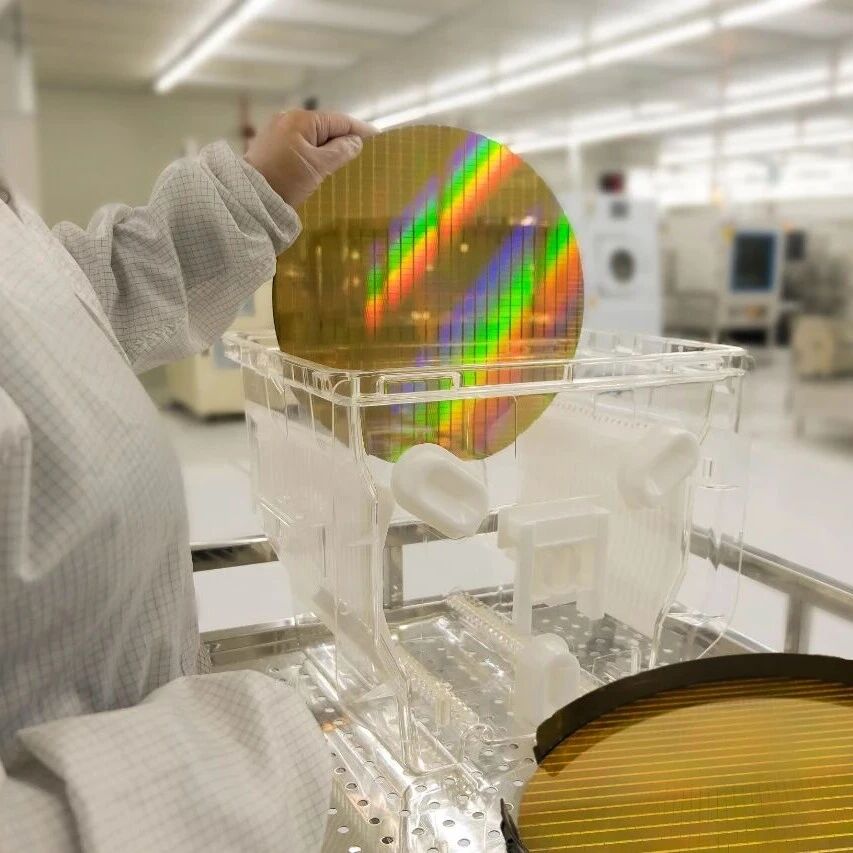
Core Viewpoint - The article discusses Samsung's plans to build a second semiconductor fab (Fab 2) in Taylor, Texas, in response to the tight capacity of competitor TSMC, highlighting the growing demand for foundry services from major tech companies [2][3]. Group 1: Fab 2 Construction and Regulatory Approval - Samsung is preparing to construct Fab 2 in its semiconductor park in Taylor, Texas, with the project now entering the regulatory review phase [2]. - The Taylor City Council has unanimously approved an amendment to extend the contract with HDR Engineering, which will assist Samsung in obtaining necessary building permits and ensuring compliance with safety and construction standards [2]. Group 2: Scale and Future Expansion - Fab 2 is expected to cover approximately 2.7 million square feet, matching the size of the currently under-construction Fab 1 [3]. - Samsung has acquired a total of 1,268 acres in Taylor, allowing for the potential development of up to 10 advanced fabs, indicating significant future expansion capabilities [3]. Group 3: Investment and Financial Support - Samsung's initial investment in the Taylor facility was announced at $17 billion, later increased to $37 billion, which includes $4.75 billion in federal subsidies under the CHIPS and Science Act [3]. Group 4: Technological Focus and Client Acquisition - The Taylor facility will focus on high-performance computing (HPC) and automotive electronics, utilizing Samsung's advanced 2-nanometer process technology [4]. - Samsung has secured orders from 121 clients, with potential large orders expected from major tech companies like Google, AMD, and ByteDance [4]. Group 5: Production Timeline and Partnerships - Fab 1 is set to begin mass production in 2027, as part of a significant partnership with Tesla, involving a $16.5 billion contract for the production of Tesla's latest AI chips [4]. - Elon Musk has indicated that the expected mass production timeline for the AI5 chip is around mid-2027 [4]. Group 6: Market Position and Growth - Samsung's foundry business revenue rose by 6.7% in Q4 2025, reaching $3.4 billion, increasing its global market share from 6.8% to 7.1%, solidifying its position as the second-largest foundry after TSMC [6].
韩国出手整治"双重上市",股指飙升5%实现三连涨!
美股IPO· 2026-03-18 10:14
Core Viewpoint - The South Korean government has announced a principle ban on the "dual listing" of subsidiaries by publicly listed parent companies, addressing the structural issue of "Korean discount" in the stock market [1][8]. Group 1: Policy Announcement and Market Reaction - The Financial Services Commission Chairman, Lee Eog-weon, announced the measures at an investor conference, emphasizing the need to protect the rights and interests of ordinary shareholders through strict reviews [3][9]. - Following the announcement, the KOSPI index surged, with a peak increase of over 5% in a single day, and KOSPI 200 futures also rose significantly, triggering trading halts [4][6]. Group 2: Structural Issues and Historical Context - "Dual listing" refers to the practice where a parent company splits off its subsidiaries for separate public listings, which has been seen as a cause of systematic dilution of share prices and a structural root of the long-standing "Korean discount" [1][9]. - Despite a 121% increase in KOSPI since early 2025, the "Korean discount" remains a significant issue, with the current price-to-book ratio at approximately 1.7, still lower than Japan's 1.9 and China's 1.8 [10][11]. Group 3: Implications for Major Conglomerates - The new regulations are expected to impact major conglomerates like SK, HD Hyundai, and Hanwha Group, potentially reducing the number of high-quality business units that can be independently listed [9]. - The case of LG Energy's IPO is highlighted as an example where the parent company's stock fell by about 9% within a month after the split, illustrating the negative impact of dual listings on parent company valuations [9]. Group 4: Investor Sentiment and Future Outlook - While the ban on dual listings has boosted market sentiment, investors remain cautious about whether these policy changes will lead to tangible improvements in corporate fundamentals and shareholder returns [12]. - Analysts suggest that further reforms, including potential changes to inheritance tax laws, are crucial for eliminating the motivations behind maintaining low stock prices, which could ultimately help resolve the "Korean discount" issue [13][14].

【权益风向标】英伟达GTC 2026点燃AI引擎,算力基建与端侧AI共振
Xin Lang Cai Jing· 2026-03-18 10:08
Core Viewpoint - The Nvidia GTC 2026 conference highlighted the evolution of technology and outlined investment themes in AI and consumer electronics, as presented by CEO Jensen Huang during a two-and-a-half-hour keynote speech [2]. Group 1: Computing Infrastructure - The Vera Rubin supercomputer platform features seven types of chips and five rack systems, creating a full-stack AI computing solution [4]. - The introduction of the LPU inference chip, integrating Groq technology, marks a shift in AI computing focus from training to inference [4]. - There is a significant and sustained increase in global computing demand, with both rising sentiment and price trends expected to continue, indicating a strong investment opportunity in the tech sector [4]. Group 2: Edge AI - Nvidia launched NemoClaw, designed as the infrastructure layer for the OpenClaw intelligent agent platform, enabling the deployment of agents with a single command while enhancing security, privacy, and sandbox capabilities [6]. - The expansion of the open model system focuses on three key areas: intelligent agents AI, physical AI, and medical AI [6]. - The market for edge AI applications, including consumer electronics, smart driving, and humanoid robots, is anticipated to accelerate, with global AI glasses shipments projected to reach 8.7 million units by 2025, reflecting a 322% year-on-year growth [6][8].


三星电子或发生大规模罢工,恐波及全球半导体产供链
第一财经· 2026-03-18 09:49
Group 1 - The core point of the article highlights that over 66,000 members of the Samsung Electronics union voted, with 93.1% in favor of a strike, scheduled from May 21 to June 7 [1] - Samsung Electronics is a significant global manufacturer of memory chips, and a strike could exacerbate the already tight semiconductor supply due to the rising demand from AI data center construction [1] - Previous negotiations regarding salary issues for 2026 between Samsung Electronics and the labor union have broken down due to widening differences on several topics [1] Group 2 - Samsung Electronics experienced its first indefinite strike in 2024, which lasted nearly a month [1]

美股异动丨恩智浦盘前续涨2.2%,携手英伟达推出面向先进物理AI的创新机器人方案
Ge Long Hui· 2026-03-18 09:22
Core Viewpoint - NXP Semiconductors (NXPI.US) has announced a collaboration with NVIDIA to launch an innovative robotic solution aimed at advanced physical AI, which is expected to enhance efficiency and reduce costs in robotics applications [1] Group 1: Product Development - The new solution integrates NVIDIA's Holoscan Sensor Bridge with NXP's highly integrated System on Chip (SoC) to minimize the number of discrete components [1] - This integration is designed to significantly reduce space occupancy, power consumption, and costs associated with robotic systems [1] - The product is focused on establishing a low-latency direct transmission path between the robot's body and its "brain," facilitating sensor fusion, machine vision, and precise motor control [1] Group 2: Market Application - The solution is particularly suitable for humanoid robot forms, indicating a targeted application in advanced robotics [1] - Related products are anticipated to be launched in the first half of 2026, suggesting a timeline for market entry and potential revenue generation [1]
