商业地产

Search documents
河南漯河:非遗展演激发经济新活力
Ren Min Ri Bao· 2025-11-06 22:11
Core Viewpoint - The article highlights the efforts of Luoyang City in promoting and preserving intangible cultural heritage through a series of engaging performances and activities, aiming to meet the cultural needs of the community while enhancing market benefits [1][2][3]. Group 1: Cultural Heritage Promotion - Luoyang City has initiated the "Intangible Cultural Heritage Year" event, planning to hold 42 performances throughout the year, with 34 already completed and a total of 2.16 million viewers for live broadcasts [1]. - The city boasts a rich array of intangible cultural heritage, including 1 national-level, 22 provincial-level, and 133 municipal-level representative projects, showcasing its cultural significance [2]. - The activities are designed to be youthful, fashionable, immersive, and digitally disseminated, with a monthly theme and weekly performances, creating a vibrant cultural landscape [2][3]. Group 2: Event Engagement and Participation - The events feature over 60 intangible cultural heritage projects, inviting local art centers and representatives to participate, thus fostering interaction and showcasing the heritage [3]. - Various formats such as stage performances, interactive experiences, and heritage markets are utilized to create a comprehensive display system, enhancing audience engagement [3]. - The performances include both national and local heritage projects, with innovative arrangements breathing new life into traditional arts [3]. Group 3: Economic and Cultural Integration - The regular performances have attracted a youthful audience, contributing to the development of new consumer experiences in the Wanda Plaza, making it a cultural and tourism hotspot in Luoyang [4]. - The Wanda Plaza has quickly become a hub with over 100 brands and 300 quality merchants, drawing significant foot traffic and enhancing the local economy [5]. - The city is integrating various cultural and tourism resources, creating a cohesive development strategy that enhances participation and attracts more visitors [6].
(第八届进博会)太古中国区主席:“我们不仅是进博会回头客,更是中国机遇的同行者”
Zhong Guo Xin Wen Wang· 2025-11-06 14:25
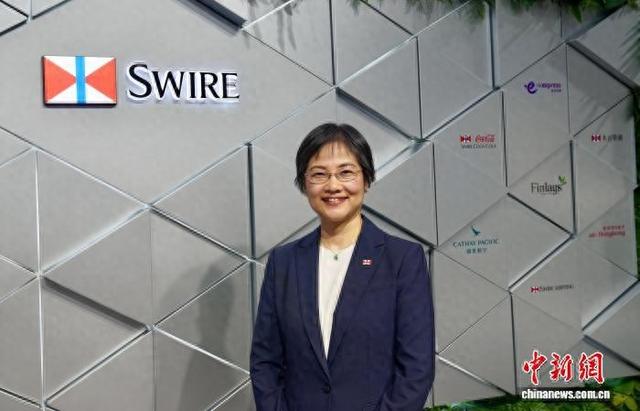
Core Viewpoint - China is continuously expanding its openness, providing certainty in the current global landscape, which is crucial for multinational enterprises [1][3]. Group 1: Investment and Business Expansion - Swire Group is increasing its investment in China, evidenced by its expansion in commercial real estate, construction of green intelligent factories, and world-class aircraft maintenance facilities [3][4]. - The company is actively exploring new market opportunities in response to the evolving demands of Chinese consumers, particularly in healthcare and urban renewal [4]. Group 2: Innovation and Technology - At the recent China International Import Expo, Swire Group showcased innovations such as the Xi'an Taikoo Li project, which integrates traditional architecture with modern commercial spaces, and advanced digital maintenance technologies in aviation [3][4]. - The company emphasizes the importance of "new quality productivity" in the aviation maintenance sector, reflecting its commitment to technological advancement [3]. Group 3: Future Vision - Swire Group's future vision includes being a provider of quality living, a participant in China's modernization, and a practitioner of win-win cooperation under China's high-level opening-up policy [4][5]. - The company aims to deepen its integration into China's development landscape while responding to consumer expectations for high-quality living [5].


自然、艺术与商业的共鸣:北京太古坊如何重塑城市经济生态新范式?
Xin Lang Cai Jing· 2025-11-05 07:08
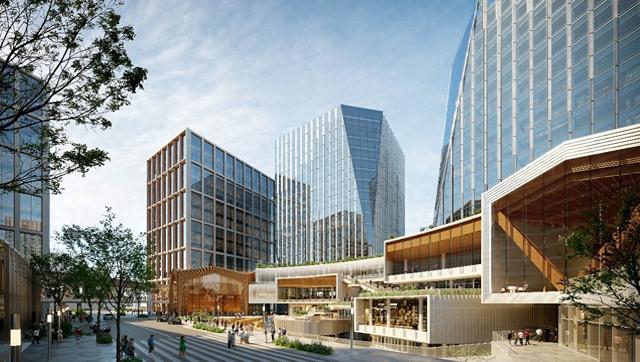
Core Insights - The Taikoo Place Beijing project has reached a significant milestone with the structural completion of all eight buildings, marking a new development phase for this landmark riverside commercial complex [1][5] - The project aims to redefine commercial space and create a new paradigm for office and lifestyle integration, attracting major industry players and promoting industrial upgrades [1][5][17] Group 1: Project Overview - Taikoo Place Beijing is an expansion of the existing Pacific Place project, located along the scenic Ba River, and will be renamed upon completion [5] - The project encompasses over 860,000 square meters of total floor area, integrating business and diverse lifestyle functions [5][7] - It features seven new super-grade A office buildings, a high-quality shopping center, a new East Hotel, and extensive green spaces, addressing the coexistence of ecological value and commercial logic [5][9] Group 2: Community and Lifestyle Integration - The project includes seamless connections between office clusters, retail areas, hotels, and supporting facilities, enhancing accessibility to public transport [7][9] - The office cluster, covering over 330,000 square meters, emphasizes efficiency, flexibility, and employee well-being, aiming to attract leading enterprises from various sectors [7][9] - The retail section will introduce over 200 new brands, creating a multi-layered retail matrix that emphasizes experiential and cultural offerings [9][11] Group 3: Cultural and Economic Impact - The "Delphi" social core within the project serves as a community hub, featuring flexible workspaces and event facilities, enriching the urban cultural ecosystem [11][13] - The project aligns with Beijing's urban development strategy, contributing to the "Two Rivers and One Belt" ecological space framework and enhancing regional collaboration [15][17] - It is expected to attract innovative, international enterprises from technology, media, life sciences, and high-end manufacturing sectors, fostering sustainable development and economic prosperity [17]

新世界执行董事兼行政总裁黄少媚:以“销售物业+经营性资产”双轮驱动为核心战略
Zheng Quan Ri Bao· 2025-11-04 15:45
Core Insights - The company is optimistic about the future of the real estate market, emphasizing the importance of quality in products and services to seize development opportunities [2][3] - The company has successfully secured a record refinancing of HKD 88.2 billion, marking the largest loan of its kind in Hong Kong's history [1] - The company aims to enhance cash flow stability by increasing sales, driven by favorable market conditions such as interest rate cuts and a stabilizing Hong Kong property market [1] Financial Performance - The company achieved a contract sales amount of over HKD 11.4 billion for the Yau Chan project, making it the top performer in Hong Kong's new housing market for 2025 [1] - The company projects a total contract sales amount of approximately HKD 14 billion in mainland China for the 2025 fiscal year, with the southern region, particularly the Greater Bay Area, contributing nearly 52% [3] Strategic Focus - The company is implementing a dual strategy of "sales properties + operating assets" to balance short-term revenue and long-term growth [5] - The company is focusing on urban renewal projects to acquire land, particularly in the Greater Bay Area and Yangtze River Delta regions, which are seen as having strong development potential [2][3] Market Outlook - The company expresses confidence in the demand support from both the Hong Kong and mainland markets, with a particular focus on the ongoing talent attraction initiatives in Hong Kong [2] - The company plans to concentrate investments in residential properties, aiming for a balance between cash input and output for long-term and short-term returns [3] Operational Strategy - The company is enhancing its operational management by integrating the operations of its Hong Kong and mainland subsidiaries, focusing on cost control and profit maximization [5][7] - The company is committed to improving cash flow, managing debt, and optimizing operational efficiency in the upcoming fiscal year [7]


镇有料 | 工业与消费“齐飞”,中山火炬区前三季度经济显韧性
Sou Hu Cai Jing· 2025-11-04 15:10
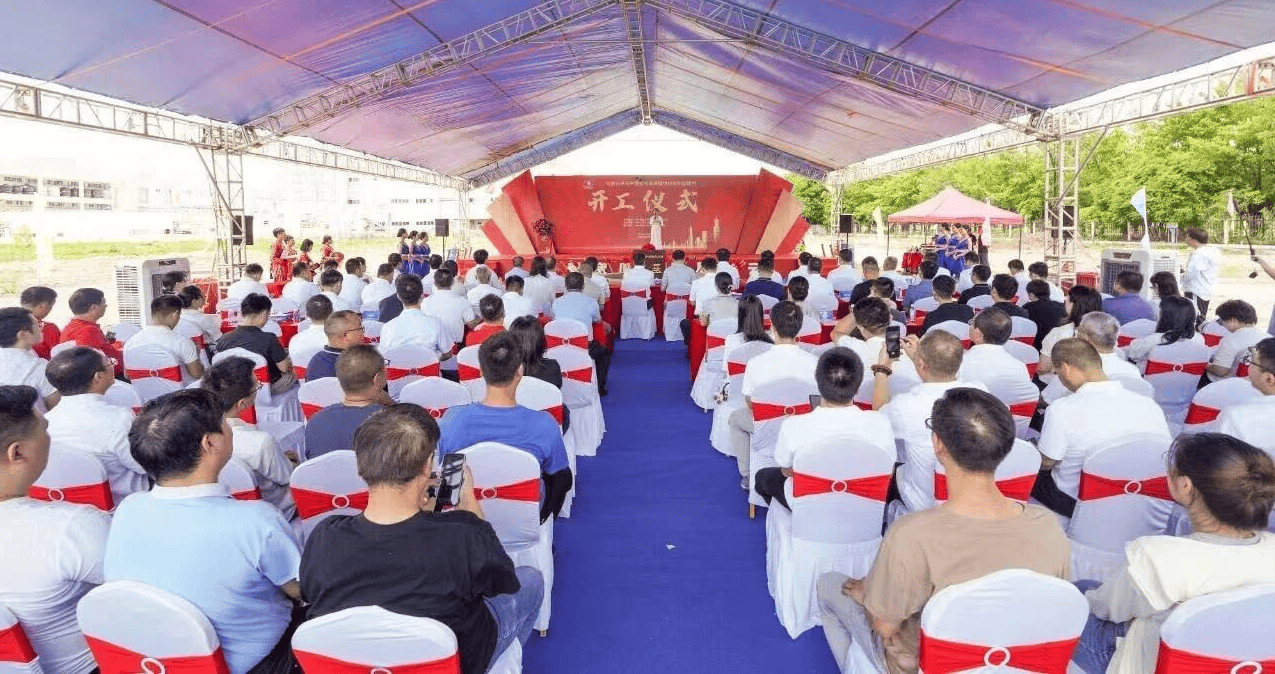
Economic Performance - The GDP of Zhongshan Torch High-tech Zone reached 41.621 billion yuan in the first three quarters, with industrial added value increasing by 6.4% year-on-year, up 1.9 percentage points from the first half of the year [1] - Retail sales and catering consumption grew by 6.0% year-on-year, maintaining over 5.0% growth for nine consecutive months [1] Industrial Growth - The number of projects in the Torch High-tech Zone reached 148, with a total investment of 23.449 billion yuan, leading the city in project count and investment [1][3] - Six major projects, including Hongjing and Maiji, have commenced construction, demonstrating a strong commitment to industrial development [1] Enterprise Development - Six new national-level specialized and innovative "little giant" enterprises were added, doubling from last year, and three new national key "little giant" enterprises were established, tripling the previous total [3] - Mingyang Group ranked 376th in the "China Top 500 Enterprises," being the only company from Zhongshan to make the list [3] Government Support - The Torch High-tech Zone government has implemented a detailed service model to support enterprises, addressing their needs in financing, labor, and market access [3][4] - A total of 1,359 enterprises received services, with 265 issues resolved, showcasing the effectiveness of the service model [3] Consumer Market - The "Yue Purchase Torch" promotional campaign resulted in a cumulative investment of 15 million yuan, leading to double-digit growth in retail and catering sectors [5] - The opening of two high-end hotels in October marked a significant development in the service industry, filling gaps in high-end accommodation [5] Commercial Development - The Torch Jianfa Group has developed a service industry cluster, attracting over 50 service projects and creating approximately 1,000 new jobs [6] - The Fuyicheng project, a key commercial hub, has attracted over 200 quality brands and achieved an average daily footfall of nearly 70,000 during the recent holiday period [8] Cultural and Tourism Integration - The Torch High-tech Zone is expanding its service industry by integrating cultural and tourism projects, enhancing the living experience for residents and visitors [8] - Innovative projects like the Bay Area Military National Defense Education Expo Park and the "Minzhong Green Belt" scenic project are expected to attract significant tourist traffic [8]
星星集团附属拟4836.7万港元出售香港物业
Zhi Tong Cai Jing· 2025-11-04 15:07
Core Viewpoint - The company has agreed to sell a property for HKD 48.367 million, which will be leased back to continue its shared workspace operations, addressing the challenges in the Hong Kong commercial property market [1][2]. Group 1: Transaction Details - The seller, Yongda Development, a wholly-owned subsidiary of the company, has entered into an agreement with the buyer, Wei Yong, to sell the property located at Silver Fortune Plaza, 20th floor, 1 Wellington Street, Hong Kong [1]. - The total area of the property is approximately 4,397 square feet, currently used as a shared workspace by the company's indirect subsidiary [1]. - The buyer will lease the property back to a designated tenant at a monthly rent of HKD 185,000, excluding property tax, rates, and management and air conditioning fees, for an initial term of two years with an option to renew for an additional two years [1]. Group 2: Strategic Rationale - The board has been evaluating the commercial environment in Hong Kong, the development of the commercial property market, and the company's financial condition [2]. - The sale is seen as a way to liquidate the investment in the property, addressing the downward trend and uncertainties in the Hong Kong commercial property market, while improving the company's debt, liquidity, financing costs, and overall financial pressure [2]. - The sale and leaseback arrangement allows the company to continue its operations in the property without the need to relocate or incur additional costs to restore the property at the end of the lease [2].
星星集团(01560)附属拟4836.7万港元出售香港物业
智通财经网· 2025-11-04 15:05
Group 1 - The company, Star Group, has announced the sale of a property located at Silver Fortune Plaza, 1 Wellington Street, Hong Kong, for a total consideration of HKD 48.367 million [1] - The buyer, Wei Yong, will lease the property back to the company or its wholly-owned subsidiary at a monthly rent of HKD 185,000, excluding taxes and management fees, for an initial term of two years with an option to renew for an additional two years [1] - The property has a total built-up area of approximately 4,397 square feet and is currently used as a shared workspace by the company's indirect subsidiary [1] Group 2 - The board of directors has been evaluating the commercial environment in Hong Kong, the development of the commercial property market, and the company's financial condition [2] - The sale is seen as a way to realize the investment in the property, addressing the downward trend and uncertainties in the Hong Kong commercial property market, while improving the company's debt, liquidity, financing costs, and overall financial pressure [2] - The sale and leaseback arrangement will allow the company to continue operating its shared workspace business without the need to relocate or incur additional costs to restore the property at the end of the lease [2]
阿里豪掷72亿港元买楼、“铺王”套现离场 ,香港写字楼迎7年最强季
2 1 Shi Ji Jing Ji Bao Dao· 2025-11-04 13:59
Core Insights - The Hong Kong commercial real estate market is experiencing a dramatic shift, with tech giants like Alibaba and Ant Group investing heavily while traditional real estate players like Dahonghui are selling off assets, reflecting contrasting market sentiments [2][9][12] Market Performance - The third quarter of 2025 marked the strongest performance for Hong Kong's office market in seven years, with a net absorption of 691,800 square feet, the highest since Q3 2018 [2] - All major commercial districts recorded positive net absorption for the first time since Q2 2015, indicating a robust recovery [2] Vacancy Rates - The overall vacancy rate for Grade A office spaces improved to 17.1% by the end of September, a quarterly decline of 0.3 percentage points, the largest drop since Q3 2018 [3] - Despite high vacancy levels, the market is showing signs of recovery, with new leasing activity reaching 3.3 million square feet, comparable to 2019 levels [3] Demand Drivers - The resurgence in the office market is driven by a booming IPO market and the rise of the wealth management sector, with banks and multinational companies accelerating their office space negotiations [4][5] - Over 70 companies have successfully listed on the Hong Kong Stock Exchange this year, raising over HKD 189.3 billion, contributing to increased demand for office space [5] Rental Trends - Core areas like Central are seeing strong demand for premium office spaces, with a net absorption of 138,000 square feet in Q3, the highest in a decade, while vacancy rates are declining [6][7] - Rental prices in Central have remained relatively stable, with only a slight decline of 0.3%, contrasting with an overall market decline of 0.8% [6][7] New Market Participants - Mainland companies are emerging as significant players in the Hong Kong office market, with Alibaba and Ant Group's acquisition of a major property in Causeway Bay being a notable example [9][10] - Demand from mainland clients for Grade A office spaces, particularly in core areas, is strong and growing [10] Market Challenges - Despite new entrants, the overall recovery of the market is expected to take time, with a projected increase in office occupancy rates by 2027-2028 due to a significant reduction in new supply [11] - The current market faces challenges such as oversupply, with a vacancy rate of approximately 19% and a substantial new supply of 3.3 million square feet this year [12]

阿里豪掷72亿港元买楼、“铺王”套现离场 ,香港写字楼迎7年最强季
21世纪经济报道· 2025-11-04 13:53
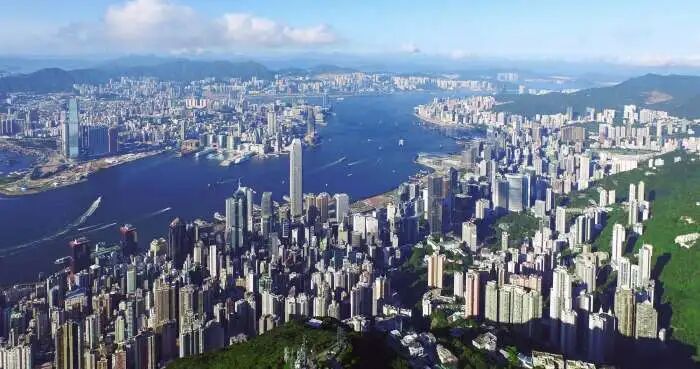
Core Insights - The Hong Kong commercial real estate market is experiencing a dramatic shift, with tech giants like Alibaba and Ant Group investing heavily, while traditional real estate players like Dahonghui are opting to sell their properties [1][11]. Market Performance - The third quarter of 2025 saw the highest net absorption of Grade A office space in Hong Kong since 2018, reaching 691,800 square feet, with all major commercial districts reporting positive net absorption for the first time since Q2 2015 [3]. - The overall vacancy rate for Grade A offices improved for two consecutive quarters, dropping to 17.1% by the end of September, marking the largest quarterly decline since Q3 2018 [3]. Rental Trends - New leasing activity from January to Q3 2025 reached 3.3 million square feet, aligning with 2019 levels, as companies take advantage of a 43% drop in rental prices compared to early 2019 [5]. - The demand for premium office spaces in core areas remains resilient, with Central reporting a net absorption of 138,000 square feet, the highest in a decade, and only a slight rental decline of 0.3% [8][9]. Emerging Demand - The resurgence in the office market is driven by the booming IPO market and the rise of the wealth management sector, with banks and multinational companies accelerating their office space negotiations [5]. - Over 70 companies have successfully listed on the Hong Kong Stock Exchange this year, raising over HKD 189.3 billion, indicating a robust capital market that boosts confidence in the real estate sector [6]. New Players and Market Dynamics - Mainland companies are becoming a significant force in the Hong Kong office market, with Alibaba and Ant Group's acquisition of a prime property in Causeway Bay exemplifying this trend [11]. - Despite new entrants, the overall market recovery is expected to take time, with a projected increase in office rental rates anticipated between 2027 and 2028 due to a significant reduction in new supply [11][12]. Investment Sentiment - Currently, investors account for only 20% of office buyers, a significant drop from the historical average of 50%, primarily due to cautious bank lending and unattractive rental yields compared to other investment options [12][13]. - The overall office market faces challenges from oversupply, with a current vacancy rate of approximately 19% and a substantial new supply of 3.3 million square feet expected to take two to three years to absorb [13].
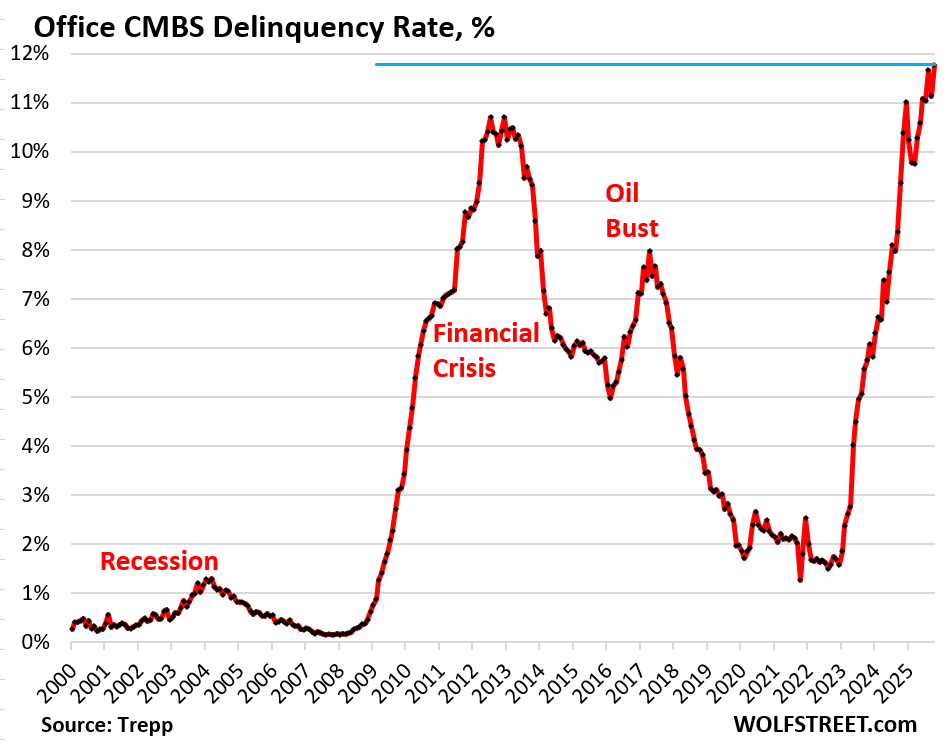
美国办公地产危机加速:办公楼CMBS违约率突破11.8%创历史新高,已超越2008金融危机峰值
Hua Er Jie Jian Wen· 2025-11-04 12:43
Core Insights - The crisis in the U.S. commercial real estate market, particularly in the office sector, is worsening at an alarming rate, with the default rate on office loans in commercial mortgage-backed securities (CMBS) reaching a historic high of 11.8% in October 2023, surpassing the peak of 10.7% during the 2008 financial crisis [1][6] Group 1: Default Rates and Trends - The default rate for CMBS office loans has surged dramatically from 1.8% in October 2022 to 11.8% in October 2023, indicating a rapid deterioration in the market [6] - The default rate for multifamily residential CMBS also rose sharply by 53 basis points to 7.1%, marking the worst level since 2015 [3] Group 2: Structural Changes and Economic Factors - The shift to remote work has become entrenched post-pandemic, with remote work accounting for approximately 28% of full-time work hours, nearly six times the pre-pandemic level, leading to a national office vacancy rate of 20% [7] - Major markets like San Francisco and Austin are experiencing even higher vacancy rates of 36.9% and 27.2%, respectively [7] Group 3: Debt Maturity Wall - A significant amount of commercial real estate debt is approaching maturity, with $957 billion due in 2025, including approximately $230 billion in office loans, exacerbating the refinancing challenges faced by borrowers [7] - Many loans originally due in 2024 have been pushed to 2025, as lenders hoped for a decline in interest rates and a rebound in asset values, a bet that has not materialized [7] Group 4: Notable Default Cases - High-profile defaults are emerging, such as the Bravern Office Commons in Bellevue, Washington, with a $304 million mortgage now in default, having seen its value plummet by 56% from $605 million in early 2020 to $268 million [8] - Other notable projects facing default include The Factory in Long Island City, New York, and the Federal Center Plaza in Washington, D.C. [8] Group 5: Broader Financial Implications - The office crisis is impacting regional banks heavily exposed to commercial real estate loans, with 59 out of the 158 largest U.S. banks having commercial real estate loan exposure exceeding 300% of their equity [9] - The collapse in office asset values is also affecting municipal finances, with cities like New Orleans facing significant budget shortfalls due to declining property tax revenues, projected to reach $1.4 billion by 2027 [9] - The risks associated with these loans have shifted from the originating banks to global institutional investors, including bond funds, insurance companies, pension funds, and real estate investment trusts (REITs), who will face increasing losses as default rates rise and collateral values decline [9]