宠物

Search documents
邀请函|国泰海通证券2025消费品年会-上海
国泰海通证券研究· 2025-08-14 13:29
Core Viewpoint - The article discusses the upcoming 2025 Consumer Goods Annual Conference organized by Guotai Junan Securities, focusing on future consumption trends, opportunities in various sectors, and the impact of demographic changes on consumer behavior [3][7]. Group 1: Conference Agenda Highlights - The conference will feature a keynote speech on future consumption trends from a demographic perspective by a population expert [7]. - Sessions will cover topics such as the resurgence of domestic beauty brands, the era of functional health products, and the jewelry industry in the new consumption era [7]. - A roundtable forum will discuss opportunities in the beauty industry, emphasizing growth and policy support [7]. Group 2: Industry Insights - The conference will address the high demand and technological innovations in the cleaning appliance sector, highlighting the interplay of policy, technology, and consumer needs [10]. - The luxury goods industry will be analyzed for trends and brand differentiation, providing insights into market dynamics [11]. - The pet economy's growth will be explored, identifying potential leading companies in this sector [11].


中泰资管天团 | 郑日:情绪强烈且易逝,如何理解新消费和情绪消费
中泰证券资管· 2025-08-14 11:33
Core Viewpoint - The article discusses the rise of "emotional consumption" as a significant trend in the capital market, particularly among younger consumers who prioritize emotional value alongside practicality and cost-effectiveness [1][4]. Group 1: Emotional Consumption Overview - Emotional consumption, also known as emotional spending, emphasizes the importance of emotional satisfaction in purchasing behavior, particularly among young people and singles [6]. - The trend of emotional consumption is linked to societal changes, such as Japan's aging population and declining marriage and birth rates, leading to a more individualized approach to consumption [6]. Group 2: Economic Context and Trends - Economic slowdowns often lead to a shift in consumer demand from functional to emotional value, as seen in historical contexts in both Japan and the U.S. [9]. - In Japan, post-bubble economic adjustments led to the growth of various sectors, including discount stores, pet economy, and virtual idol markets, highlighting the resilience of emotional consumption [9][10]. Group 3: Long-term Emotional Needs - Core emotional needs persist over time, but the forms of products and services evolve, requiring businesses to transform fleeting emotional sparks into lasting customer loyalty [13]. - Factors influencing the lifecycle of emotional consumption products include addictive design, social currency attributes, and cultural symbolism [14]. Group 4: Avoiding Homogenization - Emotional consumption products risk homogenization due to the ease of replicating emotional experiences through existing cultural symbols and marketing strategies [16]. - To maintain competitive advantage, companies must build an unreplicable emotional value chain and develop barriers through emotional technology, cultural integration, and dynamic social ecosystems [16].

第一创业晨会纪要-20250814
First Capital Securities· 2025-08-14 06:29
Macro Economic Group - In July, M2 growth reached 8.8% year-on-year, the highest since December 2023, surpassing the Wind forecast of 8.3% [5] - M1 growth was 5.6%, also the highest since February 2023, exceeding the Wind forecast of 5.3% [5] - The difference between M1 and M2 was -3.2%, the highest since June 2021, indicating a significant acceleration in the speed of money circulation [5] - Social financing (社融) grew by 9.0% year-on-year, the highest since February 2024, although the growth rate was slightly below the Wind forecast of 9.1% [5] - In July, the incremental social financing was 1.16 trillion yuan, lower than the expected 1.41 trillion yuan and the previous month's 4.2 trillion yuan [5] - Bank credit in July showed a negative increment of 500 billion yuan, marking the first negative value in 20 years [6] - The increase in bank deposits was 500 billion yuan, significantly lower than the previous month's 3.21 trillion yuan [6] Industry Comprehensive Group - Reports indicate that U.S. authorities have installed tracking devices in advanced chips believed to be illegally shipped to China, intensifying competition in the AI sector between the U.S. and China [10] - Domestic AI chip industry is expected to benefit from the heightened competition and the push for self-sufficiency in technology [10] - Dingyang Technology reported a 24.6% year-on-year revenue increase to 278 million yuan in the first half of 2025, with a net profit growth of 31.54% [11] - The overall electronic industry is seeing a rebound in capital expenditure, indicating improved industry conditions [11] Advanced Manufacturing Group - Tesla launched the Model 3 Long Range version, which may alleviate sales slowdown amid increasing competition in the electric vehicle market [13] - Dao's Technology reported a revenue decline of 11.64% but a net profit increase of 108.16%, indicating improved operational efficiency [14] - The Seagull Flying Car Group has commenced a project in Jiangsu with an investment of approximately 1 billion yuan, focusing on flying cars and related technologies [14] Consumer Group - Bandai Namco reported a record sales revenue of 300.4 billion yen for Q1 FY2025, a 7.1% year-on-year increase, indicating strong performance in the IP industry [16] - Zhongchong Co. achieved a total revenue of 2.432 billion yuan in H1 2025, with a 24.32% year-on-year growth, reflecting robust demand in the pet food sector [17] - Moutai's revenue for H1 2025 was 91.1 billion yuan, a 9.1% increase year-on-year, although growth may slow due to market conditions [18]
AI驱动宠物产业生态变革
Xiao Fei Ri Bao Wang· 2025-08-14 03:26
Group 1: Industry Overview - The pet economy in China is experiencing significant growth, with domestic pet consumption reaching 77.375 billion yuan in the first half of the year, a year-on-year increase of 8.84% [1] - The average revenue per pet store in mainland China was approximately 137,500 yuan in the first half of the year [1] - The pet industry is evolving from a focus on food and supplies to a comprehensive ecosystem that includes medical care, grooming, training, and insurance [1] Group 2: Market Demand and Company Performance - Zhongchong Co., Ltd. reported total revenue of 2.432 billion yuan in the first half of the year, a year-on-year increase of 24.32%, with a net profit of 203 million yuan, up 42.56% [2] - Tianyuan Pet achieved total revenue of 569 million yuan in the first quarter, a year-on-year increase of 13.07%, with a net profit of 17 million yuan, up 18.97% [2] - Yiyi Co., Ltd. reported total revenue of 485 million yuan in the first quarter, a year-on-year increase of 26.56%, with a net profit of 54 million yuan, up 27.96% [2] Group 3: Future Market Projections - The urban pet consumption market in China is expected to exceed 300 billion yuan by 2024, with the total number of dogs and cats reaching over 120 million [2] - The pet economy is projected to grow to 1.15 trillion yuan by 2028 [2] Group 4: Policy Support and Consumer Trends - Government policies are supporting the growth of the pet economy, with action plans released in Hefei and Foshan to promote high-quality development [3] - The evolving consumer mindset and increasing demand for pet health management and personalized services are driving the growth of the pet economy [3] Group 5: Technological Integration - AI technology is becoming a key driver in the pet economy, with companies integrating AI into pet services and products [4] - New AI-enabled products, such as the "AI Pet Partner" app and smart pet devices, are being developed to enhance pet care [4] Group 6: Digital Transformation in Supply Chain - Companies are focusing on digital transformation to address challenges in order management and inventory coordination [5][6] - The integration of AI and digital platforms is expected to improve operational efficiency and standardization across the pet industry [6] Group 7: Competitive Landscape - The competition in the pet economy is shifting towards technology depth and data barriers, with companies competing on algorithm accuracy and user engagement [6] - New business models may emerge, including AI-based pet health management subscription services and AI-driven customized pet products [6]


新消费研究-情绪价值总论:始于情绪,终于情感,尊重时间,尊重经营
2025-08-13 14:53
Summary of Key Points from the Conference Call Industry Overview - The global healing economy is projected to reach $7 trillion by 2025, while China's emotional consumption market is expected to exceed 2 trillion RMB in the same year, with an annual compound growth rate exceeding 12% [1][2][3] - The cultural, film, and gaming industries are rapidly expanding, highlighting the importance of emotional value as a significant added value to products [1][3] Core Concepts and Arguments - Emotional value refers to the emotional satisfaction and psychological pleasure consumers derive from purchasing and using products. It encompasses both narrow emotional consumption sectors (e.g., trendy toys, stress-relief toys, emotionally-driven jewelry, and pets) and a broader range of products that must create emotional value [2][4] - Companies can enhance emotional value by improving product added value, increasing consumer pleasure, and boosting conversion rates. Traditional companies in sectors like pets, trendy toys, and jewelry have successfully attracted loyal users through innovative design and marketing strategies [1][4] - The Chinese market has vast potential for developing emotional value, with a focus on "starting with emotion and being loyal to management" to build sustainable, high-quality brand power [1][6] Risks and Considerations - The emotional value sector faces volatility risks, and investors should closely monitor industry dynamics and leading companies' performances while being cautious of over-reliance on single trends or short-term fads [1][7] - As GDP per capita increases, consumer demand is shifting from functional value to emotional and group value, indicating a need for companies to adapt to these changing consumer preferences [1][8] Market Dynamics - The increase in supply-side functional value disparity has concentrated asset value among a few brands, thereby elevating the importance of emotional value [1][10] - Rising incomes among younger generations (90s and 00s) drive higher demand for emotional value, as their spending structures differ significantly from previous generations [1][11] Strategic Insights - Companies should leverage AI and digital tools to capture consumer needs accurately and build a diverse product matrix to meet various consumer demands [2][16][17] - Agile supply chains are crucial for meeting emotional consumption needs, allowing companies to respond quickly to market changes [2][18] - Social media dynamics can enhance brand development and maximize channel efficiency by resonating emotionally with consumers [2][19] Case Studies and Examples - Companies like Bandai and Xiaomi exemplify successful emotional value strategies, with Bandai leveraging a mature platform for IP operations and Xiaomi transforming its automotive products into emotional carriers through user-centric design and ecosystem integration [2][21][27] - Shoujin Holdings demonstrates how social attributes can drive market value growth, emphasizing cultural representation and product quality [2][23] Conclusion - Emotional value is not limited to specific sectors but can be integrated into various traditional industries, suggesting a long-term strategic focus for companies aiming to enhance brand loyalty and consumer engagement [2][24][25] - Investors should remain vigilant against market exuberance and focus on sustainable growth factors to mitigate risks associated with emotional value investments [2][29]
毕马威中国经济研究院院长蔡伟:消费市场的积极变化将利好消费板块的估值修复
Zheng Quan Ri Bao Wang· 2025-08-13 11:05
Group 1 - The positive changes in the consumption market will benefit the valuation recovery of the consumption sector, enhancing performance growth expectations for companies supported by policy and market demand [1] - The investment attractiveness of the consumption sector is expected to increase further, boosting investor confidence and attracting more capital inflow [1] Group 2 - In July, the PPI decline in industries such as coal, steel, cement, photovoltaic, and lithium batteries has narrowed, while CPI for fuel and new energy vehicles has stabilized after several months of decline [2] - To consolidate the foundation for moderate price recovery, it is necessary to strengthen policy coordination on both supply and demand sides, promoting industrial upgrades and demand creation [2] - On the supply side, improving standards for technology, energy consumption, and emissions is essential to phase out outdated capacity and replace it with high-quality capacity [2] Group 3 - The new consumption sector is expected to further contribute to domestic demand, particularly through the acceleration of service consumption potential, innovation in consumption scenarios and channels, and the emergence of the emotional economy [3] - The "self-care economy" trend is driving growth in new sectors such as light luxury, trendy toys, pet care, and fitness, becoming new engines for industrial upgrades and economic growth [3] Group 4 - The implementation of policies like "old for new" has led to positive changes in the consumption market, with suggestions to expand subsidy coverage to essential goods and services [4] - The focus should also be on balancing the pace of subsidy distribution to ensure policy continuity and optimize financial support and tax incentives [4] - The emotional economy-related sectors in the A-share market have shown active performance, indicating high market recognition of their growth potential [4] Group 5 - The younger consumer group increasingly values "emotional value" and "cultural identity," making "emotional price ratio" a significant factor in their purchasing decisions [5] - The rise of national brands and cultural exports is driving high growth in sectors like trendy toys and IP derivatives, with companies that possess brand advantages and innovation capabilities standing out [5]
成立两月即亏近10%!贾成东深陷“赌性”操盘风波
市值风云· 2025-08-13 10:15
Core Viewpoint - The newly launched fund managed by star fund manager Jia Chengdong has experienced a significant decline of 8.2%, ranking second to last among similar products, despite the overall A-share market rising nearly 10% [3][4]. Fund Performance - The fund "Shenwan Lingxin Industry Selected Mixed A" has a year-to-date return of -8.23% and an annualized return of -37.81% since its inception [4]. - In comparison, the benchmark index "CSI 300" has shown a year-to-date return of 5.28% and an annualized return of 40.51% over five years [4]. Fundraising and Management - The fund raised a total of 1.219 billion yuan, with 10,477 effective subscriptions, making it the fourth actively managed equity fund this year to exceed 1 billion yuan in initial fundraising [6][8]. - Jia Chengdong, previously managing assets of up to 18 billion yuan, was appointed as the deputy general manager of Shenwan Lingxin Fund in March 2025 [8][12]. Employee Complaints - Employees of Shenwan Hongyuan Securities have reported being pressured to purchase their own products, leading to dissatisfaction among investors [4][19]. - The fund's management has denied allegations of forcing employees to invest, stating that such rumors are untrue [21]. Market Context and Challenges - The fund's poor performance comes amid a favorable market environment, raising concerns about the fund manager's market timing abilities [20][22]. - The situation highlights ongoing issues within the public fund industry, such as prioritizing sales over management and the potential risks associated with aggressive investment strategies [22].

信达证券发布乖宝宠物研报:发布股票激励计划,激发核心团队积极性
Mei Ri Jing Ji Xin Wen· 2025-08-13 09:18
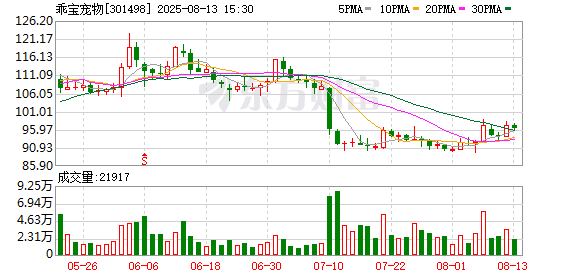
Group 1 - The company has announced the second phase of its restricted stock incentive plan, which aims to drive continuous growth in revenue and profit [2] - The company's self-owned brand is showing strong growth trends in sales [2] - The data empowerment system and research capabilities are creating product advantages for the company [2] Group 2 - The overseas production capacity expansion is progressing smoothly, with limited short-term impact expected on the OEM business [2]

温州源飞宠物玩具制品股份有限公司第三届董事会第六次会议决议公告
Shang Hai Zheng Quan Bao· 2025-08-12 19:52
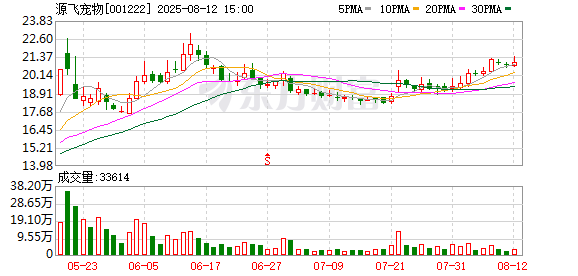
Group 1 - The company held its third board meeting on August 11, 2025, where all seven directors attended, and the meeting complied with legal and regulatory requirements [2][4]. - The board approved the adjustment of the 2025 restricted stock incentive plan, reducing the number of initial grantees from 62 to 53 due to voluntary withdrawals, while maintaining the total number of shares at 2,009,540 [3][25]. - The board also approved the first grant of restricted stock to the 53 eligible grantees at a price of 9.63 yuan per share, with the grant date set for August 11, 2025 [5][32]. Group 2 - The company decided to postpone the completion date of the "Research and Development Center Construction Project" to December 31, 2026, due to delays in implementation and adjustments in project planning [7][14]. - The board believes that this postponement will enhance the efficiency of fund utilization and align with the company's long-term development needs [7][16]. - The postponement does not require shareholder approval as it falls within the board's authority [7][16]. Group 3 - The company raised a total of 467.51 million yuan from its initial public offering in August 2022, with a net amount of 408.71 million yuan after deducting issuance costs [13]. - As of July 31, 2025, the company has invested 131.28 million yuan in its fundraising projects, with the total commitment amounting to 171.27 million yuan [13][14]. - The company has established a dedicated account for the management of raised funds, ensuring compliance with regulatory requirements [13].
源飞宠物:第三届董事会第六次会议决议公告
Zheng Quan Ri Bao· 2025-08-12 14:14
证券日报网讯 8月12日晚间,源飞宠物发布公告称,公司第三届董事会第六次会议审议通过了《关于调 整2025年限制性股票激励计划授予激励对象名单的议案》等多项议案。 (文章来源:证券日报) ...