
智能汽车

Search documents
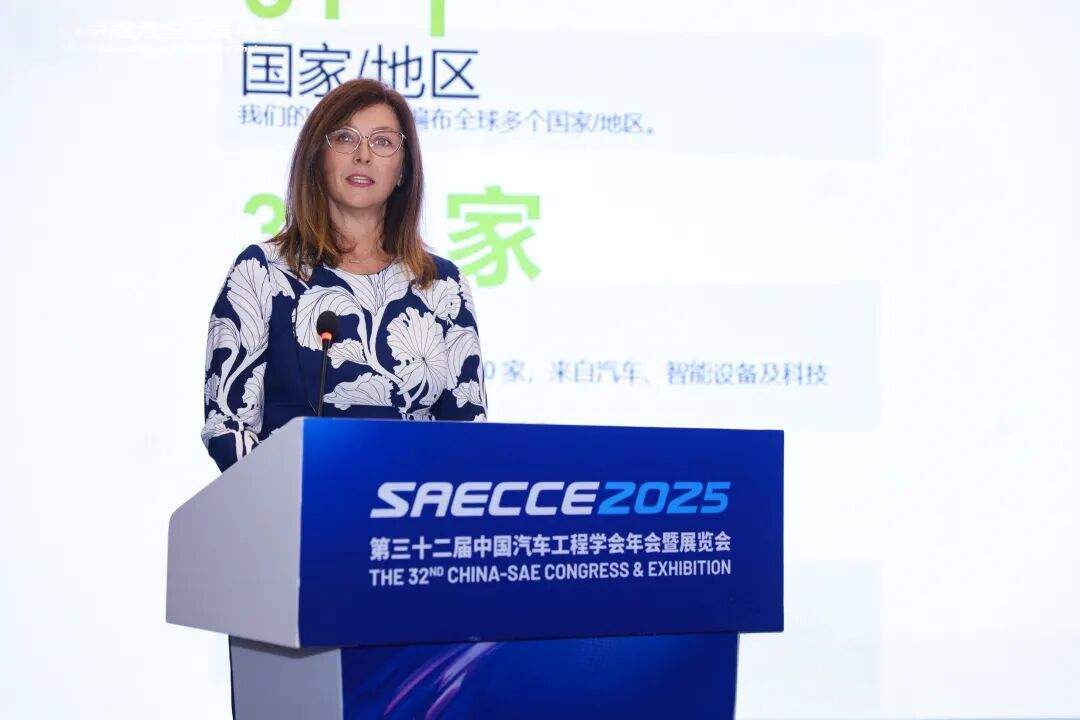
全球车联联盟受邀联合主持SAECCE 2025数字钥匙专题论坛
Huan Qiu Wang· 2025-10-24 13:27
Core Insights - The 32nd China Society of Automotive Engineers Annual Conference and Exhibition (SAECCE 2025) will take place from October 22 to 24, 2025, featuring a forum on "Smart Car Digital Keys: Technical Standards Development and Industrial Ecosystem Growth" hosted by the Car Connectivity Consortium (CCC) [1] Group 1: CCC's Role and Commitment - CCC President Alysia Johnson emphasized the organization's ongoing commitment to the Chinese market, highlighting its role as a cross-industry standards organization with over 300 member companies across 31 countries [3] - The CCC aims to establish an open, secure, and interconnected global standard for digital keys, addressing issues of standard fragmentation and inconsistent technology routes in the industry [3] - CCC plans to increase investment in the Chinese market and enhance local certification capabilities to support Chinese automotive companies in reducing R&D costs and improving global compatibility [3] Group 2: Industry Contributions and Innovations - Representatives from major domestic automotive and technology companies showcased their latest developments based on CCC standards, with Geely's approach focusing on a "CCC standard as primary, private protocols as supplementary" strategy [3] - Lantu Automotive's digital and intelligent network director emphasized that digital keys are not just functional replacements but are crucial for creating a seamless service ecosystem [4] - Shanghai Yinjing Technology's CEO stated that digital keys define the intelligent experience of automotive brands and aim to connect manufacturers with the global ecosystem [4] - Wuhu All-Trace Technology's CEO presented an innovative UWB-AOA solution that reduces hardware deployment complexity and costs, facilitating the widespread adoption of digital keys in mainstream vehicles [4] - Leap Motor's project manager outlined the company's strategic layout in digital key technology evolution and ecosystem collaboration, showcasing the forward-looking exploration of new force automotive companies in smart mobility [4] Group 3: Future Directions and Collaboration - The forum provided a high-level communication platform for the standardization, industrialization, and ecological development of digital key technology [4] - With the deepening implementation of CCC standards in the Chinese market and collaborative innovation across the entire industry chain, CCC aims to enhance the global competitiveness of the Chinese automotive industry amid the wave of smart technology [4]


智能汽车ETF(159889)涨超2.3%,行业数据与政策利好共振
Mei Ri Jing Ji Xin Wen· 2025-10-24 06:53
Group 1 - The smart car ETF (159889) increased by over 2.3% on October 24 [1] - Companies like Changan and GAC are collaborating with JD.com to innovate retail models, enhancing omni-channel marketing and after-sales service, and exploring the "people-car-home" ecosystem [1] - Six departments plan to establish 28 million charging facilities by the end of 2027 to meet the demand of over 80 million electric vehicles [1] Group 2 - The Ministry of Industry and Information Technology (MIIT) will compile the "14th Five-Year" smart connected vehicle plan, accelerating the formulation of autonomous driving standards [1] - Currently, the proportion of new vehicles with combined driving assistance functions exceeds 60% [1] - The smart connected vehicle industry is seen as a significant force for new productive capacity, pushing the industry towards high-quality and sustainable development [1] Group 3 - The smart car ETF (159889) tracks the CS Smart Car Index (930721), which selects listed companies involved in terminal perception, platform applications, and other smart car-related businesses from the Shanghai and Shenzhen markets [1] - This index covers multiple industry sectors, including electronics, computers, and automobiles, aiming to reflect the overall performance of listed companies in the smart car industry chain [1] - The index is characterized by outstanding technological innovation attributes and industry growth potential [1]
早盘直击|今日行情关注
申万宏源证券上海北京西路营业部· 2025-10-24 05:09
Market Overview - A-shares have been oscillating around the 3900-point mark, with a rebound observed after a period of consolidation, driven by active performance in cyclical sectors such as coal and non-ferrous metals [1] - The impact of tariff events is gradually diminishing, leading to a renewed focus on domestic industrial trends as the 14th Five-Year Plan is set to be finalized [1] Future Outlook - The market is expected to maintain a震荡上行 (oscillating upward) trend, with the tariff event's impact being short-term and not affecting the mid-term trend [2] - Key focuses for October include the finalization of the 14th Five-Year Plan, the disclosure of Q3 reports, and event-driven developments in the technology sector [2] Sector Highlights - The technology sector remains a focal point, with potential for rebound in underperforming areas such as robotics, military industry, and smart vehicles [2] - The domestic semiconductor industry is on an upward trajectory, with attention on semiconductor equipment, wafer manufacturing, materials, and IC design [2] - The military sector is expected to see a recovery in orders by 2025, with signs of bottoming out in mid-term performance [2] - The innovative pharmaceutical sector is anticipated to reach a turning point in fundamentals by 2025, following a period of adjustment [2] - The banking sector is witnessing a recovery in mid-term performance after the impact of loan rate re-pricing, attracting interest from long-term institutional investors due to its dividend yield [2]

理想智驾是参考特斯拉, 不是跟随特斯拉已经有了很强的证据
理想TOP2· 2025-10-24 04:48
Core Viewpoint - The article discusses the evolution of Li Auto's autonomous driving technology from following Tesla to referencing Tesla, highlighting original innovations made by Li Auto that Tesla has not publicly addressed [2][3]. Group 1: Development Line of Li Auto's Autonomous Driving - Initially, Li Auto's autonomous driving was considered to be following Tesla, but after the introduction of VLM, it transitioned to a reference model, showcasing original innovations not mentioned by Tesla [2]. - The core innovation of Li Auto's VLA is at the DeepSeek MoE level, which is lower than the DeepSeek MLA innovation level [2]. - During the V10-11 period, it was acceptable to say Li Auto was following Tesla, but from V12 onwards, the extent of following has significantly decreased [2]. Group 2: Ashok's Presentation at ICCV 2025 - Ashok Elluswamy discussed Tesla's shift to a single, large end-to-end neural network that directly generates control actions from sensor data, eliminating explicit perception modules [4]. - The reasons for this shift include the difficulty of encoding human values into code, poor interface definitions between traditional perception, prediction, and planning, and the need for scalability to handle real-world complexities [5]. - Key challenges in learning from pixels to control include the curse of dimensionality, interpretability and safety guarantees, and evaluation [6]. Group 3: Solutions to Challenges - To address the curse of dimensionality, Tesla utilizes extensive data from its fleet and employs complex data collection methods to extract valuable corner case data [7]. - For interpretability, end-to-end models can be prompted to predict auxiliary outputs for debugging and safety assurance, with the main focus being on control actions [8]. - The evaluation challenge is addressed through a neural network closed-loop simulator that allows for comprehensive testing and performance assessment [10]. Group 4: Comparison with Li Auto - The article argues that Li Auto's prior announcements on natural language processing and 3D Gaussian representation predate Ashok's presentation, indicating that Li Auto is not merely following Tesla [13]. - The discussion highlights that Ashok's concepts lack groundbreaking ideas, suggesting that Li Auto's innovations are leading rather than following [13]. - The article also notes that Tesla's potential adoption of a VLA-based solution aligns with Li Auto's previously published architecture [16].



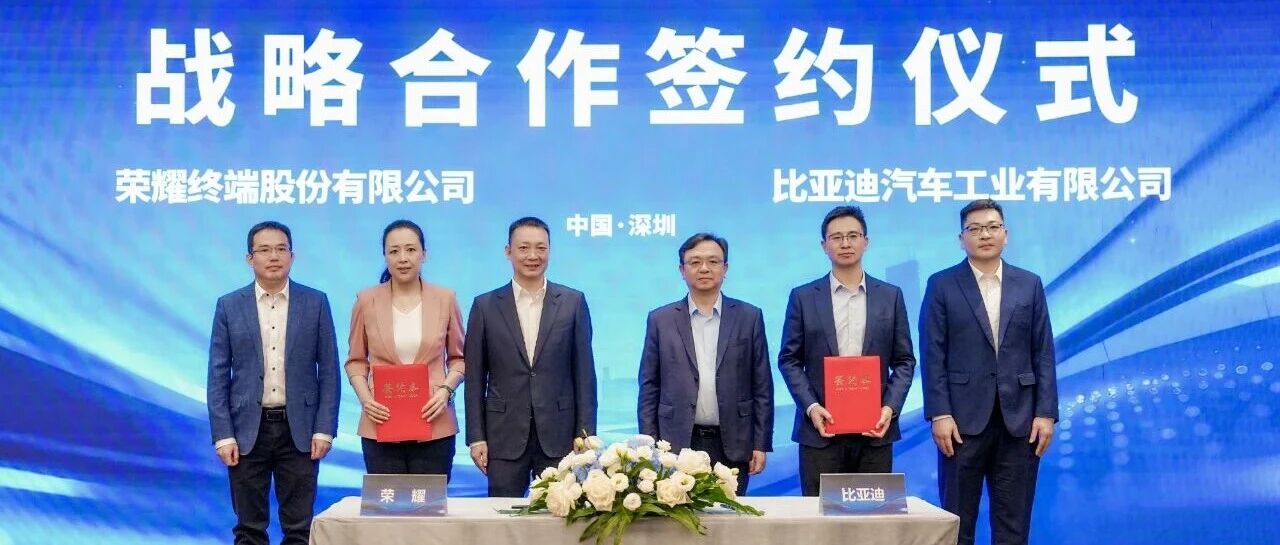
比亚迪、荣耀牵手,推进高精度蓝牙车钥匙技术迭代
第一财经· 2025-10-22 07:19
Core Viewpoint - Honor has announced a strategic partnership with BYD, focusing on three main areas: core technology and functionality implementation, channel ecosystem and user rights, and joint communication and user engagement [1] Group 1: Core Technology and Functionality Implementation - The collaboration will advance the integration of cross-end ecosystems and AI intelligence, as well as iterate technologies in areas such as high-precision Bluetooth car keys [2] Group 2: Channel Ecosystem and User Rights - Leveraging Honor's automotive connectivity capabilities and BYD's smart ecosystem, the two companies will establish a channel cooperation model of "product co-display + data co-operation," achieving platform-level rights interconnectivity [3]

早盘直击|今日行情关注
申万宏源证券上海北京西路营业部· 2025-10-22 02:55
Core Viewpoint - The market has shown resilience against tariff impacts, with the Shanghai Composite Index rebounding above 3900 points, indicating a shift in focus back to domestic industry trends as tariff concerns ease [1] Group 1: Market Trends - The recent tariff impacts are less severe than those experienced in April, leading to a stronger market immunity and a preference for sideways consolidation rather than significant declines [1] - The market is expected to maintain a fluctuating upward trend, with key attention on the upcoming 14th Five-Year Plan and third-quarter earnings reports [1] Group 2: Sector Focus - The technology sector remains a focal point in October, with orderly rotation and high-low switching expected within the sector [2] - Underperforming sectors such as robotics, military, and smart vehicles are anticipated to see a rebound, while leading sectors like computing hardware and domestic semiconductors may present buying opportunities upon adjustment [2] - The trend towards domestic semiconductor production continues, with attention on semiconductor equipment, wafer manufacturing, materials, and IC design [2] - The military sector is projected to experience a recovery in orders by 2025, with signs of bottoming out in mid-year performance declines [2] - The innovative drug sector is entering a recovery phase after nearly four years of adjustment, with positive net profit growth expected to continue into 2025 [2] - The banking sector is witnessing a rebound in mid-year performance growth following the impact of loan rate re-pricing, attracting long-term institutional investors due to appealing dividend yields [2]

AI创新进入「中国时间」,智能座舱领域「OpenAI」崛起
Feng Huang Wang· 2025-10-21 11:53
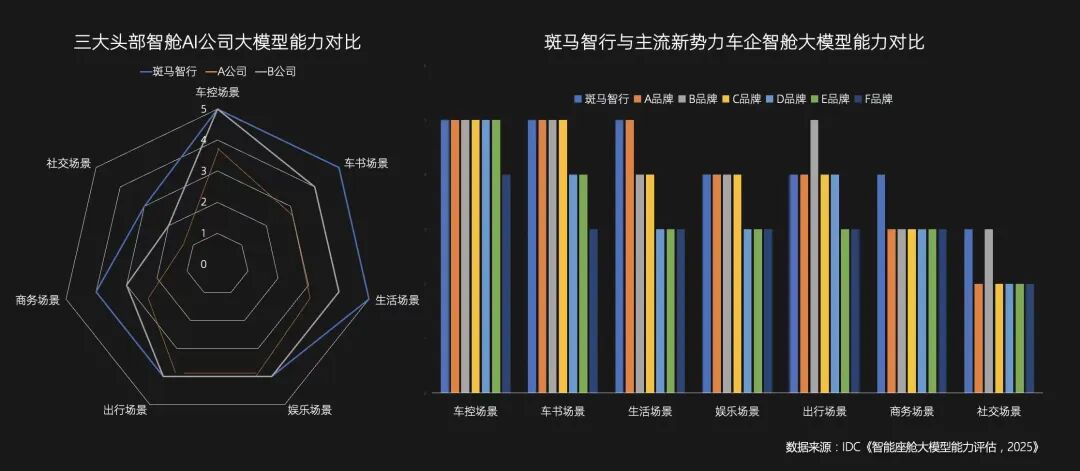
Core Insights - The traditional belief that the U.S. excels in 0-1 technological innovation while China is better at 1-100 replication is being challenged in the AI era, particularly in the automotive sector [1][12] - The launch of OpenAI's Apps SDK in October 2025 is set to revolutionize cross-platform AI applications, while China's smart cockpit sector is already moving towards mass production [1][3] - The CEO of Zhibo Zhixing, Dai Wei, predicts an imminent explosion in smart cockpit technology, marking a critical point in industrial transformation [1][4] Company Developments - Zhibo Zhixing's CTO, Si Luo, emphasizes that AI large model technology will drive interaction and service transformation in the automotive sector, highlighting the company's advantageous position [2][8] - The Auto Omni full-modal vehicle solution was launched at the Yunqi Conference, showcasing Zhibo Zhixing's proactive smart cockpit capabilities [4][9] - Zhibo Zhixing has established a strong foundation in smart cockpit AI technology since introducing the AliceMind pre-training model in 2021 [7][15] Market Positioning - Zhibo Zhixing is positioned as the "OpenAI" of the smart cockpit sector, having already implemented features that allow for proactive intelligent services in vehicles [5][19] - The company has formed an AI vehicle platform service alliance with major partners, aiming to create new business models in the automotive ecosystem [5][12] - The smart cockpit AI large model capabilities of Zhibo Zhixing have been ranked first in evaluations by global authorities [9][15] Future Outlook - The automotive industry is on the brink of a significant transformation, with Zhibo Zhixing leading the charge in smart cockpit AI innovation [9][11] - The company aims to become the leading AI platform service provider in the automotive sector, with projections indicating that the market for vehicle platform services in China could reach 14.7 billion yuan by 2030 [16][17] - Zhibo Zhixing's AIOS is expected to accelerate the integration of AI models into vehicles, enhancing the overall user experience [16][18]
成都小米SU7车祸起火,ESG公司治理评级“垫底”
Zhong Guo Neng Yuan Wang· 2025-10-21 09:55
Core Viewpoint - Recent negative public sentiment surrounding Xiaomi has drawn significant market attention due to a series of incidents, including a Xiaomi SU7 vehicle losing control and catching fire, raising concerns about product quality and compliance issues [1] Group 1: Product Quality and Safety Concerns - A Xiaomi SU7 vehicle in Chengdu lost control and caught fire, with bystanders unable to assist due to the doors being locked from the outside [1] - This incident has sparked consumer debates regarding product quality and safety standards [1] Group 2: Marketing and Compliance Issues - Xiaomi's marketing language has been criticized for potentially bordering on non-compliance, leading to discussions about regulatory adherence [1] - The company's legal team has responded by issuing a lawyer's letter and filing lawsuits against social media influencers [1] Group 3: ESG Ratings and Governance - Xiaomi's MSCI ESG rating has remained at "B" from 2019 to September 2023, with a subsequent rise to "BB" and "BBB" levels, yet it ranks 40th out of 46 peers in the technology sector for governance [1] - The MSCI ESG rating methodology assesses the severity of ESG controversies based on the nature of harm and the scale of impact [1] - Comparatively, Sustainalytics rated Tesla with a score of 28.8, indicating medium risk, primarily due to governance and labor relations issues [1]
策略观点:积跬步,行稳致远-20251021
Guoxin Securities· 2025-10-21 09:43
Market Performance Review - The recent market performance shows a pulse-like adjustment post-holiday, with the A-share market closing at 3883 points before the holiday and breaking through 3900 points before starting to adjust. On October 17, the market experienced its largest single-day decline since late August, with the Shanghai Composite Index and CSI 300 dropping 1.95% and 2.26% respectively [4][7][25] - In the short term, there is a clear shift in style, with growth stocks leading in August with an overall increase of over 10%, while small-cap growth and national index growth fell by 6.28% and 5.96% respectively in October, indicating a reversal in the previously lagging value style [4][10][20] A-share Market Outlook - The A-share market is expected to enter the second phase of a bull market, with a focus on technology as the main line. The current market resembles the 1999 bull market, driven by policy and cyclical patterns. The technology sector is expected to lead earnings recovery, which will drive structural market performance [4][35] - The valuation of growth stocks is under scrutiny, with liquidity being a core driver of the bull market. Current valuations for technology stocks have not yet reached a 15% overvaluation threshold, suggesting continued focus on AI applications in the coming year [4][35] Hong Kong Market Outlook - The Hong Kong market is anticipated to benefit from enhanced pricing power of Chinese companies and stable liquidity, with a focus on pharmaceuticals and e-commerce as new catalysts. The Hang Seng Index and Hang Seng Technology Index saw significant fluctuations, with the latter experiencing a decline of over 10% in October after a 13.9% increase in September [4][25][28] - The pharmaceutical sector has shown resilience, with innovative drug companies performing well despite overall market adjustments. The upcoming Double 11 shopping festival is expected to provide a boost to the e-commerce sector [4][25][28]
策略专题:积跬步,行稳致远
Guoxin Securities· 2025-10-21 09:39
Market Performance Review - The recent market performance shows a pulse-like adjustment post-holiday, with the A-share market closing at 3883 points before the holiday and breaking through 3900 points before starting to adjust. On October 17, the market experienced its largest single-day decline since late August, with the Shanghai Composite Index and CSI 300 dropping 1.95% and 2.26% respectively [4][7][25] - In the short term, there is a clear shift in style, with growth stocks leading in August with an overall increase of over 10%, while small-cap growth and national index growth fell by 6.28% and 5.96% respectively in October. Value stocks, which had previously lagged, gained positive returns [4][10][20] A-share Market Outlook - The A-share market is expected to enter the second phase of a bull market, with a focus on technology as the main line. The current market resembles the 1999 bull market, driven by policy and cyclical patterns. The technology sector is expected to lead earnings recovery, driving structural market performance [4][35] - The valuation of growth stocks is under scrutiny, with liquidity being a core driver of the bull market. Current valuations for technology stocks have not yet reached the levels seen in previous peaks, suggesting continued focus on AI applications in the coming year [4][35] Hong Kong Market Outlook - The Hong Kong market is anticipated to benefit from increased pricing power of Chinese companies and stable liquidity, with a focus on pharmaceuticals and e-commerce as new catalysts. The Hang Seng Index and Hang Seng Technology Index saw significant fluctuations, with the latter experiencing a decline of over 10% in October after a 13.9% increase in September [4][25][28] - The pharmaceutical sector has shown resilience, with innovative drug companies performing well despite overall market adjustments. The upcoming Double Eleven shopping festival is expected to provide a boost to the e-commerce sector [4][25][28]