自动驾驶

Search documents
这不是显卡,是一座2吨重的AI工厂
华尔街见闻· 2026-01-06 03:53
Core Insights - NVIDIA has announced the full production of the Vera Rubin platform, which weighs nearly 2 tons and integrates six new chips, significantly enhancing inference cost and training efficiency, achieving AI computations at a trillion operations per second, marking it as a true AI factory [2] - The company has also open-sourced its first inference VLA (Vision-Language-Action) model, Alpamayo 1, designed for vehicles to "think" and solve problems in unexpected situations, utilizing a 10 billion parameter architecture [3] - The first vehicles equipped with NVIDIA technology are set to hit the roads in the US in Q1, Europe in Q2, and Asia later in the year [4][17] Production and Performance - The new Rubin platform has a performance increase of 5 times compared to the previous Blackwell version, with training performance being 3.5 times better [5][8] - The Rubin platform can reduce inference token generation costs by up to 10 times and decrease the number of GPUs required for training mixture of experts models by 4 times [8] - The Vera CPU in the Rubin platform features 88 cores, providing double the performance of its predecessor, and is designed for agent inference, making it the most energy-efficient processor in large-scale AI factories [8] Ecosystem and Deployment - Major cloud providers, including Microsoft, are expected to be among the first to deploy the new hardware in the second half of the year, with Microsoft’s next-generation Fairwater AI super factory set to utilize NVIDIA's Vera Rubin NVL72 systems [6] - NVIDIA maintains a long-term bullish outlook, predicting the total market size could reach several trillion dollars despite concerns about increasing competition and sustainability of AI spending [7] Innovations and Technologies - The Rubin platform incorporates five innovative technologies, including the sixth-generation NVLink interconnect technology and a third-generation transformer engine, which provides 50 petaflops of NVFP4 computing power for AI inference [9] - The platform's modular design allows for faster assembly and maintenance, with an 18 times quicker process compared to Blackwell [9] Open Source Initiatives - NVIDIA has released the Alpamayo model as part of a complete open ecosystem for autonomous driving development, which includes simulation frameworks and datasets [14][21] - The Alpamayo model is designed for the autonomous driving research community, allowing developers to adapt it for vehicle development and as a foundational tool for autonomous driving technology [15][18] - NVIDIA has also launched various open-source models and tools across different sectors, including the Nemotron family for agent AI and the Cosmos platform for physical AI [26][27]



5分钟,封死涨停!刚刚,重磅利好来袭!
券商中国· 2026-01-06 03:39
Core Viewpoint - The automatic driving sector is experiencing significant momentum following NVIDIA's announcement of the Alpamayo series of open-source AI models and tools aimed at enhancing autonomous vehicle development, with expectations to launch L4-level Robotaxi by 2027 [1][2][3]. Group 1: NVIDIA's Announcement - NVIDIA introduced the Alpamayo series at CES 2026, which includes open-source AI models, simulation tools, and datasets to accelerate the development of reasoning-based autonomous vehicles [2]. - Alpamayo 1 features a 100 billion parameter model designed to enable autonomous vehicles to perceive, reason, and act in rare or complex scenarios [2]. - The Rubin platform, part of this announcement, offers a tenfold reduction in reasoning costs compared to the previous Blackwell platform, with training performance improved by 3.5 times and AI software performance enhanced by five times, expected to ship in the second half of the year [2]. Group 2: Industry Impact - Following NVIDIA's announcement, multiple stocks in the A-share automatic driving sector experienced rapid trading halts, indicating strong market interest and confidence [1][4]. - The automatic driving industry is entering an acceleration phase, with the Chinese government granting the first L3-level conditional autonomous driving vehicle licenses, marking a transition from testing to commercial application [4]. - By the end of 2025, Pony.ai announced that its Robotaxi fleet exceeded 1,159 vehicles, surpassing its strategic goal of 1,000 vehicles [4]. Group 3: Future Prospects - Analysts suggest that the development of the Robotaxi industry is entering a rapid growth phase, with the core of L3-level autonomous driving licenses shifting responsibility to vehicle manufacturers and system suppliers [4]. - Companies with advanced intelligent technology, engineering capabilities, and strong supply chain management are expected to benefit first from this transition [5].

5分钟,封死涨停!刚刚,重磅利好来袭!
Zheng Quan Shi Bao Wang· 2026-01-06 03:38
Core Viewpoint - The automatic driving sector is experiencing significant momentum following NVIDIA's announcement of the Alpamayo series of open-source AI models and simulation tools, aimed at enhancing the development of autonomous vehicles [1][2][3] Group 1: NVIDIA's Announcement - NVIDIA introduced the Alpamayo series, which includes open-source AI models, simulation tools, and datasets to accelerate the development of reasoning-based autonomous vehicles [2] - Alpamayo 1 features a 100 billion parameter model that enables autonomous vehicles to perceive, reason, and act in rare or complex scenarios [2] - The Rubin platform, part of this release, offers a tenfold reduction in reasoning costs compared to the previous Blackwell platform, with training performance improved by 3.5 times and AI software performance enhanced by five times, expected to ship in the second half of the year [2] Group 2: Industry Impact - Following NVIDIA's announcement, multiple stocks in the A-share automatic driving sector quickly reached their daily limit up, indicating strong market enthusiasm [4] - The automatic driving industry is entering an accelerated phase, with ride-hailing platforms and Robotaxi manufacturers speeding up their deployment processes, particularly in major cities like Beijing, Shanghai, Guangzhou, and Shenzhen [5] - The Ministry of Industry and Information Technology in China has granted the first L3-level conditional autonomous driving vehicle licenses, marking a significant step towards commercial application [5] - By the end of 2025, Pony.ai announced that its Robotaxi fleet has surpassed 1,159 vehicles, exceeding its strategic goal of 1,000 vehicles [5] - Analysts suggest that the development of the Robotaxi industry is entering a rapid growth phase, with companies possessing advanced intelligent technology and system capabilities likely to benefit first [5]
禾赛与 NVIDIA 达成重要合作,高性能激光雷达入选 NVIDIA DRIVE Hyperion 10 平台
Jin Rong Jie· 2026-01-06 03:19
2026 年 1 月 5 日,全球激光雷达领导者禾赛科技(NASDAQ: HSAI;HKEX: 2525)今日宣布,公司已被英伟达选定为"NVIDIA DRIVE AGX Hyperion 10 平 台" 的激光雷达合作伙伴。该平台是一套参考计算与传感器架构,旨在帮助各类车型实现 L4 级自动驾驶,助力汽车制造商和开发者构建安全、可扩展且由 人工智能定义的高性能车队。 目前,禾赛正携手全球汽车制造商,基于对更安全、更智能、更普及的出行方式的共同愿景,加速推动下一代自动驾驶技术走向市场。 DRIVE Hyperion 搭载了两套基于 NVIDIA Blackwell 架构构建的 NVIDIA DRIVE AGX Thor 系统级芯片,具备超过 2,000 FP4 TFLOPS 的算力——大致相当 于每秒执行 1,000 INT8 TOPS 运算,可为完整的 360 度传感器数据融合提供实时算力。 禾赛是最新一批完成 DRIVE Hyperion 开放量产架构传感器套件适配认证的合作伙伴之一。该架构所构建的传感器生态系统正持续扩展,涵盖摄像头、毫米 波雷达、激光雷达和超声波技术,赋能汽车制造商和开发者打造并验证面 ...

英伟达开源智驾模型,想定义 “物理 AI 的 ChatGPT 时刻”
晚点Auto· 2026-01-06 02:59
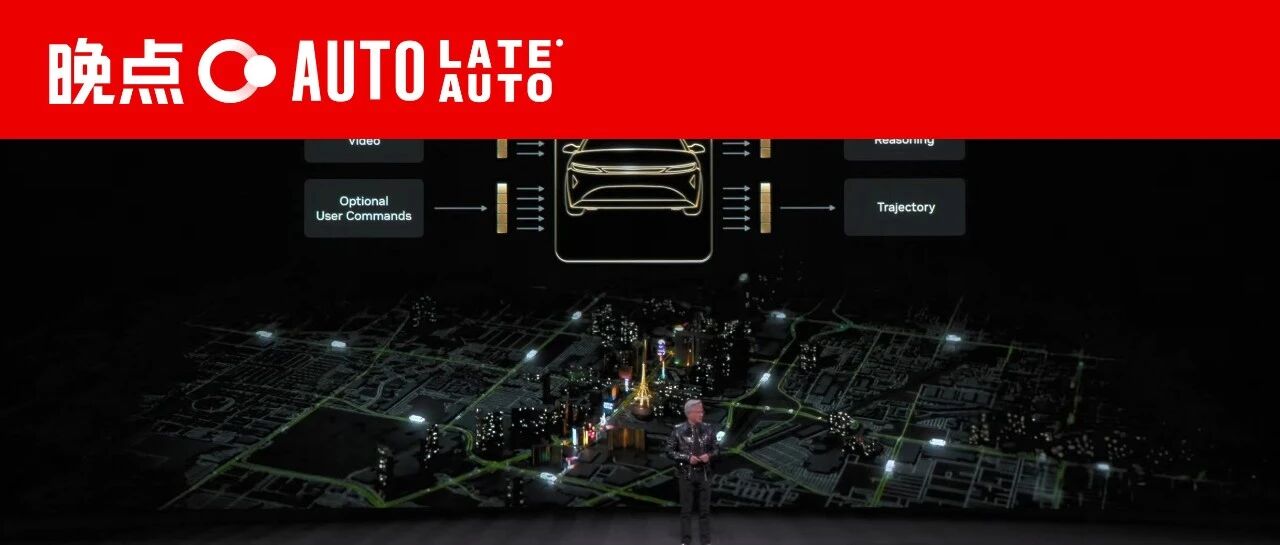
Core Viewpoint - The article discusses NVIDIA's advancements in the autonomous driving sector, particularly the launch of the open-source VLA model Alpamayo, which aims to enhance the capabilities of self-driving vehicles and compete in the market against local Chinese manufacturers [3][4][9]. Group 1: NVIDIA's Innovations - NVIDIA's CEO Jensen Huang announced at CES 2026 that the future will see 1 billion vehicles achieving high or full automation, with autonomous taxis being one of the first beneficiaries [3]. - The Alpamayo model, featuring a 10 billion parameter architecture, is designed to support Level 4 autonomous driving and is the first open-source AI system capable of reasoning and decision-making for self-driving vehicles [4][5]. - The Alpamayo series includes simulation tools and an open dataset with over 1,700 hours of driving data, providing a comprehensive foundation for developers [4]. Group 2: Competitive Landscape - Despite NVIDIA's advancements, local Chinese companies like Li Auto, Xpeng, NIO, and Huawei have already developed similar models, indicating a competitive landscape where NVIDIA is not the frontrunner [4][5]. - NVIDIA faces immediate challenges in the Level 2 assisted driving market, where it has announced a partnership with Mercedes-Benz to deploy its full-stack assisted driving solution in the 2025 model of the CLA [5][7]. - The collaboration with Mercedes-Benz involves a dual-system approach, combining an end-to-end AI system with a traditional safety-certified system to ensure reliability in complex driving scenarios [7]. Group 3: Market Opportunities and Challenges - NVIDIA's strategy includes targeting overseas markets, where the penetration of assisted driving solutions is still low compared to China, presenting significant opportunities for growth [9]. - The company is working to improve its autonomous driving solutions, with plans for quarterly software updates to enhance user experience following previous setbacks in the Chinese market [8][9]. - Despite being behind local competitors in China, NVIDIA aims to regain its influence in the autonomous driving sector through strategic partnerships and technological advancements [9].
“中国为世界注入‘稀缺的确定性’”
Guo Ji Jin Rong Bao· 2026-01-06 02:51
在全球经济面临诸多不确定性的背景下,国际主流媒体以及包括国际货币基金组织在内的国际机构对 2026年中国经济前景持积极预期,认为其增长韧性与转型动力将为世界注入宝贵的确定性。 经济增长预期积极 2026年中国经济的增长动力将从何而来?外媒的观察指向两个关键领域:内需市场的纵深发展和新质生 产力的蓬勃兴起。 欧洲《现代外交》杂志网站预测,随着中国促进形成更多由内需主导的经济发展模式,2026年中国经济 将在高科技、智能制造、绿色能源和服务消费等领域实现显著增长。 彭博社分析,在全球经济放缓的背景下,内需驱动将成为中国主要的增长引擎。 与此同时,中国的"新质生产力"成为国际观察家理解中国经济增长新动能的关键。英国天空新闻台阿拉 伯语频道认为,中国经济成就源于长期的产业规划和对高附加值产业的持续投入。 如果说政策与内需是经济的稳定器,那么创新则被外媒视为2026年中国经济最活跃的加速器。 英国《经济学人》在一篇探究中国迈向创新强国原因的文章中,特别关注了中国在自动驾驶和创新药两 个前沿领域的加速推进。文章认为,中国技术实力的增长,主要得益于产学研的深度融合以及国家顶层 设计的创新体系支持。 美国《纽约时报》则注意到 ...
禾赛被英伟达选定为激光雷达合作伙伴 共同推动L4级车队规模化部署
Zheng Quan Shi Bao Wang· 2026-01-06 02:50
人民财讯1月6日电,近日,禾赛科技宣布,公司已被英伟达选定为"NVIDIA DRIVE AGX Hyperion10平 台"的激光雷达合作伙伴。该平台是一套参考计算与传感器架构,旨在帮助各类车型实现L4级自动驾 驶,助力汽车制造商和开发者构建安全、可扩展且由人工智能定义的高性能车队。 ...
智驾概念股全线走高 英伟达首个开源推理VLA模型发布 加速安全的自动驾驶技术开发
Zhi Tong Cai Jing· 2026-01-06 02:06
Core Viewpoint - The smart driving concept stocks have seen a significant rise, driven by advancements in autonomous driving technology and positive market sentiment following announcements from Nvidia at CES [1] Group 1: Stock Performance - Zhejiang Shibao (002703) increased by 9.98%, reaching 5.62 HKD [1] - SenseTime-W (00020) rose by 6.25%, reaching 2.38 HKD [1] - Pony.ai-W (02026) gained 5.46%, reaching 129.5 HKD [1] - Horizon Robotics-W (09660) saw a 4.05% increase, reaching 9.24 HKD [1] Group 2: Technological Advancements - Nvidia CEO Jensen Huang announced the Alpamayo platform at CES, enabling cars to perform "inference" in real-world scenarios [1] - The first vehicle equipped with Nvidia technology is set to launch in the US in Q1, Europe in Q2, and Asia in the second half of the year [1] - Nvidia also announced the open-sourcing of its first inference VLA (Vision-Language-Action) model, Alpamayo1, to accelerate the development of safe autonomous driving technology [1] Group 3: Market Outlook - Huajin Securities reported a clear L3 window period, with multiple domestic manufacturers preparing for mass production [1] - The penetration rate of L2 and above assisted driving models is expected to reach 64.7% from January to September 2025, marking a historical high [1] - The firm is optimistic about the electric and intelligent transformation driving the automotive industry, with an anticipated increase in the penetration rate of smart components [1] - The domestic supply chain, combined with international expansion, is expected to accelerate growth by 2026, benefiting component manufacturers from industry upgrades [1]

港股异动 | 智驾概念股全线走高 英伟达首个开源推理VLA模型发布 加速安全的自动驾驶技术开发
智通财经网· 2026-01-06 02:03
Core Viewpoint - The smart driving concept stocks have seen a significant rise, driven by advancements in autonomous driving technology and the upcoming launch of vehicles equipped with NVIDIA's new platform [1] Group 1: Stock Performance - Zhejiang Shibao (01057) increased by 9.98%, reaching 5.62 HKD [1] - SenseTime-W (00020) rose by 6.25%, reaching 2.38 HKD [1] - Pony.ai-W (02026) grew by 5.46%, reaching 129.5 HKD [1] - Horizon Robotics-W (09660) climbed by 4.05%, reaching 9.24 HKD [1] Group 2: Technological Advancements - NVIDIA CEO Jensen Huang announced the Alpamayo platform at CES, enabling cars to perform "reasoning" in real-world scenarios [1] - The first vehicles featuring NVIDIA technology are set to hit the roads in the U.S. in Q1, Europe in Q2, and Asia in the second half of the year [1] - NVIDIA has open-sourced its first reasoning VLA (Vision-Language-Action) model, Alpamayo 1, to accelerate the development of safe autonomous driving technology [1] Group 3: Market Insights - Huajin Securities reported that the current L3 window is clear, with multiple domestic manufacturers preparing for mass production [1] - The penetration rate of L2 and above assisted driving models is expected to reach 64.7% from January to September 2025, marking a historical high [1] - The firm is optimistic about the electric and intelligent transformation driving the automotive industry, with an expected increase in the penetration rate of smart components [1] - The domestic supply chain, combined with international expansion, is anticipated to accelerate growth by 2026, benefiting component manufacturers from industry upgrades [1]
物理AI的ChatGPT时刻!英伟达“内驱”无人驾驶汽车将至,将于一季度在美国上路
硬AI· 2026-01-06 01:40
Core Viewpoint - NVIDIA has announced the open-source release of its first inference VLA (Vision-Language-Action) model, Alpamayo 1, aimed at enhancing autonomous driving technology by enabling vehicles to "think" and solve problems in unexpected situations [2][3][5]. Group 1: Model and Technology Overview - The Alpamayo 1 model features a 10 billion parameter architecture that processes video inputs to generate trajectories and reasoning processes [2][5][9]. - This model is designed to address the long-tail problem in autonomous driving by employing human-like reasoning to handle complex driving scenarios [3][5]. - The model is not intended to run directly in vehicles but serves as a large-scale teacher model for developers to fine-tune and integrate into their autonomous driving technology stacks [11]. Group 2: Industry Support and Collaboration - Major companies and research institutions, including Jaguar Land Rover, Lucid, Uber, and UC Berkeley's DeepDrive, have expressed support for the Alpamayo model, indicating its potential to accelerate the deployment of Level 4 autonomous driving technologies [5][16]. - Industry leaders emphasize the importance of open and transparent AI development for advancing responsible autonomous mobility, highlighting the role of Alpamayo in providing new tools for developers [16]. Group 3: Ecosystem and Additional Tools - NVIDIA has created a comprehensive open ecosystem around the Alpamayo model, including simulation tools and datasets, to support developers in building autonomous driving solutions [9][15]. - The AlpaSim framework, a fully open-source end-to-end simulation tool, has been released to facilitate high-fidelity autonomous driving development [15]. - NVIDIA also provides a large-scale open dataset with over 1,700 hours of driving data, covering a wide range of geographical locations and conditions, crucial for advancing reasoning architectures [15]. Group 4: Broader AI Developments - In addition to Alpamayo, NVIDIA has launched several other open-source models and tools across various sectors, including the Nemotron family for agent AI, the Cosmos platform for physical AI, and the Isaac GR00T model for robotics [21][22]. - These models and frameworks are available on platforms like GitHub and Hugging Face, enabling widespread access and deployment across different AI infrastructures [22].