
AI

Search documents
2026年宏观经济、政策与大类资产配置展望:革故鼎新:修复式增长下的再平衡与新动力
Western Securities· 2025-11-21 13:17
Economic Outlook - The nominal GDP growth rate is expected to rise to around 5% in 2026, up from approximately 4% in 2025, indicating a significant recovery in economic performance[14] - Inflation is anticipated to rebound, with CPI growth turning positive and PPI declines narrowing significantly[3] - The government budget deficit rate is projected to remain at around 4%, with new government bond financing potentially increasing to approximately 12.8 trillion yuan[3] Structural Changes - The Chinese economy is undergoing a profound transformation characterized by the decline of "old forces" such as real estate, which is in an "L-shaped" bottoming phase, while "new forces" like AI and new productivity are emerging as key growth drivers[2] - The shift from external demand reliance to internal demand dominance is expected, with policies aimed at expanding domestic consumption and countering "involution" trends[2][15] Market Dynamics - The A-share market is likely to see opportunities as the focus shifts from liquidity-driven growth to price and earnings-driven growth, with a more balanced market style anticipated in 2026[4] - The U.S. dollar is expected to remain strong, influenced by the relative economic strength of the U.S., despite potential interest rate cuts by the Federal Reserve[4] Risks and Challenges - There are risks of economic downturns exceeding expectations, insufficient policy execution, and geopolitical uncertainties affecting market sentiment[7] - The ongoing challenges in the real estate sector and local government debt pressures may limit fiscal stimulus effectiveness[20][24]
华为大动作!AI新技术
Zhong Guo Zheng Quan Bao· 2025-11-21 12:59
Core Insights - Huawei's Vice President Zhou Yuefeng announced the launch of AI container technology Flex:ai at the 2025 AI Container Application Implementation and Development Forum in Shanghai, aiming to address the challenges of computing resource utilization [1] - The technology is designed to package model code and runtime environments into lightweight images, facilitating seamless cross-platform migration and addressing deployment inconsistencies [1] - Gartner predicts that by 2027, over 75% of AI applications will be deployed using container technology, highlighting the growing importance of this technology in the AI industry [1] Group 1 - The Flex:ai technology allows for on-demand mounting of GPU and NPU resources, enhancing overall resource utilization in clusters [1] - The AI industry is experiencing rapid growth, leading to a significant demand for computing power, while global resource utilization remains low, resulting in substantial waste [1] - Issues such as small model tasks monopolizing resources and large model tasks lacking sufficient computing power contribute to the inefficiency in resource allocation [1] Group 2 - Flex:ai is built on the Kubernetes container orchestration platform, enabling precise management and intelligent scheduling of GPU and NPU resources [2] - The software aims to match AI workloads with computing resources effectively, significantly improving utilization rates [2] - Huawei plans to collaborate with academic institutions to continuously enhance the Flex:ai software, making AI technology more accessible to users and developers [2]
每日收评创业板指放量跌超4%,全市场不足400股飘红,近百股跌停
Sou Hu Cai Jing· 2025-11-21 09:20
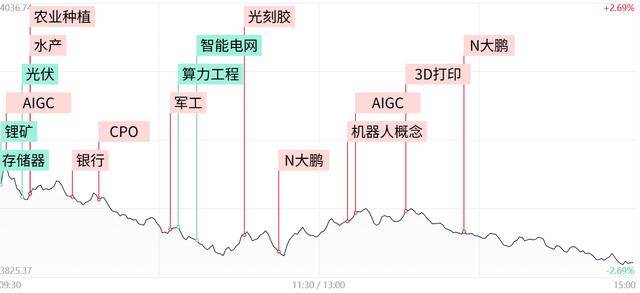
Market Overview - The market experienced significant fluctuations, with the Shanghai Composite Index falling over 2% and the ChiNext Index dropping more than 4%. The total trading volume in the Shanghai and Shenzhen markets reached 1.97 trillion, an increase of 257.5 billion compared to the previous trading day. Nearly 5,100 stocks declined, with 99 hitting the daily limit down [1]. Sector Performance - The AI application sector showed resilience, with stocks like Rongji Software achieving five consecutive limit-up days. Other notable performers included Yidian Tianxia, Huanrui Century, and Xinhua Du, all hitting the daily limit up. This sector's strength is attributed to the recent update of Google's multimodal AI model, Gemini 3.0 Pro Image, which significantly enhances image quality and accuracy [2][7]. - The agricultural and fishery sectors also performed relatively well, with stocks like Quanyin High-Tech rising over 16%. The sector's independent logic is seen as a defensive attribute, attracting funds in a weak market environment. Quanyin High-Tech announced a partial tender offer for 189 million shares, representing 20% of its total issued shares [3][7]. - The military industry sector was active, with stocks like Jiu Zhi Yang hitting the daily limit up. According to Clarkson Research, global new ship orders in October fell by 38% year-on-year, but Chinese shipyards maintained a 73% market share [4]. Individual Stock Movements - The market saw a significant decline, with over 5,000 stocks falling, including a wave of limit-downs in lithium mining stocks such as Ganfeng Lithium and Tianqi Lithium. Technology stocks continued to weaken, particularly in the storage chip sector, with several stocks dropping over 10% [6]. - The high-profile stocks that previously attracted attention also faced declines, indicating a potential shift in market sentiment and the need for a new cycle to emerge after the current risks are fully released [6]. Future Market Analysis - The market opened lower and continued to decline, with no clear signs of stabilization. The mid-term upward structure of major indices has been completely damaged, suggesting that future corrections may take longer. The focus will likely shift to sectors that resonate with the market and show strength during recovery [8]. Key Market News - Huawei launched Flex:ai AI container technology, allowing a single GPU/NPU to support multiple AI workloads simultaneously, enhancing computational efficiency [10]. - Private equity positions reached a new high for the year, with the stock private equity position index rising to 81.13%, indicating strong market engagement from top private equity firms [11].


11月21日大盘简评
Sou Hu Cai Jing· 2025-11-21 09:04
Group 1 - The US and Asia-Pacific stock markets experienced a collective decline, with A-shares dropping significantly; the Shanghai Composite Index fell by 2.45% to 3834 points, the Shenzhen Component Index decreased by 3.41%, and the ChiNext Index dropped by 4.02% [1] - The total market turnover reached 1.98 trillion yuan, an increase of 261 billion yuan compared to the previous trading day, indicating a heightened selling pressure [1] - The sentiment in the market is generally cold, with over 5000 stocks declining, except for some activity in the military sector [1] Group 2 - The expectation for a Federal Reserve interest rate cut has diminished, with the September non-farm payroll report showing an increase of 119,000 jobs, surpassing expectations; this led to a rapid decline in the probability of a rate cut in December to below 40% [1] - The tightening of overseas liquidity is expected to exert pressure on the valuations of global growth sectors [1] - In the AI sector, Google launched a new multimodal AI model, "Second Generation Nano Banana," which significantly improves image quality and accuracy; combined with Nvidia's better-than-expected earnings, the demand for computing power remains in a high-growth phase [1] Group 3 - The new energy sector saw a significant pullback, particularly in lithium carbonate and iron lithium cathodes, with noticeable capital outflow despite lithium carbonate prices exceeding 100,000 yuan per ton due to supply concerns [2] - The market is currently focused on long-term contract negotiations between material manufacturers and battery factories, with full orders potentially weakening the pricing power of battery manufacturers [2] - The securities industry is experiencing a wave of mergers, reflecting the steady progress of the new "National Nine Articles" aimed at building first-class investment banks, which may optimize the competitive landscape and enhance overall industry efficiency [2]
'Why Are Stocks Falling?': Top Analyst Issues Bombshell Warning As Volatility Hits Wall Street - Alphabet (NASDAQ:GOOG), Amazon.com (NASDAQ:AMZN)
Benzinga· 2025-11-21 08:59
Core Insights - Major cloud and AI infrastructure providers, or hyperscalers, could hold over $2.5 trillion in AI assets by 2030, with an estimated annual depreciation expense of around $500 billion due to a typical 20% depreciation rate [1][2] - This level of depreciation is projected to exceed the combined profits of these companies for 2025, raising concerns about the sustainability of current AI investment levels [2] - Investor optimism regarding Nvidia's strong earnings is being tempered by concerns over high valuations of AI companies and the rapid investment pace by major tech firms in data centers for generative AI [3] Group 1 - Hyperscalers may face significant depreciation expenses, estimated at $500 billion annually by the end of the decade [1] - The depreciation could surpass projected profits for 2025, indicating potential challenges in sustaining AI investments [2] - The recent volatility in tech stocks, including a 2.2% drop in the Nasdaq Composite, reflects investor concerns about the AI sector [3] Group 2 - The AI arms race may impose a heavier accounting burden than anticipated, as highlighted by Berezin's projections [5] - There are mixed opinions among investors regarding the sustainability of spending on AI, with some suggesting that companies may need to adapt their strategies to manage depreciation impacts [4]




今天“恐慌盘”终于出现了 全市场近5100只个股下跌 你慌了吗?
Mei Ri Jing Ji Xin Wen· 2025-11-21 08:03
Market Overview - The market experienced significant fluctuations on November 21, with the Shanghai Composite Index falling over 2% and the ChiNext Index dropping over 4% [2] - By the end of the trading day, the Shanghai Composite Index decreased by 2.45%, the Shenzhen Component Index fell by 3.41%, and the ChiNext Index declined by 4.02% [2] - Nearly 5,100 stocks in the market declined, with 99 stocks hitting the daily limit down [2] - The total trading volume in the Shanghai and Shenzhen markets reached 1.97 trillion yuan, an increase of 257.5 billion yuan compared to the previous trading day [2] Stock Performance - Only 354 stocks in the entire A-share market rose, which is slightly higher than the 106 stocks that rose on April 7 this year [3][4] - The market saw a significant increase in trading volume during specific time periods, particularly at the market open and between 10:30 and 11:30, indicating heightened trading activity [4][8] Market Sentiment - The market sentiment shifted towards fear, with panic selling observed as the indices continued to decline [6][9] - The previous days had shown a lack of significant panic, but the current market conditions indicated that "panic funds" had finally emerged [11] - The market's ability to recover or continue to decline remains uncertain, with ongoing debates about whether the current situation represents a rebound or a continuation of the downtrend [11] Influencing Factors - Concerns regarding the U.S. stock market, particularly technology stocks, have influenced market sentiment, with traders worried about whether AI can generate sufficient revenue to justify investments [14] - The potential for a "independent market" in A-shares, supported by protective funds and internal logic, is being closely monitored [14] - The "national team" of funds has increased its holdings in 222 A-share stocks, with a total market value of 3.911 trillion yuan, indicating a strategic focus on stabilizing the market [19]
马云意外鼓励,蚂蚁又一个奇兵出现了
Feng Huang Wang· 2025-11-21 05:57
Core Insights - Ant Group launched its AI assistant "Lingguang" shortly after Alibaba's "Qianwen," achieving significant download milestones and ranking high on the App Store [1][2] - The positioning of "Lingguang" focuses on efficiency and accessibility rather than direct competition with existing AI products like ChatGPT [3][4] Product Performance - "Lingguang" reached over 500,000 downloads, surpassing its initial target of 200,000 within a day [2] - The app ranked seventh on the App Store's overall chart and first in the free tools category [1][2] Market Positioning - Ant Group emphasizes a collaborative approach in the AI space, viewing competition as a temporary phase rather than a zero-sum game [4] - The product aims to enhance information retrieval and processing efficiency, distinguishing itself from other AI products that focus on conversational capabilities [4][5] Technological Innovation - "Lingguang" incorporates advanced features such as multi-modal content generation, interactive applications, and visual interaction capabilities [4][5] - The app's development reflects a shift from traditional content generation methods to more dynamic and interactive formats [5] Organizational Strategy - Ant Group established a dedicated AGI organization to enhance efficiency and innovation in AI development [6] - The company aims to leverage cutting-edge technology to create accessible products for a broader audience, maintaining a focus on user-friendly applications [6][7] Future Vision - The development of "Lingguang" is seen as an exploration of opportunities in the AGI era rather than a fixed strategic plan [7] - Ant Group anticipates that the technological capabilities of "Lingguang" will influence other products within its ecosystem in the coming months [7]
Hon Hai Tech Day 2025 Opens To Showcase Foxconn's Powerful Partnerships And Vertical Integration Strengths
Prnewswire· 2025-11-21 05:00
Core Insights - Hon Hai Technology Group (Foxconn) is transforming into an AI-powered technology platform service company, showcasing partnerships with major players like NVIDIA, OpenAI, and Alphabet at its annual Hon Hai Tech Day 2025 [1][2][3] Group 1: Partnerships and Collaborations - Foxconn's Chairman Young Liu emphasized the company's competitive strength in vertical integration, enabling deep collaborations with world-class technology leaders [3] - OpenAI's CEO Sam Altman highlighted the importance of a new partnership with Foxconn to strengthen supply chains for AI infrastructure components, which are currently in high demand [3] - Alphabet's Chief Product Officer Hiroshi Lockheimer acknowledged Foxconn as an important partner, contributing to significant technological innovations over the past decade [4] Group 2: Technological Advancements - Foxconn is investing US$1.4 billion in an advanced supercomputing center, utilizing 10,000 NVIDIA Blackwell Ultra GPUs and next-generation NVIDIA GB300 NVL72 AI infrastructure, set to launch in the first half of 2026 [4][5] - The event featured discussions on the evolution of humanoid robots in smart manufacturing and the potential of quantum technologies to enhance future artificial general intelligence (AGI) [6] Group 3: Product Showcases - Over 200 products and technologies were displayed at HHTD25, including an AI-ready modular container data center and various electric vehicle models [7][8] - The MODEL A, a B-segment class electric vehicle, was presented, showcasing AI technology and modular versatility for diverse applications [7]


OpenAI teams up with Foxconn to develop AI infrastructure hardware in US. Details here
MINT· 2025-11-21 03:15
Core Insights - OpenAI is collaborating with Hon Hai Precision Industry Co. (Foxconn) to design and produce hardware for data centres, addressing the increasing demand for AI infrastructure [1][2][3] - The partnership aims to enhance Foxconn's manufacturing operations in the US, focusing on server racks, cabling, power systems, and other essential data centre equipment [2][3] - OpenAI plans to share insights on emerging hardware needs to inform Foxconn's design and development efforts for US-manufactured hardware [3] OpenAI's Strategic Moves - OpenAI has recently finalized multibillion-dollar deals with cloud providers and chipmakers, including Nvidia and AMD, to expand its data centre footprint [4] - The company is also increasing control over the AI supply chain by purchasing chips and components from Broadcom, despite concerns about a potential AI bubble [5] Foxconn's Long-term Goals - The agreement with OpenAI reflects Foxconn's strategy to diversify its involvement in the AI ecosystem and reduce reliance on iPhone assembly for Apple [6] - Foxconn is ramping up AI server manufacturing in the US, aligning with governmental demands and mitigating tariff risks [7] - The actual benefits of the partnership for Foxconn remain uncertain, although it is part of a broader initiative to invest significantly in AI infrastructure [6][7]

多家机构把脉2026年A股市场,跨年行情如何布局?
Xin Lang Cai Jing· 2025-11-21 03:15
Group 1 - The core view is that the A-share market is expected to continue in a "slow bull" pattern in 2026, with several brokerages expressing optimism about market performance driven by key events such as the US-China trade agreement and the US midterm elections [1][2][3] - UBS forecasts that the MSCI China Index will reach a target of 100 by the end of 2026, indicating a 14% upside from current levels, supported by favorable factors including innovation and global competitiveness of Chinese companies [2][3] - The shift in market drivers from "valuation recovery" to "profit-driven" growth is anticipated, with expected earnings growth for the entire A-share market around 4.7% in 2026, highlighting the increasing importance of fundamentals [3][4] Group 2 - Key investment themes for the upcoming year include AI, with a focus on domestic chip production and applications in robotics and smart driving, as well as the globalization of Chinese companies transitioning to multinational operations [4][5] - The cyclical recovery in sectors such as oil, petrochemicals, and non-ferrous metals is expected to benefit from policies aimed at reducing competition and clearing excess capacity, with a forecasted narrowing of PPI declines [5] - Consumer sectors may see a rebound if extraordinary stimulus measures are introduced, with long-term focus areas including health, emotional consumption, and internationalization [5]