
公交

Search documents
深读100
Mei Ri Jing Ji Xin Wen· 2025-07-29 22:43
Group 1 - The summer economy is thriving, driven by a variety of activities such as graduation parties, travel, indoor skiing, art training, cosmetic surgery, driving tests, vision correction surgeries, and music festivals, indicating a clear stratification in consumer spending [1] - The collaboration between public transport companies and express delivery services like SF Express is emerging as a new business model, utilizing idle resources and enhancing delivery capabilities, which could become a significant revenue source for bus companies [1]

深读100:公交送快递:闲置资源挖出新商机;这八大“暑期经济”火了
Mei Ri Jing Ji Xin Wen· 2025-07-29 14:39
Group 1 - The core viewpoint highlights the emergence of a diverse "summer economy" driven by the extended holiday after college entrance examinations, encompassing various sectors such as graduation parties, travel, indoor skiing, art training, cosmetic surgery, driving tests, vision correction surgeries, and music festivals, indicating significant consumer segmentation and stimulating multiple industries [1]. Group 2 - The collaboration between public transportation companies and express delivery firms like SF Express to implement a "bus + express delivery" model is noted, which aims to utilize idle bus capacity and station resources, addressing delivery shortcomings and potentially creating a new revenue stream for bus companies, with further collaboration potential yet to be explored [1].
深圳率先探索并落地全国领先的“公交体系+物流体系+无人化体系”创新模式
Zhong Guo Fa Zhan Wang· 2025-07-29 07:34
Core Viewpoint - The collaboration between Shenzhen Bus Group, SF Express, and New Stone Technology aims to innovate a "public transport + logistics + unmanned system" model, enhancing urban resource utilization and delivery efficiency in Shenzhen [1][4]. Group 1: Collaboration Details - The partnership involves leveraging New Stone Technology's advanced L4 autonomous driving technology to deploy unmanned delivery vehicles, addressing the "last mile" delivery challenge in urban areas [2]. - SF Express will utilize its extensive logistics network and operational capabilities to ensure reliable and efficient delivery services under the new model [2]. Group 2: Infrastructure Utilization - Shenzhen Bus Group will transform its bus station network into efficient logistics hubs, serving as supply stations and regional transfer points for unmanned delivery vehicles [3]. - The integration of bus station resources will include grid-based management for vehicle charging, parking, and emergency support, enhancing the overall logistics network [3]. Group 3: Innovation and Impact - The initiative is expected to create a new paradigm of "public transport + smart logistics," revitalizing urban resources and contributing to the development of a modern logistics system in Shenzhen [4]. - The project aims to optimize workflows, improve efficiency, and reduce labor intensity through technological advancements, ultimately enhancing the delivery experience for residents [4].
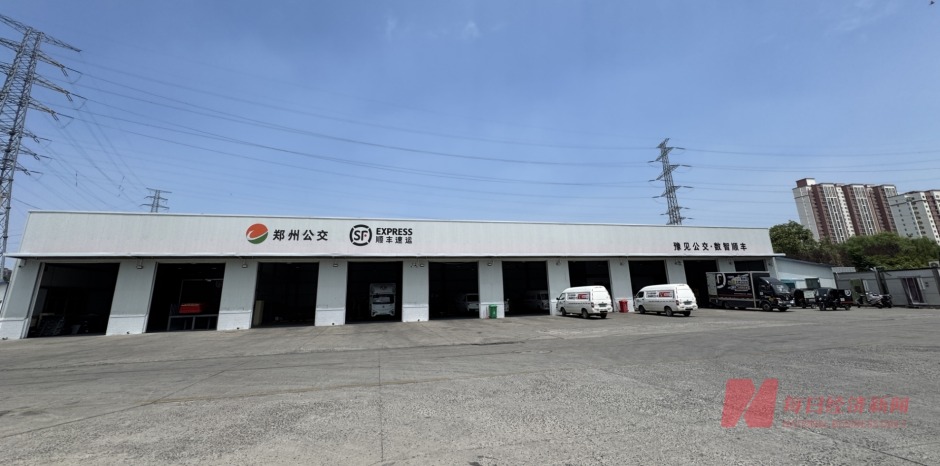
“白天载客晚上拉货”?郑州公交回应:与顺丰确有合作
Xin Lang Cai Jing· 2025-07-23 09:59
Core Viewpoint - The collaboration between Zhengzhou Public Transport Group and SF Express aims to explore a new model of "public transport + logistics + ecology" to enhance operational efficiency and revenue generation for public transport services [2][4]. Group 1: Collaboration Details - Zhengzhou Public Transport and SF Express have signed a strategic cooperation agreement, focusing on utilizing excess capacity of public transport vehicles during off-peak hours and at night for logistics purposes [2][3]. - The partnership will involve transforming certain bus stations into multifunctional logistics hubs, integrating public transport and logistics services [2][3]. - SF Express plans to implement automated sorting equipment and intelligent warehouse management systems at these bus stations [2]. Group 2: Implementation and Progress - Currently, 38 bus stations are under discussion for collaboration, with the logistics sorting center at Fogang bus station already in operation [3]. - SF Express has requested 280 personnel from Zhengzhou Public Transport for shared labor needs and has proposed a demand for over 50 vehicles for logistics operations [3]. - The initiative is part of a broader trend where various cities are exploring the integration of public transport and logistics to alleviate operational pressures on public transport companies [4]. Group 3: Industry Context - The public transport sector is facing significant operational pressures, with government subsidies insufficient to cover costs, prompting the need for innovative revenue-generating strategies [3][4]. - Other cities, such as Nanjing and Beijing, have initiated similar projects to combine public transport with logistics, indicating a growing trend in the industry [4].
无人车开进公交站,深圳两大公交企业同日签约 “公交+物流” 逐渐成规模
Shen Zhen Shang Bao· 2025-07-22 16:50
Core Viewpoint - Shenzhen Bus Group and Shenzhen Eastern Bus have signed cooperation agreements with logistics companies to explore the integration of public transport and logistics, aiming to enhance urban automatic delivery systems and address the "last mile" delivery challenges [1][2]. Group 1: Cooperation and Innovation - The collaboration involves utilizing Shenzhen Bus Group's extensive bus station network to transform these stations into efficient and economical "supply stations" and "regional transfer hubs" for unmanned logistics vehicles [1][2]. - The partnership aims to create a nationwide leading model that integrates public transport, logistics, and unmanned systems, enhancing operational efficiency and resource utilization [1][2]. Group 2: Roles and Responsibilities - Shenzhen Bus Group will take on six key roles: route planner, service manager, safety guardian, smart escort, government liaison, and resource provider, to ensure smooth cooperation and maximize social and economic benefits [2]. - The company will leverage big data and network knowledge to optimize delivery routes and establish a unified customer service window for efficient public response [2]. Group 3: Expansion and Market Development - Shenzhen Eastern Bus has also signed a strategic cooperation agreement with YTO Express and New Stone Technology to develop a "public transport + logistics" unmanned delivery model, aiming for scalable applications of autonomous driving in urban logistics [2][3]. - The bus companies are actively expanding their market-oriented diversified businesses, with Shenzhen Bus Group's market-oriented revenue share increasing from 4% in 2023 to 11% in 2024, indicating successful growth in new business areas [4].
“白天载客晚上拉货”? 郑州公交集团:网传图片为假 但这事儿确实要做
Mei Ri Jing Ji Xin Wen· 2025-07-21 11:31
Core Viewpoint - The Zhengzhou Public Transport Group is collaborating with SF Express to explore a new model of "public transport + logistics + ecology," despite initial misinformation circulating online about their operations [1][4][7]. Group 1: Collaboration Details - A strategic cooperation agreement was signed on July 1, 2023, between Zhengzhou Public Transport Group and SF Express, focusing on resource integration and upgrading public services [1][5]. - The logistics sorting and transfer center at the Foga Bus Station has already handled over 500 tons of express deliveries, indicating successful initial outcomes [4][6]. - The partnership aims to enhance operational efficiency, reduce logistics costs, and improve the utilization of public transport resources [6][7]. Group 2: Operational Insights - The Foga Bus Station has been transformed into a sorting station for SF Express, utilizing existing facilities due to reduced maintenance needs from the electrification of vehicles [5][6]. - Currently, there are 90 staff members at the sorting center, with SF Express operating a fleet of various delivery vehicles [6][8]. - The collaboration is expected to create job opportunities, with SF Express requesting 280 personnel from Zhengzhou Public Transport Group [6][7]. Group 3: Strategic Rationale - The partnership is a response to national policies promoting the integration of transportation and modern logistics, addressing financial pressures faced by public transport companies [7][8]. - The collaboration is designed to diversify revenue streams for public transport, reduce reliance on government subsidies, and enhance service competitiveness [7][8]. - Zhengzhou Public Transport Group operates a comprehensive network with 5,218 vehicles and 361 routes, providing a strong foundation for this partnership [8]. Group 4: Future Prospects - The strategic agreement is framework-based, with further details to be refined as initial cooperation progresses [10]. - Zhengzhou Public Transport Group is open to collaborating with other qualified companies, aiming for a win-win situation through resource sharing and innovation [10].

山东枣庄建设“无押金城市”破解民生痛点
Xin Hua She· 2025-07-21 10:31
Core Viewpoint - Shandong Province's Zaozhuang City has introduced an implementation plan to create a "No Deposit City," aiming to enhance the social credit system and improve the business environment by eliminating deposit requirements in various sectors [1][2]. Group 1: Implementation Plan - The implementation plan categorizes deposit issues into four types: legal clearance, direct cancellation, credit substitution, and enhanced regulation, with specific reforms identified in 12 areas including hospital stays, hotel accommodations, and library borrowing [1][2]. - The plan emphasizes the need for a comprehensive assessment of existing deposit collection practices and mandates timely actions to eliminate unnecessary deposits and implement credit management where applicable [1]. Group 2: Credit System Development - Zaozhuang will leverage the "Liuhua Fen" personal credit scoring platform to develop a "No Deposit" service platform, providing a unified "credit code" for users to access these services [2]. - The city aims to establish three main databases for enterprise credit evaluation, personal credit evaluation, and credit commitments, facilitating the collection, evaluation, application, and interaction of credit information [2]. Group 3: Current Progress and Future Prospects - Currently, eight public transport companies in Zaozhuang have eliminated bus card deposits, and the local library has implemented a "no deposit" borrowing system [3]. - Hospitals in the city are offering "credit medical" services, allowing citizens with good credit ratings to enjoy deposit-free hospital stays and "pay after treatment" options, indicating a growing trend towards more accessible credit-based services [3].
多国代表在津共议可持续交通合作与发展愿景
Zhong Guo Xin Wen Wang· 2025-07-01 16:38
Core Viewpoint - The Global Sustainable Transport Summit held in Tianjin emphasizes the importance of international cooperation in sustainable transportation, focusing on infrastructure development, green transformation, and policy alignment to promote global sustainable transport [1][2]. Group 1: China’s Initiatives - The Ministry of Transport of China is accelerating the construction of a strong transportation nation and is committed to promoting global transportation cooperation, aligning with trends of green and digital transformation [1]. - China aims to enhance green transportation infrastructure, promote the application of new energy and clean energy, and develop smart transportation and logistics to contribute to global economic recovery and ensure stable logistics supply chains [1]. Group 2: Local Achievements - Tianjin has made significant strides in sustainable transportation, establishing the world's first smart zero-carbon terminal, achieving a 74% coverage rate of public transport stations within 300 meters in the city center, and a 76% proportion of green travel [1]. Group 3: International Perspectives - Russia is actively promoting transformation in the transportation sector, including reducing carbon emissions and upgrading infrastructure, with a goal to reduce diesel use in railways by 25% by 2030 [2]. - Pakistan is implementing various green transportation initiatives, such as building electric vehicle charging networks and promoting metro and electric bus systems in major cities, emphasizing sustainability and social responsibility [2]. - Armenia recognizes China's critical role in global connectivity across multiple transportation sectors and is looking to collaborate with Chinese enterprises, particularly in mountainous transportation construction [2].
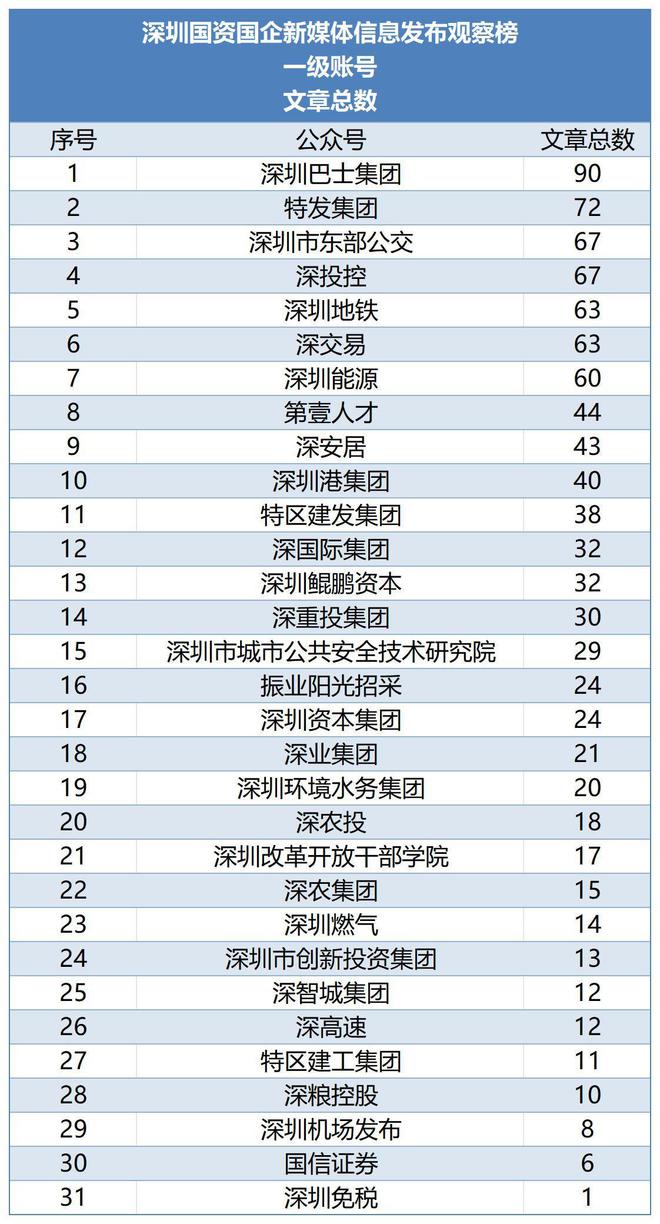
5月深圳国资新媒体观察:整体趋于稳定,个别账号环比浮动大
Nan Fang Du Shi Bao· 2025-07-01 08:10
Core Insights - The "Shenzhen State-owned Enterprises New Media Information Release Observation List" was launched to evaluate the information dissemination of state-owned enterprises and listed companies in Shenzhen, focusing on reading volume as a key indicator of influence [1] - The May 2025 report shows a slight decline in reading volume for state-owned enterprise accounts, while overall activity remains stable [2][4] - The top three accounts by article volume are Shenzhen Bus Group (90), Special Development Group (72), and Shenzhen Eastern Bus (67) [2][3] Group 1: Article Volume and Performance - The total number of articles published by state-owned enterprise accounts increased in May compared to April, with Shenzhen Bus Group leading with 90 articles [2][3] - The reading volume for the top three accounts includes Shenzhen Metro (42.2W+), Shenzhen Eastern Bus (17.2W+), and Shenzhen Gas (11.4W+) [5][6] - Special Development Group saw a significant increase in article volume, nearly doubling its output [2] Group 2: Engagement Metrics - The top three accounts by likes are Shenzhen Metro (2492), Shenzhen Bus Group (2112), and Shenzhen Eastern Bus (650) [7] - In terms of recommendations, Shenzhen Bus Group leads with 1407, followed by Shenzhen Metro (1020) and Shenzhen Eastern Bus (411) [9] - Despite lower article output, Guoxin Securities maintains a strong reading volume, indicating high content appeal [4][5] Group 3: Content Strategy and User Engagement - Shenzhen Metro's content strategy focuses on timely information, event-driven campaigns, and user-centric topics, achieving high engagement during key holidays [10][11] - Shenzhen Eastern Bus employs a modular content approach, emphasizing heartwarming stories and internal communications, but lacks strong user interaction [15] - Shenzhen Gas focuses on providing evergreen content related to gas safety and services, resulting in high repeat engagement [18] Group 4: Company-Specific Insights - Shenzhen State-owned Enterprises listed companies show a notable increase in article output, with Deep Special Power and Special Development Information leading the way [21] - The overall performance of state-owned enterprise accounts indicates a competitive landscape, with top accounts maintaining strong positions in terms of content dissemination and user engagement [21]




深中通道一周年,交通一体化显效,跨市公交客流破300万
Nan Fang Du Shi Bao· 2025-06-30 14:18
Core Insights - The opening of the Shenzhen-Zhongshan Channel has significantly transformed the transportation landscape in the Pearl River Delta, creating a one-hour living circle among Shenzhen, Zhongshan, and Guangzhou [1][2][4] - The channel has led to a substantial increase in cross-city public transport usage, with over 300 million passenger trips recorded within a year, indicating a strong demand for integrated regional transport [3][4][8] Group 1: Transportation Impact - The Shenzhen-Zhongshan Channel, spanning approximately 24 kilometers, has reduced travel times between key cities, with journeys from Shenzhen to Zhongshan now taking under 30 minutes [1][2] - The channel has recorded a cumulative traffic volume exceeding 29 million vehicle trips by May, with daily averages around 86,000 trips [2][4] - The peak traffic day during the recent holiday saw a record of 181,600 vehicle trips, showcasing the channel's capacity and popularity [2] Group 2: Public Transport Development - The introduction of cross-city bus services has enhanced connectivity between Shenzhen and Guangzhou, with new routes launched to meet commuter needs [5][6] - The cross-city bus services have completed over 112,000 trips and covered more than 7 million kilometers since the channel's opening [4][5] - Five cross-city bus routes are currently operational, facilitating daily commutes and leisure travel for residents [6][7] Group 3: Aviation Connectivity - The channel has doubled the number of travelers from Zhongshan using Shenzhen Airport, reflecting a shift in travel patterns due to improved access [8][9] - Airlines are responding to increased demand by launching new routes and offering promotional travel packages, enhancing the overall travel experience [8][9] - The integration of air and ground transport services is expected to further facilitate the movement of people and goods across the region [9]