房地产销售

Search documents
ALCO HOLDINGS(00328.HK)附属出售香港新界办公物业 作价9000万港元
Ge Long Hui· 2025-11-18 13:47
Core Viewpoint - ALCO HOLDINGS has entered into a sale agreement with Hang Seng University for a property located in Hong Kong, with the transaction expected to generate approximately HKD 90 million in proceeds [1] Group 1: Transaction Details - The property being sold includes multiple units on the 11th floor and parking spaces on the 2nd and 3rd floors, totaling a saleable area of approximately 19,139 square feet (1,778 square meters) [1] - The estimated expenses related to the sale are around HKD 500,000 [1] Group 2: Financial Implications - The net proceeds from the sale will be used to repay the group's bank borrowings and financial guarantees [1]
广发证券:中性情况下,2026年通胀中枢会较2025年有所抬升
Xin Lang Cai Jing· 2025-11-18 00:14
Core Viewpoint - The report from GF Securities indicates that under neutral conditions, the inflation center in 2026 is expected to rise compared to 2025, influenced by several factors [1] Group 1: Inflation Factors - The probability of the pig cycle entering a recovery phase in 2026 is relatively high [1] - The most significant capacity pressure in key industries has passed, and current prices are showing a certain lag in reflection [1] - The impact of "anti-involution" policies is gradually accumulating [1] Group 2: Real Estate Market - The primary constraint on inflation is that real estate sales prices have not yet stabilized [1] - A clear stabilization in this area is necessary for the market to price in re-inflation more decisively [1]

尚晋国际控股附属拟1500万港元出售澳门物业
Zhi Tong Cai Jing· 2025-11-14 12:29
Core Viewpoint - The company, 尚晋国际控股, has announced the sale of an industrial property in Macau for a total consideration of HKD 15 million, which will be used to improve its financial position and increase general working capital [1] Group 1: Transaction Details - The seller, a wholly-owned subsidiary of the company, has entered into a sale agreement with Mr. Shen Guobiao [1] - The property is located at 福泰工业大厦, with a total area of approximately 479 square meters [1] - The property was previously used as a supplementary warehouse for storing old furniture, props, and tools, most of which have been disposed of [1] Group 2: Strategic Rationale - The company no longer requires the warehouse space due to the disposal of most stored items [1] - The board believes that the sale presents a good opportunity to realize the property's value at a reasonable price [1] - The proceeds from the sale are expected to enhance the company's financial condition and increase general working capital [1]
二手房累计成交同比仍保持6%增长
3 6 Ke· 2025-11-13 02:16
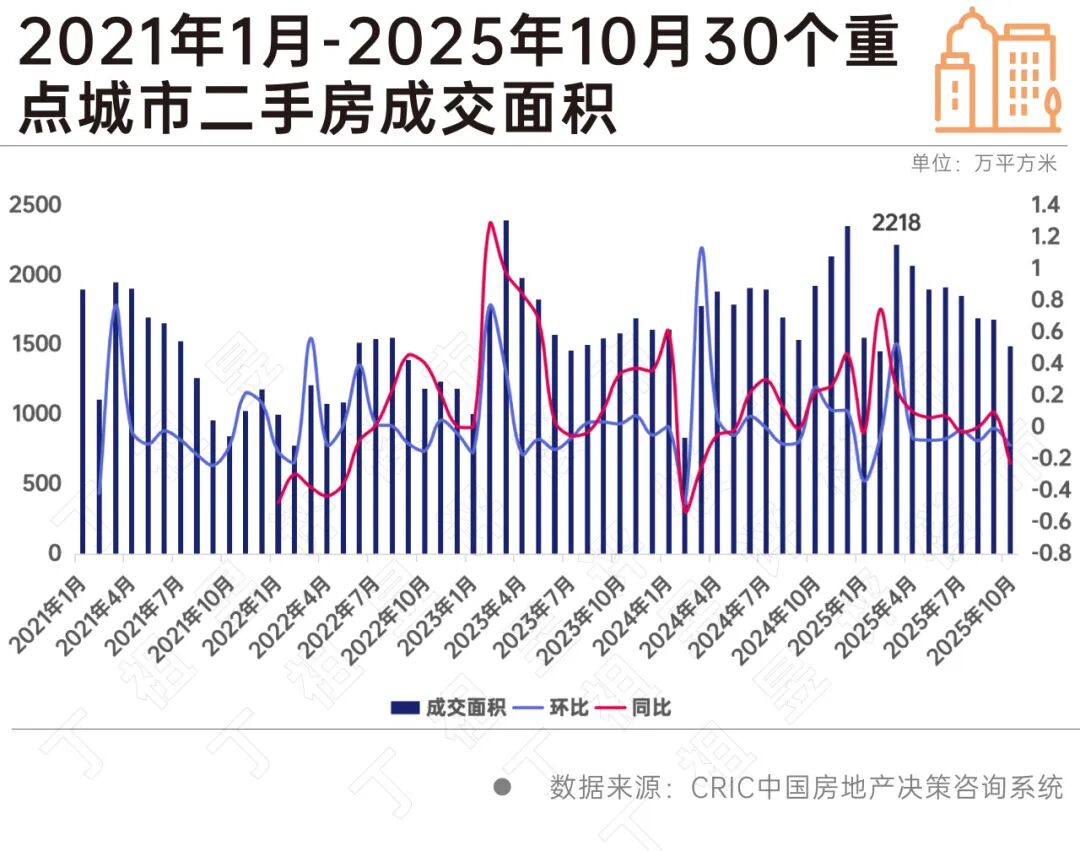
截至2025年10月,30个重点城市二手房成交面积1469万平方米,环比下降12%。 累计来看,2025年前10月,30个重点城市二手房累计成交同比仍保持6%的增长,这一数据要优于新房市场,前10月,30个重点城市新房成交累计同比下 跌7%。 一个是涨6%,一个是跌7%。所以,二手房虽然成交规模在逐月下降,但相对更稳。 而从一二手成交面积累计来看,目前已经"止跌",2025年前10月,30个重点城市一二手成交总面积与2024年同期持平。这说明,当前市场整体需求相对稳 定,并未出现大幅度下滑。其中已有部分城市开始增长。 二手房成交面积环比下降12% 2025年10月30个重点城市二手房成交面积1469万平方米,环比下降12%。 2025年至今,30个重点城市二手房成交最高点在3月份,达2218万平方米。这一成交规模虽然没有超过2024年12月,但也排得上2021年至今二手房单月成 交规模前三,走出了明显的"小阳春"行情。 此后,30个重点城市二手房成交面积开始走低,尤其是在2025年下半年后下跌明显。 这一方面是前期需求消化较多,另外一方面则是在"四代宅"等新规项目的冲击下,新房市场对二手房形成了一定的分流。 ...

银行直供房激增,是“捡漏”的机会,还是隐藏的风险?
3 6 Ke· 2025-11-11 05:46
Core Viewpoint - The emergence of "bank direct supply housing" in China's real estate market is gaining significant attention, with major banks like Agricultural Bank, Construction Bank, and Transportation Bank engaging in direct property sales primarily from non-performing loan disposals [1][3]. Group 1: Bank Direct Sales - Major banks are increasingly adopting a direct sales model for real estate, which is seen as a new method for quickly handling non-performing loans [3][5]. - The scale of direct property sales is experiencing explosive growth, with local banks and rural credit cooperatives notably increasing their listings [3][5]. - For instance, Lanzhou Bank has listed 1,779 properties for direct sale in 2025, a 50% increase from the previous year, while Jilin Bank and Tianjin Bank have listed over 2,000 and 1,200 properties, respectively [3][5]. Group 2: Advantages of Direct Sales - The direct sale model is reported to have a 15%-20% higher recovery rate for non-performing assets compared to traditional debt transfer methods, and the processing time is reduced by over one-third [5]. - Properties sold directly by banks often have significant price advantages, with some listings priced 10%-30% lower than comparable second-hand homes [5][6]. - For example, a property listed by Lanzhou Rural Commercial Bank is priced at 2,300 yuan per square meter, while similar properties in the area are listed between 33,000 and 46,000 yuan per square meter [5]. Group 3: Market Impact - The large-scale direct sales by banks are expected to challenge the current real estate price system, potentially leading to a decrease in property values across the market [11][13]. - The introduction of significantly lower-priced bank listings could further depress the already declining prices of second-hand homes and impact new home pricing strategies [11][13]. - This situation may create a downward spiral in property prices, as buyers may hesitate to purchase due to expectations of further declines, exacerbating the market's challenges [13].
伦敦股市10日上涨
Xin Hua Wang· 2025-11-10 18:59
Core Points - The London Stock Exchange's FTSE 100 index closed at 9787.15 points on November 10, marking an increase of 104.58 points, or 1.08% from the previous trading day [1] - All major European stock indices experienced gains on the same day [1] Top Gainers - Fresnillo, a precious metals producer, saw its stock price rise by 5.38% [1] - Diageo, a beverage company, increased by 5.21% [1] - Endeavour Mining's stock rose by 4.45% [1] - Polar Capital Technology Trust's shares went up by 4.42% [1] - Scottish and Southern Energy's stock increased by 3.99% [1] Top Losers - London Stock Exchange Group's stock fell by 2.14% [1] - Rightmove, a UK real estate company, decreased by 1.78% [1] - Hikma Pharmaceuticals' shares dropped by 1.71% [1] - BT Group's stock declined by 1.25% [1] - Compass Group, a catering services company, saw a decrease of 1.04% [1] Other European Indices - The CAC 40 index in Paris closed at 8055.51 points, up by 105.33 points, or 1.32% [1] - The DAX index in Frankfurt closed at 23959.99 points, increasing by 390.03 points, or 1.65% [1]
租房、买房遇到问题怎么办?
Xin Lang Cai Jing· 2025-11-07 08:06
Core Viewpoint - Real estate issues, whether renting, buying new homes, or purchasing second-hand homes, are complex and often lead to disputes that are difficult to resolve. However, with clear complaint channels and methods, these disputes can be effectively addressed [1][2]. Common Issues in Real Estate Transactions - Common problems in renting include false advertising by agents, landlords delaying deposit refunds, undisclosed property defects, rent increases after moving in, and platforms failing to fulfill commitments [3]. - New home delivery issues often involve developers delaying handovers, serious quality problems post-inspection, discrepancies between advertised and actual amenities, and property management charging unauthorized fees [4]. - Second-hand home transaction disputes typically arise from agents concealing property history, delays in transfer processes, unclear responsibilities regarding loan approvals, last-minute price increases by sellers, and disputes over deposits and service fees [5]. Complaint Channels for Real Estate Issues - The primary regulatory body for real estate complaints is the local Housing and Urban-Rural Development Bureau, which handles issues related to developers, property quality, and contract violations [8]. - The market regulatory department (12315) addresses issues like false advertising, fraud by agents, pricing disputes, and contract issues [9]. - Industry-specific regulatory channels include local housing authorities and associations for rental platforms and real estate agents, as well as the Banking and Insurance Regulatory Commission for loan-related issues [9]. - Internal complaint mechanisms on rental or real estate platforms can provide quick resolutions for issues like rental deposits and service fees [10]. Third-Party Complaint Platforms - The Black Cat Complaint platform, operated by Sina, is a popular choice for consumers, offering a simple complaint process and transparent progress tracking [11][12]. - The platform encourages faster responses from companies due to the public nature of complaints, which helps avoid negative publicity [13]. - Consumers can utilize the platform's "Red and Black List" to assess the historical performance of agents and developers, aiding in avoiding problematic entities [14]. Other Complaint Avenues - Consumer associations can mediate disputes related to deposit issues and service quality, although they lack enforcement power [15]. - In cases of suspected fraud, consumers are advised to report to the police [16]. - Legal avenues, such as court litigation or arbitration, serve as a final recourse for significant disputes where responsibilities are clear or companies refuse to address issues [17]. Conclusion - Given the high stakes and complexity of real estate transactions, it is crucial for consumers to be informed about complaint channels and processes to effectively resolve issues [17].
中原地产:预计2025年香港落成的私人住宅至今已售出约6成 创近3年高位
智通财经网· 2025-10-30 10:43
智通财经APP获悉,中原地产研究部高级联席董事杨明仪指出,预计2025年落成的香港私人住宅,截止 于今年第3季已经售出近六成单位,售出比例录57.2%,较截止第2季的51.2%,增加6个百分点。 杨明仪表示,随着发展商积极推盘,今年一手销售速度理想,货尾单位可望逐步消化,加上估计2025年 落成量减少至二万个以下,料第四季落成私楼售出比例将重越六成水平。 至于2024年落成私人住宅,截止于今年第3季售出比例录67.9%,较截止第2季的59.0%,亦增加8.9个百 分点。反映息口下降,楼市交投转旺,发展商继续加快推售短期楼花新盘,现楼货尾销售亦同样加快, 带动2025年及2024年落成单位售出比例均有明显提升。估计今年第4季尾,2024年落成私楼则可售出约 七成半的单位。 杨明仪指,2025年第3季同年预计落成的一手售出比例回升至57.2%,为2022年后的3年高位,摆脱了过 去两年同期不足四成半的低水平。2023年及2024年售出比例偏低,分别仅录43.2%及37.2%,因为当时 发展商倾向销售一两年后落成的远期楼花所致。至于2014年至2022年,每年第3季同年预计落成的一手 售出比例皆逾五成半,2018年 ...
美国9月成屋销售量环比上涨1.5% 销售量创7个月新高
Zhong Guo Xin Wen Wang· 2025-10-24 01:25
Group 1 - In September, U.S. existing home sales increased by 1.5% month-over-month, reaching the highest level in seven months, with an annualized rate of 4.06 million units sold [1] - The median home price in September was $415,200, marking a 2.1% year-over-year increase, continuing a 27-month upward trend [1] - The inventory of homes for sale at the end of September was 1.55 million units, reflecting a 1.3% month-over-month increase and a 14% year-over-year increase, although still below the pre-pandemic average by about 2 million units [1] Group 2 - Analysts attribute the rise in existing home sales primarily to a decrease in mortgage rates, influenced by the Federal Reserve's interest rate cuts [1] - The average rate for a 30-year fixed mortgage fell to 6.19%, the lowest level since October 3, 2024 [1] - Economists predict that despite the increase in home sales due to lower mortgage rates, overall sales for the year are expected to be slightly higher than last year's figures due to economic uncertainties [2]
因按揭贷款利率下降,美国房价涨幅放缓
Huan Qiu Wang· 2025-10-24 01:05
Core Insights - The National Association of Realtors (NAR) reported a slight increase in existing home sales in the U.S. for September, reaching an annualized rate of 4.06 million units, the highest level in seven months, attributed to lower mortgage rates and a slowdown in home price increases [1][3] - The chief economist of NAR, Dr. Lawrence Yun, indicated that the decline in mortgage rates is boosting housing sales, and improving housing affordability is also contributing to the increase [3] Group 1 - Existing home sales in September reached the highest level since February, indicating a potential thaw in the real estate market after a prolonged freeze [1] - The increase in sales is linked to slightly lower mortgage rates, suggesting a positive shift in buyer sentiment [1][3] - Despite the positive trends, some economists believe that mortgage rates need to drop below 6% (closer to 5.5%) to stimulate a stronger rebound in the market [3] Group 2 - The moderate recovery in sales and an increase in available housing inventory suggest a gradual normalization of the second-hand housing market after nearly three years of stagnation [3] - Concerns remain regarding the potential impact of a weak labor market and uncertainties from a possible federal government shutdown on future demand [3]