
海洋渔业

Search documents
浙江出台首部海洋经济省级综合性法规
Xin Hua She· 2025-12-25 08:05
Core Viewpoint - The Zhejiang Provincial People's Congress has approved the "Regulations on Promoting High-Quality Development of Marine Economy," which will take effect on March 1, 2026, marking a significant step in the province's marine economy development strategy [1] Group 1: Economic Performance - In the first three quarters of 2025, Zhejiang's marine production value reached 930 billion yuan, with a year-on-year growth of 6.3% [1] - The container throughput at Ningbo-Zhoushan Port has historically surpassed 40 million TEUs, with expectations to exceed 43 million TEUs this year, reflecting a year-on-year increase of over 10% [1] Group 2: Industry Development - The regulations clearly define key marine industries for development, including marine chemicals, shipbuilding, marine engineering equipment, marine tourism, and marine fisheries, aiming to promote their transformation and upgrading [1] - The regulations also emphasize the large-scale development of marine clean energy, seawater desalination, marine new materials, marine biopharmaceuticals, and marine electronic information industries [1] Group 3: Technological and Educational Support - The regulations propose to improve the support and management system for marine industry technology projects, including the establishment of specialized platforms for concept verification, pilot testing, transfer, and incubation [1] - There is a focus on enhancing talent cultivation and discipline construction related to marine economic development, supporting the establishment of emerging disciplines in higher education, and promoting vocational education and skills training in the marine industry [1] Group 4: Environmental and Resource Management - The regulations advocate for coordinated land-sea development and green growth, establishing a marine resource rights registration system, natural shoreline protection and utilization, and a compensation mechanism for fishery resource protection [2] - Specific provisions are made for layered rights management of marine areas, management of marine genetic resource protection zones, and marine ecological restoration [2]
【微聚焦】125亿元信贷活水涌向“深蓝”——青岛中行:“贷”动海洋产业高质量发展
Xin Lang Cai Jing· 2025-12-24 10:32
Core Viewpoint - The marine economy is a key engine for the iterative development of Qingdao, with financial innovation playing a crucial role in supporting the city's marine industry and enhancing its economic vitality [1][10]. Group 1: Financial Support for Marine Economy - Qingdao Bank focuses on the "4+4+2" marine industry development direction, aiming to connect marine resources, industrial upgrades, and public welfare [2][11]. - The bank has provided credit support for significant projects, including the world's first 100,000-ton smart aquaculture vessel "Guoxin No. 1" and the first pile-based fishing-solar integrated offshore photovoltaic project [2][11]. - As of now, Qingdao Bank has injected over 12.5 billion yuan into the marine industry, covering various market entities along the industrial chain [3][12]. Group 2: Collaborative Mechanisms and Service Models - Qingdao Bank has established a special task force for marine economic services, creating a cross-departmental collaboration mechanism to align financial services with marine industry development [3][12]. - The bank is committed to optimizing resource allocation and expanding credit limits to support traditional industries like port shipping and modern marine fisheries, while also focusing on emerging sectors such as marine renewable energy and equipment manufacturing [3][12]. Group 3: Investment in Green Energy - A 2 billion yuan equity investment fund has been registered to support Qingdao's marine green energy sector, focusing on offshore wind power, photovoltaics, and energy storage [4][13]. - This fund represents a collaborative effort between central and local entities, integrating national strategies with local resources to enhance the development of marine renewable energy [4][13]. Group 4: Technological Innovation and Environmental Protection - Qingdao Bank has tailored comprehensive financial service solutions for high-tech companies in the marine environmental sector, facilitating the purchase of membrane materials and optimizing production lines [6][16]. - The bank's financial support has enabled significant advancements in seawater desalination and wastewater treatment technologies, contributing to ecological protection and resource recycling [7][17]. Group 5: Future Directions - Qingdao Bank plans to continue deepening its engagement in the marine economy, optimizing service models, and aligning with the development needs of marine enterprises [9][18]. - The bank aims to play a vital role in supporting the national marine power strategy and enhancing the industrial upgrade in Qingdao [9][18].

对标先进争一流 展现新担当新作为
Xin Lang Cai Jing· 2025-12-23 23:14
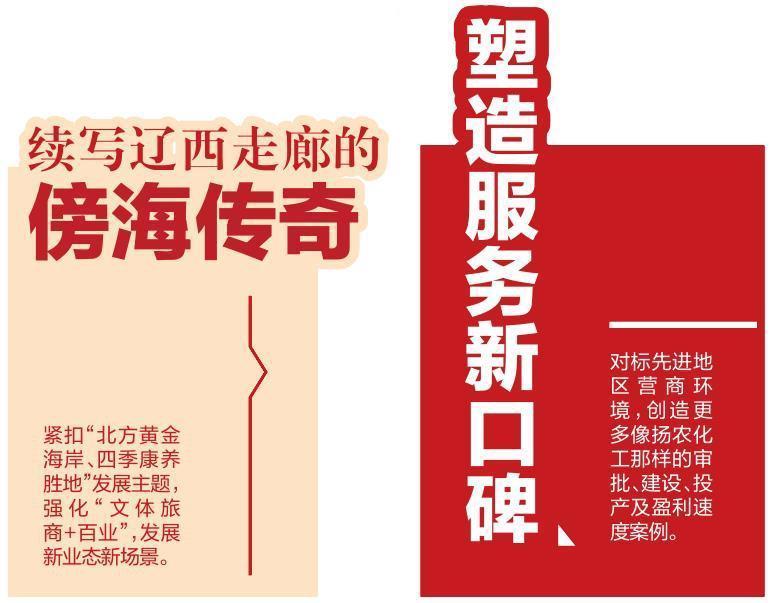
Core Insights - Huludao City has prioritized steady growth and quality improvement over the past five years, achieving a fixed asset investment growth rate that ranks among the top in the province for three consecutive years, and its GDP has surpassed 100 billion yuan ahead of schedule, marking a historic milestone [4] Group 1: Economic Development Strategy - The city aims to strengthen its economic foundation and address shortcomings, focusing on maintaining national security and accelerating comprehensive revitalization to achieve breakthroughs in various strategic areas [4] - The "14th Five-Year Plan" will emphasize building a modern industrial system with distinctive characteristics, focusing on industrial clusters in basic and fine chemicals, nuclear energy, and clean energy [5][6] Group 2: Industrial Transformation and Innovation - Huludao City will accelerate the transformation and upgrading of traditional industries, promoting smart manufacturing and green manufacturing through digital transformation [5] - The city plans to cultivate strategic emerging industries, including nuclear-related sectors, new materials, and high-end equipment manufacturing, while also laying out future industries such as biomanufacturing and hydrogen energy [6] Group 3: Technological Innovation - The city has implemented an innovation-driven development strategy, achieving significant results in cultivating innovation entities and building platforms [6] - Plans include establishing a national nuclear science research center and attracting key national laboratories to enhance technological innovation capabilities [6] Group 4: Talent and Business Environment - The city will promote the integrated development of education, technology, and talent to foster a conducive environment for innovation [7] - Efforts will be made to optimize the business environment by creating a market-oriented, legal, and international business climate, with a focus on efficient service and streamlined approval processes [8]
一叶茶、一尾鱼、一把“金钥匙”……文明集市展现潮州饶平农业全景丨文明集市县域行④
Nan Fang Nong Cun Bao· 2025-12-23 11:32
Core Viewpoint - The article highlights the vibrant cultural market in the Beijing Road business district, showcasing the unique agricultural products and cultural heritage of Chaozhou Raoping, which is actively promoting local specialties and enhancing consumer engagement through a series of promotional activities [7][10][36]. Group 1: Agricultural Products - Raoping County, located in eastern Guangdong, is known for its diverse agricultural products, including single bush tea, lion head geese, and lychee, which are gaining national recognition [12][13]. - The county has a tea planting area of 155,600 acres, producing 23,200 tons of tea with a value exceeding 5.7 billion yuan, supporting the livelihoods of 200,000 people [15][16]. - The seafood industry in Raoping is significant, with a projected total aquatic product output of 204,700 tons and an estimated value of 6 billion yuan in 2024, establishing it as an important marine aquaculture base in Guangdong [24]. Group 2: Cultural and Creative Products - The market features various local delicacies and cultural crafts, such as green bean cakes and shell crafts, which reflect the rich culinary culture and heritage of the Chaoshan region [19][23]. - Creative products like lychee woven ornaments and mini tea sets are being produced by local artisans, providing them with additional income and promoting traditional craftsmanship [28][29]. Group 3: E-commerce Development - Raoping County has implemented a three-year action plan for high-quality rural e-commerce development, aiming to integrate agricultural resources and promote local specialties to larger markets [31][32]. - The county is encouraging partnerships between enterprises and farmers to enhance product development and market access, effectively opening up new opportunities for agricultural products [33][34].

经济大省挑大梁|“齐鲁粮仓”的“稳”与“进”
Xin Hua Wang· 2025-12-23 07:46
Core Viewpoint - Shandong province is advancing agricultural modernization through industry integration, technological empowerment, and supportive policies, ensuring food security while building a diversified food supply system. Group 1: Food Security and Agricultural Production - Shandong, with 6% of the nation's arable land and 1% of freshwater, produces 8% of the country's grain, 10% of meat, eggs, and milk, 11% of vegetables, and 13% of aquatic products, maintaining a grain output of over 110 billion jin for five consecutive years [1][2] - The province is implementing a "1+4" system focusing on grain yield improvement and exploring potential in facility agriculture, animal husbandry, marine fisheries, and saline-alkali land utilization [2] - High-standard farmland construction has reached 77.59 million acres, enhancing agricultural productivity [2] Group 2: Technological Advancements in Agriculture - Shandong is integrating smart technologies such as autonomous tractors and drones, moving towards intelligent and automated agriculture [3] - The province's main crop seed coverage has increased to over 98%, and the comprehensive mechanization rate for farming has reached 91.7%, surpassing national averages [3] Group 3: Economic Development and Industry Extension - Shandong has 151 national-level leading enterprises and over 11,600 regulated agricultural processing companies, leading the nation in both quantity and processing capacity [4] - The province is developing 13 advantageous specialty industries and has established 10 national advantage specialty industry clusters, 19 national modern agricultural industrial parks, and 122 national agricultural strong towns [4] - Agricultural products from Shandong have reached international markets, with exports projected at 164.82 billion yuan in 2024, accounting for 22.5% of the national total, marking 26 consecutive years of leading the nation in agricultural exports [4]
百千万工程”推进路上的坚实金融后盾 ----农行广东分行倾力服务“百千万工程
2 1 Shi Ji Jing Ji Bao Dao· 2025-12-23 00:56
Core Viewpoint - The Agricultural Bank of China Guangdong Branch is actively supporting the "Hundred Counties, Thousand Towns, and Ten Thousand Villages High-Quality Development Project" by providing substantial financial resources to promote rural revitalization and regional development in Guangdong Province [1]. Group 1: Financial Support and Achievements - As of October 2025, the Agricultural Bank of China Guangdong Branch has provided over 600 billion yuan in county loans and over 500 billion yuan in agricultural loans, with increases of 210 billion yuan and 160 billion yuan respectively since the project's initiation [1]. - The bank has been recognized as "Excellent" in the People's Bank of China's evaluation of financial services for rural revitalization for five consecutive years, establishing itself as a solid financial support for the "Hundred Counties, Thousand Towns" initiative [1]. Group 2: Systematic Approach and Collaboration - The bank has developed a comprehensive service system to ensure financial resources are effectively allocated to every corner of counties, towns, and villages, implementing four major actions tailored to the project's goals [2]. - It has established a regular communication mechanism with provincial departments to align financial services with policy directions and project needs, resulting in the issuance of 1 billion yuan in loans across 12 pilot counties [3]. Group 3: Focus Areas for Development - The bank is concentrating its credit resources on three key areas: industrial development, urban-rural construction, and increasing farmers' income, thereby enhancing the economic vitality of counties and towns [4]. - In the industrial development sector, the bank has created a financial service system that supports the entire industrial chain, with over 32 billion yuan in loans for grain security, reflecting a 38% increase since the beginning of the year [4]. Group 4: Innovative Financial Products - The bank has developed a specialized product system with over 100 products tailored for rural industries, construction, and food security, including customized loans for marine ranching and rural industrial development [8]. - It has also strengthened the integration of investment banking and commercial banking, facilitating investments in local economic development projects [8]. Group 5: Impact on Local Economies - The bank's financial services have significantly contributed to the growth of local industries, such as the "Golden Pomelo" industry in Meizhou, which has generated nearly 10 billion yuan in annual output value, benefiting over 100,000 farmers [9]. - In Qingyuan, the meat pigeon industry has seen rapid development, with production exceeding 60 million birds and a value surpassing 900 million yuan, supported by loans from the bank [10].
海南省海洋厅发布海洋科技和国际合作成果
Zhong Guo Zi Ran Zi Yuan Bao· 2025-12-19 07:25
Group 1 - The sixth "Ocean Cooperation and Governance Forum" was held in Sanya, Hainan, showcasing practical progress and achievements in international marine cooperation with Southeast Asian countries [1] - The Marine Technology Achievement Exhibition focused on four main areas: disaster prevention and mitigation, marine fisheries, marine renewable energy, and marine ecological protection, highlighting significant technological advancements [1] - Key technologies displayed included multi-dimensional integrated intelligent forecasting and early warning for marine disasters, precise typhoon early warning, and ecological restoration projects [1] Group 2 - Multiple cooperation achievements were announced, including successful international collaboration on the large-scale breeding and ecological conservation of Tridacna by the South China Sea Institute of Oceanology and several universities from Singapore, Malaysia, and Fiji [2] - The establishment of a joint laboratory for marine biotechnology research between Hainan Tropical Ocean University and the University of Malaya aims to create an international collaborative innovation platform [2] - The launch of the "Blue Dream Song" cruise ship on the South China Sea long route marks the beginning of a journey through historical and cultural marine cities, reflecting Hainan's commitment to deepening international cooperation under the "Blue Partnership" framework [2]
国家开发银行:以高质量金融“护航”青岛高质量发展
Ren Min Wang· 2025-12-18 01:52
Core Viewpoint - The news highlights the significant financial support provided by the National Development Bank (国开行) to facilitate high-quality development in Qingdao, focusing on infrastructure projects, modern industrial systems, and marine economy initiatives. Infrastructure Development - The Qingdao Jiaozhou Bay Second Undersea Tunnel, spanning 17.48 kilometers, has achieved a breakthrough of 3,000 meters in its south line main tunnel construction, addressing the saturation of existing transport links and enhancing connectivity between Qingdao's urban and Huangdao districts [2][3] - The National Development Bank has tailored financing solutions for the tunnel project, providing a total of 2.032 billion yuan in loans to support its construction [2] Marine Economy - The development of a modern marine fishery production park is underway, focusing on the Atlantic salmon industry, which will utilize a land-sea relay model for sustainable aquaculture [4] - The National Development Bank has provided 90 million yuan in new policy financial tools to support the capital needs of this project, facilitating its launch [5] Cultural and Historical Preservation - The Qingdao International Cruise Port area is undergoing transformation to enhance the integration of old and new urban areas, with a focus on preserving historical culture while promoting modern tourism [8] - A total of 310 million yuan in loans and new policy financial tools have been allocated to support the development of the cruise port area [8] Water Resource Management - The completion of the main construction of the Guanlu Reservoir, with a total capacity of 211 million cubic meters, aims to address Qingdao's water scarcity issues and improve water supply security [10][11] - The National Development Bank has issued 3.28 billion yuan in medium to long-term loans and 915 million yuan from the infrastructure investment fund to support the reservoir's construction [11] Future Financial Support - The National Development Bank plans to continue its financial support for Qingdao's innovative industrial systems and marine economy, focusing on key areas such as ecological protection and high-quality development [12]
迟福林:再造“海上海南”,拥抱中国与东盟蓝色经济共同大市场
2 1 Shi Ji Jing Ji Bao Dao· 2025-12-17 07:59
Core Viewpoint - The establishment of the Hainan Free Trade Port and its full island closure operation on December 18 marks a significant opportunity for the development of a China-ASEAN blue economy cooperation market, enhancing Hainan's strategic position as a key hub for this initiative [1][3]. Group 1: Economic Potential - The blue economy represents a vast growth opportunity, with approximately 30% of ASEAN countries' GDP derived from the marine economy, while China's contribution is around 8% [3]. - Currently, marine product trade between China and ASEAN accounts for only 0.6% of total bilateral trade, indicating significant room for growth [3]. - If the share of marine product trade in total trade increases by 1 percentage point, it could unlock nearly $10 billion in new market potential [4]. Group 2: Strategic Advantages of Hainan - Hainan has jurisdiction over approximately 2 million square kilometers of sea area and boasts a coastline of over 1,900 kilometers, rich in tropical marine resources [5]. - The Hainan Free Trade Port will implement core policies of "zero tariffs, low tax rates, and simplified tax systems," which will facilitate the establishment of a strategic platform for the China-ASEAN blue economy [6]. - Hainan's shipping network, including 33 foreign trade routes from Yangpu Port, connects Southeast Asia and South Asia, enhancing its logistical capabilities [6]. Group 3: Industry Transformation - Hainan is transitioning from traditional marine industries to high-value-added sectors, with ongoing projects in cruise tourism and fisheries technology cooperation with ASEAN countries [6][7]. - The province's marine economic output value in 2024 is projected to be 270.7 billion yuan, accounting for only 2.6% of the national total, indicating untapped potential [8]. - The development of new marine tourism sectors, such as cruise tourism, is lagging, with only 59,000 cruise visitors expected in 2024, compared to 1.3759 million in Shanghai [7]. Group 4: Future Initiatives - Hainan aims to create a cruise tourism cooperation network centered on the province, promoting regular cruise routes connecting to ASEAN countries [8]. - The province plans to leverage its free trade port status to enhance seafood imports from ASEAN, establishing a seafood import base [9]. - Future energy cooperation will focus on offshore wind power, with initiatives to develop compatible projects that integrate marine fisheries and renewable energy [10].
2025年,烟台海洋生产总值预计突破3000亿元大关
Qi Lu Wan Bao· 2025-12-17 06:41
Core Insights - The marine production value of Yantai City is projected to increase from 214.8 billion yuan in 2020 to 281.6 billion yuan by 2024, with an average annual growth rate of 7% [1][2] - It is expected that the marine production value will exceed 300 billion yuan this year, accounting for over 26% of the city's GDP, placing it among the top coastal prefecture-level cities in China [1][2] Industry Development - The city has implemented a series of policies to promote marine economic development, including the "Implementation Opinions on Accelerating the Construction of a Marine Strong City" and the "Three-Year Action Plan for Promoting Marine Economic Demonstration Zone Construction" [1] - The first marine development blue paper at the prefecture level in the country, titled "Yantai Marine Development Report," has been published, showcasing significant achievements in marine economic development [1] Industry Structure and Performance - The structure of the marine industry has been optimized, with the ratio of the three marine industries changing from 9:31:60 in 2020 to 9:30:61 in 2024 [2] - Ten marine-related industries have entered the top three in the province, with marine mining, marine engineering equipment, marine power, and seawater desalination industries ranking first in added value within the province [2] Industry Clusters - Yantai has established several provincial-level modern marine characteristic industrial clusters, including Long Island marine fisheries, Penglai marine engineering equipment, and Zhifu marine cultural tourism, ranking second in the province for the number of such clusters [2]