
高铁

Search documents
“开放的中国为世界经济发展带来巨大机遇”(国际人士看中国“十四五”成就)
Ren Min Ri Bao· 2025-10-19 22:02
Core Insights - The "14th Five-Year Plan" period has seen significant advancements in China's economic and social development, contributing positively to global economic recovery and growth [1][2][3]. Economic Growth and Contributions - China's economy has consistently crossed multiple thresholds, with GDP expected to reach approximately 140 trillion RMB this year, marking a growth of over 35 trillion RMB during the "14th Five-Year Plan" [2][3]. - The contribution rate of China to global economic growth has remained around 30% during this period, highlighting its role as a major contributor to global economic stability [7][8]. Industrial and Technological Advancements - China maintains its position as the world's largest manufacturing country, with over 200 major industrial products leading in global production [2][3]. - The country has established the largest number of 5G base stations globally and has the largest research and development workforce, showcasing its commitment to technological innovation [2][3]. Consumer Behavior and Domestic Demand - Final consumption expenditure has contributed an average of 56.2% to China's economic growth over the past four years, an increase of 8.6 percentage points compared to the "13th Five-Year Plan" [4]. - New consumption trends driven by digital technology and innovative products are emerging, indicating a shift towards higher quality goods and services [4]. Social Infrastructure and Quality of Life - The "14th Five-Year Plan" has led to the establishment of the world's largest education, social security, and healthcare systems, with participation rates in basic insurance exceeding 95% [5][6]. - Significant improvements in public health and infrastructure, such as high-speed rail, have enhanced the quality of life for citizens, contributing to social stability [5][6]. International Relations and Investment - Foreign direct investment in China has reached 4.7 trillion RMB from 2021 to May this year, surpassing the total for the "13th Five-Year Plan" period, reflecting China's strong market appeal [8]. - China's commitment to opening up its economy and reducing restrictions on foreign investment demonstrates its role in promoting global economic cooperation [7][8].
中国生产力
Yang Shi Wang· 2025-10-18 06:44
Core Insights - China's manufacturing sector has evolved from relying on imports to becoming the world's largest and most comprehensive manufacturing powerhouse, showcasing significant productivity and development [2] - The country is experiencing rapid advancements across various fields, with impressive economic indicators reflecting its growth [2][3] Economic Performance - China generates an average GDP of 243 million yuan and a goods import-export value of 83.2 million yuan every minute [2] - Daily production includes approximately 35,900 new energy vehicles and an increase of about 6,845 meters in high-speed rail operating mileage [3] Industry Transformation - Over 800 advanced manufacturing national standards are introduced annually, driving industry upgrades, alongside the addition of 919,600 5G base stations [3] - The transformation from a "world factory" to a high-value manufacturing and technology innovation economy is accelerating, with sectors like high-speed rail, nuclear power, 5G, and new energy vehicles leading the way [3]

中国经济圆桌会|国家发展改革委:创新成为我国推动高质量发展的主引擎
Xin Hua Wang· 2025-10-18 00:38
Group 1 - Innovation has become the main engine for promoting high-quality development in China, with a shift from quantity to quality and from low-end to high-end industries [1][2] - During the 14th Five-Year Plan, China is focusing on developing new productive forces and integrating technological and industrial innovation, resulting in significant achievements [2] - By 2024, China's total R&D expenditure is expected to increase by nearly 50% compared to the end of the 13th Five-Year Plan, with R&D intensity reaching 2.69%, close to the OECD average [2] Group 2 - The digital economy's core industries are projected to account for about 10% of GDP by 2024, with new industries and business models, such as "Artificial Intelligence+", rapidly emerging [2] - Over the past four years, China's GDP average growth rate reached 5.5%, with significant milestones achieved at 110 trillion, 120 trillion, and 130 trillion yuan [3] - Achievements in economic development, technological innovation, social welfare, ecological civilization, and security have been made despite external pressures and challenges [3]
140万亿背后,中国经济破浪前行
21世纪经济报道· 2025-10-17 03:54
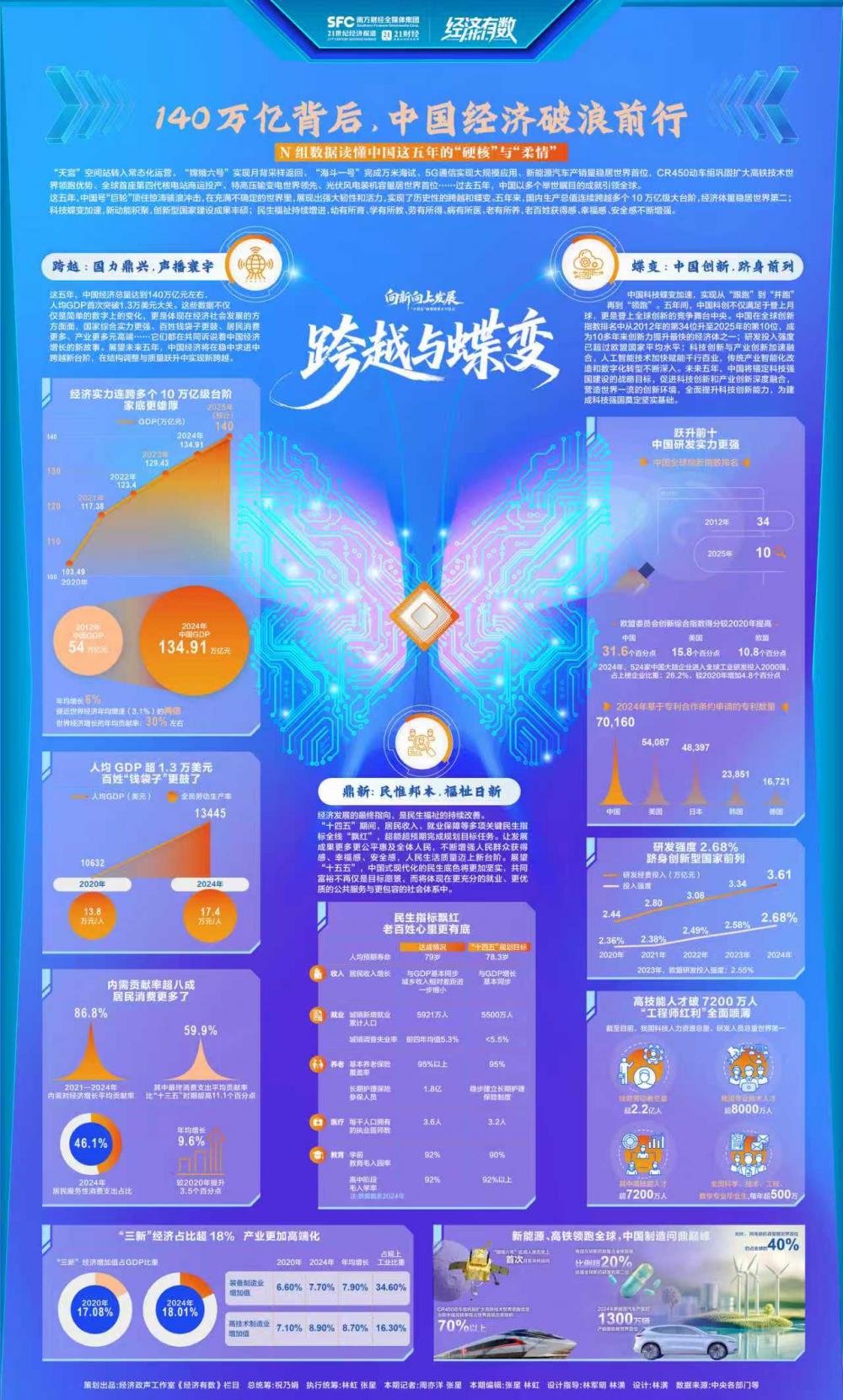
Core Insights - Over the past five years, China has achieved significant milestones in various sectors, showcasing resilience and vitality amid global uncertainties [1][3][13] - The country's GDP has reached approximately 140 trillion yuan, with per capita GDP surpassing $13,000 for the first time, reflecting a robust economic narrative [3][16] - China has transitioned from a "follower" to a "leader" in technology and innovation, with notable advancements in R&D and global innovation rankings [5][18] Economic Growth - China's economic total has consistently crossed multiple thresholds, reaching 140 trillion yuan, with an average growth rate of 5.5% over the past four years, outpacing global averages [3][16] - The contribution rate of China to global economic growth remains around 30%, positioning it as a crucial engine for global economic development [16][33] Technological Innovation - China has accelerated its technological transformation, moving from "catching up" to "leading" in global innovation, with its global innovation index ranking rising from 34th in 2012 to 10th by 2025 [5][18] - R&D intensity has surpassed the average levels of EU countries, with a significant increase in the number of high-level international journal publications and patents [18][19] Social Welfare and Quality of Life - Key indicators of social welfare, such as resident income and employment security, have shown significant improvement, enhancing the overall quality of life for citizens [7][36] - The focus on equitable distribution of development benefits aims to increase the sense of gain, happiness, and security among the populace [7][36] Infrastructure and Industry - China has built the world's largest high-speed rail network and continues to lead in renewable energy installations, including solar and wind power [21][31] - The manufacturing sector remains robust, with China maintaining its position as the largest industrial producer globally, particularly in automobiles and electronics [21][22] Future Outlook - Looking ahead, China aims to achieve further economic advancements and structural improvements, with a focus on becoming a technology powerhouse and enhancing the integration of innovation and industry [5][37] - The upcoming "15th Five-Year Plan" is expected to solidify the foundation for achieving socialist modernization by 2035 [37]
140万亿背后,中国经济破浪前行
2 1 Shi Ji Jing Ji Bao Dao· 2025-10-17 03:19
Core Achievements - Over the past five years, China has achieved significant milestones in various sectors, including space exploration, high-speed rail technology, and renewable energy, establishing itself as a global leader in these fields [1][2][3][4][7][10]. Economic Growth - China's GDP reached approximately 140 trillion yuan, with per capita GDP surpassing $13,000 for the first time, reflecting a robust economic performance and increased consumer spending [2][11]. - The average economic growth rate over the past four years was 5.5%, exceeding the global average, contributing around 30% to global economic growth [11]. Technological Innovation - China has transitioned from "catching up" to "leading" in technological innovation, with its global innovation index ranking rising from 34th in 2012 to 10th in 2025 [3][13]. - R&D investment intensity has surpassed the average level of EU countries, and the integration of technology and industry has accelerated, particularly in artificial intelligence [3][14]. Social Welfare - Key indicators of social welfare, such as resident income and employment security, have shown significant improvement, enhancing the overall quality of life for citizens [4][21]. - The goal of common prosperity is becoming more tangible, with expectations for better employment opportunities and public services in the future [4][21]. Infrastructure Development - China has built the world's largest high-speed rail network and renewable energy systems, solidifying its position as a leader in infrastructure [17][18]. - The country has also established the largest and most comprehensive manufacturing system globally, maintaining its status as the largest industrial robot market for 12 consecutive years [15][16]. Global Trade and Cooperation - China has maintained its position as the world's largest trading nation for eight consecutive years, with significant contributions to international cooperation through initiatives like the Belt and Road [19][20]. - The country is expected to achieve a record in the export of innovative pharmaceuticals, reflecting its growing influence in global markets [19].
跨越与蝶变:140万亿背后,N组数据透视中国经济这五年
2 1 Shi Ji Jing Ji Bao Dao· 2025-10-17 00:18
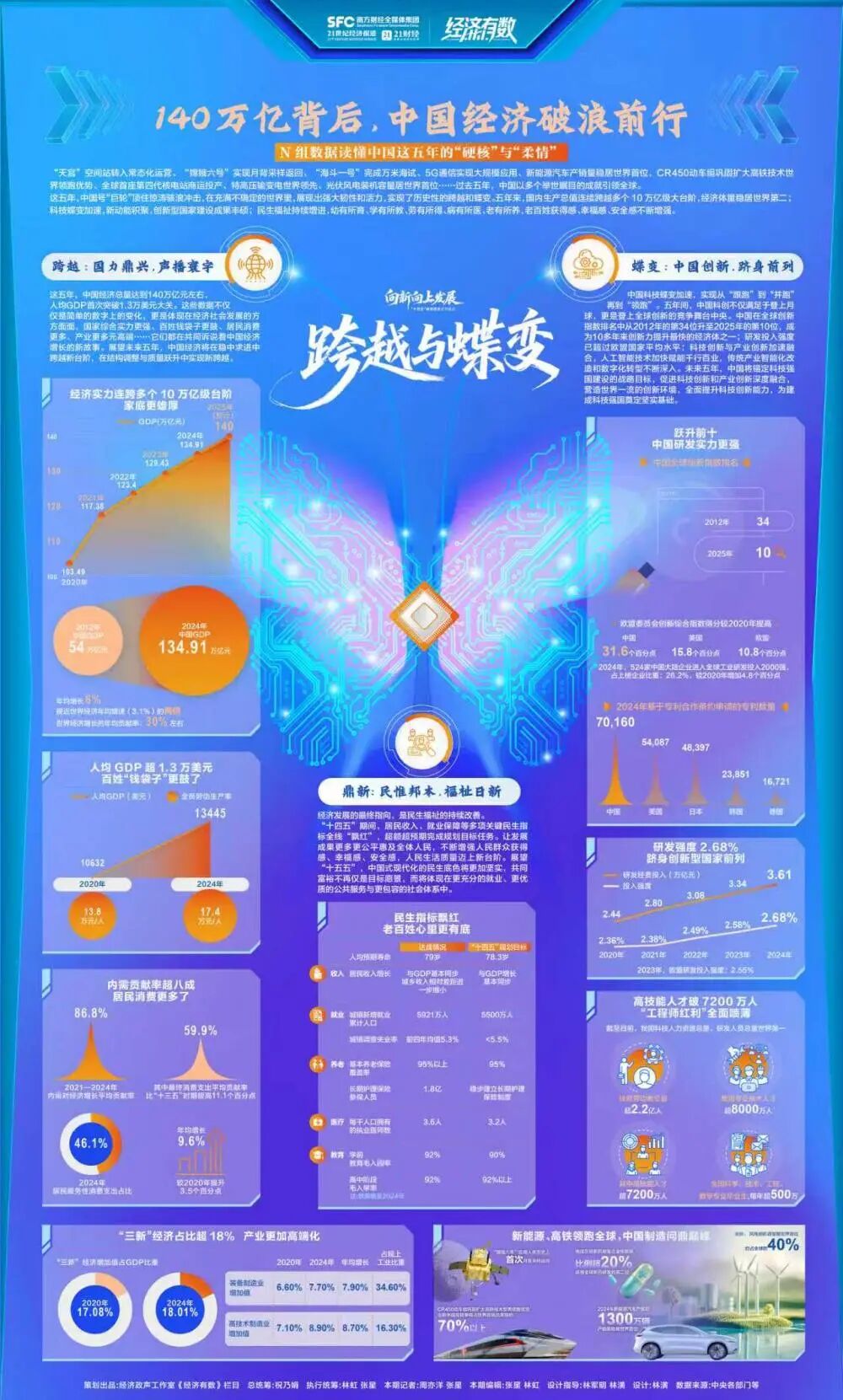
Economic Growth and Achievements - China's GDP reached approximately 140 trillion yuan, with per capita GDP surpassing 13,000 USD for the first time, indicating significant economic growth and improved national strength [5][6][7] - Over the past five years, China has crossed multiple 10 trillion yuan milestones in GDP, maintaining its position as the world's second-largest economy [5][6] - The average annual growth rate of China's economy is about 6%, nearly double the global average growth rate of 3.1%, contributing around 30% to global economic growth [7][9] Technological Advancements - China has accelerated its technological transformation, moving from "catching up" to "keeping pace" and now "leading" in various sectors [12][13] - The global innovation index ranking for China improved from 34th in 2012 to 10th in 2025, marking it as one of the fastest-growing economies in terms of innovation [12][14] - R&D investment intensity in China has surpassed the average level of EU countries, with significant increases in high-tech industry investments [10][15] Industrial Development - The contribution of final consumption expenditure to economic growth has increased by 11.1 percentage points compared to the "13th Five-Year Plan" period, with domestic demand accounting for over 80% of economic growth [9][10] - The share of the "three new" economy (new technologies, new industries, and new business models) in GDP is projected to exceed 18% by 2024, indicating a shift towards higher-end industries [9][10] - The number of high-tech enterprises in China has grown significantly, with over 50,000 active high-tech firms expected by 2025 [10][11] Social Welfare and Quality of Life - Key indicators of social welfare, such as income growth and employment rates, have exceeded expectations during the "14th Five-Year Plan" period, enhancing the quality of life for citizens [26][28] - The urban unemployment rate has remained below 5.5%, and the coverage of basic pension insurance has exceeded 95% [28][29] - The focus on improving public services and promoting common prosperity is expected to continue, with a commitment to enhancing employment and social security systems [26][28]

跨越与蝶变:140万亿背后,中国经济破浪前行 N组数据读懂中国这五年的“硬核”与“柔情”
2 1 Shi Ji Jing Ji Bao Dao· 2025-10-16 23:12
Core Insights - Over the past five years, China has achieved significant milestones in various sectors, showcasing resilience and vitality amid global uncertainties [1][2][3][4] - The economic total reached approximately 140 trillion yuan, with per capita GDP surpassing 13,000 USD for the first time, indicating a stronger national comprehensive strength and improved living standards for citizens [2][4] Group 1: Economic Growth - China's GDP has consistently crossed multiple 10 trillion yuan thresholds, maintaining its position as the world's second-largest economy [1] - The economic growth narrative is reflected in increased consumer spending and a more diversified and high-end industrial structure [2] Group 2: Technological Innovation - China has transitioned from "catching up" to "keeping pace" and now to "leading" in technological innovation, with its global innovation index ranking rising from 34th in 2012 to 10th in 2025 [3] - R&D investment intensity has surpassed the average level of EU countries, indicating a strong commitment to innovation [3][4] Group 3: Social Welfare - Key indicators of social welfare, such as resident income and employment security, have exceeded expectations during the 14th Five-Year Plan, enhancing the overall quality of life for citizens [4] - The focus on common prosperity is expected to manifest in better employment opportunities, higher quality public services, and a more inclusive social system in the future [4]
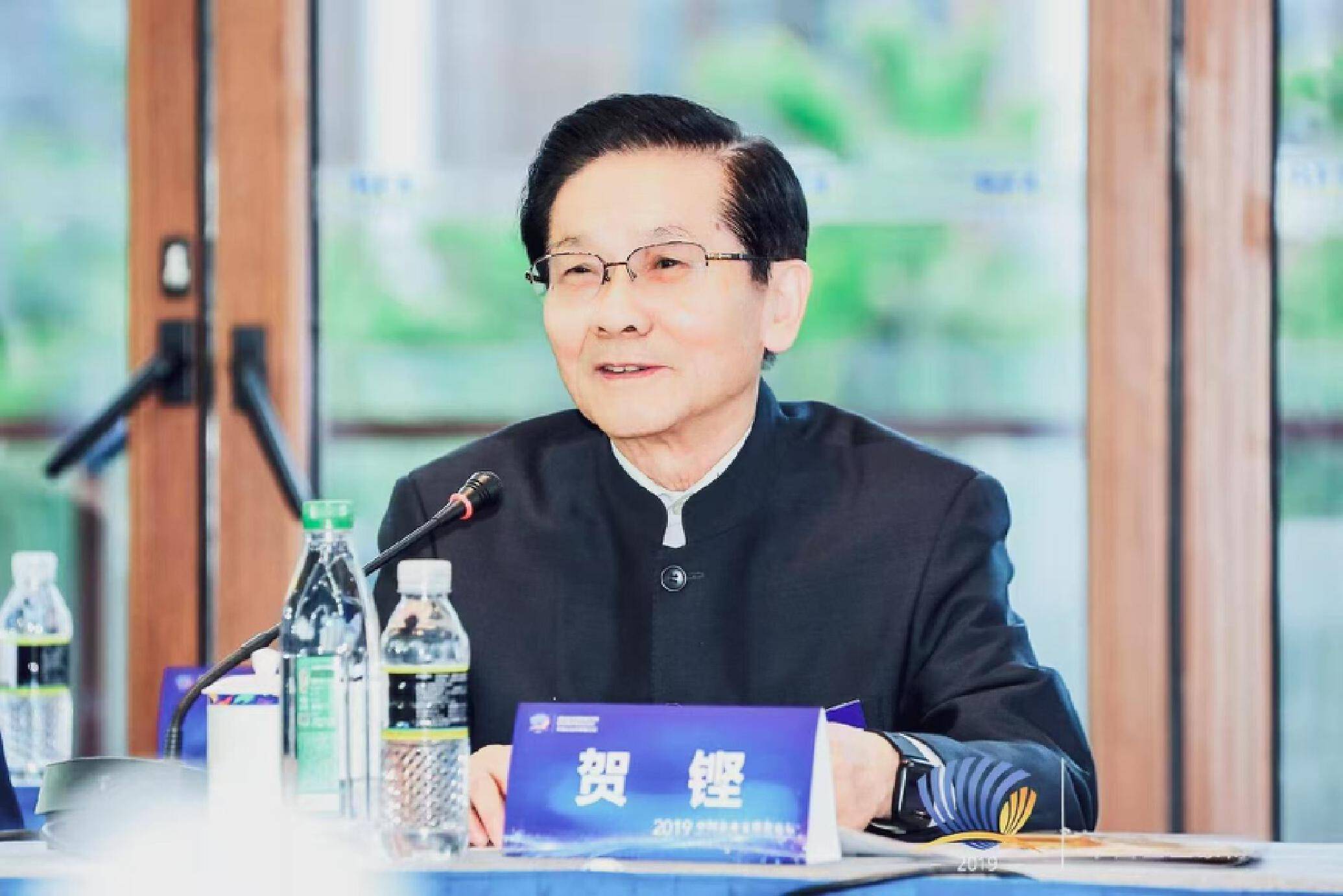
对话贺铿:别只盯着投资,多想想怎么涨工资
Sou Hu Cai Jing· 2025-10-14 09:12
Core Viewpoint - The article emphasizes the need to shift China's economic policy focus from infrastructure investment to increasing residents' income and boosting consumption, as the current reliance on investment has led to insufficient demand in the economy [2][3][5]. Investment and Economic Policy - The trend of over-reliance on investment has been evident since 1998, with negative impacts becoming more pronounced after 2008, resulting in a long-term low share of consumption in GDP [3][15]. - Current economic policies should prioritize improving residents' income through effective income distribution adjustments, such as mechanisms for wage increases linked to corporate profits [3][19]. - The article critiques the traditional focus on infrastructure and real estate investment, suggesting that funds should be redirected towards social welfare and living standards [5][6][15]. Employment and Income Distribution - There is a pressing need to address employment issues, particularly for the youth, with over 10 million university graduates entering the job market annually [6][10]. - The article highlights the importance of accurately measuring unemployment, especially in rural areas, where many migrant workers face job losses [7][10]. - A proposed income distribution mechanism should ensure that wage increases are legislated and not left to corporate discretion, addressing the slow growth of employee wages [17][19]. New Infrastructure and Digital Economy - The article advocates for a balanced view on new infrastructure investments, recognizing the necessity of certain projects while cautioning against hasty investments in areas like 5G, which may not yet have a clear demand [4][14]. - The concept of the digital economy is critiqued for its vague definitions, with many companies misrepresenting their digitalization efforts [4]. Long-term Economic Strategy - The article stresses that macroeconomic policies should serve long-term goals rather than short-term fixes, with a focus on sustainable growth driven by consumer spending [23][24]. - It suggests that the lessons from the U.S. economic transformation in the 1990s could provide valuable insights for China's current economic challenges [8][27]. Real Estate Market Concerns - The article expresses concerns about high housing prices, indicating that the affordability of housing should be assessed based on income ratios, which currently indicate a disparity [28]. - It argues that the real estate market's overheating is partly due to local governments' reliance on land sales for revenue, which distorts economic priorities [12][13].
理响中国|这就是“神秘的东方力量”
Xin Hua Wang· 2025-10-14 05:35
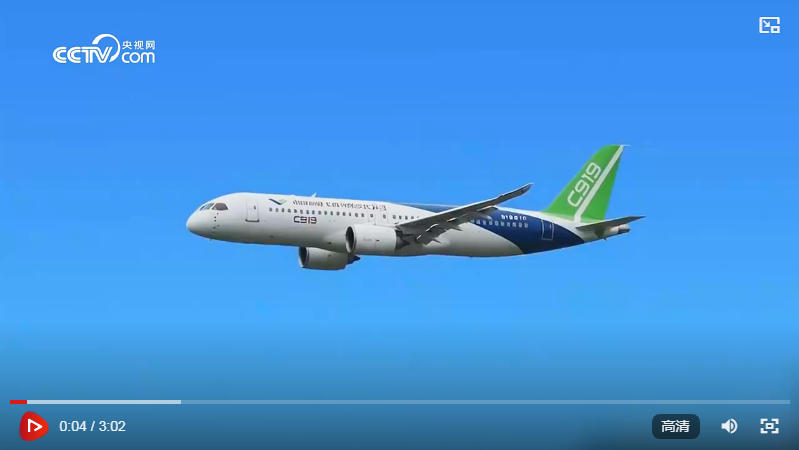
Core Insights - China's technology sector is experiencing significant growth, with major innovations such as the C919 aircraft and Chang'e 6 lunar mission showcasing the country's advancements in technology and innovation [1][3] - Cities like Hangzhou and Hefei are emerging as innovation hubs, demonstrating the effectiveness of China's technology-driven development model [2][6] - The "14th Five-Year Plan" emphasizes innovation as a key strategy for national development, leading to increased R&D investment and improved global rankings in innovation [3][5] Group 1: Investment and Growth - China's R&D expenditure reached a new high, with a nearly 50% increase compared to the end of the "13th Five-Year Plan," amounting to an additional 1.2 trillion yuan [3] - The intensity of R&D investment rose to 2.68%, approaching the OECD average, reflecting a strong commitment to innovation [3] - The high-tech manufacturing sector's added value grew by 42% compared to the end of the "13th Five-Year Plan," indicating robust industrial growth [11] Group 2: Technological Achievements - Major technological breakthroughs include the operation of the first fourth-generation nuclear power plant and the successful launch of the domestic large aircraft [5][9] - China's achievements in artificial intelligence, quantum technology, and space exploration have led to multiple global firsts, showcasing the country's technological prowess [9][11] - The number of innovative drugs in development has reached over 4,000, accounting for approximately 30% of the global total, highlighting advancements in the pharmaceutical sector [11] Group 3: Policy and Institutional Support - The Chinese government has prioritized innovation in its national development strategy, with a focus on high-level self-reliance in technology [6][12] - The establishment of a supportive innovation ecosystem is crucial, with efforts to enhance the role of enterprises in technological innovation and improve the business environment [12] - The emphasis on cultivating high-level innovative talent is essential for sustaining technological advancements and achieving self-reliance [12]
中国妇女奋斗建功新时代|勇立潮头敢为先——中国妇女在科技创新浪潮中激荡智慧
Xin Hua She· 2025-10-07 07:13
Core Insights - The article highlights the significant contributions of Chinese women in the field of science and technology, showcasing their determination and achievements in various innovative sectors [1][2][4] Group 1: Representation and Impact - Approximately 40 million female science and technology workers in China account for 45.8% of the total workforce in this sector, demonstrating a strong presence and impact [1] - Women are actively participating in high-speed rail, aerospace, biomedicine, and artificial intelligence, contributing to advancements that redefine China's technological capabilities [2][4] Group 2: Individual Achievements - Wang Haoze, a female astronaut, represents a new generation of women in aerospace, having completed a 183-day mission in space, showcasing the potential of women in high-stakes scientific roles [1] - Liang Jianying, chief scientist at CRRC, has led the development of high-speed trains, achieving speeds of 486.1 km/h during tests and 350 km/h in commercial operations, reflecting the innovative spirit of women in engineering [2] - Zhao Ruihua, a gynecologist, has dedicated her career to researching endometriosis, developing effective treatment methods that have provided hope to many patients [3] Group 3: Ongoing Research and Contributions - Liu Fengyan has spent 30 years researching rice production, focusing on increasing yields and farmer incomes, exemplifying the commitment of women in agricultural science [3] - Wang Xiaoyun, a cryptographer, has made groundbreaking contributions to hash functions and is now focusing on post-quantum cryptography, highlighting the role of women in cybersecurity [5] - Zhang Wen has been instrumental in developing diagnostic guidelines for IgG4-related diseases, integrating Chinese clinical experiences into international standards [5]