核能

Search documents
中方与ITER组织成功签署重大现金任务协议
Zheng Quan Shi Bao Wang· 2025-08-22 12:26
Core Viewpoint - The signing of the cash task agreement for the ITER magnet power supply phase II marks a significant step for China's involvement in the ITER project, beyond its physical contributions [1] Group 1: Agreement Details - The agreement was signed on August 19, 2025, between the China International Nuclear Fusion Energy Program Execution Center and the ITER organization [1] - This cash task agreement is a major commitment from China, in addition to its procurement package contributions to the ITER project [1] Group 2: Project Implementation - The ITER magnet power supply system provides variable power to superconducting coils, including the toroidal field coils, poloidal field coils, central solenoid coils, and correction field coils [1] - The power supply system is divided into two phases: phase I, which is handled by China and South Korea as a procurement package, and phase II, which will be integrated with phase I [1] Group 3: Consortium Involvement - The Chinese Academy of Sciences' Institute of Plasma Physics leads a consortium that includes five entities: Southwest Institute of Physics, Rongxin Huike Electric Co., China Nuclear Power Engineering Co., and China Nuclear Industry 23 Construction Co. [1] - The consortium is responsible for the design, prototype development, mass manufacturing, integration testing, and on-site installation and commissioning of various power supply equipment [1]
欧美贸易协议细节公布 欧盟官员和专家:关键诉求未获突破
Yang Shi Xin Wen· 2025-08-22 02:16
Group 1 - The EU and the US announced a new trade agreement on August 21, detailing that the US will impose a 15% tariff on most EU goods, including cars, pharmaceuticals, semiconductors, and timber, while exempting certain natural resources, aircraft, and generics [1] - The EU will eliminate tariffs on US industrial products and provide preferential market access for US seafood and agricultural products, with plans to purchase $750 billion of US liquefied natural gas, oil, and nuclear products by 2028, along with $40 billion in US AI chips [1] - The EU is expected to increase its investment in US strategic industries by $600 billion, indicating a significant shift in economic relations [1] Group 2 - EU officials and experts express concerns that the agreement is unfair and will negatively impact the European economy, highlighting an imbalance favoring the US [3][5] - The EU's trade commissioner confirmed that important sectors like wine and spirits were not included in the tariff reduction list, indicating ongoing negotiations to address these key interests [3] - The agreement is viewed as a "loss control document" for the EU, reflecting a deeper dependency on the US and potential friction points that may arise in the future [5]

在建核反应堆六十三座,总装机超七十吉瓦 全球核能发电量持续增长
Zhong Guo Chan Ye Jing Ji Xin Xi Wang· 2025-08-21 22:28
Group 1 - The International Energy Agency (IEA) projects that global nuclear power generation will reach a historical high by 2026, driven by Japan's nuclear reactor restarts, strong growth in nuclear power in the US and France, and new nuclear projects in Asia [1] - Nuclear energy currently accounts for nearly 10% of global electricity generation, making it the second-largest low-carbon energy source after hydropower [1] - There are nearly 420 operational nuclear reactors worldwide, with the number of reactors under construction reaching 63, totaling over 70 gigawatts of installed capacity, the highest level since 1990 [1] Group 2 - Southeast Asia is witnessing a surge in nuclear power projects, with Vietnam planning to restart a 4 million kilowatt nuclear power plant and Indonesia aiming to build over 20 reactors by 2050 [2] - European countries are reassessing their nuclear energy policies, with Germany's stance shifting towards the potential reactivation of nuclear power plants amid rising energy prices [2] - A significant increase in global nuclear energy investment is observed, with 2023 investments reaching approximately $65 billion, nearly double that of a decade ago [2] Group 3 - Technological innovations are transforming the nuclear energy landscape, with several small modular reactor designs under development, expected to be operational by around 2030 [3] - The IEA estimates that the global installed capacity of small modular reactors could reach 40 gigawatts by 2050, with potential growth to 120 gigawatts under supportive policies [3] - Small modular reactors are attractive to commercial investors due to their smaller scale and shorter investment return periods, facilitating broader private sector participation in the nuclear industry [3]
中广核矿业(1164.HK):国际贸易扰动不改自产贸易积极趋势
Ge Long Hui· 2025-08-21 20:01
Core Viewpoint - The company issued a profit warning, expecting a net profit of approximately -90 to -40 million HKD for the first half of 2025, a significant decline from a net profit of 113 million HKD in the first half of 2024, primarily due to fluctuations in spot uranium prices affecting the international trade business and a decline in joint venture performance [1][2] Group 1: Financial Performance - The company's international trade business faced a cost-price inversion in the first half of 2025, with unit sales costs ranging from 68 to 74 USD/lbs U3O8, while contract sales prices were between 58 to 61 USD/lbs U3O8, resulting in a gross loss of 7 to 16 USD/lbs U3O8 [1] - The estimated loss from the international trade segment for the first half of 2025 is approximately -362 to -312 million HKD [1] Group 2: Future Sales Agreements - A new three-year uranium sales framework agreement for 2026-2028 was approved, adjusting the pricing mechanism to 30% base price and 70% spot price, with significant increases in base prices from previous years [2] - The new base prices for 2026, 2027, and 2028 are set at 94.22, 98.08, and 102.10 USD/lbs respectively, compared to previous years' prices [2] Group 3: Industry Outlook - The global nuclear energy revival is supported by multiple factors, including decarbonization goals, energy security needs, AI-driven electricity growth, and geopolitical changes [2] - Recent policy actions in the U.S. and Japan, along with agreements between major companies for nuclear power purchases, indicate a positive outlook for nuclear energy demand [2] - The long-term price of uranium is expected to remain strong, with recent statistics showing a month-on-month increase in uranium prices [2] Group 4: Earnings Forecast and Valuation - The company's net profit forecast for 2025 has been revised down by 51% to 348 million HKD due to one-time losses in the international trade business, while net profit estimates for 2026 and 2027 are projected at 1,039 million HKD and 1,123 million HKD respectively [2] - The target price is maintained at 2.43 HKD, with a "buy" rating supported by a valuation of 18.0x P/E for 2026 [2]

可控核聚变产业化竞赛鸣枪
Zheng Quan Ri Bao Zhi Sheng· 2025-08-21 16:40
Core Viewpoint - The establishment of China Fusion Energy Company marks a significant step in the industrialization of controlled nuclear fusion in China, indicating a competitive race towards "ultimate energy" [1][4]. Group 1: Scientific and Engineering Feasibility - Controlled nuclear fusion is recognized as the "ultimate clean energy," with inherent safety features and significantly lower risk levels compared to nuclear fission and fossil fuels [2][3]. - Recent advancements include the EAST device achieving 100 million degrees Celsius for 1066 seconds and the HL-3 device reaching a "double hundred degree" breakthrough with temperatures of 117 million degrees Celsius and 160 million degrees Celsius [2][3]. Group 2: Policy Support and Industry Development - Nuclear fusion has been included in national strategic planning, with increased policy support since the "dual carbon" goals were proposed in September 2020, focusing on funding and infrastructure for research and development [3]. - The Ministry of Industry and Information Technology and other departments have outlined plans to develop a comprehensive future energy equipment system, emphasizing nuclear fusion as a key area [3]. Group 3: Investment and Collaboration - The establishment of China Fusion Energy Company has attracted significant investment, with a total investment of approximately 11.49 billion yuan from various stakeholders, including China National Petroleum Corporation and Kunlun Capital [4][5]. - The involvement of major energy companies signals confidence in the future of controlled nuclear fusion, with potential for technology integration and capital foundation strengthening [5]. Group 4: Commercialization Challenges and Progress - The commercialization of controlled nuclear fusion faces challenges in material engineering, tritium self-sustaining, and plasma stability, necessitating further experimental validation [7]. - Companies like Xi'an Xinghuan Fusion Technology are working on reducing the scale and cost of fusion devices to accelerate commercialization [6]. Group 5: Future Outlook and Cost Projections - The timeline for achieving nuclear fusion power generation is projected between 2035 and 2040, with expectations to break the long-standing prediction of needing 50 years for fusion power [8]. - Initial operational costs for fusion power are estimated at around 1 yuan/kWh, with potential reductions to 0.1 yuan/kWh as scale increases [9].
【奋楫前行•十四五话国力】创新能力:自立自强有底气
Zhong Guo Jing Ji Wang· 2025-08-21 10:17
Group 1 - The core viewpoint emphasizes the importance of innovation in China's development strategy during the 14th Five-Year Plan period, focusing on self-reliance and technological advancement [2][4] - By 2024, total R&D expenditure in China is expected to increase by nearly 50% compared to the end of the 13th Five-Year Plan, reaching an increment of 1.2 trillion yuan, with R&D intensity rising to 2.68%, approaching the OECD average [4][6] - The integration of technological and industrial innovation is highlighted, with the establishment of the Chinese space station "Tianhe" marking a significant milestone in China's technological capabilities [4][5] Group 2 - China's basic research investment is projected to reach 249.7 billion yuan in 2024, accounting for 6.91% of total R&D expenditure, indicating a strong commitment to foundational scientific research [6][9] - The number of high-tech enterprises is expected to exceed 116,000 by 2024, with the "new economy" (new industries, new business formats, new business models) contributing over 24 trillion yuan in added value [7][9] - China's global innovation index ranking has improved to 11th place, reflecting its growing influence as a key player in global innovation [9][10] Group 3 - The production of integrated circuits in China is projected to increase by 72.6% compared to the end of the 13th Five-Year Plan, adding approximately 190 billion units, showcasing significant advancements in semiconductor manufacturing [10] - The number of civil unmanned aerial vehicle (UAV) companies has reached 809, with over 3.74 million products registered, indicating robust growth in the UAV sector [12] - In the first half of the year, China's automobile production and sales both surpassed 15 million units, achieving double-digit growth year-on-year, reflecting a strong automotive market [12][13]

【奋楫前行 十四五话国力】创新能力:自立自强有底气
Zhong Guo Jing Ji Wang· 2025-08-21 09:57
Core Viewpoint - The article emphasizes China's commitment to innovation-driven development during the "14th Five-Year Plan" period, highlighting significant advancements in technology and research that support high-quality economic growth and security. Group 1: Innovation and R&D Investment - By 2024, total R&D expenditure in China is expected to increase by nearly 50% compared to the end of the "13th Five-Year Plan," reaching an additional 1.2 trillion yuan [4] - R&D intensity is projected to rise to 2.68%, approaching the OECD average, with corporate R&D accounting for over 77% of total investment [4] - Basic research funding will increase to 249.7 billion yuan, representing 6.91% of total R&D investment [6] Group 2: Technological Achievements - China has established the world's first fourth-generation nuclear power plant at the Shidao Bay base, marking a significant milestone in technological innovation [5] - The country has the largest R&D workforce globally, with 26 of the world's top 100 technology innovation clusters located in China, accounting for the highest global share [6] - The annual production of integrated circuits is expected to grow by 72.6% compared to the end of the "13th Five-Year Plan," adding approximately 190 billion units [10] Group 3: Economic Impact - The "Three New" economy (new industries, new business formats, new models) is projected to exceed 24 trillion yuan in added value by 2024 [7] - In the first half of the year, China's automobile production and sales both surpassed 15 million units, achieving double-digit growth year-on-year [12] - Shipbuilding completion, new orders, and hand-held orders accounted for 51.7%, 68.3%, and 64.9% of the global market share, respectively [13] Group 4: Global Positioning - China's global innovation index ranking has reached 11th place, entering the ranks of innovative countries, with high-quality research output maintaining a leading position worldwide [9] - The number of invention patent applications and international patent applications under the Patent Cooperation Treaty (PCT) has consistently ranked first globally [10]

印度顶住美国压力继续买俄油!特朗普为何针锋相对?
Jin Shi Shu Ju· 2025-08-21 06:42
AI播客:换个方式听新闻 下载mp3 音频由扣子空间生成 据外媒报道,俄罗斯驻印度大使馆官员表示,尽管美国一再警告并因此对印度额外加征25%的关税,俄 罗斯仍预计印度将继续购买其石油。 此前,印度在面临美国关税威胁后,曾暂停向俄罗斯购买石油,如今已恢复采购。俄罗斯驻印度大使馆 代办巴布什金(Roman Babushkin)在8月20日的记者会上表示,俄罗斯有"非常、非常特别的机制"继续 向印度供应原油,印度进口的俄油将维持在同样水平。 马利克指出,印度并不是唯一与俄罗斯进行贸易的国家,即便在狭义的能源领域也不是。比如,中国是 其原油和煤炭的最大进口国;欧盟则是俄罗斯液化天然气和管道天然气的最大客户。过去一年,欧盟自 俄罗斯进口液化天然气的数量上升,甚至创下新高。土耳其则大量进口原油、石油产品和管道天然气。 美国自身又是否"清白"?有意思的是,普京在阿拉斯加的讲话中提到,自特朗普上任以来,美俄贸易增 长了20%。 马利克指出,尽管俄乌冲突持续,美国仍然从俄罗斯以及白俄罗斯进口化肥以供农业使用,还购买俄罗 斯的铀和钚来支撑其核能产业。其电子和汽车产业则从俄罗斯采购钯金。 俄罗斯官员还表示,印俄将找到克服关税的方法 ...
俄副总理:俄方有向印度出口液化天然气的潜力
Yang Shi Xin Wen· 2025-08-20 15:28
Core Viewpoint - Russia is actively supplying oil, coal, and petroleum products to India, with a focus on expanding liquefied natural gas exports and joint investment projects in oil and gas extraction and processing [1] Group 1: Trade and Economic Cooperation - Over the past five years, trade between Russia and India has increased nearly sixfold, making India one of Russia's top three trading partners [1] - More than 90% of trade settlements between Russia and India have transitioned to local currency, with a current focus on ensuring stability in these transactions [1] Group 2: Energy and Nuclear Collaboration - Russia aims to deepen cooperation with India in the peaceful nuclear energy sector, building on the successful experience of the Kudankulam nuclear power plant project [1] - Russia is willing to share its expertise in aerospace technology with India, including knowledge in rocket engine manufacturing and satellite navigation systems [1]
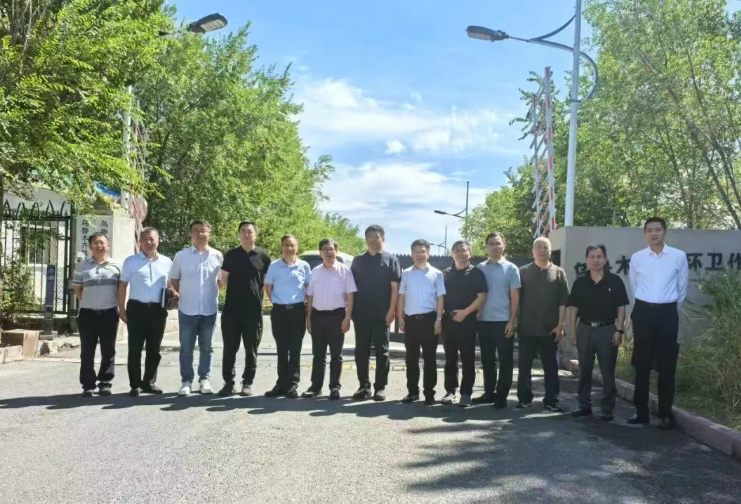
“全球首台套绿色环保生产装置”锂同位素分离基地拟落户新疆
Zhong Guo Chan Ye Jing Ji Xin Xi Wang· 2025-08-20 02:52
Core Viewpoint - The article discusses the strategic importance of lithium isotope enrichment technology in supporting China's nuclear energy development, particularly in the context of the new technological revolution and industrial transformation. The establishment of a major industrial base for lithium isotope enrichment in Xinjiang is highlighted as a key initiative to meet explosive demand in the nuclear energy sector [1][12]. Group 1: Project Overview - The project is based on the crown ether separation technology developed by Academician Hu Shilin's team, utilizing the world's first green production facility that can completely replace the mercury-lithium method currently used in industrial production [3]. - The new separation system eliminates the use of toxic mercury, addressing significant environmental and efficiency issues associated with the traditional method, thus supporting the development of fusion reactors and molten salt reactors [7]. Group 2: Importance of Lithium Isotopes - Lithium, being the lightest alkali metal, has two stable isotopes, 6Li and 7Li, which play crucial roles in nuclear applications. 6Li is essential for tritium breeding in fusion reactions, while 7Li is used as a coolant and fuel solvent in molten salt reactors [8]. - The enrichment of 6Li (30-90%) is critical for fusion reactors, and 7Li (99.99% purity) is necessary for molten salt reactors, highlighting the strategic need for domestic production capabilities [1][8]. Group 3: Regional Advantages - Xinjiang's abundant renewable energy resources, including wind and solar power, can provide the necessary green electricity for high-energy processes like isotope separation, aligning with the goal of "green electricity driving green manufacturing" [10]. - The strategic location of Xinjiang as a core area of the Belt and Road Initiative and the capabilities of Urumqi as a regional center city provide a solid foundation for the construction of large-scale strategic industrial bases [11]. Group 4: Government Support and Collaboration - The Xinjiang government is committed to playing the role of an "innovation partner," prioritizing regions that meet the special requirements of strategic industries during the project site selection process [11]. - The collaboration between the Xinjiang government, the China Atomic Energy Research Institute, and the Shanghai Zhu Guangya Strategic Technology Research Institute is crucial for accelerating the establishment of the lithium isotope enrichment technology industrial base [12].