
汽车制造业

Search documents
中兴锻造取得叉式突缘锻造工艺专利
Sou Hu Cai Jing· 2025-12-26 07:05
天眼查资料显示,许昌中兴锻造有限公司,成立于1996年,位于许昌市,是一家以从事有色金属冶炼和 压延加工业为主的企业。企业注册资本12000万人民币。通过天眼查大数据分析,许昌中兴锻造有限公 司参与招投标项目1次,专利信息259条,此外企业还拥有行政许可12个。 许昌远东传动轴股份有限公司,成立于2004年,位于许昌市,是一家以从事汽车制造业为主的企业。企 业注册资本73022.5082万人民币。通过天眼查大数据分析,许昌远东传动轴股份有限公司共对外投资了 13家企业,参与招投标项目45次,财产线索方面有商标信息7条,专利信息419条,此外企业还拥有行政 许可60个。 声明:市场有风险,投资需谨慎。本文为AI基于第三方数据生成,仅供参考,不构成个人投资建议。 国家知识产权局信息显示,许昌中兴锻造有限公司;许昌远东传动轴股份有限公司取得一项名为"一种叉 式突缘锻造工艺"的专利,授权公告号CN116809832B,申请日期为2023年7月。 来源:市场资讯 ...

江铃汽车申请兼容多套夹具的移动检修装置专利,保障设备人员在检修时的安全
Jin Rong Jie· 2025-12-26 05:49
天眼查资料显示,江铃汽车股份有限公司,成立于1997年,位于南昌市,是一家以从事汽车制造业为主 的企业。企业注册资本86321.4万人民币。通过天眼查大数据分析,江铃汽车股份有限公司共对外投资 了9家企业,参与招投标项目1974次,财产线索方面有商标信息851条,专利信息4861条,此外企业还拥 有行政许可675个。 国家知识产权局信息显示,江铃汽车股份有限公司申请一项名为"一种兼容多套夹具的移动检修装置及 夹具自动检修系统"的专利,公开号CN121201677A,申请日期为2025年8月。 专利摘要显示,本申请涉及夹具检修设备技术领域,具体公开一种兼容多套夹具的移动检修装置及夹具 自动检修系统,装置包括框架、滑轨以及滑动支撑臂,框架的顶表面设置有固定支撑臂以及沿第一方向 设置的基轨,基轨沿第二方向布置;滑轨分别与基轨滑动连接,滑动支撑臂一端与滑轨滑动连接,另一 端沿第三方向延伸,其中,滑动支撑臂及固定支撑臂背离框架的一端分别设置有共平面的支撑块,支撑 块顶表面设置有与夹具上预设凹槽相适配的凸起部,滑动支撑臂位置可调节,使装置可以对多种不同类 型的夹具进行支撑,同时,减少对自动生产线上机器人的占用时间,以及在 ...

英利汽车取得分体填充式防撞梁专利,提升灵活性
Jin Rong Jie· 2025-12-26 04:23
Group 1 - Changchun Yingli Automotive Industry Co., Ltd. has obtained a patent for a "split filling-type anti-collision beam" with authorization announcement number CN223702520U, applied on February 2025 [1] - The patent involves a new design in the field of anti-collision beam technology, consisting of an upper shell, a lower shell with a positioning part, and a filling material that enhances flexibility and simplifies the structure [1] - The company was established in 2006, located in Changchun, and primarily engages in the automotive manufacturing industry with a registered capital of 1,585.79 million RMB [1] Group 2 - Changchun Yingli Automotive Industry Co., Ltd. has invested in 23 enterprises and participated in 14 bidding projects, holding 168 patent information and 30 administrative licenses [1]

潍柴动力取得履带式挖掘机行走马达转速控制专利
Sou Hu Cai Jing· 2025-12-26 03:06
国家知识产权局信息显示,潍柴动力股份有限公司取得一项名为"一种履带式挖掘机行走马达转速控制 系统及方法"的专利,授权公告号CN117905136B,申请日期为2023年12月。 潍柴液压传动有限公司,成立于2014年,位于潍坊市,是一家以从事通用设备制造业为主的企业。企业 注册资本5204万人民币。通过天眼查大数据分析,潍柴液压传动有限公司共对外投资了1家企业,参与 招投标项目18次,专利信息481条,此外企业还拥有行政许可8个。 声明:市场有风险,投资需谨慎。本文为AI基于第三方数据生成,仅供参考,不构成个人投资建议。 来源:市场资讯 天眼查资料显示,潍柴动力股份有限公司,成立于2002年,位于潍坊市,是一家以从事汽车制造业为主 的企业。企业注册资本871567.1296万人民币。通过天眼查大数据分析,潍柴动力股份有限公司共对外 投资了64家企业,参与招投标项目5000次,财产线索方面有商标信息741条,专利信息5000条,此外企 业还拥有行政许可778个。 ...
债市早报:离岸人民币汇率升破“7”关口;债市窄幅震荡,收益率走势有所分化
Sou Hu Cai Jing· 2025-12-26 02:04
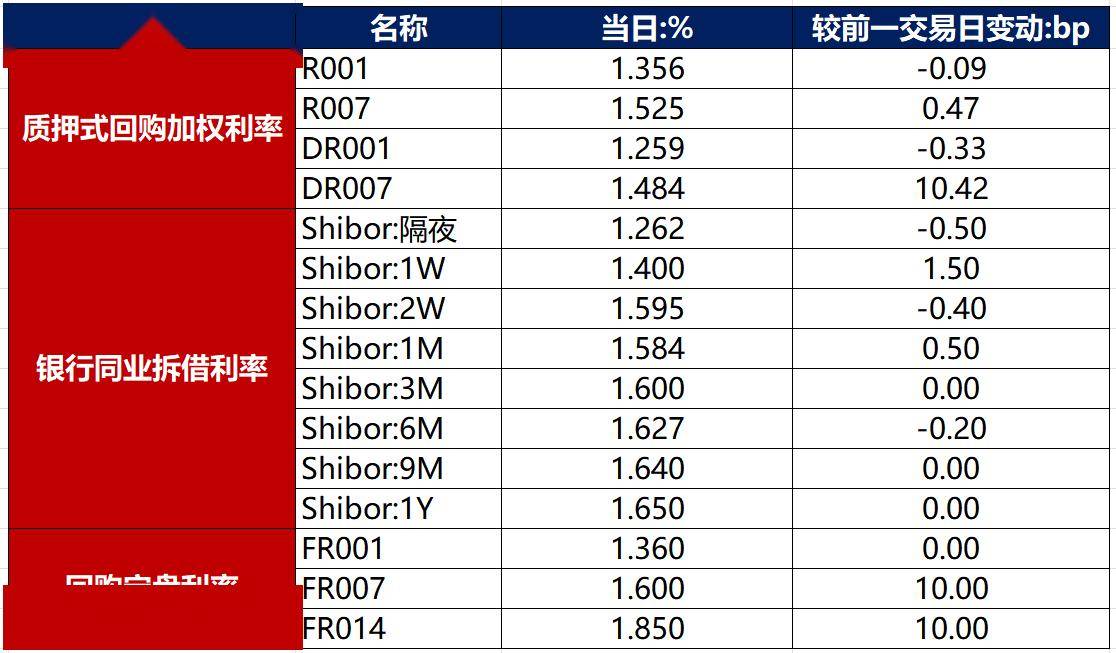
Core Viewpoint - The financial market remains stable with a slight bias towards liquidity, while the bond market shows mixed performance with short-term bonds performing better than medium to long-term bonds. The convertible bond market indices collectively rose, with most individual bonds also increasing in value [1]. Group 1: Domestic News - The Financial Regulatory Authority has strengthened information disclosure management for three types of asset management products, which will take effect on September 1, 2026 [2]. - The offshore RMB exchange rate has surpassed the "7" mark against the US dollar for the first time since October 2024, reaching a high of 6.9985, marking a 15-month peak [2]. - The People's Bank of China supports the western land-sea new passage provinces in participating in multilateral central bank digital currency bridge projects, promoting cross-border payments using digital currency [3]. Group 2: Market Operations - On December 25, the central bank conducted a 7-day reverse repurchase operation of 177.1 billion yuan at a fixed rate of 1.40%, resulting in a net liquidity injection of 88.8 billion yuan for the day [6][7]. - The money market rates showed mixed movements, with DR001 decreasing by 0.33 basis points to 1.259% and DR007 increasing by 10.42 basis points to 1.484% [7][8]. Group 3: Bond Market - The bond market experienced narrow fluctuations, with short-term bonds showing a warming trend due to excess liquidity, while medium to long-term bonds performed weakly. The yield on the 10-year government bond rose by 0.40 basis points to 1.8390% [9]. - There were no issuances of government bonds or policy bank bonds on that day [10]. Group 4: Credit Bonds - A notable price deviation occurred in the secondary market for credit bonds, with "22 Vanke 04" dropping over 13% [11]. - CIFI Group announced the results of its buyback for seven corporate bonds, with a total buyback amount of 220 million yuan [12]. Group 5: Convertible Bonds - The convertible bond market indices rose collectively, with the market's trading volume increasing to 88.525 billion yuan, up by 12.626 billion yuan from the previous trading day [20]. - Among the convertible bonds, 322 out of 392 individual bonds increased in value, with notable rises in Jia Mei Convertible Bond and Guanglian Convertible Bond, which rose over 17% and 16% respectively [20].

泰展机电取得减振器贮油缸焊接工装专利
Sou Hu Cai Jing· 2025-12-26 00:56
声明:市场有风险,投资需谨慎。本文为AI基于第三方数据生成,仅供参考,不构成个人投资建议。 来源:市场资讯 淄博博西特智能科技有限公司,成立于2023年,位于淄博市,是一家以从事研究和试验发展为主的企 业。企业注册资本200万人民币。通过天眼查大数据分析,淄博博西特智能科技有限公司专利信息14 条,此外企业还拥有行政许可1个。 国家知识产权局信息显示,山东泰展机电科技股份有限公司取得一项名为"一种减振器贮油缸焊接工 装"的专利,授权公告号CN120962266B,申请日期为2025年10月。 天眼查资料显示,山东泰展机电科技股份有限公司,成立于2011年,位于淄博市,是一家以从事汽车制 造业为主的企业。企业注册资本3263.9794万人民币。通过天眼查大数据分析,山东泰展机电科技股份 有限公司共对外投资了7家企业,参与招投标项目22次,财产线索方面有商标信息6条,专利信息163 条,此外企业还拥有行政许可28个。 ...
长城汽车取得一种门锁控制方法专利
Jin Rong Jie· 2025-12-26 00:47
Group 1 - The core point of the article is that Great Wall Motors Co., Ltd. has obtained a patent for a control method and device for a door lock, with the patent number CN119507747B, applied for on August 2023 [1] - Great Wall Motors was established in 2001 and is located in Baoding City, primarily engaged in the automotive manufacturing industry [1] - The registered capital of Great Wall Motors is approximately 8.56 billion RMB [1] Group 2 - Great Wall Motors has invested in 75 companies and participated in 2,894 bidding projects [1] - The company has a total of 5,000 trademark records and 5,000 patent records [1] - Additionally, Great Wall Motors holds 640 administrative licenses [1]

一汽解放取得除气切换阀专利提升双油箱供油系统性能
Jin Rong Jie· 2025-12-26 00:44
天眼查资料显示,一汽解放青岛汽车有限公司,成立于1956年,位于青岛市,是一家以从事汽车制造业 为主的企业。企业注册资本80200万人民币。通过天眼查大数据分析,一汽解放青岛汽车有限公司共对 外投资了1家企业,参与招投标项目4619次,财产线索方面有商标信息17条,专利信息515条,此外企业 还拥有行政许可91个。 国家知识产权局信息显示,一汽解放青岛汽车有限公司和一汽解放汽车有限公司取得一项名为"除气切 换阀、双油箱供油系统及汽车"的专利,授权公告号CN116163868B,申请日期为2023年3月。 一汽解放汽车有限公司,成立于2002年,位于长春市,是一家以从事汽车制造业为主的企业。企业注册 资本1080301.25万人民币。通过天眼查大数据分析,一汽解放汽车有限公司共对外投资了23家企业,参 与招投标项目5000次,财产线索方面有商标信息272条,专利信息5000条,此外企业还拥有行政许可190 个。 声明:市场有风险,投资需谨慎。本文为AI基于第三方数据生成,仅供参考,不构成个人投资建议。 财经频道更多独家策划、专家专栏,免费查阅>> ...

辽宁曙光汽车集团股份有限公司第十一届董事会第二十四次会议决议公告
Shang Hai Zheng Quan Bao· 2025-12-25 19:37
Group 1 - The company held its 24th meeting of the 11th Board of Directors on December 25, 2025, where it approved two key proposals related to the 2024 Restricted Stock Incentive Plan [2][10] - The first proposal involved the achievement of conditions for the first unlock period of the incentive plan, allowing 79 participants to unlock a total of 1.908 million shares, which is 0.28% of the company's total share capital [3][28] - The second proposal involved the repurchase and cancellation of 513,000 shares of restricted stock due to various reasons, including one participant's contract expiration and performance not meeting targets [7][10][14] Group 2 - The company plans to repurchase 30,000 shares from one participant who is no longer eligible, and 478,200 shares due to the company's performance not meeting the target, along with 4,800 shares from another participant who did not meet personal performance criteria [7][14][16] - The total number of shares to be repurchased is 513,000, which will reduce the company's total share capital from 683,604,211 shares to 683,091,211 shares [17][25] - The repurchase price for the shares will be 1.22 yuan per share, with the funds sourced from the company's own capital [16][19] Group 3 - The company confirmed that the repurchase and cancellation of shares will not significantly impact its financial status or operational results, nor will it affect the stability of the management team [19][21] - The company will proceed with the necessary legal procedures for the capital reduction and will fulfill its information disclosure obligations [20][24] - The Board's Compensation and Assessment Committee and the Audit Committee have both approved the repurchase plan, confirming compliance with relevant regulations [21][22]

新铝时代:股东国同红马拟减持不超过约358万股
Mei Ri Jing Ji Xin Wen· 2025-12-25 10:18
Group 1 - New Aluminum Era (SZ 301613) announced that its shareholder, Chongqing Gaoxin Chuangtou Hongma Capital Management Co., Ltd., plans to reduce its holdings by up to approximately 3.58 million shares, accounting for 2.49% of the total share capital, within three months from January 20, 2026, to April 19, 2026 [1] - Another shareholder group, Guangdong Dayi Venture Capital Co., Ltd., and its associated entities, also plan to reduce their holdings by up to approximately 3.58 million shares, representing 2.49% of the total share capital, during the same period [2] - As of the report, New Aluminum Era's market capitalization is 6.9 billion yuan, and its revenue composition for 2024 is entirely from the automotive manufacturing industry, accounting for 100% [2]