纺织服装

Search documents
国信证券晨会纪要-20251121
Guoxin Securities· 2025-11-21 02:18
Core Insights - The report highlights strong performance in the textile and apparel industry, particularly for Amer Sports, which reported a 26% year-on-year revenue increase for the first three quarters of 2025, reaching $4.465 billion, and a 153% increase in adjusted net profit to $369 million [5][6] - The report also notes the positive outlook for the media and internet sector, with Marble 3D's world model public beta launch and a focus on AI applications [7][8] - In the pharmaceutical sector, Eli Lilly's revenue surged by 52% in Q3 2025, driven by GLP-1 drugs, with Tirzepatide exceeding $10 billion in quarterly revenue [10][11] Textile and Apparel Industry - Amer Sports' Q3 2025 performance showed a 30% revenue increase, with adjusted net profit rising by 161% to $185 million [5][6] - The management has raised its full-year guidance for revenue growth to 23-24%, with an expected EPS of $0.88-$0.92 [6] - Key growth drivers include the Salomon brand, direct-to-consumer (DTC) channels, and strong performance in the Greater China and Asia-Pacific regions [6] Media and Internet Sector - The media industry experienced a decline of 2.31%, underperforming compared to the broader market indices [7] - Marble 3D's public beta launch is expected to enhance opportunities in the sector, with significant advancements in AI technology [8] - The report emphasizes the potential for growth in gaming and IP trends, recommending companies like Giant Network and Kuaishou [8] Pharmaceutical Industry - Eli Lilly's Q3 2025 revenue growth was significantly driven by its GLP-1 drug portfolio, with a notable increase in market coverage due to pricing agreements with the U.S. government [10][11] - Novo Nordisk faced challenges in the competitive landscape for weight loss drugs, leading to multiple downward revisions of its performance guidance [11][12] - The report indicates that 11 out of 16 multinational pharmaceutical companies raised their revenue and profit forecasts for the year, reflecting better-than-expected sales from new products [12]
揭阳以普宁纺织服装产业为支点,持续做大做优做强特色产业集群
Zhong Guo Fa Zhan Wang· 2025-11-21 02:15
Core Insights - The textile and apparel industry in Jieyang, particularly in Puning, is set to exceed a total scale of 153 billion yuan in 2024, with the textile and apparel sector alone reaching 135 billion yuan, indicating significant growth potential for the region [1] - Puning has been selected as one of the first pilot cities in the province for the "cross-border e-commerce + industrial belt" initiative, which is expected to drive high-quality economic development in the area [1] - The city is focusing on transforming its industrial chain towards high-end, intelligent, and green development, leveraging its strengths in textile and apparel to enhance its economic performance [1] Industry Structure - Puning has established a complete textile and apparel industry chain, with over 7,000 related enterprises, including 246 large-scale companies, highlighting the robustness of its industrial ecosystem [2] - The Puning Textile and Dyeing Environmental Comprehensive Treatment Center is recognized as the first provincial characteristic industrial park in Jieyang, aiming to strengthen the industry chain through the introduction of high-end projects [2] - In the first nine months of this year, the total output value of Puning's textile and apparel industry reached 108.3 billion yuan, reflecting an 8.9% growth, solidifying its position as the primary pillar of the local industrial system [2] Future Development Plans - Puning plans to develop a high-standard "14th Five-Year" plan for the textile and apparel industry, outlining future directions, content, and goals for the next five years [3] - The city aims to enhance the recognition of Puning's textile and apparel brands and promote brand creation initiatives [3] - Collaboration with renowned universities, such as Donghua University in Shanghai, will be pursued to support talent training and research outcomes in the textile and apparel sector [3] - The city will accelerate the development of the "cross-border e-commerce + industrial belt" ecosystem, fostering more cross-border e-commerce enterprises to expand the reach of Puning products globally [3]
九牧王跳水跌停 此前连续7日涨停
Zheng Quan Shi Bao Wang· 2025-11-21 01:59
Core Viewpoint - Jiumuwang (601566) experienced a significant drop, hitting the daily limit down to 16.57 CNY per share after a seven-day consecutive limit up, indicating potential market overheating and irrational speculation [1] Group 1: Stock Performance - The stock had a cumulative increase of 100.8% over the seven trading days from November 12 to November 20, significantly outperforming the textile and apparel industry, which saw a rise of only 1.8%, and the Shanghai Composite Index, which declined by 1.8% [1] - The stock's recent performance shows a substantial deviation from the company's fundamentals, raising concerns about the sustainability of its price increase [1] Group 2: Market Sentiment and Risks - The company warned investors about the risks associated with the recent price surge, highlighting the potential for rapid declines due to market sentiment being overly optimistic [1] - Investors are advised to remain cautious and consider the company's performance fluctuations and valuation risks, rather than being swayed by market emotions [1]

古麒绒材11月20日获融资买入8147.93万元,融资余额1.10亿元
Xin Lang Cai Jing· 2025-11-21 01:42
Core Insights - On November 20, Guchi Down Material experienced a price increase of 10.01%, with a trading volume of 897 million yuan [1] - The financing data indicates a net financing outflow of 10.16 million yuan for the day, with a total financing and securities balance of 110 million yuan [1] Financing Summary - On the same day, Guchi Down Material had a financing buy-in amount of 81.48 million yuan, with a current financing balance of 110 million yuan, representing 6.82% of the circulating market value [1] - There were no shares repaid or sold in the securities lending market, with a total securities lending balance of 0 yuan [1] Company Overview - Guchi Down Material Co., Ltd. is located in the Economic Development Zone of Nanling County, Wuhu City, Anhui Province, established on October 15, 2001, and listed on May 29, 2025 [1] - The company's main business involves the research, production, and sales of high-specification down products, with revenue composition as follows: duck down products 60.66%, goose down products 38.61%, and others 0.73% [1] Financial Performance - For the period from January to September 2025, Guchi Down Material achieved an operating income of 763 million yuan, reflecting a year-on-year growth of 0.30%, and a net profit attributable to the parent company of 139 million yuan, with a year-on-year increase of 0.99% [1] - As of September 30, the number of shareholders was 23,300, a decrease of 23.62% from the previous period, while the average circulating shares per person increased by 30.92% to 2,101 shares [1]
万事利(301066.SZ):丝巾和围巾是万事利具有代表性的国潮产品
Ge Long Hui· 2025-11-21 00:34
Core Viewpoint - Wanshili (301066.SZ) emphasizes its representative national trend products, specifically silk scarves and shawls that incorporate traditional Chinese cultural elements [1] Group 1: Product Features - The silk scarves and shawls feature designs inspired by Dunhuang, the Forbidden City, West Lake, zodiac signs, Chinese calligraphy, blue and white porcelain, and beautiful landscapes [1] - The homewear products utilize printing and embroidery techniques, often showcasing traditional patterns such as auspicious clouds, mythical beasts, and floral designs [1]

中信建投万字报告!展望2026年经济、债市、全产业链投资策略
Sou Hu Cai Jing· 2025-11-20 23:47
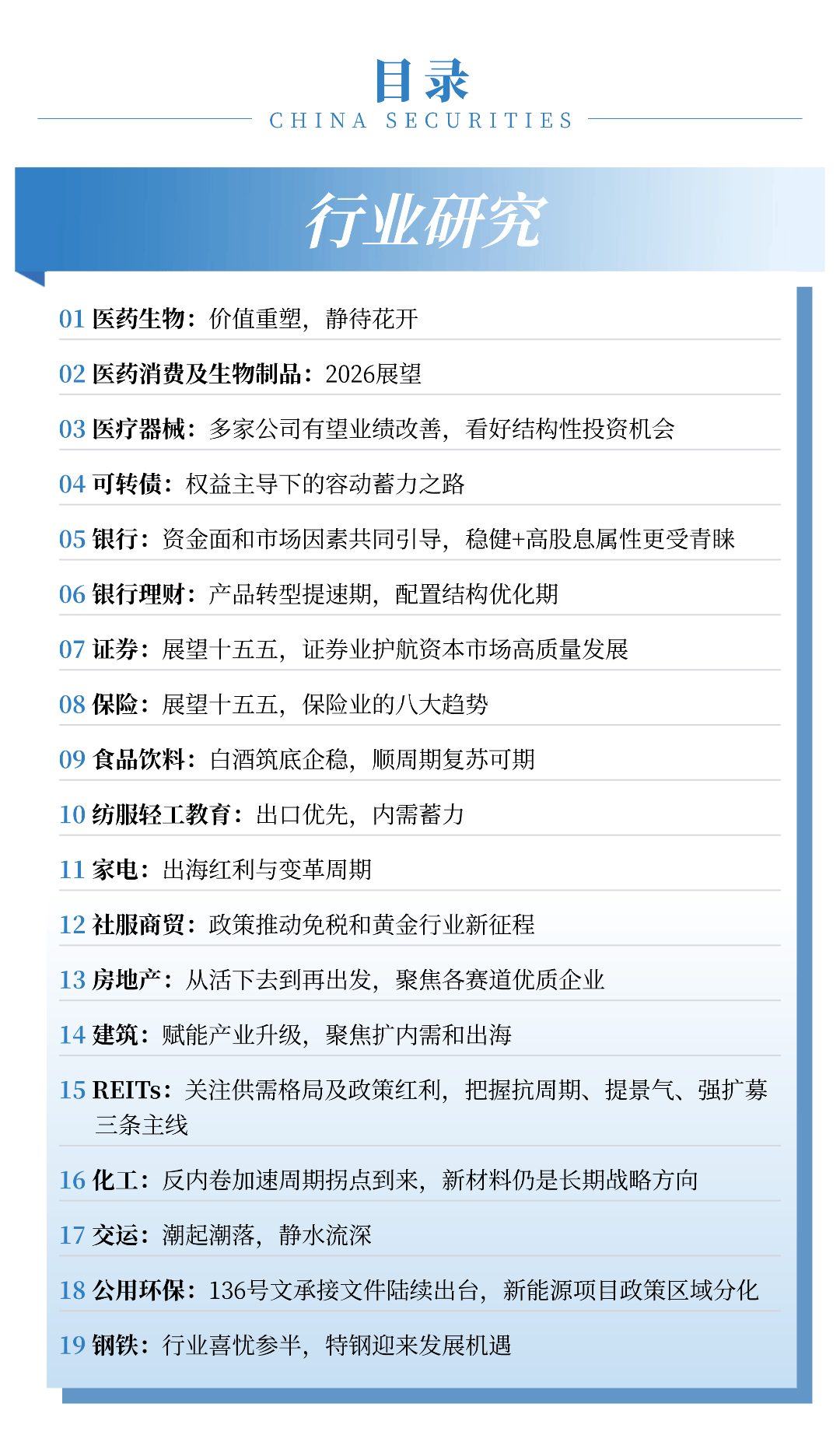
Group 1: Investment Strategies Overview - CITIC Securities released a comprehensive report on investment strategies for 2026, covering global capital markets, macroeconomic policies, A-shares, overseas markets, bond markets, asset allocation, and industry investment strategies [1] - The report includes insights from 19 research teams and spans approximately 30,000 words [1] Group 2: Pharmaceutical and Biotech Investment Strategies - The Chinese pharmaceutical industry is entering a critical phase characterized by "innovation realization + global layout," supported by population and domestic demand, as well as manufacturing capabilities [3][4] - The industry needs to focus on internal supply chain security and compliance while exploring diversified international expansion [3] - Key investment opportunities for 2026 include innovation commercialization, global breakthroughs, policy optimization, and industry mergers and acquisitions [3][5][6] Group 3: Medical Device Investment Strategies - The medical device sector is expected to see performance improvements in 2026 due to policy easing, new product launches, and international expansion [14] - The long-term investment opportunities in this sector stem from innovation, internationalization, and mergers and acquisitions [14] - The industry is witnessing a shift towards high-value consumables and innovative technologies such as brain-computer interfaces and AI in healthcare [14][15] Group 4: Consumer Healthcare and Bioproducts - The traditional Chinese medicine sector is expected to recover from short-term pressures, with improved demand anticipated by year-end [9] - The blood products industry is focusing on supply growth and consolidation, with significant demand for immunoglobulin and factor products [10] - The vaccine sector is under pressure but is expected to improve with new product sales and international expansion [10] Group 5: Banking Sector Investment Strategies - The banking sector is expected to continue its weak recovery in 2025, with a focus on high dividend strategies [25][26] - The sector's fundamentals are stabilizing, with credit growth projected at 7%-8% and non-interest income expected to improve [26] - High dividend yield strategies are favored, particularly for state-owned banks and those with solid fundamentals [27] Group 6: Wealth Management and Financial Products - The wealth management sector is entering a phase of product transformation and structural optimization, with an expected growth rate of 10% in 2026 [28][33] - The focus is on multi-asset and multi-strategy products, with a significant increase in mixed product offerings anticipated [29][30] - The integration of AI and digital technologies is expected to enhance risk management and operational efficiency in wealth management [30] Group 7: Non-Banking Financial Institutions - The securities industry is poised for a new growth cycle, driven by policies that enhance capital market inclusivity and adaptability [35][36] - The industry is experiencing a shift from self-operated models to collaborative, light-asset business strategies [36][37] - The internationalization of Chinese securities firms is gaining momentum, providing new opportunities for growth [38][39] Group 8: Insurance Sector Trends - The insurance industry is expected to undergo significant changes during the "14th Five-Year Plan" period, focusing on balancing interests among insurers, channels, and customers [43][44] - Key trends include the transformation of savings products, innovation in health insurance, and the development of new distribution channels [43][44] - The sector is anticipated to benefit from improved performance and valuation recovery, presenting investment opportunities [43][44] Group 9: Food and Beverage Sector - The food and beverage sector is recovering from a prolonged downturn, with a focus on premium products like liquor and health-oriented snacks [48][49] - The liquor industry is expected to stabilize as consumer confidence improves, with a focus on high-quality brands [49][50] - The snack and beverage segments are seeing growth driven by health trends and innovative product offerings [52][53]


王明辉:提升产业链供应链韧性和竞争力
Sou Hu Cai Jing· 2025-11-20 23:06
Core Viewpoint - The article emphasizes the importance of resilient and competitive industrial and supply chains for national economic security and development, highlighting the need for self-sufficiency and stability in key sectors [1][2][4]. Group 1: Importance of Industrial and Supply Chains - Industrial and supply chains are critical for maintaining smooth economic circulation and ensuring economic security, as stated by President Xi Jinping [1]. - The "14th Five-Year Plan" suggests enhancing the self-controllability of industrial chains and guiding their cross-border layout to improve competitiveness and resilience [1][2]. Group 2: Current Challenges - The article outlines the complex internal and external challenges facing China's development, including geopolitical tensions and reliance on foreign technology in key industries [2][3]. - The shift of labor-intensive industries to Southeast Asia and the impact of trade wars are noted as factors that threaten the stability of China's industrial chains [3]. Group 3: Modern Industrial System - A modern industrial system must meet the criteria of completeness, advancement, and security, with a focus on enhancing the stability and competitiveness of industrial chains [4]. - Despite having a complete industrial chain in several manufacturing sectors, China still faces challenges in high-tech segments, indicating a need for further development and self-sufficiency [4]. Group 4: Strategic Initiatives - The article suggests several strategic initiatives, including accelerating the development of core technologies, enhancing innovation capabilities, and optimizing industrial layouts to build a resilient development network [5][6][7]. - It emphasizes the importance of a coordinated approach to innovation and industrial chain deployment, with a focus on protecting intellectual property to encourage research and development [6].
保定山脉客羽绒制品有限公司成立 注册资本30万人民币
Sou Hu Cai Jing· 2025-11-20 22:50
Core Viewpoint - Baoding Shanmai Ke Yu Down Products Co., Ltd. has been established with a registered capital of 300,000 RMB, indicating a new player in the down products manufacturing industry [1] Company Overview - The legal representative of the company is Li Changchun [1] - The registered capital of the company is 300,000 RMB [1] Business Scope - The company engages in the manufacturing and sales of down and feather products [1] - It also involves textile processing, sales of textiles and raw materials, and manufacturing of various textile products [1] - Additional activities include the manufacturing and retail of clothing and accessories, as well as the sale of daily necessities [1] - The company is involved in new material technology research and development [1] - It has a broad range of operations including the acquisition of primary agricultural products and inspection services for clothing and accessories [1]
提升产业链供应链韧性和竞争力
Jing Ji Ri Bao· 2025-11-20 22:18
Core Insights - The importance of resilient and competitive industrial and supply chains is emphasized as a key feature for major economies, with a focus on self-sufficiency and technological advancement [1][2][4] Group 1: Industrial and Supply Chain Significance - Industrial and supply chains are critical for economic circulation and security, with a need for self-controllable and resilient systems to adapt to external shocks [1][2] - The current geopolitical climate necessitates a focus on enhancing the resilience and competitiveness of these chains to maintain economic stability [2][3] Group 2: Modern Industrial System - A modern industrial system must meet the criteria of completeness, advancement, and security, with a focus on reducing reliance on foreign technology and enhancing domestic capabilities [4][5] - There are existing structural weaknesses in certain high-tech sectors, highlighting the need for continued efforts to strengthen the industrial base and ensure a stable supply chain [4][6] Group 3: Strategic Initiatives - Key initiatives include accelerating the development of core technologies, enhancing innovation capabilities, and optimizing industrial layouts to create a resilient development network [5][6][7] - The focus should be on establishing a multi-layered, resilient development network that integrates both domestic and international resources effectively [7]
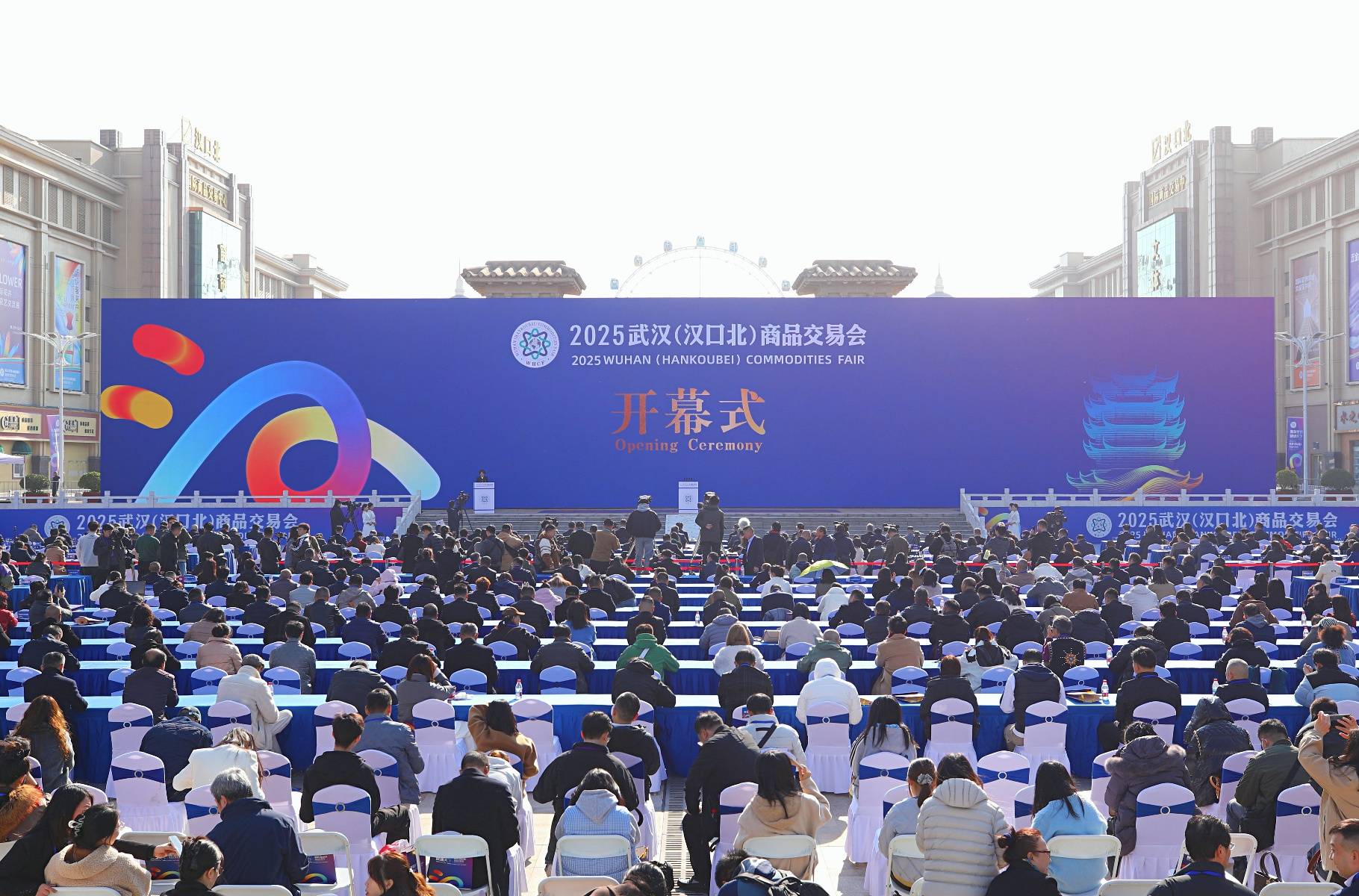
19万平方米,9大展区!2025汉交会在黄陂开幕,万商云集打造城市消费新场景
Sou Hu Cai Jing· 2025-11-20 21:39
Core Points - The 2025 Wuhan (Hankou North) Commodity Fair, themed "Connecting the World, Trade Across Borders," officially opened on November 20, attracting global exhibitors, buyers, and professionals to Wuhan [1] - The event featured a record attendance of over 1,200 entrepreneurs and experts from approximately 50 countries and regions, including 70 foreign guests, highlighting its significance as an international exchange platform [4] Group 1: Event Overview - The fair includes a main exhibition area and nine market exhibition areas, covering a total area of 190,000 square meters, the largest in its history [7] - The main exhibition focuses on commodity trade, digital trade, and service trade, with 165 high-quality enterprises participating, three times the number from the previous year [7] - The nine market exhibition areas feature over 1,000 exhibitors and 3,000 buyers, covering various industries such as pharmaceuticals, automotive, textiles, and international flowers [7][10] Group 2: Technological Integration - The fair introduced an online digital platform to enhance the integration of online and offline experiences, promoting a modern trade ecosystem [4] - Innovative applications such as AI health assessments and interactive technology displays were showcased, setting industry benchmarks for intelligent transformation [10][12] Group 3: Consumer Engagement - The event created a vibrant consumer experience with various interactive activities, including AI competitions and cultural exhibitions, appealing to a wide demographic [11][12] - Special events linked to local cultural landmarks and commercial areas were organized to enhance the overall experience for attendees [14] Group 4: Future Prospects - The fair aims to establish itself as a leading platform for trade and cooperation, contributing to the development of a national-level trade service hub in the region [14] - The event is positioned to support Wuhan's ongoing efforts to enhance its global trade presence and economic development [14]