智能汽车

Search documents
李书福叹“相见恨晚”!千里科技携吉利、奔驰入场,AI智驾战“决赛圈”打响
Sou Hu Cai Jing· 2025-09-30 15:51
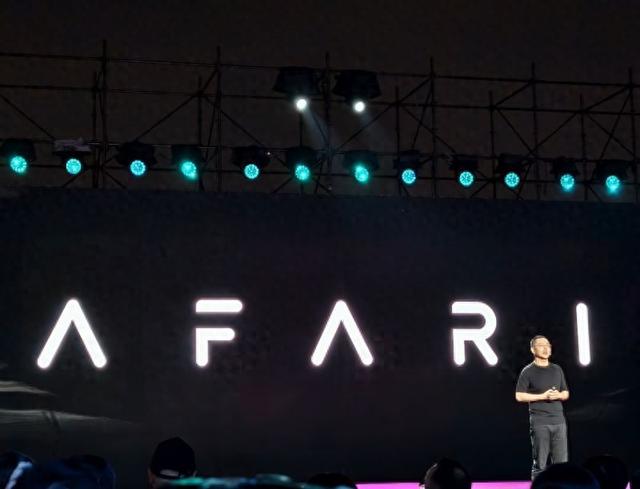
Core Insights - Geely Holding Group's chairman Li Shufu expressed high expectations for Qianli Technology and its chairman Yin Qi during the company's first press conference after rebranding to "AFARI" [1][12] - Qianli Technology unveiled its three major business segments: Qianli Smart Driving, Qianli Smart Cabin, and Qianli Smart Mobility, outlining a clear path for the integration of AI and automotive technology [3][4] Business Segments - Qianli Technology aims to achieve a "containing modulus" of 70%-80% in its smart driving systems by the end of 2025, significantly higher than the current industry average of 40%-50% [3][4] - The company plans to reduce reliance on traditional rules and high-precision maps by adopting an "end-to-end model architecture" [4] - Qianli's smart driving product roadmap includes a 1.0 version already launched, a 2.0 version (L3 level) planned for late 2025, and a 3.0 version (L4 level) targeting Robotaxi scenarios expected in 2026 [4][6] Technology and Innovation - The smart cabin operating system "Agent OS" was introduced, featuring advanced functionalities such as "supernatural interaction" and "integrated memory" [5] - Qianli Technology has set an "18-month plan" to establish a comprehensive Robotaxi service, aiming to become the first in China with OEM-level support and dedicated hardware customization capabilities [6][12] Strategic Partnerships - The "Qianli Plan" aims to create a unified AI brain and operating system, leveraging partnerships with Geely and other companies to enhance technological capabilities [8][12] - Mercedes-Benz acquired a 3% stake in Qianli Technology for approximately 1.339 billion yuan, signaling confidence in the company's technological strength and paving the way for collaboration in smart driving and cabin technologies [12][13] Financial Performance - Qianli Technology reported a revenue of 4.184 billion yuan for the first half of 2025, a year-on-year increase of 40.04%, with a net profit of 31.17 million yuan, up 19% [14]




李书福叹“相见恨晚”!千里科技携吉利、奔驰入场 AI智驾战“决赛圈”打响
Guo Ji Jin Rong Bao· 2025-09-30 15:48
Core Viewpoint - Qianli Technology held its first press conference after rebranding, introducing the new brand name "AFARI" and discussing the integration of AI and automotive technology [1][14]. Business Segments - The core focus of the press conference was the unveiling of three major business segments: Qianli Smart Driving, Qianli Smart Cabin, and Qianli Smart Mobility, outlining the technical roadmap and implementation plans for "AI + Car" [5]. - In the smart driving sector, Qianli Technology aims to achieve a model inclusion rate of 70%-80% by the end of 2025, compared to the current industry average of 40%-50% [5][6]. - The company plans to reduce reliance on traditional rules and high-precision maps by adopting an "end-to-end model architecture" [6]. Technology and Product Development - Qianli Technology's smart driving system has been validated through real-world testing in Chongqing, utilizing a 6D multi-modal perception matrix [6]. - The product roadmap includes the release of version 1.0, which is already available, and plans for version 2.0 (L3 level) by the end of 2025 and version 3.0 (L4 level) targeting Robotaxi scenarios by 2026 [6][7]. - The smart cabin operating system "Agent OS" was introduced, featuring advanced interaction capabilities and aiming to enhance user experience in vehicles [7]. Strategic Partnerships and Investments - Qianli Technology's "Afari Plan" aims to create a unified AI brain and operating system, relying on collaboration with partners like Geely for support in manufacturing and funding [9][10]. - Geely's integration of its smart driving team into Qianli Technology has created a research and development cluster of approximately 3,000 personnel [10]. - Mercedes-Benz acquired a 3% stake in Qianli Technology for 1.339 billion yuan, signaling international collaboration and support for the company's technological capabilities [14]. Market Position and Financial Performance - The company is positioned to capitalize on the growing market for smart connected vehicles, with projections indicating a global market size of $1.5 trillion by 2025 [11]. - Qianli Technology reported a revenue of 4.184 billion yuan for the first half of 2025, reflecting a year-on-year growth of 40.04%, and a net profit of 31.17 million yuan, up 19% [15].

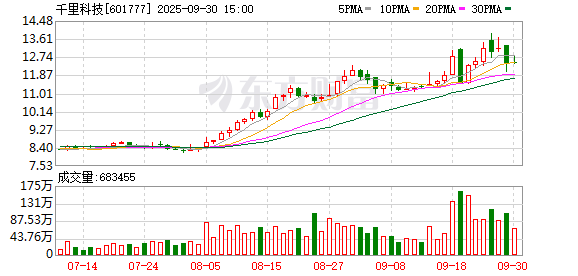
千里科技“混血”重生:智驾智舱智行三线发力,AI+战略转型再提速
Hua Xia Shi Bao· 2025-09-30 13:56
Core Viewpoint - The company is confident in achieving over 10 billion yuan in output value this year, with next year being crucial for scaling AI-related innovative businesses [2] Business Transformation - The company has transitioned from a traditional automotive manufacturer to a technology company, having completed a comprehensive business layout in smart driving, smart cockpit, and smart mobility [3][4] - The new brand name "AFARI" was launched, reflecting the company's new identity [2] AI Integration - The core strategy is "AI + Automotive," with advancements in smart driving systems driven by AI large models, and the development of a new generation of smart cockpit with advanced features [3] - Plans for Robotaxi services include deploying over 1,000 vehicles in ten cities globally within 18 months [3][4] Capital Market Strategy - The company is planning to issue H-shares for overseas listing to enhance its global strategy and brand image [5] Strategic Partnerships - The company benefits from the backing of Geely Group, which became the largest shareholder in 2020, and the expertise of its chairman, who has a strong background in AI [6] - Recently, Mercedes-Benz acquired a 3% stake in the company, which is expected to enhance funding, technology, brand influence, and market expansion [7][8] Revenue Composition - Currently, 96% of the company's revenue comes from manufacturing, indicating a need for the new business segments to generate significant income in the future [8][9]
汽车会“成长”:鸿蒙智行与老用户的一场双向奔赴
Feng Huang Wang· 2025-09-30 12:02
Core Insights - The future of vehicles is determined by hardware setting the lower limits and software defining the upper limits, with evolutionary capabilities determining the overall potential of a vehicle [1] Group 1: Product Upgrades - Hongmeng Zhixing has announced a significant upgrade, including the Huawei Qian Kun Intelligent Driving ADS 4 and over 30 experience optimizations, enhancing core functions like intelligent driving and human-machine interaction [1][2] - The ADS 4 system features a new WEWA architecture that reduces end-to-end latency by 50%, improves traffic efficiency by 20%, and decreases emergency braking rates by 30%, providing safety and comfort that can match or exceed human drivers [2] Group 2: Market Performance - In the 38th week of 2025, Hongmeng Zhixing achieved sales of 13,446 units, ranking first among new force brands, with cumulative annual sales also leading the new force brand list [1] - The company has adopted a "five realms and ten vehicles" strategy, achieving explosive growth with weekly orders reaching 35,000 units, covering both mainstream and ultra-luxury markets [2] Group 3: User Experience and Brand Loyalty - The upgrade emphasizes a long-term user experience, allowing even older models to enjoy the latest intelligent features, addressing the common anxiety of "buying outdated technology" [3][4] - This approach fosters brand loyalty and encourages word-of-mouth marketing, as users begin to view their vehicles as lifelong companions rather than one-time purchases [4]
【具身智能产业动态】傅利叶第三代机器人首次亮相,跨维智能发布升级版视频学习框架
GUOTAI HAITONG SECURITIES· 2025-09-30 11:12
Investment Rating - The report does not explicitly state an investment rating for the industry Core Insights - The embodied intelligence industry is primarily represented by embodied robots and smart vehicles, which are mutually reinforcing in their development [7] - Recent advancements include the unveiling of Fourier's third-generation humanoid robot GR-3C and the establishment of the largest humanoid robot training center in China [10][11] - Significant investment activities have been observed in the embodied intelligence sector, with multiple companies securing funding to enhance their technological capabilities and market presence [24] Summary by Sections 1. Embodied Robot and Smart Vehicle Dynamics - Fourier's third-generation humanoid robot GR-3C was showcased at the Industrial Expo, featuring 55 degrees of freedom and advanced interaction capabilities [10] - A new humanoid robot training center in Beijing can produce over 6 million data points annually, enhancing the practical application of humanoid robots [11] - Cross-dimensional intelligence released an upgraded video learning framework that allows rapid task adaptation across different robot bodies [12] - DeepMind introduced the Gemini Robotics 1.5 series, enhancing robots' capabilities in visual and language processing [13] - A strategic partnership between Lingyi Robotics and AIRS aims to integrate hardware and algorithms for humanoid robot development [15] - Kepler has initiated mass production of the world's first commercially available hybrid humanoid robot, K2 "Bumblebee," with significant pre-orders [16] 2. Smart Vehicle Dynamics - The sales ranking for new energy vehicles in the third week of September shows Leap Motor leading with 12,900 units sold, followed by Xiaomi and Aion [17][18] - A new autonomous driving test base was established in Jinan by Lingong Heavy Machinery and Huawei, focusing on comprehensive testing of autonomous mining vehicles [19] - ZF signed an investment agreement to expand its smart chassis localization efforts in Zhangjiagang [20] - NineSight signed a strategic agreement with Dubai's Roads and Transport Authority to launch an autonomous driving demonstration zone [21] - New Stone Technology delivered its 10,000th unmanned vehicle, marking a significant milestone in the commercialization of unmanned delivery [23] 3. Investment and Financing Events - A total of 9 financing events related to embodied intelligence were recorded from September 22 to 28, 2025, with notable investments in companies like LeXiang Technology and LuoBo Intelligent [24][34] - LeXiang Technology completed a 200 million RMB angel round led by Zhongding Capital, focusing on core component development and product scaling [24] - LuoBo Intelligent raised several million RMB in a round led by Sequoia China, targeting AI emotional companionship hardware [25] - Other companies like HeShan Technology and ShouZhi Innovation also secured funding to advance their respective technologies in humanoid robots and core components [26][27]
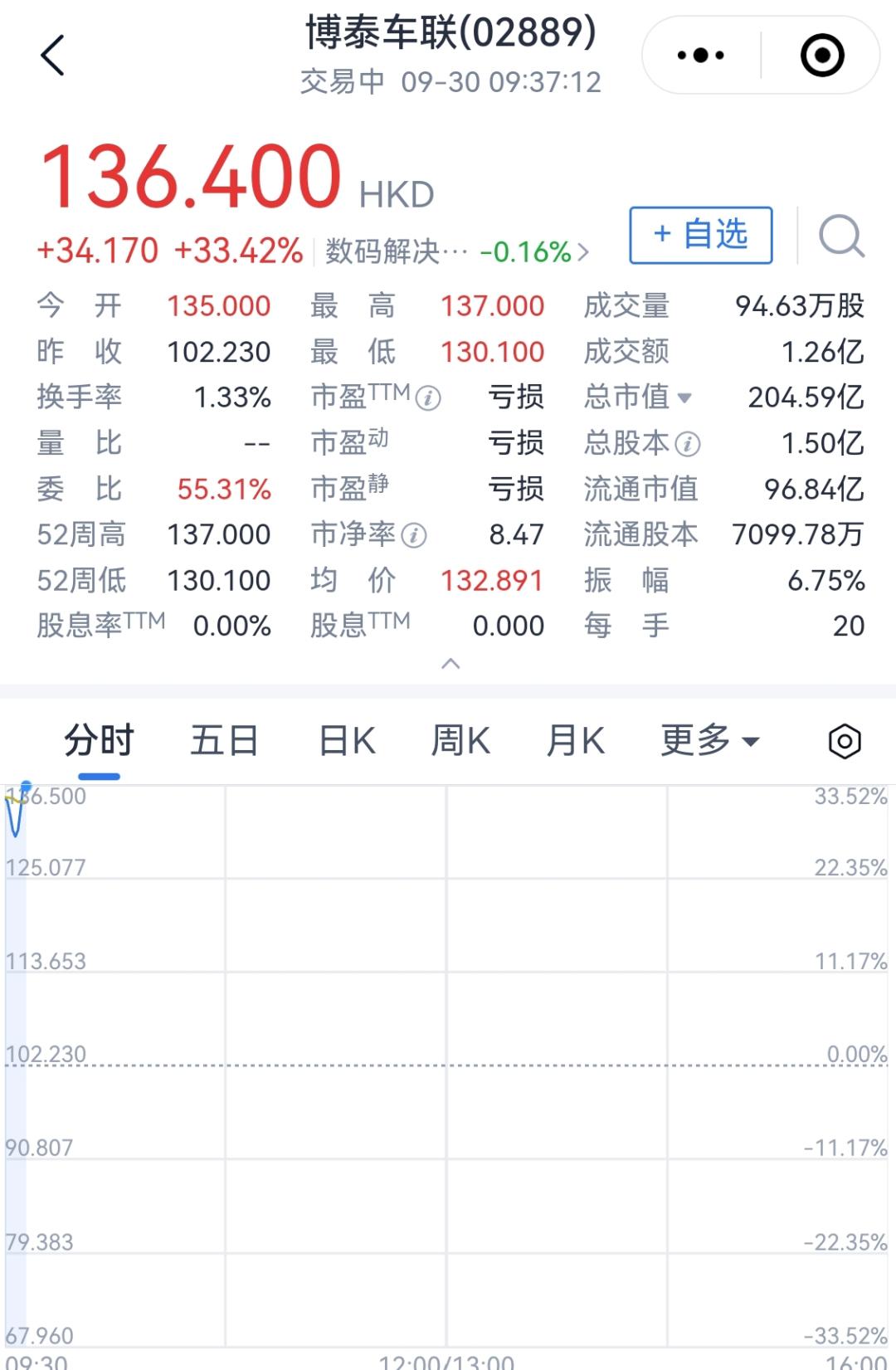
博泰车联登陆港股!核心业务三年营收复合增速超70%,驱动AI与具身智能产业升维
Mei Ri Jing Ji Xin Wen· 2025-09-30 07:49
Core Viewpoint - 博泰车联网科技在香港成功上市,标志着其在中国汽车智能化领域的领导地位,吸引了机构投资者的关注和信任 [1][2] Company Overview - 博泰车联自2009年成立以来专注于汽车智能化,成为智能座舱解决方案的早期开发者之一 [1] - 公司在智能汽车领域的竞争优势体现在其"软件+硬件+云端服务"的一体化模式 [3][4] Financial Highlights - 博泰车联此次港股IPO全球发售1043.69万股H股,发售价为每股102.23港元,上市首日开盘价为135港元,市值达到210.59亿港元 [1] - 公司在过去十年累计融资超过45亿元,股东阵容包括小米、东风汽车等产业巨头 [5] Market Position and Growth - 博泰车联在智能座舱市场中排名第一,特别是在高端市场,预计到2024年底将继续保持领先地位 [3] - 公司营收从2022年的12.18亿元增至2024年的25.57亿元,复合年增长率达44.9% [7] Technological Advancements - 博泰车联在AI和具身智能领域的布局使其具备向更广泛机器人领域延伸的基础,推动智能座舱向更高价值的转型 [6][7] - 公司自主研发的擎感大模型将成为下一代智能汽车的AI内核,展现出与特斯拉理念的相似性 [6] Strategic Initiatives - 上市募资将用于扩大产品组合、增强技术能力和提高生产能力,体现了公司在技术创新和市场开拓上的协同推进 [8] - 博泰车联正从智能座舱供应商向"汽车机器人"生态定义者转型,抓住智能化和网联化的发展脉搏 [8]
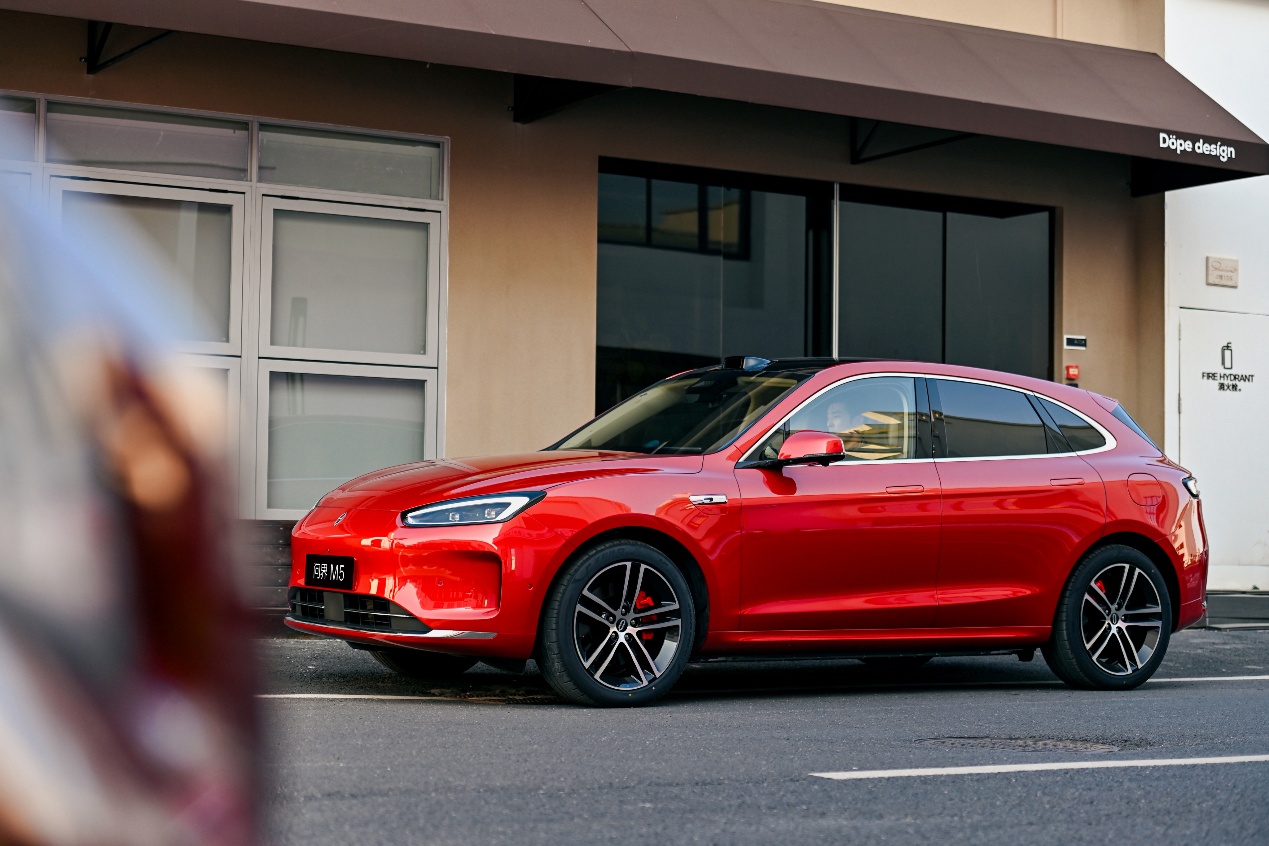
聚焦20-30万级智能SUV,问界新M5 Ultra与小米YU7谁更值得入?
Sou Hu Wang· 2025-09-30 05:08
Core Insights - The article discusses the competitive landscape of the 200,000-300,000 yuan new energy SUV market, focusing on the AITO Wenjie M5 Ultra and Xiaomi YU7, highlighting their advanced smart features and differences in driving assistance capabilities [1] Group 1: Driving Assistance Technology - Both models emphasize driving assistance as a core selling point, sharing common hardware configurations but differing in details and software capabilities [3] - The Wenjie M5 Ultra features three 4D millimeter-wave radars and a 192-line laser radar, while the Xiaomi YU7 has one 4D millimeter-wave radar and a 128-line laser radar, leading to significant differences in perception capabilities [5] Group 2: Safety Features - The Wenjie M5 Ultra adopts a proactive safety approach with a comprehensive safety system, including a collision avoidance system that can detect risks and adjust driving accordingly, having reportedly avoided over 2.26 million potential accidents [6][8] - In contrast, the Xiaomi YU7 focuses on passive safety with a higher number of airbags and a steel-aluminum mixed body design, providing robust protection in extreme collision scenarios [8] Group 3: Market Performance and Consumer Incentives - The Wenjie M5 Ultra has shown a steady increase in retail sales, with monthly sales exceeding 4,000 units from April to August 2025, indicating growing market acceptance [11] - The model offers substantial purchase incentives totaling up to 37,000 yuan, including subsidies for advanced driving assistance features and other benefits, enhancing its value proposition for consumers [12]
禾赛科技官宣与小米汽车深化合作,2026年-2027年继续供货
Ju Chao Zi Xun· 2025-09-30 04:13
Core Insights - Hesai Technology will deepen its partnership with Xiaomi Automotive from 2026 to 2027, continuing to serve as a core strategic supplier [2] - Xiaomi is both a significant business partner and a key shareholder of Hesai Technology, having led a $374 million Series D funding round in 2021 [2] - Hesai Technology has established itself as a leading player in the global LiDAR industry, providing essential 3D environmental perception capabilities for smart vehicles, autonomous driving, and robotics [2] Company Developments - The company has achieved continuous technological breakthroughs and commercialization capabilities, contributing to its robust growth [2] - LiDAR technology is described as the "robot's eye" and an "invisible safety airbag" for vehicles, emphasizing its critical role in enhancing vehicle safety [2] - Hesai Technology aims to support partners with high-quality products to ensure user driving safety and create a more efficient and secure driving experience across various scenarios [2]


异动盘点0930|优必选涨超5%,脑动极光-B涨超16%;阿里巴巴美股涨超4%,美光科技涨超4%
贝塔投资智库· 2025-09-30 04:00
Group 1: Hong Kong Stocks - China Metallurgical Group (01618) rose nearly 7%, with institutions stating that the value of this resource-rich construction company needs urgent reassessment [1] - Rongchang Bio (09995) increased over 5%, as its innovative ophthalmic drug RC28 has been submitted for listing, following a partnership with Santen China [1] - Laikang Pharmaceutical-B (02105) surged nearly 6%, with a cumulative increase of 36% over the last three trading days, driven by positive preliminary results from the Phase I clinical MAD study of LAE102 [1] - UBTECH Robotics (09880) rose over 5%, with a report from CMB International recommending UBTECH as the top pick in the humanoid robot sector and raising its target price [1] - Innovent Biologics (09969) increased over 6%, as the company announced the first prescriptions for Tanshitumomab in several provinces [1] - BrainCo-B (06681) surged over 16%, benefiting from policy catalysts in the brain-computer interface industry, with its cognitive impairment digital therapy product having a first-mover advantage [1] - Yaoshi Bang (09885) rose over 10%, with high-margin business accelerating growth and POCT devices expected to see increased deployment in the second half of the year [1] - DCH Holdings (00179) fell over 7%, as Citigroup downgraded its investment rating from "Buy" to "Neutral," citing limited upside potential for the stock [1] - Minmetals Resources (01208) rose over 2%, planning to issue $500 million zero-coupon convertible bonds maturing in 2030 for overseas debt refinancing [1][2] Group 2: US Stocks - Alibaba (BABA.US) rose 4.65%, with Morgan Stanley reiterating an "Overweight" rating and raising the ADR target price from $165 to $200 [3] - Li Auto (LI.US) increased 3.57%, as the Li One officially commenced delivery at the Changzhou smart manufacturing base, with a report indicating that the i6 model's sales performance is expected to outperform the i8 [3] - JD.com (JD.US) rose 0.15%, announcing that the 2025 Double 11 shopping festival will start on October 9 at 8 PM, two days earlier than last year [3] - Xpeng Motors (XPEV.US) increased 1.76%, with the company announcing that the Xpeng MONA M03 has delivered a total of 180,000 units [3] - New Oriental (EDU.US) rose 4.38%, with a report indicating that the overall business development of the group is stabilizing [3] - Merus (MRUS.US) surged 35.97%, following an agreement with Danish biotech company Genmab for a cash acquisition at $97 per share [3] - Novo Nordisk (NVO.US) fell 0.20%, as Morgan Stanley downgraded its rating to "Sell" and reduced the target price from $99 to $47 [4] - MoonLake (MLTX.US) plummeted 89.93%, with trial results for its therapeutic drug falling far below expectations, leading to a significant target price cut by RBC [4] - TSMC (TSM.US) fell 0.05%, reaffirming that it has not engaged in discussions regarding potential investments or collaborations with any companies [4] - Micron Technology (MU.US) rose 4.22%, with Morgan Stanley predicting that the storage industry price increase cycle may continue into next year [4]



市值超200亿,雷军又收获一个IPO
3 6 Ke· 2025-09-30 03:37
Core Viewpoint - The listing of Botai Vehicle Networking Technology (Shanghai) Co., Ltd. on the Hong Kong Stock Exchange marks a significant milestone in the booming electric vehicle industry, reflecting the vitality of the domestic smart automotive supply chain [1][9]. Company Overview - Botai Vehicle Networking was founded in 2009, initially focusing on the development of vehicle networking systems, and launched China's first 3G vehicle networking system in 2010 [4]. - The company shifted its focus in 2018 to integrated software, hardware, and cloud services for smart cockpit solutions [4]. - As of 2024, Botai is the third-largest supplier of smart cockpit domain controller solutions in China, with a market share of 7.3% [4]. Financial Performance - Botai's revenue for 2022, 2023, and 2024 is projected to be 1.218 billion, 1.496 billion, and 2.557 billion RMB respectively, with corresponding gross profits of 171 million, 231 million, and 300 million RMB [4][7]. - The gross margins for these years are 14.1%, 15.4%, and 11.8%, while the company reported losses of 452 million, 284 million, and 541 million RMB [4]. - In the first five months of 2025, Botai achieved revenue of 753.6 million RMB, a 34.2% increase from the previous year, with a gross profit of 98.66 million RMB [4]. Business Segments - The main business segments of Botai are smart cockpit solutions and connected services, with smart cockpit solutions being the core revenue source [7]. - The smart cockpit domain controller developed by Botai interacts with other domain controllers and displays relevant information on the cockpit screen [7]. Shareholder Structure - Botai has a strong shareholder base, including major industry players such as FAW Group, Dongfeng Motor, and Xiaomi, which provides substantial financial support and unique industry resources [7]. - Prior to the IPO, the founder held 23.14% of the shares, with employee incentive platforms holding 11%, and Xiaomi and Dongfeng holding 5.56% and 2.6% respectively [7]. Industry Trends - The global and Chinese markets are accelerating the smartization of passenger vehicles, driven by expanding market demand, technological innovations, and government policy support [8]. - The market size for smart solutions in China's passenger vehicle sector is expected to reach 252.4 billion RMB in 2024, growing at a compound annual growth rate of 18.4% to 587.6 billion RMB by 2029 [8]. Future Outlook - Despite current losses, Botai is expected to strengthen its position in the smart cockpit and connected vehicle sectors, contributing to the domestic automotive smart upgrade and providing long-term value returns for investors like Xiaomi [9].