
餐饮服务

Search documents
日本餐饮用通缩经验在中国发力低价店
日经中文网· 2025-10-26 00:33
Core Insights - Sally's plan to double its store count in China to 1,000 by 2035 aligns with its strategy to leverage low-cost dining options amid a challenging economic environment [2][4] - The company is investing approximately $30 million to build a new factory for sauces, pasta, and pizza, set to commence operations in Guangzhou in January 2026 [4] - The trend of increasing low-cost dining options is evident as high-end restaurants exit shopping centers due to economic downturns, enhancing Sally's appeal as a tenant [4] Expansion Plans - Sally aims to open over 50 new low-cost Italian restaurants annually in China, targeting a total of 1,000 stores by 2035, comparable to its domestic store count in Japan [4] - FOOD&LIFE COMPANIES (F&LC) plans to increase the number of "Sushi郎" stores in the Greater China region by approximately 40, reaching around 190 by the end of the 2026 fiscal year [6] Market Context - The Chinese economy is experiencing a deflationary trend, with the Consumer Price Index (CPI) showing a year-on-year decline for four consecutive months as of May, although it saw a slight increase of 0.1% in June [6] - Japanese dining companies have honed their ability to provide high-quality dishes at low prices through efficient cooking and service techniques developed in a long-term deflationary environment [7] Consumer Preferences - Japanese dining brands are gaining positive recognition in China for their balance of quality and price, appealing to consumers' desire for value [7] - The pricing strategy for dishes at Sally's restaurants includes offerings such as Milan-style baked rice at 15 yuan and squid ink pasta at 16 yuan, catering to local consumer preferences [4]


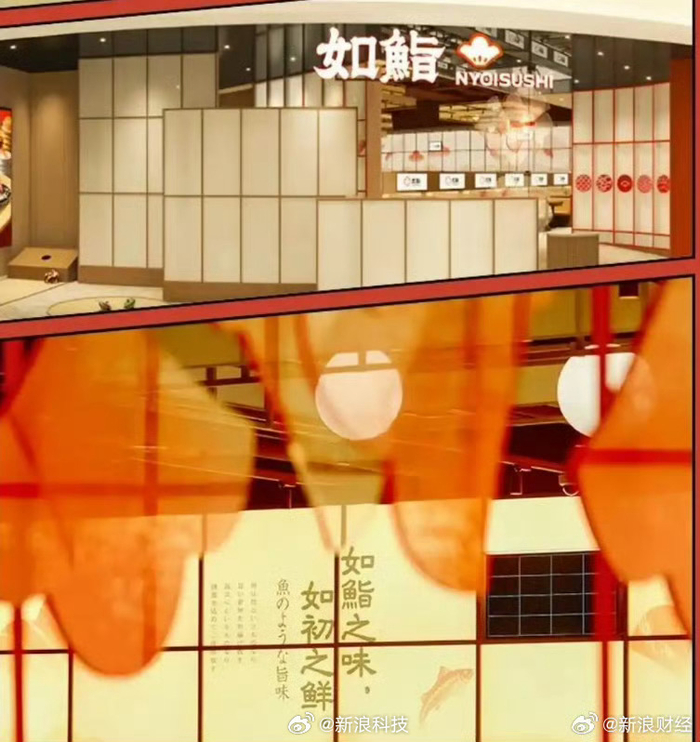
海底捞旗下首家寿司店“如鮨寿司”在杭州开业,主力产品集中于9.9元、15元价位段
Cai Jing Wang· 2025-10-25 20:45
Core Insights - Haidilao has launched its sushi brand "Rushi Sushi" with its first store opening in Hangzhou, Zhejiang, attracting significant customer traffic since its inception [1] Store Performance - The store receives an average of 800 to 1000 customers on weekends, achieving a turnover rate of up to 8 times during peak hours [1] - The store has a capacity of over 500 square meters with 56 tables, accommodating various dining scenarios including solo dining and small gatherings [1] Product Offering - Rushi Sushi offers over 200 SKUs, including sushi, sashimi, noodles, desserts, and beverages, with a focus on fresh ingredients like Norwegian salmon and various shrimp types [1] - The pricing structure for menu items is categorized into five tiers: 8 yuan, 9.9 yuan, 15 yuan, 19.9 yuan, and 28 yuan, with the majority of products priced at 9.9 yuan and 15 yuan [1]

海底捞旗下首家寿司店杭州开业,周末翻台率达8轮
Xin Lang Ke Ji· 2025-10-25 13:27
Core Insights - The opening of the first sushi restaurant "如鮨寿司" under Haidilao marks a significant step in diversifying its restaurant offerings [1] - Since the launch of the "红石榴计划," Haidilao has incubated 14 different restaurant brands, including "焰请烤肉铺子" and "小嗨爱炸" [1] Performance Metrics - The new sushi restaurant in Hangzhou has been receiving an average of 800 to 1000 customers per day on weekends [1] - The restaurant achieves a table turnover rate of up to 8 times during weekends [1]
仙饼嫂宣布启动IPO 计划在纳斯达克上市
Zheng Quan Ri Bao Wang· 2025-10-25 03:09
Core Viewpoint - Inner Mongolia Xianbing Sister Catering Management Service Co., Ltd. has announced its IPO plan on NASDAQ, aiming to raise $10 million by issuing 2.5 million shares at $4.00 per share, marking a significant step for Mongolian cuisine in the international capital market [1][2] Company Overview - Xianbing Sister is headquartered in Hohhot and focuses on the Tongliao beef pie, integrating Mongolian culinary culture and intangible cultural heritage techniques [1] - The brand emphasizes a "freshly made, no pre-made" philosophy, innovating flavors and pairing them with traditional beverages and dishes, creating a competitive product matrix [1] Market Strategy - The IPO proceeds will be allocated to three main areas: accelerating domestic store expansion, enhancing intangible cultural heritage food research and digital upgrades, and establishing acquisition reserve funds for industry chain integration [2] - The company plans to expand into new markets such as Hainan and Shenzhen, while also strengthening its supply chain network [2] Investment and Support - Shenzhen Tianhao Industrial Investment Holding Co., Ltd. will provide capital support and resource collaboration for the IPO, leveraging its background in cultural tourism and catering investments [2] - The actual controller of Xianbing Sister, Gao Zhenbo, highlighted the significance of the NASDAQ listing for promoting Mongolian cuisine globally [2] Industry Analysis - The IPO represents a pioneering move for Mongolian cuisine to enter the international capital market, exploring a sustainable path for intangible cultural heritage food through standardized production, cultural empowerment, and capital operation [2] - With the increasing global demand for unique culinary cultures, Xianbing Sister is expected to gain a competitive advantage in the international market due to its rare intangible cultural heritage IP and standardized operational capabilities [3] - Post-funding, the company anticipates its nationwide store count to exceed 30 by the end of 2026, serving as a bridge between Chinese Mongolian cuisine and global consumers [3]
*ST云网:10月24日召开董事会会议
Mei Ri Jing Ji Xin Wen· 2025-10-24 15:04
Group 1 - The core point of the article is the announcement by *ST Yunwang regarding its board meeting and financial performance for the first half of 2025, highlighting the significant contribution of its photovoltaic business to revenue [1] - In the first half of 2025, *ST Yunwang's revenue composition shows that the photovoltaic business accounted for 59.98% while the catering service contributed 40.02% [1] - As of the report, *ST Yunwang has a market capitalization of 1.7 billion yuan [1] Group 2 - A notable transaction was reported where a well-known brand spent 170 million yuan to acquire 2,000 shares of a target company with a registered capital of only 10,000 Hong Kong dollars, raising questions about the necessity of the acquisition [1] - The Shanghai Stock Exchange expressed confusion regarding the rationale behind the acquisition given the significant premium involved [1]

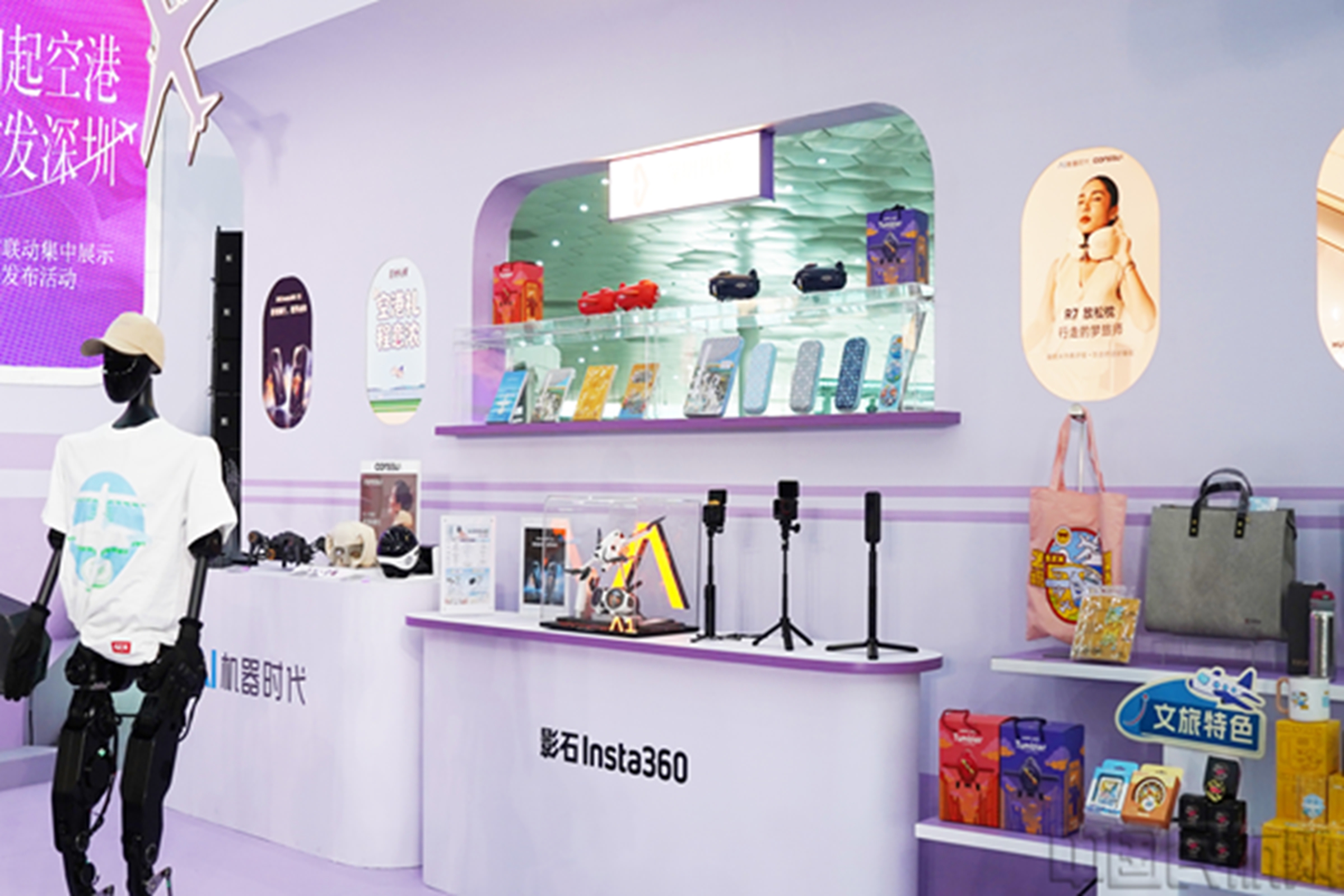
“潮起空港·首发深圳”五首集中展示发布活动在深圳机场举行
Zhong Guo Min Hang Wang· 2025-10-24 14:04
Core Viewpoint - The event "Tide Rising at the Airport: First Release in Shenzhen" held at Shenzhen Airport aims to showcase the "first economy" by highlighting new international high-end brand stores, local quality brand products, and newly opened international flight routes, thereby enhancing Shenzhen's economic development level in this area [1][6]. Group 1: Event Overview - The event is guided by the Shenzhen Municipal Bureau of Commerce and organized by Shenzhen Airport Group, focusing on five key scenarios: first store, first release, first exhibition, first show, and first flight [6][7]. - Participants experienced an immersive journey designed to showcase Shenzhen Airport's achievements in building a "first release highland" and a "world-class airport business circle" [6][7]. Group 2: Brand Participation and Highlights - Major brands such as Huawei, Insta360, and others showcased their latest products, emphasizing China's innovative capabilities in technology [7][8]. - New international flight routes were promoted in collaboration with Emirates and other airlines, enhancing connectivity [7]. - Various first stores, including Wolfgang Puck and other renowned dining brands, attracted significant attention from participants [7][9]. Group 3: Economic Impact and Future Plans - Shenzhen Airport has seen over 53 million passengers this year, leveraging its position as a key hub in the Guangdong-Hong Kong-Macao Greater Bay Area [9]. - The airport has introduced nearly 60 new brands this year, including around 20 first-time entries, expanding its retail offerings significantly [9][10]. - Future plans include further exploration in the "first economy" sector and continuous upgrades in facilities and services to enhance passenger shopping experiences [10].

*ST云网:2025年前三季度净亏损0.2亿元
2 1 Shi Ji Jing Ji Bao Dao· 2025-10-24 10:36
Group 1 - The company *ST Yunwang reported a revenue of 201 million yuan for the first three quarters of 2025, representing a year-on-year increase of 79.99% [1] - The net profit attributable to shareholders of the listed company was -20 million yuan, showing a year-on-year growth of 47.76% [1] - The basic earnings per share were -0.0246 yuan, reflecting a year-on-year increase of 47.77% [1]
2024-2025年中国餐饮服务商行业白皮书
Sou Hu Cai Jing· 2025-10-24 06:47
Core Insights - The Chinese catering industry has entered a stable development phase, with revenue expected to reach 56,712 billion yuan by 2025, up from 52,890 billion yuan in 2023, reflecting a year-on-year growth of 20.4% [2][11][19] - Digitalization is the primary driving force for catering service providers, with 69% of enterprises expressing intentions or plans for digital transformation, despite only 28.2% having implemented it [3][11] - The trend of "going overseas" is emerging as a significant growth avenue for catering service providers, as the domestic market becomes saturated [5][11] Market Overview - The catering industry has recovered to pre-pandemic levels, with a steady growth trajectory supported by favorable government policies aimed at promoting consumption and digital transformation [2][15][19] - The number of chain restaurants in China reached 50,384 in 2023, with a chain rate of 21%, indicating a significant increase in the presence of chain brands in lower-tier cities [2][11] Digital Transformation - Digitalization is crucial for enhancing operational efficiency, with many catering enterprises facing challenges such as fragmented information management systems and a lack of marketing capabilities [3][11] - Catering service providers are increasingly offering integrated solutions that cover the entire operational chain, from marketing to management [4][11] Service Evolution - The service offerings of catering providers have evolved from single-function services to comprehensive, full-stack solutions, catering primarily to small and medium-sized enterprises [4][11] - Popular service providers like Zaihui and KERUI have gained traction by providing integrated solutions that emphasize convenience and cost control [4][6] International Expansion - The overseas market presents significant opportunities, particularly in Southeast Asia, where the catering market is expected to grow from $92.3 billion in 2020 to $170.5 billion by 2025 [5][11] - In the U.S., the catering market reached $898 billion in 2022, with a high level of digitalization and standardization, presenting both challenges and opportunities for Chinese service providers [5][11] Future Trends - The catering service industry is expected to see deeper digital integration, with increasing demand for smart devices and efficient management systems [6][11] - Service providers will likely expand their offerings to include value-added services such as influencer cultivation and content creation [6][11] - More catering service providers will tailor localized solutions for different overseas markets, adapting to cultural differences and consumer habits [6][11]

2025年中国品牌在东南亚市场的崛起报告-增长机遇及对区域竞争者的影响
Sou Hu Cai Jing· 2025-10-23 13:47
Core Insights - The report highlights the rise of Chinese brands in the Southeast Asian market, driven by a young population, digital economy growth, and strategic investments [1][9][12] - By 2024, China's exports to Southeast Asia are projected to reach $587 billion, marking a 12% year-on-year increase, with ASEAN6 countries contributing significantly to this growth [1][9][31] Trade Evolution - The historical trade relationship between China and Southeast Asia has been strengthened by the Belt and Road Initiative, enhancing infrastructure connectivity and economic ties [19][24] - The ASEAN6 countries, which include Indonesia, Malaysia, the Philippines, Singapore, Thailand, and Vietnam, account for 95% of the region's GDP, making them attractive markets for Chinese brands [1][25] Market Opportunities - Southeast Asia's demographic advantage, with over 6.5 billion people and a median age of 31, presents significant growth potential for Chinese brands [14][52] - The region's digital economy is rapidly expanding, with a notable shift towards e-commerce and fintech, driven by a young, tech-savvy consumer base [12][52] Industry Focus - Chinese brands have established leadership in sectors such as electronics and electric vehicles, with companies like BYD and Xiaomi holding over 25% market share [2][15] - The home appliance sector has seen brands like Haier and Midea increase their market share from 9% in 2015 to 25% in 2024 through localization and premium positioning [2][15] Competitive Landscape - The competitive landscape in Southeast Asia is being reshaped as Chinese brands leverage innovation, efficiency, and localization strategies to challenge traditional competitors [3][10] - Existing companies must adapt quickly to the digital capabilities and pricing strategies of Chinese competitors to maintain market share [10][14] E-commerce and Cross-border Trade - The rise of cross-border e-commerce, facilitated by platforms like Lazada and Shopee, has transformed consumer behavior in Southeast Asia, allowing Chinese brands to penetrate the market effectively [46][47] - Despite progress, e-commerce penetration remains low in key markets like Malaysia, Thailand, and Vietnam, indicating untapped opportunities for growth [47][52]






山东出台若干措施全链条保障舌尖上的安全
Da Zhong Ri Bao· 2025-10-23 00:57
Core Viewpoint - The Shandong provincial government has introduced 25 specific measures to enhance the food safety regulatory framework, focusing on the entire supply chain from farm to table, ensuring the safety of food products for consumers [2][3]. Group 1: Food Product Safety - A risk-based classification management system for food products will be trialed, with strict controls on high-risk varieties and production methods [2]. - Quality control measures for meat products will be strengthened, including the implementation of quality management standards for pig slaughtering and the promotion of centralized slaughtering for cattle and sheep [2]. - An electronic certification system for food products will be developed to enhance traceability and compliance [2]. Group 2: Food Production and Operation Licensing - The approval process for food production and operation licenses will be tightened, with mandatory inspections within specified timeframes after license issuance [3]. - A specialized food safety inspector system will be established to ensure adequate oversight based on the number of food producers in each city [3]. - The certification of traditional specialty foods and the establishment of standards for prepared dishes will be promoted [3]. Group 3: Online Food Sales Regulation - A collaborative governance mechanism for online food sales will be established, ensuring that producers and sellers comply with safety certification requirements [3]. - Responsibilities of online food ordering platforms and operators will be clarified, with a focus on enhancing supervision of takeout services [3]. - The "Food Safety Sentinel" system will be promoted to strengthen oversight of non-dine-in food services [3]. Group 4: Catering Service Governance - Comprehensive supervision of food safety in centralized dining units will be reinforced, particularly in schools, nursing homes, and hospitals [4]. - The "Internet + Open Kitchen" initiative will be advanced to increase transparency in food preparation processes [4]. - A collaborative management mechanism for school food safety will be established, including a blacklist for suppliers with poor records [4].