光伏

Search documents
信义光能(00968.HK):印尼新建产能年内投产 海外销售占比有望提升
Ge Long Hui· 2026-02-12 21:49
Company Overview - The company is experiencing a phase of increased domestic demand for photovoltaic glass due to a reduction in export tax rebates, leading to a slight increase in glass prices and a partial recovery in sales profits [1] - The company aims to control inventory levels to alleviate pressure during the Chinese New Year, with inventory days decreasing from 40.17 days to 34.18 days, a reduction of approximately 6 days [1] Market Commentary - Demand for photovoltaic components has been weak in the first half of the year, with the focus on inventory clearance expected to continue until mid-February [1] - The company is one of the leading suppliers of glass for export components, and it is anticipated that the proportion of overseas shipments will increase, potentially raising profit margins [1] Production and Capacity - The company has launched a 1200-ton production line in Indonesia as of January 15, with another line expected to commence soon, aiming for full production and sales within the year [1] - The overseas production capacity is projected to account for 24.7% of the company's total production capacity, with expectations that over 35% of total shipments will be exported [1] Financial Forecast and Valuation - Revenue forecast for 2025 has been raised by 13.4% to 18.914 billion yuan due to higher-than-expected glass prices [1] - The profit forecast for Q4 has been increased by 2% to 1.528 billion yuan, while the revenue forecast for 2026 has been adjusted up by 10.3% to 20.324 billion yuan [1] - The company has introduced a revenue forecast for 2027 of 21.293 billion yuan and a profit forecast of 2.355 billion yuan [1] - The target price is maintained at 3.6 HKD, corresponding to P/E ratios of 14.5 and 12.3 for 2026 and 2027, respectively, indicating a potential upside of 1.4% from the current stock price [1]
江苏中信博新能源科技股份有限公司关于召开2026年第一次临时股东会的通知
Xin Lang Cai Jing· 2026-02-12 19:35
Group 1 - The company will hold its first extraordinary general meeting of shareholders in 2026 on March 2, 2026 [2][5] - The meeting will take place in the company's conference room, with both on-site and online voting options available [3][5] - The online voting system will be provided by the Shanghai Stock Exchange, with specific voting times outlined [3][4] Group 2 - The company has announced changes to its fundraising project, specifically the "Research Laboratory Construction Project," including adjustments to its research direction and internal investment structure [21][22] - The total amount of investment and the amount of raised funds for the project will remain unchanged, but the project timeline will be extended [24][25] - The new research directions will focus on "Intelligent Piling Robot Development" and "Intelligent Installation Robot Development," aimed at enhancing efficiency and reducing costs in photovoltaic installations [25][26] Group 3 - The company has restructured its board's strategic committee to include sustainability responsibilities, reflecting a commitment to environmental, social, and governance (ESG) management [18][19] - This change aims to integrate sustainability into the company's strategic planning and decision-making processes [19] - The committee's member composition and term regulations will remain unchanged despite the name and responsibility adjustments [19]

广发证券首席策略分析师刘晨明 备战马年第一波上涨期
Shen Zhen Shang Bao· 2026-02-12 18:47
Core Viewpoint - The A-share market is expected to experience its first wave of upward momentum in the Year of the Horse, with optimism surrounding sectors such as the AI industry chain, space photovoltaics, and non-bank financials [1][2]. Group 1: Market Timing - The spring market rally is anticipated to begin in February, historically the strongest period for such movements, with a 100% probability of small-cap indices rising between the Spring Festival and the National People's Congress [1]. - Previous instances of early spring rallies occurred during economic upturns or policy shifts, with notable years being 2013, 2014, 2015, and 2020 [2]. Group 2: Market Conditions - The release of annual report forecasts has alleviated negative fundamental disturbances, with a record high of companies reporting low expectations or losses in 2025 [2]. - As negative financial news is digested, the market is expected to be in a better position starting in February, allowing for a more favorable trading environment [2]. Group 3: Investment Strategy - The correlation between spring rallies and corporate performance is strong, with recommended sectors including the ByteDance industry chain, space photovoltaics, and non-bank sectors such as brokerage and insurance [2]. - Other sectors to consider for investment include optical modules, semiconductors, humanoid robots, chips, PCBs, and innovative pharmaceuticals, with additional tracking suggested for metals, satellites, storage, chemicals, and power grids [2].

金银暴跌真相揭秘!五大危机来袭,散户如何自保避免资金清零
Sou Hu Cai Jing· 2026-02-12 17:08
Core Viewpoint - The recent sharp decline in gold and silver prices, following a period of significant gains, has raised questions about market manipulation and the role of major financial institutions in precipitating this crash [1][3]. Group 1: Market Dynamics - Gold prices surged past $5,600 and silver reached $120, leading to widespread optimism among investors [1]. - A sudden market crash occurred from January 30 to February 2, with gold dropping over 20 points and silver experiencing a nearly 40% decline [3]. - The market was characterized by extreme overbuying, with gold and silver reaching relative strength index levels of 90 and 93.8, respectively, indicating a fragile market structure [7]. Group 2: Institutional Actions - Major banks raised gold price accumulation thresholds and restricted trading just before the crash, signaling potential market instability [3]. - The nomination of Kevin Warsh, a known hawk, to the Federal Reserve chair position shifted market expectations, leading to a spike in the dollar index and a rapid decline in gold and silver prices [5]. - Institutions like Morgan Stanley and Goldman Sachs began to withdraw from long positions as silver prices approached $100, indicating a strategic exit before the crash [13]. Group 3: Impact on Retail and Industry - The crash led to a significant drop in A-share gold stocks, with a market value loss of 50 billion yuan in a single day [11]. - Retail gold prices fell sharply, and many gold recycling businesses halted operations due to market chaos [11]. - The solar industry, heavily reliant on silver for production, faced substantial losses as silver prices plummeted, with companies like Tongwei Co. projected to incur losses of 15 billion yuan [11]. Group 4: Investor Behavior - Retail trading platforms saw a 30% increase in positions held by small investors, suggesting that while institutional players exited, retail investors remained heavily invested [13]. - The market's volatility and the subsequent forced liquidations of leveraged positions highlighted the risks associated with high leverage in trading [9]. Group 5: Lessons Learned - The recent events serve as a reminder that financial markets are not guaranteed profit machines, and the importance of heeding market signals and warnings is crucial for investors [15]. - The crash underscores the necessity for investors to remain vigilant and responsive to market changes rather than becoming complacent during periods of rising prices [15].

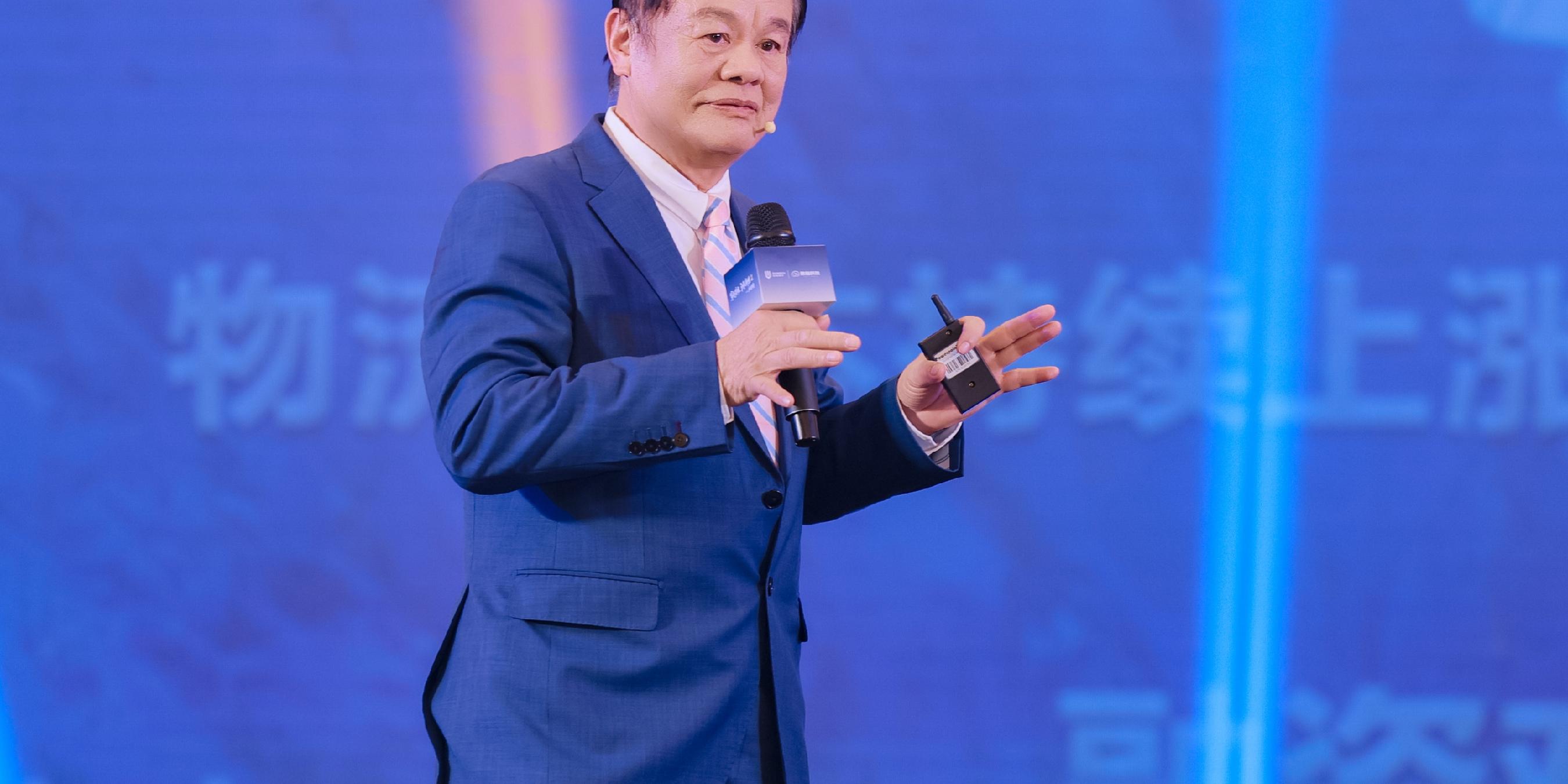
创维集团创始人黄宏生:38年只做“电”这一件事,从造“用电”的机器,到干“发电”的生意|2026商业新愿景
Jing Ji Guan Cha Wang· 2026-02-12 16:09
Core Insights - The global geopolitical and economic shifts have created significant pressure on businesses and households, leading to a more divided world where traditional market expansion strategies face unprecedented challenges [2][3]. Group 1: Challenges and Strategies - Companies must adapt their overseas expansion strategies to focus not only on market share but also on benefiting local economies and building trust with local partners [3][4]. - The traditional aggressive market penetration approach of Chinese companies is encountering resistance, necessitating a shift towards a "mutual benefit" model that emphasizes local workforce development and technology transfer [4][5]. Group 2: Technological Innovation - The company has initiated the "AI Living Room Revolution," leveraging data from 200 million households to enhance user experience through proactive AI applications, moving beyond traditional command-based smart appliances [6][12]. - The lack of integration of smart technology in products has been identified as a critical factor in the decline of major Japanese electronics firms, serving as a warning for Chinese companies to innovate [5][6]. Group 3: Energy Sector Expansion - The company's photovoltaic business now accounts for one-third of its revenue, reflecting a strategic pivot into the energy sector, utilizing existing manufacturing and distribution capabilities [7][9]. - The focus will extend to energy storage solutions in 2026, with an emphasis on optimizing energy usage through AI algorithms that can manage electricity pricing effectively [10][11]. Group 4: Health and Well-being - The company is exploring the automotive sector with a focus on creating vehicles that provide a "mobile rest space," addressing the health concerns of a significant portion of the population [12]. - The overarching goal across all sectors—home appliances, energy, and automotive—is to enhance human health and quality of life [12]. Group 5: Future Outlook - Companies must prioritize technological innovation, remain humble in strategy, and focus on results to navigate uncertainties in 2026, ensuring they are rooted in user needs and global partnerships [13].
创维集团创始人黄宏生:38年只做“电”这一件事,从造“用电”的机器,到干“发电”的生意
Jing Ji Guan Cha Wang· 2026-02-12 16:08
Core Insights - The global geopolitical and economic shifts have created significant pressure on businesses and households, leading to a challenging environment for both industrial and financial sectors [1] - The traditional aggressive market expansion strategies of Chinese companies are facing unprecedented obstacles, necessitating a shift towards a more symbiotic approach that benefits local economies [1][2] - The decline of Japanese electronics giants serves as a warning for Chinese companies to embrace smart technology and software integration to remain competitive [3][4] Group 1: Business Strategy - The company has adopted a "altruistic value symbiosis" approach, focusing on local partnerships and retaining local workforce while establishing R&D centers in foreign markets [1] - The company has acquired factories in South Africa and Indonesia, emphasizing the importance of contributing to local industrial capabilities and technology standards [1] - The company is leveraging its user data from 200 million households to drive its AI initiatives, aiming to create smart appliances that proactively respond to user needs [5] Group 2: Industry Trends - The company's solar energy business now accounts for one-third of its revenue, showcasing a strategic pivot towards renewable energy [6] - The company has built over 800,000 household power stations in five years, targeting markets with high electricity prices and significant unmet energy needs [7] - The company plans to expand into the energy storage sector, utilizing AI algorithms to optimize energy usage and profitability for users [8] Group 3: Future Outlook - The company emphasizes the importance of being rooted in user needs, technological innovation, and global partnerships to navigate uncertainties in the coming years [8] - The company is exploring the automotive sector, focusing on health and wellness features in vehicles to address the needs of a large population facing health challenges [8]
光伏系列报告:叠瓦方案有望在太空光伏得到应用
CMS· 2026-02-12 14:31
Investment Rating - The report maintains a strong recommendation for companies such as 帝科股份 (Dike Co., Ltd.) and 聚和材料 (Juhua Materials) [3][4] - ST 京机 (ST Jingji) and 德邦科技 (Debang Technology) are not rated [3] Core Insights - The report highlights the potential application of the tile structure in space photovoltaic systems, which can reduce the risk of damage to solar cells and improve power output per unit area [1][7] - The use of tile structures is expected to create new demand scenarios for conductive adhesives and related equipment, benefiting companies involved in these technologies [1][7] Industry Overview - The industry consists of 308 listed companies with a total market capitalization of 792.4 billion and a circulating market value of 693.8 billion [4] - The industry has shown strong performance with absolute returns of 63.1% over 12 months [6] Key Companies - **ST 京机 (ST Jingji)**: A leader in automated manufacturing technology for photovoltaic modules, with a significant market share and established partnerships in tile technology [8] - **帝科股份 (Dike Co., Ltd.)**: A leading company in photovoltaic silver paste, with a strong market position and potential for growth in space photovoltaic applications [9] - **德邦科技 (Debang Technology)**: A core supplier of conductive adhesives for tile photovoltaic cells, with a strong competitive advantage [10] - **聚和材料 (Juhua Materials)**: A leading company in photovoltaic silver paste, developing copper paste products and addressing domestic supply chain issues [11] - **奥特维 (Aotewi)**: A prominent manufacturer of photovoltaic equipment, with deep reserves in tile technology and a comprehensive solution for vacuum process equipment [12]




600481,突遭监管警示!自曝“SpaceX订单”后涨停......网友:这种信披,后面基本是要吃“函”的
Zhong Guo Ji Jin Bao· 2026-02-12 14:29
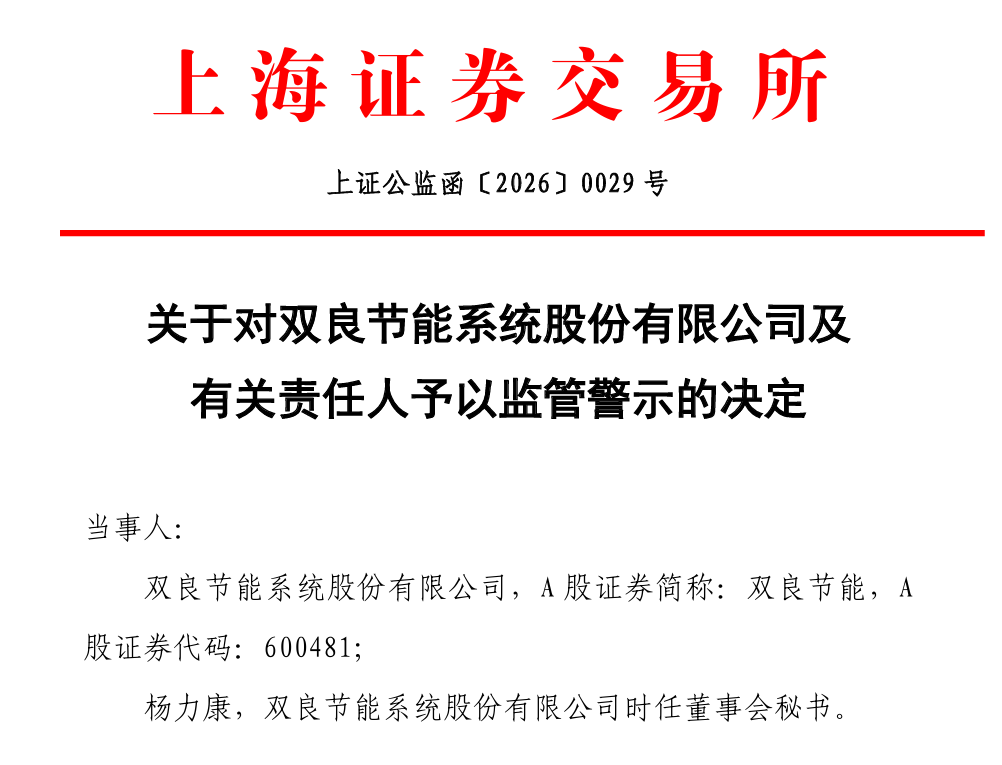
Core Viewpoint - The company, Shuangliang Energy, faced regulatory warnings from the Shanghai Stock Exchange due to misleading information regarding its involvement with SpaceX, which led to a significant stock price increase but was later clarified as indirect and non-exclusive supply [1][8]. Group 1: Regulatory Warnings - The Shanghai Stock Exchange issued a regulatory warning to Shuangliang Energy and its responsible personnel for not providing accurate and complete information regarding its overseas orders related to commercial aerospace [1][8]. - The company was criticized for failing to adequately disclose the nature of the orders, their impact on overall operations, and the uncertainties surrounding future orders, which could mislead investors [8]. Group 2: Stock Market Reaction - Following the announcement of a supposed "SpaceX order," Shuangliang Energy's stock price surged to its daily limit, with a trading volume of 1.762 billion yuan and a total market capitalization of 21.5 billion yuan [3][7]. - The company later clarified that the total value of the three overseas orders was 1.7 million euros (approximately 13.92 million yuan), which would not significantly impact its operational performance [7]. Group 3: Business Operations and Financial Outlook - Shuangliang Energy's main products include energy-saving and water-saving products, new energy equipment, and photovoltaic products, with applications primarily in new energy generation, steel, coal chemical, and thermal power sectors [9]. - The company anticipates continued losses in 2025, projecting a net profit attributable to shareholders of between -1.06 billion yuan and -780 million yuan, due to ongoing challenges in the photovoltaic industry and cost pressures [10].

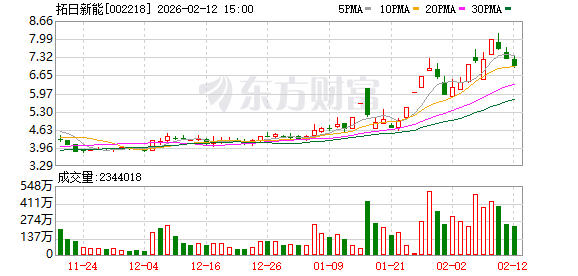
拓日新能:公司的晶硅电池产品在多年前曾供应过商业卫星使用,但近期未签订卫星领域的新订单
Mei Ri Jing Ji Xin Wen· 2026-02-12 14:05
Core Viewpoint - The company has previously supplied silicon solar cell products for commercial satellites but has not signed new orders in the satellite sector recently, which has not impacted its operational performance [2]. Group 1: Company Performance - The company has a fully integrated photovoltaic industry chain advantage, allowing it to effectively create a diversified position through both vertical and horizontal layouts [2]. - The company is committed to developing and providing suitable photovoltaic products based on different application scenarios and customer needs [2]. Group 2: Future Development - The company will continue to focus on various photovoltaic application scenarios and invest in ongoing research and development to meet customer demands [2].

低调秘访苏州!马斯克SpaceX团队为何看重这家2000亿本土巨头?
Xin Lang Cai Jing· 2026-02-12 12:13
Core Insights - SpaceX, led by Elon Musk, conducted a secret visit to Suzhou to explore collaboration with GCL-Poly Energy Holdings, a green technology giant with assets exceeding 200 billion yuan [3][4] - The visit has significantly impacted the capital market, with GCL-Poly's stock price surging over 52% in five trading days, despite the company clarifying that there is currently no substantial cooperation with SpaceX [3][4] Group 1: Company Overview - GCL-Poly is a leading player in the photovoltaic industry, focusing on green low-carbon technologies and has established a complete industrial ecosystem that includes wind, solar, storage, and electricity [3][4] - The company has been a pioneer in the commercialization of perovskite technology, with an asset scale consistently above 200 billion yuan [3][4] Group 2: SpaceX's Interest - The key focus of SpaceX's interest in GCL-Poly is the development of space photovoltaic systems, which involve deploying large solar power stations in space to transmit energy back to Earth [5][36] - GCL-Poly has been preparing for this opportunity for over a decade, having entered the perovskite field in 2013 and achieving significant efficiency milestones for commercial components by 2025 [5][36][38] Group 3: Technological Advancements - GCL-Poly is set to launch the world's first GW-level perovskite module production line in June 2025, with the largest perovskite module size certified in February 2023 [9][38] - The company’s perovskite components have completed the transition from laboratory to large-scale production, making them a rare resource that SpaceX cannot easily source from Western companies [42][43] Group 4: Market Implications - The visit by SpaceX has elevated Suzhou's position from a manufacturing hub to a potential global testing ground for space energy, with plans to reach a trillion yuan in the renewable energy sector by 2026 [44][45] - The competitive landscape in Suzhou's renewable energy sector is shifting towards technological innovation and application breakthroughs, moving beyond just cost and scale [47]