
证券业

Search documents
9月债市新增11家境外机构
2 1 Shi Ji Jing Ji Bao Dao· 2025-10-23 23:41
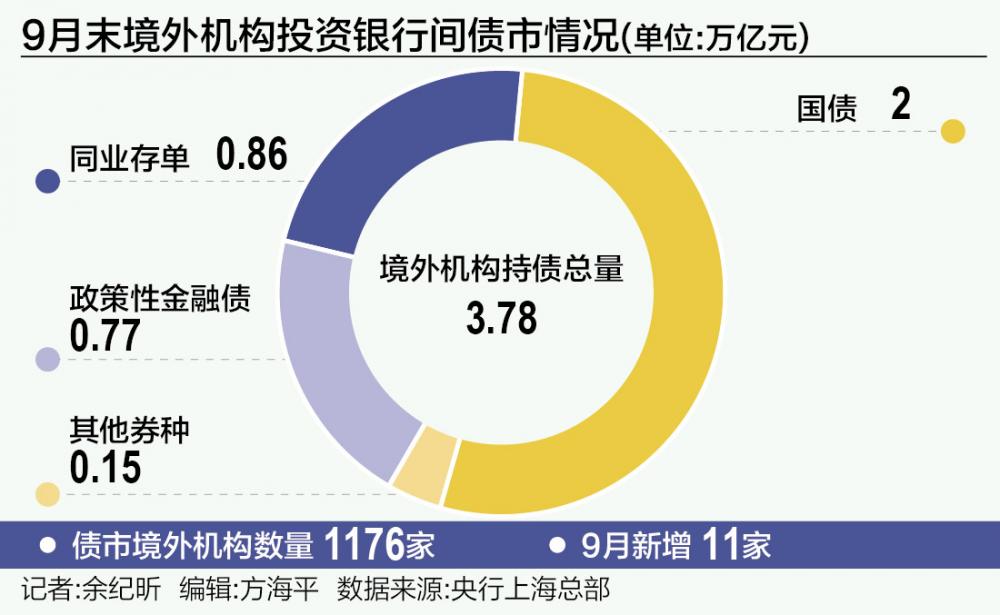
Core Insights - The People's Bank of China (PBOC) reported that as of September 2025, foreign institutions held 3.78 trillion yuan in the interbank bond market, accounting for 2.2% of the total custody volume [1] - The report indicates a significant increase in the number of foreign institutions entering the market, with 11 new entities in September alone, contributing to a total of 1,176 foreign institutions [3] - The introduction of a new bond repurchase mechanism for foreign investors is expected to enhance market liquidity and attract more foreign capital into the domestic bond market [6][7] Group 1: Foreign Investment in Bond Market - As of September 2025, foreign institutions held 2.00 trillion yuan in government bonds, 0.77 trillion yuan in policy financial bonds, and 0.86 trillion yuan in interbank certificates of deposit [1][3] - The number of foreign institutions participating in the bond market has increased, with 11 out of 15 new entrants in the third quarter joining in September [3] - The trading volume of foreign institutions in the interbank bond market was approximately 0.96 trillion yuan in September, with an average daily trading volume of about 41.7 billion yuan [1] Group 2: Market Dynamics and Trends - The trading volume of foreign institutions in September showed a slight decline to 0.83 trillion yuan from 0.87 trillion yuan in August, indicating a limited contraction in overall trading activity [3] - Commercial banks maintained a dominant position in the bond market, with a trading volume of 24.46 trillion yuan in September, while securities companies saw a decrease in trading volume [4] - The new bond repurchase policy allows foreign institutions to engage in repurchase transactions, enhancing the liquidity management tools available to them [6][7] Group 3: Impact of New Regulations - The new regulations are expected to diversify the types of investors in the bond market, including foreign central banks, international financial organizations, and various financial institutions [6] - The introduction of the repurchase mechanism is anticipated to reduce transaction friction and enhance the willingness of foreign institutions to hold bonds [7] - The repurchase business is expected to improve the pricing efficiency of the domestic bond market by reflecting overseas capital market expectations [8]

每日债市速递 | 二十届四中全会强调坚决实现全年经济社会发展目标
Wind万得· 2025-10-23 22:40
1. 公开市场操作 央行公告称, 10 月 23 日以固定利率、数量招标方式开展了 2125 亿元 7 天期逆回购操作,操作利率 1.40% ,投标量 2125 亿元,中标量 2125 亿元。 Wind 数据显示,当日 2360 亿元逆回购到期,据此计算,单日净回笼 235 亿元。 财政部 、 央行 10 月 23 日以利率招标方式进行了 2025 年中央国库现金管理商业银行定期存款(十期)招投标,中标总量 1200 亿元,中标利率 1.76% ,起息日 10 月 23 日,到期日 11 月 20 日。 (*数据来源:Wind-央行动态PBOC) 2. 资金面 银行间市场资金面仍维持平稳,存款类机构隔夜回购利率已在 1.31% 附近徘徊数日;匿名点击( X-repo )系统上,隔夜报价还报在 1.30% 。非银机构以 存单及信用债等抵押融入隔夜,报价亦连续多日维持在 1.40%-1.45% 区间。交易员指出,在央行呵护之下,市场流动性预期延续稳定乐观。短期内缴税影 响渐近,并与跨月叠加,资金难免有短暂收敛过程,但整体平衡偏松大局仍难改。 海外方面,最新美国隔夜融资担保利率为 4.23% 。 // 债市综述 / ...

今年以来广义财政收入增速首次转正 增量政策陆续出台实施 | 财税益侃
Di Yi Cai Jing· 2025-10-23 14:23
Core Viewpoint - China's economy has shown stable performance in 2023, leading to a recovery in fiscal revenue, supported by proactive fiscal policies aimed at stabilizing employment, businesses, and market expectations [1][11]. Fiscal Revenue and Taxation - In the first three quarters of 2023, the broad fiscal revenue reached 19.46 trillion yuan, a year-on-year increase of approximately 0.4%, marking the first positive growth in fiscal revenue this year [1]. - The general public budget revenue was 16.39 trillion yuan, with tax revenue at 13.27 trillion yuan, reflecting a year-on-year growth of 0.5% and 0.7% respectively [2]. - Tax revenue growth turned positive in recent months, with September showing an 8.7% year-on-year increase, the highest for the year, driven by improved corporate performance and active capital market transactions [2][3]. Non-Tax Revenue - Non-tax revenue in the general public budget decreased by 0.4% year-on-year to 312.12 billion yuan, significantly lower than the previous year's growth of 13.5% [4]. - The decline in non-tax revenue is attributed to a high base from previous years and stricter regulations on administrative penalties [4][7]. Government Bonds and Fiscal Expenditure - The net financing of government bonds reached 1.146 trillion yuan in the first three quarters, an increase of 428 billion yuan year-on-year [10]. - Fiscal expenditure for the same period was 20.81 trillion yuan, a year-on-year increase of 3.1%, with significant allocations towards social security, education, and healthcare [11]. - The government has accelerated the issuance of special bonds to support major projects, with a total expenditure of 4.21 trillion yuan from various bond types [14][15]. Real Estate and Land Revenue - The revenue from government funds, primarily from land sales, decreased by 0.5% year-on-year to 30.72 billion yuan, with land use rights revenue dropping by 4.2% [7][8]. - Policies aimed at stabilizing the real estate market have led to a narrowing decline in land sale revenues and related taxes [8]. Investment and Economic Stability - The introduction of new policy financial tools worth 500 billion yuan aims to enhance project capital and stimulate total investment by approximately 4.8 trillion yuan [15]. - The fiscal policies are designed to support local governments in managing existing debts and facilitating economic recovery [15].
债券通北向通9月成交5810亿元
Xin Hua Cai Jing· 2025-10-23 14:05
Core Insights - The Bond Connect reported a total northbound trading volume of 581 billion RMB in September 2025, with an average daily trading volume of 25.3 billion RMB [1] - Government bonds and policy financial bonds were the most actively traded, accounting for 49% and 33% of the monthly trading volume, respectively [1] - The Swap Connect facilitated 861 transactions totaling 431.8 billion RMB, with 83 foreign institutions participating [1] - The ePrime bond issuance system supported 14 offshore bond issuances in September, amounting to an equivalent of 18.324 billion RMB, including a successful issuance of 5 billion RMB in offshore RMB local government bonds by Hainan Province [1] - A total of 72 bond issuance information and results were published by the "New Bond Information Platform" in September [1]
构建良好科技金融服务生态 助力科创产业高质量发展 青岛市召开科技金融经验交流会
Jin Rong Shi Bao· 2025-10-23 07:01
为了有效落实科技金融相关政策,搭建科技金融工作经验交流平台,10月16日,由中国人民银行青岛市 分行与金融时报社联合主办的"构建良好科技金融服务生态 助力科创产业高质量发展暨青岛市科技金融 经验交流会"在中国人民银行青岛市分行举行,中国人民银行信贷市场司副司长余剑,金融时报社党委 书记、社长孟琦,中国人民银行山东省分行党委委员、纪委书记丁倩,中国人民银行青岛市分行党委书 记、行长刘云生以及来自青岛市金融监管部门的负责人、青岛市金融机构的代表以及科创企业的负责人 出席了此次交流会。 做好科技金融大文章越来越成为关注的焦点。从2024年6月29日,中国人民银行等七部门联合印发《关 于扎实做好科技金融大文章的工作方案》,到2024年10月16日,中国人民银行、科技部联合印发《关于 做好重点地区科技金融服务的通知》;从今年5月7日,中国人民银行、中国证监会联合发布《关于支持 发行科技创新债券有关事宜的公告》,到5月14日科技部、中国人民银行等七部门发布关于印发《加快 构建科技金融体制 有力支撑高水平科技自立自强的若干政策举措》的通知,围绕科技金融的政策推动 力度持续加大。如何进一步深化科技金融工作,更好地建立科技金融 ...
国泰海通晨报-20251023
GUOTAI HAITONG SECURITIES· 2025-10-23 02:54
Macro Research - The report emphasizes the increasing impact of alpha factors on China's export growth, highlighting the importance of tariff changes, order overdrafts, re-export regulations, and exchange rate fluctuations in addition to external demand factors. It is projected that exports will achieve a growth rate of 1-3% in 2026, with low risk of a decline in alpha factors [2][4][18]. Real Estate Research - The real estate sector remains in a downward trend as of September, with a significant decline in front-end investments, indicating continued pressure on prices. The gap between new and second-hand housing prices is widening, suggesting diminishing marginal benefits from new projects [2][7][8]. - In the first nine months, real estate investment fell by 13.9% year-on-year, and even with a potential increase in the last quarter, a double-digit decline is expected for the year. The focus will be on how to mitigate this decline, with urban renewal and new technology infrastructure seen as potential areas for support [7][8]. Biomedicine Research - The brain-computer interface (BCI) industry is anticipated to experience significant development opportunities driven by technological breakthroughs, policy support, and capital investment. The market outlook for BCI in healthcare and consumer sectors is promising [2][10][11]. - Domestic policies are actively promoting the development of the BCI industry, with various government departments issuing supportive measures since the 13th Five-Year Plan. This includes guidelines for enhancing innovation capabilities and establishing a reliable industry system by 2030 [11][30]. - Investment activity in the BCI sector has surged, with over 1,000 disclosed transactions and nearly 400 companies receiving funding, totaling close to $10 billion. The global BCI market has grown from $1.2 billion in 2019 to nearly $2 billion in 2023, with a compound annual growth rate exceeding 13% [12][30].
大跌!创12年来纪录!有人称1个小时亏损5万元
Nan Fang Du Shi Bao· 2025-10-23 01:01
北京时间10月21日晚间,黄金、白银双双跳水。 现货黄金一度大跌6.3%,创2013年4月以来最大单日跌幅,最终收跌5.31%,报4124.36美元/盎司; 现货白银最终收跌7.11%,报48.66美元/盎司。 此前一个交易日,金价刚创下4381美元的历史新高。 社交媒体上,不少买入黄金、白银的网友懵了:我今天才买的。 金银遭遇罕见重挫! 图片来源:大河报视频截图 昨天(10月22日),现货黄金开盘后继续下探,盘中一度重挫跌至8.01%,最低报4005.01美元/盎司。现货白银一度跌至2.1%,报47.529美元/盎司。 | L | w 商品 | | | | --- | --- | --- | --- | | A股 港股 | 全球 美股 | 商品 | 汁 三 外汇 | | 已为您生成昨日市场智评 | | | 查看 | | 全球商品 | 品圈圆出 | 原油 | 黄金白银 | | 贵金属 它 | | | | | 伦敦金现 | 伦敦银现 | | COMEX黄金 | | 4109.697 | 48.305 | | 4116.5 | | -15.073 -0.37% | -0.357 -0.73% | | +7.4 + ...

陆家嘴财经早餐2025年10月23日星期四
Wind万得· 2025-10-22 22:41
Group 1 - U.S. President Trump expressed hope for a favorable trade agreement with Chinese leaders during the upcoming APEC meeting, but mentioned the possibility of cancellation [2] - The Chinese Fund Industry Association is set to release a draft for public fund performance benchmark rules, with major fund companies submitting various indices for consideration [2] Group 2 - China's Minister of Commerce Wang Wentao met with Airbus CEO, emphasizing the importance of strengthening cooperation and addressing operational concerns in China [3] - The National Bureau of Statistics reported unemployment rates for different age groups, with the youth unemployment rate at 17.7% for ages 16-24 [3] - Guangdong Province released a plan to enhance high-quality development in manufacturing through AI, proposing 16 policy measures [3] - Shanghai's GDP for the first three quarters reached 4.07 trillion yuan, with a year-on-year growth of 5.5% [3] Group 3 - Beijing's GDP for the first three quarters was 3.84 trillion yuan, growing 5.6% year-on-year [4] - Jiangsu Province's import and export value reached 4.38 trillion yuan, a historical high, with a year-on-year growth of 6.4% [4] Group 4 - A-shares experienced a slight decline with a trading volume of 1.69 trillion yuan, while sectors like real estate and banking saw gains [5] - The Hong Kong Hang Seng Index closed down 0.94%, with significant net buying from southbound funds [5] Group 5 - Shenzhen introduced a plan to promote high-quality mergers and acquisitions, aiming for over 200 projects and a total transaction value exceeding 100 billion yuan by 2027 [6] - The Hong Kong Stock Exchange is collaborating with mainland exchanges on various initiatives, including the inclusion of REITs [6] Group 6 - The latest report from Goldman Sachs indicates a fundamental shift in China's stock market investment logic, predicting a potential 30% increase in key indices by the end of 2027 [6] - Notable fund managers have actively adjusted their portfolios in response to market conditions, indicating a long-term positive outlook for China's equity market [6] Group 7 - The "Energy Saving and New Energy Vehicle Technology Roadmap 3.0" was officially released, targeting an 85% penetration rate for new energy passenger vehicles by 2040 [9] - Several regional banks have begun lowering deposit rates, with reductions of up to 80 basis points [9] Group 8 - The Civil Aviation Administration reported significant growth in the aviation sector, with passenger transport increasing by 5.2% year-on-year [10] - Nanjing introduced policies to support families with multiple children in terms of housing fund loans [10] Group 9 - The Federal Reserve held a Fintech conference discussing the integration of traditional finance and digital assets, indicating a shift in regulatory attitudes towards DeFi [11] - The Hong Kong Stock Exchange is resisting listings from cryptocurrency platforms posing as shell companies [11] Group 10 - Huawei launched the HarmonyOS 6, enhancing user experience and compatibility with Apple devices [12] - Mercedes-Benz is undergoing a significant layoff plan, with around 4,000 employees already leaving [12] Group 11 - The U.S. federal debt surpassed $38 trillion for the first time, reflecting rapid growth in government borrowing [14] - The U.S. government shutdown has reached 22 days, becoming the second-longest in history [15] Group 12 - Oil prices rose significantly, with U.S. crude oil futures up 3.74% due to supply-demand dynamics and geopolitical tensions [21] - Global gold ETF inflows reached a record high in September, with total assets under management hitting $472 billion [22]

上海前三季度GDP增速跑赢全国,逆势而进靠什么?
Di Yi Cai Jing Zi Xun· 2025-10-22 03:25
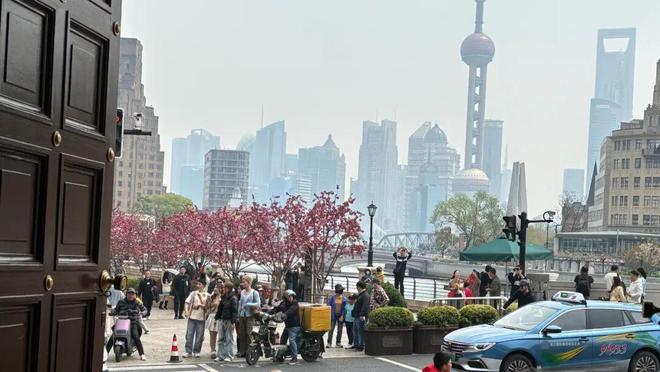
Economic Growth Overview - Shanghai's GDP for the first three quarters reached 40,721.17 billion yuan, with a year-on-year growth of 5.5%, surpassing the national average of 5.2% [2] - The economic growth reflects Shanghai's resilience as a key driver of China's economy and highlights the ongoing structural transformation and upgrading of its economy [2][3] New Economic Drivers - The growth in Shanghai's economy is attributed to the continuous expansion of new industries, new business formats, and new models, which have become significant new drivers [3] - The manufacturing sector saw an 8.5% increase in output value, outpacing the overall industrial output growth by 2.8 percentage points, with key sectors like artificial intelligence and integrated circuits growing by 12.8% and 11.3% respectively [4] High-Tech Manufacturing - High-tech manufacturing output increased by 10.3%, with aerospace and electronic equipment manufacturing growing by 20.6% and 13.4% respectively [5] - The production of wind turbine generators and lithium batteries for energy storage saw significant increases of 100% and 2,790% respectively [5] Financial and Information Services - The tertiary sector's value added reached 8,448.67 billion yuan, growing by 5.9%, with the financial sector contributing 6,965.27 billion yuan and growing by 9.8% [7] - The information transmission, software, and IT services sector grew by 15.5%, indicating a robust performance in the service industry [7] Consumer Market Trends - The total retail sales of consumer goods reached 12,302.77 billion yuan, with a year-on-year growth of 4.3% [10] - The hospitality and catering sectors showed improvement, with significant increases in revenue due to promotional activities and events [11] Innovation and Investment - Industrial investment in Shanghai grew by 20.3%, significantly outpacing the overall fixed asset investment growth of 6.0% [6] - The city is fostering an innovative ecosystem, particularly in the biopharmaceutical sector, which is experiencing rapid growth [5][6] Conclusion - Shanghai's economic performance is characterized by resilience and adaptability, driven by new industries and consumer demand, positioning it as a vital player in the national economy [12]
上海前三季度GDP增速跑赢全国,逆势而进靠什么支撑
Di Yi Cai Jing· 2025-10-22 02:42
Economic Growth Overview - Shanghai's GDP reached 40,721.17 billion yuan in the first three quarters, with a year-on-year growth of 5.5%, surpassing the national average of 5.2% [1][2] - The economic growth reflects Shanghai's resilience as a key driver of China's economy and highlights the importance of the underlying forces behind the growth rather than the growth rate itself [1][2] New Growth Drivers - Shanghai's economy has shown steady growth despite challenges, driven by the continuous expansion of new industries, new business formats, and new models [2][3] - The manufacturing sector's output value increased by 8.5%, outpacing the overall industrial output growth by 2.8 percentage points, with significant contributions from artificial intelligence, integrated circuits, and biomedicine [3][4] Industrial Performance - The added value of Shanghai's industrial enterprises above designated size grew by 5.3%, with a 5.7% increase in total industrial output value [4] - Strategic emerging industries accounted for 44.1% of the total industrial output value, with notable growth in new energy, information technology, and high-end equipment manufacturing [3][4] High-Tech Manufacturing - High-tech manufacturing output increased by 10.3%, with aerospace and electronic equipment manufacturing seeing growth rates of 20.6% and 13.4%, respectively [3][4] - The number of valid invention patents in Shanghai reached 306,000, marking a 12.7% year-on-year increase, indicating a robust innovation ecosystem [3][4] Investment and Profitability - Industrial investment in Shanghai grew by 20.3%, significantly outpacing the overall fixed asset investment growth of 6.0% [6] - Industrial enterprises' profits increased by 16.3%, with a sales rate of industrial products at 99.1% [6] Service Sector Growth - The tertiary sector's added value reached 8,448.67 billion yuan, growing by 5.9%, with the financial sector contributing 6,965.27 billion yuan and growing by 9.8% [7] - The information transmission, software, and IT services sector saw a 15.5% increase in added value, reflecting the ongoing transformation and upgrading of Shanghai's industrial structure [7][8] Consumer Market Dynamics - Shanghai's total retail sales of consumer goods reached 12,302.77 billion yuan, with a year-on-year growth of 4.3% [9] - The consumption recovery was supported by policies such as the "old-for-new" exchange program, which generated nearly 110 billion yuan in social consumption [10][11] Tourism and Hospitality - The number of inbound tourists in Shanghai reached 6.366 million, a 37% increase year-on-year, with significant growth in hotel occupancy rates [10][11] - The hospitality and catering sectors also showed improvement, with revenue growth driven by promotional consumption vouchers [10][11] Future Outlook - Shanghai aims to strengthen its new growth drivers and maintain economic stability amid global uncertainties, focusing on technological innovation and consumer demand activation [12]